I volunteered with a suicide prevention hotline in college and was working one Good Friday when a sobbing woman called. As trained to do, I said encouraging words (“It’s okay” “Take your time“) until she could share what was going on.
“Jesus was crucified today.”
Literally, that’s what she said. At first I thought she was punking me. But then I realized she was seriously in need of hope, that life was rough/overwhelming/excruciating and that Good Friday was as good a day as any to add the death of Jesus to whatever crises her life was enduring that day. She continued to weep.
If she was faking it, she was an excellent actor. I’m talking dying animal sounds.
I have made my own dying animal sounds. There have been moments when I felt alone and hopeless. It’s a horrible place to be. Jesus is a part of that story for me too but the context was different.
On the day I took the suicide prevention call, what I wanted to say was:
“Can you hang on for three more days? I promise it will get better.”
(I foolishly thought her biggest issue was Jesus dying on the cross.) I don’t remember if that’s actually what I said, but honestly I said something like that, and I wasn’t being flippant. Surely, this woman had heard the end of the Holy Week story – that crucifixion was not the last word.
But sometimes, we simply need to wait for three days.
Some agonies indeed pass in a matter of days. Our perspective improves with a good night’s sleep or a helpful therapy session or a weepy phone call with a friend.
And sometimes the pain feels endless. It feels impossible that we can ever recover and find peace. It’s cruel to tell someone in that kind of pain to “wait three days.” Today I’m thinking about . . .
The countless victims of assault at the hands of Jeffrey Epstein, along with tens of thousands of others who have been assaulted by tens of thousands of other abusers.
The innocent people living in war zones (and other zones like schools and hospitals that only evil agents would attack.)
The people weeping in the throes of psychological and physical illness in our personal circles and all over the world.
It will not help any of them to say, “Can you hang on for three more days?” Three days will – most likely – not make a difference in the overwhelming tragedies that burden millions of people every day.
Nevertheless, we who call Jesus our Savior find hope in those three days.*
This is our calling. We are called to be with our friends when they are making dying animal sounds. We are called to accompany people as they pick up the pieces. We are called to pick up the pieces with them.
God has done this for us. We were born to do this for others. And we don’t have to wait until Sunday to step up.
*Note: It seems like Jesus rose in just two days in our current way of counting. But in ancient Palestine “inclusive counting” marked three days from Jesus’ death (he died Friday before sunset which was Day One) from sunset Friday through sunset Saturday (Day Two) and rose in the morning of Sunday – so after sunset Saturday (Day Three.)
Palm Sunday: When Jesus entered Jerusalem, the whole city was stirred and asked, “Who is this?” Matthew 21:10
Good Friday: At that moment the curtain of the temple was torn in two from top to bottom. The earth shook, the rocks split Matthew 27:51
Easter Morning: The guards were so afraid of (the angel) that they shook and became like dead men. Matthew 28:4
Nerd Moment:
Within each of these Holy Week verses, there is the Koine Greek word ἐσείσθη (eseisthē) or ἐσείσθησαν (eseisthēsan) pronounced eh-SEE-sthee or eh-SAYTH-thee-sahn respectively. They are related to our word “seismic” as in earthquakes. (Note: Matthew 28:2 uses a different word σεισμὸς (SEISmos) that is almost always translated “earthquake” – which happened when the angel appeared at the tomb.)
Some of us have experienced literal earthquakes that broke the glass and moved the furniture and possibly caused bodily harm. And some of us have experienced figurative earthquakes when the person we’ve trusted most betrayed us or the glue that held our family together is gone, causing emotional and spiritual harm.
Some of us might be feeling particularly shaky these days for all kinds of personal and global reasons.
James Bond famously preferred his martini to be shaken, not stirred. Whatever. Reddit reports that there is no “right” way to enjoy a martini: “If you want your martini a little bit colder, more diluted, and with more liquid in the glass, shake it. If you want to taste the spirit more, stir it.” Again: whatever.
I’m struck by the seismic words in the Holy Week stories. We can all relate to being shaken and if we are most fortunate, these stories many of us have heard all our lives will jolt us a little bit upon hearing them again. However, I’m concerned that – because the stories are so familiar – we have lost the ability to understand the seismic realities of those moments: when the ground shook as Jesus entered Jerusalem and was later crucified, and still later when there was an earthquake at the empty tomb and the men guarding the tomb shook like leaves (or “dead men?”) when they saw an angel shining like lightning.
This is what Christians say we believe and yet it’s quite possible that this week will be like any other. We hear the Biblical stories read and we sort of pay attention. Maybe we find them comforting in their familiarity. And then we go out to brunch next Sunday afternoon.
My prayer this week is that we would not only remember that the world was shaken during that first Holy Week, but that we would subsequently be stirred emotionally to the point that something about us would be changed.
I am consistently stirred when I watch that scene in the movie “In and Out” when Kevin Kline’s character – who’s trying not be “be gay” cannot help but break out into a glorious dance to “I Will Survive.” I was stirred over the weekend when I heard Ibram X. Kendi speak at the No Kings event in Charlotte. (His new book is a must read for these shaky times.) A great sermon stirs me – especially a great funeral sermon. Something in my soul moves and I am inspired to take the next step: be a better person, change my priorities, see things more clearly.
My hope for this Holy Week is that we would be both shaken and stirred. Shaken by the power of the foundational stories of our faith. And then stirred to make necessary changes. May it be so.
Some leaders prefer to be feared rather than loved. (My favorite example these days involves Florsheim shoes.) I have a theory that leaders who would rather be feared than loved have never experienced unconditional love. They don’t know what it feels like. They have no idea how to offer it.
I heard a comedian recently share that – while his own parents offered him unconditional love – he could have used some conditional love. It would have helped if his parents had said, “We will kick you out of the family if you don’t stop _______.” But his parents never said that. Sometimes this is called tough love.
As a recently retired leader, I have felt the love. I don’t know that any of my colleagues have ever feared me. But I don’t actually believe that this binary understanding of leadership is necessary. If we love someone – and I’m including all the Biblical forms of love* we will share difficult truths. We will hold people accountable. That’s not about being mean or fearsome. That’s about being authentic.
Many of our elected leaders relish being feared: feared by their subordinates, feared by other world leaders, feared by their own family members. This is not strong or healthy leadership.
It’s also not strong or healthy to need to be loved and/or liked to the point of never addressing conflict or making tough decisions. Poor leaders are the fearful ones who don’t want to rock any-sized boat for fear of dividing the organization or offending the powerful.
I’m talking about church leadership here. About halfway through my ministry, a parishioner told me that I was “everybody’s friend.” It was not a compliment. He was saying that I needed to lead God’s people by making decisions that would not please everyone. I needed to stand up for what makes God happy rather than what makes “the biggest givers” happy. And it’s not about bullying or aggressiveness. It’s – ironically – about love.
Do we love God enough to offend those who are standing in the way of making disciples? Do we love God’s people enough to remind country club congregations that Jesus didn’t die for our fun cliques and traditions?
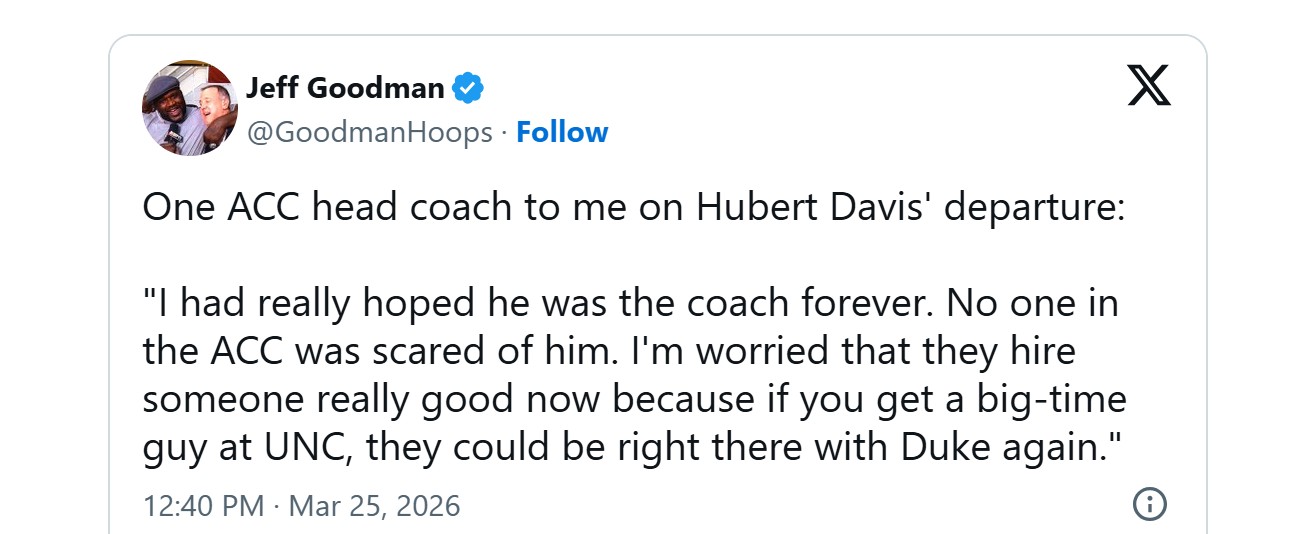
For what it’s worth, I’d rather have a beloved coach like Hubert Davis than somebody who throws chairs at their players. Being loved and having a Christlike character doesn’t mean you can’t be successful. Exhibit A.Exhibit B.
*Agape (unconditional, sacrificial love), Philia (deep affection/friendship), and Eros (romantic love)
I remember hearing Brian McLaren once say that “God Bless America” is a tad offensive in that we seem to forget that God has lavishly blessed America since the beginning. How dare we continue to ask God to bless us – even when – we as a nation – have committed unspeakable sins from slaughtering natives to enslaving Africans to imprisoning people of Japanese descent, God has continued to bless us?
Yes, we are the land of the free and the home of the brave. We are the nation of imperfect but nevertheless heroic humans from George Washington and Abraham Lincoln to Harriet Tubman and Shirley Chisholm. Frederick Douglas. Ida B. Wells. Audie Murphy. Daniel Inouye. Ruby Bridges. Margaret Sanger.
Several months ago, HH and I were present when one of my favorite pastors led a traumatized congregation in prayer. We have often remembered her solemn words: O God, love us through this. No matter what we are going through – loss of a job, death of a loved one, anguish over a broken dream, the misery of addiction, the torture of poverty – God has loved us whether we feel it or not. This is what I deeply believe.
I am a hopeful person because of God. But I’m not an optimistic person because human nature is consistently disappointing. Every day I ask God to love us through these times. Love us through the insatiable greed of our business and government leaders. Love us through abject poverty and injustice. Love us through unspeakable cruelty. Love us through intentional ignorance.
And every day our leaders in this “land of the free and home of the brave” make decisions and say words out loud that crush our spirits. They exacerbate hatefulness.
O God, love us through this.
I am not on Twitter and so I don’t follow Gandalv (@Microinteracti1) but these words strike me as an essential word to those of us who call on God to love us through these days of war and cruelty. This was published over the weekend, the day after Robert Mueller died. I hope you’ll read every word.
Robert Mueller died last night.
He was 81 years old. He had a wife who loved him for sixty years. He had two daughters, one of whom he met for the first time in Hawaii, in 1969, on a few hours of military leave, before he got back on the plane and returned to Vietnam. He had grandchildren. He had a faith he practiced quietly, without performance. He had, in the way of men who have seen real things and survived them, a quality that is increasingly rare and increasingly mocked in the country he spent his life serving.
He had integrity.
And tonight the President of the United States said good!
I have been sitting with that word for hours now. Good. One syllable. The thing you say when the coffee is hot or the traffic is moving. The thing a man who has never had to bury anyone, never had to sit in the specific silence of a room where someone is newly absent, reaches for when he wants the world to know he is satisfied. Good. The daughters are crying and the wife is alone in the house and good.
I want to speak directly to the Americans reading this. Not the political Americans. Just the human ones. The ones who have lost a father. The ones who know what it is to be in that first hour, when you keep forgetting and then remembering again, when ordinary objects become unbearable, when the world outside the window seems obscene in its indifference. I want to ask you, simply, to hold that feeling for a moment, and then to understand that the man you elected looked at it and typed a single word.
Good.
This is not a country having a bad day. I need you to understand that. Countries have bad days. Elections go wrong. Leaders disappoint. Institutions bend. But there is a different thing, a rarer and more terrible thing, that happens when the moral center of a place simply gives way. Not dramatically. Not with a single catastrophic event. But quietly, in increments, until one evening a president celebrates the death of an old man whose family is still warm with grief, and enough people find it acceptable that it becomes the weather. Just the weather.
That is what is happening. That is what has happened.
The world knows. From Tokyo to Oslo, from London to Buenos Aires, people are not angry at America tonight. Anger would mean there was still something to fight for, some remaining faith to be betrayed. What I see, in the reactions from everywhere that is not here, is something older and sadder than anger. It is the look people get when they have waited a long time for someone they love to find their way back, and have finally understood that they are not coming.
America is being grieved. Past tense, almost. The idea of it. The thing it represented to people who had nothing else to believe in, who came here with everything they owned in a single bag because they had heard, somehow, across an ocean, that this was the place where decency was written into the walls. That idea is not resting. It is not suspended. It is being buried, in real time, with 7,450 likes before dinner.
And the church said nothing.
Seventy million people have decided that this man, this specific man who has cheated everyone he has ever made a promise to, who has mocked the disabled and the dead and the grieving, who celebrated tonight while a family wept, is an instrument of God. The pastors who made that bargain did not just trade away their credibility. They traded away the thing that made them worth listening to in the first place. The cross they carry now is a costume. The faith they preach is a loyalty oath with scripture attached. When the history of American Christianity is written, this will be the chapter they skip at seminary.
Now I want to talk about the men who stand next to him.
Because this is the part that actually breaks my heart.
JD Vance is not a bad man. I have to say that, because it is true, and because the truth matters even now, especially now. Marco Rubio is not a bad man. Lindsey Graham is not a bad man. They are idiots, but not bad, as in BAD! These are men with mothers who raised them and children who love them and friends who remember who they were before all of this. They are not monsters. Monsters are simple. Monsters do not cost you anything emotionally because there is nothing in them to mourn.
These men are something more painful than monsters.
They are men who knew better, and know better still, and will get up tomorrow and do it again.
Every small compromise they made had a reason. Every moment they looked the other way had a justification that sounded, at the time, almost reasonable. And now they have arrived here, at a place where a president celebrates the death of an old man and they will find a way, on television, to say nothing that means anything, and they will go home to houses where children who carry their name are waiting, and they will say goodnight, and they will say nothing.
Their oldest friends are watching. The ones who knew Rubio when he still believed in something. Who knew Graham when he said, out loud, on the record, that this exact man would destroy the Republican Party and deserve it. Who sat next to Vance and thought here is someone worth knowing. Those friends are not angry tonight. They moved through anger a long time ago. What they feel now is the quiet, irrecoverable sadness of watching someone disappear while still being present. Of watching a person they loved choose, again and again, to become less.
That is what cowardice costs. Not the coward. The people who loved him.
And in the comments tonight, the followers celebrate. People who ten years ago brought casseroles to grieving neighbours. Who stood in the rain at gravesides and meant the words they said. Who told their children that we do not speak ill of the dead because the dead were someone’s beloved. Those people are tonight typing gleeful things about a man whose daughters are not yet done crying. And they feel clean doing it. Righteous. Because somewhere along the way the thing they were given in exchange for their decency was the feeling of belonging to something, and that feeling is very hard to give up even when you can no longer remember what you gave for it.
When Trump is gone, they will still be here.
Standing in the silence where the noise used to be. Without the permission the crowd gave them. Without the pastor who told them their cruelty was holy. They will be alone with what they said and what they cheered and what they chose to become, and there will be no one left to tell them it was righteous.
That morning is coming.
Robert Mueller flew across the Pacific on military leave to hold his newborn daughter for a few hours before returning to the war. He came home. He buried his dead with honour. He served presidents of both parties because he understood that the institution was larger than any one man. He told his grandchildren that a lie is the worst thing a person can do, that a reputation once lost cannot be recovered, and he lived that, every day, in the quiet and unglamorous way of people who actually believe what they say.
He was the kind of American the world used to point to when it needed to believe the story was true.
He died last night. His wife is alone in their house in Georgetown. His daughters are learning what the world is without him in it. And somewhere in the particular hush that falls over a family in the first hours of loss, the most powerful man and the biggest loser on earth sent a message to say he was glad.
The world that loved what America was supposed to be is grieving tonight. Not for Robert Mueller only. For the country that produced him and then became this. For the distance between what was promised and what was delivered. For the suspicion, growing quieter and more certain with each passing month, that the America people believed in was always partly a story, and the story is over now, and there is nothing yet to replace it.
That is all it needed to be.
A man died. His family is broken open with grief.
That is all it needed to be.
Instead the President said good.
And the country that once stood for something looked away.
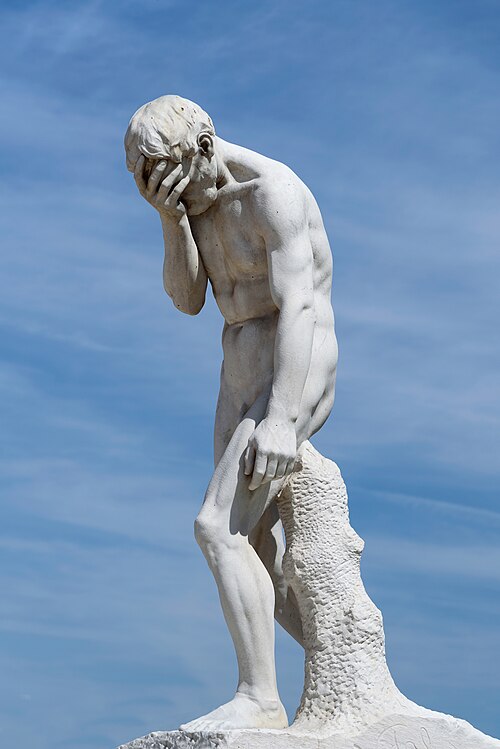
Image of Cain after Killing His Brother Abel by Henri Vidal (1896)
Note: Hi. Please don’t express that you are sorry for us or that you knew someone with Parkinson’s once and “she lived for 30 years.” Awesome. And also this disease is 1) an adventurous opportunity and 2) different for everyone.
We are now a Parkinson’s Family. It started first for HH and then it occurred to me that we all have it in that we are all on the same team fighting it. There’s equipment we have purchased. There are classes we have signed up for. There are newsletters we receive regularly. There are symposia we attend. There are new friends we have made. We now know words like bradykinesia and dyskinesia.
I come from a cancer family so this has been new to me. I used to keep up with words like Tamoxifen and AC protocols (Adriamycin and Cytoxin). Now we are increasingly familiar with words like Carbidopa-Levodopa. I’m obsessed with the Vagus Nerve.
I used to expect little pains to turn into sudden life-threatening metastasis. Now we are in it for the long haul. We are ready and we are not ready.
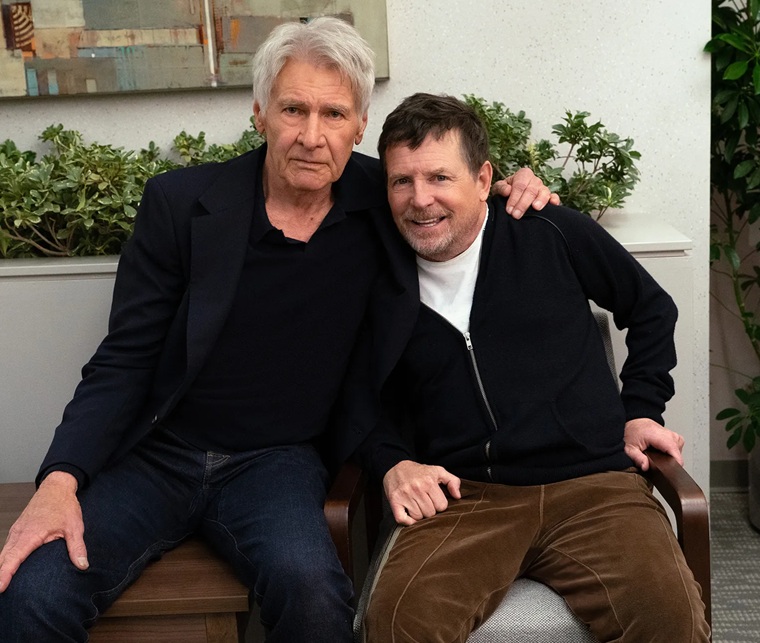
We love Shrinking and two of the creators/writers (Bill Lawrence and Brett Goldstein) are from Parkinson’s Families. Harrison Ford’s character frequently uses a four-letter word to describe his experience with PD. That epithet might show up on an embroidered pillow in our home one day.
Michael J. Fox plays both a real character and a hallucination in Shrinking. Love that. Sweet Alex Keaton is also likely to use that four letter word these days. Actually Apple TV in general loves that four-letter word (e.g. Roy Kent) and I increasingly do too. Don’t judge me. We are a Parkinson’s Family and sometimes it’s the singular word that expresses our feelings best.
As the familiar prayer goes: we don’t know what the future holds but we know God holds the future. We are immeasurably blessed with health care options and countless friends. We are moving back to the city where we raised our family. This will give us the opportunity to be closer to some of our adult kids, and that’s another gift.
We are embracing the funny parts of being a PD family. Our favorite examples at this moment:
Q: Hey, would you like to join us for _____?
A (from HH with a Debbie Downer voice): I can’t. I have Parkinson’s.
A (from me with a Debbie Downer voice): I can’t. HH has Parkinson’s.
As a Parkinson’s friend noted recently: People ask me if I’m mad at God because our family has Parkinson’s. I tell them the truth. Life gave me Parkinson’s. God helps us deal with it.
We are now a Parkinson’s Family and by grace we hope always to remember that God is the head of this family.
Note: This is what I shared at my last Presbytery meeting in February. I have one more week before retirement.
I once served a rural congregation in a town of 400 people.
I’ve served a suburban church whose members included military leaders, spies, and lots of lawyers.
I’ve been a single pastor, a married pastor, and the Pastor Mom of 3 children under the age of 4.
I’ve served two great Presbyteries through everything from lawsuits to COVID.
I’ve been asked -as the local pastor- to judge a Halloween costume contest where I was bribed by three different sets of parents who wanted their particular witch to win. I’ve blessed a bar, cast out evil spirits, and been invited by three different people to cast evil spirits out of me.
I baptized someone in the Potomac River after getting an okay from the EPA. I’ve baptized newborns in NICUs- some of whom had already passed away.
I’ve officiated weddings on mountainsides, beaches, farmhouses, restaurants, museums, the National Cathedral, and the top of the George Washington Masonic Temple in Solomon’s Throne Room.
I served our denomination with my sister Denise Anderson representing the Church in 24 states and several different countries.
I’ve had the honor of being with several people when they breathed their last breath, and then witnessed their burials or the spreading their ashes everywhere from railroad tracks to Arlington National Cemetery to the doors of the Castle Church in Wittenburg.
I’ve been blessed with a huge variety of experiences, by God’s grace.
But I have never been retired.
And so I covet your prayers.
Thank you for allowing me to be the church with you.
I wanted a more positive name for this post, so I’m calling it Telling the Truth. But after spending the day with other Presbytery leaders and hearing about assorted lies we have known and loved, I’m hoping that we stop repeating what is not the truth about our congregations.
Among the lies that are killing the Church of Jesus Christ in these days:
If you build it they will come.
Calling a young pastor with children will bring in young families.
Opening a preschool will bring in young families.
Avoiding church conflicts keeps a congregation together.
Allowing bullies to threaten the church they say they love ensures financial survival.
Nope.
Here is the truth:
I know a church that built a gym assuming “people would come” to use the gym and subsequently join the church. Never happened.
It’s not “the young pastor’s” job to bring in young families. That would be the role of prayerfully discerning leaders who are called to serve all the neighbors, not just the young ones.
Preschools do not “bring in young families” and are not tools for membership growth. We open preschools to serve families seeking excellent childcare for them and their children.
Unresolved conflicts will eventually bubble up, often at a level that cannot be overcome without serious damage.
Bullies do not love their church. Let them go. When they threaten to leave if they don’t get their way, quote Westley from The Princess Bride and say “As you wish.” God will bless that Church.
Most of you probably know truth from lies in Church World. But I talk with church members every day who do not know these truths. They repeat these lies in board meetings, planning committees and pastor nominating teams.
Thriving congregations do not cling to dated “pearls of wisdom.” We focus first and foremost on following Jesus who ministered to more people at drinking holes than temple buildings, who reached out to people of every age and life experience, who faced conflict head on, and who never tolerated bullies (while still loving them.)
This is the truth.
Image from an article in Forbes Magazine (Oct 24, 2015) It’s still true.
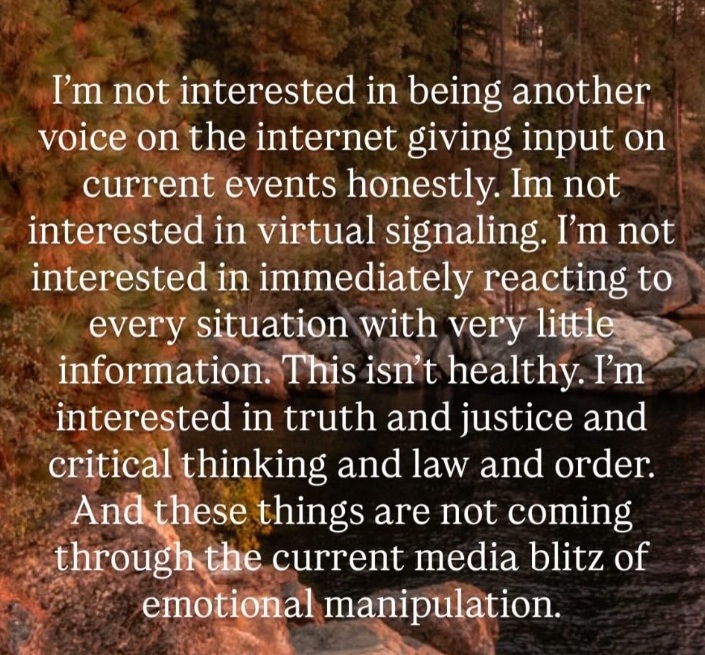
From the Instagram Account of Sadie Gannett January 2026
The best place to make a difference “is right inside our four walls” said Jesus never.
Actually that’s a Sadie Gannett quote from this article in The Atlantic. Ms. Gannett is a social media influencer who – like most of us – has opinions. From that Atlantic article:
Sadie Gannett, for example, who posts as “organic.gannett,” wrote that she is “not interested in being another voice on the internet giving input on current events”—only in pursuing “truth and justice and critical thinking and law and order.” The best place to make a difference, she added, “is right inside our four walls.”
The truth is that conservative folks seem to weigh in on social media when the issue aligns with their personal politics (the assassination of Charlie Kirk, the murder of Iryna Zarutska on a train in Charlotte, the murder of Sarah Root.) And progressive folks seem to weigh in on social media when the issue aligns with their personal politics (the murders of Renee Good and Alex Pretti, the detainment of five year old Liam Conejo Ramos.)
People who loved the Bad Bunny show during the Super Bowl posted about the joys of diversity and a broader view of patriotism. People who hated the Bad Bunny show shared his more lurid lyrics. And so it goes.
Something Jesus said:
“Do not think that I came to bring peace on earth. I did not come to bring peace but a sword. For I have come to ‘set a man against his father, a daughter against her mother, and a daughter-in-law against her mother-in-law’; and ‘a man’s enemies will be those of his own household.’ He who loves father or mother more than Me is not worthy of Me. And he who loves son or daughter more than Me is not worthy of Me. And he who does not take his cross and follow after Me is not worthy of Me. He who finds his life will lose it, and he who loses his life for My sake will find it.” The Gospel of Matthew 10:34-39
I interpret this to mean that authentically following the message of Jesus will divide us because we cling to what is familiar and comfortable and we are slow to grapple with hard truths and repent of our own selfish behaviors. I get it when people tell me that they need to take a break from the news. Jesus himself took time away to be quiet and pray. Unlike any of us, Jesus had clarity on God’s will.
In terms of social media in general, it’s essential to ask some basic questions about what we read:
Is it true? (Check the sources)
Is it kind? (How’s our tone?)
Is it necessary? (What is gained by sharing?)
(Note: these are also good questions to ask before we share any information.)
And other questions to ask as we observe injustice and cruelty in the living of these days God has given us:
What has Jesus already said and done when God’s children are hurt?
Who are today’s lepers and tax collectors and vulnerable women that Jesus loved 2000 years ago?
What was Jesus’ response when his own followers betrayed him, denied knowing him, kept their mouths shut?
Sometimes we need to speak up. I suggest we do it up close and personal rather than via social media.
When we witness a person abuse another person, when we can see destructive actions, when we live in a country with the privilege of expressing our faithful beliefs to those with the power to change things we must speak up and stand up. It is our calling as disciples of Jesus.
It’s so much easier to put something on social media and – honestly there’s a place for that in terms of sharing information. But if we believe that God has called any of us to focus first and foremost on what’s going on in the small walls of our safe spaces, we are ignoring the Gospel. Jesus never, ever said anything like that.
“How we spend our days is, of course, how we spend our lives.” Annie Dillard
Is it actually true that our career is just one-eighth of our lives? It is according to this article in The Atlantic from 2022. According to Industrial-Organizational Psychologist Andrew Naber, we actually spend a third of our lives at work, which begs the question, “What is work?” Does it including paid jobs, volunteer jobs, household jobs? If so then – yes – I for one have spent at least a third of my life at work.
I taught a church class called The Meaning of Life several years ago, which was requested by a group of DC area workaholics and we didn’t come away agreeing with any one meaning, but there were familiar suggestions:
To love God and enjoy God forever. (Westminster Shorter Catechism)
To love God and your neighbor as yourself. (The Great Commandment according to Jesus)
To achieve your own happiness. (Ayn Rand)
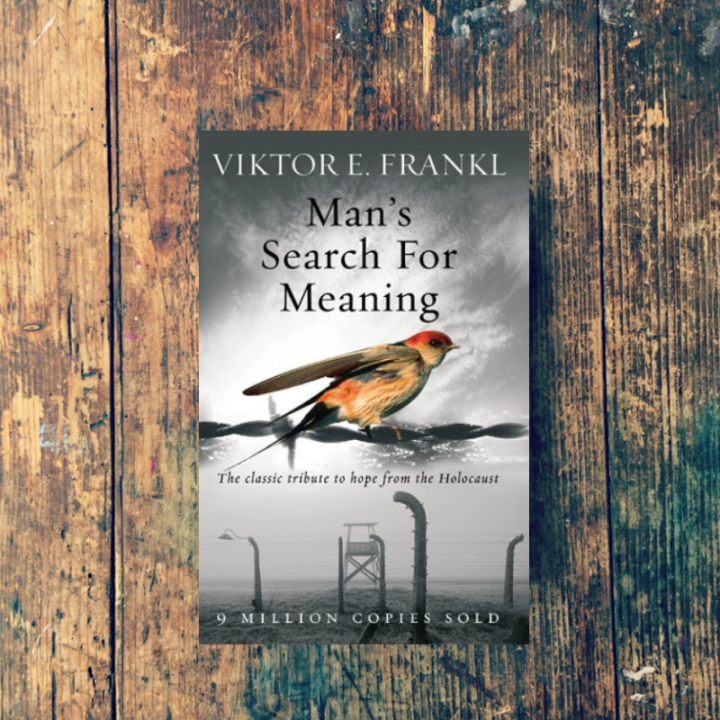
“Ultimately, man should not ask what the meaning of his life is, but rather must recognize that it is he who is asked. In a word, each man is questioned by life; and he can only answer to life by answering for his own life; to life he can only respond by being responsible.” (Victor Frankl. Please read this book.)
I only remember one assignment from The Meaning of Life Class. We had a conversation on the most important thing everyone did the day before. The answers included these:
Comfort my daughter after a bully had called her names.
Say bedtime prayers with my child after hearing about their day.
Apologize to my sister.
Solved the Middle East Crisis. (Joking. This was DC after all.)
Finished a paper on Electricity in South Asia. (Again this was DC)
I confess before you and God that I have often privileged my work before anything else. We excuse this by naming what we do “a calling.” I’ve learned the hard way not to agree to officiate at a wedding the same weekend of your child’s birthday. (Although the wedding wasn’t happening during the birthday party, our child wanted a whole birthday weekend. I get it.) I also left a different child and our dog at the vet because worship was starting in 30 minutes.
There are too many examples.
And as my professional work life ends soon, my work will change and I’m not ready to identify what that work will be yet. Options include packing our home to move to live closer to one of our adult kids and getting more exercise. And re-reading Man’s Search for Meaning. I’m excited.
I also confess before you and God that I might have gotten a lump in my throat when I completed pension forms recently. Happy to retire. Never done it before.
I am drenched in the privilege of having countless moments of meaning in this life. I expect there will be many more after March 13, 2026.
And what about you? What brings meaning in your life?
As I write this, I have 39 days of professional ministry left before I retire.
40 days felt Biblical and comforting. 39 days makes me feel a little panicked because there are a million loose ends to tie up.
I’ve walked towards retirement with many colleagues. Some haven’t retired until the church mortgage was paid off. Some didn’t retire until the construction project was completed. Some waited for a certain pillar of the church to die (and it felt imminent because the pillar was in hospice care.) Some have waited until their children graduated from college. Others were just exhausted and ready to finish it.
I have moments of exhaustion but that’s mostly after dealing with the things Jesus didn’t die for. You know what I’m talking about: Cemeteries, carpet colors, cranky people who are angry that they aren’t in charge of Vacation Bible School anymore. Or they’re irritated that the Pastor is taking a Sabbatical. Or they’re angry that __ got a church key and they had to return theirs.
But mostly I have moments of great joy, especially when the connection between Jesus and the humans involved is clear. You know what I’m talking about: the seminarian who adamantly didn’t want to serve in parish ministry but after field education realized that – yikes – that was exactly what God was calling them to do. The pastor who worked diligently to teach their congregation about the need to be in relationship with the neighbors instead of merely sending checks to assorted local charities. The staffs that come together. The boards that love serving together. The shifts that turn a clubby church into a life-changing church.
I love that stuff. I have loved these many years in professional ministry. But there will be no tidy bow as I leave. There will be many loose ends that cannot be tied up before I retire. My exceptionally gifted colleague MA recently posted this on social media and it expresses what I’m talking about:
It helps now and then to step back and take the long view. The Kingdom is not only beyond our efforts, it is even beyond our vision.
We accomplish in our lifetime only a tiny fraction of the magnificent enterprise that is God’s work. Nothing we do is complete, which is another way of saying that the Kingdom always lies beyond us. No statement says all that could be said. No prayer fully expresses our faith. No confession brings perfection; no pastoral visit brings wholeness. No program accomplishes the Church’s mission. No set of goals and objectives includes everything.
This is what we are about. We plant the seeds that one day will grow. We water seeds already planted, knowing that they hold future promise. We lay foundations that will need further development. We provide yeast that produces effects far beyond our capabilities.
We cannot do everything, and there is a sense of liberation in realizing that. This enables us to do something, and do it very well. It may be incomplete, but it is a beginning, a step along the way, an opportunity for the Lord’s grace to enter and do the rest. We may never see the end results, but that is the difference between the master builder and the worker.
We are workers, not master builders, ministers, not messiahs. We are prophets of a future that is not our own.
This is known as The Romero Prayer named after the assassinated Archbishop of El Salvador Oscar Romero (1917-1980) by the Bishop of Saginaw, Michigan Kenneth Untener (1937-2004). It sings my song: We are prophets of a future that is not our own.
And God is raising up new prophets every day. This is such good news.







 A Church for Starving Artists