I wish I could share the personal stories shared with me over the last months since the Dobbs decision on June 24, 2022. They are stories of procedures involving non-viable pregnancies and abortion-like procedures involving human tissue that is not technically fetal material. What’s true is that if a pregnancy is not viable or if a procedure needs to be done involving other non-viable tissue, a woman can indeed have a legal procedure that removes those tissues. What’s also true is that – depending on the state – the courts would have to be involved before the procedure is cleared and some doctors won’t even try to get clearance.
But I can’t tell those stories. They are not my stories.
Here is a story that I can share because a writer named Nicole Walker already shared it. If you read it and think, “It’s extremely rare for this kind of thing to happen – a preteen assault victim who finds herself pregnant,” for example – please know that I have known dozens of women who have disclosed similar experiences to me as their pastor. I’ve been contacted by mothers and grandmothers who have asked for help for their daughters and granddaughters.
On this 50th Anniversary of Roe v. Wade, I mourn the loss of choices for women like Nicole Walker for whom “abortion at 11 wasn’t a choice; it was her life.“
We still live in a world that doesn’t value women as independent, beloved, precious children of God. God has given us agency but some seek to take that agency from us. And yes, we humans sometimes (often?) make poor decisions. And also God is gracious and God loves even the shamed and blamed among us.
What does it mean to be Pro-Life today? We need to read scripture through that lens. And we need to pray for divine guidance. And we need to remember that everyone reading this loves someone who has had an abortion. And we need to remember that loving the unborn more than the born is not okay.
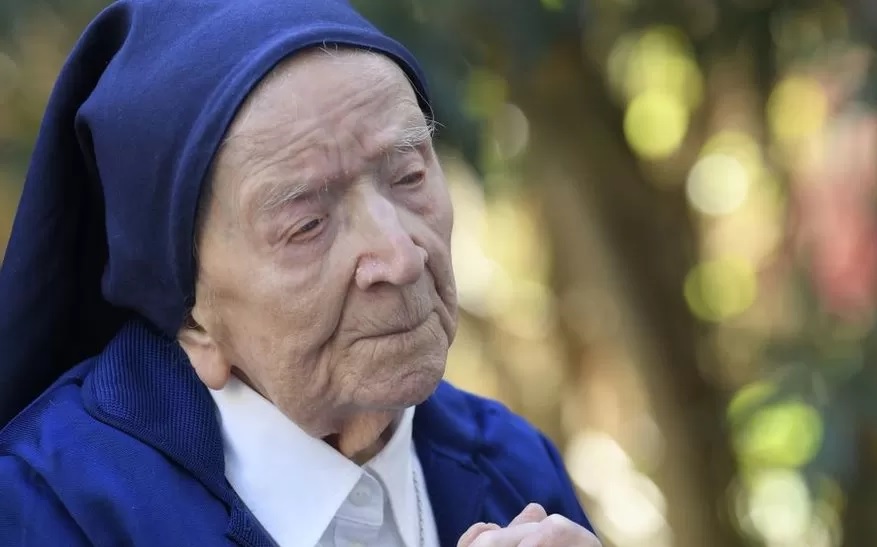
French nun Sister André (née Lucile Randon) lived for 118 years and 340 days and was the world’s oldest documented living human, until her death yesterday in Toulon, France. God bless her.
She had a lot of things going for her that improved her odds for longevity.
Fun fact: no one technically dies of old age. Yes, older parts wear out. But there is always a medical cause of death: lung failure, complications from skin cancer, COVID, traumatic brain injury, bubonic plague, flesh-eating maladies.
It was reported that both Prince Philip and Queen Elizabeth II died of old age, probably because it’s considered unseemly to say that they died from renal failure or COPD. The royal industrial complex doesn’t want us considering those royal kidneys or lungs. Same with Pope Benedict. He passed ostensibly because he was 95, not because diabetes or heart disease or complications from childhood tuberculosis.
If you’ve been reading this blog for a while you’ll know that I think about death a lot. The disadvantage of believing I wouldn’t live past 60 is that I never imagined that retirement planning would be necessary. The advantage of realizing that I have and will continue to live past 60 is that I have adventures to plan. And I love adventures.
Within the last few months, I was talking with someone I don’t know and she said, ‘There used to be a Presbyterian Pastor named Jan who wrote a blog. Something about artists.” Have you ever read it?
I said, “I think it’s me. And I still write it.”
“Oh, sorry,” she said. “I thought she was dead.“
Not dead yet. But this is a glimpse into what my future holds. I’ll be less active and less “out there.” People will think I’m dead before I actually pass away. God-willing we will all grow older with lots of adventures.
Like Sister André, I am a female, white, religous, chocolate-eating, wine-drinking, still-working, not isolated human. And by providence, I don’t yet have cancer or a flesh-eating disease. But I would appreciate not living until I’m 118.
Nevertheless I am grateful every day that I’m still alive. I’m grateful that you’re alive.
(Note: There have been times when I couldn’t say I was grateful to be alive. If you are uncertain about the value of your life, please contact me or someone on your team.)
I have almost a hundred first and second cousins, including the “once-removed” kind, and I can be obnoxious about it in that I act that it’s some kind of achievement. I did absolutely nothing to be born into this family. I’m here because of a cosmic lottery.
I feel proud, comforted, and loved in this family. Moving back to NC in 2018 brought me closer to where my parents grew up and subsequently, I run into cousins on the street sometimes and almost every where I go, someone asks, “Are you related to _____ Edmiston?” Yes, I am.
Last Friday, I visited with a couple of my nonagenarian cousins. One of them shared that she has become close to her husband’s niece who is now raising her own grandchildren after a series of tragic circumstances. Addiction, incarceration, and early deaths have required her to raise two children as an octogenarian herself.
When the children’s mother died, the octogenarian grandmother asked my nonegarian cousin (her aunt) if they might be able to have a memorial service in her livingroom, and she agreed. They wanted something small. And so Patricia (not her real name) hosted a funeral and in the course of serving refreshments afterwards, she got to know the two children. Wherever they live with their grandmother, there is no place to ride their bikes, so P invited them to bring them to her house on Saturdays and bike around her cul-de-sac. P also learned about other small things the children needed – apart from material things: a place to take a break from their grandmother’s house, etc. And she’s stepped in to offer support. “I want them to know they have a family.”
This is the fundamental task of the people of God: to remind people that they have a family. We need people who make us feel proud and comforted and loved. Sometimes we are related by blood. Sometimes we are related by marriage. Sometimes we are related by choice. Sometimes we are related by sheer providence.
I recently reread Donna Hicks’ books – Dignity – and she lifts up the notion that “honoring people’s dignity is the easiest and fastest way to bring out the best in them.” This is an essential learning for bosses, teachers, colleagues, parents, and – of course – pastors.
Everyone needs to know that they have a family. Part of our calling is being that family when we can do it.
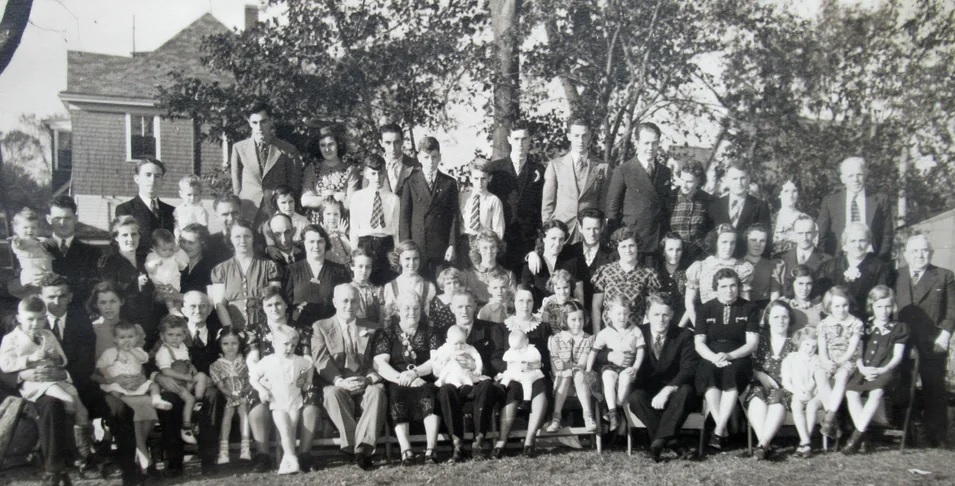
About the image: It’s a copyright free photo of somebody else’s family, but we looked like that – all white, lots of kids, gathering regularly for the family reunion. Today, our reunion photos include cousins who are black and brown along with the white ones, thanks be to God.
One of the joys of my life is sitting with people as they try to figure out what God is telling them. Seminarians wonder about their Call to Ministry and what they’ll do after theological school. Church officers wonder if God is telling their church to “go big or go home.” Pastors wonder if God is calling them away from a particular congregation and – if so – where are they supposed to go next?
Coming off the journey of the Magi who followed a star, we are most likely not going to get a star to indicate our path. But there are other ways that God leads us.
I shared before about the excellent This American Life episode called Baby’s First Christmas and in one of the segments, Allen – who was training to be a shopping center Santa – mentioned someone he knew named Pastor Don. While in graduate school for a counseling degree, Pastor Don’s professor asked:
“How many of you have people who are already coming to you for counseling?”
Don and a few other students raised their hands. Then the professor said, “I’m going to be honest with you. If people aren’t already coming to you, getting a degree from here probably won’t change that. You’re either the kind of person people want to confide in, or you’re not.”
I believe this to be true. Effective pastors often attract people and their spiritual questions long before they start seminary. It’s just something they were born with.
This is not to say that – if nobody ever asked you about the meaning of life prior to seminary – you aren’t called to professional ministry. But I will share that through these years of ministry myself, I’ve heard time and again about pastors who should have been professors, or pastors with weak emotional intelligence, or pastors with no people skills. Is God calling you to be a professional minister? Listen for clues from what trusted people have observed about your gifts.
Some of us land in an occupation because that’s what our parents did and it takes enormous courage to step away from that family business. What if God calls you to be a librarian in a family of chefs? What if you are called to be a dentist in a family of farmers? (Whether we like it or not, we’ve all witnessed what happens when the family business involves royalty but all you want to do is move to Montecito.)
Fortunately, most of us are privileged with many choices even when we aren’t Royal. And some choose seminary.
Actually fewer people are choosing seminary or theological training these days for a number of reasons from “I’ll never make enough of an income to pay back my student loans” to “The institutional Church is in decline to the point that there will be no churches sooner than later.”
Yes, the Church is changing (thanks be to God.)
And also there will still be roles for professional church leaders in the future.
All these choices involve spiritual discernment. What do you find yourself already being called upon to do? What sparks special interest in your soul? What feels like a true fit? What nudges are gnawing at you?
I was told – along with my classmates in our Introduction to the Old Testament class – to drop out and choose another vocation if there was anything in the world – other than professional ministry – that we could possibly do. I couldn’t think of anything.
I was an unofficial pastor before I was an official pastor. Seminary and subsequent experience helped me hone my skills and fill my toolbox. This doesn’t mean that I’m holier or smarter or dumber than those called into politics or medicine or mechanics or bartending. It just means that – for now – God has called me to this and I’m grateful. I never want to be doing anything God is not calling me to do.
What is God calling you to do and be? Listen and watch for signs. Even if you don’t seem to be the typical _____, it doesn’t mean it’s not your calling. I had never see or met a clergywoman until my first day of seminary and I ended up here. And yet here I am almost 40 years later.
Where is God calling you? And where are you clearly not called to be?
In physics, The God Particle refers to the Higgs Boson which was discovered in 2012 after scientists had been searching for it for 40 years. The Higgs Boson is – in the words of this English major – the subatomic particle giving mass to all other particles. I’m sure it’s more complicated than that, but I’d like to focus on the God part.
Driving home yesterday, I was listening to the NPR radio show “On the Media” about the fragility of the world as we begin 2023. Climate change, in particular, continues to threaten the planet. Fires. Hurricanes. Hunger. Famine. Flooding. As Brooke Gladstone reported, we’ve become accustomed to “doom and gloom.”
Friends – perhaps we are also living in the thick of our own personal doom and gloom. The levels of trauma, addiction, injustice, inequity, mental illness, and random catastrophies are overwhelming. And yet, there is at least a particle of God – the One who “gives mass” to all other things – in the midst of even the most overwhelming.
Scientifically speaking, the God Particle gives energy to weaker particles. Theologically speaking the God Particle gives energy to weaker particles.
The fact that it took 40 years for scientists to figure this out is just fun. (According to the Hebrew and Greek Scriptures: It rained for 40 days while Noah was floating in his ark. The Israelites wandered for 40 years on their way to Canaan. Jesus was tempted by Satan for 40 days. There are 40 days between the resurrection of Jesus and the ascension of Jesus.)
I witnessed a miracle yesterday that speaks to this truth about God and life. I love someone who was in the depths of misery years ago to the point that his bones and blood and soul were all weak with pain. His choices had been dangerous. His vision was cloudy. His perspective was cloudier. Those of us who loved him felt crushed. And yet there was a particle of hope in the midst of the agony. And a lot of people prayed.
Here’s what happened: that particle of hope activated the particles of hopelessness to the point that a massive, life-giving spark occurred. It wasn’t immediate, but it also didn’t take 40 years.
Yesterday this person I love was ordained to church office. His faith is strong. His life is good.
In the beginning was the Word, and the Word was with God, and the Word was God. He was in the beginning with God. All things came into being through him, and without him not one thing came into being. What has come into being in him was life, and the life was the light of all people. The light shines in the darkness, and the darkness did not overcome it.
At the closing of the “On the Media” segment on Fragility (and aren’t we all fragile?) Brooke Gladstone says this:
“Okay, so we don’t have much agency when it comes to the thermal death of the universe. I wish there were a pill (that helped us be less afraid.) All we have is a little free will: making the decision not to despair.”
My friends, please believe me when I tell you that even in the worst moments of life, even when God seems far away or non-existent, there is still a particle of God in the middle of everything. Do not despair. Do not be afraid.
U.S. athletes Tommie Smith and John Carlos protest global racial injustice at the Summer Olympic Games in Mexico City on October 16, 1968.
The word “protest” is literally in my faith tradition. I am a Presbyterian Christian – a branch of the Church created to protest activities in the Roman Catholic Church over the course of the 16th and 17th Centuries. The Protestant Reformation hoped to bring systemic change to the Church of Jesus Christ and – throughout our history – people have died during the course of protesting.
When Tommie Smith and John Carlos raised their fists during the U.S. national athem at the 1968 Olympics, apartheid was still the way of the world in South Africa. Two leaders had been assassinated in the United States. People had been beaten during the Democratic National Convention in Chicago. Smith and Carlos chose to express their protest for such violence in this peaceful but controversial way. Other Americans were not pleased.
When Colin Kaepernick first knelt during the U.S. national anthem to protest police brutality and racial injustice in 2016, his action was both vilified and copied throughout the country and beyond.
Two years ago today, over 3000 people descended upon the National Mall in our Nation’s Capital – many of whom protested what they called a stolen election – which resulted in the deaths of seven people and approximately $30 million in damages according to the Architect of the Capitol.
What do we do when we disagree with the institutional policies of governments or businesses or denominations? The options are endless:
Kneel
Stand in solidarity
Raise a fist
March
Boycott
Write letters
Leave the country/institution
Barricade on site
Destroy property
Attack people
Kill people
Those are just a few options. Most of us agree that Peaceful Protest is a human right (unless we are okay with fascism) and weirdly some people who decry fascism still have a hard time with peaceful protest. (Read what happened to people like Tommie Smith or Colin Kaepernick after they protested peacefully.)
The truth is that many of us (most of us) do nothing when we see injustice. We might even blame peaceful protesters for their faithful, thoughful rage. There are countless examples of peaceful protesters being met with violence.
Followers of Jesus: I’m writing specifically to you all here. Jesus died for the sake of love. Jesus died for standing up to an unholy regime, a cruel culture, and a wayward people. What do you consider to be the faithful way to protest?
I was once asked in an interview with a church Pastor Nominating Committee: “Is there any issue for which you might protest publicly?” This church was in a region of the country where peaceful protests are part of the culture. I assume there was concern that I might be a rabble rouser.
My answer was something like this: “Of course there are issues I might protest. Wouldn’t you?”
Although I didn’t offer a litany of what those issues might be, again, the list is endless: The abuse of vulnerable people. The ruination of the creation God gave us. Greed. Cruelty. Violence.
On this infamous anniversary, I hope we consider what we would (and do) protest in the name of Jesus. I pray we would see Jesus as our model for protest.
This op-ed by Jessica Grose in yesterday’s New York Times rings true for many clergywomen – and many professional women in general. In referring to disgraced former billionaire Sam Bankman-Fried and his casual clothing style, Grose writes:
Every time I read the news and see Bankman-Fried’s unkempt visage, I’m filled with just a little bit more rage, because I know — women know — that investors would never entrust a young woman looking this sloppy with a single cent, much less billions …
Women of every age are treated differently from men, and by different, I’m not talking about general gender norms. I’m talking about how seriously we are considered in terms of our gifts and skills compared to men. What I am not saying: that women are always discounted. What I am saying: that women are often discounted. This happens at every age.
I remember the very first benediction I proclaimed on my first Sunday in my first church after ordination and in that breath between the Amen of the last verse of the last hymn and my first benedictory word, I heard one church member stage-whisper to another church member, “She can’t be a day over 16.” (I was 28.) Twenty years later I was identified by two young colleagues as a crone. I was 48. (For the record, they told me it was a compliment.)
In spite of what Lauren Pasquarella Daley says in Grose’s article, I believe that it’s not only possible for leaders of all genders to be both competent and likable, the most effective leaders actually are both. Excellent 21st Century leaders are emotionally intelligent, authentic, trustworthy, and capable. It frankly doesn’t matter if you are male, female, nonbinary, single or married, with or without children, or of whatever age.
And yet, I just yesterday talked with a young clergywoman who shared her experiences of being a young pastor who happens to have children and how hard it has been to be taken seriously as a competent professional minister. As a 60-something clergywoman, I have experienced – more than once – a male pastor explaining the sermon I had just preached to his congregation as if I hadn’t been clear.
Folks, it happens every day. And yet . . .
Those who discount anybody whom God calls to serve in whatever profession, in whatever kind of body are the ones missing out. God is up to something. I see it where I serve in Charlotte. I see it in our neighboring towns and in rural communities. I see it via friends in Chicago and D.C. and San Francisco. God is calling competent and likeable leaders who might be called babes or hags or something in between. Whatever. God is doing a new thing. God is using us all for more than an hour – or even a season.
Let’s stop judging each other based on age. We are the ones losing out when we confuse age (or gender) with effectiveness.
Image is from the July 2016 Conference of The Young Clergy Women Project, Boston University taken by Sarah Hooker and used with permission. Read more about the YCWP here.
You save humans and animals alike, O Lord. Psalm 36:6b
Did you see what happened in Scarborough, England on New Year’s Eve? A lost walrus (nicknamed Thor) was found resting in the Scarborough harbor and – after consulting with Marine Life Professionals – the town council decided to cancel their fireworks program for the sake of the walrus’ welfare.
A representative from the Scarborough Borough Council said on December 31st:
“We have taken the decision to cancel tonight’s New Year’s Eve fireworks display on the advice of British Divers Marine Life Rescue because of the arrival of the walrus ‘Thor’ in the harbour. There are concerns that the display could cause distress to the mammal.”Source.
Scarborough is a city of about 108,000 citizens. They had been planning the fireworks event for about six months. They had already purchased the fireworks out of the annual budget. And then they canceled to protect a walrus.
This is extraordinary. Most of us are concerned primarily with our own distress, our personal inconvenience, our individual discomfort.
Not only would most of us not miss out on a party for the sake of a walrus, many of us resented wearing face masks to protect our neighbors from covid.
What I believe about the atonement is that Jesus died to show the depths of God’s love for us. We who claim Jesus as our Savior are sometimes slow to make personal sacrifices beyond the easy ones. Most of us do not give to those in need in ways that involve authentic sacrifice on our parts. Most of us are annoyed by being personally inconvenienced even if what’s inconvenient to us is life-saving to someone else.
Whether we are talking about canceling fireworks for the sake of a confused animal or postponing a football game out of respect for a seriously hurt player, it’s often the right and good thing to do. Re: that football game.
Loving sacrifices include
Stepping away from a leadership position we love for the sake of allowing fresh leadership,
Surrendering the need to control a mission project we love for the sake of equipping new volunteers,
Choosing to refrain from replacing our car this year in order to make a more generous donation to mission,
Shifting our schedule in order to sit with a grieving neighbor,
Going out of our way to turn someone else’s mess into an opportunity to relieve them even a little bit.
Jesus spoke words about the loving sacrifice of giving our lives for the sake of others. Sometimes all it takes to love someone sacrificially is to be willing to be inconvenienced for one night.
Resolutions might be short-lived, so I’m suggesting three spiritual practices that assume there’s grace when we mess up. What’s not new about 2023 is that political and theological divides continue and all of us are worse for it. And so, in the spirit of fresh starts, here are three spiritual practices I’m trying for the New Year and I hope you’ll join me.
Stop lumping people together as if everything is binary. There are more than two political perspectives (conservative and liberal.) There are more than two theological perspectives (conservative and liberal.) There are more than two ways to raise children (the right way and the wrong way), consume global news (my cable and your cable), and eat healthy (all the meat, no meat. ) It’s lazy to lump all ____ in a single lot as in: “Democrats care less about stranded passengers than they do about gaining more federal control over the airline industry.” WSJ op-ed 12-28-22 or “The Republicans chose to (back Trump) because they wanted power.” (NYT op-ed 12-3-22) I know. I know. You intellectually believe that it’s actually true that all Democrats are about federal control or all Republicans are about gaining power. I’m not sure it’s true for all Democrats or Republicans. Power is everybody’s god.
Stop saying “I absolutely hate ___” as in “I hate Nancy Pelosi” or “I hate Donald Trump” or “I hate evangelical Republicans” or “I hate godless Democrats.” I have friends and family members who routinely say these words in spite of their Christian identity. What God hates is performative faithfulness.
Stop writing people off. I get that it’s healthy to steer clear of anyone who has abused us or threatened us. Don’t get even. Get therapy. And yet if someone appears to be everything we disagree with, it doesn’t mean they are the embodiment of everything we disagree with.The beauty part of being in politically, socio-economically diverse church is that we are literally in a community of people with whom we would never be friends without that church connection.
So here’s the kicker: if you are part of a church that lumps people together, that spews hate towards certain humans, that writes people off . . . maybe you need a new church in 2023. Jesus was the living manifestation of a faith that sees people as individual children of God, that calls followers to pray for our enemies, that offers grace to the most unlikely candidates.
Let’s be more like Jesus in 2023.
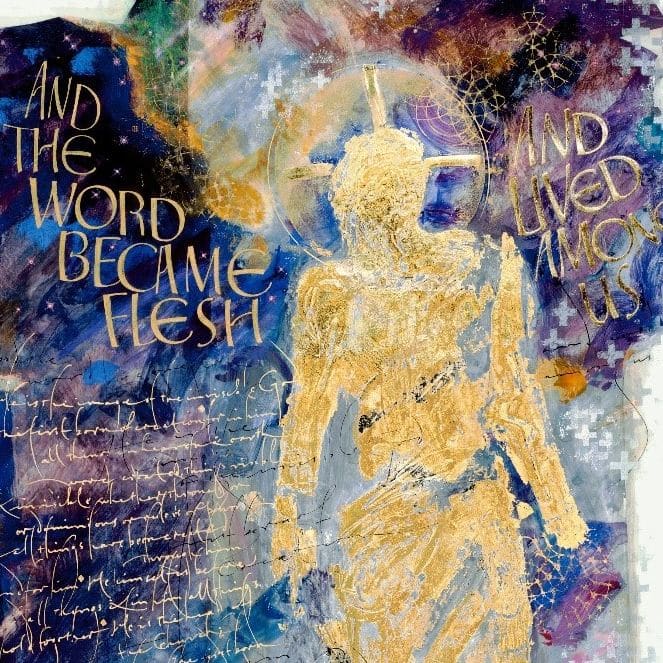
Image from The St. John’s Bibleillustrated by Donald Jackson (completed in 2011)
Many worship leaders (including this one) love lots of candles to create ambience. Lighting a candle to remember, honor, or pray for another is one of the most common spiritual practices throughout the religious world. And candles are only growing in popularity according to manufacturers. Raise your hand if you gave or received a candle for Christmas.
There is indeed a candle for almost every olfactory need: cheese, cinnamon rolls, fresh cut grass, bacon and Gwyneth Paltrow’s private parts. (It sold out quickly on her website which I don’t feel comfortable hyperlinking here.) There are candles promising balance, harmony, self-confidence and sex appeal.
Candles have been part of religious rites for thousands of years in almost every faith tradition. Before electricity, they were utilitarian. Now they are ‘meltable decor.” And in a world that needs to relax, candles offer opportunities for stopping and staring into the flame. They can also burn our houses down, so we need to stay mindfully relaxed.
You can order the Beeswax Magi and Baby Jesus shown here from Etsy although these candles seem like candidates for candles that you never actually light. The imagery of turbans on fire much less a flaming infant is not comforting. And yet someone decided that this particular mold might be inspiring through all Twelve Days of Christmas.
Creating sensory experiences is a common goal for those of us who lead spiritual communities. We are swiftly moving out of the season of handbells to hear, evergreens to smell, twinkling to see, cozy fabrics to touch, and favorite cookies to taste. These are the five senses that Aristotle taught us. But it’s clear that each of those senses are not lone experiences.
A candle feels warm, looks pretty, smells good, crackles ever so slightly, and might even put a specific taste in our mouths. Neuroscientists say that human beings actually have between 22 and 33 different senses including visceral senses (nociceptors) that signal possible disease in our internal organs or motor senses (proprioceptors) that help us move our feet without looking at them. Our senses all work together.
Quite a bit has been written about the importance of Relational Ministry in the 21st Century Church. How we treat each other makes a difference. Building community makes a difference.
And the physical atmosphere we create in church is also essential. How we make each other feel using all our senses is not just about superficial candlelight or soft music. The smells and sights and sounds and everything our other sensory experiences bring to mind give us moments of home and stories and the Holy.
Yes, there’s a candle for everything. Why do we have them in worship experiences? It’s an interesting conversation as we offer opportunities for authentic communion in 2023.
How are church candles connecting us to God and each other? And how are they not? Discuss.
Note: One of the saddest cultural shifts wrought by covid is the loss of blowing out the candles on a birthday cake. One of my brothers was a spitter and so some of us have been concerned for decades about this practice.









 A Church for Starving Artists