Author Archives: jledmiston

How Do We Meet our Neighbors in 2022?

Many of you preached or heard sermons last Sunday asking the question “And who is my neighbor?” – at least if the lectionary lesson for the day was preached. If you know this parable by Jesus, you also know that neighbors are not merely those who live on our street and they could even be our enemies (like that vile-but-turned-out-to-be-good Samaritan.)

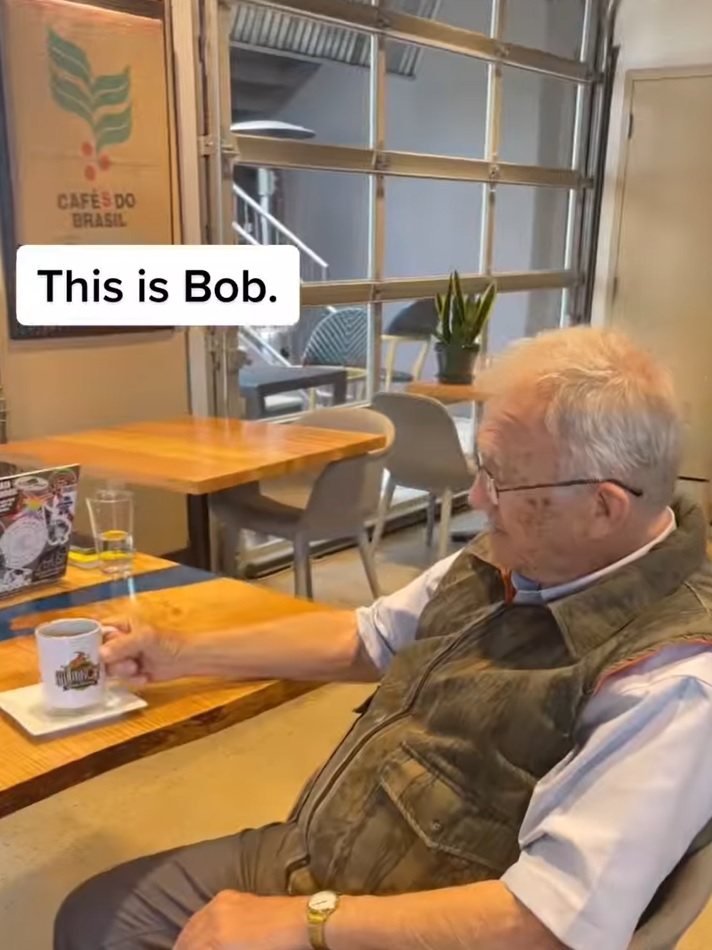
Bob is my neighbor.

True Confessions: I do not know all my geographically closeby neighbors and the way I know them is nominal. We live in a three story apartment building with lots of young adults who are cooler than we are.

There’s “Josh”* next door and I only know his name because I read the label on a package at his door to find out his name. When we pass in the hall or on a sidewalk, he never looks us in the eye when we say, “Hi.”

We know the first names of three other neighbors because we know their dogs. We met Bernie, Hops, Fifi, and Denver before we met their parents, and now we do know three of their four parents’ first names.

My neighbors also include Bob (if you live or work in the Plaza Midwood neighborhood of Charlotte, you know Bob) who is seen every day drinking coffee in one of several restaurants. And we know the first names of servers and baristas and cashiers although there’s quite a bit of turnover.

Church people often ask me, “How do we meet our neighbors?” and I follow up with “Why do you want to know?

  • Do we want to “attract young families” in hopes they will join/become involved/pledge money?
  • Do we want to figure out our neighbors’ needs so we might offer support?
  • Do we simply want to be friendly and build community?

If we – as followers of Christ – want to “reach out” into the neighborhood, there are ways to do this depending on your context. For example, if you are in a rural community it’s not the same as if you are in a suburban or urban community. But – assuming you want to get to know your neighbors for the sake of loving and serving them (and not targeting them), you can try these things:

  • Get to know people you meet in passing. Do you know the names of the servers in the local diner? Do you know the name of the maintenance people in your apartment building? Do you know your barista enough to greet them by their first names? Developing friendly relationships is community-building.
  • Invite the sheriff, the school principal, the county social worker, the high school guidance counselor to come to your church in order to get to know them and learn what they do all day. What needs do they see in the community? How might the church help with those needs?
  • Offer resources based on what community leaders tell you about local needs: If there is need for reading tutors, set up a team to volunteer. If there are parents with LGBTQA+ kids who want to support their kids and don’t know how, offer space for them to gather. If there are lots of kids who go home to empty houses, consider an after school program. Reminder: this isn’t about getting new members; it’s about loving people where they are.

Living an authentic Jesus-following life is the best way to meet the neighbors. See The Gospels for examples: What do we do if we see people hurt on the side of the road? What do we do if we meet parents with sick children? What do we do when we come in contact with women being shamed? The examples are endless.

Being a good neighbor often means paying attention. Who do we see every day whom we ignore?

*Names have been changed except for Bob and all the dogs.

What Are the Heavens Telling Us?

 The heavens are telling the glory of God;  and the firmament proclaims God’s handiwork. Psalm 19:1

First image from the James Webb Telescope shared by NASA yesterday. More images coming today.

I understand why some people no longer watch the news.

Much of the news reported today is pessimistic, painful, hyperbolizing, divisive, cruel, and untrue. It’s too much.

We can become overwhelmed by the vast sorrow and unspeakable grief of daily human life. Layer upon layer of trauma is piled upon us as gun deaths soar and no one seems to care, as war continues and no one seems to care, as hunger and disease continue to ravage children and no one seems to care.

I mentioned to friends yesterday that I was excited to see the images from the James Webb Telescope this week and they had no idea what I was talking about. They are bright, college-educated professionals who simply don’t read the news. They think most of it’s only half true.

They know that the January 6 hearings are happening and they know that gas prices are higher but getting lower. They know that there’s a war in Ukraine and they heard Prime Ministry Abe was killed.

Again, the news tells us what’s going on in the world. Or not.

I believe that we who are people of faith need to know that people in Japan are grieving and neighbors in Highland Park are in shock and families close to home are unable to pay for medical procedures. We who are called to serve need to know things in order to care for God’s people. We can’t serve people if we don’t know what’s going on in their lives.

But the news doesn’t tell us everything.

The 19th Psalm declares that the heavens tell us things too. They speak of the majesty of God in ways that defy all words. Because God has allowed certain people to have the vision and gifts to build a miraculous tool for conducting infrared astronomy, we are about to see – with our own eyes – new images of the Glory of God.

We need these images.

Just as we need to stare deeply into the stamen of a cone flower and the iris of a dog’s eye and the folds of a baby’s finger to find wonder in these days, we can find unfathomable wonder in studying images from deepest space never seen before.

These images aren’t merely news; they are evidence of something more mysterious than we can possibly comprehend. I call that mystery God and God continues to be with us in the thick of things.

Writing Policy is Ministry (And not for the Fainthearted)

Just like shifting church culture is not for the faintedhearted, writing policy for The Church is not for the fainthearted either. I don’t love writing policy (or writing anything by committee) but I spend my life trying to shift church culture. It occurs to me that the policies of any organization are – by definition – instrumental in shifting that organization’s culture. And writing policy is ministry.

Does this image make you excited or tired?

Examples of how policy impacts culture:

  • A nation’s policies on immigrants define how that nation views immigrants
  • A corporation’s policies on employee benefits define how that corporation values its employees.
  • A denomination’s policies on everything from family leave to investments to the very structure of the denomination define that denomination’s culture regarding how they value pastors and other church employees, how they discern what is financially just and unjust, and how flat or hierarchical their organization will be for the sake of their mission.

If you are yawning right now, I’m with you. I would be bored out of my mind writing legislation. But it matters. And our policies – like our budgets – reveal our true priorities.

For where your treasure is, there your heart will be also. Matthew 6:21

There is no integrity in saying that we – as a Church – trust women only to have policies that take agency away from women. I can’t take a Church seriously that says we value the voices of the vulnerable or disenfranchised only to exclude those voices in the work of the Church.

The 225th General Assembly of the Presbyterian Church USA (my denomination) just completed it’s meeting over the weekend and the leaders who did the work are exhausted, exhiliarated, frustrated, proud, and in need of a deluxe foot massage. Thank you delegates, commissioners, committee/task force/commission members, and staff. Thank you. Thank you. Thank you. What you’ve done is ministry.

There were missteps, mistakes and victories depending on your perspective. Church culture was shifted if only by inches. But the point of it all is that the results will bring us closer to the Reign of God – on earth as it is in heaven.

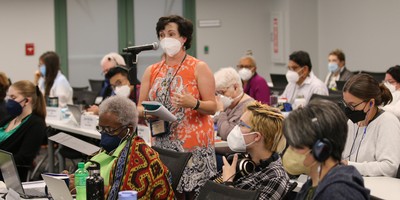
Image is from one of the committee reports in Louisville at GA225. Thanks to all photographers and videographers serving the Office of the General Assembly over the past several weeks.

Books I’m Loving This Summer

I’m a non-fiction reader (obsessed with connections to Church World) but I’ve picked up a collection of short stories as well. These are my all-around favorites so far this summer for what it’s worth:

There are many things to protest this summer. Let’s do more than shake our fists says the extraordinary Eboo Patel. Why this book can change the culture: we need to build a future that looks like the wildly diverse reign of God.
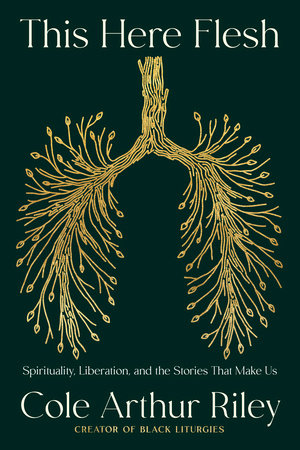
Order this gorgeous book immediately. Cole Arthur Riley is unspeakably gifted in storytelling and liturgical reflection. Why this book can change the culture: among other things it reminds white people about the utter depth of our white supremacy DNA.
I rarely do this, but I asked someone working in an independent bookstore in Charlotte what he was reading and he took this book by Yoon Choi off the shelf and said, “You must read this.” He was right. Brilliant short stories so well written and poignant. Why this book can change the culture: for white people like me, it opens up the work of immigrants who are so essential in being the community God’s created us to be.
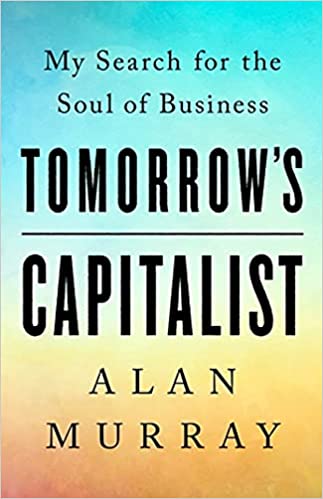
Alan is a college friend and he knows the corporate world well. This book reminds me a bit of Yancey Strickler’s book I read last summer, although Alan’s book is coming from the perspective of a business journalist. Why this book can change the culture: we in the non-profit religious world need to partner with our business leaders for the benefit of everyone even if business leaders don’t realize that yet. Tomorrow’s capitalist will not thrive without concern for community stakeholders and there is no better partner to address the needs of community stakeholders than The Church.
I would like to hang out with Leidy Klotz all day long and hear him share subtraction stories at Mudhouse Coffee in Charlottesville (where he teaches.) Why this book can change the culture: We in the Church (and world) have been taught that being better means adding things. Sometimes we are better when we subtract things.

This is just a start. What books are you reading?

Can’t wait to get MaryAnn McKibben Dana’s new book in the coming weeks.

Order MAMD’s book here.

Sharing

We teach children to share their stuff, but truthfully, there are several things most adults don’t like to share: toothbrushes, credit card statements, pastors. Seriously, congregations seem to dislike the idea of sharing a pastor with another congregation at least as much as they dislike sharing a toothbrush.

When we have a bivocational pastor (one who serves part-time as a pastor and part-time as a teacher/administrator/banker/dog groomer) we can assume that our pastor is generally “ours” on the weekend for Saturday activities and Sunday worship.

When we share a pastor with another congregation, that pastor is not solely “ours” on Sunday. They also spend time with another church which limits their availability to us.

Important shift in church culture in the 21st Century: Your pastor is not available 24/7.

Sure, if a life-shattering emergency happens during the pastor’s day off, that pastor will probably attend to it. But today, pastors are not (or should not be) expected to cancel vacations, cut short a day off, or miss their child’s birthday party because you can’t find your baptismal certificate.

There are safeguards that pastors can take to ensure time for sabbath rest:

  • Get a dog. (“Sorry, I need to leave now to go feed my dog.”)
  • Get a family. (“I can’t meet that afternoon because I have a Parent-Teacher Conference.“)
  • Get a backbone. (“No I can’t that day/time/week.”)

Sharing a pastor with anyone – the pastor’s family, another job, another congregation – forces us to keep healthy boundaries.

But the #1 reason why we need to get over our refusal to share a pastor with another church is because many – if not most- congregations cannot afford a fulltime pastor, especially when health and retirement benefits are part of the package. And very few pastors can support themselves on a part-time salary.

And gone are the days when you can expect full time service from a part time pastor. (Don’t even try. It’s fundamentally greedy.)

What would it take for our congregations (with 50 or fewer members) to partner with a neighboring congregation for the sake of having pastoral leadership? Why can’t we share?

  • Is it ego? We want the community to believe we are wealthier than we are?
  • Is it denial? If we call a PT Pastor, we’re admitting that we aren’t as strong as we once were?
  • Is it competition? We don’t want the Christians down the road to see us struggling?

The future for many small congregations will be Pastor-Sharing. This is actually a wonderful opportunity to broaden our ministry and make connections that benefit the whole community. Congregations are better together.

If we will only consider it.

Would you rather your congregation close in 2-3 years? Or share a pastor and continue ministry in a new way for many years to come?

Are We Anti-Semitic?

This is a very tender and complicated matter.

I have Jewish friends who are feeling threatened from every side today. From the right, neo-Nazis and other hate groups continue to terrorize synagogues and Jewish Community Centers in the United States. And now the Jewish community is surely feeling assaulted – at least verbally – from the left.

The Petra Hotel in East Jerusalem where settlers moved into the first floor in March 2022 removing residents.

My own denomination approved a committee resolution last week at our General Assembly which states the following:

Recognize that the government of Israel’s laws, policies, and practices regarding the Palestinian people fulfill the international legal definition of apartheid. Apartheid is legally defined as inhuman acts committed for the purpose of establishing and maintaining domination by one racial group of persons over any other racial group of persons and systematically oppressing them This occurs in Israel/Palestine through:

  • Establishing two sets of laws, one for Israelis and one for Palestinians, which give preferential treatment to Israeli Jews and oppressive treatment to Palestinians
  • Expropriating Palestinian land and water for Jewish-only settlements.
  • Denying the right to freedom of residence to Palestinians.
  • Dividing the population along racial lines by the creation of separate reserves and ghettos for the Palestinians.
  • Denying Palestinians the right to a nationality.

Mine is not the first denomination to use the word “apartheid” but it deeply stings to many hearers. My denomination has a long history of partnering with Jewish neighbors both in the United States and in Israel, and yet we are called to speak truth.

When I criticize the harmful systems in my own country based on my religious beliefs, I do so because I believe the United States can do better. It doesn’t mean I hate my country.

When we criticize the harmful systems in Israel based on our religious beliefs, we do so because we believe Israel can do better. It doesn’t mean we hate Israel.

The God of the Abrahamic faiths is a God of justice and mercy and it’s very hard to call out our friends when we see and hear about unjust, merciless practices. I have visited the Holy Land several times and have seen with my own eyes the differences in the way Palestinians are treated compared to their Israeli siblings. I have Jewish friends who agree that Palestines must be treated with more compassion if there will ever be peace. Again, it’s tender and complicated.

Just as the United States is not a Christian nation and – when we are our patriotic best – we welcome all faiths, many of us also recognize Israel’s right to exist while – at the same time – supporting the Christians and Muslims who have lived in Palestine for thousands of years.

Only God can help us with these conflicts. But I refuse to not speak up when any nation oppresses their people (including my own.)

Billboards I’d Like to See This Summer

HH and I love where we live except for one thing: the view. Our balcony overlooks a parking lot and if you stand at the kitchen sink, you can see an Independence Boulevard billboard blocking our view of the Charlotte skyline. Usually the billboard is advertising a realtor or an HVAC business. It’s ugly.

One of my cousins works for a billboard company and I was asking her what it would cost to rent that billboard so that I could look out my kitchen window and be inspired. Not surprisingly – I can’t afford that or any other billboard.

But a girl can dream.

I would love to have a billboard that expresses a faith in Jesus that doesn’t look like these people or these people or these people. Most people think that Christians believe homosexuality to be “unacceptable” not realizing that tens of thousands of Christians in the United States not only “accept” our LGBTQA+ siblings; we recognize their gifts and love who they are. Every day I read tweets about how Christians are destroying the world.

Not the Christians I know.

The ones I know are doing what Jesus taught us to do like housing people and feeding people and teaching people that God has created each dang one of us in God’s own image. We like wholeness and colors – including gray – and all kinds of music and poetry and art and humans. A lot of us like Ted Lasso.

You’ve probably seen those billboards where God is talking to us:

I don’t mind these and I believe God can speak any way God wants to speak, but this kind of thing can be abused. Exhibit A:

(Cherry-picking verses without proper exegesis is bad theology.)

I would love to see a billboard that states what my sister Denise Anderson came up with for a t-shirt to benefit several important charities:

I’d love to see a billboard that says:

  • You know Jesus died for Nancy Pelosi, right? You know Jesus died for Mitch McConnell, right? You know Jesus died for Ilhan Omar, right? (This would actually be a series of billboards.)
  • If your church condemns LGBTQA+ people, you need to find a new church.
  • Love your neighbor’ even includes people who get on your last nerve.

This is not about “getting new members” or “being woke.” This is about living the way Jesus shows us to live.

Also, if you know of any grants that pay for inspiring billboards, please let me know.

The Secret About America?

FBC was taking an Uber from Union Station in DC to his home in Northern Virginia and his driver was one of those interesting people you often get to meet in Ubers. She was an immigrant from Afghanistan who had come to the U.S. five years ago. She had just finished her Masters Degree in cyber security and was earning extra money by driving for Uber.

They had the kind of conversation that FBC said he wishes could have continued past the cab ride, but one thing she said has stayed with him.

“One thing I’ve learned about American is that you can either eat well or you can sleep well.”

Translation: if you are rich enough to eat well, it happened because you did something that should keep you up at night. And if you can sleep well at night, it’s probably because you’ve lived a life of integrity and it’s kept you from becoming rich.

I’m not sure I agree. (Sadly many immoral people who eat and live like royalty sleep very well at night.) There are many “good people” who have lived prosperous lives without engaging in criminal activity. And yet most of the most financially prosperous people I know are slow to dig deeply into the roots of our success. We who are rich live on land taken from Native Americans. We who are rich (and white) have benefitted from the labor of enslaved people who were owned by our ancestors. We who are rich have benefitted from investments in businesses that privileged shareholders over stakeholders for the last 100 years which has resulted in hurting vulnerable populations and the environment.

And yet – nevertheless (one of my favorite God words) God’s reign lifts up a world in which everyone eats well and sleeps well – if only we love God and our neighbors as ourselves. We just don’t want to.

The not-so-secret thing about this great country is that it’s never been what we say we want to be.

“We the People of the United States, in Order to form a more perfect Union, establish Justice, insure domestic Tranquility, provide for the common defense, promote the general Welfare, and secure the Blessings of Liberty to ourselves and our Posterity, do ordain and establish this Constitution for the United States of America.”

If we look at all things our nation is divided about today, it all has to do with Justice, Tranquility, common defense, general Welfare and the Blessings of Liberty. If we honestly sought these things for all people, we would be a better nation. And God seems to be calling us to this kind of nation – one in which everyone eats and sleeps well. Happy Fourth of July, friends.

Image is The Flag is Bleeding by Faith Ringgold (1997)

I Don’t Know Dave Barnhart but I Concur

Also I’m on vacation this week. Please let’s all be authentically Pro-Life this week and every week.

(Tweet from Kelly Grimes.)

From Intelligence to Emotional Intelligence to Adaptability Intelligence

I wrote this in 2015 here:

Emotional intelligence is a better predictor of pastoral success than straight As on a seminary transcript.  Emotionally intelligent people better manage their stress, diffuse anxiety, and promote a climate of optimism and adaptability which makes people feel more innovative.  It’s science, people.

EQ continues to be the most essential personality characteristic of an effective pastor. A self-aware leader understands their actual strengths and weaknesses, blind spots, and purpose.

Although many of us know the work of Ronald Heifetz, I’d never heard the term AQ until reading this book by Alan Murray. While we might be aware of the importance of being adaptable – especially after/during a pandemic, congregations hoping to transition into impactful mid-21st Century ministry need to find leaders with a high AQ.

Or maybe congregations don’t want that.

At the risk of over-simplifying the Pastor Nominating Process, I believe – very generally speaking – there are three kinds of pastors seeking ministry positions in these days:

Those with a high IQ – They are smart enough to do theological graduate work – and in my denomination – they can exegete scripture in ancient Hebrew and Koine Greek. They are well-read and have gifts in teaching, preaching, and general leadership. Extra points if your resume includes an Ivy League School. “Our pastor went to Yale.”

Those with high EQ – They communicate well, play well with others, and know how to read the room. They are self-aware and empathetic and able to succeed relationally. They handle conflict with poise and adversity with a positive spirit.

Those with high AQ – They are not only well-read about adaptive leadership, they are not only relationally gifted enough to talk about adaptive leadership, but they can actually do adaptive leadership. They are not afraid to try and fail, to unlearn and relearn, to pivot – our favorite pandemic leadership word.

According to the chart above which I found here, there is also the PQ which is “performance quotient” or what a person is actually achieving.

All this talk of achievement is a tricky one in that being a “successful spiritual leader” means different things to different people. Is a successful spiritual leader one who is beloved by their congregation because the pastor’s like God to them? Is a successful spiritual leader one who doubles the size of the membership? Is a successful spiritual leader a builder who led the sanctuary renovation and added a new gym? Is the successful spiritual leader one who equips the saints for ministry – whether those saints are members of the church or preschool parents or scout troop members or neighbors who drop by the food pantry?

Some people naturally have a high AQ and others of us can learn how to have a high AQ. This is a rich and exciting time to learn these skills whether we are pastors, bankers, bakers, or dairy farmers. These times call for joyful adaptability. Who’s with me?