Author Archives: jledmiston

The Opposite of Rental-san

Shoji Morimoto

Maybe you’ve heard of people who hire dates to accompany them to weddings so that Aunt Sophie won’t look at you with pity because all the other cousins are married. (Note: I remember a wedding in which I was holding a champagne glass which my sister grabbed for preventative measures when an elderly great aunt wondered – out loud – whether or not I had a character defect since I wasn’t married at 30.)

Certain moments are hard when you are uncoupled. And Shoji Morimoto has made a business out of these moments.

He charges 10,000 yen (about $85) per session, and is most frequently hired to accompany people who are at a turning point in life, who want to rewrite traumatic memories or experience a vulnerable moment they feel uncomfortable sharing with friends or family.

Because Japan is a shame-based culture (as are most of our cultures) business is good for Shoji Morimoto. He will be with you when you sign your divorce papers, pick out a casket, tell your parents you’re queer or need a hemorrhoid consulation – all shameful events in many families.

I know how to save you $85. Find a Church that’s not about shaming people.

Your immediately response might be, “Our Church doesn’t do that” and yet, how well does it go when a stranger or a long-term church member blurts out that they are unemployed/dealing with alcoholism/sensing they are bi/not loving their newborn like they thought they would/drowning in debt? Most of our faith communities shame people whether we realize it or not.

  • The church that gives you attention when you are a young family but ignores you when you are a single person of a certain age.
  • The church that doesn’t sit beside you in worship or invite you to brunch afterwards because they don’t know your people.
  • The church that whispers about your job layoff.
  • The church that you’d never tell about the suicide attempt.
  • The church that doesn’t know that Child Protective Services took your children.

Please read the Bible.

Jesus spent time with hated people, whispered-about people, condemned people And he loved them not because he was “woke” but because he was holy.

I read this quote on Jim Kitchen‘s FB this past week from Georgia Tech professor Dr. Bill Drummond:

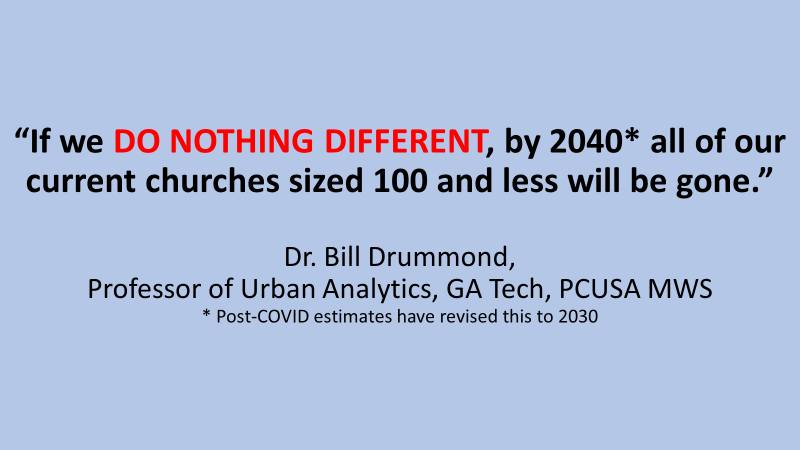
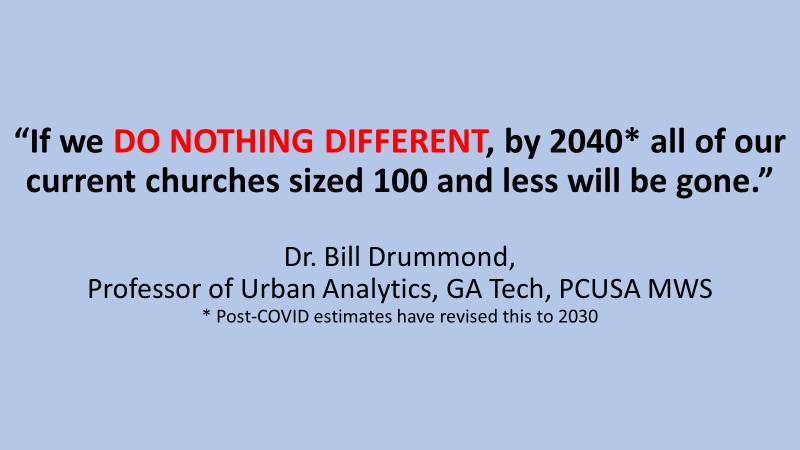
“If we do nothing different, by 2040, all of our current churches sized 100 and less will be gone.”

And all I could think about was Rental-san. If the Church cannot sit with/stand with/pray with/hold those who need someone, we will have failed. This goes for you “theologically diverse church” who actually only tolerates your LGBTQA+ people. This goes for you “friendly church” who actually talks only with people you know. This goes for you “we-want-young-people” church that only wants young people who can be molded into your idea of a Jesus follower.

We must be a completely different church well before 2040. And it’s not about survival. It’s about being The Church of Jesus Christ – literally – for the love of God.

We can hire strangers to fulfill our social and cultural needs. Or we can find – and be – authentic community.

Happy Monday to you.

Counterintuitive Moves

Can you name something – anything – that’s going really, really well?

This is not a rhetorical question. Please add your things-are-going-so-well contributions in the comments. Seriously.

I talked with some public school teachers recently who believe the educational system is broken. I have a police officer friend who believes the justice system is broken. Everywhere we turn – from government to politics to elections to banking to climate to media – things seem a little unglued.

And then there’s The Church. Pastors and other leaders are wondering how to adapt and if they have the energy to adapt post-pandemic.

The common reaction to Times Like These involves:

  • Clinging to all the things we’ve loved in the past from BBQ fundraisers to traditional Vacation Bible School.
  • Turning to the tried and true volunteers who have been in charge forever.
  • Cutting costs.

If we want energy, if we want excellence, we need to look to our Counterintuitive Savior – the One who said Blessed are the meek, for they will inherit the earth and The first shall be last and the last shall lbe first. Jesus turned many things on their heads. Let’s be like Jesus.

Our school teachers are exhausted and demoralized. What if our government forgave the student loans of all public school teachers?*

Our police officers are exhausted and demoralized. What if our justice system allowed police officers to receive more training in de-escalation and culture building and less on military drills?

Our justice system in the United States has failed hundreds of people who have been found innocent after already serving decades in prison. (Check out this story about Darryl Hunt.) We have long focussed on punishment instead of rehabilitation. Imagine investing in – first – assisting those exonerated citizens who have been broken by the system to give them trauma counseling and job training. Imagine helping those in transition out of prison to build new lives that serve the community.

And in Church World . . .

Imagine long term volunteers stepping aside to let someone new be in leadership. The usual thing is to keep the old guard doing what they do for stability. The counterintuitive thing is to equip new leaders and then cheer them on and don’t micromanage them.

Imagine letting go of institutionalized events that “we’ve always done” but – secretly – there’s no energy to keep doing them. The counterintuitive thing is to do is to stop doing that Strawberry Festival in June and discern what new thing God might be calling us to do that nourishes us with more than strawberries.

Imagine making a concerted effort to invite non-Church people to join us. Instead of welcoming Christians from other churches, what if we invited the local sheriff, the local high school principal, the local community social worker – regardless of their faith tradition – to come to our worship services and tell us what they are seeing in their daily work. Maybe the Spirit will open our eyes to new needs, new possibilities for outreach.

Imagine things going really really well in the name of the One who challenges us to look at the world in a new way. Instead of a tyrant, our Messiah was a baby born in a cave. Instead of a political despot, our Messiah entered Jerusalem on a donkey.

Jesus is moving us in new ways. Let’s not miss this opportunity.

If your Church is stuck, get together with a small group of faithful leaders and ask God to show you what to do. Do not be surprised when it’s the opposite of what you’ve always done.

*I can hear you asking, “Who’s paying for all this?” I believe that we could afford to pay for this and more if we had the will to do so.

How It Went

Last week The Presbytery of Charlotte hosted a national secular conference and we learned many things.

We learned that . . .

  • Logistics are important. Like all event planning there are the big decisions (what hotels to book) and there are the tiny decisions (how to arrange the t-shirts.) This event took about three years to plan. A lot can happen in three years.
  • Context is more important. When we started planning something very intentionally named “The National White Privilege Conference” almost every bank, hospital, restaurant, and club wanted to be a part of it. That was 2019. In 2022, almost every bank, hospital, restaurant, and club didn’t want anything to do with it. During those three years, Breonna Taylor, George Floyd, Daunte Wright and several others were killed by police officers while unarmed. Armand Arbery was killed by three men later convicted of hate crimes. The U.S. Capitol was attacked by people who defecated in congressional offices and beat police officers. And over six million people have died of COVID worldwide.
  • Exhaustion reigns. People are tired of COVID. People are tired of hearing about racism. (Note: if you happen to have long-COVID or you lost a loved oned to COVID, there’s a different kind of exhaustion. And for those of us who are White People, saying we are “tired of race talk” only highlights our privilege.
  • Misinformation also reigns. Yes, we got a little hate mail and it was usually filled with misinformation. My favorite was a complaint about the Presbytery spending $250 million on this conference. (Believe me, if we had $250 million there wouldn’t be an affordable housing problem in Charlotte.)
  • Hope reigns most of all. One of the disadvantages of attending this event virtually (and more than twice the participants attended virtually both because of COVID and expense) is that you don’t get the hallway conversations and the lunch meet-ups. You don’t get to have informal conversations with the keynoters and workshop leaders. In those interactions there is enormous hope. People are smiling in spite of the world’s brokenness. There is laughter and it’s not all cynical. There is deep respect and love shown.

Also, everyone should visit the NASCAR Hall of Fame. They were big unexpected supporters.

Why do I work to make conferences like this happen? Because Jesus. I would love to talk with you about it if you are willing.

“I’d be curious to know . . . “

Early – like three weeks in to my new position as General Presbyter in Charlotte – I was attending a men’s breakfast sponsored by five congregations and I was so new that I didn’t yet know that we had multiple congregations with the same name. Because of the history of slaveholding in our oldest Presbyterian churches, there are Black Churches and White Churches with (almost) the same name. After emancipation, those who had been enslaved in the White Church left to start their own Black Church down the road.

I didn’t yet know this.

I was eating my pancakes with two White men who said they were from “Little Church” and this surprised me – in a good way – because I knew the Pastor of “Little Church” and he was a Black man. “Good for these guys,” I thought to myself.

A few moments later, that Black Pastor came into the breakfast. He greeted the two White men at my table like a Pastor would typically greet parishioners and they were all friendly. Then the Black Pastor greeted me and I said to the Black Pastor, “I was just talking with two of your parishioners here.

One of the White men almost spit out his coffee. With a strange laugh he said, “Do you think we would have this N- be the Pastor of our church?”

To say I was shocked is an understatement.

The Black Pastor who surely heard this turned and walked away. And I blurted out, “Wow, that word just came out of your mouth.” And then I said something like, “We don’t say that word in Church. Actually we don’t say that word anywhere.” It felt like I was a preschool teacher talking to four-year olds.

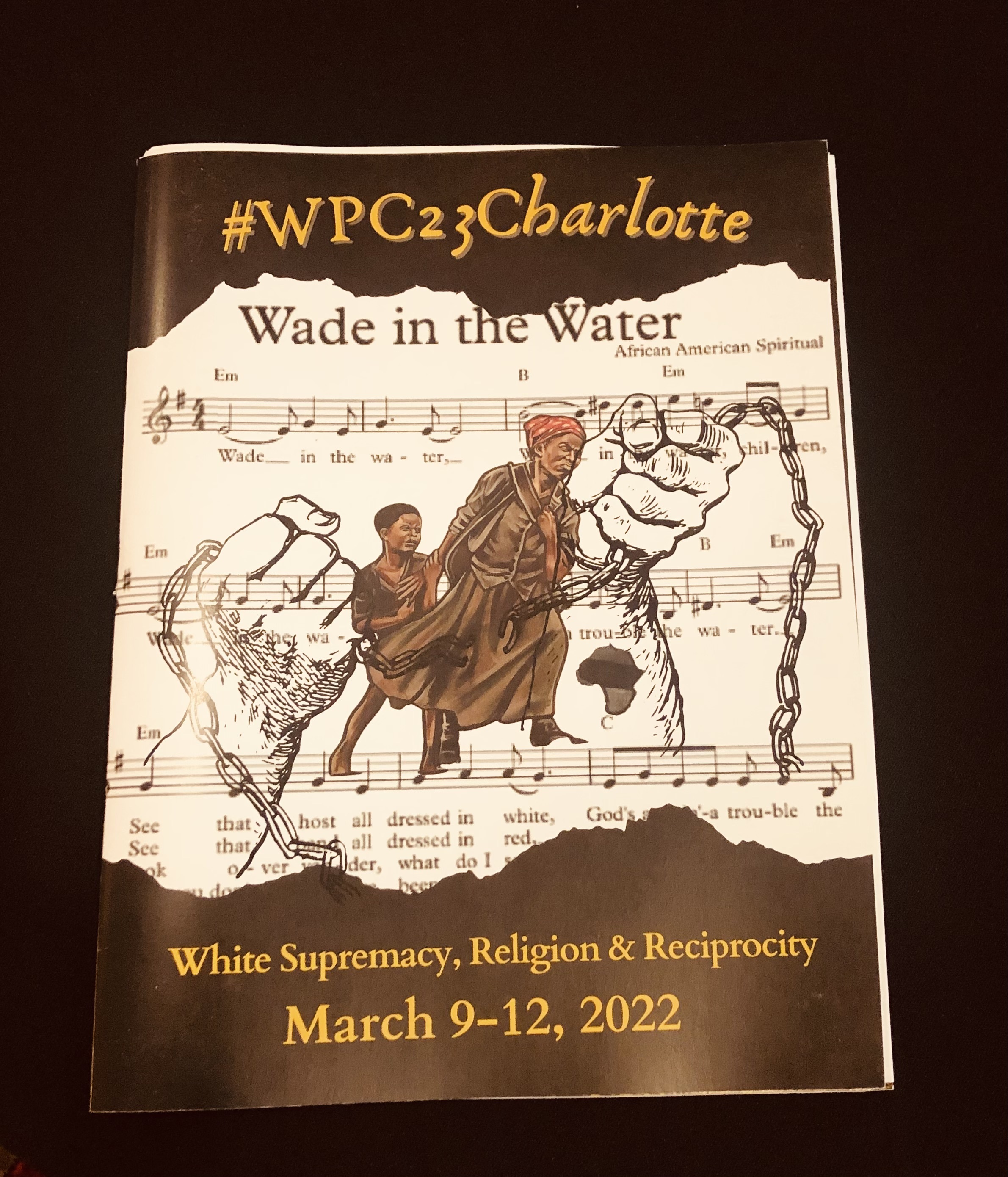
I shared that story at lunch yesterday at the pre-conference event for The National White Privilege Conference which we have been planning for almost three years. For 23 years Dr. Eddie Moore and his team have led this conference throughout the United States, but this is the first time it’s come to the Deep-ish South. Please check it out here. Our theme this year is Wade in the Water: White Supremacy, Religion, and Reciprocity.

If I learn nothing else this week, I learned an important teaching at lunch yesterday. Two women asked me what I said next to the two White men at the breakfast table and I said I was too shocked to say much more.

Not good enough.

We who identify as White are given opportunities every day to interrupt racism and I missed my opportunity that day. I’m not going to moan about it and I’m not going to cry in shame about it. But I am going to try to do better. My lunch friends suggested that next time, I offer this helpful response: “I’d be curious to know . . . “

  • “I’d be curious to know why you think you could use that word.”
  • “I’d be curious to know why you would treat this Pastor this way.”
  • “I’d be curious to know how you could say that word as a Christian.”
  • “I’d be curious to know how you could say that word in front of me as your General Presbyter.”

The hope is that we would express curiosity instead of shock. The hope is that we would come into a conversation with authentic curiosity which also requires more compassion than outrage. The hope is that I might have said something within ear shot of that Black Pastor so that he might know I won’t let that word go without addressing it.

Every day we hear comments that hurt and violate people that the dominant demographic tend to “otherize.” Black people, Asian people, LGBTQ+ people, people with disabilities, people who are not Christian. We can do better.

Let’s stop being shocked and subsequently paralyzed. Let’s be curious. Also – no more White tears.

Thank you Christie and Melanie

Sharing Pastors, Buildings, Vision

We all want to have our own. Maybe it’s an American thing. I don’t know.

As the Institutional Church shifts and fewer people participate in person and resources are limited (or we think they are) it’s a good time to discern what Big Changes might be in our future.

What would you be willing to do to help your congregation thrive?

  • Would you be willing to share a pastor with another congregation?
  • Would you be willing to share your church campus with another congregation?

Where I live, there are congregations that do great ministry in their communities but they can no longer afford a full-time pastor. It probably feels like a death sentence to admit that they can only call a part-time Shepherd. But would you rather close your church or share a pastor with another congregation?

This is the choice some of our congregations will need to make in 2022.

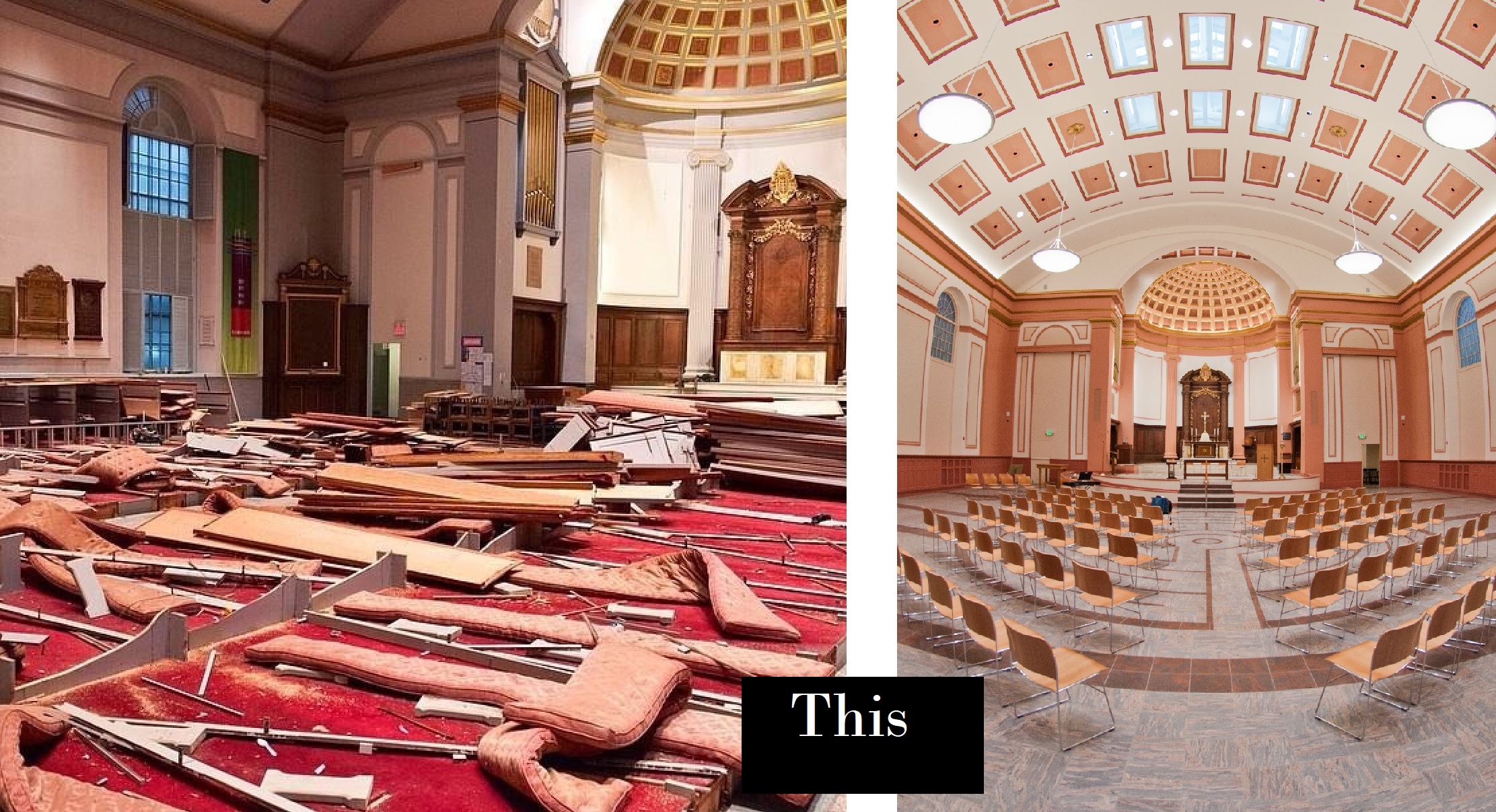
Where I live, there are congregations with large buildings and extra space, and they can no longer afford what it costs to keep that building that used to serve a congregation of 500 when now the congregation numbers about 80. What if that church shared their building with another congregation? Would you rather close your church or share your property with another congregation?

This is the choice some of our congregations will need to make in 2022.

We like to have “our own.” Our own house. Our own car. Our own children. Our own grandchildren. But imagine how our rich life might be if we shared? The future might well involve more shared housing and more shared transportation. While we might have family by blood and adoption and marriage near us, we are also blessed with chosen family who are related to us only by God’s grace.

We teach little children to share and – as adults – many of us share our resources to support everything from universities and colleges to public television and radio to people in need of homes, medical treatment, and food. Why is it so different to share leadership and space?

This might be a good conversation to have within our congregations. Could we undergird our church’s community impact by sharing a pastor with another church? Could we double the usefulness of our building as a tool for ministry by sharing it with another church? Would we?

(Note: I’m not talking about being a landlord. I’m talking about true partnerships.)

These are not conversations about desperation. These are conversations about exciting possibilities. What can you envision? What would you be willing to do to help your congregation thrive?

Image source.

One (Mainline) Church. Multiple Campuses.

Lots of non-denominational congregations have multiple campuses to the point that they become their own denomination. In the city where I live, examples include Forest Hill Church and Elevation Church. There are four Forest Hill locations in Charlotte, one just over the NC border in SC, and one just outside Charlotte out “in the country.” Elevation has five locations in Charlotte plus additional locations from Florida to Canada. They all share common beliefs about their faith and have lots of pastors, programs, and people.

I am part of a denomination once known as a mainline church in that we are part of the earliest Christian groups to come to what would become the United States starting in the 1600s, helping to form this country. We are the Presbyterians, the Episcopalians, the Lutherans, the Methodists, the Disciples of Christ, and the Congregationalists. Our people hailed from northern Europe for the most part and we were mostly White.

Things have changed. Sort of. These days “Mainline Protestant Christians” and “Evangelical Christians” are often considered mutually exclusive although I would call myself a Mainline Protestant Evangelical Christian who is very progressive on some things and kind of conservative on some things. But that’s just me. People of faith are easily pegged but it’s unfair to do so. Most Black Protestants are part of Mainline denominations or denominations that are offshoots although I know lots of Evangelical Black Presbyterians.

But I digress.

I serve 93 congregations in seven counties as a “mid-council leader.” These congregations are small and large, urban and rural, “conservative” and “liberal” and also a mixture of both. Each congregation has it’s own governing board and it’s own budget and it’s own mission and ministry. Like “non-denominational churches” we have a shared set of beliefs based on scripture and historic creeds. We all love Jesus in our own ways – although some of us talk more openly about it than others.

What if we saw these 93 congregations as one Church with 93 campuses?

Seriously. Imagine this. While each congregation had it’s own location and leadership, there would be more of a sense of cross-pollination which – frankly – has been one of the blessings of COVID. During these past two years, I’ve seen:

  • Members of “East Church on the Hill” and “Church with the Red Barn” participate in Zoom Bible Studies and Book Discussion Groups over at “Third Church in the Suburbs.”
  • People worshipping with a variety of different congregations on a given Sunday via live-streaming.
  • Congregations partnering together for special worship events, small groups and youth programs.
  • Lots of pulpit exchanges and guest preachers from the variety of congregations in our Presbytery.

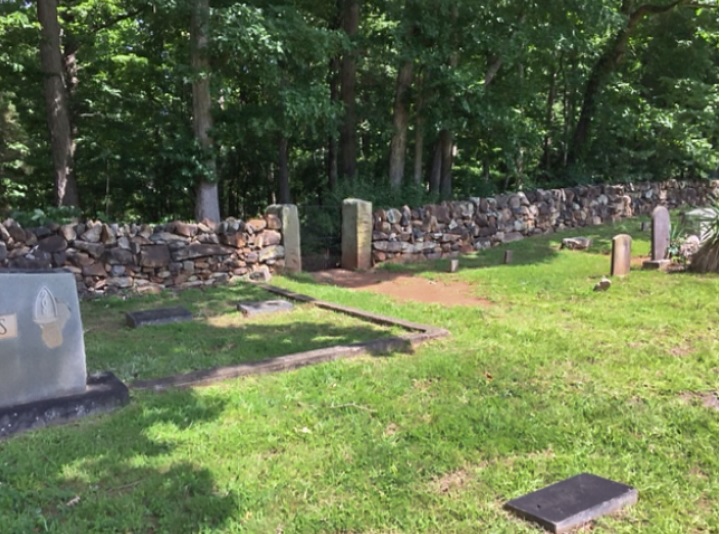
One of the benefits of being A Connectional Church is that we partner together to do what we cannot do as individual congregations. Over the past year, I’ve witnessed a large congregation replace the roof of a small congregation making it possible for that small congregation to return to their sanctuary for Christmas Eve. I’ve seen participants from at least six congregations join together to clear out an historic cemetery. I’ve watched multiple youth groups work together to build a Habitat House. I’ve marveled at the mass collection of supplies for victims of natural disasters and seen multiple congregations join to help new refugees from Afghanistan find homes and jobs.

Ministry is not about making a name for our particular branch of faith or our individual congregations. It’s not about competing with our neighboring congregations. It’s about serving the people God loves. (That would be all people, especially the broken ones.)

Yes, we have different campuses. The particular Church I serve has 93 of them. But all of us are on the same mission: to heal the dispirited, to make disciples, to worship the One who created us.

Imagine if we saw ourselves as One Church.

Image of just a few of the campuses of The Church known as Charlotte Presbytery. Friendly reminder: the church is not a building. We just use buildings as places for The Church to gather.

Basketball, Shame, and Jesus

There was a basketball game over the weekend. The unlikely victors defeated a team coached by the winningest coach in NCAA history at his last home game. My hope is that we were all good sports and yet I admit before you and God that sometimes I am not.

My first memory of hate involves NCAA basketball.

The year was 1971 and it happened to be my 15th birthday. The University of North Carolina and the University of South Carolina were playing in the NCAA Atlantic Coast Conference finals.

USC was #6 in the nation, coached by Frank McGuire who had committed the unforgivable basketball sin of leaving one school in the ACC to coach at a rival school in the ACC. UNC was #11 in the nation, coached by Dean Smith who had been McGuire’s assistant but was now in his tenth year as Head Coach in Chapel Hill.

It was a dirty game.

Even USC fans admit that their talented point guard John Roche was mean and nasty. He had a resting scowl face and he was quick to kick, punch, and elbow his opponents while referees often missed it. He seemed to be a bully off-court too. I deeply hated him.

South Carolina prevailed 52-51 over North Carolina that day in 1971 and it was bitter. The bully won.

And then – in an act of humility and authentic good sportsmanship in spite of 40 minutes of questionable officiating, Coach Smith directed each of his players to line up and shake the hands of each of their South Carolina opponents. John Roche refused to shake the hands of the North Carolina players or coaches. He wouldn’t shake anyone’s hand but instead smirked and laughed at the Tarheels.

I can still feel my insides seething when I recall that day. I hated John Roche with a burning hatred. The smugness. The disdain. The terrible sportsmanship.

The bad guy who did the sign of the cross before hitting free throws. How dare he call on Jesus’ name.

It infuriated me worse than any feeling I’ve ever felt for Duke – and there are many of us who grew up with strong feelings about Duke including a high school classmate of mine who wrote the seminal book about it. (The Blythe family also sat behind us in church.)

During Lents past and especially when I read the accounts of Jesus’ betrayal and shameful death, I remembered John Roche at the 1971 ACC Finals. It was the closest thing I could get to experiencing utter betrayal and bitter contempt.

[Note: clearly my life was and has been unspeakably easy if my deepest experience of shame and betrayal involved a basketball player I’d never met. But again, John Roche taught me about what treachery and contempt felt like.]

March Madness always falls during Lent and that makes sense to me if you are a college basketball fan. Yes, it’s just a game and it’s also about heroism and honor and teamwork and self-sacrifice. It’s about stories of redemption and stories of grace.

I love March Madness. And I love that God can even use basketball to teach us what sin looks like.

Image of John Roche, point guard for the University of South Carolina in 1971. And congratulations to Coach K who finishes up an extraordinary career at Duke University where he is currently the winningest coach in NCAA history.

Leadership and Keeping Up

Note: This is not a post about 1) Toxic Busy-ness, 2) The Kardashians, or 3) Frantic Anxiety about Falling Behind.

This is a post about Keeping Up for the sake of the Gospel.

When I was traveling for two years with a church gig, one of my handlers (the person who picked me up and made sure I got to where I was supposed to be) was driving me to a meeting. Once he got onto the highway, he merged into particular lane created for people with more than one person in the car.

We call this the HOV lane,” he said, “And it stands for ‘high occupancy vehicle.'”

He didn’t offer this explanation s-l-o-w-l-y as if I was intellectually challenged. He said it matter-of-factly as if this was a bit of information that was simply not well-known. This man was younger than I was.

I thanked him and shared that I had lived in the DC area with lots of HOV lanes.

And then he told me about some of the churches in their Presbytery. He shared that one of their churches had a tutoring program and he expressed that fact with an exclamation mark, as if tutoring programs were rare or unique in churches. He mentioned that another church was thinking about starting a computer training program. This was 2018.

Again, a computer training program is neither rare nor unique on church campuses. But they were new to that leader. And as we drove together it was clear that he was also unfamiliar with churches who welcome refugees, host after-school programs, and take mission trips. He mentioned all those ministries as if he’d just heard that they happen, when actually most of the thriving congregations I know of all faiths offer similar ministries. This lovely elder who had offered to drive around was simply unaware of what was going on in his own community.

Imagine if a church person came up to you and said, “There’s this thing they do in St. Dymphna’s Church down the street called Lent. We should try that.”

One of the things I notice in many of our churches is that we are slow to learn new things. We hear that there’s a new resource called Nooma videos and while we are pumped to try this new resource, we don’t realize that Rob Bell created Nooma videos in 2002. We wonder if we should introduce “contemporary music” to worship although much of what we call “contemporary” is 40 years old.

Speaking as a late bloomer who is often the last to know, I offer this word to my colleagues in ministry: please let’s hone our tools. Read secular materials to see what cool things are happening in other organizations and ponder how we might benefit from new ways of thinking. Read through the latest editions of Fast Company, Wired, and the HBR if you are pondering entrepreneurial shifts. For ordinary trends read Monocle, Riposte, and Positive News. Read poetry. Listen to podcasts that your kids recommend. Attend conferences that you’ve never attended before.

One of the common questions parishioners ask me is about encouraging their pastors to work on their preaching, pastoral care, leadership skills. Especially when a pastor’s been at it for over a decade – much less several – we don’t think we need to upgrade our proficiencies. Several times a year, I’m asked by a different church leader, “How do we tell our pastor (who thinks he’s good preacher) that he needs to attend a preaching conference?” And I’m not talking about criticism from the parishioner who is still furious at the pastor for something that happened in the 1990s. I’m talking about what happens when the leaders of a congregation all agree that their pastor could use some coaching on better ways to moderate a meeting or offer authentic pastoral care.

Leaders: if we believe in lifelong learning, this is the perfect season to venture into some new skill set building. It’s not about keeping up with every cultural icon or racing to attend every cool event. It’s about breathing different air, seeing with new eyes, staring into space and letting the Spirit speak. Ask people you trust what you need to do to be a better leader. And then do that thing.

We have too many leaders who are okay with coasting on the big things while being busy with a million little things. May Lent be a season when we can breathe deeply and ponder the big things, perhaps prompted by what’s going on over at The Creative Independent.

Note: We need you and you need to be at The National White Privilege Conference here in Charlotte next week: March 9-12, especially if you indeed want to grapple with new things. Info and registration here. Deadline for registration is March 7.

Dust

You are dust and to dust you will return.

Today there will be Ash Wednesday church services and drive-through Imposition of Ashes throughout the land, and depending on where we live, we might see a lot of people with ash-smudged foreheads or we might not see a single person with ash marks. The secular might pull the devout aside and whisper, “Hey there’s something on your forehead” not knowing that this is an intentional mark of penitence and mortality often worn by Christians on the first day of Lent.

You are dust and to dust you will return.

Most of us don’t tell our children they are dust. We want our children to believe they are amazing and exceptional and able to leap tall buildings in a single bound.

Some of us adults possibly feel like we dwell in a suffocating ash heap. We don’t need a priest to tell us that we are dust and to dust we will return. We get it. We have swings of hopelessness. We continue to endure COVID-brain, COVID-appetite, COVID-fatigue. COVID-crankiness. We fight our neighbor over masks and vaccines. We will threaten our children’s teachers if they don’t listen to us Parents.

What does it mean – today – to have someone mark us with a cross of ashes on our foreheads and say, “You are dust and to dust you will return” ? Do we respond with “Duh. What else is new?” Do we feel even worse about ourselves? I hope this isn’t the case.

Not all dust is created equal.

  • Dust bunnies live under the sofa and they grow if not vacuumed up.
  • Furniture dust – if left long enough on the dining room table – can be written or drawn upon.

These forms of dust are uninspiring and allergy-provoking.

But then there is cosmic dust. Star dust. The dust of creation.

God created us in the beginning out of the kind of dust from which a universe could be molded and formed. And after we live this life, something mysterious happens that we can only imagine. We return to dust, but I get the idea that this is not a terrible thing.

Jesus died for these things: love, hope, deep peace, justice, freedom. When we find ourselves overwhelmed by the ash heaps of life, maybe it helps to reframe the dust from which we come and to which we will return.

Maybe it’s star dust.

Image of interstellar dust.

Little Gestures that Heal

Lord, oh the Great and Almighty, protect our beloved Ukraine,

Bless her with freedom and light of your holy rays.

With learning and knowledge enlighten us, your children small,

In love pure and everlasting let us, oh Lord, grow.

We pray, oh Lord Almighty, protect our beloved Ukraine,

Grant our people and country all your kindness and grace.

Bless us with freedom, bless us with wisdom, guide into kind world,

Bless us, oh Lord, with good fortune for ever and evermore.

SNL’s cold open over the weekend was a hymn sung by The Ukrainian Chorus Dumka of New York (lyrics above.)

This was a choice the writers didn’t have to make. They could have gone with a satire about Putin or a Lonely Island video about Chernobyl. It could have been funny because – Lord knows – we need funny. But they went with healing.

It was healing in the same way the cold open was healing on December 15, 2012 – the Saturday night after the Sandy Hook massacre when a children’s chorus sang Silent Night.

I attended a stirring funeral service over the weekend and among the takeaways is that most of us send sympathy cards that offer our thoughts and prayers. Much has been said about the cliche of “thoughts and prayers” over the past years.

Everytime there’s a school shooting or a immigration catastrophe or a flood, we routinely offer them and then nothing much changes.

Someone eulogized at the same funeral that we show our affection and empathy by doing more than thinking and praying with our brains. Sharing food, making a phone call, and visiting on a random Tuesday afternoon infuse us with something holy. There are gestures we can offer that actually bring healing.

The Library of Congress Magazine this month includes an article recently called “The Book That Saved a Life” about a French soldier named Maurice Hamonneau whose life was spared in battle because the book Kim by Rudyard Kipling was in his shirt pocket and it stopped the bulletin. Hamonneau sent the book to Kipling whose own son had recently died in a different battle.

Hamonneau didn’t have to do that. But he did, and it was a healing gesture. The gesture probably helped heal Hamonneau as well as Kipling.

Lent begins this week and imagine a Lenten season where we devote ourselves to simple gestures of healing. What do we have that might bring healing if we gave it to someone else?

An extra coat? A medal? A family treasure? A handwritten letter? I believe that if we made healing gestures a way of life – instead of offering mere thoughts and prayers – the world can indeed be truly healed.