Author Archives: jledmiston

Repeating Lies is a Spiritual Problem

No lies about your neighbor.  Exodus 20:16 in The Message

Scientific American magazine reported about something called the Illusory Truth Effect in December 2019 and it’s part of the ongoing conversation about why there is so much disinformation being spread these days.  From disinformation about vaccines to misinformation about “what the Bible says” it’s not a good time to be a lazy person.  If we hear that Senator X has a zipper problem or Pastor Y misuses her church credit card, we need to dig deeper.  If we hear those rumors more over and over, we need to dig even deeper. From that Scientific American article:

The Washington Post recently reported that there are “more than 350 instances in which [Trump] has repeated a variation of the same claim at least three times.” In fact, Trump has repeated some false claims more than 200 times—for example, his claim that his border wall is being built.

If I tell people over and over again that I was a Rhodes Scholar, I might even start believing it myself.  But it’s not true.  And it’s an easily provable lie.  But if I tell people over and over again that the Pastor of Big Church on the Corner is an ineffective leader, her reputation will be damaged.  And it’s harder to prove or disprove such a comment.

The world is awash in disinformation and misinformation which threatens our democracy, our health, and our souls.

Many people believe that:

  • President Obama is Muslim.  (Note: It would be fine if he happened to be Muslim.  But it’s not true.)
  • Today’s U.S. economy is the best it’s ever been in the history of the United States. (Note: The economy is great. But it’s currently not the best it’s ever been in our history.)
  • “The Wall” is under construction at the Mexican border.  (Note: Photos widely shared of the promised Wall were actually taken of a different wall in Calexico, Calif.  In other sections of the border, new fencing is replacing old fencing contracted prior to President Trump’s election.)

These lies have been repeated so many times that millions of people believe them.  That’s the Illusory Truth Effect: if someone says it over and over again it “becomes true” in the minds of those who keep hearing it.

Unfortunately the lies that millions of people also believe have to do with their inherent worth.  Millions of people are told every day that they are not worth being loved, that if they are loved it’s conditional or transactional.  This is a lie.

Here is the God’s honest truth (and I mean that literally):

Every human being is worthy of unconditional love.  Every skin color. Every gender.  Every orientation.  Every culture.  Every ability. Every religion.  God created each of us worthy of love.  We in the Church need to repeat that fact over and over and over again – not because it is an illusion but because it’s eternally True.

For God so loved the world . . .

Not just white people.  Not just healthy people.  Not just successful people.  Not just Americans.  Not just educated people.

All people.  The world.  This is the Truth and souls are damaged if we fail to live accordingly.  Let’s make a point of spreading this True Information as often as possible.

White Churches: Your Next Pastor Might Not Be White

I think it is one of the tragedies of our nation, one of the shameful
tragedies, that eleven o’clock on Sunday morning is one of the most segregated
hours, if not the most segregated hours, in Christian America. I definitely think
the Christian church should be integrated, and any church that stands against integration and that has a segregated body is standing against the spirit and the teachings of Jesus Christ, and it fails to be a true witness. But this is something that the Church will have to do itself. I don’t think church integration will come through legal processes. I might say that my church is not a segregating church. It’s segregated but not segregating. It would welcome white members. Martin Luther King Jr on Meet the Press April 17, 1960

Someone asked me a couple weeks ago, “How can we get Black People to join our church?”  The people asking were White Christians and they were hoping to become more racially diverse.

The answer to this question is complex, but here are some initial followup questions:

  • Why do you want your congregation to be diverse racially?  Did you hear that diverse congregations are popular with Millennials?  Has it occurred to you that a segregated congregation doesn’t look anything like the kingdom of God?
  • Are People of Color (truly) welcome in your worship services and other events?
  • Do people treat new worshipers – especially people who don’t look like the majority of worshipers in skin color, age, abilities – like rare birds who are stared at and tiptoed around?
  • Is your staff diverse? This is a big one.

Depending on your congregation’s polity, Bishops, Church Elders, Pastor Nominating Committees, and Personnel Committees have the power to interview and hire/call pastors, educators, administrators, and music leaders. Especially when it comes to calling new pastoral leaders, there’s pressure to select a combination of Jesus/Rock Star Pastor.  There is also pressure to select a pastoral leader who will make everybody comfortable.

[Note: Jesus probably made a lot of people uncomfortable and Rock Stars can be divas who prioritize making themselves comfortable.]

If your congregation’s neighborhood is changing, it makes sense to call a pastor who reflects those demographic changes.

If your workplace, your children’s classrooms, and the stores in which you shop are racially diverse, it makes sense to have a church staff that looks like the office, the classroom, and the Target where you and your family spend your time.

Martin Luther King, Jr. said that there are segregated churches and there are segregating churches.  Yes, most of our congregations are racially segregated.  But the great sin is that most of our congregations are also racially segregating.

Image from Thrivent Financial with ideas on how we can serve others on this national holiday.  If nothing else, write a letter of thanks to a first responder, take food to a shelter, or volunteer where needed today.  Thanking God for prophets of justice like Dr. King.

Mike, De’Amon, and Miguel

How comfortable are you feeling right now?  Most of us like to feel comfortable.

And yet I increasingly believe that we learn life’s most important lessons when we are uncomfortable.  And I’m not talking about mattresses and shoes.

I’m talking about embracing uncomfortable situations and having uncomfortable conversations.  This is how we stretch and grow and move forward.  Or we can seek comfort and stay where we are.

The National Gathering of NEXT Church is perennially inspiring, fun, and motivating.  Yes, there have been speakers who jolt us and spark new ideas.  The 2020 National Gathering – in particular – promises to make us uncomfortable.

Yay.

Keynoters Mike Mather, De’Amon Harges, and Miguel de la Torre will make us decidedly uncomfortable in Cincinnati March 2-4, 2020.  And this is very good.

One of the questions Brene Brown asks in her book Daring Greatly when trying to figure out an institution’s culture is this one:

What’s the collective tolerance for discomfort?  Is the discomfort of learning, trying new things, and giving and receiving feedback normalized, or is there a high premium put on comfort (and how does that look)?

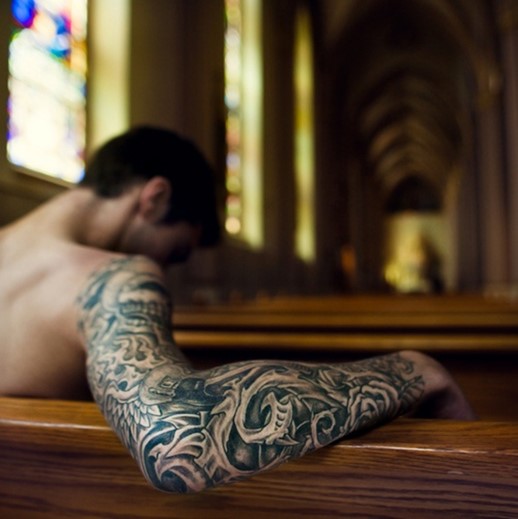
Let’s say you are sitting in a church pew on Sunday morning and a guy comes in wearing a torn t-shirt and he smells bad.  And he sits beside you.  Or there’s a woman you’ve never seen before who sobs throughout the whole worship service.  Do you approach her?  Or there’s a young man clearly dealing with some sort of brain injury who is sitting behind you in worship and he keeps touching your hair.  All these things make us uncomfortable.  All these things are opportunities to love someone.

Spiritual growth is essential for humans and we have a lot of growing to do if we are going to follow Jesus in a tumultuous world.  And it’s going to be uncomfortable, but also holy and worth it.

I hope you consider welcoming some uncomfortable conversations with Mike, De’Amon, and Miguel in March.  Register for NEXT Church here.  It will be holy and worth it.

Image is one I use when talking with congregations about being uncomfortable in church.  How would you feel sitting beside this guy next Sunday?  And what could we learn from him? And what could we learn about ourselves?

Lin-Manuel, Audie, and Ijeoma

I was getting my haircut last Friday and mentioned to my stylist that SBC had met Lin-Manuel Miranda at Freestyle Love Supreme. She gave me a blank stare.

S and I have talked over many haircuts about Lizzo, Fleabag, and podcasts we like.  I also know from these conversations that our backgrounds are different and I enjoy her company (and her salon skills) very much.  Did I mention that we come from different worlds?

S had never heard of Lin-Manuel Miranda much less Freestyle Love Supreme.  When I told her about a story that Audie Cornish has reported on All Things Considered, it was clear that she’d never heard of All Things Considered, much less Audie Cornish.  When she asked me what I’d learned in 2019, I told her I loved So You Want to Talk About Race by Ijeoma Oluo and I was looking forward to the Just Mercy movie.  More blank stares.

You know you live in a bubble when everything you reference in a single conversation sounds like a foreign language to other people in the conversation.

“Everybody” I know can identify Lin-Manuel Miranda (and recognizes the lyrics to Hamilton.)  “Everybody” I know listens to All Things Considered (and Morning Edition and Wait, Wait Don’t Tell Me.)  “Everybody” I know has read So You Want to Talk About Race (and The New Jim Crow and I’m Still Here and Just Mercy.)

I need to get out more.

One of the reasons our nation is so divided is because many of us live in bubbles.  We judge those who aren’t as – whatever – as we are.  And the truth is that all of us are ignorant about other people’s culture.

True Confession: I had never heard of Jason Aldean until the Las Vegas Shooting in 2017.

I know nothing about hunting and fishing except what I’ve learned from my father-in-law.  I know nothing about Pakistani food except what I’ve learned from my daughter-in-law.  I know nothing about parrots except what I’ve learned from one of my colleagues.

I know nothing about many, many things.

If we hope to heal the divisions in our nation, our families, our neighborhoods, we need to listen to people who know things we don’t know.  We need to appreciate different kinds of knowledge.  We need to be gracious in the presence of people whose opinions are the opposite of our opinions.

Lin-Manuel Miranda is a is an American composer, lyricist, singer, actor, producer, and playwright, widely known for creating and starring in the Broadway musicals In the Heights and Hamilton.*  My SBC met him recently.  It was pretty cool.

Image from Freestyle Love Supreme.  From left to right: Chris Sullivan, Anthony Veneziale, Christopher Jackson, Utkarsh Ambudkar, Bill Sherman and Lin-Manuel Miranda.

*From Wikipedia

Meghan and Harry

Notice how we call them by their first names as if we know them/they’ve become like other First Name Only celebrities.

We in the former colonies don’t generally get what it means to “be a royal” although we seem to love the weddings.  Do we care because they are celebrities?  Do we care because we wish fairy tales were true?

The New York Times has published five pieces about Meghan and Harry in less than a week so The Gray Lady clearly cares.  But the most important article about them was written last week by Afua Hirsch: Black Britons Know Why Meghan Markle Wants Out.

The couple have been referred to as:

  • “A Breath of Fresh Air”
  • “Rogue Royals”
  • “Turncoats”
  • “Selfish”
  • “Victims”
  • “Victimizers”
  • “Adults Who Deserve to Live Their Own Lives” . . .

and countless other epithets, titles, and characterizations.  It’s interesting that so many people have so many comments.  But racism is the new feature in this royal story.

It’s not merely the “straight out of Compton” comment or the one about baby Archie looking like a chimpanzee.  Racism is usually coded more subtly.  We Western White People in the United States are everyday racists in the way we assume that People of Color live in poor urban neighborhoods and are inherently dangerous.  We make racist comments without even realizing it.  I know I do.

And it must be a nightmare to be followed around everywhere you go. Adele, Drake, and Cher understand this kind of imprisonment, but being “royal” ratchets it up beyond our imagination.  And being a person of mixed race who married the ginger prince feels suffocating even as an observer.

Royal news is a blessed distraction from global disasters and our own political divides.  You know what else is a distraction?  Judging people based on their skin color which has been – sinfully – not just a distraction but a policy in the United States of America.

Leave Meghan and Harry to do what they need to do.  Instead let’s focus on dismantling the everyday racism. I know I personally have a lot of work to do.

Image of Meghan Markle aka The Duchess of Sussex.

Ruth

Many people don’t get family matriarchs.  There’s no homestead to pass from generation to generation.  There’s no special tea cup or piece of jewelry.  There might not even be stories.  (Note: The NY Times shared news of the death of a local “star of New York Real Estate” last week and – as it turns out – her fabulous life story was a lie.)

Ruth Edmiston Hunter’s life was not a lie.  It was truly special and well-lived. And last Wednesday, January 8 her baptism was made complete.

Other cousins reminded me over the weekend that Ruth was the first of the fourteen grandchildren of Victor Chalmers Edmiston and Jane May Gray – my great-grandparents.  This also means that she was the oldest great grandchild of Samuel Edmiston who died at Antietam fighting for the Confederate Army.  There was also a Samuel Edmiston from Pennsylvania who fought at Antietam for the Union Army.  Every war is simple and every war is complicated in its own way.

Ruth was a woman of valor and an accomplished leader of other women.  She graduated from Queens College in Charlotte in the middle of World War II and she served Queens post-graduation in numerous capacities including the Board of Trustees.  She was a longtime member of Steele Creek Presbyterian Church and she will join her husband on the grounds there in death.  Or at least her body will be there.

I have no idea how heaven works exactly but it moved me to tears to imagine the holy reunion with those who have gone before her.  She outlived her parents, of course, but she also outlived her husband, her siblings and each of her ten first cousins.  I’m a little jealous that she gets to see them again however God makes that happen.

In addition to her many accomplishments as an adult, Ruth played Fanny in the Mt Ulla Elementary School’s musical presentation of Christmas with the Old Woman Who Lived in a Shoe. Included in the cast were her aunt Annie Lou and her cousins John and Sam.

Re-reading the program for that children’s performance, I’m reminded that there was no one left who remembered Ruth as a little girl.  There was no one left who was present at her baptism.  I wonder what that feels like and I pray she was not lonely being the oldest person in her family tree.

I’m deeply grateful that God shared Ruth with us for almost 99 years.

Here’s to the matriarchs and patriarchs of our lives.  Let’s use our days well this week.

Image of Ruth Edmiston Hunter my first cousin, once removed.

Access to Bliss

Who doesn’t love being in a state of bliss?

When we live frantically, our blissful moments are easily overlooked and under appreciated. And yet the slow chewing of a perfect piece of chocolate or the sweet intimacy between partners or the deep ecstasy of noticing a bluebird on a slow walk has cathartic properties.  My therapist recently mentioned something about my “access to bliss” and I’ve decided I’d like to increase my access.  It’s not about accumulating more chocolate.  It’s about appreciating the chocolate.

“One of the quickest pathways to bliss is to experience a life-threatening illness.  All of a sudden life’s sweetness and tragedy unfurl before us.  When we hear that we may only have a short time to live, life seems especially precious.”  Women Rowing North: Navigating Life’s Currents and Flourishing As We Age by Mary Pipher

Bliss happens when a sick child has a really good day.  Bliss happens when the test results show no more cancer.  Bliss happens when there’s a death sentence reprieve.

It occurs to me that there are millions of people in the world who live with such a high misery quotient that they have virtually no access to bliss.  They live in refugee camps or detention centers.  They are trapped in broken bodies with clear minds.  They have no hope and no reason to be hopeful.  They have lost almost everything after a flood or fire or storm.

On this Friday full of possibilities, how can we offer someone easy access to bliss?  Seeing those who need it is the first step.

Labels (and How They Mess With the Spirit of God)

I like the wine and not the label.  Does that make sense?

I was re-watching the red wine/white wine scene in a previous season of Schitt’s Creek and thinking about labels the other day.  Especially in Church, we are good at labeling.  I know I am.

I always thought this character – David – was goofy and vain.  But this scene taught me that he is also confident and comfortable in his own skin.

Labeling messes with God’s creation.

Where I work we have “black churches” and “white churches.”  We label people to be poor, rich, strong, weak, old, young.  Young colleagues referred to me as “a crone” once about ten years ago and it broke my heart a little bit. They meant it as a compliment but my brain pictured this.

Maybe because Church is an organization, we organize the people  We lump them together as:

  • The choir members
  • The Church ladies
  • The legacy members
  • The homebound
  • The nominal members
  • The big givers

There is nothing wrong with descriptors, but each of us is more than one thing.

A post against labeling might seem trite, but how we see people determines how spiritually healthy our congregations are.  I hear churches tell me that they are a “small church” or a “poor church” as if it sums up the whole of who they are.  It doesn’t.

We are rich with diversity even if we look alike.

I have been told by Pastor Nominating Committees the following:

  • He seems to be great but we aren’t ready to call a gay pastor.  People will think we are A Gay Church.
  • We aren’t ready for a black pastor (on our all white church staff.)  In fact, it would mostly be hard for him.
  • We aren’t looking for an woman pastor.

We really limit the power of God, don’t we?  Sometimes the people we label negatively or say “we aren’t yet ready for them” are – possibly – the ones God is sending our way.  We might like the idea of calling a pastor who will stretch our souls and our understanding of who is supposed to lead us, but when it comes down to it, we stick with safe choices/what’s we’ve always done before.

I’d bet that congregations with a low incidence of labeling tend to be growing congregations.  That teenager with braces?  They might be an excellent deacon.  That person who doesn’t say much?  They might have a lot to say on the governing board.  The outcasts?  The fringe people?  The queer ones?  (See – I’m even labeling them here.)  All might be the perfect souls to visit people in the hospital or run the next community dinner or play an instrument in worship.

Relationships help us overcome labeling people as any one thing.  And maybe God is telling us that – ready or not – the people we consider least likely to lead (because we have labeled them least likely) are the ones God is choosing.  None of us is any one thing.

Image of Schitt’s Creek’s David (Dan Levy) and Stevie (Emily Hampshire) in the wine aisle. 

What Works in 21st Century Ministry: It Depends

It used to be true in my denomination (and it’s still true in some denominations) that every seminarian was required to follow the exact same path to ordination and every congregation was required to follow the exact same path to find a new pastor and every pastor was expected to be like every other pastor.  Although there are still many “shalls” in my denomination’s Constitution, there are more “ordinarily-s” and this is a good thing.

  • Should seminarians be required to take Clinical Pastoral Education? It depends. CPE is great for discovering insights about ourselves, for practicing our bedside manner and for familiarizing ourselves with Hospital World.  But if you’ve worked as a registered nurse for ten years prior to seminary, you might not need CPE.
  • Should an Interim/Transitional Pastor become the “Permanent” Pastor ? It depends.  There might be a situation in which allowing the “Temporary” Pastor to become the “Permanent Pastor” is the healthiest decision for a congregation.
  • Should a congregation sell its building and set up their ministry in a storefront? It depends.  Maybe that storefront location will expand their ability to be the Church in the world. Or maybe not.

The route to thriving 21st Century Ministry is all about health: What best nourishes each future or current pastor?  What’s the healthiest path for a congregation taking into account its current situation?

What’s healthy for one congregation is unhealthy for another.  And who gets to make these calls?

In my denomination, everything is done by committee.  There are committees who walk alongside seminarians.  There are committees who walk alongside congregations in transition.  And here’s the thing:

We can’t know what’s healthy for a seminarian or a pastor or a congregation unless we have authentic relationships with them.

It’s obnoxious and audacious for me to counsel somebody if I don’t know them.  And so – congregations – this is the beauty of denominations working together to help you thrive and be the church you were created to be.  Seminarians: we want you to be the best prepared spiritual leaders possible.  We don’t know what God has in store for you, but we want you to be ready for it.

This is about trust.  This is about connectedness.  This is about relationships.

This is what’s required in the 21st Century Church.

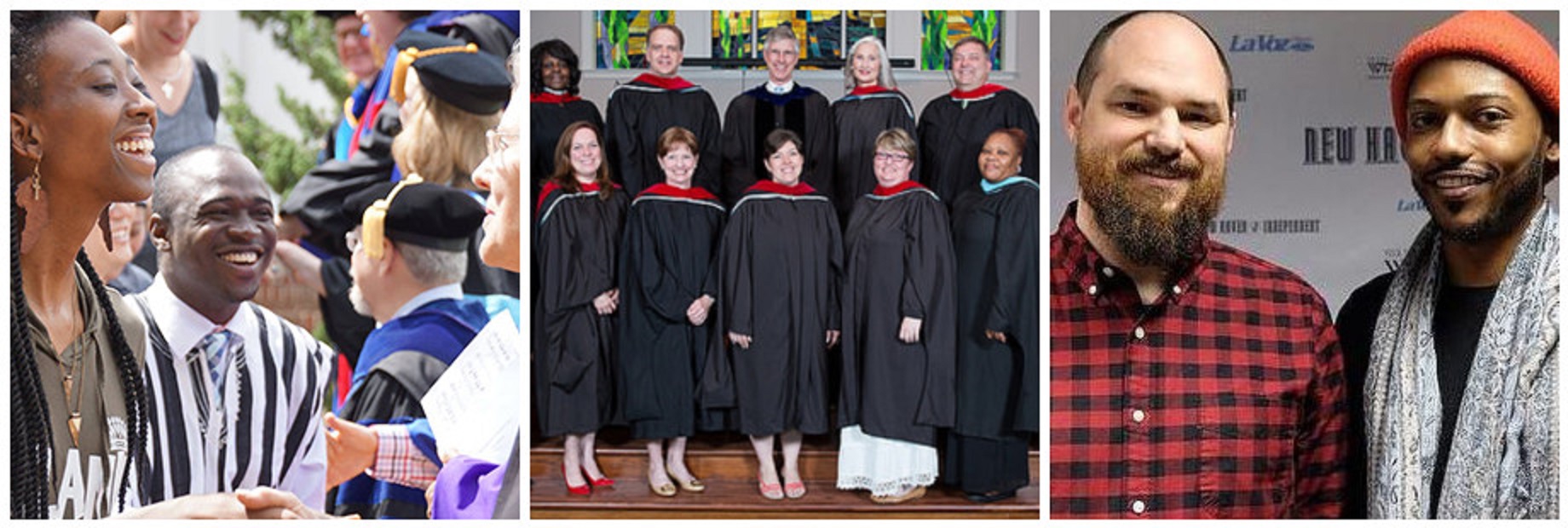
Would the pastors pictured above be good for your congregation?  It depends.

Images from Left to Right are from the websites of Columbia Theological Seminary in Decatur, GA, Union Presbyterian Theological Seminary at Charlotte – Graduation 2019, and Andover Newton Theological Seminary at Yale.

Magic Jesus?

‘Lord, if you had been here, my brother would not have died.’ John 11:21

Many – if not most of us – treat God like Santa.  We act as if there’s a cosmic quid pro quo, and yes, sometimes karma is a thing.

But even a cursory read of the Bible reminds us that this is not always how it works.  God will not save a dying child just because I beg for it.  God does not cure your cancer if you worship more regularly.  God doesn’t not strike down my enemies, even if I double my financial giving.  God is not Santa.  God is not magic.

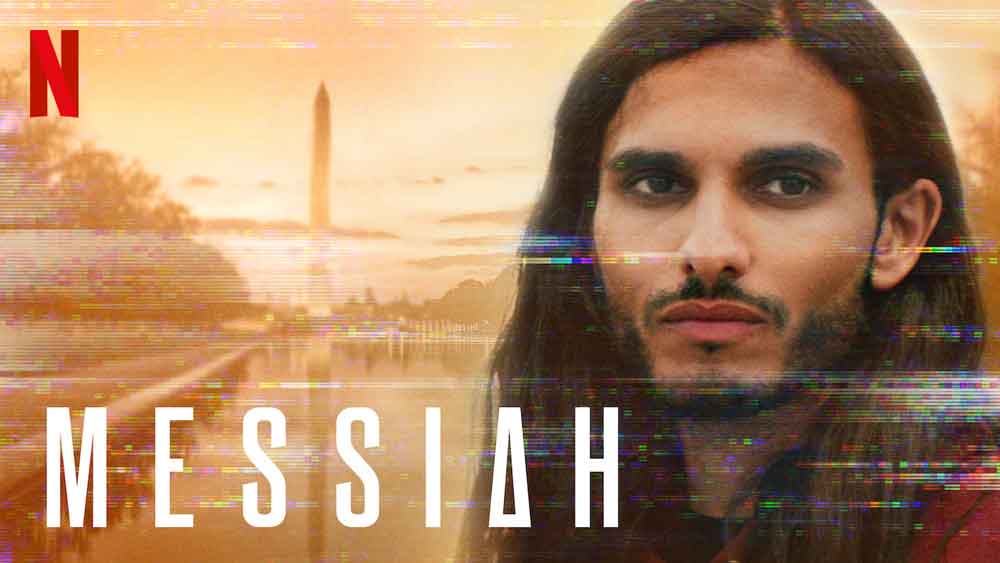
Although it feels like a guilty pleasure, I loved bingeing on Netflix’s Messiah last weekend.  In a nutshell, it’s the 21st Century and there’s a charismatic spiritual leader born in the Middle East who seems to perform miracles, or maybe he’s a con man or insane.  Sound familiar? He is called Al-Masih (“the messiah” in Arabic.)  Also the CIA and Mossad are involved.

Some believe that he’s the Second Coming of Jesus.  Some believe he’s the First Coming of the Savior.  Some believe he’s a mesmerizing human being with a clinical Messiah Complex.  Some believe he’s a gifted scam artist.  We will have to wait until Season 2 to find out the truth.

Spoiler Alert:  There’s a moment when it looks like Al-Masih is going to heal a child’s dying dog but instead he allows the dog to die which confuses and devastates the boy.  The point is that “The Messiah” is not a magician who fulfills our every wish.  Al-Masih is “serving God’s will” which is not the same as our will.

Although this is an imperfect series (and some Hate. It.) I appreciate the reminder that God’s ways are not our ways – something God says through the Hebrew prophets – but we tend to ignore/forget/wish it wasn’t true.

God doesn’t fix things the way we want them to be fixed.  This is really important to remember as a person who is trying to follow Jesus.

Jesus came to show us what the love of God looks like so that we might carry on and try to do the same.  The message of Jesus saves us but not in the ways we might think.  Human beings will continue to suffer illness and tragedy.  We will all endure measures of pain and we will all die.  And yet faith comes into play in the thick of all that.  Living in mystery is part of God’s plan – at least for now.

Some of us will be cured.  All of us can be healed.  It’s part of the mystery.

Being present and compassionate with each other is part of our life’s purpose.  I, for one, believe this happens best in the context of church, but the truth is that some churches do more harm than good.  Some teach heresy.  Some make everything about themselves.

And yet God will be God no matter how badly we misunderstand.  If we are serious about living out our human purpose, we will try to understand using tools like spiritual relationships, prayer, service, and gratitude.  If you can develop those tools apart from a community of faith, you are exceptional.  Most of us need to be held accountable in a church, synagogue, mosque, ashram, monastery, kibbutz, or small group.

I’d love to hear what you think about this series.  Love it? Hate it? Feels like Real Housewives of Dilley, TX?

Image from Netflix.