Category Archives: Uncategorized

I Heart Weekends

brunch ny timesI have a very clear memory of My Last Weekend As a Church Civilian.

I was 24 years old.  It was the weekend before I started as the Student Pastor in my seminary field education congregation.  I was sitting in a Greek restaurant outside Boston with a friend blissfully consuming my spinach & feta omelet and the Sunday New York Times when it hit me:  this is the last weekend of my life when I will not have Professional Church Responsibilities, required by either my seminary or my future congregation.  Honestly this stark realization almost knocked the wind out of me.

So here I am 35 years later and I still miss weekends.  Sure, there have been vacations, study leave, a sabbatical, sick days, and several months between positions.  But I have worked most weekends for a long time.

Yes, there are many professions that require weekend work from fry cooks to brain surgeons.  And there are the jokes about pastors working only an hour a week and it happens to be Sundays.

But the unrelenting weekend work of pastors is unlike other work.  Even as a Middle Judicatory Staffer (a description of ministry which makes me sound like someone you would never invite to a party) I work weekends.  The wonderful thing is that I can control this in a way that a parish pastor cannot.

I’m coming off of a four-church weekend if you count an all day Presbytery Assembly on Saturday.  But occasionally, there is a weekend when nobody is being ordained or installed, nobody’s retiring, no church is having a congregational meeting or an anniversary, and no pastor is ill.  Those weekends are precious in a way that’s different from a vacation weekend.

Most parish pastors do not have those opportunities.  They are in worship Every Weekend except for – in my denomination – 6 Sundays a year (2 for Continuing Education and 4 for vacation.)

I also know some parish pastors between church calls who come to enjoy their “free weekends” so much that it’s almost painful to go back to working 46 weekends each year.

Everybody needs that soul-refreshing break every week when we can read Every Single Page Of The Sunday Paper if we wish.  Clearly most people on the planet do not get this, but that doesn’t mean we don’t need it.

What would it look like if all pastors got a real weekend at least once a month? I’m imagining a Sunday each month when other leaders (who never went to seminary) were set free to lead worship without the supervision of The Pastor. I’m imagining the resting pastor visiting another congregation to worship without any leadership duties.  I’m imagining equipped volunteers.   I’m imagining pastors picking up interesting ideas from other congregations.  I’m imagining refreshed leaders.

I wish for you and all of us nourishing weekends.  Imagine.

The Need to be Needed (& How It’s Hurting the Church)

One of the worst kept secrets of pastors is that we very much need to be needed. spotlightWe like the attention that comes with a pulpit and a microphone.  It’s fun to be beloved.  We like to fix things or at least we like to believe we can.

Okay that’s actually four secrets.  And what’s also true is that some congregations 1) do not think they need their pastor, 2) mess with the sound system (Note: this is a metaphor), 3) Do not love their pastor, and 4) are beyond anybody’s ability to be fixed.

Sometimes we pastors make ministry about us.  And it’s hurting the church we love.

Among the behaviors that are wrecking things:

  • The pastors who “love us so much” that they not only sit in the surgical waiting room for hours with the parishioner’s family, but they also go with us to our annual exams, x-ray appointments, mammograms, dental surgeries, and colonoscopies.
  • The retired pastors who still live in the town of their former church and meet their longtime friends (aka former parishioners) for coffee every Tuesday.
  • The pastors who insist on attending every church meeting.  (Or the congregation that requires that pastors attend every church meeting.)
  • The pastors who don’t take at least one full day off each week.
  • The pastors who don’t take all their vacation.
  • The pastors who don’t take all their study leave time or spend their continuing education money.
  • The pastors who boast about working 60 hour weeks.
  • The pastors who insist on having everything run by them before being purchased, printed, ordered, assigned, or instituted.

A thriving 21st Century Church is all about giving permission, setting  free, minimizing the hoops to jump through, and teaching the faithful how to pray, lead, serve, and love their neighbors without constant pastoral supervision.

As long as we make our people dependent on us, we might feel important but our congregants will feel spiritually disempowered.  If we love the church we serve, we can’t make it about us.

Free Range

kids playing

I’m thinking that most of us – Democrats and Republicans, Progressives and Conservatives, Denominational People and Non-Denominational People – can agree on the issue of free range children – at least to a point.

I’m not talking about allowing our preschoolers to wander home alone from the library at 9 pm.  I’m talking about kids who who know how to look both ways before crossing the street who need to run and skip and catch guppies and climb trees – sometimes without the watchful eye of adults.

I’m not talking about abandoned kids whose parents drop them off at the zoo to go to work.  (Sadly, that probably happens.)  I’m talking about two siblings – ages ten and six, walking several blocks home after playing in a park on a sunny Sunday afternoon.

All of us of a certain age can recall stories from our childhood of summer days when we left home in the morning and returned in time for dinner having played with our pals all day long.  We rode bikes. We collected rocks.  But then Etan Patz‘ photograph was printed on the side of our milk cartons and people got scared.  And a couple years later the Center for Missing and Exploited Children was established and names like Elizabeth Smart and Jaycee Dugard became familiar.

If you are a parent who’s lost a child even for a minute in Target, you know that it’s terrifying, even after you’ve found them in the Lego aisle.  We’ve been trained to keep a sharp eye.

So what happens to kids who never wander?  Do we turn into overly cautious adults who are slow to explore?  Are we forever to live by fear instead of faith?

I wonder today about Free Range Adults.  They aren’t many.

I know some adults who take risks and explore the world.  They tend to be fresh out of college, privileged enough to have the resources to travel or move to a new city.  But then we settle down and by the time we are middle aged, we become slower to explore.

So what does all this say about the moving of the Spirit – if anything?  I work with wonderful church people who are usually slow to leave their comfort zones.  Maybe we are afraid of wandering too far from what feels like “home” to us.

We forget that the God who created us also called Abram and Esther and Ruth away from all that was familiar to them.  God moved prophets to speak difficult truths to people who didn’t want to hear them.  God took a holy singular personal risk to make an eternal cosmic point.

And so living Free Range with our ears perked up towards the heavens seems like the least we can do.  I believe God is calling us to something that will stretch us beyond our wildest imagination, but we need to be willing to wander a bit.

Is Your Pastor a Tool?

Garden Art by Tadpole Creek CreationsI ask this in the most positive way possible.

The reason our churches have buildings, classrooms, Bibles, coffee makers, printing machines, hymnals, screens, parking lots, playgrounds, flip charts, and all other property is because they are all tools for ministry.  We do not worship them.  We use them to carry out our ministry, to make disciples and to love God and neighbor.

And not only does a pastor have tools for ministry from libraries to to computers to a seminary degree, but we pastors are tools for ministry.  We want to be sharp and effective.

Think of all the different professions that need tools:  cooks, potters, electricians, gardeners, seamstresses, construction workers, teachers, and students.  We pastors metaphorically do the work of ordinary tools.

Imagine:

  • The pastor as aerator bringing fresh air to dry, unhealthy landscapes.
  • The pastor as flashlight bringing light to dark spaces.
  • The pastor as spatula stirring things up as needed.
  • The pastor as hammer offering leverage when a wall needs to be torn down.
  • The pastor as needle patching up what is torn.
  • The pastor as broom cleaning up the debris.

You get the idea.

As I work with so many good pastoral leaders, it’s clear that after many years on the job, we get tired and dull.  Some of us haven’t taken a life-changing continuing education class or retreat (i.e. something to help us “get sharper”) in years.  Some have never had a sabbatical.   I hate to admit this, but some of us haven’t read a new book in a while.

Now more than ever, our spiritual communities need the right tools to do ministry and that includes a strong, well-trained, energetic equipper of the saints – an effective pastor.  If you know a pastor who no longer has the capacity to be effective, there are things we can do to encourage her/him.  Support them in prayer, financial care, and offerings of coaching, counseling, and recovery time. God deserves our very best.

Image source.

Which Seminary Should You Attend?

dunikowska-knocking-on-heavens-door-2004This article by Duff McDonald struck my fancy yesterday regarding “MBA Programs that Get You Where You Want to Go.”  Want to work on Wall Street?  Start a new business selling organic meat? Become a marketing consultant? Instead of Harvard, Wharton, or Kellogg, maybe you should consider Ross, Fuqua, or Sloan.  Or – in the wisdom of my excellent colleague EH, if you want to work in Southern California all your life, maybe you should go to Marshall at USC.  If you want to spend all your years in Maine, an MBA from  Maine Business School (they make it easy) makes sense.

I doubt that most Americans could name a seminary or divinity school.  But for all you The More You Know fans, the Presbyterian Church (U.S.A.) is connected to 12 seminaries.  Among my PCUSA colleagues, there are many graduates of other non-PCUSA related seminaries and divinity schools.  If someone asked me where she should go to seminary, I’m not sure I would ask “What kind of ministry do you want to do?”  I would probably ask “Where do you want to live?”

I went to seminary because of geography.  I also heard from a colleague that he was advised to “go to seminary someplace you’d like to live because you’ll never get to choose where you live again.”  He was a big believer in God calling us to places where we don’t want to go.  Very John 21:18.  Exhibit A:  I never thought I’d ever be living in The Prairie State.  (But now that I’m here, it’s pretty great.)

At the risk of offending my colleagues, I’m going to this whole “Which seminary should you attend?” question a whirl and I’d appreciate your feedback.

If you want do general parish ministry and eat excellent barbecue for 3 years, go to  Austin Presbyterian Theological Seminary – Austin, TX.

If you want to do general parish ministry and make lifelong Southern connections, go to Columbia Theological Seminary – Decatur, GA

If you want the ease of on-line seminary, go to University of Dubuque Theological Seminary – Dubuque, IA

If you want to do general parish ministry and be near The Mother Ship, go to Louisville Presbyterian Theological Seminary – Louisville, KY

If you want to study urban ministry, perhaps in a non-parish setting, go to McCormick Theological Seminary – Chicago, lL

If you want to learn how to start new churches, go to Pittsburgh Theological Seminary – Pittsburgh, PA

If you want special focus on youth ministry and/or be a Senior Pastor, go to Princeton Theological Seminary – Princeton, NJ

If you want general parish experience with added chops in spiritual disciplines, go to San Francisco Theological Seminary – San Anselmo and Pasadena, CA

If you want an historical black church experience (and you can wait because they are not currently offering classes) go to Johnson C. Smith Theological Seminary – Atlanta, GA

If you want general parish education, especially with a focus on Christian Education, go to Union Presbyterian Seminary – Richmond, VA & Charlotte, NC

If you want certificate programs in leadership, and especially training in being a coach, go to Auburn Theological Seminary – NYC

If you want training to serve the church in Puerto Rico, Latin America, or with Spanish-speaking churches in the US, go to Evangelical Seminary of Puerto Rico – San Juan, PR

[Full disclosure: I went to seminary in Boston (where there is no PCUSA seminary) because of a relationship and I took classes at Boston University School of Theology (preaching), Harvard Divinity School (Greek and NT), Gordon Conwell (polity), and Andover-Newton (MDiv & their CPE connections because I planned to be a chaplain as I had never seen a woman in the pulpit.)  I also have a DMin from Columbia Theological Seminary – a PCUSA affiliated institution  – because of their Christian Spirituality program.]

The reality is that the seminary one attends may or may not lead to whatever call one discerns.   “The Big Three”  clergywomen recently called to large urban congregations – Shannon Johnson Kershner, Amy Butler, and Ginger Gaines-Cirelli – are graduates of Columbia Theological Seminary, Wesley Theological Seminary, and Yale Divinity School respectively.  So there.

Clergy – I’d love your feedback on the advice you received about where to go to seminary?  And how did you make your decision?  And did it matter?

Non-clergy – I’d love to hear your assumptions about particular seminaries.  Do you assume all Fuller graduates are conservative?  That all Princeton Seminary graduates are big time?

Image source here.

Thank You Working Fathers

Mosaic St Joseph the workerI joyfully celebrated the Resurrection of Jesus  in a standing room only sanctuary surrounded by babies, toddlers, and their parents last Sunday.  As it happens with babies and toddlers, Attention Needed To Be Paid. There was the little girl with the runny nose. There was the baby who applauded every time the choir sang.  There was the skirmy little guy who needed to be held, then not held, then held again.  There was the baby who needed a new diaper.

Yes, these little ones could have been in the nursery, but they were not for whatever reason.  And towards the end of the service, some parents near me left to go retrieve their children who were in the nursery during worship so that they would be ready for the post-worship Egg Hunt.

So, here’s what I noticed: Most of the parents doing the hands-on duties were dads.

I remember a time when only mothers left worship to change diapers, picked up the baby at the nursery, or kept emergency toys in their pockets.  I have no recollection of my own father changing anybody’s diaper as a father, grandfather, or fun uncle.  Maybe he did, but I never saw it.  What I did see on Sunday were many fathers doing fatherly things:  making puppets out of their fingers, bouncing babies on their shoulders, offering sips from water bottles.

Thank you Working Fathers.

On my commute to work yesterday, I came across this article about working moms and a cool new website called Power to Fly that connects professional women with jobs that allow them to work from home.  Awesome.

But it’s interesting that this website is not also for men. Fathers interested in spending time with their young children and working from home are also seeking similar positions, I would think.  What about married gay dads?  What about single dads?  What about dads who can do their jobs digitally who are married to spouses required to work at construction sites or in operating rooms?

I get that this is a niche market specifically for women looking for this sort of thing, but here’s a plug for working dads:  fathers need this as well.

HH and I shared a single job when our kids were young  – which worked out for us but might not work out for others.  Even when our children were older, HH was always A Working Dad.  He coached lacrosse and drove Brownies and went to PTA events.  It was helpful that he could do some of his work from home.

My point is that there are many working fathers out there who have done what I’ve done as a working mother – parented while trying to balance work from the home and work outside the home.  And don’t get me started about “stay-at-home moms.”  They are obviously Working Moms too even if they do not earn an income.

All engaged parents are working parents.  How can we best support each other in this?

Image is part of a mosaic celebrating the Feast Day of Joseph the Worker ordinarily observed in late April.

Smartphones & Boundaries

Holy Family SelfieAll of us with smartphones are – ostensibly – available 24/7.  This is potentially a soul-sucking reality.

There are some excellent new articles out there about U.S. culture and smartphone usage.   A.A. Gill wrote this  for Vanity Fair which cites an unnamed study reporting  that “speaking into it was the sixth thing (respondents) did with their phone.”  And Pew Research recently shared a detailed report full of fascinating factoids (e.g. 46% of respondents said they couldn’t live without their smartphones.)

I am one of the 46%.  Of course, I could indeed live without my smartphone.  I just don’t want to.

I use my phone for texting, email, directions, photos, weather, time, and reading – not necessarily in that order.  But talking on it is at least the sixth thing I do with my phone.  In fact, on the outgoing voice mail message, I share the fact that I’m most likely to get back to you if you text me your message.  Even my dentist and hair salon text me with appointment reminders.  I appreciate that very much.

But when we love our smartphones, we risk working All The Time.  I’m trying to curb this.

My cell phone number is included in the clunky institutional directory available to all ruling and teaching elders with whom I work.  I personally share that number with church people who need to reach me for an emergency.  But my cell phone is my home number and I’m trying to remember that your cell phone is your home number.  Call me Old School, but I’m trying to hone those communication boundaries by encouraging people to contact me via my office voice mail and email.

[Note:  if you are my friend as well as my colleague, text away.  We need to meet for coffee/drinks/donuts/therapy and texting is the way to go.  Yes, the boundaries between work and non-work are fluid.  We know each other well enough keep good boundaries or to hold each other accountable when we don’t.]

But what about non-emergency church related questions that come to us via cell phone text, Facebook message, Twitter or other social media venue?  For a long time, I have answered those questions even though they were possibly interrupting my perusal of family photos or linking to interesting articles.  As a boundary-challenged pastor, I have always wanted to be helpful, even at three in the morning.  I grew up in the South to be nice.  Always.

Nevertheless I have started a simple yet (for me) life-changing practice.  When I receive a non-emergency text or message I make myself respond this way:

“Let’s do this via my office phone or office email.”

Sounds pretty tame, doesn’t it?  But it’s changing my life.

Pacing ourselves is a spiritual practice just like honoring a Sabbath Day. Keeping social media boundaries makes for a healthier spiritual life as well.  I’d love to hear about how you handle this.

Image source here.

A Successful Easter!

packed churchTo all my friends who made Easter meaningful in our congregations yesterday,
thank you. All you preachers, liturgists, musicians, singers, teachers, ushers, lily arrangers, hot cross bun bakers, and plastic egg-fillers – bless you.  Now you can rest.  Sort of.

There was an excellent strand of comments on  RevGalBlogPals’ Facebook page over the weekend regarding the effort that goes into Holy Week. One of my colleagues had been disappointed that so few parishioners had come out on Maundy Thursday, especially considering the enormous effort that went  into that service.  The truth is that only a small fraction of our people consistently attend “special services” like Maundy Thursday or Good Friday.

Oh . . . but Easter.

We all expect packed pews on Easter Sunday.  We expect to dazzle and be dazzled.

If the masses are going to join us for worship at all, it’s going to be on Easter Sunday (second only to Christmas Eve and Mothers’ Day.)  I remember the stress of wanting to awe friends and strangers with the sheer gorgeousness of Easter morning.  I wanted every note, word, smell, and sight to inspire.  I remember the utter exhaustion on Easter afternoon.  But I also remember the feeling that Easter sometimes felt like a performance and that didn’t feel so great.

Was the hope that we would do our best because The Resurrected Jesus deserves our best?  Or were we hoping that our Easter guests and other rarely seen worshippers would be lured back next Sunday?

[I wonder if anybody’s ever studied the incidence of Easter visitors returning to the same sanctuary the Sunday after Easter.  If so, please share.]

What does “a successful Easter” look like?  The sermon uplifts?  The music soars?  The children smile?  The offering plates yield the financial secretary’s best hopes? The post-worship brunch is scrumptious?

What if we judged a successful Easter on different things?

The blind receive their sight, the lame walk, the lepers are cleansed, the deaf hear, the dead are raised, and the poor have good news brought to them. (Matthew 11:5)

Students in Garissa, KenyaChrist is risen!  Christ is risen indeed!  But there are others who long to see, walk, be clean, hear, rise up, and receive good news. What are our next steps?

Image of students in Garissa, Kenya.

We Know How This Ends (Sort of)

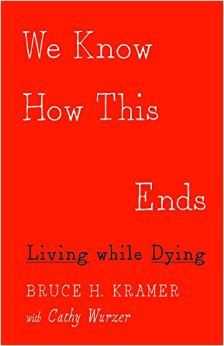
Bruce KramerBruce Kramer wrote an exquisite book before he died from ALS. When you have amyotrophic lateral sclerosis, you know how your life will end – sort of. You cannot know the timeline of how the symptoms will reveal themselves. You cannot know which friends and family will be resilient and which will crumble. But you pretty much know that it’s ALS that will take your life.

There is a note in my phone and a document on my laptop that says: “If I Die in 2015 . . .” It’s the annually edited note to my loved ones about which hymns I’d like everybody to sing at my memorial service, whom I’d like to preach, and what I’d like somebody to read out loud. (Yes, I have written a message for my own memorial service because I’m bossy like that.) If you happen to be with me when I die, check my phone.

All of us are going to die. We know how this life of ours ends – sort of. Most of uschagall-white-crucifixion don’t know the particulars about how. Even if I were diagnosed with stage 4 cancer today, I could get hit by a truck tomorrow.

We also do not know what happens after we die. There are scientific details about what happens to our bodies after death. But what happens to our souls is a matter of faith. I know my body will die one day. I believe my soul will live on by God’s grace.

We know how Good Friday will end, and that makes it less than catastrophic for followers of Jesus because Sunday is coming. [Once when I was volunteering at a Suicide Hotline on Good Friday, a caller sobbed that Jesus was dead and I let her cry for a long time. And then I said something like, “Can you hang on for 2 more days?”]

Death = Bad. Resurrection = Good. And yet we call this Friday good.

We can’t have resurrection without the death. I don’t know about you, but I’ve noticed that we forget this.

May your all your deaths be holy ones.

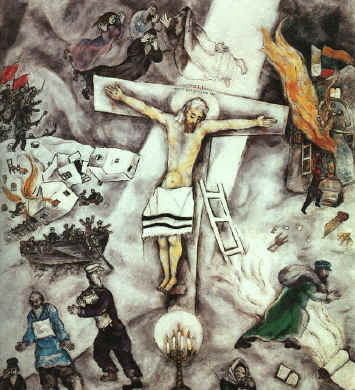
Art is White Crucifixion by Chagall.

Empty Nest Church

This is a love note to struggling churches who wonder where all the kids went.

HH and I are (sort of) Empty Nesters.  Empty NestOur 20-something kids come home for brief periods  – for holidays or between apartment leases – but then again, the home they visit here in Chicagoland is not where they grew up.  We no longer have the home where they learned to walk and talk, where they spent their first 20+ Easters and Christmases.

We moved to a house that works for us in our current situation.  There’s no swing set in the back yard.  There are no sleds or wagons in the garage.  No basketball net in the driveway.  We gave all those things away when we moved from their childhood home, and this is a good thing.  We don’t need certain things any longer, but we made sure that families who could use those things now have them.

The gifted coach and consultant JK inspired a thought yesterday regarding empty nests and churches.  Many of our congregations are still living in “the family house” where – long ago – their children grew up and spent many Easters and Christmases. It’s where milestones were celebrated and stories were shared.  “The kids” might return for occasional visits, but they are no longer around.  They’ve moved on and established new homes and new communities of their own.

Nevertheless those congregations are still gathering in “the family house.”  It’s too big for them. There’s a lot of junk stored in closets and basements.  There are countless memories. But they don’t need that space any more, and yet it’s too hard to think about moving.

There comes a time – if we’re fortunate to have lived long lives – when we need to make decisions about how we will downsize and – ultimately – where we will spend our last years.  It’s part of life.

All pastors have had parishioners who waited too long to make end-of-life plans. I knew a lovely woman in a former congregation who refused to leave her home of 60+ years.  She had many excuses.  And she assumed she’d always be able to handle the stairs, the maintenance, the yard work.  By the time she was well into her 90s, it was too late.  She couldn’t physically make the move.  She lived in squalor, unable to care for her home or herself.  She was too weak and too desperate to move into a more practical space.

My friends, some of our congregations find ourselves in this situation. We need to make end-of-life plans.  But some of us refuse to leave our “home.”  We have many excuses.  And we assume we’ll always be able to handle the stairs, the maintenance, the yard work.  But now  it’s become too late to make the necessary shifts that will help us transition.

This is Holy Week and ultimately we are resurrection people, right?

Imagine congregations that have become Empty Nest Churches making choices that make it possible for new communities to thrive.

When HH and I left the home we knew for so many years, it wasn’t easy.  It still isn’t, and yet I wouldn’t go back.  Great things are ahead for our kids and even for us. But there are times we need to let go of what is past.