Category Archives: Uncategorized

The Landlord Mindset

mindset-imageContinuing the conversation re: yesterday’s post . . .

I once served a congregation that shared the building with a Korean Presbyterian Church.  That is to say that 1) we “owned the building” and 2) the other church – which had no other place to worship – was comprised of people in our own denomination who happened to speak Korean as their primary language.  Their pastor and I were members of the same Presbytery.

We treated them terribly, in my opinion.  At every Session meeting, there were complaints that they were “using our stuff,”  “breaking our stuff,”  “taking advantage of us,”  etc.  Eventually, they found another space and they have flourished there.

About ten years or so later, my same congregation agreed to share space with a Pentecostal congregation.  We still “owned” the building but something had changed in our culture and in our hearts.  We lived as partners.  They indeed gave us a tidy sum each month as “rent” but it was considered a gift which allowed us to keep our own ministries going.  We prayed for and with them, wanting them to thrive and looking out for them in terms of what we could do to make their ministry prosper.

Two totally different situations.

Technically, I suppose, we who “owned the building” were landlords in both situations, but the difference was in our attitude and mindset.  Now – in a different place and time –  when I visit churches who are sharing their building with others, comments like these show me that the arrangements are a matter of survival:

  • “They now owe us $30,000 in arrears for fixing the boiler.  They are in the building more than we are and they should pay for the heating.”
  • “Their children run all over the building.”
  • “They cook awful smelling food and I can’t understand them.”
  • “They use too much toilet paper.  We should increase the rent.”

As everybody knows, a church in survival mode is a dying church.

And then there are comments like these that show me that the arrangements enhance their mission:

  • “The ___ church’s pastor is having surgery next week.  Who can take dinner over to her house Thursday?”
  • “Some of us are getting together with the other church for caroling Friday night.  Anybody else want to go?”
  • “The AA group is having a New Year’s Eve Party on the 31st so we’re love-bombing them with hors d’oeuvres to be left in the kitchen that afternoon.”
  • “We need to be sure to leave the bathrooms cleaner for the groups coming in on Monday.  Can we make a concerted effort to do that?”

Churches that partner as equally as possible with “outside groups” tend to thrive.  But here are some questions to consider:

  • Do we know our partners?  Do we know what they do?  Who they are?  Why they meet?  (Even anonymous 12-Step Groups are not so anonymous that we can’t chat in the halls or set up coffee for them and ask how we can serve them better.)
  • Do we consider ourselves equals in ministry?  Or are we The Overlords and they are the Underlings?
  • Do we appreciate them and tell them so?
  • Do we admire their ministry and showcase it to our congregation?

Stewardship Season Idea:  Take members of your congregation on a Mission Tour of your building.  (“Here is where the computer classes happen on Tuesdays and Thursdays.  Over _________ people have learned computer skills through this program and they often need volunteers if you’re interested.” “This is where the women’s NA group meetings on Monday nights.  Most of the group comes on a prison bus for court-sanctioned NA.”)

If we have no idea who is in our building and we have no relationship with them, we are merely landlords.  A different mindset makes all the difference.

If You Could Have a Pastor OR a Church Building, Which Would You Choose?

This is a real question for several churches I know and love.  With a building, we Common Table (2)get a place to gather and it’s often a placed drenched with community or personal history.  With a pastor, we get someone to cast a vision and equip the other leaders to do ministry.

Some churches are identified by their pastors (i.e. “I’m part of Lillian Daniel’s church.”)

Some churches are identified by their buildings (i.e. “The stone church with the beautiful windows on the corner.”)

What if we could only afford one?

The truth is that pastors are expensive, especially in denominations that require congregations to contribute to health benefits and pension plans.  But most thriving congregations have full-time professional ministers.

It’s also true that many churches have loved their buildings  more than they love God.  I, for one, love church buildings, but their purpose is to be a tool for ministry. Few of us can afford to have a expensive tool that we use for only a few hours a week.

I’m not encouraging churches to become landlords because renting space is not ministry.  Sure, our renters might do good things (e.g. teach preschoolers, support addicts, offer legal aid) but that’s their ministry, not ours.  Most of us have nominal relationships with the Scout troops or the partner churches that use our  buildings.

We have entered a season when, increasingly, congregations will need to choose between keeping their pastor or keeping their building.

Of course, most of our churches have and want both a pastor and a building.  But if you really had to choose, which would you pick?  We might have to make this decision in our lifetime.

OR we could rethink/restart/reconstruct the church as we know it.

Image of a gathering of one of my favorite spiritual communities: Common Table in Vienna, VA.

Waiting is Not About Magic

waiting-painting-by-G-A-DandekarI had a friend in college who prayed faithfully for a boyfriend.  And then she sat in her dorm room and waited, wondering why her divinely created Dreamboat wasn’t showing up.

Newsflash:  Waiting is not about magic.

I won’t go into the whole confusion about God and Santa except to say that – unlike tongue-in-cheek Sarah Silverman – I don’t believe that Jesus (or either of the other two persons of the Trinity) is magic.  And yet, many of us remain confused.

We pray our wishes will come true, but then we do nothing more than offer a minimal effort to work with God.  Example from Church World:

  • A church wants to grow and return to their former glory (e.g. full pews.)
  • They pray to The Almighty that their church will grow.
  • They try simple strategies:  install a new church sign,  hand out flyers, call a new/better pastor.
  • They wait.
  • Nothing changes.

Going out into the world to make disciples of all people is hard work.  It’s not about putting up a shinier sign or passing out pithy flyers or choosing a new leader.  It’s about Changing Everything: our souls, our perspectives, our wildest dreams, our expectations, our control.   Change is hard and most of us don’t want to do it.

Much of the world is waiting for food and water.  They are waiting for shelter.  They are waiting for grief to subside or for the meds to kick in.  They are waiting and waiting and waiting because they have no choice.

But we who have many choices can choose – during this season of waiting –  to believe in magic or to believe in Jesus’ message to go out.

Image Source.


The Relationship’s the Thing

Just let me state for the record: we’re giving love in a family dose.

Like almost everybody else, we are planning to travel in the next 24 hours to gather with family.  While I’m semi-freaking out about the weather and the thought of my kids traveling through icy rain/snow, I trust that we will eventually arrive safely and enjoy a meal that most of the world would consider a once-in-a-lifetime feast.

But more than the turkey and the sweet potatoes and the pie, relationships rule.  I consider myself unspeakably fortunate that there is family we want to see.

I have spent a week of vacation every summer with my siblings, their spouses, and our children for the past 23 years.  Some people find it surprising that we would want to vacation together, but we have a really good relationship.

Monday’s post on Racism, Sexism, & Ageism sparked some excellent comments that I want to reiterate  here.  Specifically, the comments on Facebook about relationships hit home.

My church job is the ecclesiastical equivalent of working for The Man.  I serve in a middle judicatory denominational office of the institutional church, staffing the commission that prepares people for professional ministry and the commission that oversees church-pastor relationships.  As one wise colleague shared in a recent FB comment:  “Discernment based on mentoring and relationships is almost non-existent, which is why I think (the Commission on Preparation for Ministry) has a hard time being adaptable. Therefore,the overly institutionalized process will inevitably be racist, sexist and ageist. Institutionalized processes can be more equitable, but can’t happen without some serious training and discernment.”

Yep.

I remember worshiping on a baptism Sunday with Cedar Ridge Community Church when Brian McLaren was the pastor, years ago.  All those who came forward for baptism brought with them their spiritual mentor.  Some of the mentors were parents or grandparents.  Some were teachers or friends.  It was so inspiring to see the fruits of spiritual mentoring up close and personal.  The candidates for baptism were then baptized by their mentors.  I distinctly remember thinking, “This is not how Presbyterians do it.  But I wish we did.”

Most of us in the institutional church are weak in the mentoring department. Either our spiritual development is overly personalized and we see no need in growing spiritually within a community or we fail to take opportunities to notice the opportunities for mentoring others in our community.

HH has a clear memory of someone mentioning to him in the fourth grade that he had gifts for ministry.  He held that comment close to his heart through his teenage years and well into seminary.  And I totally treasure those years I worked with MP whom I trusted to the point of his being able to tell me when I was kind of an idiot and yet I didn’t take it personally.

The problem with shepherding seminarians, pastors, and congregations in the institutional church is that we are attempting to do the shepherding via corporate processes rather than relationships.  Each of our seminarians have a Commission for Preparation for Ministry liaison, but their relationships tend to be transactional (“You send me signed forms and I will help you move along through the process.“)  Each of our congregations have a Commission on Ministry liaison, but those relationships are nominal and only kick in when there’s a crisis or transition.

How great it would be if all liaisons had close relationships with all advisees. But the truth is that we are to busy to have deep, abiding institutional relationships. So what is the answer?

  • Collegial relationships within our institutions take time but we all make time for things we deem important – like connecting with people beyond our own interests.
  • Spiritual friendships and  mentor relationships don’t just happen.  They require intentionality.

And in the meantime, institutions are also necessary to bring order in a more formal way.  Institutions set rituals that – in a perfect world – bring us closer together.  Of course, because of corporate sin, institutions are invariably sexist, racists, ageist, and most other -ists too.  But I’ve come to appreciate the good that institutions offer.

This week – and every week – it’s easier to bake a pie than it is to become a family of faith.  But relationships are the key to becoming what we were created to be.

May your relationships flourish this Thanksgiving.

Note:  Sister Sledge is on my baking soundtrack.

Are We Being Sexist, Racist, Ageist? Or Not?

Racism ArtPart of my job involves staffing the Commission on Preparation for Ministry – the commission that shepherds seminarians through the ordination process.  And I get these kinds of phone calls:

Caller #1:  I’m concerned that the CPM is prejudiced against second-career-women because our church member is having a hard time in your process.

Me:  Actually, she was having a hard time because she could not articulate her call.  There are several other second-career women who have articulated their call and are flying through the process.

Caller #2:  I’m concerned that the CPM is prejudiced against theologically conservative candidates.  Our church member is feeling like he cannot share who he really is because you will object to his conservative theology.

Me:  Actually, we are holding him back because he rolled his eyes when we asked him about eschatology.  We have several theologically conservative candidates and one of the reasons they are flourishing through the process is because they are theologically humble.

Caller #3:  I’m concerned that the CPM have problems with racial-ethnic minorities.  They are treating non-white candidates disrespectfully and asking them to do extraordinary requirements.

Me:  Actually, many of our racial-ethnic candidates are having no problems getting through the process.  The ones who are moving more slowly are slowed down because they are asking for exceptions with every requirement and they are not turning in their papers on time.

It’s a new week and I’m starting it off with the Commission Ministry early Monday morning.  As we try to discern how to best serve as gatekeepers and as shepherds, we want to be fair.  So are we being sexist/racist/ageist?  Or not?

As a friend – who is a woman of color – shared with me recently, “How do we know when we are being sexist/racist/ageist and how do we know when people are simply in need of more gate-keeping?”

I truly believe that we want to be fair as we discern others’ call to professional ministry.  What do you believe?

Image source.

Bacteria, Brains, & The Holy Spirit

According to this article, the top three Myers Briggs types for clergy are ENFJ, ESFJ,  and ENFP.  Your pastor is least likely to be an ISTP or an ESTP.

Simplistically speaking, this means that pastors tend to be Feelers more thangut-bacteria-300x224 Thinkers.  We Presbyterians pride ourselves in requiring our clergy to be well-educated.  (Note:  we are the only denomination that still requires both Hebrew and Greek.)   And yet pastoral sensibilities imply having compassion (splagchnizomai – σπλαγχνίζομαι) which involves our guts.  You can look it up.

There has been a wealth of programming lately on the science of gut bacteria and one of my favorite stories recently (found here) connects our bowels and our brain.  In other words, there truly might be something to having “gut feelings.”

What’s in our gut (new favorite term: gut flora) could quite possibly impact MS, sinus issues, and weight loss. And – amazingly – it also seems to impact our ability to experience the Spirit of God.  Or at least that’s what I’ve determined intellectually  – as well as in my gut.

Maybe we should prescribe probiotic yogurt to our Pastor Search Committees.

If you’ve ever been on a Pastor Search Committee, you will know that it can be like dating.  In the first five minutes, it’s often clear if this relationship has a future.  At least, this has been my experience and the experience that others have shared.

I suppose it’s also possible to have a Pastor Search Committee full of Myers Briggs “Thinkers” who will look at the facts (correct number of years experience, educational credentials, etc.) and then determine The Right Pastor according to a clear list of requirements.  The problem with this way of selecting a pastor is that there is little room for The Holy Spirit to speak to us/allow our guts to inform us.  What I’m saying is that there seems to be a connection between The Spirit and our guts.

As my HH will quickly school you, this is a Biblical concept.  Jesus was moved in his guts.  That’s what it literally says here.  Awesome.

Yes, our bodies are temples.  Yes, we are what we eat.  And yes, there is a connection between food and God which is more than the holy experience of eating perfect dark chocolate.

Multiculturalism & The Gettysburg Address

Four score and seven years ago our fathers brought forth on this continent, a new nation, conceived in Liberty, and dedicated to the proposition that             all men are created equal.

abraham-lincoln-honesty-freedom-equality-684585It’s not that I’m trying to be snarky.  But with all of yesterday’s worthy tributes to the 150th anniversary of Lincoln’s Gettysburg Address, there were certain words that impaled me as I heard them again and again:  Fathers.  Liberty.  Men.  Equal.

Yes the writers of The Constitution were all “fathers,” but just as surely as there were  women at The Last Supper, there were women in the background of that Great Experiment of creating a new nation as well.

And as for Liberty, just four months before Lincoln’s Gettysburg Address, Kit Carson had waged war again the Native Americans of New Mexico and Arizona.  This was a mere 24 years after the horrendous Trail of Tears when thousands of American Indians were relocated from the Southeastern States to Oklahoma – a clear and ugly example of ethnic cleansing in our nation’s history.

Many will say that in the 19th Century and even in the 21st Century, the word “men” means “men and women” but in the case of Lincoln’s Gettysburg Address, “men” meant “male people.”  Keep in mind that even former slaves who were male were given the vote before women of any color.

And today – as the governor of Illinois signs the Marriage Equality bill just four blocks south of our office – inequality is alive and well in so many ways.

I hear Lincoln’s historic address and imagine that he was not talking about what was as much as he was talking about what could be.  Sort of like last Sunday’s lectionary reading from Isaiah.

The Real America

jasper-johns-map-museum-of-modern-artDo you remember when Sarah Palin spoke of “The Real America“?

After living in two states for the past two years, I finally got my Illinois drivers’ license yesterday and experienced this exchange:

DMV Guy:  You’re going to need your marriage certificate.

Me:  When my husband got his driver’s license, I don’t think he needed his marriage license.

DMV Guy:  But he didn’t change his name when he got married.

Me:  I didn’t change my name either.

DMV Guy:  What do you mean?

Me:  I didn’t change my name when I got married.

DMV Guy:  You can do that?

Me:  (?)

DMV: You have to change your name when you get married.

Me:  Actually, you don’t.

So, I got my new license yesterday with my actual birth name and the DMV cashier also wondered how I managed to keep my name after getting married, and it made me think that maybe I am a little out of touch with The Real America.

How can you not know that you can get married and keep your name?

So, I am a Professional Pastor serving The Institutional Church and sometimes I wonder how far off base I am in terms of Real People.

We serve God’s people and sometimes we don’t understand God’s people.  We might believe that everybody has heard of Walter Bruggemann and everybody reads The New York Times and everybody watches Homeland.  But the truth is that there are people Out There who don’t even know that Women Can Get Married and Keep Their Names.

I’m just saying.  Sometimes we don’t even realize that we are separated from people who are not just like we are.

Image of Jasper Johns’ Flag (1954-1955)

Considering the Pastors Who Will Follow Us

I know of a pastor who was independently wealthy and, while serving a small congregation, refused to accept a paycheck.  This seemed like a good and generous idea until it came time for that pastor to move on.

The next pastor serving that parish had an impossible situation on her hands.  She was not independently wealthy and she definitely needed her meager paycheck.  For her entire ministry, though, she heard over and over  (and over) again about how generous her predecessor had been.  The congregation resented every paycheck, every cost-of-living allowance, every reimbursement that their new pastor earned.

Frankly, it never occurred to me as a parish pastor that my work baton.250w.tnpractices, my personal habits, and my boundary-keeping (or lack of boundary-keeping) would have an impact on the clergy person who followed me.  We are all too preoccupied with the daily grind of ministry – and often dealing with the issues left over by our own predecessor – to spend much time considering the pastor who will follow us.

Consider this:

  • If we have the habit of working seven days a week – even boasting about how “pastors shouldn’t take a day off”  – then we are making it difficult for the person who comes after us to take a Sabbath.
  • If we return from vacation for every emergency, we are ruining the next pastor’s vacations.  Or at least we will cause him/her to spend enormous energy re-establishing those boundaries.
  • If certain church leaders are our special friends and we share “everything” with them – including confidential church information – we are making life miserable for the next pastor who does not share confidential information with those leaders.
  • If we fail to take our study leave or if we refuse financial reimbursements, we are making the pastor who follows us appear lazy or greedy.
  • If we accept lavish gifts from wealthy members (e.g. vacation homes, used cars) the next pastor who doesn’t accept such gifts could be considered cold or ungrateful.

God-willing, we are not the last pastor to serve in our current call.  How are we making it easier – or more difficult – for the ones who will follow after us?

A Pastor & Her Gigs

“Pastors: The Gig economy is here. Keep your day job. You will soon have more in common with artists/musicians than doctors and lawyers . . . ”  

Tweet from Jim Henderson June 2012 (@byJimHenderson)

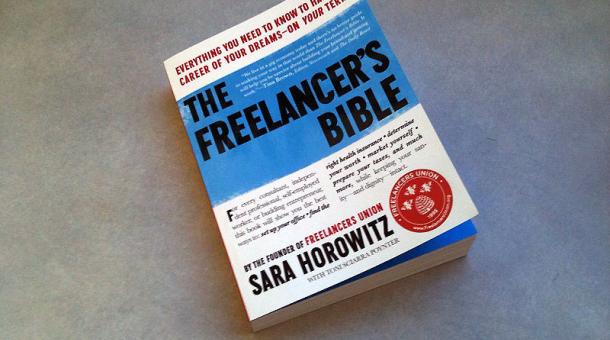
freelancers-bibleThe Gig Economy is not a new concept, but this recent article (thank you KEWP) reminded me that women, in particular, need to stop underselling ourselves when it comes to sharing our expertise.  Colleagues and friends who have written important books, developed essential resources, and created inspiring art need to:

  1. not be afraid to self-promote such endeavors and
  2. not be afraid to charge what they are worth.

Frankly, we need the money that these gigs bring.

Most of us who write, paint, sculpt, film, and talk about spiritual/ecclesiastical ideas have regular jobs which inform our work.  While I no longer serve one congregation, I get to be up-close-and-personal with 100 congregations preaching almost every Sunday, meeting with personnel committees and other boards, coaching Search Committees.  And as I see patterns, my random ponderings about 21st Century ministry are better informed.  And so I have ideas to share.  Hence:  gigs.

My basic road show is 21st Century Church 101 and I’ve done it so many times and for so many years that it concerns me that some churches still want to hear about it.  “What do you charge?” people ask me, about this particular presentation and I never know what to say.  It depends really on who’s asking.

But as I ponder what Jim Henderson* tweeted in June 2012 about future pastors having more in common with freelancers than we have with white-collar professionals, I wonder how we will navigate these waters.  My own gigs come out of a day job that is also about professional ministry, serving in a Denominational Middle Judicatory which might not exist one day.  Many of our churches – especially new church plants – will have pastors whose day jobs involve keeping their First Career (assuming they’ve gone to seminary to start a Second Career) or finding employment as barristas or construction workers.  Their professional ministry will be in the form of “gigs” rather than their primary means of employment, perhaps.

I am grateful and delighted when groups want to pay me to hear what I have learned about Church World.  In fact I feel an urgency to share it.  I heart special gigs and I love talking about The Future Church.

But I wonder if one day most of our pastors will not have what we now consider to be “regular church positions.”  Instead they will have an array of church gigs that supplement their regular, secular income.  Who really knows?  What do you think?

*Jim Henderson’s group Beyond the Box granted my former church $300 to do something random for Jesus.  We bought $100 of Krispy Kreme Donuts and $200 of water bottles and handed them out during rush hour in the intersection in front of the church building.  No flyers.  No church t-shirts identifying us.  Just donuts, water, and a smile.