Category Archives: Uncategorized

Not for The Fainthearted: Changing a Church’s Culture

The Ubiquitous Church Parlor

The Ubiquitous Church Parlor

Our book group just read Brene Brown’s Daring Greatly and  – as I do with everything from Cooking Light magazine to Tillich, I read through the lens of Church World.

Peter Drucker apparently once said, “Culture eats strategy for breakfast.”  In other words, we can make all the strategic plans in the world, but if those plans mess with our organization’s culture, the plans will never work . . . unless we change the culture.

We need pastors who know how to change a congregation’s culture – albeit lovingly, pastorally, patiently, firmly.  But it’s essential for a congregation’s future to make such changes as we move into a post-Christian season.  Too few of our pastors know how to do this.

I love Brene Brown’s Ten Questions For Figuring Out An Organization’s Culture – again from Daring Greatly – and I have added common answers to her questions from churches I have known and loved.

Q1:  What behaviors are rewarded?  Punished?  Rewarded: Singing tenor in the choir.  Punished:  Changing the menu for the long-established Annual Global Mission Dinner.

Q2:  Where and how are people actually spending their resources (time, money, attention)?  On soccer fields (for the kids) and golf courses (for the adults).  At the office.  In minivans and SUVs.

Q3:  What rules and expectations are followed, enforced, ignored?  Followed:  Casual Fridays dress code.  Enforced: No smoking.  Ignored:  Coffee cups in the sanctuary.

Q4:  Do people feel safe and supported talking about how they feel and asking for what they need?  If they are under 35.

Q5:  What are the sacred cows?  Who is most likely to tip them?  Who stands the cows back up?  Sacred cow:  The parlor.  Suspected Tipsters:  Members under age 40 with kids.  Cow restorers:  Church Ladies.

Q6:  What stories are legend and what values do they convey?  Remember when the pews were packed?  But now we have the wrong pastor/choir director/organ/elders.

Q7:  What happens when someone fails, disappoints, or makes a mistake?  We sometimes eat them.

Q8:  How is vulnerability (uncertainty, risk, and emotional exposure) perceived?  As naive and too Oprah-esque.

Q9: How prevalent are shame and blame and how are they showing up?  It’s the Presbytery’s fault.

Q10: What’s the collective tolerance for discomfort?  Is the discomfort of learning, trying new things, and giving and receiving feedback normalized, or is there a high premium put on comfort (and how does that look)?  Why is The Presbytery/the new pastor/the new music director telling us what to do?  There was nothing wrong with the way we wanted to do it.

Every week of my life I visit congregations full of truly wonderful people who are faithful but fearful.  They fear uncertainty.  They see the world around them changing.  But many of them love God and want to serve in the name of Jesus.  And this is why I stay in the institutional church.

Many of my friends decry the institutional church and all the ridiculousness of it.  But – in spite of all that is ridiculous – I know really great people who want to be the church for a new season.  They just don’t know how.  And it’s scary making the necessary shifts in an uncertain world.  But about these things I am certain:

  • There will always be a church.  It just might not look like it has in the last century.
  • Denominations will be altered in significant ways.  But even non-denominational churches will have partnerships with other churches.
  • Everybody will continue to crave community.  Everybody wants to belong.
  • Jesus is Lord.

Do you and/or your pastoral leaders know how to shift the culture?  What would you need to make this shift?

Wish List: A New Kind of Transitional Pastors

Image

There’s a breed of pastors who have committed to serving churches between “permanent pastors.”  A good interim pastor is like gold. 

Good interim pastors help congregations come to terms with their recent (and sometimes distant) past.  They prepare the way for the next pastor, so that that he/she can hit the ground running, rather than deal with a difficult staff member or gnawing issue.

But today, we need at least a few Interim Pastors who know how to teach 21st Century Church culture to their interim churches.  For example:

  • A pastor has just left after 20 years and the church had still been functioning as a 1980s church.  They have never heard of the shifts in church culture.  They are still of the mind that ‘if we build it, they will come.’  They need an interim who will prepare them to call a pastor who can lead them in a post-Christian culture.
  • After attempting to jolt a dying church with new energy, the pastor is moving along. Her congregation rejected all ideas to reach out into the neighborhood.  A core group of long-time members rejected the notion that the church will never be as it was in the 1970s.   Now they need an interim who can help them assess their future story:  What’s next for them?  Should they call an established pastor who will look like their former pastors?  Or do they want to try again with another visionary pastor?  Are they at the point when they basically need a chaplain?  The answer to these questions require knowledge of missional church, conversations about Belonging-Behaving-Believing, etc.

We need transitional pastors who can also offer redevelopment consultation – not to do the redevelopment necessarily, but to help a church discern if they really want to make the shifts to keep their ministry going and thriving.

Not every congregation needs this.  Some congregations still need traditional interim pastors who have serious work to do, to be sure.  But there are increasingly congregations who need an interim/consultant who helps them – forgive me for this word – survive. 

Thoughts?

Image Source.

Paying Taxes as a Spiritual Practice

Caesar-Augustus1As we prepare to buy a house in our new hometown, the number crunchers tell us that our local property taxes will be approximately the same as our actual mortgage.  Yikes.

HH and I are blessed with two jobs in an economy that guarantees no jobs – especially for a couple of English majors with graduate degrees in something as unmarketable as “Divinity.”  And so – with our two jobs – we can afford to live here and pay our taxes.  And we will do so happily.

Among the comments I’ve heard from helpful acquaintances:

  • The taxes are high because the schools are really good.  But you don’t have kids in the schools.  Why would you live there?
  • You know your gas taxes are the highest in the country, right? (Actually we are third, behind California and NY.)

All of us pay taxes on things we don’t like (e.g. war.)

All of us pay taxes on things we find helpful (e.g. snow plowing, street lights.)

Tax collectors were hated in First Century Palestine and we are not happy with them in this Century either. And of course nobody likes irresponsible spending and waste.  But what if we considered the paying of our taxes as a spiritual practice?  For the most part, our taxes take care of us and our neighbors.

In today’s political divide, can we who call ourselves followers of Jesus agree that this is one way that we – as a larger community – can care for each other?  I am happy to pay taxes that serve the greater good.  You?

I Can’t Write a Better Sabbath Post than This

Today is my first Sabbath in a while, in terms of having “nothing” to do.  It is glorious.

Part of the joy of Sabbath involves remembering: 

  • Remembering all I’ve been able to do this week and not worrying about what didn’t get done.
  • Remembering the week’s funniest stories.  It’s one of the bonuses of my job.
  • Remembering where I was this time last Friday and then remembering that God still resurrects people.
  • Remembering that God resurrects people even when we don’t get to witness it on this side.

The Message of the Day comes from my colleague DL who has witnessed resurrection first hand.  As people ask him what they can do for him, his response preaches:

  1. Pray for A’s recovery.
  2. Learn CPR.  There may be a moment in your life when nothing you have ever done is more important than this.
  3. Take a dance class.

The Lord of the Dance deserves all of these tributes and more.  Now go enjoy the holiday weekend.

The Clumsy Dance Partner . . . Or: Sometimes We Screw Up

I wrote yesterday about “dancing with the ones who brought us” – my metaphorElaine dancing for moving cooperatively with the church entities that oversee our ministry.  In my case, that middle judicatory is called The Presbytery.

Presbyteries  – in my tradition – support congregations, help them in times of crises, celebrate with them in times of joy.  We grant money for special church projects, assist pastors in financial trouble, offer pastoral support to pastors, and shepherd congregations in pastoral transition.  But sometimes we screw up.

Someone rightfully suggested yesterday that Presbyteries (and Bishops, District Superintendents, etc.) need to be transparent, honest, and supportive – and sometimes we are not.  Part of this is a result of living in a litigious culture.  Examples:

  • A pastor is incompetent and needs to go, but he threatens to sue if he is fired.  And we make the mistake of fearing this pastor more than God.
  • A church leader is falsely accused of misconduct and – while never formally charged much less found guilty – the Presbytery is so terrified of being sued by somebody that we fail to support this innocent leader.
  • A congregation is never told why a pastor has left their church because the pastor has asked that the truth not be told.  The truth is that the pastor is suicidal or addicted or going through an ugly divorce or sick with a brain tumor.  But The Presbytery simply says that “the pastor had to leave” because that pastor has threatened legal action if the truth comes out.  Rumors abound, but we can’t share the truth.

In addition, Presbyteries and other overseeing leaders drop the ball occasionally.  We inadvertently give erroneous information to Pastor Search Committees which slows down their process.  We lose forms.  We abuse our power – such as it is – because we are weak and immature.  We insist on procedures that make no sense.

I am fortunate to work in a healthy church institution – or at least it’s as healthy as any I’ve known – but we still make mistakes.  We forget that relationships are more important that regulations.  We show favoritism.  We are clumsy.

And we will try to do better.

Image of Elaine Benes dancing.

Refusing to Dance with the Ones who Brought Us

My life’s work is often associated with everything from The Death Star to “The (oppressive) Man.”

Won't DanceSo  . . . I was grateful to witness a recent conversation  in which The Presbytery (for you institutional church geeks, that’s the Middle Judicatory of my denomination) was actually credited – not blamed – for something good.  In reviewing a particular church’s history at a church meeting, someone who didn’t know what he was talking about had blamed The Presbytery for the way a previous pastor had been treated.  But a sage of the congregation said that – actually – it was The Presbytery who had helped the elders resolve a difficult situation while respecting the wishes of the pastor.  (He had left his parish abruptly because he was sick with AIDS.  It was the late 1980s.)

I find that it’s easy and common for congregations and individuals in our congregations to blame The Presbytery for everything from why it takes so long to be ordained to why they can’t call the pastor they really want, even if the desired pastor is a (take your pick:) trouble-maker, serial adulterer,  criminal, bully.  Trust is at a new low, and yet, I’d like to share some of “the secrets” of the Presbytery (and why we are considered mean/out-of-touch/untrustworthy.)

  • The Presbytery won’t let a church begin the process to call a new pastor.  Perceived reason why:  We “want their building.”  We “can make money off of them by putting condos on their land.” We don’t care about them.  We want their church to die. Real reason why:  They don’t have enough money to pay their utility bills much less pay for a pastor.  Or They have serious issues that need to be resolved before bringing a new pastor in.
  • The Presbytery is asking a candidate for ordination to slow down his/her ordination process. Perceived reason why:  They were essentially hazed during their own processes, so now they are hazing me.  They are bullies.  They are inferior pastors/elders themselves misusing their power to control my life.  They are nit-pickers.  Real reasons why:  You turned your papers in late/with numerous typos/after obviously writing them on a bus on the way to the meeting.  You act like you are unteachable and all pastors must be life-long learners. You have issues after your family of origin died in a fiery crash and you have avoided counseling.  You roll your eyes at us when we ask honest questions about theology.  You act defensive as if we are challenging your theology when we are actually making sure you can articulate what you believe clearly – because some day a ten year old might ask you what The Trinity is all about.
  • The Presbytery won’t give money to help us.  Perceived reasons why: Because you are a conservative congregation/a liberal congregation/a small congregation/ a rural congregation/ an urban congregation.  Because The Presbytery pays big bucks to support their staff.  Real reasons why:  Several of our partner churches give zero money to shared mission giving and so we don’t have the funds to help you as we would like.  It’s up to churches to at least try to raise most of the money for their own mission and building projects.  You want to use the money to install a new church sign and a new sign won’t change the culture of your congregation – which is what’s really needed.

I could go on and on, but the bottom line is that some of our churches and church leaders refuse to dance with the ones who brought them along.  When a suspicious elder recently asked me, “What are your intentions for our church?” I said, “We want you to make disciples of every person in this neighborhood.  We want you to thrive and grow and help broken people.  We want you to be a haven of hope in this community.”

We also want:

  • The best trained, healthiest pastors on the planet.
  • The best equipped disciples possible, so that God’s kingdom would come on earth as it is in heaven.
  • Lively, thriving, faithfully mature congregations that bless the city and beyond.

Sometimes this is not what our congregations and leaders seem to want in their heart of hearts.

Image Source.

Summer Love Bomb Ideas

popsicles[NOTE:  due to the sad events in OK yesterday, it feels too lighthearted to be writing about popsicles and summer.  But tragedy always reminds us that we need to care for and laugh with each other every chance we get.  Text PDA to 20222 to donate $10 to support disaster response where needed most, through the Presbyterian Church USA.]  And now today’s post:

In the spirit of yesterday’s post, I was thinking about ideas for love bombing unsuspecting neighbors this summer.  What if we loved people randomly this summer with simple offerings of care and refreshment?  It’s time to make some plans!

Here are some of my favorite summer love bomb ideas:

  • Take popsicles to a park on the hottest day of the summer and hand them out to the neighborhood kids.
  • Serve ice cold bottles of water on a busy sidewalk at the end of a work day in your city/town.
  • Pick a laundromat in the area – preferably in a place with fairly beaten up washers and dryers- and pay for everybody’s laundry that afternoon.  Bring cookies and lemonade.  Hang out together. [Note:  idea comes from this congregation.]

The point of these activities is not to get new members or promote your church or target the neighbors.  It’s just about loving people in simple, fun ways.

Mark your calendars.

What love bomb ideas do you have?

What Do We Get Out of This?

I’ve shared the story before about a non-profit organization that asked ourdonate-clothes-4.s600x600 church if they could put a bin to collect clothing in the church parking lot.  We said, “Yes.”  But then the organization put the bin in another church’s parking lot across the street.  Same street.  Different church.

One of our elders was not happy.

Unhappy Elder:  That was supposed to be our mission project.

Nonplussed Elder:  Who cares where the bin is located?  Clothes will still be collected and it’s convenient for both our members and the members of the church across the street.

UE:  But we won’t get the credit for doing it.

NE:  ?!

All too often we in the institutional church serve because we will get something out of it.  In worship yesterday, there were two ways to give money to the special Pentecost Offering.  One could text “YOUNG” to 20222 and send $10 directly to the denomination.  Or one could put a check or cash in an envelope in the pew.  The church and subsequently the Presbytery only gets credit for donations in the envelopes, and I’ve heard leaders criticize giving via texting for this very reason – even though it’s much easier to give with a text message.

Every year, our congregations host community fairs and other neighborhood events  in hopes that we will attract new members.  We individually serve on boards and committees so that we will get our own way in church world.  We live “good lives” so that we will get to go to heaven.  We might even claim Jesus as Savior primarily for this reason.

But – as Rick Warren famously said – life’s not about us.  When we truly serve, it’s about someone else – preferably someone not connected to us.  (Note:  if we are only serving our friends and family, that’s actually about us.)

I’m wondering how a church teaches the crucial lesson that serving is not about what we get out of it.  Yes, maybe we get a “good feeling” when we serve.  But do we also expect to get holy credits?  How do we teach that following Jesus is not about benefiting ourselves?  It’s about the Kingdom.

As I Was Preparing a Bible Study About Same Sex Marriage . . .

My job description doesn’t include teaching classes on sex or marriage, but this is what I was asked to do for a congregation pondering Biblical teachings on these ubiquitous matters last weekend, especially in light of this.  They wanted a Biblical interpretation of same sex marriage from a progressive point of view.  The previous week they’d received the same lesson from a more tradition point of view, taught by a friend of mine.

David_and_Jonathan_icon1Marriage equality is not going away.  And here’s my Big Confession:  I believe that marriage equality is a holy thing, sanctioned by God because God is all about Covenant Relationships.  Not this.  Not this.  Not this.

But this.  (Sorry for all the links.)  As I was studying this topic anew, a couple of things occurred to me for the first time.

Remember these verses?

  • Genesis 2:18 Then the Lord God said, ‘It is not good that the man should be alone; I will make him a helper as his partner.’
  • Genesis 2:24 Therefore a man leaves his father and his mother and clings to his wife, and they become one flesh.

What I realized about these verses – that so many use to prove that marriage is about a man and a woman – is this:

  • The word for “helper” here (‘ezer עֵזֶר) is actually a male noun. I’m not saying the helper for the man must be male.  But this is interesting.
  • At no time in ancient history or even today in some cultures, did the man leave his father and mother.  It has always been the woman who left her parents.
  • And for that matter, Adam didn’t have a mother and father.
  • The word for woman and wife – throughout all the OT – is the exact same Hebrew word (ishshah אִשָּׁה) which is also the same word for a female animal.  

Were Adam and Eve really even “married”?  When I looked for passages about “traditional marriage” in scripture, I found that there aren’t any.  Yes, there’s the marriage at Cana but that’s about the party after the marriage ceremony.  And if the ceremony was anything like most ceremonies in those days, it would have involved the husband and the bride’s father signing a contract.  There were no vows, unless we count the promises made to pay a dowry.

The first time “marriage” is used in Scripture (Exodus 21:10) it’s about taking a second wife (or “woman.”)  She was literally “taken” as in fetched, snatched, procured.   It’s the same word in Hebrew:  לָקַח laqach .  

[Thank you Carole Fontaine and Krister Stendal who taught me Hebrew and Greek.]

I would encourage everybody to pull out your Strong’s Concordance and check out the marriage passages in both the Hebrew and Greek scriptures.  Could someone please find a verse that illustrates the covenant of marriage between a man and a woman that is not figurative?  (Serious question.)

Image is an icon of Jonathan and David.

2 Sam 1:25-26

Looking into Each Other’s Eyes

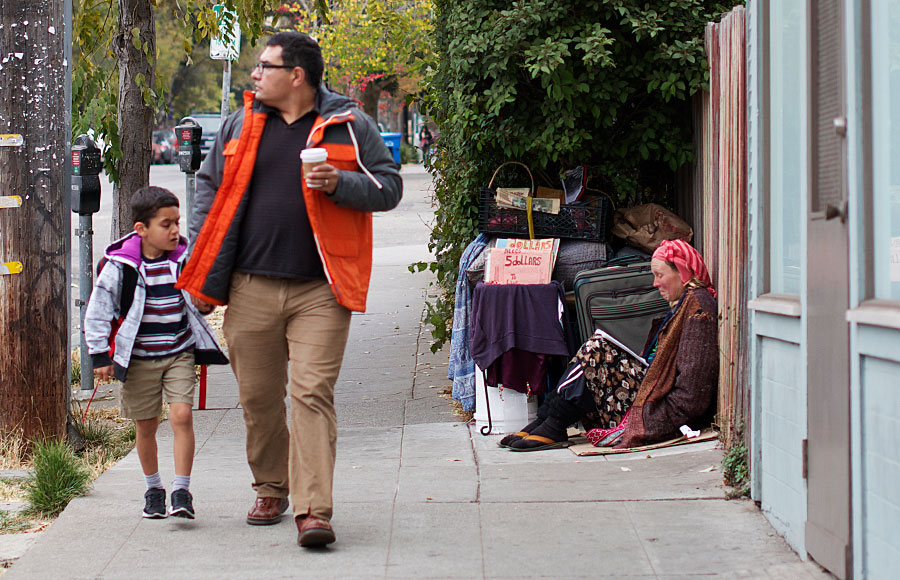
OLYMPUS DIGITAL CAMERAI randomly decided to look – really look – at people I passed by on my way into work yesterday.  From the commuter train to the pedway to the CTA to the station to the block before our office building’s front door, I would try to catch eyes and smile at random people.

For many cultures – in East Asia and most Muslim countries – looking into the eyes of someone, especially someone of the opposite sex – is considered disrespectful or forward.  But for me, I was hoping to acknowledge people who are often invisible:  the lady beside me on the train, the security guard in the pedway, the ticket taker, the subway minstrel.

And then someone tripped me as we were getting on the subway.  It was an accident as he was trying to sidestep a guy with a rolling suitcase.  But I crashed to the ground – eyeglasses knocked off my head – and, of course, people stared.  Two skinned knees but all was fine.  Except for one thing:

The guy who accidentally knocked me down never looked at me.  He never looked at me in the face, much less in the eyes.  If he had to identify me five minutes after our little collision, he wouldn’t have been able to do it.  Was she white? Black? Wearing a purple coat?  Short?  Old? Freckled?  He wouldn’t have been able to say.

At the risk of creeping people out, I consider it a spiritual practice to look each other in the eye.  It makes us real.  It acknowledges people.  We can even thank them with our eyes.  It reminds us that we are all human beings with lives and stresses and work to do and people to love.

That’s all.

Image source.