Category Archives: Uncategorized

How Many Do You Need to Have a Church?

A conversation on the Emergent Village Community Facebook Group caught me by surprise on Wednesday.  Someone asked:   “Does anyone know of Emergent leaning churches in the 200-600 member range?

The comments that followed were interesting.  Emergent churches have no designated requirements and there are certainly no rules about size. I have been a part of a tiny emerging church community  and I’ve experienced emerging worship in a congregation of several hundred.

Scripture says that where two or three are gathered, Jesus is among them.

But then again, one of the Emergent Village Community FB commenters said that a church isn’t sustainable if it stays at about 150 participants unless  the congregation has no full-time staff, no building, etc.  Actually, this is true for most congregations – not just emergent churches but all kinds of churches.  Unless at least 150 people are committed and involved, they don’t have the capacity to hire a pastor, sustain a building, etc.

In my denomination – the PCUSA – the median church size is 95.  Eight in ten congregations (80 percent) have 250 or fewer members. Half (52 percent) have 100 or fewer.  So how do these congregations survive much less thrive?

Many of them use their endowments – funds donated and invested when times were different.  Many of them stop maintaining or repairing their buildings.  Many call a part-time pastor or share a pastor with another small church.  But there is no capacity for the kind of ministry they once offered in their communities and it’s just a matter of time – unless things dramatically change – before the church closes.

The future holds an even wider variety of churches:  those without buildings and professional staff, those with part-time paid leaders, those living off their assets until the well is dry, those with enough resources to continue to serve as they’ve been serving , new communities being completely different kinds of churches.

I’d love to hear about the capacity of your church to do ministry in 2012.  What does your congregation have to make ministry possible?  What do you need to make ministry possible?

Minority Report

I almost named this post The Lesbian Bible Study.

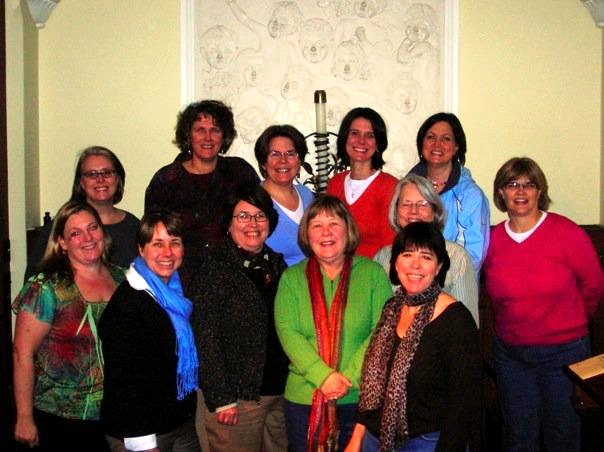
I was in a Bible study on Capitol Hill about 15 years ago with a group of clergywomen about my age, and – as it turned out – I was the only heterosexual in the group.  It was interesting being in the minority.  I am a white woman with a good education and a privileged background in comparison to the rest of the world. I am rarely in the minority. In fact, I am almost never “the only one” of my race/age/ethnicity when I go to meetings, the grocery store, church, or the office.

How about you?  Have you ever been in the minority?

I remember being in a Chick-Fil-A in rural Maryland with my kids once and they noticed that all the customers and employees were white.  It was immediately noticeable to them.  It wasn’t like the Chick-Fil-A back home.

My kids rarely comment when they are the only white kids in any particular situation.  They’ve grown up as the minorities in their (excellent) public schools.  They have every expectation of working with people, living with people, and being in church with people of different races and ethnicities from their own.

I believe this is the future of our culture and world in spite of the fact that the morning news today reported that Chicago – where I now live and work – is the most segregated city in the United States.

When was the last time you were a minority and how did it feel?  It’s an excellent exercise for teaching us how to be welcoming, hospitable, and open.

Guest Blogger: Matt Pritchard

While I’m at a retreat through Tuesday, one of the most influential people in my ministry – Matt Pritchard – has generously agreed to share a post he wrote for another blog.  Enjoy this wisdom from Matt.

For many years, I’ve been blessed to be a part of many groups that deeply valued community from the elementary and high schools in my small mountain town to Christian groups in college to intentional Christian communities throughout my 20s to today.

In the autumn of 2007, I joined the staff of Fairlington Presbyterian Church in Alexandria, VA.  One of my key responsibilities was to nurture Holy Grounds, a new worship community of only a few months.

Holy Grounds turned out to be the most unique church community I’ve ever been a part of.

Most churches function as a banquet. We pay people to prepare a weekly spiritual meal for all who have gathered.

While this is certainly easier for those gathered, it has significant drawbacks. The pastor who has been paid to prepare the banquet is often left exhausted and famished by the endeavor. While the meal is often quite tasty and nourishing for some in the congregation, the menu, whether baby food, steak, curry, vegetarian, or gluten-free, fails to sustain all.

Holy Grounds became a community where people not only learn and accept the responsibility to seek out food (note: not talking individualism here, it’s God who makes the provision), but also learn how to and accept the responsibility to feed others. It’s not up to paid staff to feed everyone, rather it is a communal responsibility to find and share spiritual (and actual) food. We teach, bless, and encourage one another (as our gifts allow) in our pursuit of God.

It’s a spiritual potluck. We each bring a dish.

Some bring old favorites. Others bring new recipes that they’re trying out for the first time. Sometimes a person can’t bring a dish because they are too tired or overwhelmed. Sometimes someone brings a few dishes or one giant dish. Each contributes from her or his gifting whether a baker, cuisinier, rôtisseuror, saucier, or dishwasher.

Some people eat a little bit from what every person has brought. Others get a massive helping of a handful of dishes.

There is plenty for everyone to eat and certainly something that will fill the hunger each brings.

We don’t just leave with our hunger satiated, but, as with any good potluck, we share the recipes so that we can make them later for others.

The cool thing is that it’s not incumbent upon any individual to make sure that everyone is fed. It’s a responsibility we share. Unlike most churches, pastoral staff doesn’t arrive too tired to eat from preparing a massive meal for everyone; at Holy Grounds they get to partake in the spiritual feast alongside their coworkers in ministry.

And we each depart with more than we brought.

The banquet extends far beyond worship as we share responsibility in decision-making, in planning, in discernment, in care for the least of these, in walking alongside one another throughout each week, in encouraging, in pastoral care, in hospitality, and in virtually all aspects of our lives. It’s messy and it’s often difficult, but it’s truly good.

Holy Grounds (linkto: http://fairlingtonholygrounds.org) grapples with the hard questions of what it means to follow Jesus and love their neighbor as Christ loves them so that they might bring the Kingdom of God in Alexandria, VA and throughout the whole world.

Matt Pritchard now lives in Pittsburgh, PA helping people form communities that seek to bring the Kingdom of God closer.  He works with Kingdom Experiments , InterVarsity, the Simple Way , the House of St Michael the Archangel , and many more .

Clergy: Are We Willing to Move?

I hesitate to answer this question because it feels self-serving or self-righteous.  We moved from our home of 22 years to a new part of the country to follow God’s call about a year ago.  It was:

  1. clear that this was where God was leading us and
  2. traumatic

But we did it.  My husband was called to serve a wonderful congregation halfway across the country.  I was eventually called to an interim position where there is more than enough good work to do.

Especially in certain parts of the U.S. – DC, San Francisco, Chicago, NYC  where real estate is expensive and it’s difficult to afford a home – pastors seem to stay within those metropolitan areas and move from one church in that city to another if they move at all.  But throughout the U.S. – because of working spouses who cannot easily leave their jobs, not to mention kids who are happy in school,  adult parents who are close by, and other family issues –  there is less moving from one geographic region to another.  We like where we are.  And moving is an extraordinary hassle.

One of the issues with churches calling new pastors and pastors seeking new calls seems to be that we are hesitant to move to unknown parts of the world.  Honestly, it’s more than disrupting.  It can be gut-wrenching.  Even if we have a sense of adventure, it’s hard to leave home.

We come from a long Biblical line of people who up and left because of a call from God:  Abraham, Moses, Jonah, Paul.  Some moved under duress.  Some said, “Here I am” without hesitation.  But God still calls some of us to move.

What would move you to move?  

Is it about God’s call?  Happy kids? Being closer to family?  Better weather?  Cheaper real estate?

What keeps you from moving? I’d love to hear what you think.

Can We Start New Churches Without Money?

Short answer:  Yes.

What if we deployed gifted leaders all over the city?  Or rural villages, suburbs, exurbs, or parks?  What if we sent teams of people out into their communities to make connections, serve the local needs, and offer lavish hospitality?

Obviously these leaders need to support themselves financially.  They’d probably like health insurance and a retirement plan.  They’d like the resources to pay for space, refreshments, music, and community needs.

Bi-vocational ministry is one answer, but this feels overwhelming unless the new church is a community endeavor.  I have friends who work construction, create websites, or practice law by day and pastor churches by night.  But they can’t do it for long.

We know pastors who serve congregations part-time and serve in some other specialized ministry the other part of their days being pastoral counselors, college teachers, or hospice chaplains.

There are pastors whose spouses support them financially.  Or maybe they have an account in the Cayman Islands.  But I don’t know many of these people.

But funding new churches allows for leaders to focus on building that community.  Time is freed up to meet over coffee, lunch, or a run.  Churches are rarely funded according to what they really need which adds additional stress.

And then we could start churches without any money.  People could simply get together to talk about God, life, purpose, pain, community.  They might pray with and for each other.  They might even sing spiritual songs and celebrate the sacraments together and study the Bible.  A committed community might share relational tithes to fund ministry and support each other.

We don’t have the money to start new churches” sounds like an excuse.  Do we really need money to create new communities of faith?

PS – Check this out from our friends in Minnesota.

Practicing Our Faith

jews-christians-church-nb10b

Newsweek magazine includes stats this week about the percentage of Jewish Americans who go to temple.  I have Jewish friends who self-identify – spiritually –  as atheists which has always felt foreign to me. Being Jewish for these friends is about being culturally, but not faithfully, Jewish.

We Christians all have friends who are culturally, but not faithfully, Christian.  It sounds judgmental and a bit obnoxious to make this declaration, but the truth is that followers of Jesus do not “go to church” like we used to.  According to the Newsweek article, less than 40% of all Christians “attend religious services.”

Hmm.

I visit lots of congregations these days and I sometimes ask other visitors, “So, what do you think?  Did you find this worship service to be spiritually nourishing?”  Actually, they often say that “worship is boring.”  They want to love it.  They want to find spiritual depth.  They want to find community.

And yet “nobody goes to temple.”  Or “to church.”  Your thoughts?

Cure for a Meeting Hangover

One of my job requirements involves “the ability to sit in long meetings.”  Really.  It was in the job description.

So yesterday and today were two of those long meeting days.  And in spite of sitting in a chair for multiple hours, at the end of today, I am either punchy with exhaustion OR peculiarly hopeful about the state of the church:

  • J. is already a bivocational minister and he’s still in seminary.  And there are several others like him.
  • People with way too many things to do in their own families, jobs, and churches are serving congregations beyond their own so that healthy ministry can happen.
  • Disciples on opposite sides of some theological issues are praying for and with each other, attending each others events, and going to bat for each other when necessary.

I’m too tired to share much more.  But there’s nothing that cures a meeting hangover like 1) a good night’s sleep and 2) hope for tomorrow.

Rethinking Diversity

High School Prom 2007

Diversity is not an ancient wooden ship. In the 21st Century Church, neither is it about quotas or representation either.   But it is still about culture and context.

One of the issues that I’m sometimes asked about when congregations are seeking a new pastor involves race.  “Would your (African American) congregation be interested in interviewing white candidates?”  “Could you help us (a predominantly white congregation)  interview some young Latino pastors?

Tim Cargal – PCUSA teaching elder and preparation for professional ministry expert – spoke to a group of us today about the trends in calling new pastors to serve our congregations.  One of the factors he discussed was race and ethnicity.

It used to be true that Asian pastors primarily served Asian congregations.  It used to be true that predominantly white congregations only called white pastors.  It used to be true that African American pastors only served predominantly African American churches.

Our children do not live in this world and increasingly neither do we. My kids notice (not positively) when everyone in a worship service/restaurant/grocery store is as white as they are.  It strikes  them as abnormal.   They’ve grown up in a world in which inter-racial dating and marriage are barely noticed.  They have gone to public schools with people from all over the world.  I have wondered about whether or not this has been their experience because they grew up in an urban setting.  But now that my job involves visiting the burbs and small towns around Chicago, I’ve noticed that they are many suburban areas with large populations of immigrants living side-by-side with Whites and Blacks who have lived in those neighborhoods for generations.  I live in a town of 9000 and I see people of every color standing side by side waiting for the  morning train.

This is not to say that racial tensions are gone and racism is no longer an issue.  But Martin Luther King Jr’s assertion that 11 am on Sunday morning is the most segregated hour in America is no longer true for many of our congregations.

Nevertheless, while our Gen X and Y seminary graduates might be willing to serve congregations which are predominantly a different race from their own, the congregations – which are filled with Baby Boomers and older generations -may not be as open to this.  Or maybe they are.

I believe the Spirit always moves when congregations call new pastors.  When I witness a predominantly White congregation call a Black pastor, the presence of the Spirit feels especially strong.

As Fred Willard’s character in Anchorman said, “Diversity means that times are changing.”  My hope is that our congregations will be as willing as our pastors to recognize that “a good match” has more to do with the gifts of a pastor and the context of a congregation than race.  This is the future of the church.

I Am An Evangelical Christian

My name is Jan Edmiston and I am an evangelical Christian.   I believe that ministry is about making disciples of all nations and expanding the reign of God on earth as it is in heaven (i.e. making this world heavenly as it was created to be.)  I am also interested in lavishly supporting new missional communities wherever there are people in need of good news.

I believe that narrative annual congregational reports are an excellent idea – more authentic than statistical reports (which often report false numbers to make a congregation look healthier than it is.)  I believe that holding each other accountable is not only a good idea but a holy one.

I also believe that God calls all kinds of people – not only to follow the way of Jesus but to be leaders in that ministry.  God calls people that I would not call – but I am not God.  God is wiser, more creative, and more generous than I would ever be.

I believe that the historic confessions of the Reformed faith are guides directing our future, but they are also road markers showing us where we have been and reminding us that the world has changed.  I believe, for example, that Chapter XX of the Second Helvetic Confession marks where the church was in in 1566 but it does not reflect God’s will for the church today.  I do not believe it is sinful it for me to baptize someone in the name of Jesus Christ because I have ovaries.  That confession is dated and no longer orthodox according to our current understanding of Holy Scripture which are indeed the unique and authoritative Word for our lives.  God’s Word doesn’t change.  But our understanding of God’s Word changes.  As one of my perfect grandmothers used to say:  “It’s amazing what the Lord has let us learn.”

We don’t know everything.  Yet.

I believe that God calls us to be in covenant relationships which are sacred and obedient to God’s will for humankind.

I believe that sin is the refusal to be the people God created us to be.  In other words, it is sinful to pretend to be or to act as if we are something that we are not.

I believe that God created some people to be gay.  All of them are called to ministry in the name of Jesus Christ – whether they know it or not.  Some of them are called to leadership in the church.

I believe that the people who have created and now live or will live in the new denomination called ECO Presbyterians – The Evangelical Covenant Order of Presbyterians are good and faithful people.  But we disagree on a few things.

I’m fine with that.  But please don’t presume that those outside that order are not Evangelical Covenant believers as well.

Amy Jo Gets a Birthday Party

I posted on FB yesterday that a party had broken out on the Metra Electric Train heading home at the end of my work day on Wednesday.  Cupcakes and chardonnay were served as we – some strangers and a few friends – celebrated Amy Jo’s 48th birthday party in Car #8 on the way to the southern suburbs of Chicagoland.  It was the first time that some of us ever met Amy Jo.

In a matter of minutes I got several comments on FB about The Search for Community and how the church is not the place people usually consider in their search.

Ugh.

People seem to want to have fun.  People seem to want to connect in meaningful ways.  People seem to want to love each other.  The Amy Jo party on the train reminded me of Agnes’ birthday party as told by Tony Campolo.  Amy Jo appeared to be a 50-something woman who worked in Chicago and was loved by random people who took the same commuter train home every day.

My friends, this is church.  Or at least, this is the church the way I imagine it to be.