Category Archives: Uncategorized

Lazy Choices Kill Congregations

“As I have defined it, love is the antithesis of laziness. Ordinary laziness is a passive failure to love.” M. Scott Peck

  • There’s the congregation that would rather settle for a low-energy, ineffective pastor rather than go through the process of calling a new leader.
  • There’s the Pastor Search Committee that would rather pick the organist’s cousin George who is “available right now” to be their Pastor rather than go through the process of finding a really good match for who they are and what they need for this moment in time.
  • There’s the Nominating Committee who picks the same people for the same roles over and over again whether those people are still the right ones for that position or not because it’s too much effort to discern who else might be called to serve who’s never served before.
  • There’s the Pastor who knows the congregation needs to re-boot and re-think their purpose, but he’s close to retirement and doesn’t want to stir the pot for his last years in professional ministry.
  • There’s the Personnel Committee who knows that they need a different kind of youth leader who knows how to make LGBTQ kids in the neighborhood feel welcomed, but they dread the pushback from the congregation, so they go for the “safe” candidate.

Long, long ago in a culture far, far away long – before Brene and Nadia, long before Oprah was Oprah – “everybody” read a book by M. Scott Peck called The Road Less Traveled: A New Psychology of Love, Traditional Values, and Spiritual Growth. It’s worth checking that book out again.

Dr. Scott Peck pitched that our most common sin was laziness. Humans are simply lazy. We are too lazy to care about our neighbors, too lazy to do the work that will make the future better, too lazy to be who we were created to be. We just don’t want to make the effort.

I see this every day in The Church. [Note: I also witness great acts of service, breathtaking moments of generosity, and impressive feats of grappling with hard situations.] And I see lots of laziness.

Everybody’s tired. Yes.

And everybody wishes things could be different but we don’t want to do the work.

Signs of heaven:

  1. A Pastor Nominating Committee wrestles with who they are now and what their church and community need now and they not only do the work to call the right pastor; they are also willing to back up their/God’s choice when other folks complain that the new pastor is too young/old/white/black/female/queer. The truth is perhaps that the naysayers don’t even want to take the time to consider why this new pastor – who doesn’t look like what they expected – is clearly the person God chose.
  2. A Church strives to include voices not usually heard when discerning the next chapter of their contributions to the neighborhood.
  3. The Big White-Steepled Church on the Hill that’s doing just fine in terms of their mission goals and finances chooses to risk conflict by confronting their uncomfortable past which includes founders who were slaveholders and former pastors who were segregationists.
  4. The Church struggling to thrive in this culture makes the courageous choice to do what’s best for the community (rather than what feels safest for themselves) and allow their church property to become something new to serve the neighbors.

You’ve already read my Signs of Laziness.

Fortunately, I see more Signs of Heaven than Signs of Laziness – but there are too many signs of laziness out there and what The Lazy among us don’t realize is that lazy choices kill congregations.

Lazy choices kill congregations.

The easy way out. The easy hire. Don’t do it. Show me one time God ever took the easy way.

Love is the antithesis of laziness. Love does the work because it’s not about us. It’s about figuring out what God might want to do with us and our community to fulfill the best and highest Plan for this world.


Best Performances

I stayed up late last night to watch The Academy Awards mostly because it was fun watching people get dressed up and sit face to face fully vaccinated at a party. Frankly, some of the choices were not my favorites (Chadwick Boseman and Viola Davis were robbed) but comparing the different roles of – say – the five Best Actor nominees is like comparing apple and oranges and grapes and pears and pomegranates. All delicious but so different.

I was thinking about some of the stellar performances of my colleagues in ministry which involve drama, comedy, animation, and editing – not to mention best sound tracks and costume design. For example:

Best Directing goes to those pastoral leaders who lovingly move their congregations from a Constantinian model of ministry to an Entrepreneurial/Disciple-making model of ministry.

Best Performance in a Drama goes to the elders and deacons who keep ministry vibrant after a congregational trauma (e.g. the pastor is struggling with terminal health issues . . . or runs off with a liturgical dancer.)

Best Soundtrack goes to the music leaders who create a Christmas Pageant using lyrics from Hamilton (First Presbyterian in Brooklyn did this a couple years ago and it was amazing) or the youth leaders who write a play about Amos re-working lyrics by H.E.R.

I witness extraordinary performances by the priesthood of all believers every day. And then it occurs to me that these are not “performances” at all. They are authentic acts of service and love.

I’ve known professional ministers and other leaders of faith who were acting the part. God help us.

There are the pastors who preach one thing and do another. (The #ChurchToo movement has stories that rival anything Emerald Fennell could create.) There are elders who perform acts of respectability but privately they are gaslighters and bullies. There are teenagers who pretend to be pious for their parents but they are hiding secret lives. And there are church members who threaten to “stop giving” to the church if they don’t get their way, only to find out that they don’t make any financial contribution. These are performances.

True ministry is about God and living an authentic life that shows what God’s love looks like. True ministry happens when pastors offer selfless pastoral care to the families who slander them behind their backs. True ministry happens when the church nursery workers are as respected as the Senior Pastor. True ministry happens when people are spared shame. True ministry happens when “people who don’t deserve it” are blessed with a safety net.

True ministry is not about performance. It’s about spiritual leadership in a broken world. As much as I like watching actors act, those performances are a distraction. The stories in our actual lives are just as rich and disturbing and funny and colorful. And every day we are given the opportunity to dwell in those stories in a way that makes the world the way it was created to be. It can be real. Or it can be a performance.

It’s so much better when it’s real.

Let’s Burst Some Bubbles

We all live in bubbles.

Someone burst my bubble over the weekend and it was not comfortable. I was holding forth on something and a person refuted my position with some pretty good facts and her personal experience. She had some good points.

The lovely thing about bubbles is that we can create new ones easily.

Yesterday at about 5:00 ET many of us felt like bursting. And then maybe we did. The Chauvin verdict burst that bubble that says that Black people killed by White police officers will never get justice. But keep in mind that it took watching the murder of a Black man by a White man live in real time and then on video for justice to prevail.

And keep in mind that millions of people in this country did not care one way or another. They did not feel like bursting. They were probably walking the dog or cooking dinner and the verdict had no impact on their mood or emotions.

It’s so easy to stay in our bubbles and never be exposed to what’s outside our safe floating orb. This article by Shira Ovide points out that

“Online services like YouTube, Netflix and TikTok digest what you have already watched or its computer systems infer your tastes and then suggest more of the same. Websites like Facebook and Twitter expose you to what your friends like or to material that many other people already find engaging.”

We don’t need more of the same. We need to get exposed to different voices.

This goes for those of us who watch Fox News and those of us who watch MSNBC and those of us who “don’t watch the news anymore.” This goes for those of us who read the WSJ and those who read the NYT and those who read The Mooresville Tribune.

In my own bubble, I’m looking ahead to pondering how we in Charlotte will remember the 100th anniversary of the Tulsa Massacre knowing that most of the White people in Charlotte have never heard of the Tulsa Massacre. I’m writing an article on White Supremacy knowing that many people I love believe White Supremacy is only about the KKK. To be perfectly honest, I’m trying to bring you into my bubble and I need to explore yours as well.

Breaking bubbles and breaking barriers will never happen as long as we believe we have The Truth on our side. Wherever you are today, I hope you have the opportunity to talk with someone who disagrees with you about something.

May our bubbles burst today. It might not feel good. But we need it.

That Box We Always Talk About / Reverse Engineering Our Ministry

I would be happy to never again hear the term, “Think outside the box.

What is this proverbial box and where did it come from?

Actually we are the ones who built the box. At any given meeting about church growth/outreach/community engagement/evangelism meeting, these are the suggestions I hear church people make (with my personal response):

  • Let’s have a neighborhood Open House. (Nope.)
  • Let’s have a “Come as you are” Sunday. (Nope.)
  • Let’s open our doors to the homeless. (Nope.)
  • Let’s have a bake sale. (Nope.)
  • Let’s knock on doors in the neighborhood. (Nope.)
  • Let’s hand out flyers at the next community event. (Nope.)
  • Let’s build a Family Life Center to attract the local kids. (Nope.)
  • Let’s have a Bring-a-Friend Sunday. (Nope.)
  • Let’s create a Five Year Plan for growth. (Nope.)

These events are not only part of that box we built; they also illustrate a dated, ineffective way of being the Church today. Note that most of these ideas reflect a “come to us” rather than a “go out” mentality. Note that each of these ideas imply a quick fix that conflates having events with being in relationship with.

[Note about The Five Year Plan: Five years ago we had no idea there would be a pandemic. Five years ago, Trump had not yet been elected President. Lots of things change in five years. Strategic plans are meaningless without 1) knowing what the culture is and 2) being extremely fluid and willing to edit the plan.]

A better way seems to be reverse engineering. Let’s say that our mission goal is to serve our neighbors who are residents of the men’s shelter near our church property.

Instead of starting with the usual “how to begin?” we start with what we hope the end result will be;

Instead of this:

  1. We want to serve our homeless neighbors.
  2. We go to a shelter and hand out invitations to come to worship and after we’ll have a one-time meal.
  3. Those who come (assuming some shelter residents show up) are welcomed warmly and we enjoy a meal together.
  4. We might or we might not ever see those folks again.

Try this:

  1. We want to make a positive sustainable impact for our homeless neighbors.
  2. We contact the men’s shelter nearby by and ask how we might serve these neighbors.
  3. They suggest that our church volunteers serve dinner on the first Friday of each month because that’s their current need.
  4. We sign up to do what they need: serve dinner on the first Friday of each month.
  5. We are intentional about doing more than serve food; we introduce ourselves by name and we remember the resident’s names. Volunteers are trained in how to do this, if necessary.
  6. We authentically get to know the residents and hear their stories. We nurture relationships to the point of including residents in ideas for menus. We ask them what they need as the months get warmer. We listen to what they say.
  7. They say it’s really hot on the streets in the summer and they basically are looking for cool places to spend the day.
  8. We give gift cards for McDonald’s, Dunkin Donuts, or DQ to each resident the next first Friday.
  9. We continue to build relationships. We ask the residents and the staff of the shelter how else we might partner.

See the difference?

With the first way we begin by offering something easy (handing out invitations) in hopes of a transaction (they come to our church.) How much we would congratule ourselves if they joined!

With the second way we begin with the why. Why do we want to connect with our homeless neighbors? Then we ask what’s needed. We don’t make assumptions. We are not in the business of pitying “the needy.” We are in the business of making earth look more like heaven.

Future options might include attending a local job fair, learning what jobs are in need, finding grant money to pay for training for those jobs. One of our churches in Charlotte Presbytery did this. They learned that there was a need for trained forklift operators at a local job fair. They offered grant money from the denomination to train 32 people in forklift operation and all 32 got fulltime jobs as forklift professionals with benefits in 3 months.

Start with a mission goal and work in reverse. What do we need to do to make ____ happen?

And toss the box.

We’re Going to Show Our Ignorance. Accept It & Learn

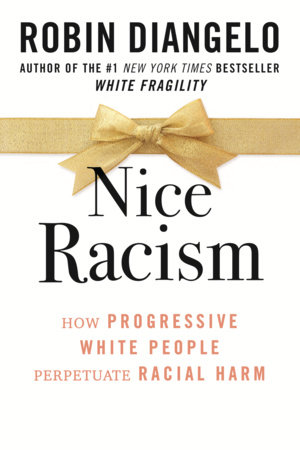
Robin DiAngelo was one of the keynote speakers at last week’s virtual White Privilege Conference and her address “Nice Racism: How Progressive White People Perpetuate Racial Harm” pierced my soul. She told the story of a conversation she had with brand new Black friends many years ago in San Francisco.

Her first inclination as a White person with very few Black friends was to establish that she was not racist. In fact, she was so determined to display her lack of racism that she actually displayed her racism in full glory. She started by sharing “how racist her family was” by repeating their jokes and comments about Black people, not noticing how uncomfortable her dinner partners were.

She wasn’t showing them how anti-racist she was. She was showing them how oblivious she was.

Hello, I’m Jan. Been there countless times.

When I say things like “My daughter-in-law is brown” or “My white children were the minority in their public schools in Virginia” or “We lived in a very diverse neighborhood” or “I have Black friends” it shows that I am not “woke.” I’m just ridiculous.

Of course I’m a racist. And I am going to get things wrong as I learn how to be anti-racist. And it’s my job to figure it out and do better.

Our SBC will be marrying a brilliant and kind human of Indian descent later this year and it’s uncomfortable not knowing the cues. (Again – hello. I haven’ had to learn Indian cues because I’m White and exist in the dominant culture every day.) I haven’t had to learn about Vrats or Upvas. I haven’t had to put Divali on my calendar.

My father grew up on a dairy farm and while those Guernseys were sacred in terms of providing milk to sell to customers in North Carolina, I’m not familiar with how cows are sacred in India.

And the wedding customs. I want to have a spirit of learning and respectfulness when I can already tell that my deeper spirit can be snarky and disrespectful. There are different customs about everything from who buys the wedding dress to who can give presents. This is new territory for me. O Lord, help me not be an idiot.

I am ignorant in many things outside of Being White. I haven’t had to code switch much. Or ever.

And the reason I bring all this up is that I hear from White friends and family that they are afraid they’ll say the wrong thing and so they say nothing. They don’t engage with People of Color. They don’t want to show their ignorance. But then they/we don’t take the time to learn.

I have been ignorant and I will continue to be ignorant in the future (but I hope less so.) I cringe thinking about the time I touched TDA’s hair. Lord have mercy. Christ have mercy. Lord have mercy.

Forgive me, Lord, for exhausting my friends.

And I am exhausted for Black, Brown, and Golden people. Not only do they deal with the daily ignorance of White people like me who haven’t had to learn about cultures beyond Whiteness but in addition to this, Black, Brown and Golden people are subject to daily indignities and the distinct possibility that they or people who look like them could be shot, pushed to the ground, or generally dismissed. That was a really long sentence. And yet it illustrates the exhaustion I’m talking about.

Robin DiAngelo’s book White Fragility was a good place to start for some White people. Her next book Nice Racism: How Progressive White People Perpetuate Racial Harm will be especially edifying for those of us who consider ourselves so woke. And please mark your calendars: The National White Privilege Conference is in Charlotte, NC next March 2022. Hope you’ll come learn with me.

Pre-order Robin DiAngelo’s new book here.

What Would We Do Without _____?

One of the things I love about Church World is that I am introduced to people I would never have the opportunity to know if we didn’t do Church together. Some of the finest people I know exemplify the love and strength of Jesus. They share their wealth sacrificially – and by “wealth” I don’t necessarily mean they are wealthy. But they make decisions on purchasing a new car or going on vacation based on needs over wants so that they can fund projects for those in need.

I say this first and foremost because this could sound like a bummer of a blog post. Bear with me.

In every church I’ve served, someone has told me early on about a leader or a family or a neighbor that the church “could not live without.

  • The retired pastor who is willing to help in any and every situation.
  • The amazing family who can trace their church membership back five generations.
  • The preschool director who is so generous with her time that she is always in the building.
  • The church elder whose financial contributions always get the church out of a pickle when the boiler dies or the roof leaks.
  • The sweet lady who lives next door who volunteers to polish the furniture and organize the closets.
  • The church administrator who is the only one who knows where everything is.

My friends, we might be able to name individuals we know who are like these examples, and they are faithful servants who ask nothing in return for their contributions of money, time, and wisdom. Without these pillars of the Church, everything would crumble. Or so we fear.

But this might not be the whole story. Because of my ministry in the Church, I often learn that:

  • The retired pastor is interfering with the authority of the current pastor.
  • The amazing family who can trace their church member back five generations believes that the building belongs to them.
  • The preschool director who is so generous with her time has no boundaries.
  • The church elder whose financial contributions always get the church out of a pickle is unintentionally sabotaging their congregation’s future.
  • The administrator who is the only one who knows where everything is has control issues and is trying to solidify her power.
  • The sweet lady who lives next door preserves the property and records in a way that perpetuates a culture of Church as Institution rather than Church as Disciple-Maker.

Healthy congregations allow the pastor to serve as they’ve been called to serve, recognizing that the Church belongs to Jesus, healthy boundaries are essential for everyone, and a culture of shared giving, shared power, and making disciples of Jesus Christ is the goal.

I can’t tell you how many congregations are being destroyed by the very people whom “we can’t live without.” They are not pillars as much as they are unwittingly preventing the Church from growing.

They love their Church but they are getting in the way. They are “good people” but Church has become about them, not about expanding the reign of God.

I write these things as a love letter to Church Pillars and all who love their own churches Please ask someone you trust, “Am I helping move our congregation into a Body of Christ that serves others? Or am I honestly about transactional ministry? (I give you money, time, wisdom and you give me what I ask for/demand.)

This is a question for each of us.

Image is of the Pillars of the Church of the Nativity in Bethlehem.

When People Disapprove of Us

Worrying about what other people think about us is a heavy burden. Seriously. Worrying about the disapproval of others can literally kill us.

Southern Living Magazine is always Pinterest and Instagram-worthy

Long before Instagram, The Church was a major contributor to the myth that “I have my life together.” If we belong to a church that thrives on image over reality, we have a problem. If our Insta-feed shows a perfectly curated existence, we are basically deceiving ourselves and the truth is not in us. Or so said John the Evangelist.

First of all, worrying about what others think is going to make us so tired. Secondly, that whole Abundant Life thing Jesus talked about will be fairly impossible to experience.

Assorted comments I’ve heard in my travels:

  • If my child doesn’t get married in the sanctuary, our church friends will believe we haven’t passed down our faith to them.
  • If I leave my marriage, people will think I wasn’t a good husband/wife.
  • If my people find out my child is gay, our church friends will shame us.
  • If my Bible study group knows my husband/wife is an alcoholic, they will look down on me.
  • If we don’t have the retirement party at the country club, people will think we have money problems.
  • If I miss a single family event, my extended family will shun me.

Oh good grief.

Age helps with this because many of us learn not to care what other people think. And it’s not that we don’t want to be liked or valued; it’s that we want to be liked and valued for being our real selves. Abundant life comes when we know we are loved and valued because God created us and not because of the kind of car we drive or what college our child got accepted into.

The bottom line is this: if we want to put our beautiful cakes and patios on Instagram, do it. If we want to put our hot mess photos on Instagram, do it. We are loved in spite of our poor choices and dirty hair.

And I like pretty cakes and sunsets and happy family photos. Bring ’em on. But that’s not why we are loved.

Are Robert’s Rules of Order Racist?

Actually, is everything racist? In a word: yes.

This happens to be a weekend of conversations, trainings, and reflections on dismantling White Supremacy (Wait. You don’t have those?) Kidding/not kidding. This weekend is the virtual 22nd White Privilege Conference.

[Note: This is not a diversity training event or even anti-racism training. The WPC is more about changing the culture.]

My colleague JC (not Jesus Christ in this particular reference) mentioned to me that the congregation he serves is going full bore ahead on assessing the inherently racist practices of their congregation. And then he mentioned Robert’s Rules of Order.

Are Robert’s Rules of Order inherently racist? Is it possible that this Mainstay Of Order, this Ultimate Authority of Parliamentary Procedure, this Revered Guide to All Things Decent might in fact perpetuate White Supremacy in our culture?

Umm – yes?

A little background:

There was a Robert and his full name was Henry Martyn Robert. He was born in South Carolina in 1837 but his family relocated to Ohio because his Baptist preacher father was so deeply against slavery. In fact, his father became the first president of Morehouse College, the famous HBCU which is also the largest all-men’s liberal arts college in the United States.

(So far, nobody sounds racist in the white Roberts family.)

Henry Martyn Robert was an army officer and being orderly was his favorite. He published his Rules in 1876 just 11 years after the end of the U.S. Civil War. According to this wonderful source, Mr. Robert was a 25 year old Army engineer stationed in New Bedford, MA when he was asked to moderate a meeting in the Baptist Church he was attending.

Meetings can be lively, heated, even rancorous affairs,
and church meetings,
as anyone who has attended them can attest, are no exception. Source

Amen.

The experience of moderating the Baptist meeting made Mr. Robert offer this comment: “One can scarcely have had much experience in deliberative meetings of Christians without realizing that the best of men, having wills of their own, are liable to attempt to carry out their own views without paying sufficient respect to the rights of their opponents.”

Amen again.

He wrote his Rules in San Francisco while stationed there and to no one’s surprise, church meetings could be testy in San Francisco too. And so were work meetings. And so were secular community meetings. Mr. Robert wrote a guidebook hoping “to enable assemblies of any size, with due regard for every member’s opinion, to arrive at the general will on the maximum number of questions of varying complexity in a minimum amount of time and under all kinds of internal climate ranging from total harmony to hardened or impassioned division of opinion.

And here’s where White Supremacy seeped into the mix:

  • Formerly Enslaved Blacks and Free Blacks had not been allowed into White Spaces in the late 19th Century, and in the 20th and even the 21st Centuries, People of Color have not been welcome in White Spaces . . . like business and other meetings. Therefore Robert’s Rules have traditionally been the realm of White People, generally speaking.
  • Black, Indigenous, and other People of Color (i.e. not the dominant culture) have been historically stifled, undervalued, and invalidated by the system which keeps those in the dominant culture unchallenged. Therefore BIPOC people might be invited to participate in a gathering, but their contributions are not taken as seriously.
  • When the system/culture has taught BIPOC to stay quiet and humble (You are so lucky White People have included you) and there is a single person with the power to decide who gets to speak and for how long and how often, it’s possible that some voices will be less likely to speak – unless the Moderator of the meeting is skilled at including everyone.
  • Plus there is a long list of other characteristics of White Supremacy Culture that keep this culture dominant. Read Tema Okun’s list here.

We give thanks to the Lord for people like Henry Martyn Robert for his attempt at reigning in chaos. And at the same time, as Nelba Márquez-Greene is credited with saying first, “White Supremacy is not the elephant in the room. It’s the room.”

Yes, Robert’s Rules contributes to our racist culture. Almost everything contributes to our racist culture because White Supremacy is the air we breathe, the ground we stand upon, and the burden we carry. And so we try to understand it and dismantle it, not in order to create chaos, but to establish what God has ordered: that all human beings are created in the image of The Divine. I’m thankful to congregations like my colleague’s willing to grapple with this because it’s holy work.

[What’s not holy work: arguing about chancel flower arrangements, sabotaging the Pastor’s authority, bullying parishioners, taking money from mission to fix the air conditioning, telling neighborhood children they aren’t allowed on the church playground, making new people feel left out in meetings, assuming everybody knows church language, loving the church cemetery more than Jesus, believing you own the church building because you are a third generation member . . . . . . . .]

Have a good weekend, friends.

Beyond the “To Do” List

I’m a list maker. A good day is when I get ten things done by noon. Boom. Boom. Boom. A couple of zoom calls. Some emails. Phone call check-ins. A load of laundry or two. There’s a deep sense of accomplishment when I conquer The List.

Jesus didn’t die for my lists though. Jesus died for people and our relationships with each other.

And relationships take time. No boom, boom, boom.

I’m on the planning team for a secular national conference in 2022 and on the design team for my denomination’s next General Assembly and I offered (a very weak) opening drive at the Pastor’s Masters Golf Tournament on Easter Monday. And I serve 93 congregations in North Carolina as their General Presbyter. Every one of these roles is about relationships.

Yes, there are lists of duties to check off as we plan for conferences and assemblies. But our work is mostly about relationships.

Dr. Eddie Moore, the Executive Director of the The Privilege Institute sent out an email yesterday to those of us planning the 2022 White Privilege Conference in Charlotte reminding us that:

If we’re not working on relationships, we’re not organizing/planning the WPC/WPS.“*

Relationship building is not a marketing strategy. It’s about human and divine bonding.

When we enter our local diner, we could just order coffee, pay the bill, and leave with our delicious beverage. Or we could remember the server’s name and address them by name next time. We could notice them and connect with them if the opportunity arises. I’m a Myers-Briggs Introvert and still I need to do this. It builds community in my neighborhood.

If we don’t know the names of people in our local community – the person who delivers our mail or the one behind the cash register at the grocery store – why not? Do we notice the people sitting alone? Do we notice the dog walkers? The bikers? The homeless guy on the bench?

I’m not saying we should walk up to strangers and invite them to become our new best friends. I’m talking about paying attention to people. Notice their faces, their book, their t-shirt. I was in one of my local coffee spots yesterday and there was a new person behind the counter where I placed my order. “Hot mocha.” And the manager who was also behind the counter said, “She likes it extra hot.” He had remembered. Made my day.

We in the Church mess up a lot. We try to help where no help is needed and we fail to help when suffering is obvious. It’s easier to talk incessantly about strategies and schedules than talking about our own brokenness or the brokenness of our community.

Jesus died to bring resurrection to each of us. And when we get that, we want to share that possibility with others. But we have to work on relationships first. And it takes time. But it’s so worth it in terms of changing the world for good. We can’t really follow our calling if we don’t want to know the people we are called to serve alongside. Have a warm and meaningful Wednesday.

Image is of LaChrista at one of my favorite coffee places. She goes by LC.

*WPC/WPS are The White Privilege Conference and the White Privilege Symposium. Check them out here.

What Good Have We Witnessed?

We are inundated with examples of witnesses who have seen terrible things with their own eyes.

There are the bystanders – including at least two children – who witnessed the death of George Floyd according to their sworn testimony last week. There are witnesses throughout the world who have witnessed war crimes and unspeakable human misery.

Many of us saw the film footage of a 65 year old Filipino woman being knocked down and kicked in NYC in front of at least three live witnesses who did nothing to help her.

Individually, we have witnessed the death of loved ones, the heartbreak of broken relationships and the disappointment of broken dreams. And . . . we have witnessed so many beautiful things too. Miraculous things.

I remember the words of the apostle Paul from Sunday’s Easter worship in describing the resurrection appearances of Jesus:

“Last of all, as to one untimely born, he appeared also to me.” 1 Corinthinans 15:8

So what beautiful life-changing things have your witnessed?

I remember when Rob Bell (during his Mars Hill Church years) was interviewed on a random Sunday while being interviewed by a secular reporter. The journalist was trying to understand why so many people would gather in a former shopping mall to worship God in the 21st Century. Why would anyone do that? And Bell said something like this, looking from behind the curtain with the journalist before worship: I don’t know why they are here except that couple over there lost a child a few months ago, and yet can still put their shoes on in the morning. And there’s a woman who endured abuse all her life sitting over there and she finds purpose and joy in working with neglected children now. And that person over there is trying to recover from a life of addiction.

In a world filled with the traumatic experiences we have witnessed, who will speak up about the miracles? If we don’t believe we have witnessed miracles, we are not paying attention.

Maybe it takes some concentration. We are so used to the world’s tragedies that we forget that there are glorious moments of healing and grace in our midst.

There are the parents who celebrated the 15th birthday of their daughter last weekend although she is forever six after dying during a school shooting. Somehow, they inspire other human beings to rise up. How is that possible? And yet this is something I witnessed on Easter morning.

There is the person thoroughly betrayed by her partner during a particularly vulnerable time in her life and somehow has the strength to offer life-saving community to people who have no hope.

There’s the child who is somehow a miraculous prophet while enduring treatment for cancer while bringing her estranged family together.

There’s the person who has absorbed systemic racism all their life and somehow has the strength to offer grace to ignorant people (like me.)

What beauty have you witnessed? What healing have you observed? We have a responsibility in the name of Jesus to tell others what we’ve seen and heard, not in a way that shames the sorrowful or minimizes someone’s pain. But there is hope and maybe we can offer some.

When has God appeared to you? I’ve seen God in so many parts of life. I know you have too. Let’s share that Good News.