Remember When Child Sacrifice Was Not Okay?

One of the reasons that the God of the Hebrews was special in the Old Testament is because this God did not ask people to practice child sacrifice.

The point of the story of “the sacrifice of Isaac” is that the God of Abraham was different.  God asked Abraham to sacrifice his son – which was not an unusual request considering that the Amorites worshipped Moloch and the Moabites worshipped Chemoth – both fans of human sacrifice. When God offered a replacement sacrifice, it was clear that this Deity was different.  Child sacrifice was not okay with this God.

Early Christians were known for their generous treatment of widows and orphans in a culture known for casting widows and orphans out.  Early Christians worshipped a God who would rather touch lepers, eat with pariahs, converse with unfamiliar women, and even turn water into wine before allowing the sick to suffer, the unpopular to be ostracized, the powerless to be disregarded, and even the wine-less to be shamed.

With Jesus, love was introduced as God’s superpower.  And it becomes our superpower when we follow Jesus.

Love makes sacrifices for others.

But we are extremely confused today.  Instead of making sacrifices for others, we have reverted to sacrificing others to benefit ourselves.

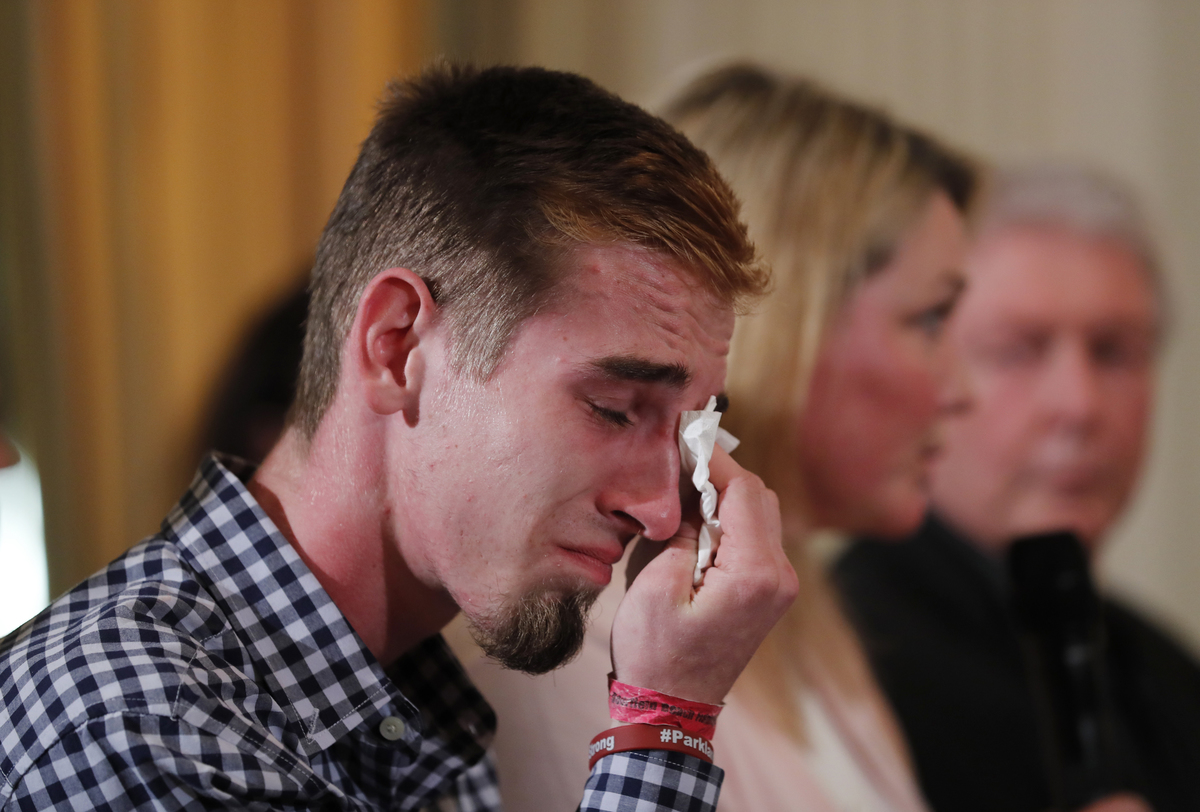
We choose to sacrifice our children for the sake of the gun lobby.  We choose to sacrifice the poor for the sake of corporate profits.  We choose to sacrifice people fleeing from war and abject poverty for the sake of people who chant for a wall.

We all deserve to go to hell if we don’t stand up and declare that child sacrifice is not okay.  Via the prophet Isaiah, God said this:

When you stretch out your hands,
   I will hide my eyes from you;
even though you make many prayers,
   I will not listen;
   your hands are full of blood. 
Wash yourselves; make yourselves clean;
   remove the evil of your doings
   from before my eyes;
cease to do evil, 
 learn to do good;
seek justice,
   rescue the oppressed,
defend the orphan,
   plead for the widow. 

I would like every local, state, and national politician  – especially those who call themselves Christian – who has ever voted to choose corporate interests over the interests of children to read and re-read this and recognize that their hands are full of blood.

And our hands are full of blood if we do not vote these people out of office unless they make it impossible for anyone to purchase an assault weapon. 

Remember when child sacrifice was not okay?


Image of the Moabite god Chemosh from Wikipedia.  Also, this post was inspired by this excellent Garry Wills article written after the Sandy Hook shootings.

Commuter Marriage

HH and I have been married for 30 years and we’ve lived apart twice before – for six months each time. 

The first time was when we were newlyweds – which was weird because many couples live together before marriage and we didn’t even live together after marriage – for six months.  At month three, we learned we were expecting our FBC so it seemed wise to speed up the let’s-move-in-together plan.

The second time was when HH had a new call, all three kids were in college and I needed to get some things done – professionally and personally – before joining him in Chicagoland.

This third time will happen in April and there is no time limit in terms of how long we will live apart.  HH serves a great congregation in Chicagoland.  I’ve just been called to a great position in Charlotte.    Sometimes couples have to live apart to stay in their profession.

In the course of discerning if we could do this, I talked with:

  • God
  • HH
  • Our kids
  • Other people doing commuter marriage
  • God again

And while I am pumped for this new position and know that God has called me to this ministry, it is bittersweet.  There are hundreds of things I like about being with HH every day.

So, here’s what I’ve learned in my two previous stints in a commuter marriage and in my term as a denominational leader (which involves quite a bit of time away from home) and in talking with commuter couples who offer their own Pro Tips:

  1. Absence makes the heart grow fonder and reunions are sweet.
  2. I get a ton of work done when I live alone.
  3. I need to remember to stop working when there is no one around to remind me to stop working.  (I got a dog in my first call when I was single just to be able to tell people “I have to get home to my dog.”  Some people expected me to work 24/7 and I bought into this unholy idea for a while.
  4. HH and I plan to have coffee together every morning via Facetime.
  5. I talked with the search committee (and will be talking with other leaders in Charlotte) about “going home” to HH twice a month, if possible – leaving Thursday nights and returning Saturday nights/ Sunday nights once a month.  This will have to be flexible according to church schedules of course.  (People tell me it’s easier when only one person does most of the back-and-forth travel.)
  6. I will need a true home in Charlotte too with familiar things. (And I have one.  Moving into cute apartment next to a BBQ place.)
  7. Spense needs to stay in Chicagoland but we will also be talking via Facetime.  #Yard
  8. A healthy marriage makes me a healthy pastor.  I’m best if my marriage is happy so feel free to encourage me to take my Sabbath/see HH as often as possible.

I’m happy to accept further Pro Tips for any of you who commute between two homes in your marriage.  Especially for clergy couples who take God’s call to professional ministry seriously and cannot always find calls near each other, living apart can be a reality.

Some of you will disapprove of this arrangement for whatever reasons.  But my hope is that most of you will hold me and my HH in prayer that this will only make our marriage stronger and more fun.  It’s will kind of be like having a love nest in Plaza Midwood.

The Whole 40

I see two basic truths on this Valentine Day:

  1. Lent lasts 40 days.
  2. People long to be whole.

HH and I are doing The Whole 40  during Lent (and this is the first and last time I will talk about that) because certain foods are messing with us at this point in our chronological lives and I will especially need Jesus to help me with giving up sugar.  And pasta.  And cheese.  We are trying 40 days instead of 30 because . . . Lent.  Again, I will need this to be a spiritual practice.  And I may not succeed.

Giving up things for Lent or for any season was not something I did growing up.  Simply giving up – yes, sometimes I have been tempted to do that.  But giving up certain foods seems harder for the granddaughter of dairy farmers and bakers.

It’s also hard to give up greed, self-centeredness, gossip, and other daily ways of life that keep us from being whole. But this is the season to try.

The focus is not supposed to be on ourselves (and how much I want a piece of pizza.)  The focus is supposed to be on those who are not loved nearly enough who are hungry for food and peace and dignity.

We all want to be whole.  I’m trying it in a new way for the next 40 days.


Why Does Your Church Exist?

Everything. I. Read. these days is fundamentally about this question.

I just finished the Bonhoeffer chapter in Forged in Crisis: The Power of Courageous Leadership in Turbulent Times by Nancy Koehn  and have just realized (!) that Bonhoeffer was a postmodern Christian:

In Bonhoeffer’s eyes, a church that existed for others, that sought to embody Christ’s concern with those who suffered, was not primarily concerned with its own survival or aggrandizement. Nor was it a community of ascetics or saints living in monastic seclusion—quite the opposite. The Christian life, he argued, was rooted in being truly human, in anchoring oneself in what he termed “this-worldliness.”

Amen.

For the last twenty years, I’ve been asking churches the question, “Does your church exist for your congregation or for the people outside your walls who need the love of God?”  In healthy congregations, the answer is “both” but one is always dominant.

If our congregation exists dominantly for its own members, then we are dying.  And we basically deserve to die.  We have missed the point of the Gospel.

I don’t mean to bum everybody out on Fat Tuesday, but this is important on the cusp of Lent.  We live in a time when innocent immigrant young adults are being threatened with deportation from the only country they’ve known.  We live in a time when the poor in our own great nation are being threatened with an ever increasingly level of shaming.  We live in a time when corporations are blessed with more benefits than human beings in need, with the premise that corporate profits will eventually aid individuals.  (This is has been proven to be untrue. Corporate profits overwhelmingly aid those in the corporation.)

This is a blog for people who – generally – want to follow Jesus.

So . . do we want to follow Jesus or don’t we?  If we do, then this is why our congregations exist.  Our world craves community, security, nourishment, and wholeness.  What are our congregations doing to offer these gifts?

Image of Dietrich Bonhoeffer who continues to be a good read for Lent.

A New Chapter

As I write this, I’m back in Louisville without much time to reflect much less write. My next call has finally been revealed and there will be some thoughts on that later. But for now, I’ll just say I’m tired but happy. Can’t wait to return home to Chicagoland tonight if the airports re-open. Thank you for the good wishes. They mean a great deal to me.

Image via MT-B.

Simple Division. Between Neighbors.

I’m in the middle of an 15 day work trip mostly in Louisville, Kentucky.  Four hotels.  Multiple cabs.  Banquet meals.

My expenses are covered.  The beds are plush.  The hot water is plentiful.  The wireless and cable are free.  There is complimentary coffee.

It would be easy to move through this work trip without seeing the other people working all around me. There are hotel housekeepers, cab drivers, restaurant servers, concierge managers, and shuttle drivers.  They depend on my tips.  And they make comments to me as we share stories that make me realize that the economic divide between us is deep.

  • One hotel restaurant server phoned me in my hotel room hours after lunch to tell me that there was a problem with my bill and she couldn’t get her tip.  (The front desk had forgotten to place my credit card on file so when I charged the bill to my room, it hadn’t gone through.)  The tip was $3.00 – 20% of my bill – but she needed that $3 before leaving at the end of her shift.
  • One of my cab drivers shared that he was working extra hours to pay off medical bills because he doesn’t have insurance and his wife has cancer.
  • Another cab driver told me that when he lived in NYC, he and his wife worked in a bakery but they didn’t earn enough money to rent an apartment so they slept on the subway. Once a week, they checked into a cheap motel to sleep in a bed and get a shower.
  • The shuttle driver and I were talking about snowstorms and he said that he was grateful they didn’t have snowstorms in Louisville because it would be hard to get snowed in and not be able to work.  (He doesn’t get paid for snow days or sick days or vacation days.)

Each one of these people is a hard worker who has not had the advantages many of us have had, through no fault of their own.  My own privileges start with my skin color and multiply from there:  born to college-educated parents who expected college for me, annual vacations, music lessons, braces, health care, and an excellent public school system.  The advantages of having connections assisting me in everything from admission into circles of influence to offering safety nets if I needed them.

Those of us with college degrees forget that over 60 percent of those living in Indiana, Iowa, Ohio, Missouri and Wisconsin, and over 80 percent in certain counties in western Pennsylvania, Michigan, Ohio, and Wisconsin do not have college degrees.  (Source here.)

What do we do about this economic divide?  We can start by joining the New Poor People’s Campaign led by the Rev. Dr. William Barber and the Rev. Dr. Liz Theoharis.  If nothing else, this movement connects people who would not be connected otherwise.  If nothing else, our involvement helps us to see people who are usually invisible in our busy worlds.

If we talk to people in service professions, we will find our lives enriched and our perspectives broadened.  (So this, too, is a selfish endeavor.)

It’s harder to accuse people of being from $#^% countries or being “losers” if we know that – actually – they are among our hardest working neighbors.

Image from a recent hotel stay.  I learned that the Galt House in Louisville makes a concerted effort to hire formerly homeless individuals for their housekeeping positions.

Lady Doritos

I’m writing from Louisville (still here) where the Presbyterian Mission Agency Board is meeting.  This is my cream in the Oreo cookie between the Annual Event of the Association of Christian Educators (last week) and the selection of General Assembly Committee Leadership (next week.)  But in the throes of Church World, can we talk about Lady Doritos?

When I first heard that Pepsi Cola (the good people who make Doritos) is marketing a snack chip that saves women from 1) making unladylike crunch sounds in public and 2) licking our manicured fingers to clean off the nacho dust, my mind went  – surprisingly – to Dr. King.  One of his sermons was featured in last Sunday night’s Dodge Ram commercial, displaying once again that usurping theological content for secular promotion is an unfortunate idea.  His actual sermon – based on Mark 10:35-45 – was about the problem with marketing.

I imagined Dr. King’s Drum Major Instinct sermon going something like this at next year’s Super Bowl:

You know, those gentlemen of massive verbal persuasion.  And they have a way of saying things to you that kind of gets you into buying. In order to be a man of distinction, you must drink this whiskey.  In order to make your neighbors envious, you must drive this type of car. In order to be lovely to love, you must eat this kind of snack chip.”

Alas, PepsiCo does not, in fact, plan to create and market Lady Doritos.  “We already have Doritos for women,” the company reported yesterday.  “They’re called Doritos.”

Thanks be to God.

Just when you think the whole world has lost every speck of sanity, PepsiCo redeems itself.  There will be no Lady Doritos.

May we also redeem ourselves by spending our precious energy creating what truly inspires and transforms the world for good.  Some of us try to do this in the name of Jesus Christ.

Image of some of the tweets that made me laugh out loud yesterday as #LadyDoritos was trending.

What Happens When We Prepare to Meet Our Maker?

“McCain has Stage 4 brain cancer and has been absent from Washington since before Christmas. He is not expected to be on Capitol Hill this week. Sponsoring this immigration measure is a stark departure from McCain’s aggressive stance on border security.”

I’m struck by this story about a generous and bipartisan plan regarding undocumented immigrants proposed by Senator John McCain (R-Arizona) and Senator Chris Coons (D-Delaware).  Once upon a time Senator McCain was less tolerant towards “Dreamers.”  But his time is more precious now and there’s a final legacy to establish.  And he wants to get past this so that Congress can move on to other things like benefits for our troops.  Apparently he has decided that – in these last weeks/months/years he will be more merciful towards those he has more harshly judged before.

My family has observed this up close and personal.  Although Dad was a fundamentally generous man, he spent his last weeks with terminal cancer offering some surprisingly tolerant statements about issues he had been less tolerant about before.  He was going to be meeting his Maker soon and he wanted God to be as forgiving as he was suddenly willing to be.

The reality of certain death changes everything.

Although I do not wish President Trump ill, I wonder what would happen if – today – he was diagnosed with Stage 4 cancer.  How would his policies change, knowing that the end of his life was unequivocally in sight?  Would he spend his time ensuring that his loved one’s inheritances were iron clad?  Would he be kinder on Twitter?  Would he suddenly change his words about immigrants, refugees, women, the poor, and other “losers”?   Would he have an authentic Come To Jesus moment?  My hope is that he would become kinder and more merciful.

We are all called to repent – not just so we’ll get a ticket to heaven – but because it’s the way God created this world to be here and now (as well as in heaven.)

My prayer is that Senator McCain experiences deep love both now and eternally.  He has already experienced deep hell in this life.  But in the meantime, I’m grateful he seems to be willing to show lavish mercy on this side of the grave.

Are we the kind of people who need a terminal prognosis to do justice, love kindness, and walk humbly?  I hope not.


Image is of Dean Smith‘s new gravestone in the old Chapel Hill Cemetery which quotes  Micah 6:8 .  The LORD requires us  “to do justice, and to love kindness, and to walk humbly with your God”  To the left is a detail from the top of the stone. courtesy of RME.  March Madness is soon upon us.  Another reason to live.

Traveling Lightly

I own a lot of stuff.  Although I’m quick to get rid of broken things and clothes I don’t wear, there are still boxes we have never unpacked since moving from Arlington, VA seven years ago.  Do we really need things we haven’t used for seven years?  There might be a Bible verse about that.

Two things about having dead parents:

  1. If we had kept every sentimental thing, we would need a warehouse.
  2. I still have all their love letters from just before and just after their wedding because they lived apart for several months even after they got married.  (Dad was based in AZ with the US Army & Mom lived in NC with her parents for a while even after the honeymoon.)  Note: their letters are boring.  “I got a new white top today,” Mom wrote in one not-so-scintillating missive.

Because we’ve cleaned out parents’ and grandparents’ houses, I am hoping to avoid a similarly exhausting fate for my own children.  And in my situation, my siblings did most of the work.

Yesterday’s Sunday Morning featured a man who collects washing machines.  It gave me chest pains.  All I could think about it that this man’s heirs will “get to” deal with this after he passes away.  Washing machines.  Why couldn’t he have collected Pez dispensers or pennies?

Collecting things is the hobby of the privileged.  Rich people collect art.  The rest of us (who are also quite rich by global standards) collect everything from salt and pepper shakers to aluminum Christmas trees.  But what happens when we die?  Do our grandkids bear the brunt of our sentimentality?

Religious organizations deal with this as well in myriad ways:

  • We can’t possibly merge with The Church on the Hill because all our church china says First Church in the Valley.
  • When Miss Judy died, she left us her Hummel collection and we can’t get rid of them, so we’re displaying them in the church parlor – which probably says to visitors, “We are old and don’t care who knows it.”
  • We’ve saved every copy of every church bulletin just in case.
  • Our worship service is the same as it’s been for fifty years because …. Red Hymnal.

We are a sentimental bunch while most of the world is increasingly not by virtue of human tragedy.  Refugees don’t get to be sentimental as they run for their lives.  Natural disaster victims joltingly lose their stuff in fires and floods.

What if we focussed less on accumulating stuff and more on accumulating experiences – like deep human conversation or travel that broadens our world view?  We might find that we become more generous with sharing what we have.  We might find that we didn’t need those things after all.  We might find that we are not what we own.

Churches are not their buildings or their Hummel figurines.  We are the people who long to connect with each other and with God, who are looking for meaning and purpose, who are broken and afraid (which makes us cling to our things.)

I’m not saying we shouldn’t own anything.  I’m just saying that when we travel lightly we more easily appreciate what really matters in life.

What Are the Ten (Honest) Things We Should Know About Each Other?

A friend and colleague shared with me yesterday that as her daughter and son-in-law were “dating” an ocean apart from each other, they regularly shared “Ten (Honest) Things You Should Know About Me” lists.  Although they’d only briefly hung out after first meeting, by the time they saw each other a second time, they felt like they knew each other pretty well.

I wonder if Pastor Nominating Commitees and Candidates might do this too. Total honesty and specificity would be required.  I can imagine a PNC putting together a list that looks something like this:

  1. We are a great church but we are worried about a few things.
  2. Some people are desperately worried.
  3. Some of our members are cranky.  Maybe more than a few.
  4. Miss Esther has been making homemade donuts for 19 years for our coffee hour.  Nobody messes with Miss Esther.
  5. The truth is that we have only seven kids in Sunday School.
  6. We are really good at crafts.  At least a couple of ladies are really good at crafts.
  7. We’ve hosted a fish fry every First Friday of October for 22 years.
  8. Most of us hate the fish fry.
  9. Nobody talks about it but we have a gay couple that everybody loves. Nobody messes with Dan and Steven either.
  10. We say we want to change, but we don’t really want to, but we have to and so we hope to call a pastor who will love us into doing what we don’t want to do.

Many pastors out there would love to serve this church.  Many pastors are looking for congregations who tell the truth about themselves and allow their leaders to share their truths as well.

Would love to hear what Ten (Honest) Things your Church might share when looking for your next pastor.  Or you could share your own.