Missed Opportunities: Go Gumshoes!

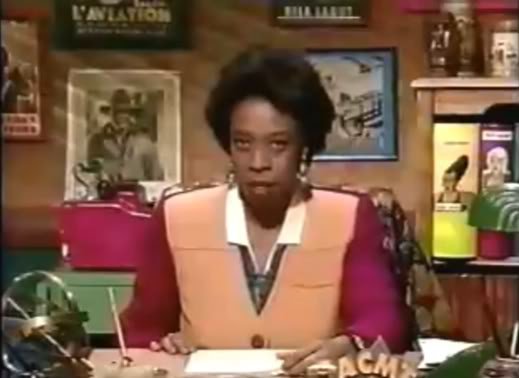
SBC and I deeply bemoan the fact that the School Board of Joliet, IL missed a once in a lifetime opportunity in 2013 when they dedicated the Lynne Thigpen Elementary School – named for the wonderful actor Lynne Thigpen – and failed to name the mascot The Gumshoes.  Come on!  It was so obvious!  

Imagine that every science class, every art class, especially every geography class (!) doing their work as “gumshoes” – detectives committed to discovering the answers!  Where in the world is The Sphinx?  Machu Pichu? The Mona Lisa?  Honestly, this is among the worst missed opportunity I can imagine.

But I see this every day in Church.

  • A congregation meets – literally – beside an elementary school with a large free and reduced lunch population and they have zero relationship with that school.
  • A march is scheduled outside an urban church building and the elders decide to close the building that day (to prevent strangers from entering) rather than serve water and coffee out front and let guests use their restrooms.
  • The church building has a fellowship hall that nobody uses Monday – Saturday and there are homeless people sleeping in the streets.

I could go on and on.  We – as the Church – need to work on our own gumshoe skills to figure out how we might serve those in our community.  Sometimes the clues are so obvious.

Image of Lynne Thigpen as The Chief in the television show “Where in the World is Carmen Sandiego?”  She died suddenly in 2003 and her hometown named their newest elementary school after her in 2013.  (But they missed the boat on naming the mascot.)

A Two Part Dream


Thanks to my friend SP-B, I have a two part dream today:

  1.  That all families – not just families with Black and Brown children – will have The Talk.
  2. That one day there will be no need for The Talk.

We – White People – need to talk about these things with our White children and remind them that racial bias is real.  Maybe one day it won’t be.

This Proctor and Gamble commercial was first broadcast last summer. It was also broadcast at the end of Blackish this week.  It should be shown during every newscast and sports event on every channel until we don’t need it anymore.

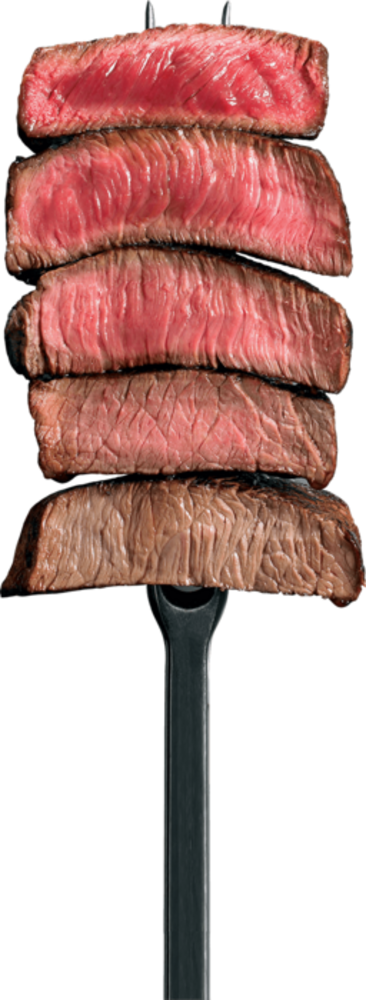
I Like My Steak Medium and My Church Well Done

[Note: Apologies to any vegetarian and vegan readers.]

“Medium” is my go-to for all meats:  salmon, burgers, pork, steak.  “Medium Church” – not so much.

I’m not sure what to say about a Rare Church today except that Well Done Church also seems to be Rare.

This is not to say that any Church perfectly executes their ministry.  The appearance of “Perfection” seems a little fake anyway.  I find that a Well-Done Church has the following distinctions:


  1.  Authenticity.  People genuinely care about each other more than they care about appearances.
  2. Curiosity.  People want to learn more – about God, about their neighbors, about themselves.
  3. But Curiosity is Not About “Getting Smarter.”  Often we seem to go to our Bible studies, our book discussion groups, our speaker series and then we go home smarter, but nothing changes.  A Well Done Church acts upon what they’ve learned together.
  4. It’s about God.  You can feel it.
  5. There is laughter.  It’s funny (not humiliating) when mistakes are made from the pulpit or in the parking lot.  No shaming and blaming.
  6. Things flow.  Although the Holy Spirit makes this happen, leaders also work together well to create worship that moves through the liturgy smoothly, lifting up special themes and foci.
  7. Hospitality is genuine and the circle is wide.  (This is sadly rare.)  We who think we are friendly are usually talking only to our friends.  The heavily pierced guy or the unfamiliar woman of a certain age sitting alone or the tall trans lady don’t experience hospitality in many congregations.

Although it’s easy to make a Medium Steak into a Well-Done Steak, it’s not easy to shift a Medium Church into a Well-Done Church because the issue is DNA rather than temperature.  Both take time.  But shifting a congregation’s DNA or culture takes an enormous amount of time and a particular devotion to make that shift.

It happens only by focussing on God and figuring out who God is calling us to be as The Church in our particular context.  It will involve people leaving.  It will involve hurt feelings.  But it will mostly involve a vision so clear that we cannot help but move toward it.

It’s monumentally easier to order a rare steak and be done with it.

Start with Uber

Not every community has Uber and some who do are still angry with them.

But I’m trying to figure out how White People might connect with people from other cultures when all their friends, family, and colleagues are also White.  Maybe we could start with Uber if it’s in your area.

My last four Uber drivers were from Jerusalem, Tunis, Addis, and Karachi respectively.  Three were Muslim.  All four were proud fathers.  Three were college graduates.

When I take an Uber from Midway Airport in Chicago to my home in the South Suburbs, I have a good 30 minutes to get to know my driver.  Weirdly, I don’t talk with people on planes, but when I’m in a car and there are just two of us, it feels bizarre not to talk with my travel companion.  Sometimes I sit in the front with the driver.  Sometimes I sit in the back, especially if the front passenger seat is filled with the driver’s stuff.

By the time we pull into my driveway, we have often shown each other photos on our phones of our kids.  A couple times we’ve prayed.  We shake hands and move on.  We exchange words of gratitude for the other. It’s very friendly.

It’s also impossible to leave the car denigrating “all Muslims” or “all immigrants.”  I’ve loved catching a glimpse of the lives of my neighbors.  I’ve appreciated the gift of hearing their stories.  I’ve marveled at how our lives are similar. There is almost always a connection.

We need to get our of our little lives and notice people whose accents, skin color, ages, and lifestyles are different from our own.  Often they are invisible to us.  Or their presence makes us shut down and keep to ourselves.

What if instead of fearing/ignoring/keeping away from people who are unfamiliar or different from us, we took the opportunity to learn something from each other?  Curiosity is an excellent tool for expanding our universe.

If not Uber, what would you suggest?


Religion and Politics and Words

Audience, Stage, Performers?Congregation, Chancel, Choir?

Spectators, Arena, Cheerleaders?

The different words we use to describe a worship gathering might illustrate semantic differences, or they might speak to our theology of worship.

Yesterday in the news, President Trump described a meeting with these words:  studio, performance, reviews.  Usually those words are used for television shows or stage acts, and political commentators made note of it.

People who have never crossed the threshold of a church building are more likely to see an audience and a stage and singers if they happen to stumble into a Christian worship gathering.  That makes sense.  Maybe most people seeking spiritual community would describe it that way.

On the one hand, we lifelong church people need to recognize how unfamiliar our language is to people who don’t do church.  But on the other hand, we need to recognize why we do what we do and hope our language describes what’s really going on.

Preachers, liturgists, church musicians and church singers are not performers – although all of us want to shine.  Charismatic spiritual leaders attract people.  But the deeper reasons why we lead in worship is not about us.

The same is true in politics.  Our political leaders are not performers although we gravitate towards charismatic leaders.  But the deeper reasons why they govern is not about them.

Maybe Oprah will run for president and maybe she won’t.  Some would say that she is already a spiritual leader.  But she – and all of us – were created for something bigger than ourselves.  I believe that God is watching us and notes who is being served.

Image from Architectural Artifacts in Chicago.

Pastors Looking for Love

What I wonder is this: “Can you love your pastor?” 

I felt queasy when I heard a preacher say this from the pulpit.  It was painful.

While all pastors want to be well-liked, respected, and even loved, that’s not why we accept the call to professional ministry.  Good pastors often have to make decisions that disappoint people or even anger parishioners.  And God knows not all parishioners are loveable.

But we are called to love God’s people, to show them what the love of Jesus looks like, and to pray even for our enemies.  Our job is to love them, not to aspire to be loved by them.

I believe this is one of the keys to effective ministry.  This is why we need emotionally healthy church leaders.

If we have not experienced unconditional love ourselves, it’s very difficult to offer that love to God’s people.  Clergy with deep emotional needs cannot themselves do the hard work of ministry until those needs are addressed.  I remember Nadia Bolz-Weber saying “we preach from our scars, not from our wounds.”

Yes, even clergy have emotional needs.  There are times when parishioners support their pastoral leaders with casseroles and hospital visits and get-well cards and prayer.  Pastors get sick and grieve and experience difficult situations.  But it’s not the congregation’s job to be the primary support system for the pastor.  And God is supposed to be the object of our adoration, not the pastor who points to God.

Vulnerable pastors inspire growth.  Needy pastors create unhealthy dependencies.  What do you think?

The Largest Roman Catholic Parish in the US is in (wait for it)

. . .  Charlotte, North Carolina. 

Not Milwaukee.  Not Boston.  Not Chicago.  The largest Roman Catholic parish can be found in the Presbyterian stronghold of Charlotte.  You can read about it here.

Guess where the largest contingency of Bahá’í live in the United States?  Not Massachusetts or California.  According to Wikipedia, The Bahá’í Faith is currently the largest religious minority in Iran, Panama, Belize, and . . .  South Carolina.

There are mosques in Gadsen, Alabama and Madison, Mississippi.  There are Hindu temples in Spanish Fork, Utah and Cedar Rapids, Iowa.

My point is this:  we need to know our neighbors.  We should not be surprised to learn that there is a Buddhist Temple in Kannapolis, NC and a Zoroastrian Center in Flower Mound, TX.  Instead of being out of the loop or shocked or even outraged that there are spiritual people in our communities whose faith is different from ours, we need to reach out and meet the locals.

As people move geographically and spiritually, we are called to pay attention and shift how we best become their neighbors – in the image of Christ.

Image of the gloriously beautiful Bahá’í Temple in Wilmette, Illinois.  It is one of ten Bahá’í Temples in the world and the only one in the United States.

Little Girls Are Watching

Little boys are watching too.  

Oprah talked last night about the power of witnessing Sidney Poitier win the Academy Award for best actor when she was a little girl.  And there are surely little girls who watch Oprah today, imagining that they too can be business women or actors or philanthropists.

It’s a busy travel season for me, so this will be short.  But as I travel throughout the Church it’s increasingly clear to me that we need more women of color in leadership positions in the church and beyond.  Little girls are watching us and they are brown and black, as well as white and olive in skin color.  Little boys are watching too and they long to see leaders who look like them.

But white children and white adults need to see people of color in leadership too.  White people need to acknowledge that people of color are essential leaders and inspirers and creators in our country for all of us.  The women of color in my own denomination are among the most brilliant and talented leaders we have.  We are missing out if we do not hire them, listen to them, and honor them.

Image of the amazing Rev. Dr. Katie Geneva Cannon, Annie Scales Rogers Professor of Christian Ethics at Union Presbyterian Seminary in Richmond and the first African American woman ordained in the Presbyterian Church in 1974.  Photo from Union Presbyterian Seminary.

Personal Life Tips for a New Year #3

[Note: This week, I hope to remind myself of things that will make 2018 a good year for me and for the people around me.  Maybe they’ll speak to you too.]

#3– Life Tip for a New Year: Not All Leaders Are Created Equal

Yes, everybody gets a trophy these days but not all leaders are equal.  I find in Church Word – and I believe it’s also true in Academic World, Medical World, Banking World, Sports World and every other world – that we often have people in leadership positions who are not good leaders.

Maybe they rose to their position because they fulfilled a demographic but demographics don’t guarantee passion or fitness for a particular role.  I was once asked to chair a Singles Ministry in my first Presbytery because I was single.  Nobody asked me if I had a vision for this.  Nobody asked me if I had energy for this particular ministry.  (I didn’t.)

Maybe “nobody else would do it” which means that we should stop doing whatever “it” is, until there is indeed deep calling and commitment to that thing.  If nobody wants to lead Vacation Bible School, don’t have Vacation Bible School this year.  Just don’t.  One of two things will happen:  1) Someone who’s been shy about stepping up – even though he/she feels inspired to do it – is nudged enough to step up or 2) Vacation Bible School has become something “we have to do” not something that makes a positive impact in our community.  If nobody wants to be in charge of the next project that your organization “always does” just don’t do it – at least this year.

Maybe someone aspires to be a leader but they have no followers.  Something I learned in Community Organizing Training:  All Strong Leaders have followers.  Notice who on your board does not inspire others, and when it’s time to recruit new members, look for people whom others will get behind.

Strong leaders have the trust of their people to the point that they inspire energy and vision while also holding people accountable. Their people feel safe and supported. Communication is excellent and the only surprises are birthday parties.

You know what weak leaders do.

I pray for solid leadership training in this new year whether we spend our lives shepherding churches, hospitals, businesses, or sports teams.  There is so much we can do to make this world better.

Who will lead us?  There are some excellent choices out there.

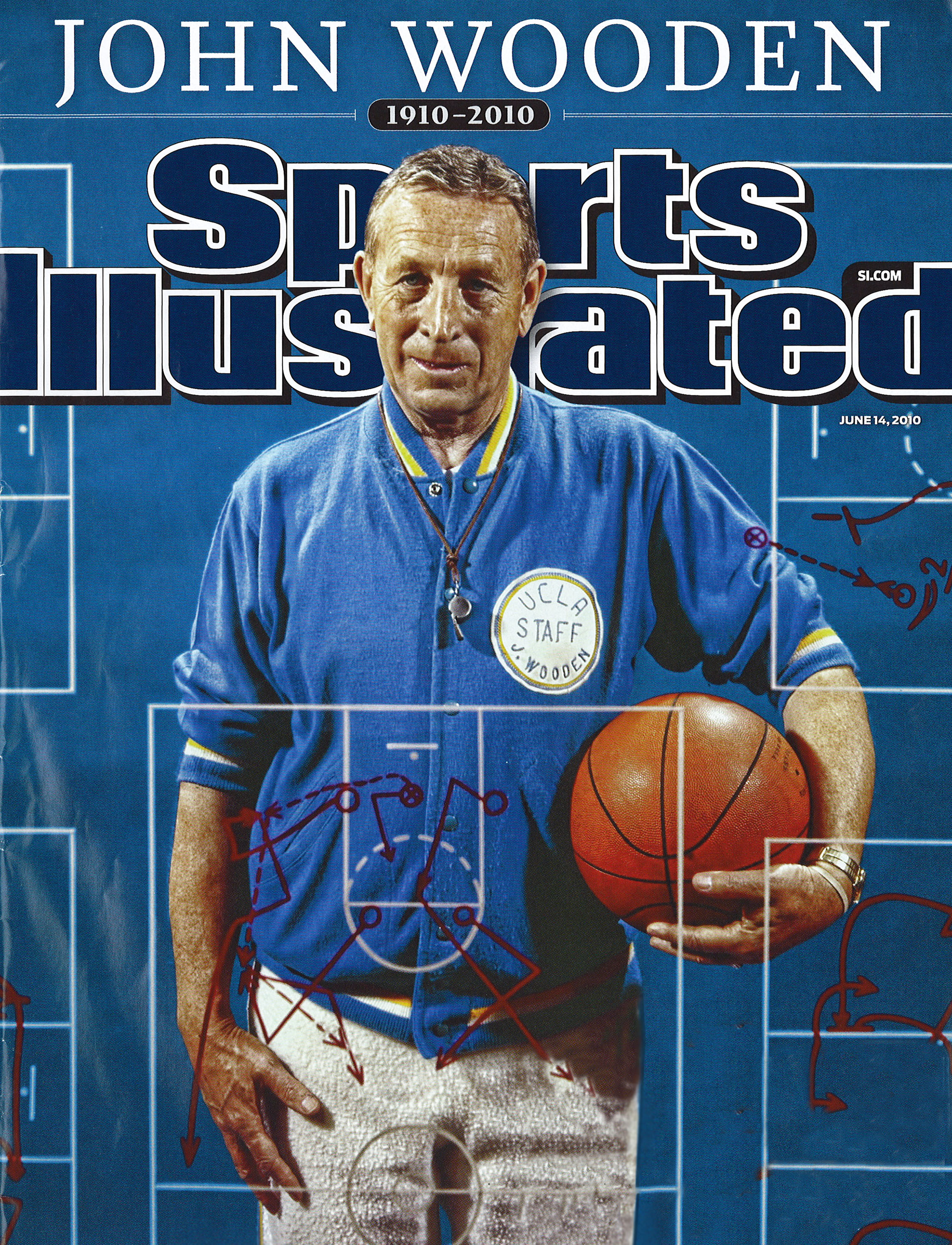
Image of the great John Wooden, one of the greatest coaches and leaders of our time, upon his death at the age of 99.


Personal Life Tips for a New Year #2

[Note: This week, I hope to remind myself of things that will make 2018 a good year for me and for the people around me.  Maybe they’ll speak to you too.]

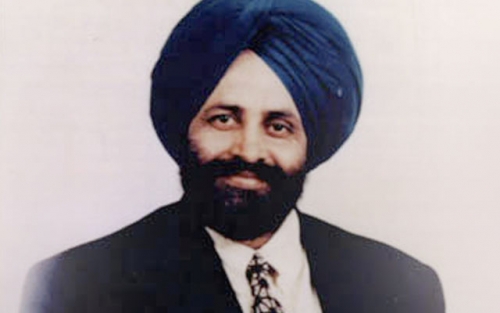
Balbir Singh Sodhi was killed because of ignorance – as well as hate.

#2– Life Tip for a New Year: Do The Research

I loved Kumail Nanjiani’s monologue on SNL last fall – especially this part:

Here’s my problem with most racism.  It’s the inaccuracy. That’s what bugs me.  So I’m like, “Do the research! Put in the work! You will see the benefits!”  I’ll give you an example:

If someone yells at me, “Go back to India!” I’d be like “that guy’s an idiot.” But if someone was like, “Go back to Pakistan which was part of India ’til 1947 and is now home to the world’s largest salt mine” I would be like “that guy seems to know what he’s talking about. I’ll pack my bags!”  Just because you’re a racist, you don’t have to be ignorant.  An informed racist is a better racist.

If I truly believe that transgender women want to attack other women and girls in public bathrooms, I need to become less ignorant.  I need to read this book perhaps.

If I truly believe that all Trump voters are racist, I need to talk with some Trump voters personally –  or better, I need to listen.

If I truly believe that all immigrants from Muslim countries are terrorists, I need to watch The Big Sick or talk to someone who has come to the United States from Sudan or Jordan or Indonesia in hopes of starting a new and better life. Get some coffee together.

If I truly believe that all undocumented people from Central America are “rapists and criminals” trying to “take our jobs” maybe I need to talk to the undocumented high school honor student at my son’s school from Honduras and hear the story of his family’s escape from a death squad. Or maybe I need to talk to the tomato pickers in Florida who are willing to work in the Florida sun for eight hours a day at minimum wage because they are that desperate to work.  I met a man there who came to this country after his daughter was kidnapped by traffickers in El Salvador.  He hopes to  save enough money to hire someone to help him find her.  There are many honor students who are undocumented.  There are many undocumented workers who pay taxes and take any job they can find to offer a better life for their families.

We need to know what we are talking about.  Fake news is real (but – ironically – it’s not coming from credentialed journalists and researchers.)  Just because someone tweets it, doesn’t mean it’s true.

Again, I offer this tip because I myself need to be reminded.  If I want my own opinions to be affirmed, I usually take the easy route and believe what supports what I already believe.  Maybe this tip is for you too.  For the love of God, we need to do our research.

Image of Balbir Singh Sodhi, a Sikh shop owner from Mesa, Arizona who had just purchased an American flag to hang outside his business in response to the terrorist attack on 9-11-01 when an ignorant man – thinking he was a Muslim because of his beard and turban – killed him in cold blood.  Unfortunately, there are scores of stories  about innocent people killed because someone was ignorant – as well as criminally violent. 

Also it’s not ok to kill anyone because of their faith.