Stuff Church Offers (That the World Needs Right Now)

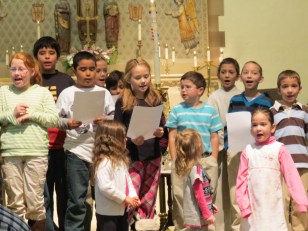
Children_singing_11_4_12I was listening to Daniel Goleman on TED Radio last weekend talking about the 21st Century generation’s unique developmental journeys.  He said that we are witnessing the first generation of human beings who are learning empathy, conversation and compassion via social media.  Or not.

What will it look like when a whole generation learns how to make friends, engage in conversation, navigate conflict, and date primarily via social media?  We all know that it’s easier to be mean and trollish on social media than it is to be mean and trollish face-to-face.  What if the next generations never learn how to connect up close and personal?

Goleman says:  “Emotional intelligence begins to develop in the earliest years.  All the small exchanges children have with their parents, teachers, and with each other carry emotional messages.”

Social media is not the most reliable venue for sharing emotional messages.  We who use email every day have had experiences when we misread the tone because email doesn’t convey tone.

So . . . how can the Church impact this reality?

There are several things that Spiritual Communities offer that cannot be found in few other venues.  For example:

  • Communal Singing – Only in church and professional baseball games do random people stand and sing together.  It doesn’t matter if you can carry a tune or not.  We make music together. Seasonal tip:  Go caroling.
  • Compassion Curriculum – Jesus felt compassion which means that his very bowels were moved (splagchnizomai in Koine Greek) when connecting with people in need.  We teach compassion in church as we relay ancient stories and core beliefs to our children and adults.
  • First Response Training – I wrote about this a couple weeks ago, but to reiterate:  we cannot assume that people know how to take dinner to families with new babies or folks recovering from surgery.  Church is one of the few communities to teach such crucial life skills in a culture of busy-ness and family disconnectedness.

For this reason and many more, I believe that the institutional church will thrive in the 21st Century.  It won’t look like it looked 50 – or even 20 – years ago.  But there is so much we can share that is sorely needed in a world craving connection.
From Jon Stewart to Trevor Noah

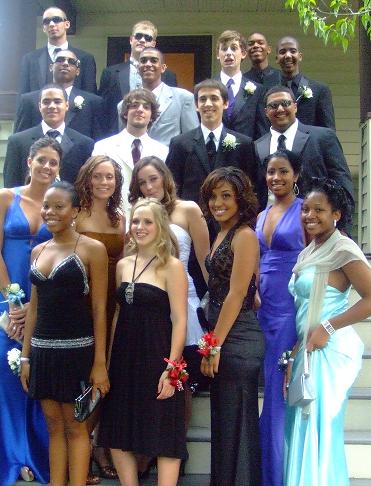
Prom 2007My friend MaryAnn McKibben Dana wrote about Trevor Noah recently and my NYC kids and I had just seen a live taping of The Daily Show with Trevor Noah the day before.  All three of us had also seen The Daily Show with Jon Stewart in previous years and – like child birth – I had forgotten how long it actually takes to transition from the uncomfortable waiting until The Moment when you get to see that long-awaited face.

One of the fun things about these shows is that – when you order the tickets – you have no idea who the guest will be.  Last week we saw Spike Lee (interesting but not as scintillating as I expected although I loved his outfit) and in previous years, we’ve seen Jeff Garlin, Owen Wilson, and an academic figure I can’t remember.  Dream guests:  Michelle Obama, Claire McCaskill, and Aziz Ansari’s parents.

But this post is not about that.  It’s about color.

If Jon Stewart had anything to do with the selection of Trevor Noah as the satirist who would follow him – or with the selection of Larry Wilmore for the program that follows The Daily Show – he is as On Top of Things as I always imagined.  Yes, we need women as late night TV hosts, but we have long needed more color at least as much.

The world is colorful.  I am increasingly aware that 1) if my world looks Just Like Me in every office, shop, theatre, and train I can become blind to reality and my perspective is sheltered and limited.  And 2) our planet has got to come together and recognize each other’s humanity regardless of race, religion, creed, political proclivities, and gender or sexual orientation.

So, back to The Daily Show.  When Jon Stewart was the host, the audience looked a bit like a hipster NPR crowd.  Smart, sarcastic, left-leaning, well-educated.  But last week, the audience was remarkably different and it was surely because the new host is not only funny and smart and poised, but he is a mixed race South African 30-something who speaks six languages.

The audience reflected this.  In the pre-show conversation, audience members self-identified as being from Barbados, France, Greenland, Italy, Egypt, and South Korea.  He spoke German with a German student.  Racially, everybody was there. Religiously, I can only guess we were as diverse a crowd. There were several women wearing hijab.

It was a thing of beauty.

This is not just our future, sisters and brothers.  This is our present and it’s a wondrous thing.  When we live our lives solely with people who are Just Like Us, it’s easier to sort the world into Us and Them, Black and White, Christian and Not Christian, American and Foreigner.  And it becomes easier to forget that the One whom we Christians try to follow was – himself – brown and Jewish and – like Trevor Noah – a polyglot (Aramaic, Hebrew, Greek) who would find Western Life foreign if not faithless.

We White people sometimes feel offended when others speak of our privilege, and yet here is what we can do with that privilege:  open doors, seek out fresh voices we haven’t heard from, and thank God for diversity (because God created the world that way.)

Image is one of my favorite photos of FBC’s prom night nine years ago in Arlington, VA.  This was, is and will be our world, thanks be to God.

My Friend the Fashion Designer

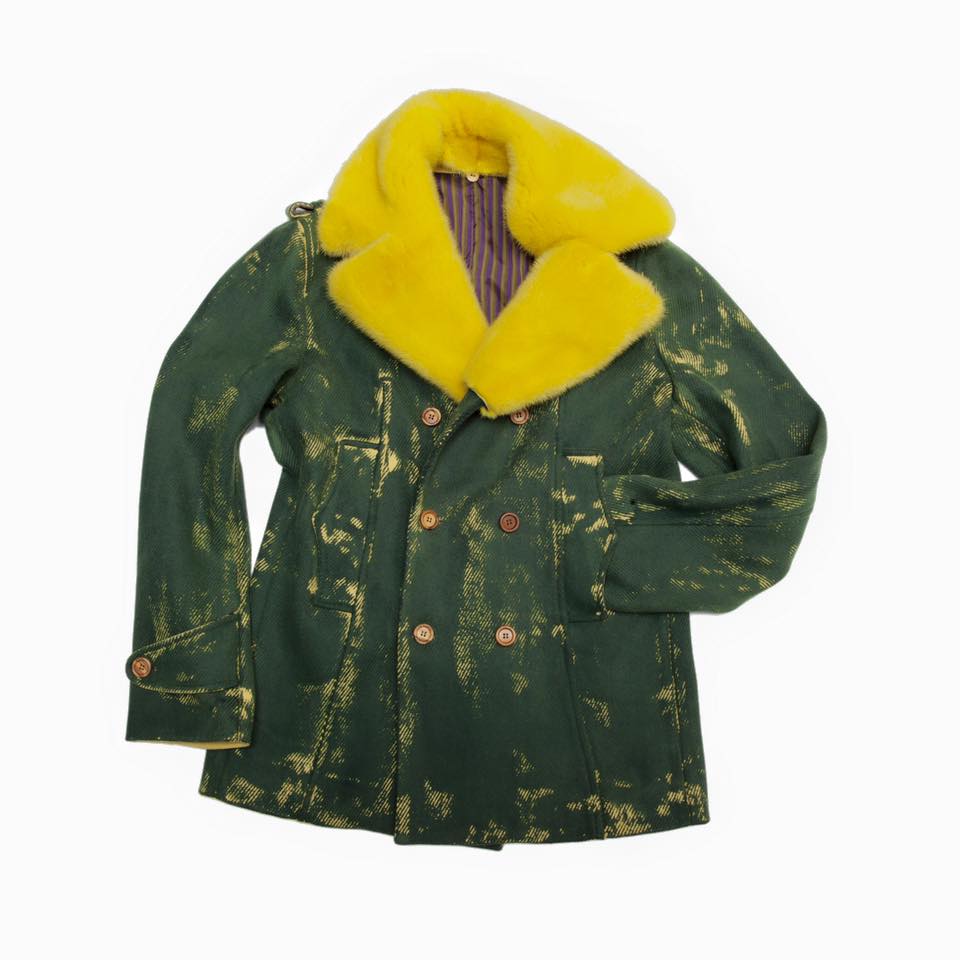
I am not a haute couture kind of girl.  My basic outfit on these chilly days are Jay Kosblack leggings and a long sweater, and only occasionally do I change my earrings. But on Monday in a NYC coffee shop, I met a stranger bedecked in designer clothing who became my brother in Christ.

We could not be more different, from our religious upbringing to our socio-economic status.  The rings on his fingers were probably worth more than my car.  His travel stories rivaled National Geographic’s.  His friends are the kind of people we read about in business and entertainment magazines.  But we found ourselves sitting side by side at a coffee bar on a random Monday morning.

This is what we are called to do in life:  connect with people who are not like us. If we live in rural towns with little diversity or in neighborhoods where everybody looks alike, there are fewer obvious opportunities to connect with The Other – or so it seems.  Actually, we may look similar, but we don’t have to scratch very deeply to discover an uncomfortable opinion or a life experience unlike our own.

God coming to live among us is the ultimate example of connecting with The Other.  For an array of reasons – from laziness to busyness – we do not take the time or make the effort to connect with those whom we do not understand or already “know.”  We prefer to hang out with our own tribe.  It’s understandable. It’s easier.

But uniting in spirit with people who are Not Like Us is one way God grounds us.

I was not looking for this experience last Monday.  And yet it happened by grace in a coffee shop that brews a mean cappuccino.  I was more likely to pay attention because I was relaxed and enjoying a day off in a faraway place, but what if we practiced the spiritual discipline of looking for these holy connections in our own neighborhoods?  These are the things that don’t happen when we spend our days sitting at our church desks holding office hours.

Image is a design by Jay Kos.

Called to the Dirt

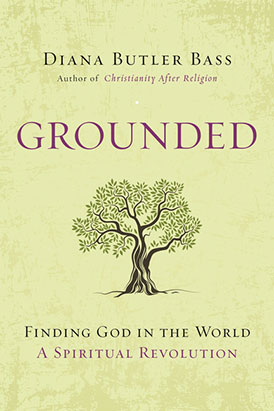
“We are animated dirt. Soil and life joined. From living ground we were made; to living ground we will return.” Diana Butler Bass in Grounded

We were at a family birthday party several years ago when TBC told me that she had discerned her life’s work:  “I’m called to the dirt,” she said.

As the great granddaughter of farmers, she would be joining a family trade,  but in a way that would be unrecognizable to her 20th Century ancestors.

It occurs to me that – upon the birth of Jesus for which we prepare this season- God was called to the dirt.  God became dirt.  For a more eloquent & complete breakdown of this, please read Grounded– Diana Butler Bass’ most recent book- especially Chapter One.

I love Diana’s insight that spirituality as we have experienced it has been a horizontal endeavor marked by tall steeples and elevated pulpits.  But the marks of a God known as Emmanuel- God with us– is a wholly different concept.  This God not only became dirty by engaging in earthy, gritty human life.  But this is a God willing to die in the thick of human imperfection and injustice.

All of us – farmers, preachers, clothing designers, baristas- all of us human beings are called to the dirt in order to nourish the world with all that is good.  It’s the most basic of Advent messages.

Choosing Church

 I found myself on Advent 1 in Brooklyn on vacation with extraordinary choices:  Sleep until noon or arise with the sirens? Drink exquisite coffee from TBC’s 4th floor window overlooking the neighborhood or from one of countless patisseries lining the sidewalks?  

It would be so easy not to choose church. 

There are many deterrents to choosing church even if we are spiritually or generationally disposed to do so – especially in an unfamiliar town.  

  • What if the sanctuary seats 400 and only 40 show up?  (Been there.)   
  • What if it’s one of those churches that makes newcomers stand up and introduce ourselves.  (Please don’t ever do that.)
  • What if the music not only fails to inspire, but it separates us from God.  (Ugh – “Jesus Is My Boyfriend” music)
  • What if the message offers no hope in light of LaQuan McDonald or The Planned Parenthood attack?  (Because we need a word of hope.)
  • What they call themselves “a friendly congregation” in the opening words but there is no one to hand us a bulletin when we wander in? (Also the Wednesday class sounds interesting but there was no time or location mentioned- just a friendly heads up.)

TBC & I were lucky.  We experienced the living God on Advent 1 in an actual church building as strangers greeted us warmly and the music stirred us and the message was exactly right. And even if the opposite had been true, I’ll still be back, if not to that particular church gathering then to another in another town.

I still choose church.  

It can disappoint us and infuriate us and even hurt us.  But where else can we gather with all kinds of people who have spiritual longings and bankruptcies? Where else can we shake our fists and weep and express our profound gratitude and smile at elderly people and wave little waves at babies and sing together and mention out loud that we need prayer for great or small things?

I still choose church.  But I also marvel when I meet strangers who still choose church.

Recipes and Cookie Cutters

The Good News:  Turkey Cookies

  1. Thousands of us in the United States will enjoy the handiwork of family recipes this Thursday.
  2. Sugar cookies of every seasonal shape will be available in the coming weeks.

The Bad (but not so bad) News:

  1. There is no longer a recipe for creating A Successful Church.
  2. Cookie Cutter Churches have died or are dying.

There was a time when most Protestant Mainline Churches followed a similar recipe for success and it worked:  Sunday Morning Church School, Sunday Morning Worship, Children’s Vacation Bible School during a week in the summer, Church Choir, Women’s Groups Men’s Groups, Pastor-Led Bible Study, Sanctuary with Pews, “Education Wing” that looked like a school building.

Over the past couple of decades the recipe shifted a bit.

Some churches installed screens in the sanctuary and initiated “contemporary worship services.”  Some built enormous Family Centers.  Some copied what other churches had found successful.  (I remember a pastor telling me last year that his church was considering the possibility of placing a computer lab in their building because the church down the street had one.  I suggested that they should not do this because 1) the church down the street already had one and 2) there are computer labs in public libraries and 3) they needed to discern what their church was called to offer to the community based on the needs of the neighbors.)

How many times have we heard that “we need a preschool to bring in young families” because that “worked” for another church?  Or we need to include guitars and drums in worship because “that’s what the Methodists (or the Lutherans or the Presbyterians) did to bring in the young people“?

I’m not saying that screens, drums, and preschools are a bad idea.  It’s just that we need to include them in our ministry because it works for our own context.  (If we try putting a preschool in a neighborhood with no children or with an overabundance of preschool options already available, we will be frustrated.)

The question is always Why?  Why do we want screens?  (There are excellent reasons but “to be attractive to the young people” is not one of them.)  Why do we want to bring in young people?  (Again, there are good and great reasons but “so they will join all the committees and give money to keep us afloat” is not one of them.)

There is no precise recipe for a “Successful Church” in the 21st Century anymore than every American is eating the exact same menus this Thanksgiving. (Anybody sharing the feast with a vegan?  Anyone bringing curry this year?) Just as our culture is more diverse, our communities are becoming more diverse and therefore our congregations could – should? – become more diverse as well . . . at least if we are serious about making disciples of all nations (or all neighbors.)

If we really need a recipe, I would suggest this one:

  1. Prepare the congregation.  (God is always doing something new and it’s usually not what we expect.)
  2. Gather necessary ingredients/information.  (Do we know what our community is missing?  What’s needed?  What breaks God’s heart out there?)
  3. Allow things to heat up. (Let the Spirit in.)
  4. Mix it up.  (Try new things.  Don’t try to institutionalize everything – i.e. just because you try something doesn’t mean you have to do it forever.)
  5. Taste. Savor. Strive for a more adventurous palate.  (HH and I encouraged our kids to try a “no thank you portion” with new foods.  This is not a bad idea for church creativity too.  Just try it.  Maybe it won’t become your favorite thing, or maybe it will.)
  6. Don’t forget to say ‘Thank You’ to the chefs. (Church is no place for shame and blame when we try something new and it doesn’t work out.  Thank those who worked behind the scenes and then take your turn.)

And leave the cookie cutters in the drawer.  (Drop cookies are easier and more fun anyway.)

Happy Thanksgiving Everybody!

Lola, Sheila*, & All of Us

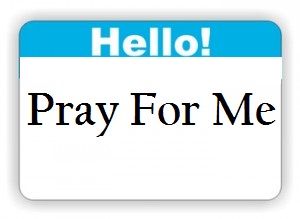
So this is happening.  Pray for Me

I caught a glimpse Saturday night of what it might be like, if my friend and colleague Denise and I find ourselves elected to serve as Co-Moderators of the 222 General Assembly of the PCUSA  in 2016.

When Cindy Bolbach  was Moderator (2010-2012), she occasionally phoned me from Holiday Inns in small towns across the country to review her day and share the things she could not share widely.  There were lonely nights and funny encounters.  There were also random blessings.

Last Saturday night, on the way to celebrate a church anniversary with a congregation in Indiana during the first snow storm of the year, I checked into a hotel and was asked by the two women behind the desk why I was in town.  I said that I was preaching at a church’s 175th anniversary in the morning and without hesitation they asked me if I would pray for them.  Absolutely.

Me:  How can  I pray for you, Sheila*?  (She was wearing a name tag.)

Sheila:  Things are just not going very well.  Just pray about that.

Other Desk Worker:  Please pray for my kids. I have seven kids.

Me:  What’s your name?  I see Sheila’s name tag, but what’s yours?

ODW:  Lola.*

Me:  I will definitely pray for you both.  Thank you.

[Note:  Lesson One is that I should have asked if I could pray for them then and there, but I was really tired and I didn’t.  Next time.]

Every single day, we meet people in need of a holy connection.  They might be hurting or tired or afraid.  In some places there are still people who seek out a clergy person to pray for them, hoping against hope that those prayers will make a difference.  But this is a blessing that all people of faith – clergy or not – should be willing and equipped to offer.

There will be more of those moments if Denise and I find ourselves in the role of GA Co-Moderators.  But I imagine a world in which all people of faith would make ourselves available to connect those in need with The Holy.

For today, please pray for the two hotel workers.  God knows their real names.

*Names changed.

Helicopter Pastors?

Pastors:  Are we “hobbling” our people?

This article by Emma Brown of the helicopter and crossChicago Tribune addresses the familiar notion of over-helping our children.

Stanford University former Dean Julie Lythcott-Haims who wrote How to Raise an Adult: Break Free of the Overparenting Trap and Prepare Your Kid for Success offers some no brainer advice to parents:

1. Check your language. “If you say ‘we’ when you mean your son or your daughter – as in, ‘We’re on the travel soccer team‘ – it’s a hint to yourself that you are intertwined”

2. Examine your interactions with adults in your child’s life. “If you’re arguing with teachers and principals and coaches and umpires all the time, it’s a sign you’re a little too invested”

3. Stop doing their homework. Enough said.

There are surely some pastors who under function in that they basically call it in. (Question to congregations:  Why haven’t you fired these pastors?)

But more likely, we pastors over function in ways that hobble our congregations. With all due respect to Emma Brown and Julie Lythcott-Haims, here are a couple ideas for us who serve congregations:

1. Let’s check our language. If we call everything “mine” as in “my organist” or “my sanctuary” or “my congregation” – as if we own them – we risk setting ourselves up for a role that will not be healthy.  The church belongs to God and the different components of the church belong to all of us who are part of the community.

2. Let’s examine our interactions.  If we constantly argue with those who disagree with us, if we’re my-way-or-the-highway leaders, if we refuse to partner with people unless we can be in charge, if we treat the rest of our church staff and our volunteers as if we alone offer the final word, our congregations will suffer.

3. Let’s stop doing their ministry. Our calling as pastors is to equip our people to serve as First Responders (see yesterday’s post.)  Our calling is to train our people to pray with others (out loud!) and to lead Bible studies and to take the lead in church programming and to speak clearly about their faith stories.

We who need to do all the ministry ourselves have some security issues.  The irony is that congregations led by pastors who “do everything” are not thriving, healthy congregations.  Relinquishing control and deploying our leaders to serve is not only more fun, it’s the way church is called to be.

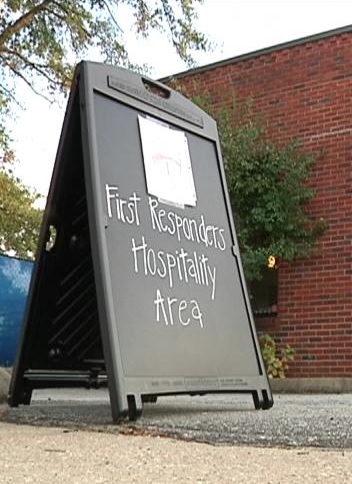
Everybody’s a First Responder

I visit many church leaders who have forgotten – or perhaps never knew – how toFirst Responders be the church.  (That sounds really harsh, but stay with me.)

We talk about missional leadership and outreach into the neighborhood and pastoral care, but many of us are not equipped to do these things.  Imagine if – especially in these days – we trained all our of people to be First Responders:

  • There’s a snow storm and we need to know how to check in with our neighbors to see if they are okay.  We need to check if they are warm and stocked with food.  If necessary, practice the “Hi, I just wanted to check to see if you’re okay” dialog.
  • The new couple across the street just adopted a baby and we want to be good neighbors.  Ask if we could bring over dinner.  Find out if there are food allergies.  Deliver dinner in disposables.  Drop off the food and go.  (Don’t plan to stay for a long visit and – for heaven’s sake – don’t comment on how tired somebody looks or how it doesn’t look like they’ve had time to tidy up.)
  • The single man down the street is recovering from hip surgery and his kids live in another state, and we want to offer support.  Get the kids’ numbers in case you need to contact them.  Ask if you can drive the man to his doctor or physical therapy appointments.  Invite him over for dinner or take dinner to him.

I believe that if we all knew how to love our neighbors, our congregations would thrive in spirit if not in numbers.  We can no longer assume that everybody knows how to do these things, but this is something the church could do:  offer First Responder training for the neighborhood and beyond.  It might seem rudimentary.  But in our hectic, busy world – perhaps we’ve forgotten how to respond to someone in need.  Or perhaps we never learned how to do it.

God forbid, maybe we’ll one day need to know how to tend to a victim of terrorism.  Or maybe we’ll simply need to know how to help a lonely neighbor. Church:  this is a good place to being figuring out how to care for others.

Don’t Be a Daes

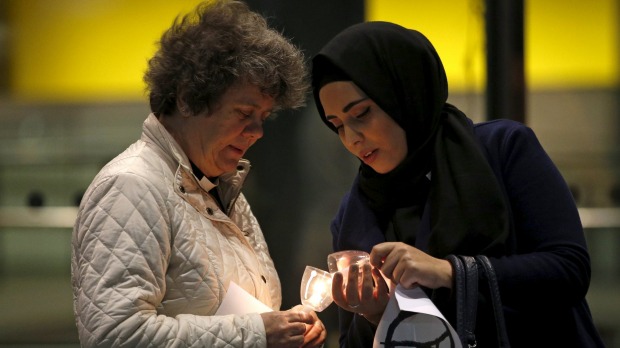
Love in ParisWe all know that words matter.  “Progressive” versus “Liberal.”  “Pro-life” versus Pro-Choice.”  “Violent Extremists” versus “Radical Islam.”

The terrorists responsible for the recent attacks in Paris and Beirut have been called ISIL (Islamic State of Iraq and the Levant) or ISIS (Islamic State of Iraq and Syria.)  We love our acronyms.

But John Kerry and others have been pushing a different acronym:  DAESH or DAIISH  (pronounced something like di -ESH or dehySH)   It’s the acronym for the Arabic name of the group: ‘لدولة الإسلامية في العراق والشام’ (‘al-dowla al-islaamiyya fii-il-i’raaq wa-ash-shaam’). We can hear on this podcast why calling them DAIISH is a slam.

In a nutshell:

  • To use their their own Arabic name and acronym it demeans the name.  It’s a name that should be demeaned.
  • DAIISH sounds very much like the word daes (“one who crushes something underfoot“) and dahes (“one who sows discord“) – especially when Western people say it.

Word play is our friend.

Calling something what it truly is is not only a linguistic exercise.  It’s a theological and political exercise.  Remember these words:

We are afflicted in every way, but not crushed;  perplexed, but not driven to despair; persecuted, but not forsaken; struck down, but not destroyed;  (2 Corinthians 4:8-9)

There is violence in the Scriptures of Jews, Christians, and Muslims, but that’s not who we are.  Don’t be a deceiver or a d#@k, or a daes or a dahes or a DAESH.  This is not what we were created to be.