A Successful Easter!

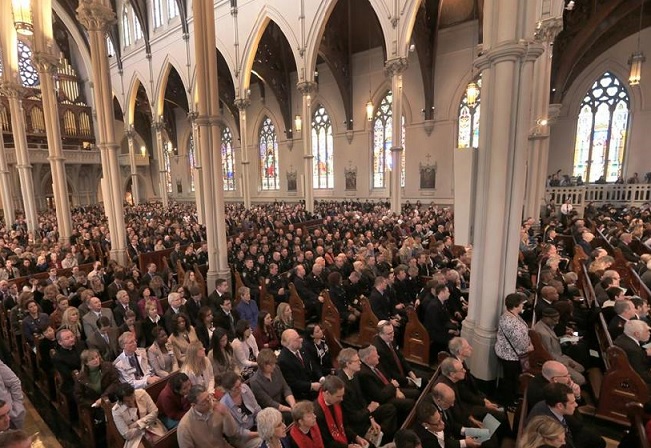
packed churchTo all my friends who made Easter meaningful in our congregations yesterday,
thank you. All you preachers, liturgists, musicians, singers, teachers, ushers, lily arrangers, hot cross bun bakers, and plastic egg-fillers – bless you.  Now you can rest.  Sort of.

There was an excellent strand of comments on  RevGalBlogPals’ Facebook page over the weekend regarding the effort that goes into Holy Week. One of my colleagues had been disappointed that so few parishioners had come out on Maundy Thursday, especially considering the enormous effort that went  into that service.  The truth is that only a small fraction of our people consistently attend “special services” like Maundy Thursday or Good Friday.

Oh . . . but Easter.

We all expect packed pews on Easter Sunday.  We expect to dazzle and be dazzled.

If the masses are going to join us for worship at all, it’s going to be on Easter Sunday (second only to Christmas Eve and Mothers’ Day.)  I remember the stress of wanting to awe friends and strangers with the sheer gorgeousness of Easter morning.  I wanted every note, word, smell, and sight to inspire.  I remember the utter exhaustion on Easter afternoon.  But I also remember the feeling that Easter sometimes felt like a performance and that didn’t feel so great.

Was the hope that we would do our best because The Resurrected Jesus deserves our best?  Or were we hoping that our Easter guests and other rarely seen worshippers would be lured back next Sunday?

[I wonder if anybody’s ever studied the incidence of Easter visitors returning to the same sanctuary the Sunday after Easter.  If so, please share.]

What does “a successful Easter” look like?  The sermon uplifts?  The music soars?  The children smile?  The offering plates yield the financial secretary’s best hopes? The post-worship brunch is scrumptious?

What if we judged a successful Easter on different things?

The blind receive their sight, the lame walk, the lepers are cleansed, the deaf hear, the dead are raised, and the poor have good news brought to them. (Matthew 11:5)

Students in Garissa, KenyaChrist is risen!  Christ is risen indeed!  But there are others who long to see, walk, be clean, hear, rise up, and receive good news. What are our next steps?

Image of students in Garissa, Kenya.

We Know How This Ends (Sort of)

Bruce KramerBruce Kramer wrote an exquisite book before he died from ALS. When you have amyotrophic lateral sclerosis, you know how your life will end – sort of. You cannot know the timeline of how the symptoms will reveal themselves. You cannot know which friends and family will be resilient and which will crumble. But you pretty much know that it’s ALS that will take your life.

There is a note in my phone and a document on my laptop that says: “If I Die in 2015 . . .” It’s the annually edited note to my loved ones about which hymns I’d like everybody to sing at my memorial service, whom I’d like to preach, and what I’d like somebody to read out loud. (Yes, I have written a message for my own memorial service because I’m bossy like that.) If you happen to be with me when I die, check my phone.

All of us are going to die. We know how this life of ours ends – sort of. Most of uschagall-white-crucifixion don’t know the particulars about how. Even if I were diagnosed with stage 4 cancer today, I could get hit by a truck tomorrow.

We also do not know what happens after we die. There are scientific details about what happens to our bodies after death. But what happens to our souls is a matter of faith. I know my body will die one day. I believe my soul will live on by God’s grace.

We know how Good Friday will end, and that makes it less than catastrophic for followers of Jesus because Sunday is coming. [Once when I was volunteering at a Suicide Hotline on Good Friday, a caller sobbed that Jesus was dead and I let her cry for a long time. And then I said something like, “Can you hang on for 2 more days?”]

Death = Bad. Resurrection = Good. And yet we call this Friday good.

We can’t have resurrection without the death. I don’t know about you, but I’ve noticed that we forget this.

May your all your deaths be holy ones.

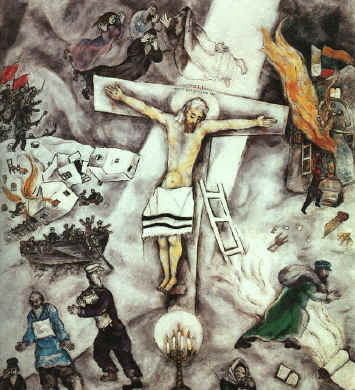
Art is White Crucifixion by Chagall.

Empty Nest Church

This is a love note to struggling churches who wonder where all the kids went.

HH and I are (sort of) Empty Nesters.  Empty NestOur 20-something kids come home for brief periods  – for holidays or between apartment leases – but then again, the home they visit here in Chicagoland is not where they grew up.  We no longer have the home where they learned to walk and talk, where they spent their first 20+ Easters and Christmases.

We moved to a house that works for us in our current situation.  There’s no swing set in the back yard.  There are no sleds or wagons in the garage.  No basketball net in the driveway.  We gave all those things away when we moved from their childhood home, and this is a good thing.  We don’t need certain things any longer, but we made sure that families who could use those things now have them.

The gifted coach and consultant JK inspired a thought yesterday regarding empty nests and churches.  Many of our congregations are still living in “the family house” where – long ago – their children grew up and spent many Easters and Christmases. It’s where milestones were celebrated and stories were shared.  “The kids” might return for occasional visits, but they are no longer around.  They’ve moved on and established new homes and new communities of their own.

Nevertheless those congregations are still gathering in “the family house.”  It’s too big for them. There’s a lot of junk stored in closets and basements.  There are countless memories. But they don’t need that space any more, and yet it’s too hard to think about moving.

There comes a time – if we’re fortunate to have lived long lives – when we need to make decisions about how we will downsize and – ultimately – where we will spend our last years.  It’s part of life.

All pastors have had parishioners who waited too long to make end-of-life plans. I knew a lovely woman in a former congregation who refused to leave her home of 60+ years.  She had many excuses.  And she assumed she’d always be able to handle the stairs, the maintenance, the yard work.  By the time she was well into her 90s, it was too late.  She couldn’t physically make the move.  She lived in squalor, unable to care for her home or herself.  She was too weak and too desperate to move into a more practical space.

My friends, some of our congregations find ourselves in this situation. We need to make end-of-life plans.  But some of us refuse to leave our “home.”  We have many excuses.  And we assume we’ll always be able to handle the stairs, the maintenance, the yard work.  But now  it’s become too late to make the necessary shifts that will help us transition.

This is Holy Week and ultimately we are resurrection people, right?

Imagine congregations that have become Empty Nest Churches making choices that make it possible for new communities to thrive.

When HH and I left the home we knew for so many years, it wasn’t easy.  It still isn’t, and yet I wouldn’t go back.  Great things are ahead for our kids and even for us. But there are times we need to let go of what is past.

Getting Into Good Trouble

March talk“From the march across the Edmund Pettus Bridge, to the freedom rides and the sit-ins, to fighting for women, children and seniors, to a 2009 arrest protesting policies in Darfur, John Lewis has been getting into good trouble for decades.” From the John Lewis for Congress website.

When was the last time you got into trouble?  I’m not talking about forgetting somebody’s name or running out of gas.  I’m not talking about troublesome behavior – as in chewing gum in the classroom or acting anti-socially.  Breaking the law might get us into trouble, although we usually don’t even count speeding or tax cheating as crimes.

Last night, I heard John Lewis and Andrew Aydin speak about their graphic novelJohn Lewis March and it was a little like going to church.  It was the perfect Holy Week activity.

The regal and honorable John Lewis challenged us to “get into good trouble.” Stand up for someone who needs help.  Defend the weak.  Speak up for what is right.

John Lewis was arrested over 40 times in the 1960s for getting into good trouble: defending people who simply wanted to vote or eat at the counter of a drug store. Most of us are content to engage in low-impact, low risk slacktivism.  We buy Tom’s Shoes or Pink Ribbon t-shirts feeling great that our purchase helps someone without shoes or with cancer.  We text special numbers to the Red Cross and – magically – $10 from our checking account is sent out to support hurricane victims.

But John Lewis preached that more of us need to be willing to stand up and march.  Andrew Aydin prophesied that using social media should be the tool that gathers people to work for good, not merely a quick way to express our displeasure about Ferguson or RFRA.

We who follow Jesus might remember that he, too, was about marching.  He was about making bodily sacrifices for what’s good and right.  Jesus taught non-violence.  And we remember that long before John Lewis and his fellow marchers were arrested and beaten, Jesus was arrested and beaten.  He was even given the death sentence for getting into good trouble.

I was one of those kids who was terrified of getting into trouble.  I’m still fairly trouble-averse.  But there are certain things worth standing up for, defending, speaking up about.   This is one of the messages of that first Holy Week.  (No fooling.)

Image from the Chicago Ideas talk with John Lewis and Andrew Aydin, drawn by Dusty Folwarszny of The Ink Factory.

Teaching Our People How to Say “Hello”

tea setImagine that you are at least 60 years old, have been a Christian for at least 40 years, and have been a member of your church for at least 20 years.  And your pastor suggests that you need to learn how to offer authentic hospitality.

At best:  These are fighting words.  (“Of course I know how to welcome people.”)

At worst:  “Ouch.”

One of the trickiest things for a pastor to navigate is sharing the uncomfortable news to her people that they are not skilled in 21st Century Hospitality.  We’ve all heard the well-worn adage that all churches consider themselves “friendly” even though it’s clearly not the case.  But it’s quite another thing to suggest that our lifelong church members do not know how to welcome guests well.  Among the common mistakes we make:

  • Pouncing.  (“You should join the choir!)
  • Stalking.  (“I’ve been watching you for the past couple Sundays.“)
  • Smothering.  (“Let me take you to coffee hour and then we can sign you up for the chili dinner.
  • Scaring.  (“You should meet Peggy.  She’s single like you.“)
  • Offending.  (“Those piercings must really hurt.”)
  • Discomfitting.  (“We like it when people dress appropriately for church.“)

I honestly believe that we intend to be genial to the guests in our congregations. But in our excitement to make “new people” feel welcomed, we say awkward things and our efforts do the opposite of our intentions.

Imagine teaching all church greeters, ushers, and coffee servers how to say “hello” in the most authentic and genuine way, without agenda or fakeness.  Imagine saying “Hello” with the intention of making that stranger feel loved and safe and included.  Such a small thing that makes such a difference in creating community.

I Am an Evangelical Christian

Over the weekend, I shared this article from the New York Times by Nick Kristoff which begins this way:

“One sign of a landmark shift in public attitudes: A poll last year found that Americans approved more of gays and lesbians (53 percent) than of evangelical Christians (42 percent).”

A couple of thoughts:Christians and Muslims Protect Each Other

  1. This statement assumes that “gays and lesbians” and “evangelical Christians” are two wholly separate entities. (i.e. you can’t be both GBLT & evangelical Christian.)
  2. My tweet linking to this article (“The liberal caricature of evangelicals is incomplete and unfair.”) got more responses than any other tweet I’ve ever posted.

Lots of people “favorited” it. And lots of other people shared their own comments:

  • “AND, the same could be said for the caricature of liberals by the evangelicals. A modicum of thought might help.”
  • The extremely vocal minority of any group creates unfair perceptions of the entire group.”
  • “Nice of evangelicals to do all that brave stuff, now make ’em stop supporting laws that make my life harder.”
  • “It’s not a caricature when it continues to be proved true and is manipulated by lobbyists to divide us.”

It’s clear that “evangelical Christian” is synonymous with anti-LGBT sensibilities to most Americans. And this is not new. I remember in my 20s, fresh out of college, a friend was shocked to learn that I was a Christian. “But I’m not like those Christians,” I blurted out defensively.

Today I embrace the adjective “evangelical.” Evangelical = euangelion = the “good news” or “gospel.” Yes, I am an Evangelical Christian. I believe that the message of Jesus is very Good News. I believe that following Jesus is the best way to live our lives. I also . . .

  • Take the Bible seriously. I take it seriously enough to study each word in the original languages as best we can (the original documents are long, long gone and the oldest existing codices were written 200 years after Jesus died.) I take it seriously enough to acknowledge that it’s not comprised of “God’s words” as if it was personally autographed by God (that would be Islam) but it is indeed God’s holy, inspired, and authoritative Word. I take it seriously enough to know that it was not created to serve as a history book, a science book, or a sin management book (it is a library of books including poetry, parables, prophesies, stories, laws, letters, and narratives.) I take it seriously enough to acknowledge that it is infallible in Truth but not in truth. In other words, it points to Truth but it wasn’t intended to be scientifically or chronologically true. That was never the point.
  • Believe that the way of Jesus is the only way to be “saved.” Clearly, there are many people who claim to follow Jesus but do not. And clearly, there are many people who do not claim to follow Jesus who do.
  • Believe that God loves us enough to die for us. (Happy Holy Week.)
  • Believe that faith is practiced by expressing the gospel in social reform efforts that help make “earth as it is in heaven.”

“Evangelical” is not a description I am willing to surrender.

As an Evangelical Follower of Jesus I also believe that God fashioned vastly more diversity in creation that we can possibly imagine or measure, and that all God’s creation is a blessing and called to enjoy abundant life and serve according to our God-given purpose. This includes all nations, races, creeds, variations of gender, sexual orientations, abilities, and genetic possibilities.

I believe that claiming “Evangelical” is a political statement – and I’m not talking about Farwellian politics.

On Saturday, I participated in the ordination of two new pastors in the Evangelical Presbyterian Church in Egypt. Leaders flew in from Cairo to Kansas City (rather than flying all the Americans to Cairo) to anoint two to be missionaries to the United States of America.

Let this sink in for a moment: Protestant Christians make up only 0.07 % of Egypt’s population. But they have sent two pastors to share The Good News in a nation where Protestant Christians ostensibly make up a whopping 51.3% of the population (or 78.4 % of the population if we include all Christians) according to Pew.

Calling yourselves “Evangelical” in a nation where 94-95 % of the population is Muslim is a political statement. In most predominantly Muslim nations, it is highly frowned upon – if not against the law – for Christians to share their faith with their Muslim neighbors. And so our Evangelical sisters and brothers in Egypt, for example, are making a bold statement: We are all about sharing the Good News (euaggelion or εὐαγγέλιον) even if it’s risky for us.

I, too, am willing to take that risk. I am an Evangelical Christian. And I humbly believe that:

Marriage is a gift God has given to all humankind for the well being of the entire human family. Marriage involves a unique commitment between two people, traditionally a man and a woman, to love and support each other for the rest of their lives. The sacrificial love that unites the couple sustains them as faithful and responsible members of the church and the wider community.”

Thanks be to God.

Image of recent photos in Egypt of Christians and Muslims protecting each other. Both convey the way of Jesus.

Against My Religion

We have a multi-faith wedding happening at our home this summer andMap of Indiana religion is a consideration for sure.  At latest count, there will be Christians, Muslims, Jews, and Buddhists – in addition to many unbelievers of any stripe.

Among the self-identified faithful, there will be practicing and non-practicing adherents.  But we are making provisions for all practicing guests, as best we can.  No pork, for example.

In the joyful throes of wedding planning, I’ve also heard these comments:

We won’t be drinking wine, but it’s fine to serve it.”  (A lovely accommodation in light of the Muslim practice of no alcohol.)

I won’t be dancing.  It’s against my religion.”  (Fine, but I know other people in your faith tradition who dance.)

I have joked that it’s against my religion not to have a chilled cocktail about an hour before the wedding, but obviously that is more of a preference than a religious practice. . . .

Which brings me to Indiana.  Indiana business owners who object to same-sex couples, for example, now have a legal right to deny them services.  In other words, if I own a dry cleaning business, I can refuse to clean the shirts of gay people – married or not.  Or something like that.

It was against Jewish law in Jesus’ day to touch lepers and bleeding women, and yet he did it for the sake of the greater law of love.  If we believe the Bible, Jesus spoke against stoning an adulterer, socialized with Samaritans, and was okay with his followers picking grain on the Sabbath – all in violation of his religion’s law.

What would Jesus say to the bakery owner who refuses to bake a wedding cake for a gay couple for religious reasons? (“It’s against my religion for same-sex couples to marry.“) Or to the nursery school owner who refuses to allow a mixed-race child to attend that school – again for religious reasons.  (“It’s against my religion for races to intermarry.”)  Or the restaurant owner who refuses to rent the party room to a Hindu family for their daughter’s graduation.  (“It’s against my religion to do business with someone who worships multiple gods.“)

If I’m to understand Jesus correctly, I believe it’s against my religion to refuse to serve my neighbor.

Ideas Are Cheap, Action is Costly

bringing-ideas-to-lifeI was reading Relevant and came upon this article and it reminded me why I have an easy job compared to parish pastors. (Note:  I serve 96 congregations and worshiping fellowships in a Middle Judicatory.  It’s way more fun than it sounds.)

I am called to resource congregations and their leaders with ideas. But those leaders are the ones called to act on those ideas.

You want to know how to reorganize your governing board?  I have several ideas. Want to grow your congregational spiritually?  I have suggestions. What to shift your congregation’s culture?  I can prompt you.  Want to learn how to connect with the neighborhood?  Not a problem.

But the professional minister who decides to adopt one of my Big Ideas is the one who pitches the shift to an often skeptical audience, sweats the details, takes the heat, risks her job, places a target on his back.  Failure is almost guaranteed.

One of life’s realities is the belief that positive change will come without the excruciating work it takes to make those changes happen.  And yet . . .

Bringing life to transformational ideas is the call of the 21st Century Pastor.  I don’t know a single church that doesn’t need to make shifts in their outreach, organizational structure and culture.  But most of our pastors are not equipped to make these changes without ongoing coaching.

Our seminaries offer excellent academic training, but few teach change management for congregations.

So, this is a long-winded salute to the parish pastors out there who dare to introduce the kind of change that energizes disciples, models abundant living, nurtures spiritual community, and makes it all about God.  You are rock stars. You are the future of the church.  You fill me with joy.  Thank you from the bottom of my heart.

Image source.

Who Are The Untouchables in Our Congregations?

You know who I’m talking about.
They are the bullies, the gossips, the haters.  They might be incompetent or simply ineffective.  They might be The Big Givers who inspire fear that “they will leave” if challenged.  They could be . . .

  • The former pastor’s widow who is beyond criticism.
  • The music director who is “beloved” and yet quite difficult.
  • The long-time volunteer who complains about how many years she “has had to do this job” but she won’t let anyone else do it.
  • The Elder Emeritus who blocks all change.
  • The nonagenarian who holds the congregation hostage with his Disapproval Face.
  • The Top Giver who threatens to “cut his pledge” if she doesn’t get her way.

They are seemingly untouchable no matter how cranky, obstinate, mopey, or cruel they might be.

Imagine what would happen if skilled leaders held these sisters and brothers accountable.  In Crucial Conversations, Patterson, Grenny, McMillan, and Switzler write:

In the worst companies, poor performers are first ignored and then transferred. In good companies, bosses eventually deal with problems.  In the best companies, everyone holds everyone else accountable – regardless of level or position.”

The same is true for healthy congregations and their senior/solo pastors. Imagine:

  • Leaders with the spiritual confidence to refute gossip as soon as they hear it.
  • Parishioners with the integrity to stand up to bullies the very moment of bullydom.
  • Pastors who hold volunteers accountable and set term limits for the health of the organization.
  • Volunteers who happily mentor their replacements so that they serve in a position no more than 3 years, and then pass the baton.
  • Important conversations that happen regularly and while they might heat up, they never explode.
  • Congregations of people who share a common purpose and refuse to make it about any one person (unless we count Jesus.)
  • Parishioners resilient enough to welcome constructive criticism for the sake of being a more faithful church.

Who are The Untouchables in our congregations?  And who will have the courage and faith to ask them if they realize that they are hurting the very church they say they love?

And what do we do when an untouchable church member threatens to leave?As you wishSometimes the best thing we can do is to quote Westley in The Princess Bride.

Mixed Marriage? Broken Family? Or Something Else?

There is one body and one Spirit, just as we were called to the one hope in our calling. Ephesians 4:4

heartbreak_medIn a church I once served outside Our Nation’s Capital –  where elections impacted personal employment as well as national policy –  some of our ushers added an additional responsibility to their duties on Sunday mornings during election season:  they counted the bumper stickers in the church parking lot.  If the GOP bumper stickers seriously outnumbered the Democratic bumper stickers – it was time to include more progressive images and ideas in sermons and prayers.  If the Democratic bumper stickers seriously outnumbered the Republican bumper stickers, it was time to mention historically conservative examples.

Call me a fence sitter, but I believe that Scripture is an equal opportunity offender.  And we are called to be a Church that looks like the kingdom of God, with a rainbow of all races and ethnicities, political proclivities and ages, education levels, physical/mental abilities, and socioeconomic classes.

And speaking of rainbows . . .

I am fairly certain that I offended some of my friends and family last week when I joyously touted that enough Presbyteries had voted in favor of changing the definition of marriage in my denomination, the PCUSA.  The new definition is:

Marriage is a gift God has given to all humankind for the wellbeing of the entire human family. Marriage involves a unique commitment between two people, traditionally a man and a woman, to love and support each other for the rest of their lives.

These are fighting words – heartbreaking words – to some people I love.  They are also words that make many of my sisters and brothers weep with joy.  For a long, long time, faithful followers of Jesus who are also LBGTQ have waited for the rest of the church to experience an Acts of the Apostles moment:

  • Remember when God made food clean that had once been considered profane?
  • Remember when the Council of Jerusalem debated whether or not the uncircumcised could be saved?  There was “no small dissension” about this issue and “they parted company” over the issue.
  • Remember that in the discussion about whether or not being uncircumcised was okay, it was not okay to “fornicate”?

Being able to marry the person you love – if we are concerned about fornication – seems to be a good and holy thing.

Yes, we can argue about these issues (and God knows we have.)  We can stay together as a church in spite of mixed perspectives on the interpretation of Scripture.  We could “break up” (again) as a Church.  Or we could do something completely different – although I don’t know what that might be.

I believe that God continues to speak.  (Thank you United Church of Christ friends.)  And I believe that sometimes it’s a good thing to break up the family. And I also believe that God still calls us to wrestle angels.

And I believe it’s imperative to be a good sport – whether we are talking about March Madness or denominational policy-making.  May God have mercy upon us.  May God continue to speak.

Image source unknown.