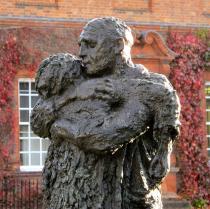
Let’s Be Gentle with Each Other: The Busiest Pastoral Care Week of the Year

marlborough-bronze_w210_h209_cw210_ch209_thumbThere are both sacred and profane names for this week between Christmas Day and New Year’s Day.  (See Urban Dictionary for the profane ones.)

Most of us however – whether in secular or non-secular professions – call this Vacation Week.  A Thursday to Thursday holiday means that we get a whole eleven days off – unless we work for scoundrels.  And yet . . .

This is The Most Pastorally Heavy Week of the Year.  Consider this:

  • While suicide peaks in the springtime according to this article, it’s nevertheless a blue season for many people.
  • There are lovers who thought they might receive wedding proposals at Christmas, but they were disappointed.
  • There are adult children who were treated like their adolescent – or even preschool  – selves while visiting relatives and it didn’t go well.
  • There are unemployed people who have little hope for a quick and easy hire in the first weeks of the New Year.
  • There are addicts who will have spent multiple hours in 12-Step meetings.
  • There are individuals with no families, no friends, toxic families, fake friends.
  • There are people who could not “afford” Christmas this year.

You get the picture.

So what happens when professional clergy take the week off – which of course they deserve after a relentless Advent and Christmas Eve extravaganza? My hope is that we all notice that this is one of the toughest weeks of the calendar year in terms of emotional and spiritual needs.

And I hope that we reach out in compassion.  Has anyone taught us how to do this?  (Heads up:  this is an excellent goal for churches in 2015 – that this time next year there are dozens of people equipped in our spiritual communities to offer pastoral care during the week between Christmas and New Year’s Day 2015.)

Let’s take notice out there.  And be gentle with each other.

Image is the sculpture of The Prodigal Son by Charlie Mackesy (2009) 

Favorite Discoveries of 2014

maryam-mirzakhani-iranian-woman-win-math-top-prize-copyI’m a late bloomer so some of these finds might be old news to you.  But they
made 2014 richer and better in my little world.  Enjoy!

  1. Ta-Nehisi Coates wrote this article which may go down as one of the essential pieces of our time on race in the United States.  Required reading if we hope to understand the people who came to our nation as slaves.
  2. Emiliano Sciarra invented the card game Bang! in 2002 but my family just discovered it in 2014.  Love. It.  Our favorite part: the cards are in both Italian and English, so we are learning essential terms like “Uccidere lo sceriffo!”  I have not yet won a round of Bang! but instead of being frustrated, I am in awe of Signore Sciarra.
  3. Molly Zuckerman-Hartung is a Chicago-based painter whose art makes me think.  It also makes me happy.  Check here out here.
  4. Maryam Mirzakhani is smarter than we are.  I would be content to hear her tell stories about her childhood in Iran or to watch her eat a sandwich.  She won the Fields Medal in 2014.
  5. Brussel Sprouts became my go-to vegetable in 2014, redeemed after memories of nasty, overcooked versions consumed exactly one time in childhood in a meal that still leaves me gagging.  And now they are delicious.

Here’s to creativity and discover in 2015.  Happy New Year everyone!

Image of Maryam Mirzakhani and the beauty of math.

These Are a Few of My Favorite Things

When the dog bites, when the bee stings
When I’m feeling sad
I simply remember my favorite things
And then I don’t feel so bad.
Oscar Hammerstein II – 1959

My Favorite Things

1.  Congregations with the energy and fearlessness to make positive changes that alter the lives of their neighbors.

2.  Pastors who spend part of their study leave time learning something that has nothing to do with church (even though it still does.) Note: If you live in NYC, Chicago, or LA, check out Course Horse and take a class in Indian cooking or Dramatic Accents (!) or Black and White Photography.  It will feed your soul.

3. That moment when someone is telling her story and she realizes her true calling.

4. That time when someone is telling his story and he decides he can finally let go.

5.  Sermons that you think are dross but then someone shares that it was golden for them.

6. Those frugal church people who appear to have minimal income but leave a fortune in their wills to organizations trying to change the world for good.

7. Church leaders who relinquish their long-time responsibilities to let new people try their hands at it. (Yes, I’m talking to you, Superintendent of the Sunday School Emeritus.)

8. Pastors who retire before the congregation thinks they should retire.

9. Congregations who present gift cards to their church staffs at Christmas (or just say “Thank you.”)

10.  Pastors who share their imperfections – especially during this season.

These things make me smile every time.  Happy Christmas Week, everybody!

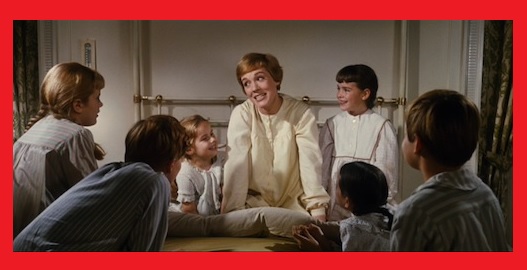
Image from The Sound of Music.  (And when did this become a Christmas song?)

Who Is The Face of Your Church?

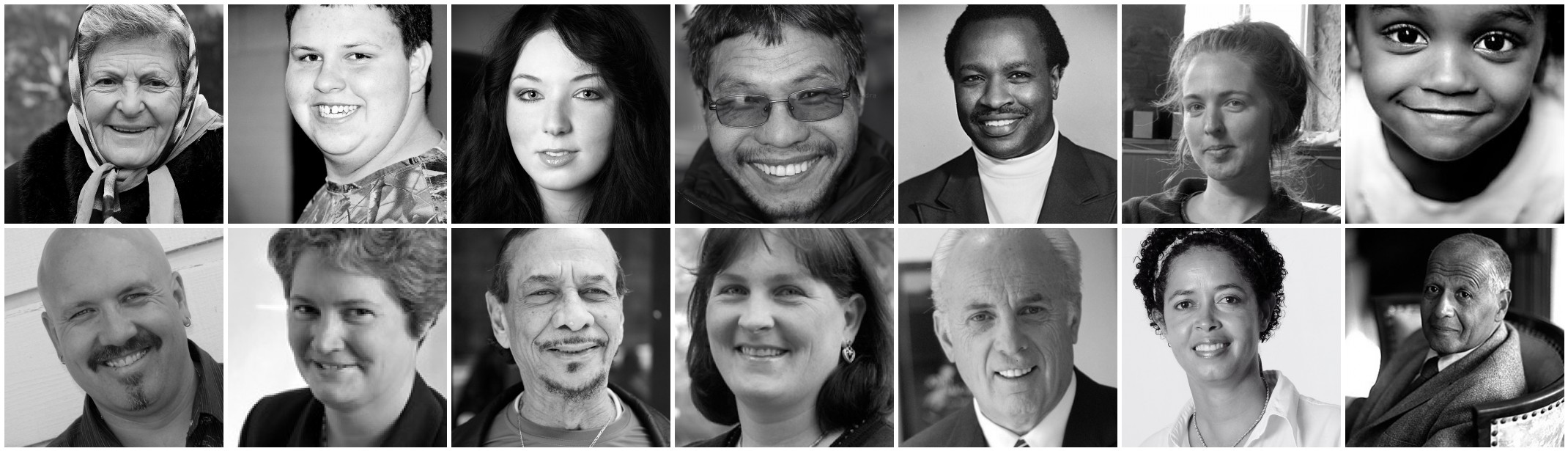
Mosaic of Faces

In large churches, this is the season when the Senior Pastor is the featured preacher throughout the most prominent holiday services.  (The Sunday after Christmas – like the Sunday after Easter – is one of the high holy days of Associate Pastors.)  Senior Pastors gets paid the big bucks for being The Face of the Church.

In denominations with hierarchies, the face of the institution is The Bishop or the Conference Executive or the General Presbyter.  These are the folks who represent The Organization, The Institution, The Congregations.

In the 21st Century Church, the face of the congregation or organization cannot be one person.  Yes, perhaps we need someone to represent us at community events or ecumenical activities or interfaith occasions.  But in the 21st Century Church, our face has many representations.

A growing community is one in which the whole community is its face.  The community must reach out.  The community must offer hospitality and pastoral care. The community must understand the connection between worship and mission.  The community must speak for the community.  No longer is the face a single individual.

Imagine this for a moment.

It used to be true that churches called pastors who were excellent representations or hopes of themselves.  We called pulpit candy – good looking pastors (usually male) who looked good and spoke well and offered impressive resumes so that we – the congregation – felt accomplished and smart ourselves.  We called a pastor with a stellar pedigree which must mean that we have stellar pedigrees to have called such a pastor.

Friends, this can no longer be true.  If our congregations or organizations are going to thrive in a post-Christendom culture, we need to take responsibility for our spiritual identities.  We must no longer be wholly pastor-centered, expecting the person with the seminary degree to be the professional Christian in our midst. We must no longer relinquish our own calling and gifts.

Who is the true face of our congregation?  We are.

Who represents our congregation or organization to the world?  We do.

Embracing Spiritual Usurpation

Christmas wreath 2011We all do it.  If we Christians have a decorated tree in the house or a wreath on the door, we do it.  I have Muslim friends who hang stockings.  I have Protestant friends who pray with rosaries.  I’m a big fan of the call of the minaret.

I’ve even usurped the word “usurpation” because it literally means “to encroach, infringe or seize wrongfully or illegally.”  I’m defining it in a friendlier way: Sometimes religions or cultures or generations or traditions enjoy a practice that people in different religions or cultures or generations or traditions find meaningful and they/we attribute our own meaning to it.

I love prayer beads because I am an easily distracted pray-er.  My prayer beads don’t have a crucifix and I have only a vague idea how the traditional Roman Catholic rosary prayer goes.  But I pray for a different person with each bead.  (A friend in Malawi was happy to hear that she was one of my beads.  “I’ve never been anyone’s bead!” she wrote.)

When I’ve traveled in predominantly Muslim cities and the call to prayer sounds five times a day, I also pray to God.  It’s a lovely reminder every few hours to thank God or remember someone in need.  I completely agree that God is great and so saying “Allahu Akbar” is a quiet comfort to me.

Christians have been usurping everything from Passover Seders to Winter Solstice for generations.  We just impart our own meanings onto them and make them Christian-ish.   God knows that we Christians have usurped the religion of consumerism to make it our own.

Spiritual Usurpation could be an offensive practice (“Muslims don’t even believe that Jesus is God.  How dare they put up a Christmas tree!“)  This is pretty ridiculous when we Christians have already usurped the practice of decorating with greens from the pagans.

My hope is that we embrace Spiritual Usurpation but act respectfully.  Let’s not kid ourselves that – just because we Christians might spin a dreidel this season –  it doesn’t mean we understand the Hebrew meaning of Hanukkah.  For the record, the origin of the dreidel, according to Wikipedia, “dates from the Medieval period at earliest, since it is a Judaized version of a Germanic teetotum.”  All of us are historically shameless usurpers.

It’s supremely postmodern that we would claim certain practices and assign our own meaning to them.  My own Presbytery debated the term “Community Organizer” at a recent meeting.  Historically it means one thing to some people and something very different to other people.

The point of spiritual practices is to create meaning that brings us closer to The Holy.  It’s a way of worshiping what is Greater and Higher than we are. If lighting a menorah or a kinara is meaningful, even if you do no identify as Jewish or African, it’s a good thing.  Right?

Church M&Ms

In my first parish, soon after ordination, the local  funeral director – mmJoe Page from Joseph C. Page Funeral Home* – and I developed a unique relationship.  When a parishioner died, he phoned me with the news in this way:

JP:  Good Morning Pastor Jan.  Guess who died.

Me:  What?

JP:  You’re not going to believe who died.  Guess.

Me:  I don’t want to guess.

JP:  No, really.  Guess.  You won’t believe it.

This went on for the length of my tenure as the young pastor in town.  In addition to these unexpected phone conversations, Joe Page of Joseph C. Page Funeral Home would also meet me for breakfast in January of every new year because he’d want my feedback on who I thought might die in the new year.

Really.

JP:  ___ doesn’t look so good.  I give him until March.

Me:  Let’s not do this.

JP:  I wouldn’t be surprised if ____ drank himself to death this year.

Me:  Seriously, let’s not do this.

So now I find myself – like some of you perhaps – wondering the future of many of our congregations.  To be perfectly honest, I wonder which congregations will close this year.  I won’t say that they are going to “die” because their legacy will surely enrich the growth of other congregations.  But some of our churches will most certainly close in 2015.

I have a doctor friend who taught me about M&M meetings in hospitals.  This is the weekly meeting during which the medical staff reviews the recent deaths, infections, etc. in that particular hospital.  The CDC also publishes The Morbidity and Mortality Weekly Report  which covers national outbreaks and other public health information.  They’ve probably been spending a chunk of time discussing Ebola this fall.

What would it look like to do an M&M meeting in The Church? What are the outbreaks, the toxic trends, the serious and not-so-serious infections that are impacting our congregations?  Is there an sudden outbreak of denominational distrust?  Is there a contagious fever going around that saps spiritual energy and clouds vision?  Is the level of gossip toxic?  Is there chronic dementia regarding church history?

Anxiety kills vision.  And when we are anxious about depressed numbers or ongoing conflict, we cannot look at the big picture.  I occasionally talk with congregational leaders who will spend an hour discussing how to spend $500 but they haven’t noticed that their congregation is spiritually incapacitated.  A virus has been traveling through the community and the impact is rather deadly.

Christmastide – just around the corner and after Advent – is an excellent time to meet for a Morbidity and Mortality report.  What will probably die in 2015 – and it’s not a bad thing?  (The annual chicken dinner?  The craft fair?)  What needs particular pastoral attention in the new year? (The deacons?  The support staff?)  What viruses might be spreading?  (Exclusivity? Volunteer shaming?)  What healthy trends are picking up?  (More interest in weekly prayer group?)  Heading these trends off at the pass might be a good way to prepare for another busy year.

Serving M&Ms at this meeting is optional, but recommended.


*Names changed.

Are the Spirit of Christmas and the Spirit of Christ the Same Thing?

We Gotta Pray Screenshot Alicia KeysAlong with many others, I shared this story on FB about a woman whose identity is not known “yet” (because we love both intentional and unintentional celebrities) who paid off approximately $20,000 in over 150 layaway accounts near Bellingham, Massachusetts.

If you don’t know what a layaway account is, it’s what you do when you don’t have enough money to buy something out right. You “lay it away” in a back room of the store and pay it off as you are able.

When one Toys R Us beneficiary received notice that her layaway account had been paid in full, she said, “I feel like I was part of something special – touched by an angel.”  This is truly the Spirit of Christmas.

Is it also the Spirit of Christ?

The apostle Paul wrote that “anyone who does not have the Spirit of Christ does not belong to him.”  Ouch.

I want to belong to Christ but I definitely live in the flesh.  And I’m venturing a guess here and will suggest that you too – faithful reader – most likely live in the flesh as well.

I just bought myself my own Christmas gift last night.  It’s a purse I’ve wanted for a long time and it was half off and it’s no longer being made and I have all kinds of reasons why I really really need this particular bag.  Even though this morning’s class was about Spending Less as part of The Advent Conspiracy  (and I think they meant spend less on other people) I went and spent more on myself.  Clearly the only Advent Conspiracy I’m a part of is a selfish one.

As I write this today, families bear the second anniversary of Sandy Hook and thousands continue to ache over racial injustice.  And if we didn’t realize this before, we now know for certain that the United States of America – our beloved nation – tortures people.  What can I do besides wear black and share articles on FB and feel self-righteous when the Sunday benediction includes the words “Return no one evil for evil”?   Friends, our nation returned evil for evil in our names.

I’m wondering what it means to share the Spirit of Christ and not merely the Spirit of Christmas.

I wonder if the Spirit of Christmas – which by the way is an excellent way to live – is about noticing the material needs of those who have less than we have and the Spirit of Christ is about noticing the spiritual needs of those who are desperate, lost, broken, and furious.  Our response to the first is to bring relief via toys, blankets, mittens, and socks.  Our response to the second is to bring relief via relationship, freedom, and forgiveness.

It’s harder to offer the Spirit of Christ, if you ask me.  And please know that sharing the Spirit of Christ has absolutely nothing to do with bull horns or shaming or violence.  It has to do with praying that we would exude the Spirit of Christ in our own lives in terms of the way we treat other people who are not like ourselves.

As HH said in this morning’s sermon, Jesus showed up in places nobody would expect the Messiah to show up:  in a manger, on a cross.  Where are we showing up in the name of Jesus to share the Spirit of Christ?

Image is a screen shot of Alicia Keys’ We Gotta Pray.

Is Church Only for Rich People?

My new favorite person is Vu Le but more about that later.Creating Frankenstein

First, I want you to help me figure this out:

  • An urban neighborhood riddled with violence and unemployment needs a church to offer a haven of healing and good news.
  • A church is created, led by a missional pastor who gets out into the neighborhood and discerns the needs of the neighbors.
  • The church is packed every Sunday, mostly with unemployed people.
  • They are busy weekdays too with tutoring programs and computer training for neighborhood students.
  • The church is “successful” in every way but financial sustainability.

What’s a church to do when the members do not have the personal financial resources to fund the ministry?

Congregations are faith-based non-profits.  We cannot apply for government grants.  We can charge rent in our buildings for outside groups, but we don’t want to be in the real estate business.  We can hold fundraisers and sometimes those fundraisers create community and bolster relationships, but our tax free status might be at risk if we raise too much money through “moneymaking” ventures.

One of the reasons for denominations to exist is that we can do more as a community of churches than we can do as a single congregation.  What if four to six wealthy churches pooled their money to wholly fund a church that cannot fund themselves?  In essence, those wealthy churches become the funders and donors and those poor churches become the grant recipients, in non-profit parlance.

And now we have power issues.  Or at least they are more obvious than they were before.

Back to Vu Le.  He makes so many excellent points in his non-profit blog.  Please subscribe to his blog if you are 1) part of a wealthy church that funds unsustainable ministries or 2) part of a ministry-rich but financially-poor church that depends on the generosity of people not directly part of your congregation. He shares the fact that his job often revolves around “frankensteining bits of funding together.”

Increasingly, this is going to be an issue for all our spiritual communities:

  • How will congregations comprised of unemployed or underemployed members be able to afford a pastor, much less a church with programs to feed them both physically and spiritually?
  • How do we convince Funder (i.e. Wealthy) Congregations to realize that their donations will be needed forever?  It’s not like First Presbyterian Church of Poorest Neighborhood in Town will ever be able to overcome their deeply rooted poverty.  Imagine that three young people from the congregation go to college, become surgeons, return to the neighborhood, and tithe their income. The ministry would still struggle financially.
  • The more successful a ministry becomes, the more expensive it becomes.  When a ministry takes off, more money is needed for additional utilities, more staffing is needed to serve the program, more insurance is needed to protect the institution, more supplies are needed to support the activities.

Answers anyone?  Is it true that “sustainable non-profit” = sparkly unicorns?

Image is of one famous Frankenstein creator.  And thanks to SB for introducing me to Vu Le’s blog.

That Pesky Budget Shortfall

It’s catch up time for annual church budgets. And Christmas is often The Season of Hope in terms of balancing the church budget.

This is not just a time of inspiring choral programs and heartwarming children’s pageants, but church finance people pray that the well heeled among us will be inspired and warmed to the point of Giving Big before December 31st.

One of the more painful shifts in the 21st Century Church is the fact that people do not financially support the church like they used to. Or at least this is what we have come to believe.

  • Yes, it used to be true that Church People once pledged money to their congregations as their primary (and possibly their only) charitable giving.
  • Yes, it used to be true that it cost less to staff, program, and maintain a church that it does today.
  • Yes, it’s true that many of the institutional church’s most generous contributors are passing away or moving south to retire in the sun.
  • Yes it’s true that even our wealthiest congregations are “struggling” to the point of decreasing staff size.

Our smaller congregations have struggled financially for years. But now our “big churches” also find themselves thousands or tens of thousands behind in giving for 2014.

And yet, these are good days. Anxious perhaps but very good. These are the days when we are forced to make choices that clarify who we are and why we exist as The Church.

  • Do we need the building we currently use?
  • Have we depended too much on church staff to do the ministry of the congregation?
  • Are we predominantly serving our neighbors or ourselves?
  • Are we making a difference in the lives of those less privileged than we are?

Some of our churches will close in 2015 because it’s time. And some of our churches will continue to thrive because their mission is strong. And many churches fall between the two, struggling but doing their best to serve those in need and bring Good News to broken people.

Blackbaud reports that $26,183,217.42 was donated to over 4000 non-profits on Giving Tuesday last week. People want to give. Are we in the institutional church offering ministry that inspires generous giving?

PS check this out.

The Incarnation and Michael Brown, Eric Garner, Tamir Rice, Rumain Brisbon . . .

  They shall name him Emmanuel’, which means, ‘God is with us.’   Matthew 1:23

Killed by policeThis post is for white people, especially white Church people.

I can’t breathe either, but I sound like a jerk saying that. I don’t deserve to say it with my white skin and enormous privilege.  But I am honestly queasy over the state of racial relationships in this land we love.

I know what you’re thinking, white family and friends:  you are getting a little tired of people talking about white privilege and you find this constant talk about #blacklivesmatter – ing and news coverage of protests excessive.  But let’s look at this from the perspective of Advent and The Coming of Christ.

We who believe that the One who has come and is coming again is Jesus might also believe that we are called to follow Jesus.  If Jesus became one with us, maybe we understand that we are to become one with others for whom Jesus died.

Do we believe in turning the other cheek, caring for “the least of these” and loving our neighbors as ourselves or don’t we?  Yes, police officers and others with authority are also our neighbors and God’s children.  But we are all called to protect and to serve each other.  Will we be those people or won’t we?

We need to address racism in church.  We need to connect with people of color to listen to their stories of racial profiling and everyday racism.  And we need to use our privilege to serve those without privilege.  If we don’t do this as the people of Jesus, I’m not sure we can claim to follow him.

Mosaic of Trayvon Martin, Renisha McBride, Eric Garner, Rumain Brisbon, Michael Brown, John Crawford III, Dontre Hamilton, Jonathan Ferrell, & Tamir Rice.  They have all died in the past months for many reasons but the color of their skin had something to do with it.