 Remember in 2008 when Sarah Palin – while traveling through North Carolina – praised small towns for being “the real America”? She apologized later, saying that she didn’t mean to imply that the rest of the country was less patriotic or less “real” as America. I believe her apology was authentic.
But living in a small town and living in a city are very different. One is no more real than the other, but they are culturally poles apart.
As my family travels each summer, we drive through small towns on the way to cities or coastal villages. And every summer, somebody says, “I wonder how our lives would be different if we’d grown up in one of these tiny towns.” Short answer: Extremely different.
According to this article, published just last week, 24% of the world’s best educated people live in the top 100 largest metropolitan areas worldwide. The article points out: “To put this into perspective, these metropolises accounted for just 11% of the global population in 2013.”
This is not to say that there are not smart people – or even very well-educated people – in tiny towns throughout the United States and the world. This is not to say that there are no uneducated urban dwellers. Obviously.
But anthropologists are increasingly saying that those of us with college and graduate school educations are sorting ourselves into more populated parts of the world. The Washington Post declared that “a ‘nationwide gentrification effect’ is segregating us by education.” The better paying jobs are in cities. The amenities that add to the quality of life (restaurants, parks, recreation leagues, museums, theaters) are in cities.
Population researchers are starting to wonder what will happen if everybody with a college degree leaves Small Town America – especially for economic reasons. The Post article even asks, “What happens to Toledo and Baton Rouge without (college graduates)? Will this sorting become even more dramatic in the next decade?
And this brings me to the future of spiritual communities in small towns.
We know that – across the board in every size town/city, in every denomination – church attendance and church giving are down. But issues unique to churches in tiny towns include these:
- What happens when the pastor is the best educated person in town? Actually this was often the case in the 18th and 19th centuries in this country. And it could be true again in communities with seminary educated pastors and parishioners who have not had the opportunity or interest to seek higher education. Certified local pastors (also called lay pastors or commissioned elders) might not have seminary degrees, but they are still trained for church leadership. Still, the dynamic of a pastor with a graduate school degree, much less a college degree leading a people with a different kind of education can impact the pastor’s feeling of isolation.
- What happens when the economy dries up in a small town to the point that the community cannot financially sustain a church? I’m not merely referring to the ability to pay a pastor’s salary; this is also about keeping a church building, paying for educational materials, and pooling funds to help those in need.
- How do we encourage pastors to move to areas of the country with few amenities? Many tiny towns offer no job possibilities for their spouses, no schools for their children.
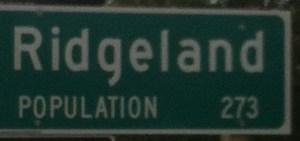
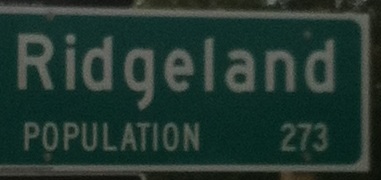
Every day, in my current ministry position, pastors contact me about wanting to move to Chicago. Every. Day. They want to come to the city because their spouse has a job here or their grown children live here or they just love Chicago. It’s a great city full of life and art and recreation and beauty. I assume that not as many people are clamoring to serve in Ridgeland, Wisconsin – Population 273.
Are we facing a future when many of our small towns will either not have churches? Are we facing a future when many of our small towns will become suburbs or simply fade away?
Image from along the road in a lovely little town in Northwest, Wisconsin.

 Like you, I hear difficult things every day. There’s the news (“Arizona Takes Two Hours to Execute Inmate“) and then there’s work (“I have nothing good to say about our church.“) How do you handle it?







 A Church for Starving Artists



#mediaviewer/File:Union_Station_Washington_DC_24_Sep_2013.jpg)
.jpg)