Holy Aging

The days of our life are seventy years,
   or perhaps eighty, if we are strong;
even then their span is only toil and trouble;
   they are soon gone, and we fly away. Psalm 90:10

Elderly woman's handI heard yesterday that Harry Hart died just days short of his 100th birthday.  He was related to me by marriage (my uncle’s wife’s brother) but I always knew him as Uncle Harry.  He was a war hero, the second of eight children.  I had been praying he would make 100 years because I heard he had wanted that.

I suppose that when life is suddenly – or not so suddenly – limited to sitting up in bed and occasionally sipping water, living to reach a special birthday is one of the few things we have to look forward to.  His beloved Mildred passed away in 1995.  Most of his friends have passed away.

Harry Hart is survived by just three of his seven siblings.  (Please God, don’t let me survive my siblings.)

Another friend of mine – one of my heroes – has a freshly altered leg compliments of surgery to remove melanoma.  I love this guy and he deserves this not at all.  He writes that it makes him feel old which is funny to me because he’s in his 40s and yet I get it. Circumstances age us.  But this is not the worst thing that has ever happened to him and he has already aged more than most of us deeply in his soul.  And he is a better pastor for it.  Or is that just something stupid we say when we try to make sense of things?

Aging sucks.  Really it does.  And yet if we are really, really fortunate, we get to live 70 or 80 years – or more – with extraordinary experiences and unspeakable joys.  If we are really fortunate, we sustain a few crushing blows that miraculously do not paralyze us.  Post-retirement can indeed be The Third (and most important) Age as Gwen Wagstrom Halaas suggests.  But it’s not easy.

If we are really fortunate, we do not mind the eyeglasses or hearing aids or monthly trips to get the gray out.  If we are really fortunate, there are more awesome days than not-awesome ones.  If we are really fortunate, we stop living in the past and look to the future trying to figure out how to live well if we can’t walk as briskly or jump on one leg anymore.  If we are really fortunate, we figure out how to love life from a hospital bed, if that’s what the future holds.

Is that really possible?  I’m naive/optimistic enough to think so.  It can be holy but when it hurts – a lot – physically and emotionally to grow older, it probably doesn’t feel holy at all.

Hang out soon with a person who feels old and ask about that.  The guy who fixes my car randomly asked me to visit his wife’s great aunt in a nursing home recently and I thought it was a strange request.  But I think I might do it.
Stress, Addictions, and Church

I’m starting to believe that everybody’s addicted.  Everybody.  We are simply in different places in terms of handling these addictions. communion

There are the familiar ones (alcohol, tobacco, porn, narcotics, food) but everyone’s brain is wired to light up upon doing something – it could be eating a chocolate donut or buying new shoes – and we like the lightening, sometimes too much.  Obviously these are tame activities for some of us and monsters for others. Check out this story about addiction as a reflex.

For example,  alcoholics experience a reflexive moment of euphoria when drinking.  Gambling addicts feel comfort at a slot machine.

Here’s an excellent story about the reStart Center in Seattle – a detox facility for young men addicted to technology to the point of having mostly virtual friends and not knowing how to cook a basic meal. I don’t play video games but this story made the study of addictions click.

We all have comfort habits:  a glass of wine, a bowl of ice cream, a trip to Nordstrom, a long run, a joint, a lottery ticket.  They relieve our stress and restore our lives for but a moment . . . unless the wine, food, shopping, exercise, weed, or gambling begin to control us because we aren’t dealing with the stress at its root.  The stress mounts; we turn to comfort habits faster and more often.

How does the church respond to the stress/crazy/need for comfort?

For starters, we need to acknowledge that most pastors and parishioners alike are addicted to our own substances/activities.  May God have mercy, but some of us are even addicted to Church Power (e.g. we have been in charge of Coffee Hour for a decade, we have been Church Treasurer for 20 years, we have The Pastor for 30 years. We experience a peculiar euphoria when standing behind that coffee urn, that financial report, that pulpit.) Honestly, we are these people.

But . . .  back to how church can engage with our addicted culture:

  • ·         Are our spiritual communities healing places where we are loved and accepted in spite of our inability to control ourselves in certain corners of our lives?
  • ·         Do our churches teach us how to relax in healthier ways?  MAMD reminded us at OASIS that the church has much to offer here: Sabbath, liturgical seasons, prayer, meditation, spiritual songs.  Now more than ever, our culture needs these practices.
  • ·         Are we paying attention?  Do we even know that we live in the meth capital of the state?  Do we know that binge drinking is the favorite weekend activity of our local honor roll students?
  • ·         Do we serve the 12-Step Groups meeting in our church buildings beyond giving them space?  Yes, they are anonymous, but we can connect with them in non-threatening ways.  My previous church set up espresso machines in the lobby to serve made-to-order coffee drinks to an NA group of women who came from a prison to attend a meeting.  Believe me, if you give free lattes to a group of people who get sub-grade coffee in prison, they will connect with you.  We just wanted to express the love.

But then again coffee is addictive too.   This is why life is so complicated and grace is so amazing.

Undivided Attention

MaryAnn McKibben Dana continues to help us rethink how we ponder and use time peaceour time, as a lovely crowd of Mid-Americans gather here in Kansas City at an event called OASIS.

When MA says that she’s stopped (or is trying to stop) using the terms “super busy” or “crazy busy” to describe her life, I remember that I’ve used those terms to describe my schedule about a dozen times already that day.

Instead, how about saying that life is full, life is abundant, life is . . . complicated even.  What if we shift our thinking to imagine that we are luxuriating in time.

So . . .

I didn’t take my Sabbath last week because there was a training I was expected to attend – and I didn’t even mind that (much.)  My Sabbath is Friday and this event was only offered on Friday, so there you go.  That would not have been a problem except that Saturday and Sunday were also booked solid.  Very. Abundant.

One of the things I spent my time doing Saturday was to sit and listen to individuals who are elders in a conflicted church.  We scheduled individual time for each to sit with me and say whatever they needed to say.  Without my tongue in my cheek, I can honestly say that I luxuriated in that time.  Undivided attention – if we recognize that’s what’s happening – is healing.  Yes, it takes time, but it is unadulterated pleasure – looking at someone’s face, listening to their frustrations/questions/anger, connecting with them as my actual brother or sister in Christ.  We are all on the same team, loved by the same God.  Even undivided attention touched by conflict can be nourishing.

But then we need to rest our brains.  Often this is the part we do kicking and screaming. Or engaging in something “restful” that feeds an addiction.  More about that tomorrow.

Cat Cora As a Model for 21st C. Ministry

Cat Cora MosaicI had never heard of Cat Cora until Tuesday at The Chef’s Table talk for Chicago Ideas Week.  Where had I been?

Cat Cora‘s basic skills involve food but to say she is simply a chef would be erroneous.  She was the first female Iron Chef.  She is executive chef for Bon Appetit.  She is a UNICEF spokesperson.  Her voice is featured in the Iron Chef video game.  She recently created a food app.  She operates a restaurant at Disney World.  She just opened a restaurant in Singapore.

She is a model for 21st Century ministry.

Many of us who serve as professional ministers have one job.  We are The Pastor or The Chaplain or The Theology Professor or the Middle Judicatory Executive or The Bishop. But the future of 21st Century professional ministry might well involve an assortment of “calls” all juggled, more or less at the same time.

I’m not talking about traditional bivocational ministry (if we can even call bivo ministry ‘traditional’).  I’m talking about serving smaller churches, creative projects, community endeavors, teaching gigs, and social media outlets as a cornucopia of ministries that support us financially and spiritually.

I’m talking about the pastor who supports herself by serving a congregation 15 hours a week while serving a community ministry for LGBTQ homeless kids a couple hours a week while teaching occasional social media for churches while offering spiritual direction to 3-6 individuals.  Yes, it sounds exhausting, but I’m wondering if it isn’t our future.

When a pastor has One Job, it’s easy for our professional identity to wrapped up in that One Job to the point that – when we leave it – we are fairly lost.  As you read this, I am probably in our Presbytery’s Boundary Training talking with pastors who need to watch out for this.  Retired pastors with no identity beyond their former church are boundary-problems-just-waiting-to-happen.  Active pastors who work sacrificially All The Time for “their people” have boundary problems too.  I’ve been one of those people.  Still am in some ways.

What if,” you might ask, “a professional minister isn’t really talented enough to have opportunities like writing, speaking, teaching, or counseling in order to supplement his part-time church income?”  Then maybe we can do something truly bivocational like serve as a pastor and a car mechanic or a pastor and a lawyer.  And there will – perhaps – always be churches that want and can afford full-time professional ministers.  But increasingly more and more will not.

If we have several projects going at once, there is no way we can experience our sole identity through just one.  It keeps us self-differentiated.  It keeps us from living and breathing a single job.

A gifted pastor’s basic skills involve church but to say she or he is simply a pastor would be erroneous.  The 21st Century Pastor spends less time on building maintenance and more time on a variety of creative ways to share our belief that following Jesus is the best way to live, that loving our neighbors is the best way to spend our days.

I find this more exciting than exhausting.

Church as Dry Bar

Dry BarSometimes we just want to feel fluffier.

No real world Church People – male or female –  have hair like Sofia Vergara but we, too, can visit one of the Dry Bars popping up in cities all over to get that blown out look.  These hair salons don’t cut your hair.  They don’t color your hair.  They just fluff it and maybe put a glass of chardonnay in your hand.  It takes just a few minutes and then tah dah – you are fresh and new.

This article has some not-so-new-but-still-we-need-to-pay-attention ideas about who we are as Followers of Jesus.  Hint:  most of us are not good at it.

Yes, there are lots of cultural Christians, many congregational Christians, and many fewer convictional Christians, but – I agree with Steve McSwain  – that many followers of Jesus have left the church to try to save their faith.  They are not satisfied with a simple blow out.  They want water and color.  They don’t want to appear fresh and fluffy.  They want to be turned inside out.  They don’t want a brief moment of respite.  They want a life of peace.

I’m not sure the institutional church will ever again look anything like it did in the 1960s.  But it’s not going to look – at all – like a dry bar much longer.

Ideas Shared and Sparked

CIW marquisThere are people that share interesting ideas.

And then there are people that spark us to come up with interesting ideas.  It’s a holy thing actually.

I adore Chicago Ideas Week for the ideas shared by so many interesting people.  Danny Schuman, Tig Notaro, and Catherine Hoke are among those whose ideas have made me happy this week.

But yesterday I heard ideas that sparked my own.

Love.  These.  People.

When we are inspired our lives change forever.  My top three Life Inspiration Moments – not counting the days I met Jesus, my husband, and our children –  happened at a bus stop in London (had just finished reading Crime and Punishment), DAR Constitution Hall (at an Aretha concert), and today at the “At the Chef’s Table” Talk for Chicago Ideas Week featuring Melissa Clark, Cat Cora, Graham Elliot, Mollie Katzen, and the others I already mentioned.  [Note to self:  read everything Josh Kilmer-Purcell has ever written.]

I have a new life plan today.  So many new ideas.  So what inspires you with life-changing ideas?

Cristóbal Colón Had Some Ideas

chicago-ideas-weekIt’s Ideas Week in Chicago – one of my favorite annual events – and while the talks this year lack many overtly religious/spiritual/interfaith options, there will be much to inform Church World.  More about that later.

With today being Columbus Day, I was pondering his ideas – as disturbing and backwards as they sound today.  According to Backstory, here are some of the ideas that Columbus did and did not have:

  • Columbus did not initiate the idea that the earth was round.  Aristotle had already established that (c. 330 BCE) not to mention a guy named Yajnavalkya (c. 9th–8th century BCE.)  But Columbus did have the idea that the earth was small – hence his confusion in believing that Cuba was China.
  • Columbus did believe that the lovely people he met in what is now the Bahamas would make docile servants for the royals.

And there was more, but here’s my point:  Ideas Are Important.  But not all ideas are good, reasonable, or true.  And still, all thriving institutions need ideas and idea people.

A couple of things about ideas in general:

  • We can try out an idea and if it doesn’t work, it’s okay.  Failure is an excellent teacher.  Or maybe an idea hasn’t failed as much as it needs to be tweaked a little and then voila!
  • Fear of  institutionalizing ideas paralyzes us.  Saying “let’s try this for 3 months and then evaluate” sets everyone’s heart at ease.
  • Mistakes introduce unlikely discoveries.  This is how we got the color mauve.  Excellent.
  • Everything is spiritual.  Among the Chicago Ideas Week talks and labs I’ll be attending include “Twist: The Joy of Solving” and “Work: Fueling Performance.”  They seem to have nothing to do with God, except that they do.
  • For churches to thrive, they need more than creative pastoral leadership.  Read/re-read this by Patrick Scriven.

I’ll be blogging on ideas all week.  Please share yours as well.

You Are My Citalopram

mri_imagesLet’s be honest here.  Some people make our lives easier and some make our lives harder.

I remember driving into the church parking lot years ago and the sight of certain cars made my heart tighten up.  It meant that my immediate future would involve a conversation with someone who always seems to be making a racket.  You can read about such children of God here.

You know them. They complain constantly, behave belligerently, and focus on the spiderweb in the corner when the building is actually on fire.

And then there are the people whose very presence calm us like the best quality anti-depressant.  We need these people.

So, as you read this today, I am spending time with one of my favorite human anti-depressants.  I hope you have some too.  Thanks be to God.

Living on the Bridge

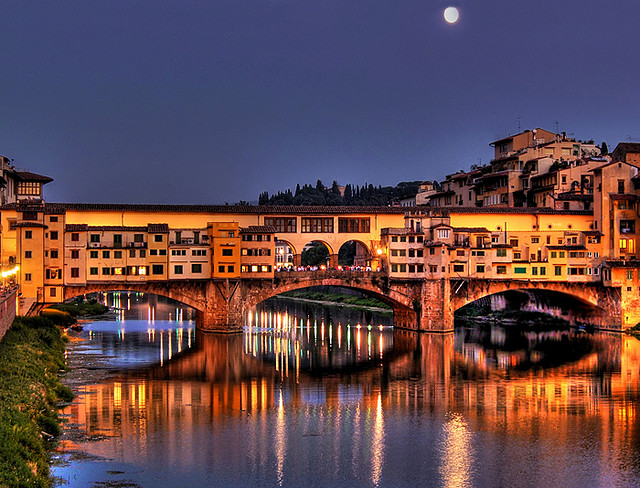
Bridges-Pont-Vecchio-by-J-SalmoralChristians are warned not to be Laodiceans.  In other words we are not supposed to be lukewarm followers of Jesus.

But  – at the risk of being labeled wishy-washy –  I believe we need more bridge builders.  Actually, I believe some of us need to live on the bridge.

It’s not about being two-faced.  It’s even not about being wishy-washy.  It’s about loving and respecting people on both sides of an issue.  It’s about recognizing that none of us has cornered the market on God’s Truth.  It’s about theological humility.

Being a bridge builder is a valuable competency for today’s spiritual leader.  And living on the bridge seems to be good too if we welcome those who are inching towards the other side from either direction.  I’m feeling like we need this now more than ever.  But it’s kind of exhausting.

Image of the Pont Vecchio bridging the Arno River in Florence.

PS  I think this is my 8th or 9th blogoversary.

Men, Women & Expectations (Please Tell Me We’ve Evolved a Little)

A retired clergywoman friend of mine has been ordained for almost 50 years.  Jackson-Pollock-Male-and-Female-1942-large-1033295365

As someone who’s been ordained for almost 30 years, we share some common experiences as women pastors.   Like Y,  I was often the first clergywoman parishioners had ever laid eyes on.  Like Y, I was sometimes  the only female at a clergy conference in those early years.  Like Y,  I even experienced colleagues making passes at me.  Clergy colleagues.

But my long-retired friend tells me that  – as a young (under 40) clergywoman, she never attended a clergy conference, clergy retreat, or continuing education class without a male colleague making a pass at her.  There was an expectation that – because she was there – she must have been “available.”

So last night I read this article from the online version of Vanity Fair about teenage girls, teenage boys, social media, and the expectation that the girls are fair game to the boys sexually.  Because they are there.

The VF article is disturbing for countless reasons.  But I wonder:  have things not evolved in terms of boys and men expecting sexual favors from girls and women just because they are there?  Is the article hyperbolizing possible problems with social media?  Or is it truly the expectation of some males regarding all females?

Just wondering.

And where is the church in all this? What is the church teaching our boys and girls, our men and women about why we are valuable?  Can you share specific conversations/programs/opportunities that your spiritual community is offering to talk about this with our kids and their parents?

Image is Male and Female 1942 by Jackson Pollock.