Bacteria, Brains, & The Holy Spirit

According to this article, the top three Myers Briggs types for clergy are ENFJ, ESFJ,  and ENFP.  Your pastor is least likely to be an ISTP or an ESTP.

Simplistically speaking, this means that pastors tend to be Feelers more thangut-bacteria-300x224 Thinkers.  We Presbyterians pride ourselves in requiring our clergy to be well-educated.  (Note:  we are the only denomination that still requires both Hebrew and Greek.)   And yet pastoral sensibilities imply having compassion (splagchnizomai – σπλαγχνίζομαι) which involves our guts.  You can look it up.

There has been a wealth of programming lately on the science of gut bacteria and one of my favorite stories recently (found here) connects our bowels and our brain.  In other words, there truly might be something to having “gut feelings.”

What’s in our gut (new favorite term: gut flora) could quite possibly impact MS, sinus issues, and weight loss. And – amazingly – it also seems to impact our ability to experience the Spirit of God.  Or at least that’s what I’ve determined intellectually  – as well as in my gut.

Maybe we should prescribe probiotic yogurt to our Pastor Search Committees.

If you’ve ever been on a Pastor Search Committee, you will know that it can be like dating.  In the first five minutes, it’s often clear if this relationship has a future.  At least, this has been my experience and the experience that others have shared.

I suppose it’s also possible to have a Pastor Search Committee full of Myers Briggs “Thinkers” who will look at the facts (correct number of years experience, educational credentials, etc.) and then determine The Right Pastor according to a clear list of requirements.  The problem with this way of selecting a pastor is that there is little room for The Holy Spirit to speak to us/allow our guts to inform us.  What I’m saying is that there seems to be a connection between The Spirit and our guts.

As my HH will quickly school you, this is a Biblical concept.  Jesus was moved in his guts.  That’s what it literally says here.  Awesome.

Yes, our bodies are temples.  Yes, we are what we eat.  And yes, there is a connection between food and God which is more than the holy experience of eating perfect dark chocolate.

Multiculturalism & The Gettysburg Address

Four score and seven years ago our fathers brought forth on this continent, a new nation, conceived in Liberty, and dedicated to the proposition that             all men are created equal.

abraham-lincoln-honesty-freedom-equality-684585It’s not that I’m trying to be snarky.  But with all of yesterday’s worthy tributes to the 150th anniversary of Lincoln’s Gettysburg Address, there were certain words that impaled me as I heard them again and again:  Fathers.  Liberty.  Men.  Equal.

Yes the writers of The Constitution were all “fathers,” but just as surely as there were  women at The Last Supper, there were women in the background of that Great Experiment of creating a new nation as well.

And as for Liberty, just four months before Lincoln’s Gettysburg Address, Kit Carson had waged war again the Native Americans of New Mexico and Arizona.  This was a mere 24 years after the horrendous Trail of Tears when thousands of American Indians were relocated from the Southeastern States to Oklahoma – a clear and ugly example of ethnic cleansing in our nation’s history.

Many will say that in the 19th Century and even in the 21st Century, the word “men” means “men and women” but in the case of Lincoln’s Gettysburg Address, “men” meant “male people.”  Keep in mind that even former slaves who were male were given the vote before women of any color.

And today – as the governor of Illinois signs the Marriage Equality bill just four blocks south of our office – inequality is alive and well in so many ways.

I hear Lincoln’s historic address and imagine that he was not talking about what was as much as he was talking about what could be.  Sort of like last Sunday’s lectionary reading from Isaiah.

The Real America

jasper-johns-map-museum-of-modern-artDo you remember when Sarah Palin spoke of “The Real America“?

After living in two states for the past two years, I finally got my Illinois drivers’ license yesterday and experienced this exchange:

DMV Guy:  You’re going to need your marriage certificate.

Me:  When my husband got his driver’s license, I don’t think he needed his marriage license.

DMV Guy:  But he didn’t change his name when he got married.

Me:  I didn’t change my name either.

DMV Guy:  What do you mean?

Me:  I didn’t change my name when I got married.

DMV Guy:  You can do that?

Me:  (?)

DMV: You have to change your name when you get married.

Me:  Actually, you don’t.

So, I got my new license yesterday with my actual birth name and the DMV cashier also wondered how I managed to keep my name after getting married, and it made me think that maybe I am a little out of touch with The Real America.

How can you not know that you can get married and keep your name?

So, I am a Professional Pastor serving The Institutional Church and sometimes I wonder how far off base I am in terms of Real People.

We serve God’s people and sometimes we don’t understand God’s people.  We might believe that everybody has heard of Walter Bruggemann and everybody reads The New York Times and everybody watches Homeland.  But the truth is that there are people Out There who don’t even know that Women Can Get Married and Keep Their Names.

I’m just saying.  Sometimes we don’t even realize that we are separated from people who are not just like we are.

Image of Jasper Johns’ Flag (1954-1955)

Considering the Pastors Who Will Follow Us

I know of a pastor who was independently wealthy and, while serving a small congregation, refused to accept a paycheck.  This seemed like a good and generous idea until it came time for that pastor to move on.

The next pastor serving that parish had an impossible situation on her hands.  She was not independently wealthy and she definitely needed her meager paycheck.  For her entire ministry, though, she heard over and over  (and over) again about how generous her predecessor had been.  The congregation resented every paycheck, every cost-of-living allowance, every reimbursement that their new pastor earned.

Frankly, it never occurred to me as a parish pastor that my work baton.250w.tnpractices, my personal habits, and my boundary-keeping (or lack of boundary-keeping) would have an impact on the clergy person who followed me.  We are all too preoccupied with the daily grind of ministry – and often dealing with the issues left over by our own predecessor – to spend much time considering the pastor who will follow us.

Consider this:

  • If we have the habit of working seven days a week – even boasting about how “pastors shouldn’t take a day off”  – then we are making it difficult for the person who comes after us to take a Sabbath.
  • If we return from vacation for every emergency, we are ruining the next pastor’s vacations.  Or at least we will cause him/her to spend enormous energy re-establishing those boundaries.
  • If certain church leaders are our special friends and we share “everything” with them – including confidential church information – we are making life miserable for the next pastor who does not share confidential information with those leaders.
  • If we fail to take our study leave or if we refuse financial reimbursements, we are making the pastor who follows us appear lazy or greedy.
  • If we accept lavish gifts from wealthy members (e.g. vacation homes, used cars) the next pastor who doesn’t accept such gifts could be considered cold or ungrateful.

God-willing, we are not the last pastor to serve in our current call.  How are we making it easier – or more difficult – for the ones who will follow after us?

A Pastor & Her Gigs

“Pastors: The Gig economy is here. Keep your day job. You will soon have more in common with artists/musicians than doctors and lawyers . . . ”  

Tweet from Jim Henderson June 2012 (@byJimHenderson)

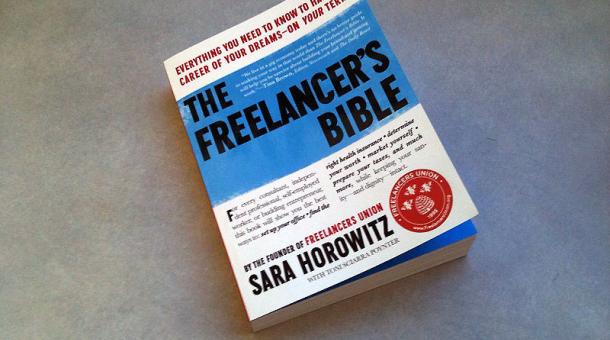
freelancers-bibleThe Gig Economy is not a new concept, but this recent article (thank you KEWP) reminded me that women, in particular, need to stop underselling ourselves when it comes to sharing our expertise.  Colleagues and friends who have written important books, developed essential resources, and created inspiring art need to:

  1. not be afraid to self-promote such endeavors and
  2. not be afraid to charge what they are worth.

Frankly, we need the money that these gigs bring.

Most of us who write, paint, sculpt, film, and talk about spiritual/ecclesiastical ideas have regular jobs which inform our work.  While I no longer serve one congregation, I get to be up-close-and-personal with 100 congregations preaching almost every Sunday, meeting with personnel committees and other boards, coaching Search Committees.  And as I see patterns, my random ponderings about 21st Century ministry are better informed.  And so I have ideas to share.  Hence:  gigs.

My basic road show is 21st Century Church 101 and I’ve done it so many times and for so many years that it concerns me that some churches still want to hear about it.  “What do you charge?” people ask me, about this particular presentation and I never know what to say.  It depends really on who’s asking.

But as I ponder what Jim Henderson* tweeted in June 2012 about future pastors having more in common with freelancers than we have with white-collar professionals, I wonder how we will navigate these waters.  My own gigs come out of a day job that is also about professional ministry, serving in a Denominational Middle Judicatory which might not exist one day.  Many of our churches – especially new church plants – will have pastors whose day jobs involve keeping their First Career (assuming they’ve gone to seminary to start a Second Career) or finding employment as barristas or construction workers.  Their professional ministry will be in the form of “gigs” rather than their primary means of employment, perhaps.

I am grateful and delighted when groups want to pay me to hear what I have learned about Church World.  In fact I feel an urgency to share it.  I heart special gigs and I love talking about The Future Church.

But I wonder if one day most of our pastors will not have what we now consider to be “regular church positions.”  Instead they will have an array of church gigs that supplement their regular, secular income.  Who really knows?  What do you think?

*Jim Henderson’s group Beyond the Box granted my former church $300 to do something random for Jesus.  We bought $100 of Krispy Kreme Donuts and $200 of water bottles and handed them out during rush hour in the intersection in front of the church building.  No flyers.  No church t-shirts identifying us.  Just donuts, water, and a smile.

Do Churches Want Happy Pastors?


The Flourishing in Ministry Project from Notre Dame’s Mendoza College of Business is a must-read for every church personnel committee and pastor.  Matt Bloom, Associate Professor of Management, reminds us that, “The traditional business model says you get people to perform well by giving them the right rewards and aligning those with what you expect them to do.”

Sadly, too many pastors are consistently paid minimum salaries, expected to serve at a level that no parishioner (whom the Bible also identifies as a minister) would ever serve, with dated tools and limited resources.  And then these pastors are expected to transform their congregations, “bring in new members,” choose their congregations over their families, and be grateful.

Happy pastors = happy churches.  For that matter, happy church staffs in general, whether they are paid or volunteer, make for happy congregations. And happy pastors and congregations tend to be flourishing pastors and congregations.  For the purpose of this post, I’m concentrating on professional ministers.

How do we promote well-being for our pastors?

  • Are our pastors spending the majority of their days dealing with minor annoyances and grievances?  Why? Jesus did not die, nor was your pastor called by Jesus, for these things.
  • Do our pastors feel appreciated and are acts of gratitude towards our pastors’ service heart-felt or contrived?
  • Do our pastors have lives apart from the church?  Do we encourage them to have non-church friends, to spend time with family away from Church World, to have interests that have nothing to do with their professional ministry?  Do we love it when we hear that our pastor is taking a Thai cooking class or learning how to play golf?  Or do we wonder where he/she is finding the time to do this when there is so much work to do for the church?
  • Are we quick to remind our pastors of their strengths so that when we talk about their growing areas, they do not feel devastated?  Or do we assume that “they know what they are good at” and go directly to constructive, or not-so-constructive, criticism?
  • Are we aware that we don’t and actually can’t know what our pastors do all day, but we trust them to lead, make decisions, pray, think, and care for the community?
  • Are they growing professionally, spiritually, emotionally?  Do we encourage them to take classes, attend conferences, stretch outside their comfort zones?
  • Do we expect the pastor to conform to the congregation’s expectations rather what God might be leading him/her to be?  Or do we encourage our pastor to be her authentic self?  Do we allow him to be his own person?
  • Are we as engaged with the mission of our spiritual community as we expect the pastor to be engaged?  Do we consider our pastor to be the sole purveyor of religious goods and services?  The lone professional pray-er and servant?
  • Do we encourage our pastor to “recover” after particularly busy and/or emotionally taxing times?  Do we encourage an extra day off after a week with two funerals?  Do we grant an extra week’s vacation after the pastor’s own father dies?  Do we appreciate the pastor’s request to close the office the Monday after Easter to rest from the labors of a very full Holy Week?

There is a troubling tendency among many churches I visit to drain every ounce of energy, every moment of time, and every spark of individuality from the pastors “whose salaries they pay” as if pastors are hired hands rather than spiritual mentors called to equip them to be ministers too.  According to The Flourishing in Ministry Report, the pastors studied rated themselves a 4.9 on the Happiness Scale in which 1 = extremely unhappy and 7 = extremely happy.  4.9 is not terrible, but it could be better.

The Flourishing in Ministry Report was shared with me by the extraordinary Carol McDonald, Executive of the Synod of Lincoln Trails.

Buying Time (But Why?)

There are times when I visit churches and think to myself, “This church is dyingtime_is_money but they haven’t realized it yet.”  They have enough financial assets and people to buy them time as things are not exactly growing. 

Maybe there are new members each year, but just as many members move or pass away or drop out and so the numbers are not increasing.  Maybe there is still a great capacity to do the ministry they’ve always done, but things are tighter.  There are fewer dollars and fewer people.

Many of our “best givers” (i.e. financial tithers) are dying with each passing year.  And many, many of our congregations are balancing their annual operating budgets with the interest – or even the principle – from investments made a generation ago by those who grew up in a culture when more people supported institutions (rather than institutions supporting people.)

Common Discernment Question for Church Leaders: 

“We have enough money to continue as a church for about five years. 

  • Do we decide to close now, sell our building and share our assets with another church or start something completely new? 
  • Or do we continue as we are until the money runs out and then we have no choice but to close?”

What’s the most faithful decision?

Churches with the resources to “buy some time” are fortunate but the question must be asked:  Why Buy Time?

  • Is there evidence that – if you can simply get through a specific season – your church community will grow and thrive in the future?
  • Are plans being made to make risky choices?  Try new ministries?  Shift the culture of the congregation?
  • Are you buying time because this is a serious time of discernment after which your congregation or your church leaders will make a Big Decision about the mission focus?

Congregations with ample financial assets and large-ish membership numbers are very fortunate . . . unless there are no plans to change the way we’ve been the church together.  Otherwise those churches are same path as so many of our congregations that were once comprised of hundreds of members  but now have 10-30 members left.

Because I don’t want this post to be a total downer, know that there are courageous, risk-taking, Spirit-led congregations who are:

  • Not “waiting for a rainy day” to use their assets for new ministries.
  • Making hard changes in the way they’ve staffed churches from your basic Senior Pastor/Associate Pastor/Educator models to something more adaptable for a postmodern context.
  • More interested in figuring out what Jesus calls us to do/be and less interested in perpetuating an institution, even an institution they love.
  • Aware that their buildings are tools for ministry and not themselves idols to be worshipped.

It’s easy to avoid these conversations, but we need to have them.

Unmentionables in the Pulpit

Woman killed in DetroitMany weeks ago, the Sunday after George Zimmerman was found not guilty in Florida, I longed to find peace in a worship service.  I wanted to pray with others who might also be aching over the profound sadness and anger felt after a teenage boy is shot in this country for no reason while nobody is held accountable.

To my astonishment, neither Trayvon Martin nor George Zimmerman were mentioned in worship.  I left feeling a little empty.

I wonder about what was not mentioned yesterday in worship.

  • Was there a church that failed to mention the tragedy in the Philippines?
  • Was there a church in Illinois that failed to note last week’s vote in favor of marriage equality?  (I imagine that some congregations would be thanking God while others are asking for God’s mercy.)
  • Was there a church that failed to mention the sacrifices given by our veterans and their families?

What was not mentioned yesterday in worship and why?

Was there a congregation two Sundays ago that failed to mention that we live in a world where someone can be shot while asking for help – especially if she is a stranger with dark skin?  I’d bet that most congregations did not hear prayers for the family of Renisha McBride.

Some churches do not like “to bring politics” into the pulpit.  But what’s political?

  • Is it political to mention crises resulting from Acts of Nature?  Probably not.
  • Is it political to ask God to work through our leaders to help victims of Acts of Nature? Maybe.
  • Is it political to pray for our leaders and their families after an election? Some would definitely say ‘yes’ especially if they didn’t vote for them.

What is unmentionable  – or simply unmentioned – for pastoral prayers in your congregation?  And why?

Image of Renisha McBride – age 19 – who was shot to death in Dearborn Heights, MI trying to get help after her car broke down.

Learning to Love Unscenic Vistas

abandonedI grew up in a pretty town (Chapel Hill) beside a not so pretty town (Durham) which always brought me huge satisfaction and unseemly pride.

Now I live in a pretty village but take the train every morning, past abandoned shopping centers and rusty train yards, to get to one world class city with all the wealth and poverty of all cities.  The president often mentions that he’s from The South Side which is grittier and messier than The North Side, I suppose to have solidarity with the poorer side of town.

Neat and Tidy is a good way to live and many of us spend an enormous amount of money and energy trying to get there.  But life is not at all neat and tidy and – if we claim to be followers of Jesus – there is a call to notice, and maybe even seek, places and people who have been abandoned and forsaken.

So much easier to live in a gated community with manicured gardens.

I’m trying to Pray the Commute these days.  Yes, there are bleary-eyed human beings aboard the train who need spiritual attention, but looking outside the train offers a wealth of prayer possibilities.  The abandoned store.  The school bus.  The sad streets.  Once the store served local shoppers.  It’s fun to imagine who they were and pray for them.  The buses are full of kids who’ve been sent to new schools this fall.  Men sit on street corners looking like they don’t really have a place to go.  Makes for a rich prayer life and it’s transformative.  Instead of looking away from unscenic vistas, I stare and wonder. Or at least I try.  This is not a post about how well I do this.

How does the world change unless we stare at unscenic vistas?

Image of a train yard seen on Metra Electric in South Chicago.

Deep Impact

deep impactRelevant Magazine has posted a good story called “Seek Impact.  Not Attention” regarding the universal longing to be liked.  We forget that ‘what happens off the stage always trumps what happens on the stage.’

A couple years ago, the Interfaith Youth Core – after becoming “famous”  – decided it was much more important to make an impact.  The word “impact” factors heavily in their materials these days.  And it’s more than a word.  They are making a global difference in teaching interfaith cooperation.

Too many churches are still interested in being popular.  Even now in the 21st Century, there are still churches where it’s impressive to be a member, where the wealthy and powerful gather to be seen.  Even within small congregations, there are people who vie for important positions.  Church roles like “treasurer” or “deacon” or “coffee hour lady” are the only position of power some people believe they have.  But Jesus’ followers are called to be servants who make an impact, rather than members who get attention.

As we evaluate the ministry we are doing in our faith communities, it’s not about the numbers in worship or the Yelp ratings or the preacher’s Klout score or  how comfortable we are.  What impact does our spiritual community have on the neighborhood and beyond?

Jesus had a deep impact on people and – at least for a moment –  earth became a bit more like heaven.  That’s what we’re called to do too.  And we can make a deep impact better together than we can individually.

That’s what the church is supposed to be about.