Why Am I Telling This Story?

People who know me know my stories:DanaNoris

  • The First Funeral Story
  • The Baked Bean Story
  • The Spiderman in Mexico Story
  • The Heroic Wine Cellar Story
  • The Aaronic Blessing in the Mall Story
  • The Target Story
  • The Joan Benoit at The White House Story
  • The Private Parts Drawn on the Paper Towel Story
  • The Beautiful Witch Lady Story
  • The Brain Tumor Wedding Story
  • The Dessert Menu in the Ladies Room Story
  • The Exorcism Teacher in the Church Parking Lot Story

I literally have hundreds of them.  They are all true.   And some are amazing, if I may say so myself.

I’m trying to stop the habit of telling other people’s stories and sticking to my own, and this is hardest when it comes to my kids.  I share stories involving them because my kids are exceptional human beings and I want everyone to know. I’m that mom.

But this brings me to a question, and it’s ultimately a spiritual question:

Why Am I Telling This (or any) Story?  It’s a spiritual question, because the answer discloses my insecurities, my human needs, my sinfulness.

  • Am I sharing this story so you’ll think that I (or my kids and therefore – again –  I) am incredibly smart/good/clever/important?
  • Am I sharing this story to top your story, so that I’ll feel superior?
  • Am I sharing this story to bring someone else down?
  • Am I sharing this story to make an excuse for myself?
  • Am I sharing this story to draw attention to myself for no particular reason?
  • Am I telling this story because I know it’s a winner and I’m basically a Myers-Briggs introvert who wants to go home?

I’m trying now – before I tell a story – to ask myself these questions.  Stories are crucial tools for entertaining, explaining, teaching, admiring, and blessing people.  Or they can be used to imply to our listeners that we are, in fact, the prettiest girl in the room.  (I’m speaking to both men and women here.)

It seems to be a good spiritual discipline to ask the question.

Image of Dana Norris, host of the Story Club Chicago.
The Good Kind of Cancer?

vladimir-borovikovsky-job-and-his-friends-1810sI have a friend who was recently diagnosed with “the good kind of cancer.”  In other words, her every molecule is not ravaged with organ-eating cells that require drenching her innards in chemicals to the point of utter despair.

Is it ever okay to say that some cancer is “the good kind”?

The most optimistic among us could say, in given circumstances . . .

“I have the good kind of depression.”  (It only happens situationally like when my loved ones all die in a fiery crash?)

“I have the good kind of unemployment.”  (I happen to be independently wealthy and don’t mind hanging out all day feeling adrift?)

“I have the good kind of existential loneliness.” (There are people who actually do understand me, but they’re all on vacation?)

“I have the good kind of homelessness.”  (I sleep on a different friend’s sofa every night?)

There is no good cancer.  Depression, unemployment, loneliness, homelessness are never good.  God can use horrendous situations for good.  But some things are never good in and of themselves.

This is a dangerous thing to suggest to friends in crisis.  Pastoral Care 101 involves allowing people to feel what they feel.  It’s not our job to say, “At least this is the good kind of nuclear winter.”  Better idea:  Sit in the total suckiness with them and love them gently.  Do their laundry.  Make them a salad.

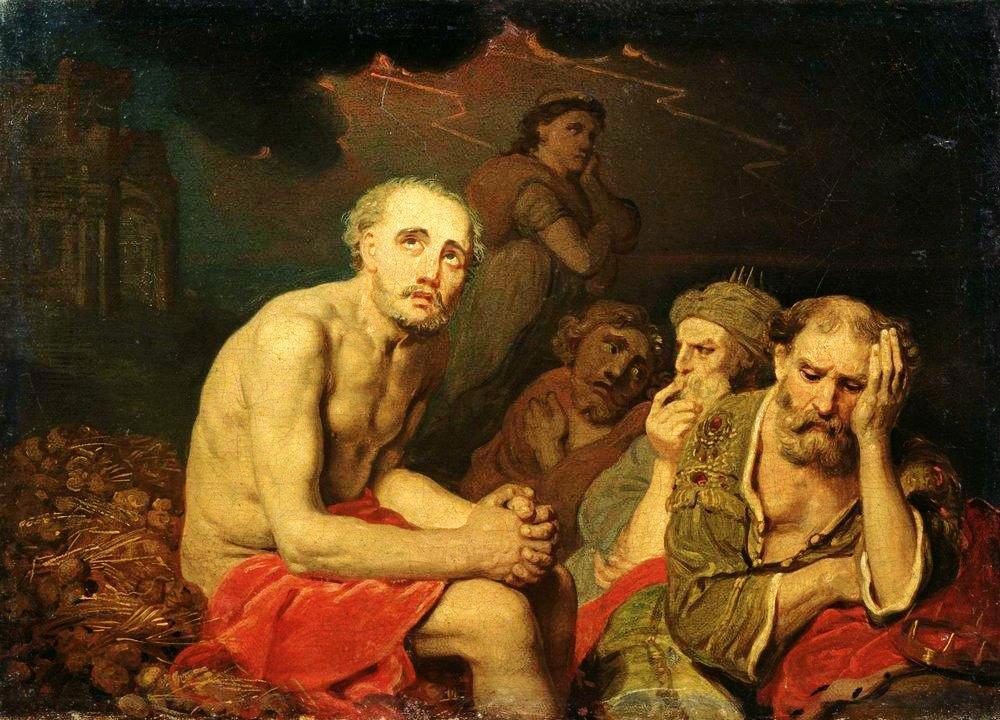
Image is Job and His Friends by Vladimir Borovikovsky (1810s)

Being Poor Makes Us Dumber?

Are people poor because they are not very intelligent?

Or are people not very intelligent because they are poor?

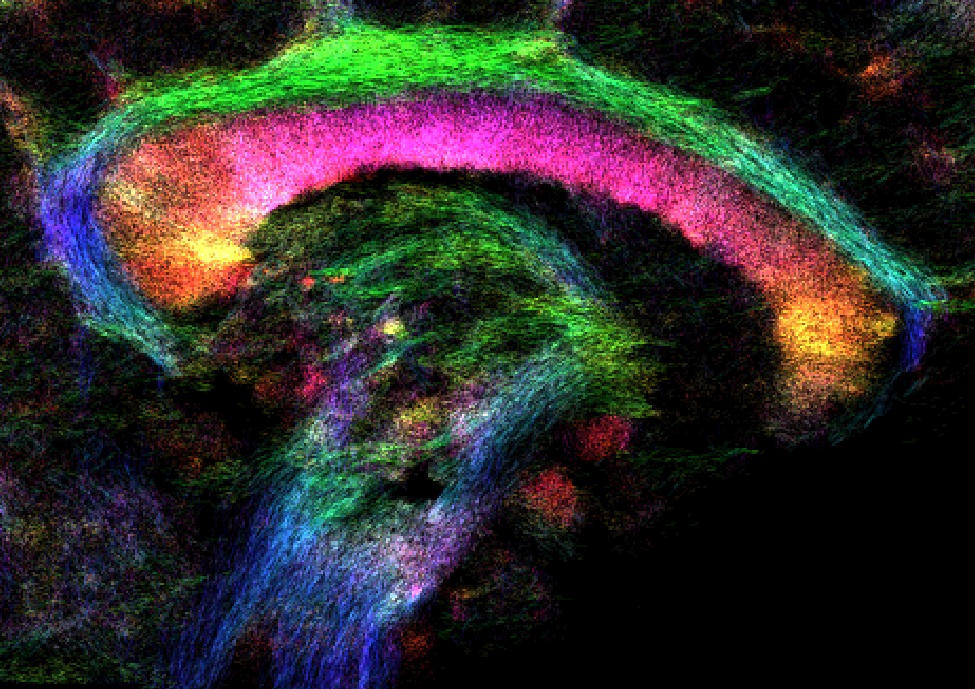
Textured Brain by AnwanderConventional wisdom in our nation  – at least among some of us – has been that people are poor because they are not very smart.  They make foolish choices.  They are not committed to self-improvement.  They are not well-educated.

This story on NPR refers to a recent study by Ivy League smarties which indicates that poor people are just as intelligent as rich people, but the burdens of worrying about money “scrambles our thinking.”

Being poor takes up more mental capacity,” says Eldar Shafir.   This makes total sense to me.

HH and I randomly and happily remind ourselves these days that we are no longer paying both a mortgage (for a house we weren’t living in) and rent (for a house we are living in.) The daily anxiety of carrying this financial load, along with college tuition and other responsibilities was a constant heaviness in our lives.  When you’re always thinking about how to juggle expenses, it’s almost impossible to be creative.  Honestly, we drive into our (one) driveway these days and feel energized just knowing we can manage.  Owing more money than we have makes us exhausted.  And a bit addled.

One of the hallmarks of following Jesus is caring for the poor and oppressed.  It makes us more Christ-like.  And it will make people Christ loves a little bit smarter.  This I believe.

Image source.

Hallmark & The 21st Century Church

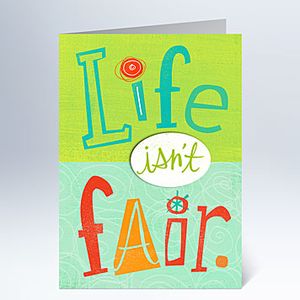
A friend  told me recently that on her octogenarian Mom’s birthday, sheLife Isn't Fair Unemployment Card

  • Took her Mom out to dinner.
  • Took Mom to run errands (since she no longer drives)
  • Gave her Mom a flowering plant.

At the end of a nice day, Mom turned to her daughter, visibly upset, and said, “I’m a little disappointed you didn’t send me a card.

Maybe 80-something Mom is rude.  Maybe the postal carrier’s daily visit is the highlight of her day.  Who knows?

But I believe that one of today’s cultural shifts is marked by how much we appreciate greeting cards.  A couple observances and wild generalizations:

  • Most people under the age of 50 don’t care about receiving a greeting card in the mail with a one line message and a signature. People under the age of 30 care even less.
  • Some people over the age of 50 still love to receive cards delivered by a real postal carrier.
  • People with Facebook accounts would rather have 100 personal birthday messages, made possible by Mark Zuckerberg, than receive a couple snail-mailed cards.  Specially chosen Birthday GIFs are particularly appreciated.
  • Not everyone loves digital cards. For better or worse, we have a lot of emails to read.  An Evite makes life easier for everybody.  A Halloween card that takes three minutes to download makes life harder.  Perhaps this is obnoxious and ungrateful, but it’s true.

So, what are the implications for community-building and pastoral care in churches?

  • Impersonal cards do more harm than good if sent to certain people in our congregations.  Do send cards to older people who enjoy them.  Do not send form letters without authentic pastoral effort to anyone under the age of 70.  Even those 70 and over would probably like to have some real handwritten news with that signature.  (Sad but true story:  I’ve known church Deacons who committed to sending birthday cards to all church members, but they misspelled names or even called the birthday person by the wrong name.  This negates all efforts to offer authentic pastoral care.)
  • People want authentic community.  They don’t want cursory form letters  in the hospital.  They don’t want to be A Name a Pastoral Care List. They want authentic compassion.  They don’t want fake, thoughtless, or impersonal.
  • We might believe we are actually being real, thoughtful, and personal when we send cards.  But it takes genuine effort to be real, thoughtful, and personal.  Do we care about someone enough to get to know whether or not she prefers greeting cards or Twizzlers?  Maybe he prefers balloons or a cupcake.  Does she want her health situation to be confidential or does she want to be named on The Prayer List?
  • If we want to nurture community, we will need to commit time and attention to human beings as individuals.  We have got to know our people.  Depending on the size of the congregation, the pastor cannot possibly know each individual’s story.  And, actually, it’s not the pastor’s job to visit the everybody.  It’s the pastor’s job to teach other church leaders to do pastoral care so that every person in a faith community has at least one or two personal connections.

I don’t mean to criticize the good people who work at Hallmark.  But Hallmark cards are a metaphor for what’s weak about our care for one another.

The card pictured above is from a new line of cards for the unemployed.  For the love of God, if you know people who are unemployed, please cook them dinner or take them out to lunch or go over with warm muffins and coffee and hear their story.  Do not send them a card.  I’m begging you.

Thank You Church Building Laborers

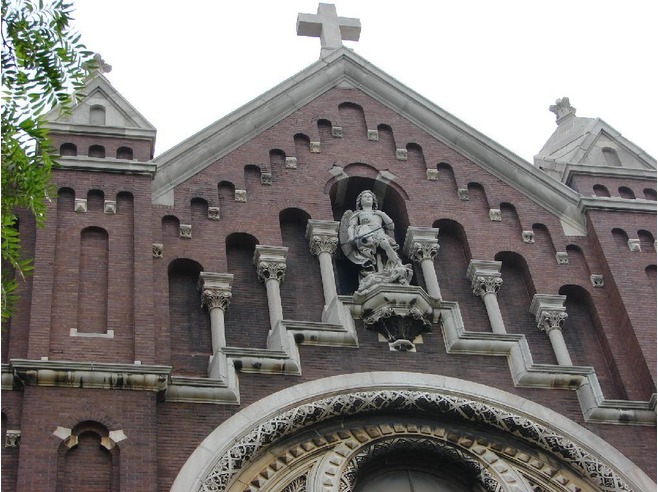
Some of us are unspeakably fortunate to be paid to read or think or pray or plan.  We aspire to inspire, or something like that.  St_Michaels_Catholic_Church_Chicago

There are others who use different muscles.  They literally lift, haul, build, smooth, clear, and dig.

They make it possible for our churches to meet and do their ministry in houses of worship and Christian nurture.  Let’s remember them today:

  • The Bricklayers, Stonemasons, Painters, and Roofers whose efforts give us one of our most important tools for ministry:  the building in which we gather.  (Note: if we are  using our buildings as museums or once-a-week meeting places rather than tools for ministry, our church is dying. No exceptions.)
  • The Church Sextons, Janitors, and Groundskeepers who keep things tidy and safe.  (Check out  The Complex Life of a Church Janitor)
  • Electricians who light up the nursery, HVAC professionals who ensure the sanctuary has AC, Plumbers who keep the toilets flushing, Carpet Cleaners who keep classrooms fresh.
  • The Craftspeople who repair organs, tune pianos, tweak copy machines, and renovate stained glass.

Since the building of Solomon’s Temple, laborers have erected holy gathering places.  Many of these laborers were slaves.  Some have become famous.  Most most are not appreciated nearly enough.  If you are worshiping God today in a space with walls, windows, flooring, doors, AC, electricity, and running water, remember those who labored to make it happen.

Image is of St. Michael’s Roman Catholic Church in Chicago,

Leaping Into the Crazy

Crazy_Art_2_by_Friik1987A friend of mine shared that her mother regularly repeated this advice:  Don’t Stick Your Hand in the Crazy. This should probably be needlepointed onto a pillow.

Here’s the thing:  many of us intentionally leap gladly into the crazy.  It’s our job. I’m talking to you: social workers, parole officers, middle school guidance counselors, police officers, ER nurses, fire fighters, pastors.  We regularly deal with the ridiculous, the random, the outrageous, the shocking, the twisted.  And we kind of love it.  It sets us free.  It makes things real.

Thanking God this weekend for the privilege of serving positions full of messiness and wonder.

Image source.

Dream Job

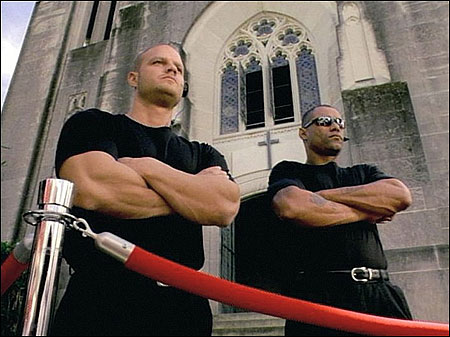
One person’s dream job is another person’s nightmare.  I have a friend who church bouncerorganizes closets and it rocks her world.  Good for her, is all I can say.

As I’ve shared before, when I first told people about my (then) new job two years ago, I warned them that they might want to throw up a little bit in their mouths. Middle Judicatory Institutional Church Staff Member* does not scream “fun” for many people.  But it’s been my Dream Job.  It’s an interim position that ends before long and then The Next Dream Job begins.

Among the interesting jobs I’ve come across recently:

Jobs I wouldn’t mind having in a different place and time:

  • NPR Talk Show Host
  • Ambassador to Jordan
  • White House Easter Egg Roll Director

What about you?  What’s your dream job?  Is it possible that God is calling you to do something that sounds crazy to most people?

*This is not my real job title, but it’s essentially what I do.

Image of Church Bouncers.  (This is a real job.)

30, 50, 80

From the diary of my great-grandmother Jennie Neel Linker  August 28, 1933

The Lord sent us a new little granddaughter. She doesn’t have a name and weighs 7 1/2 pounds.   Dr. Templeton was the Dr., and Alma and Mary Bill were assistants, and Bob is all smiles.  May she be an honor to her parents, her Maker, and her country.  

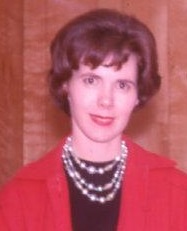
Barbara Linker Edmiston age 30

They would name her Barbara Ann years before the Beach Boys song.

Mom would have been 80 today.  On August 28, 1963 we were celebrating her 30th birthday when, in the middle of enjoying a cake she probably baked herself, I remember the news showing a special speech that had been delivered that day by a young pastor named Martin Luther King, Jr.  We stopped at her request, turned up the television, and watched.

Check out the 1960s hair and lipstick.  This is the only photo I can find when Mom was 30, but little did we know that she had already lived more than half the years she’d be given.  And little did we know that the 34 year old preacher on TV would be gone in less than four years.

And little did we know that 50 years later many things would be different and many things would not be so different.

Tell me, what is it you plan to do with your one wild and precious life?” Mary Oliver famously asks.  On this particular summer day, I am grateful for that 34 year old preacher and for my 30 year old mom who asked us to watch and listen between bites of cake.

Both of their lives were too short from our perspective, but they spent those lives quietly honoring their parents, their Maker, and their country. Thanks be to God.

Note: We had technical difficulties with correcting dates all day, so sorry if you read this post before corrections were finally correct.  

Identifying Our Privilege (& Then Using It Well)

The first time somebody told me I was a privileged person, I felt defensive and white privilege cardembarrassed.  You think I’m privileged?  

But the truth is that I am. My skin is white.  My heritage is European.  My citizenship is of the United States of America.

My education level is among the highest in the world.  I have a home, and that home has central AC and a dishwasher.  We have a guest room.  And two cars.  We get a vacation (or two) every year.  And we’ve been able to give our kids braces and college educations.  We all have health insurance.

I am rich.  Not 1% rich, but richer than most of my global brothers and sisters. So, yes, I am quite privileged.  What am I going to do about it?

Perhaps you saw this video.  (Go ahead & watch it if you missed it last week.)  It occurs to me that part of our spiritual practices must include using our privilege well:

  • If we are white in a white majority world, we must step in when people of color are being offended.
  • If we are employed, we must advocate for the unemployed.
  • If we are educated, we must seek education for those without access to strong primary and secondary schools, much less access to college.
  • If we have homes, we have got to notice the homeless.
  • If we have health, we have the strength to support the physically and mentally weak.

It seems sinful to ignore those who live without our particular privileges.

It seems holy to notice those who need supporters/champions/spokespersons and stand alongside them.  Picture Jesus hanging out with the woman at the well, the tax collector, the leper.

Privilege can be an advantage that separates people.  Or it can be a tool for bringing people closer together.  We get to decide which path to take every day.

Image Source.

A Life Well-Loved

In the past 72 hours . . . Aimee Wallis Buchanan

  • Two recent seminary grads (one of whom is my first cousin once removed) married each other in a joyous ceremony.
  • Someone I love was diagnosed with leukemia.
  • Someone I love started chemo for lung cancer.
  • We remembered the anniversary of my Dad’s death 23 years ago.
  • We celebrated the 30th anniversary of the ordination of one of my dearest friends.

And  – today –  I would like to tell you about a CD of music created to celebrate the life of a special human being who died several months ago at the age of 44.

There is nothing good I can say about the death of Aimee Buchanan.  I met her exactly one time years ago, but her death is something I’ve thought about many, many times since her passing in February.  Nobody –  in the prime of a life engaged in so much good, who is beloved by her spouse, her children, her parents, and hundreds of friends – should die.  Or so we fervently believe.  It’s not just right.

And yet, here we are.

Life is full of darkness and light, bitter losses and glorious dawns.  The twelve tracks on this album are, frankly, perfect for a good cry, with moments of soaring joy.  For $10 you can not only hear them all in their entirety, but you will also be supporting the work of the Asheville Youth Mission.

There are too many people in the world in need of comfort and support and healing.  Too many people don’t even know what love looks like.  Aimee’s life has inspired many of us to be better people.  And you can help in a small way here.

Photo of the Rev. Aimee Wallis Buchanan (April 12, 1968  – February 4, 2013.)