You Don’t Know What You’re Talking About

Pontius Pilate: What is truth?  John 18:38

Truth by BrudianChurch seems to be one of the best environments on earth to disseminate misinformation.  Better than office pools.  Better than classrooms.  Better than prison.  Not quite as good as Twitter.

I remember running into a friend in Marshall’s once, and  – because I was a pastor – she immediately and rather breathlessly shared Church Information with me from her own congregation on the other side of town.

Breathless Church Lady:  Our associate pastor was just fired because the senior pastor was so jealous of him!  Can you believe that?!  Everybody loved him.  He was the Real Pastor, if you ask me.

Me (in my head):  Actually the associate pastor got fired because he was having an affair with three different members of the choir.

I knew this because I was on the team that had received this report.  But I couldn’t share that truth with the Breathless Church Lady.  All I could say was this:

You don’t know what you’re talking about.

In my travels to visit different churches through the years, I have heard lots of misinformation:

“The Presbytery just took our pastor away and we never were able to say good-bye.”  (Actually, the pastor was dying of AIDS and he himself requested that he leave quickly and that the Presbytery not share his health information. And he didn’t want to say good-bye in spite of what the Presbytery had advised.)

“The intern is having an affair with the pastor.  That’s why our pastor’s getting a divorce.”  (Actually, the pastor and his spouse had been secretly separated for a year and there was nothing going on with the intern.)

“Our educator is so inept, she must be having an affair with the pastor.  That’s the only way she’s keeping her job.”  (Actually, the pastor’s having an affair, alright, but with a liturgical dancer in another state.)

Notice a trend here?  Yes, lots of misinformation is about sex.  But there are also inaccuracies that display basic mistrust, fear, and meanness.  Power issues abound.

What does the pastor do all day?  I don’t think she ever visits people!  (Actually she spends a lot of time talking with those dealing with everything from addiction to unemployment to depression, but she can’t report that and nobody sees her do it.)

The Presbytery doesn’t do anything to support us.  (Actually The Presbytery’s dealt with behind-the-scenes mediation, helped you cover some emergency expenses, and made it possible for your church to find a new pastor.)

I think our treasurer is skimming money from church contributions.  He’s retired and his wife doesn’t work, but they just got a new car.  (Actually, he inherited the car from a relative and he pledges more money than you do.)

Why do we in the church share erroneous information?  Do we have too much time on our hands?  Can we not believe that our pastor is doing her best?  That men and women can serve on the same staff together and not be romantically involved?  That institutional leaders are working hard to help congregations thrive?  That we are all on the same team?

Yes, we’ve seen abuses.  Sure.  But most of us trying to serve God are doing it with integrity.  Or we are trying.

(Note to abusers/liars/crazy-makers:  Servants with integrity love you, but we won’t let you hurt people.  Love = holding each other accountable.)
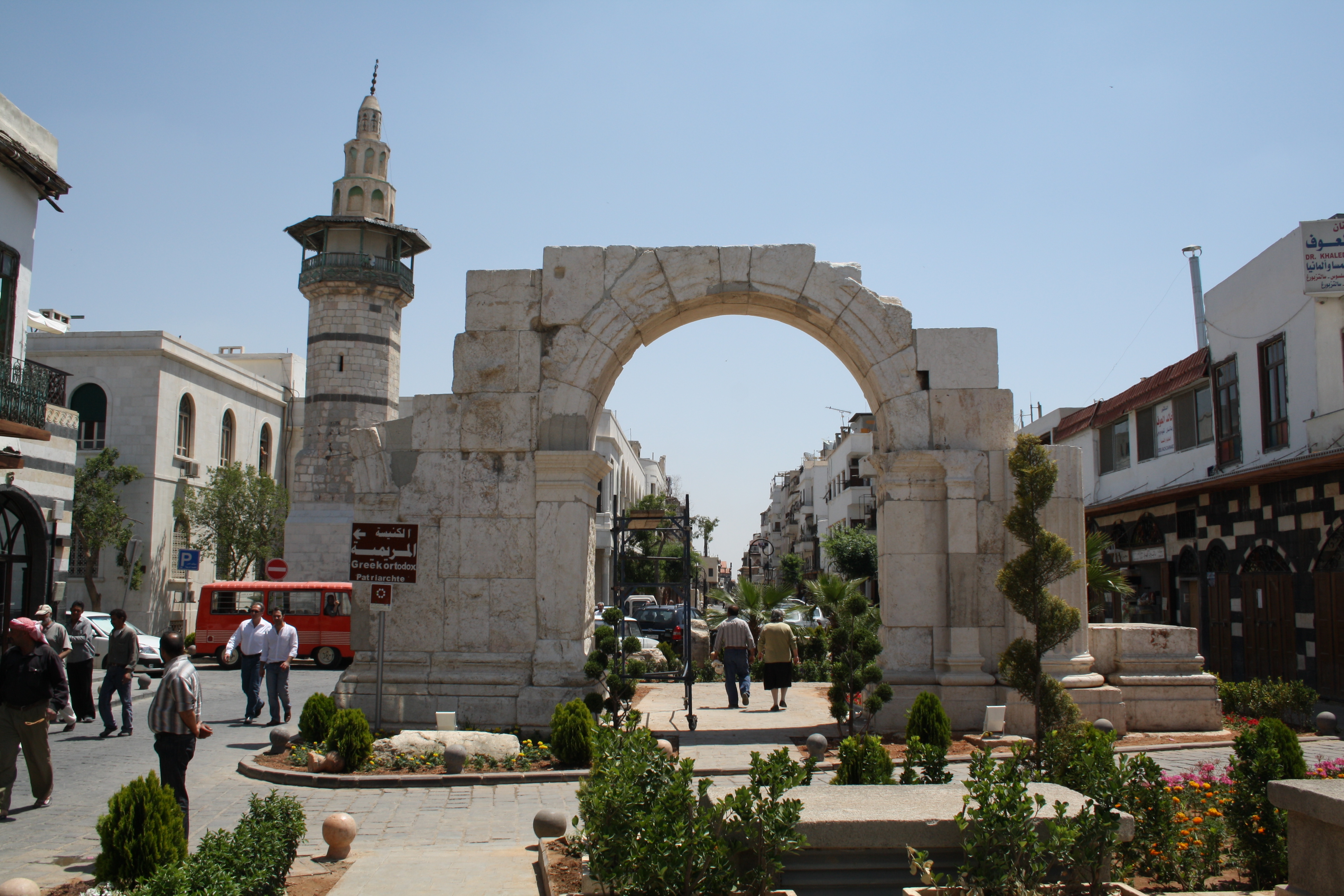
Image Source.

Syria

Straight Street DamascusTBC and I were blessed to visit Damascus in 2009.  Syria is a gorgeous country, full of generous people and amazing food and moving scenes of Muslim and Christian children playing together.  At least that’s what it was like in 2009.

For the love of God, pray for Syria today.  Read more here.

Image of Straight Street in Old Damascus.

Back Story

I like the way God connects ideas/people/things. Two of my recent posts are connected:

  • Church must be about conversations.
  • Television (our choices/options) is informative.

The connection is The Back Story.10-Charlie-and-Liam-in-Driv

One of the reasons I loved Lost and now love Orange is the New Black is because both invite us into the back story of the characters.  And what we learn when we see what happened before is that we get them in a new way.  We understand a bit of why they are the way they are.

Yesterday, SBC’s former apartment mate came by to turn in her key.  They shared an apartment through July, and then she moved out and someone else moved in August 1st.  When she came to drop off the key, SBC said, “We also got the July utility bills” and she immediately declared that she wasn’t going to pay her part.

SBC:  But you lived in the apartment through July.

Former Apartment Mate:  Worst case scenario for me:  you lose power.  Oh well.

My first thought (okay, actually my second thought) upon hearing this was, “What made her that kind of person?What in the world is this girl’s back story?  

I will never know.  But the cool thing about church/life is that  – if we are doing it right – we get to hear the back stories of other people and they are amazing.

Image:  Do I really need to identify this?

Am I What I Watch on TV?

While on vacation recently, my brother asked me what TV shows I like.  MyPiper and Larry reunite under Thompson's watch responses, he said, seemed to indicate that I am  inordinately interested in:

  • Lesbians in prison
  • Murder
  • Adultery
  • Wealthy British people

So much for that favorite Bible verse from Philippians :

 . . . whatever is true, whatever is honorable, whatever is just, whatever is pure, whatever is pleasing, whatever is commendable, if there is any excellence and if there is anything worthy of praise, think about these things.

Actually, Paul wrote those words from prison in Rome, so things were not all that rosy for him at the time.  I believe that his point was not to avoid the world’s ugliness, but to be resilient and faithful even when swimming in it.

One of the Big Issues of Christianity seems to be how we  – as individual followers of Jesus – deal with the world’s ugliness.

  • Do we strive to separate ourselves from all that is unmanicured and stomach-turning and dirty?
  • Do we send money from afar to the world’s dark places as part of our spiritual practice to help bring healing and hope?
  • Do we Go There to stand alongside those whose lives are crazy/overwhelming/excruciating/broken?
  • Do we watch Orange is the New Black and live vicariously through Piper Chapman?

Being “missional” means that we do more than wish “those people” knew Jesus.  It’s more than sending our checks to Church World Service and never thinking about the world’s needs again – until next year.

Being “missional” means Being Like Jesus:  Going there.  Standing side-by-side.  Taking a brother or sisters’s misery as our own.  Being indistinguishable from The Other/The Needy/ The Poor.

Honestly . . .

  1. Everybody should be watching Orange is the New Black.
  2. This show captures power issues more than any other I’ve ever seen.
  3. It might just move me (and you) to do more than watch.  I’m talking about noticing.  Noticing the faces.

So, what are your Must See TV shows?  And what impact do they have on your life?

Image source.

Worship That Makes Me Nuts

Toppled SteepleI am a judgmental person, especially about church.  A former parishioner once told me that she had a hard time sitting through worship without judging the experience:  “The choir was off.  The sermon was boring.  The children’s story was about the adults not the kids.”  

It was actually comforting to hear this.  I also find myself distracted sometimes.

I want to worship God when I gather together with a congregation on Sundays.  I want it to be real.  I want to make a connection with God and other people.  But certain things distract me and the worship experience then morphs into something less than holy.

I confess before you and God that my snarky judgement rears its ugly head when:

  • Someone – anyone – refers to God as “The Man Upstairs.”
  • Nobody smiles.
  • The pastor reads the sermon.
  • Everybody’s white, although the neighborhood is not.
  • There is an assortment of “sermon illustrations” (baseball, Mt. Everest, a guy with one leg, a story heard on NPR)  but nothing about anybody’s real life.
  • The language is gender exclusive – as if only men are in the room.
  • There’s an American flag in the sanctuary. (Or a Canadian flag.  Or a Swiss flag, for that matter.)
  • There’s no reference during any part of worship that anything’s happening in the world outside the congregation’s life. (Blood on the streets in Egypt.  A verdict in Florida.  Multiple kids have been shot in Chicago over the past 24 hours.)
  • During the time of sharing prayer concerns, people are identified by first names, as if we all know these people.  (“Bob’s recovering well after the kidney surgery.  But Cathy’s cousin is still having migraines.“)
  • The children’s story is way over their heads and a waste of time.  (“Repeat after me, children:  Sanctification.”
  • The preacher seems to think we are stupid.  (e.g. A reference to “Paris, which is in France.“)
  • And, at the same time, there is the assumption that we are smart about particular church rituals (e.g. A bowl is passed around throughout the worship time and nobody’s explains why.)

Apparently nobody knows where Paris is but everybody knows about the bowl.

See?  I can be pretty snarky.

Worship’s not always like this.  All it takes is somebody – even one person – being real.

One of the reasons that Nadia Bolz Weber is such a popular speaker and her church enjoys a steady flow of visitors/tourists, is because she is authentic and when talking about her church, she describes something authentic.  At Wild Goose recently, she said that her church – A House for All Sinners and Saints in Denver –   is “anti-excellence/pro-participation.”  They don’t do perfection.  (AHFASS fondly calls itself “Half Ass.”)

Let’s not waste that precious time when the people of God gather – whether it’s Sunday mornings or Tuesday nights – forgetting to connect with each other and our Creator/Redeemer/Sustainer, rather than going through the motions.  With a flag.  While somebody is passing around a bowl.

Image is a steeple we always see on vacation.  It blew off a church building a few years ago, and it’s still lying in the yard.  I always wonder what’s going on over there.

Conversations as Church

Clark-Talking-art-lgOur Presbytery examines new pastors – both the almost-ordained and the already-ordained-and-moving-into-our-Presbytery  pastor’s- by meeting with them as a team of 4-6 people who are ruling and/or teaching elders.  It’s one of my favorite church responsibilities.

Once upon a time, we asked those coming into our Presbytery to “defend” their statements of faith and/or speak to their call to professional ministry.  Today, 4-6 of us meet with them to have conversations about sin and resurrection and God’s reign and the meaning of life.  It’s a sublime experience.

I believe we experience church in conversations.

Here’s a crazy God Thing.  As we conversed with three people who will soon be our colleagues, I literally had intimate connections with each one, discovered only after intentional conversations with them:

  • One is both a social worker and a pastor who – unknowingly – reminded me of those days before seminary when I was a social worker wondering why I felt like a pastor to my clients.
  • One mentioned that her mom died in 1987 which is the same year my own mom died.
  • One mentioned her children who are the same line-up and birth order as my own.

Ordinary connections, but connections nevertheless.

For hundreds of years, we have been the church by sitting alongside each other in pews on Sunday mornings and it’s been quite possible that we have worshiped for decades without ever having a conversation about our kids or our jobs or our hopes.

We cannot be the church unless we know each other beyond the pew-sitting.

Imagine a Christian community in which friends share their theological quandaries and questions.  When we talk about our doubts and joys and assurances, we find ourselves in a community that Changes the World.

That’s the kind of church I’m talking about.

Want specific ideas to get started this fall?

  • Plan Theology on Tap or God Talk or Faith on Tap events instead of classes set up to have one smart person lecture everybody else.  (Everyone goes home smarter, perhaps, but no connections have been made except to the lecturer.)
  • Have youth members interview the oldest members in pairs, and then invite the oldest members to interview the youth.  Be intentional about why this is happening (i.e. to get to know each other; not to judge or criticize.)  Cap it off with a snack together.
  • Pause in the middle of a sermon to invite people to answer a question you pose by talking with those around them.  Note:  some will hate this and believe it’s not really worship.  Have a teaching moment (i.e. “It’s still worship.”)

Image source.

Bivocational Church

Note:  People who know Shawna Bowman recognize that she’s a genius.  I credit her with this idea of “Bivocational Church” from a conversation yesterday.

Lots of people believe that bivocational ministry will be more prevalent for 21st Century Pastors than in previous generations (except for that very first generation of Jesus followers, of course.)

Bivocational pastors work part-time in professional ministry and part-time in another field.  In a perfect world, that other field would dovetail nicely with preaching, teaching, and pastoral care – say, like a school teacher or social worker.  But I also have friends in bivocational ministry who are part-time baristas, bartenders, and construction workers.

Acts 18:3

Acts 18:3 

The real question is:  How in the world does someone serve a church 20-25 hours a week and still equip that church to grow?  Sadly, many bivocational pastors serve tiny churches that cannot afford a full time clergyperson and after writing a sermon, leading worship, and making a couple phone calls they’ve used up their 20-25 hours.  There is no time for teaching Bible studies, training leaders, offering pastoral care, or connecting missionally with the community.  Often churches with part-time pastors can do nothing but maintenance and it’s almost impossible for those congregations to grow.  It feels like the beginning of the end for once thriving churches with full time pastors.

But . . .

What if the bivocational pastor acknowledged her/his utter inability to “do it all” and instead invited the whole congregation to be a bivocational church? 

Imagine the culture of a congregation shifting with the realization that church is not merely about a “Sunday service” but actually it’s about a way of life?  What if the bankers, plumbers, bakers, and waitresses all saw that their life’s work was indeed bivocational because they, too, are ministers?

  • We are all called to ministry – at least that’s what my own Reformed tradition declares.
  • We are all called to follow the way of Jesus.
  • We are all called to a “Christian vocation.”

What if the crux of the 21st Century Pastor’s ministry tasks involved equipping her/his parishioners to do ministry out in the world?  Imagine spending 20-25 hours per week focused on teaching others to preach, teach, visit the sick, pray, and shepherd God’s people.  What if the bivocational pastor focused on teaching her/his parishioners to be A Bivocational Church?

Image source.

In Search of Engineers

engineerMany parents will soon  send their progeny off to college hoping they’ll major in engineering.  Fewer parents long for their kids to major in theology or religious studies.  But it occurs to me that what the church needs are ecclesiastical or theological engineers.

Engineers are trained and gifted in re-working systems as opposed to technicians who address specific problems.  Radiological techs take and read x-rays.  AC technicians fix the air conditioning.  There are highly skilled technicians and low-skilled technicians but both have more expertise than the average person who tries to install her own ceiling fan.

The church needs more ecclesiological engineers. Wise and hopeful congregations will seek leaders who come in with a solid foundation of the basics – theology, pastoral care, preaching –  but who are also creative enough to know how to tweak the way things are done in order to fulfill the greater mission of God’s people.

The greater mission does not involve details like organizing Vacation Bible school or ordering biodegradable coffee cups, although those things are important and they point to the greater mission.  But many pastors find themselves doing those tasks – tasks the members should be doing.

Most pastors are technicians. They craft sermons and Bible Studies.  They fix problems.  They look at information and act on that information.  In the church, we find pastors who are highly skilled technicians and others who are low-skilled.

But we need more pastors who are engineers.  A church’s DNA can be altered only if someone (or a team of someones) is willing to do the delicate work of inserting new DNA.  A church’s systems can be shifted by careful tweaking.  A church’s culture can be altered by whip-smart, loving, spiritually gifted pastors.

Unless the engineering is done gently and lovingly, the whole thing comes crashing down.

This metaphor is not perfect.    But there are too few churches – and I’m grateful to know some- who are led by engineers/the highest skilled pastors who have clearly altered the DNA, culture, and systems of their congregations.

More tomorrow.

Summertime Quickies

Wild Goose by Aneel TrivediAfter two glorious weeks away traveling from Chicago to Brooklyn to the NC coast to Chapel Hill to the NC mountains/Wild Goose 2013, I am filled with energy, joy, and many ideas to ponder.  But it was a long drive home yesterday and I don’t yet have a handle on the impact of these recent blessed days.  It’s coming, but for now, here are some quick pieces of wisdom:

  1. One-on-one conversations are crucial for faith development and intimacy.  21 people were on our family vacation at the beach and we had a magnificent time.  But I wish I’d been able to spend a whole day individually with each person talking about Things That Matter.  Sadly, I don’t have 21 days of vacation for this particular purpose. Nobody does. (But thank you Edmiston Family for a fabulous time.)
  2. Pastors don’t have to be responsible for everything in their congregations. I don’t feel responsible for what my parishioners believe.  I feel responsible for what they hear.” (Thank you Nadia Bolz Weber.)
  3. If a person speaks a word that points to the Truth of God’s Word, that person is serving as a priest, regardless of who she/he might be.  On Sunday morning, HH and I went to see ancient Native American pictographs and met a retired science professor along the way who self-identified as a pagan. Nevertheless, he spoke the Truth to a couple of vacationing pastors.  (Thank you, God.)
  4. There’s something wrong with a sanctuary when 1/3 of the entire space is set aside for 1-3 special people who get microphones. (Nadia again.)
  5. Best explanation for why FBC (and countless others) mark their bodies with ink and piercings:  ” Many people, today, personalize everything (Hello, grande soy mocha with an extra shot) and personalizing your body is an act of spiritual storytelling.” (Again, from the lovely/inked NBW)
  6. Huge insight I can’t wait to share with my seminarian/pastor friends – especially those who have experienced a large measure of pain:  “Preach from your scars, not your wounds.”  (Thank you again, O Pastrix.)
  7. Wild Goose is a fun experience.  Camping is a fun experience.  For some people, it’s too hard to do both the same weekend.  Some of us need to take our Wild Goose learnings to a cabin with a shower and AC at the end of the day. (Thank you HH.)
  8. Sometimes a glass of sweet iced tea can save your life.  (Thank you, Darkwood Brew, who donated 100% of their profits to Wild Goose.)
  9. We need some new protest songs.” (Yep, Amy Ray.)
  10. God calls us to speak the Truth in hostile situations.”  If we aren’t speaking up for the weak and oppressed in places where we might find push back if not rejection, we aren’t following Jesus.  (Thank you William Barber.)

More later.

Image of the French Broad River in Hot Springs, NC by Aneel Trivedi. 

Time to Go?

marc-chagall-abraham-and-sarah-bibleVacation feasting continues as I gorge on memories here in the town where I was born and raised, went to college, married my HH, and said goodbye to my parents.

All I have to do is walk the sidewalks for random memories to pour over me.

  • There’s where I was sitting when I told S that her boyfriend was, in fact, gay.  
  • Here’s my old dorm room where H came to crash for a few weeks after her mother died.  
  • Over there on the wall of the gallery where several of us worked is the once  barely-attached-to-the-wall painting we used to borrow  to “give” to each other for birthday gifts only to return before morning.  Who doesn’t need a Rembrandt? (Note:  It’s now securely bolted to the wall.  I checked.)
  • There’s the bush where I threw up after stumbling upon my boyfriend making out with his future wife.
  • And over there’s the house where four of us, standing around bored at a party, decided to go to Europe together after graduation.

I haven’t lived here for 35 years but it’s my Ur.  God called me out of here to go where I hadn’t planned to go.

My current home is a community in the Midwest where many residents grew up as children.  They left home for college, perhaps, but returned to settle down and live their lives.  I know several people who live in towns like this across the country.  They’ve chosen to stay put for lots of good reasons.  Some towns are basically great places to live, great places to raise a family.

Who wouldn’t want to live in a place that’s comfortable and familiar and safe?

Place is sacred in my theology.  God calls us to specific places.

Some of us are called out of all that’s comfortable, familiar, and safe.  And some of us aren’t.  Neither is better than the other.

Occasionally loved ones have directly asked me: Why have I chosen to live so far away? Maybe it feels like I don’t want to be geographically (or even emotionally) close to family.  Actually, it would be nice to live closer to them.

But sometimes God calls us to go.  Remember Abram & Sarai?  I believe that God still calls us away.  Maybe not all of us are called to do this, but many of us are.  This – I’m convinced – is why Shane lives in Philly, Margie lives in Jordan,  Joanna lives in Thailand, and Matt lives in Pittsburgh.

God doesn’t say, “Please leave” or “Leave if you feel like it.”  It’s more of a “This is your next call.  Go.”

Honestly, it would be nice to live in NC again.  Or Virginia.  Or NY.  All places I’ve loved calling home.

But God’s called us elsewhere.  And because we are loved, God makes life beautiful wherever we’re sent.   This is grace.

Image is Abram and Sarai by Marc Chagall.