Three Quick Recommendations

bear_emily_cr_nick_suttle_974_custom-0f5ef9cbf1e49e6635d865659f3ae53268dbee2b-s40-c85It’s been a busy week and I don’t have much to say except that these items have come highly recommended for our edification.

  • For all who need a song today: Listen to the music of 12 year old Emily Bear who was featured on Morning Edition yesterday.  Here’s a good one to slowly ease us into the day:  Little Angels.

Have a lovely Wednesday.  Image Source.

Everybody’s Temporary

Big Day (sort of.)

temping the new permanentAs of today, I am no longer The Interim in my current position as a Middle Judicatory Church Executive.  (How’s that for a job that sounds soul-sucking?  You’ll have to take my word for it when I say that it’s actually quite soul-feeding.)

I am now considered “permanent” administratively, although no job is truly “permanent” of course. I will be “installed” at our next Presbytery meeting, as if it will take a construction professional or a wrecking crew to get rid of me.

I wish we had another term for “Temporary Ministry” which, in my denomination include only “Interim Pastors” and “Temporary Supply Pastors.”  Could we come up with new terms that mean:

  1. “Temporary As In a Year or Two”
  2. “Temporary As In This-Isn’t-Forever, Pal.“

In reality, we have “Temporary Supply Pastors” who have served the same congregation for a decade or more.  The church cannot call them officially to become “permanent” because finances are uncertain and/or the very existence of the congregation is fragile.

And then we have “Permanent Pastors” who serve their churches for less than two years.  We just said “goodbye” to a young pastor who had been installed for only five months.  There wasn’t a problem.  He simply was called to a different installed position that was a better match.

As well, we have Permanent Pastors who seem parked in their positions forever.  Jobs are scarce and why leave if you have a well-paying call?  Why leave if you have less than 10 years before retirement?  Why leave if you are beloved by your congregation?  Why leave your home of ___ years?

People come and go into and out of pastoral positions for countless good and not-so-good reasons.  But what if we acknowledged the reality that Everybody’s Temporary.

Interim Ministry – also called Transitional Ministry – involves specific skills that point to the future.

Gifted Interim Pastors . . .

  • Clean up what needs to be cleaned up (e.g. that staffer who needs to go, that policy that needs revising) so that the next pastor can hit the ground running rather than having to deal with the ugly/ridiculous/difficult before Things Can Move On.
  • Prepare the congregation for what God’s calling them to do/be next.
  • Consider the church’s past, clarify the present (e.g. Who are we?  What’s our context?) and imagine the future.

Lame Interim Pastors . . .

  • Are there to keep the paychecks coming after retirement and/or no “permanent” positions are available.
  • Preach dated sermons that have nothing to do with where/who/how the church is now.
  • Have no idea how to help congregations make shifts into a new season of ministry.
  • Refuse to make those difficult changes that will help the future pastor jump right in.

None of us is truly permanent and this should impact the way we currently serve God’s people.  Are we – in any way – coasting?  Kicking back?  Doing what we’ve always done?  Refusing to attend conferences/lectures/amazing Pecha Kucha events?  Seriously, when was the last time we’ve read the perspective of a theologian under the age of 40?

If we consider ourselves “permanent” what does that mean for the future of our congregation?  Being In The Now is important, of course.  But many of us are not even In The Now, much less looking at The Future.  (i.e. We keep talking about The Past and How Great Things Were.)  It’s killing us, but it doesn’t have to be this way.

Your Church’s Highlights

We buried my Aunt Jane on Saturday and it was the only burial service I’ve ever attended that involved parting gifts from the deceased.  Aunt Jane kept files on us replete with newspaper articles, letters, birth announcements, and wedding invitations.  Among the items in my own Aunt Jane file were all the monthly newsletters from my first church out of seminary. 

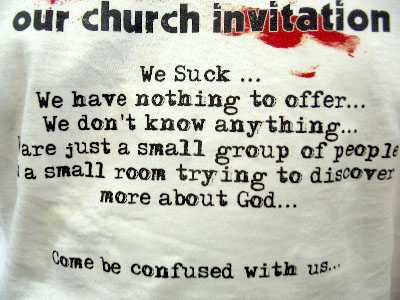
2004_11_04suckshirtYikes.  [To members of the first church I served:  I am so sorry for being so far off the mark.  Please forgive me.  I had no idea what I was doing.]

For example, as I read the Monthly Session Highlights (the most important business of the church as conducted by the elders) I was horrified by what we/I considered to be “highlights.”  Among the best of the highlights:

  • “DM reported that someone donated a new lock for the back door.”
  • “Session voted to spend $400 on a new typewriter.”
  • “LT reported that the bayberry bush in front of the church has died.”
  • “DM reported that new lights have been installed in the nursery.”
  • “After lengthy discussion, Session voted to increase the building use fee from $25 to $35.”

Lord. Have. Mercy.

This was 30 years ago, mind you, but it could be yesterday in some of our tiny dying churches.  Our “highlights” involve carpet cleanings and how many mums were ordered for Harvest Sunday, the donation of parlor sofas and the idea to sell notecards.  No wonder nobody comes to church anymore.

Imagine highlights that look more like this:

  • Ten members finished the Youth Stephen Ministry Training equipping them to offer support to their classmates and friends outside the church.
  • God Talk is now meeting weekly at Cuppa Joe’s coffee shop on Tuesday nights.
  • $3000 was donated to kick off the new South Suburban Night Ministry reaching out to families living in the hotels off the interstate.  Contact our Facebook page if you, too want to prepare bag lunches.
  • Volunteer training for Senior Center Visitors prepared 82 people to care for guests meeting Monday – Friday for lunch and activities.
  • Volunteer barristas are needed for the Twelve Step Hospitality station on Friday nights. 

See the difference?  People instead of projects.  Relationships instead of rules.  Equipping the Saints instead of expecting the Staff to do the ministry.

What do your church highlights look like?

Image Source.

Please. Get Some Non-Church Friends

hobbiesImagine that you have spent most of your life as a parish pastor/minister/priest.  

Maybe you were loved deeply.  Maybe your personal identity and life’s purpose were based  – mostly – on your role as The Pastor.  Maybe your biological clock is based on the liturgical calendar.  Maybe you were blessed with enough years to retire from your church,  honored and adored.  But now you are retired.

Maybe you have lost your reason to get up in the morning.

Your friends are all in your (former) church.  Your spouse’s friends are all in your (former) church.  Your kids are even (still) in your (former) church.

What’s a retired pastor to do?  It’s hard to make new friends in your 70s.  It’s impossible to make lifelong friends in your 70s.

But it’s not too late to start a new chapter that doesn’t involve your former church.  Please.  For the sake of that congregation.  For the sake of the pastors who will follow you – leave that church behind.

This post is actually for the 20 – 50-something pastors out there.  For your own sanity and emotional health, please find some non-church friends, non-church hobbies, non-church interests.  Do it now before you are so enmeshed in Church World that you can’t have a conversation with someone without saying the words, “In my church . . .”

  • I’m not talking about pastors who paint but all their paintings are hanging on the walls of the church building.
  • I’m not talking about pastors who play golf with guys from the church’s Men’s Group.
  • I’m not talking about pastors who write poetry about Jesus.
  • I’m not talking about pastors who weave paraments for the sanctuary.
  • I’m not talking about pastors who run marathons to raise money for their church mission trip.

I’m talking about painting, golfing, writing, weaving, running just for you.  I’m talking about joining a wine club with no parishioners in it, taking classes that will never work their way into a sermon, having friends who don’t even believe in God – much less belong to your congregation.

If you do this now, you won’t force someone like me to have to meet with you in your 70s to remind you that you are no longer the pastor of your (former) church and you need to find new friends and new interests late in life.

Jesus had really interesting friends who didn’t necessarily hang out in synagogues and the Temple talking about scroll colors and parable ideas.  I’m pretty sure about that.


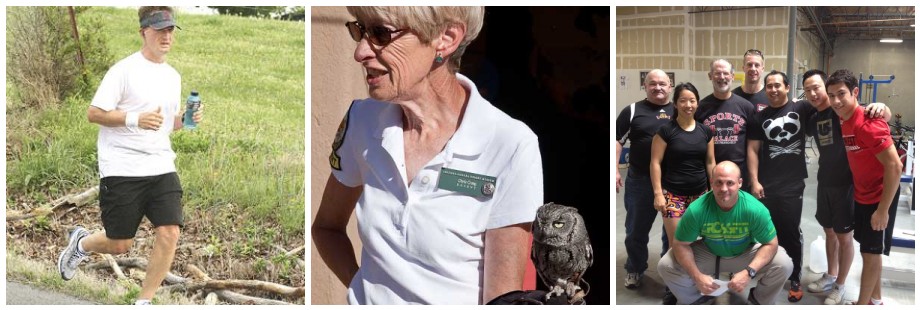
Mosaic of pastors who do other things too.

The Only Woman in the Room

Mad-Men-meetingI attend a lot of church-related meetings. But during one of yesterday’s four meetings,  in a conference room with 13 other people, something occurred to me:

I was the only woman in the room.

Women were first ordained in my denomination in 1956.  While 28% of all mainline Protestant churches in the United States have women pastors, almost half of all active clergy in my denomination are female.  More than half of the candidates for ordination are women.

In every church meeting I attend, at least half the participants are women.  Often there are more women in the room than men, but in yesterday’s meeting there was only one woman:  me.

Anybody want to guess what the meeting was and why I was the only woman present?

I’ll share the answer at the end of the day today.

Postscript: My meeting was with pastors who fall on the more conservative side regarding issues facing our denomination – including the possibility of our General Assembly approving GBLTQ marriage in 2014.  Although there are certainly some clergywomen in our denomination who are against GBLTQ marriage, most of those opposed seem to be men.  I’ve always wondered if we – clergywomen – are often more open to such changes because we know what it’s like when Scripture is used to forbid our leadership.  Most mainline Protestants interpret Scripture using hermeneutical techniques (historical, cultural, contextual, lexical analysis) that understand God’s Word differently than those who point to certain passages that “prove” what they believe about women and homosexuality.  

Image source.

Training for Trauma

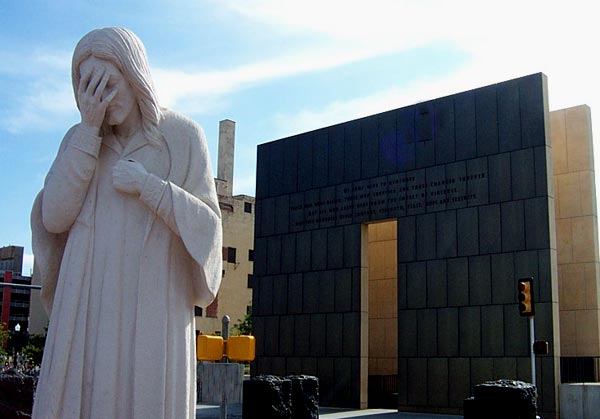
oklahoma-city-bombing-3There seems to be trauma everywhere.  For all the people who die  in shootings, bombings, floods and fires, there are countless others who survive, traumatized by those events.  After the tragedies, we hear that counselors will be deployed to assist those trying to cope after the fact.  In my denomination, the PDA leaps into action after somebody has opened fire in a movie theatre or after a tornado has twisted through a high school.  Thanks be to God.

But, think about it.  Every. Day. There. Is. Trauma.  Traumatic events seem to be on the increase, don’t they?

Children shot on a basketball court.  Shoppers shot in a mall.  Federal workers shot in their workplace.  And that’s just over the past week or so.

Cars washed away in floods.  Homes burned to the ground.  Whole villages squashed by an earthquake.  Again – all this has happened in just the past week.

And then there are survivors of car crashes, cancer, child abuse, and all manner of brokenheartedness.  These are the people who sit in our pews on Sunday mornings.  And they are the people who never sit in church buildings.

How do we serve these folks?  We can’t take away their pain or erase their memories.  But we are called to walk alongside them, to hear their stories.  And – as far as I know – there are no seminaries teaching pastoral care skills for trauma victims.  Maybe it’s best to offer this kind of training as a specialty.  But increasingly, it feels like all of us need this training.  Sadly, trauma is no longer a rare occurrence.  It happens every day.

Note:  HH and I have tickets to see the documentary Sole Survivor this week.  I consider this Continuing Education.  Will offer a review Friday.

Image Source.

A Church’s Most Important Hour of the Week?

clockSunday Morning Worship is not the most important thing a church does each week. I don’t mean to offend, but the notion that Sunday Morning Worship is the most important thing we do together is killing us.

The reality is that most parish pastors spend the great majority of their time each week preparing for that one hour when the congregation gathers for worship.  In holy preparation, pastors do some or all of the following:

  • exegete Scripture,
  • write a sermon and accompanying liturgy,
  • conjure up a Children’s Story,
  • coordinate the music,
  • oversee publication of the bulletin,
  • make the slides,
  • ensure that there will be ushers/money counters/nursery volunteers.

Corporate worship comprises only one (or maybe two) hours of the week but the majority of our efforts are poured into that brief slice of time on The Lord’s Day. But even the most inspiring worship experience does not spiritually mentor and equip most people.  Too many of us compartmentalize our faith into basically two pieces:  Sunday Morning and The Rest of the Week.  We come in, sit down, sit still, and leave smarter/holier/at peace.  Often, we don’t even experience peace.

Exhibit A:  The parishioner who sat through worship and then yelled at another driver in the church parking lot on her way home.

Being a follower of Jesus is not about “coming to church” on Sunday.

What’s More Important that Sunday Morning Worship:  those times when God’s people connect out in the community.

Exhibit A:  Jesus met people in homes, by drinking fountains, on the road, at the beach, at festivals.  And their lives were changed – sometimes in infinitesimal ways and sometimes in enormous ways.

Yes, Jesus taught in synagogues and in the temple, but mostly he connected with people in ordinary places.

The most important hour of the week for Church is when:

  • relationships are nurtured,
  • new leaders are mentored,
  • broken people are loved,
  • Jesus is recognized.

We have met for generations in sanctuaries on Sunday mornings at 11 (or 8:30 or 9:30 or 10:30 or 5:30) for corporate worship.  In a perfect world, we have gathered to proclaim and receive the gospel, praise God, confess our sins, find inspiration, and be spiritually fueled in order to go out and serve.

In the real world, corporate worship has often been about seeing our friends, experiencing stirring music, hearing an elegant sermon (or a mediocre one), and going out to brunch after.  We all know that people can sit beside each other in pews for generations and not really know each other.

How can we better become The Church?  Small groups, dinner clubs, circle meetings, prayer partners, game nights, cook outs, mission trips, retreats, service projects, craft projects, parties.  And maybe even during corporate worship on Sunday mornings.  But honestly, it doesn’t usually happen on Sunday mornings.  Or it doesn’t happen solely on Sunday mornings.

So – church professionals – why are we spending so much time on what happens on Sunday mornings?  Our parishioners expect it, of course.  But corporate worship is not the main thing.  It’s the dessert.

There’s Goes My Senate Confirmation

PastrixAt this very moment  – in the bowels of a government warehouse someplace – there is an ancient wiretap tape of me and a former boyfriend breaking up over the phone.  In the throes of break-up crying – with a short intermission in the middle to go throw up – former BF informed me that our conversation was being taped by guys in a white van outside his house because their church was harboring Salvadorean refugees.  “Oh great,” I sniffed.  “There goes my Senate confirmation.”

My past has made me a better pastor.  But here’s a question:  Is it necessary to have an interesting/sordid/irreverent past to be an effective follower of Jesus/pastor?

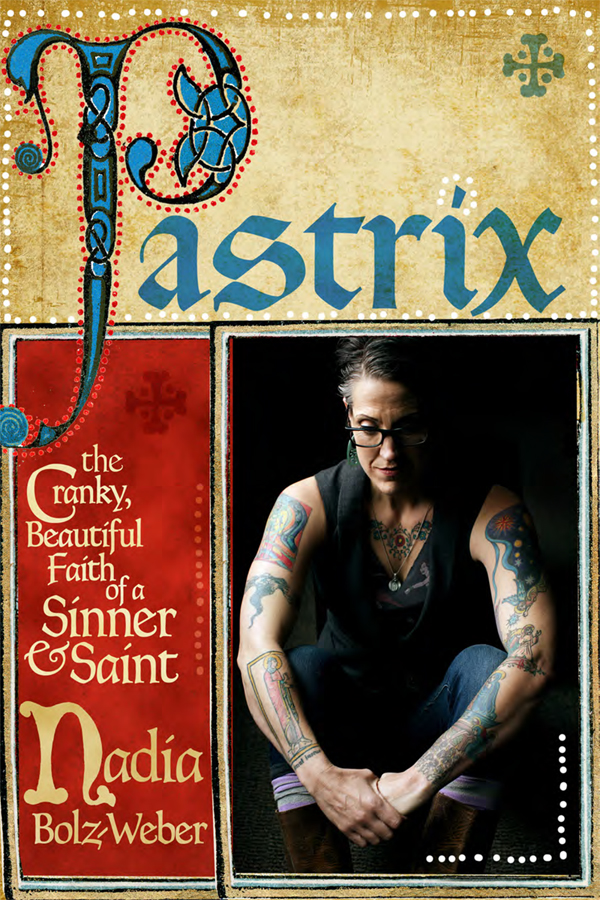
I love that Nadia Bolz-Weber’s Pastrix has hit #17 on the NY Times Bestsellers list, and I attribute this fabulous news to these truths:  1) she has a great story and 2) she looks like Nadia Bolz-Weber.  Her story includes addictions and tattoos and a sailor’s vocabulary.  It’s also beautiful and redemptive.  And it’s as dramatic as Paul’s story about the road to Damascus  – but more relatable.

I wonder about those who’ve grown up sheltered and wholesome in perfect-ish families with no history of depression, addiction, abuse, missteps, or poor choices.  What do they do when someone comes to them with a tale of brokenness and imperfection?  Is it possible for them to hear those stories without judgement or pity?  Can they walk alongside someone if they have absolutely no experience of betrayal or confusion or utter despair?

My own life is fairly tame compared to your average convict/heroin addict/soldier/pickpocket/meth dealer.  I have no cool tattoos.  I have no stories involving prison.  I used to drive a minivan.  But the measure of pain in my life and occasional brushes with utter despair have made me a better pastor.  You?

PS Please read Pastrix.

What Retired Pastors Would Like to Say to Active Pastors

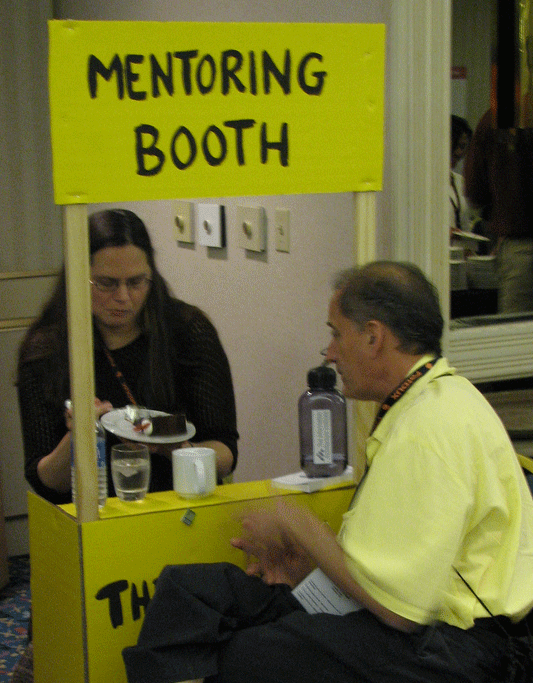
As promised, this post is a follow up on yesterday’s post.  I enjoyed a lovely Mentoring-Booth-Lana_aka_Blunch yesterday with about 35 of our retired clergy people and their spouses during which I asked them to answer this question:

What Would You Like to Say to Active Pastors?  (And here is what they shared.)

  1. Hang in there.  Things are very different now from when I was serving the church and you are going to have to work harder to figure it out.
  2. Do something risk-taking or cutting edge.  (This pastor shared that he served as pastor of the first interracial congregation in Texas.  He raised his family in a tough context, but it was worth it.)
  3. Ask yourself if anything about your current ministry scares you.  If not, it’s time to move on.
  4. Remember the saying about preaching with a Bible in one hand and a newspaper in the other?  Talk in your sermons about how much trouble we are in, both in terms of global and interpersonal conflicts. Ask your congregation and yourself, “Is our Jesus big enough to handle these things?”  If you don’t think so, read your Bible more closely.
  5. Don’t preach cookie cutter wedding and funeral homilies.  Make it personal.  These are great opportunities to build community
  6. Take advantage of connecting with retired pastors.  We need the intellectual stimulation and maybe you could pick our brains about something.

If you are retired from professional ministry, what would you add?

If you are actively serving a church, what else would you like to hear from retired clergy?

Image Source.

What I’d Like to Tell Our Retired Pastors

Today, our Board of Pensions is generously hosting a luncheon for Potterour retired pastors and – gratefully – there will be no drama over the Walgreen-CVS Express Scripts controversy this year.  Or so we can only hope.

We have a lot of retired clergy in our Presbytery and they are gifted, valuable, fun, and interesting.  Our retired clergywomen – especially those who have been ordained for 40+ years – have stories that all our 20 and 30-something clergywomen should probably hear.  Jaw dropping/inspiring.

The agenda today is about Medical and Pension benefits, but I would love to have an occasion during which we could have a healthy, honest talk about the relationships between clergy currently serving congregations and their retired predecessors.  Because my job is to share information that is often tough to hear, this is what I imagine saying, on behalf of my actively serving colleagues:

1.  Please do not introduce yourself as the pastor of your former church.  Even if you say, “I’m the former pastor of Big Church on the Hill” or “I retired from St. Stella’s Presbyterian” it’s not helpful.  It looks like you still identify, first and foremost, with that particular congregation and the fact is that the congregation needs to move on for the sake of its future ministry.  Please just say that you are retired, and if interested, someone will ask you where you used to serve.  Then, feel free to share that information.  But when you start with your former church’s name, it looks and feels like you are still connected in a way that keeps the church back there.

2.  Please continue to keep fresh and share your wisdom.  Ask our retired clergy who serve on important commissions in our Presbytery.  They have the exquisite opportunity to share their wisdom while hearing about 21st Century Church World.  It’s fantastic . . . unless you are that guy who can’t stop talking about how great it was in the 1960s when your church had 500 members or how kids today have bad theology and don’t know what they are doing.  Really, don’t ever say those things.

3.  Consider co-mentoring a new pastor.  This is for you if – and only if – you are hungry to learn.  Good mentors never act as if they know everything or have cornered the market on pastoring.  Honestly, you still have so many things to learn and you have so many things to teach.  But nobody will want to be mentored by you if you are patronizing or unteachable.

4.  Don’t ever drop in on events in your former church.  Just don’t.  If there’s a party for the 90 year old Christian educator and she was also on your staff back in the day,  it doesn’t mean you are automatically invited to the party. If there’s a ribbon cutting for the new homeless shelter in the new wing of the building, you should not show up unless specifically invited by the current pastor.

5.  If you lose your mind for a minute and ignore #4, for the love of God, do not make the event you’ve crashed about you.   Do not burst in on the scene and start telling stories about how you are the one who thought up the homeless shelter idea.  Do not regale the staff – many of whom have never worked with you – about how you remember the party for the Christian Educator when she was only 80.

6.  If you are lonely, feeling purposeless, achy, cranky, or worried about the future of Christendom, please give me a call.  Do not take these maladies out on your former church.  I will try to help you recalculate, as my Garmin daily offers.

7.  Remember that it’s a good thing for life to move on.  Without necessary losses, life becomes stagnant and sad.  Yes, losing our life’s work, our friends, our loved ones, our abilities, our “power” is also very sad – because all transitions involve some measure of grief.  But we are people of faith, aren’t we?  We are enormously blessed to be in a denomination that cares about its retired servants.  We have opportunities for new ventures.  We belong to God.

Fun plan:  At the Retirees’ Lunch today, I’m going to interview people to find out what they’d like to tell active clergywomen and men.  Stay tuned.