Holy Monday: What If . . .

I am the Lord, I have called you in righteousness, I have taken you by the hand and kept you; I have given you as a covenant to the people, a light to the nations, to open the eyes that are blind, to bring out the prisoners from the dungeon, from the prison those who sit in darkness.   Isaiah 42:6-7
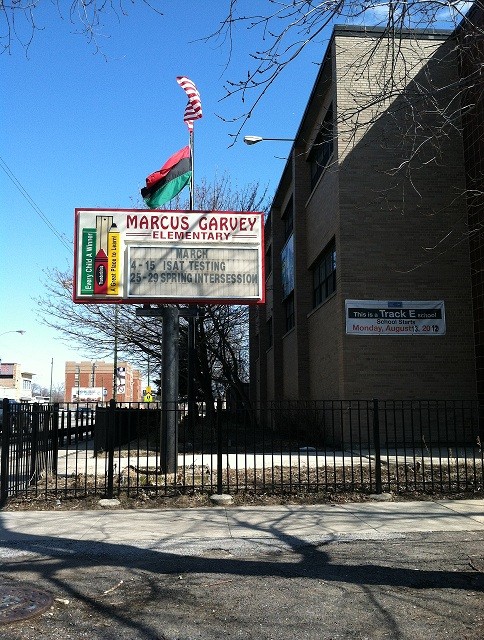
Marcus Garvey SchoolOn the cusp of Holy Week, officials of the Chicago Public Schools announced Friday that 53 elementary schools and one small secondary school will be closing.  That’s 11% of the city’s grammar schools.

Most of these schools are on the South Side of Chicago in low-income neighborhoods, some bearing the names of African American or Latino-American heroes:  Mahalia Jackson, Marcus Garvey, Ana Roqué de Duprey, Benjamin Banneker, Mary McLeod Bethune, Jesse Owens.  It looks like this is a done deal, which begs the question:  what will Chicago Public Schools do with these buildings?

Leaving buildings  abandoned sounds like a particularly terrible plan.

After listening to this radio show on Friday, it struck me:  What if the Presbytery of Chicago – or any denominational body in the city – partnered to lease at least one of these soon-to-be empty school buildings and create something new?  This is why we have denominations – so that we can join lots of congregations together to do what a single congregation cannot do.

So, here’s my Big Idea:

  • Choose a school, preferably near a Presbyterian congregation (or whatever kind of congregation is part of a larger body that wants to do this with the community.)
  • Lease it with the understanding of the City of Chicago that this will be a non-profit center for service, education, and ministry.
  • Invite the amazing Ashley Goff to come share with us what she’s learned about The Pilgrimage in DC and start by creating a Pilgrimage-esque facility (sleeping quarters, showers, kitchen, gathering space) in the former school – for youth and adults to stay for Urban Plunge Experiences to paint, clean, and serve in countless other ways to prepare this space for ministry.
  • Find – among Presbyterian Christians in our churches or from other connections – contractors willing to donate HVAC, lighting, plumbing, landscaping, and other services to refurbish the school.
  • Call a specialized minister  – or preferably a team of ministers – to be  Curators/Conveners/Pastors to organize the ministries of this new spiritual community.
  • Talk with the neighbors – preferably in a community organizing style of relational meetings – about what they want/need in their neighborhood.  (Note:  This is about the neighbors, not about what we want to do.)
  • Create a haven in this neighborhood with any combination of services depending on the needs/hopes of the community:  after-school homework and tutoring, adult education, computer lab, prayer chapel, music lessons, childcare, financial counseling and education, spiritual direction, video/multi-media classes, Bible studies, sex education classes, basketball games, yoga, community garden, cooking classes, movie nights, psychological therapy, basic medical care, job counseling, enrichment classes for children. Whatever.
  • Hire a full-time grant-writer to help find funding streams.
  • Hire a staff to manage the assorted ministries offered, including a volunteer coordinator who recruits, trains, supervises, and honors the volunteers.
  • Hire security.  We want this to be a very safe place.
  • Offer regular prayer throughout the day.

What if we could do this?  We churches don’t believe we are rich, but we really are.  There are ways to do this if only we want to do it – and if God wants us to do it.

Image of the Marcus Garvey Elementary School in Chicago, one of the schools selected to close after this school year.
Big Week Ahead (or not)

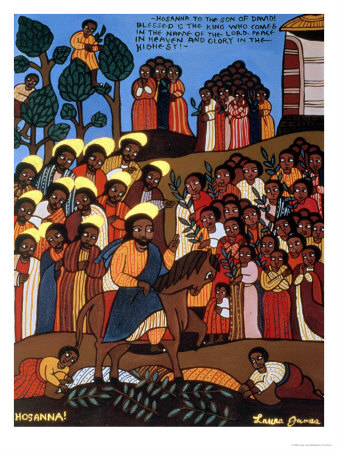
laura-james-hosanna-1995This weekend marks the beginning of the holiest week for Christians- and the busiest week for my church friends serving parishes.  Multiple bulletins to prepare.  Liturgies to create.  Sermons to write.  Palm fronds, Easter lilies, and plastic eggs.  Special Music.

Pressure’s on.

It’s The Big Week . . . for clergy and other church leaders.  But most of the population will experience next week in a different way.  Some have spring break plans.  Others will park themselves in front of a television and suddenly care about college basketball teams that meant nothing to them last week.

The truth is that most of the culture will not be as into Holy Week as church people.

So, here’s my question:  is the focus of our Holy Week swirl about event planning or connecting spiritually to God and each other?  Do we believe that Holy Week events will make disciples?  Or would our time be better spent serving neighbors who have no plans to come through the sanctuary doors on Palm Sunday or Maundy Thursday or Good Friday?

A friend of mine shared yesterday that his church – which meets in a building next to a public school with a high percentage of kids who receive a free or reduced price breakfast and lunch  – is handing out grocery bags filled with a week’s worth of groceries to each student to take home.  Every kids gets a bag so the free/reduced meal kids don’t feel embarrassed.  Their spring break is also next week so most of those kids won’t get their usual breakfast and lunch.

This is a church that spends more time on providing services to the neighbors than providing services to those within their own walls.  Gutsy.

May this be a truly holy week for us all.


Pastors of Fortune

I remember – almost 30 years ago – hearing for the first time about a pastor making $100,000 a year in cash salary.  It was a stunning revelation that this was even possible.  At the time, I was earning so little income as a rural pastor that I qualified for government assistance.

money_origami_cross___made_with__100_bill_by_vincent_the_artist-d5p65niMany pastors – especially of churches larger than 500 souls – earn a six figure salary these days, at least in urban and suburban parts of the U.S.  According to The 2008 Compensation Handbook for Church Staff, Presbyterian pastors are among the best paid in the country.  Christianity Today reported several years ago that “Presbyterian senior pastors earned the most in our survey—their average salary plus housing/parsonage was $78,000—while Baptist senior pastors earned next to last—$67,000.”

We all know that nobody goes into professional ministry for the money. Nevertheless, we all appreciate a just salary that pays for our basic needs as well as some basics wants.  I am sinfully proud of the fact that HH and I could pay for braces for our three kids.  I am sinfully anxious that our kids have student loans to pay off.  It would have been great to be able to cover more of their college costs but I’m grateful we could give as much as we gave them.

Part of my current job involves receiving the “Terms of Call” for all the installed pastors of our Presbytery,  and I am struck by the disparity.  I have a hard time believing that the Senior Pastor of a large, wealthy church really works three times as hard as the solo pastor of a tiny church in a less affluent part of Chicagoland.  But that’s the numerical difference in their salaries.  One pastor makes the minimum and another makes three times that – even if they have similar gifts and years of service.

Again, according to Christianity Today “the biggest single factor in determining any pastor’s pay is the church’s income. And among churches with senior pastors, Presbyterian churches have the highest-reported church income, so some of that gets passed along to their senior pastors.”

Ideas for creating a fairer system have been tossed around for years to no avail.  It’s not up to Presbyteries – in my denomination – to set up these regulations, I believe.  It’s up to the congregations themselves.

Imagine if a congregation intentionally committed to paying their Senior Pastor and their Associate Pastors more proportionately.  Yes, experience and education matter.  But most Associate Pastors have almost as much responsibility as Senior Pastors.  It seem unjustifiable to pay a Senior Pastor twice as much – or more – than the Associate Pastor in multi-staff congregations.

It also seems unfair to pay a solo pastor – who does everything from preaching each Sunday to leading the youth group –  a fraction of what a Head of Staff makes, especially when that Head of Staff never has to worry about unlocking the doors every Sunday or recruiting teachers or training the ushers.

We have many pastors who – no matter how hard they work, how creatively they try to lead their people, or how gifted they are – will never make more than the minimum salary.

I have no answers.  Do you?

Image source here.

Rich Church. Poor Church. Brave Church.

Rich Church - Portuguese Church YikesA particularly smart colleague pointed out to me – after yesterday’s post –  that a Big Church is not necessary a Rich Church.

The average sized church in the PCUSA these days is (!) 187 members.   Three-fourths (75 percent) have 200 or fewer members. Eight in ten (80 percent) have 250 or fewer members. More than half (53 percent) have 100 or fewer.  So what is a “big church”?  250 members?  600 hundred?  1000?  The Top Ten congregations have over 4000 members.  So can we assume they are “rich”?

They might be rich in participation and real estate, but do they have financial resources in the bank? Maybe not.

Here’s the crazy thing:  some of our largest churches don’t have the capacity to fund new endeavors.   And some of our Small Churches have quite a lot of money in their endowments.  It’s possible that our “richest” churches – by some definitions  – are indeed the “little churches.”

An important point that Shawna Bowman made yesterday, is that small and large churches need to learn from each other.  It’s true.

Capacity for ministry might involve financial capacity.  Or it could be human capacity (participation).  But we need . . . capacity  – for ministry.

Survivalist churches don’t have any capacity for growth, spiritual development, making disciples of all nations.  And many of our congregations seem to believe that we are in a zero sum game.  Nope.

We have the capacity to do amazing ministry.  How have we missed this?

Would you say your church is rich?  Why or why not?


What Will Happen to All the Little Churches?

The minimum salary for a full time pastor in our Presbytery is $42,764 cash annually,  which is not a lot for someone with a Masters Degree who works 50+ hours a week living in an urban area.  Dying Church 2

Quite a few of our pastors make the minimum salary, no matter how much experience they have or how hard they work or how gifted they are.

This has a lot to do with the size of the active congregation.  If a church has 50 active members, each and every member would have to donate $1,152.52 a year just to have a FT pastor, covering the cash salary and required benefits.  A church with 30 members would require each member to give $1,919.20 to have a FT pastor.  Needless to say, these congregations generally do not have FT pastors.

And this is what would be needed just for the pastor’s salary – not all the other necessities like building upkeep, utilities, property and liability insurance, other staff salaries (music minister?  secretary?  custodian?), and – oh, right – resources to serve the neighbors.  Churches also need to purchase things like postage, curriculum, office supplies, etc.

So what will happen to all the little churches?

We know the usual answers:

  • Many will be gone in 5-10 years after spending their last resources. 
  • Some will merge with other congregations and survive a bit longer.
  • Some will be brave enough to close before all their resources are gone and they will resurrect by using those resources to plant a new church.

I have another idea, but it involves a serious paradigm shift:  from “this is my church and about pleasing me/my needs” to “this is God’s church and about making disciples of all nations.

What if large churches called an associate pastor whose primary job is to plant a new church in an under-served neighborhood?  That associate pastor would have the resources and staff support of a large, established congregation but would equip the saints in a new neighborhood, with new people.

Or a large church could call an associate pastor whose primary job is to redevelop a struggling church in need of fresh leadership and vision.  The smaller congregation would become a satellite of the larger congregation.

We Presbyterians call ourselves “a connectional church” but we are not as connected as we could be.  It’s not about sharing common rules and regulations.  It’s about sharing a common mission to show our neighbors what love looks like in the name of Jesus.  I can imagine a network made up of many small congregations, connected by anchor churches with the vision to exist for the transformation of our city and beyond.

So who’s up for a paradigm shift?


Are Successful Clergywomen a Little Crazy?

I would say yes but, then, I’m only speaking for myself.

I remember having a massage once on the free afternoon of a conference rainbow-tears-anne-lacyweek – one of those holy getaways when I was seeking both spiritual and physical refreshment – and as my muscles were being kneaded and punched, I started crying.  Weeping really.  Actually, drooling.

It was right out of that scene in Broadcast News when Holly Hunter had her five minute cry – except mine was a little more pathetic.

Did you see this yesterday in the NY Times Magazine by Heather Havrilesky? It’s about the increased number of strong women characters on television – Leslie Knope, Nurse Jackie, Carrie Mathison – and how they appear strong but are actually very shaky in their own private moments:  

the more astute and capable many of these women are,the more likely it is that they’re also completely nuts

The best clergywomen I know can finesse pinball game-esque crises on any given day. They might be thrust into a morning staff meeting  only to be deflected  off into a hospital emergency, then launched quickly into a family crisis, bouncing off a phone call from angry Church Ladies to an evening meeting with the Deacons to the dining room table at home where a child’s science project is being created.  We hold it together.  We are impressively focused.  We. Get. It. Done.  But then we crawl into bed and weep.  Or we pour ourselves a drink.  Or we make an additional appointment with the therapist.  Or we double up on the practices our spiritual director suggested.

Yes, we are a little crazy.

I hesitate to use that term because I have friends with serious mental health issues.  And yet, all of us – I’m convinced – have mental health issues.  Or spiritual health issues.

We are smart.  We are accomplished.  We can officiate a funeral at 10, attend a Parent – Teacher Conference at noon, do premarital counseling at 2, start a sermon at 3:30, make dinner for the family at 5, run a load of laundry at 5:30, and head to another meeting at 7.  But then we collapse a little bit – either physically or emotionally.  Who can keep doing this?

Many women – teachers, dentists, lawyers, non-profit managers – find themselves in this situation.  We are smart.  We are accomplished.  But we need a  release from the pressure.  We become a little crazy.

A friend of mine shares that her mom always said, “Don’t stick your hand in the crazy.”  Clergywomen – among others – intentionally stick our hands in the crazy.  It’s what we do.

Image here.

Madness

It has begun.basketball

March Madness is like Christmas if you love college basketball. And I grew up loving college basketball to the point that during a family vacation to the Basketball Hall of Fame in Springfield, Massachusetts, HH and I practically wept as we stood among the Dean Smith, Bill Bradley, and Kareem Abdul Jabbar memorabilia.  Really.  It was holy.

So let’s talk about madness.

People are mad about the most interesting things.  Some of us go mad after a terrible loss.  A loved one dies and we find ourselves in the fetal position drooling and making dying animal sounds.  We suddenly crave Jello.  We listen to Billy Joel over and over again.  We can’t sleep.  We watch reruns of Gunsmoke. We. Have. Lost. Our. Minds.

Some of us go mad merely thinking about loss.  We worry about losing people we love.  We worry about losing a certain way of life. 

For churchy people, there is the phenomenon of losing our church culture.   Our church seems to be flailing and we become paralyzed.  We don’t know what to do.  Our beloved religious institutions seems to be floundering and it feels like we’re trying to stay above water during a tsunami.  And yet we are afraid to change things.

I know one mad church that owns multiple properties in a city with expensive real estate but they won’t even consider selling any of their properties.  They are saving that real estate “for a rainy day” but they don’t realize that the rains are torrential out there.

I know another mad church that finds itself at a turning point.  They are in the throes of finding a new head of staff, and the temptation to call a pastor just like their former pastors is overwhelming.  But what they need is a fresh leader with a 21st Century perspective.  They are mad enough to sabotage themselves.

People are mad about holidays.  Easter’s coming up and it needs to be fabulous for many of us who self-identify as Christian.  We want pageantry.  We want an excellent spiritual experience.  But we fail to note that every day should be Easter for followers of Jesus.  Resurrection is an everyday occurrence.

And so here we are:  entering the season of madness.

It’s not like the season of Lent.  It’s not like the season of Easter.  It’s the season of madness.

We change our schedules to watch our favorite teams.  We cheer on teams we couldn’t have cared less about last week.  (Go Lehigh!)  We wear school colors and some of us paint our faces.

Madness moves us to do strange things.  So, imagine what spiritual madness looks like.  What if we lived our lives following the way of Jesus  – without regard to earthly security, cultural norms, or basic self-centeredness?

It would look a little crazy.  And yet it would be amazing.

PS- Go Heels.

What Kind of Journey?

Gonna take a Sentimental Journey,
Gonna set my heart at ease.
Gonna make a Sentimental Journey,
to renew old memories.

Doris DaySentimental Journey was the #1 song on the charts in 1945 and it’s still the soundtrack of many of our institutional lives – especially if we’re talking about church institutions.

We call ourselves a Christian nation but what many of us mean is that we have family and cultural affection for church-related traditions.  Many – if not most – of our church conflicts are about  sentimentalism rather than theology or spiritual disciplines.  At least that’s been my experience:

  • The discussion about moving a painting donated by a family years ago from the church library to the  . . . um . . . basement because 1) it scared people and 2) had no theological connection to anything (it was the portrait of a family relative with no connection to the church)
  • The discussion about using a new tune for the Gloria Patri which included comments like, “This is how we’ve always sung the Gloria” or “I want my children to learn it exactly how I learned it.”
  • The discussion about no longer continuing the Fall Fun Fair because 1) it was too expensive and we didn’t have enough volunteers and 2) it was not the transformational event we were hoping to offer for the community.  But some people were very upset because “We’ve always done The Fall Fun Fair” and “Our family’s whole Columbus Day weekend has always been about the Fall Fun Fair.

See a pattern here?

“My family”

“My children”

“My heritage”

“What I want”

“What I’m used to”

“What makes me comfortable”

These are the themes of sentimentalism, which bloom and grow in many established institutions.  And churches are supposed to be communities of worship and mission and discipleship.  Imagine if congregations spent all their time on a missional journey rather than a sentimental one.


Image of Doris Day whose first hit recording was Sentimental Journey in 1945.

Normal Pastor’s Kids

I appreciated this post by Southern Baptist pastor Thom Rainer who informallyBen Jay Libby black white asked pastors what Ten Things Pastors Wish They Knew Before They Became Pastors.  I’ve been thinking especially about #7:

7. Show me how to help my kids grow up like normal kids.  “I really worry about the glass house syndrome with my wife and kids.  I’m particularly worried that my children will see so much of the negative that they will grow up hating the church.  I’ve seen it happen too many times.”

My spouse and I are both pastors so our three kids are double PKs.  Their experiences  – like other Pastors’ Kids – are unique for several reasons:

  • Most kids don’t go to work with their parents and watch them do their jobs in a variety of settings including a pulpit.
  • Most kids do not get exposed to meetings where a gathering of people discuss and vote on how much money their parents will make, how much vacation they will get, or whether or not they deserve a sabbatical.
  • Most kids are not as exposed to birth and death on such a regular basis.  Another parent asked me on a playground once if I was a funeral director.  “Your kids are always saying that you have another funeral.
  • Most kids don’t witness the meanness of adults who work with their parents so up close and personal.  Our children once witnessed an angry church person storm out of a pizza restaurant rather than eat in the same room as The Pastor.  They’ve watched people yell at their mother because she was The Pastor.
  • Most kids are not exposed to the physical health and mental health issues of adults who are not members of their families.  A troubled church member once shared with our 8 year old over the phone that she wanted to kill herself.  True story.

As far as being “normal” though,  there are benefits to being a PK:

  •  A Pastor’s schedule is flexible enough to go to afternoon soccer games, especially when there is a meeting that night.  A Pastor can choose not to officiate at a wedding on her daughter’s birthday.  
  • Some people have special affection for our children just because they are the Pastors’ kids.  
  • Pastoral ministry offers excellent opportunities to teach children very directly about hospitality, pastoral care, and Real Life.  Although our kids didn’t know the confidential business of our parishioners, they were aware that people were in the hospital or going through a divorce.  They watched me weep when people died.  They asked where ___ was when they noticed he was no longer participating in church anymore.  They watched parishioners grow old.  They welcomed new babies like cousins.
  • PKs are exposed to a wide variety of people: black, white, Asian, African, European, gay, straight, very young and very old, homeless people, mentally ill people, ardent Republicans and yellow dog Democrats.  They got to know people they never would have known if they hadn’t been part of the church, and because they were usually the first to arrive and the last to leave any church function, they got to know these people pretty well.

As a mom who believes in the flinging-the-doors-open style of parenting, talking about everything as it comes up in an age-appropriate way, it was wonderful sharing professional ministry with our kids.  Because of the way they were raised, they are savvy and solid human beings.  

And if I may say so, we have really normal and happy kids.  Most of that is sheer grace.

But if you are reading this and you are not a Pastor, but you have a Pastor and your Pastor has kids, please keep this in mind:

  • Don’t expect more from PKs than you would expect from other kids.
  • Please don’t believe you can reprimand or offer commentary to our kids in ways you would never talk to or about other people’s children.  (Yes, I’m talking about you Smiling Mean Person who used to criticize our daughter’s soccer uniform during the Passing of the Peace.)
  • And please encourage your Pastors to go to all Parent-Teacher conferences, PTA meetings, their concerts, plays and games – even if there is a church meeting that night.
  • Please understand when your Pastor doesn’t want to schedule your daughter’s wedding on her daughter’s 16th birthday or your husband’s funeral on the afternoon her son is singing a solo at the school concert.
  • Please be the people you profess to be as followers of Jesus.  Believe me, PKs in particular notice when you are mean or rude or selfish.

Thank you.

Image is of our trio of PKs when they were 2, 4, and 6 years old.

White Smoke Rising – Encouragement for Pastor Search Committees

White Smoke RisingPresbyterians don’t call pastoral leaders like our brothers and sisters in the Roman Catholic Church.  We don’t even do it like the Episcopalians, Methodists, or Lutherans.  There is no bishop or other leader who appoints or designates the new Pastor.  We do it by committee, which is sort of like a conclave.  People pray, talk, pray some more, and then they vote.

I like the idea of white smoke rising from the chapel chimney when A Call Has Been Determined.  

There are several Pastor Nominating Committees out there hoping for the Spirit to point them in the faithful direction.  My hope is that white smoke will arise when they find the pastor who:

  • Understands that “getting new members” is not the point.  
  • Has no intention of being The Hired Christian.
  • Knows how to equip other people to offer pastoral care, pray, teach the Bible, and lead worship.
  • Teaches hospitality as a matter of spiritual maturity, not good manners.
  • Takes people on a missional journey, not a sentimental one

God bless all you PNCs out there.  I pray you are probably having more fun than the gentlemen locked in the Sistene Chapel today.