Our House Was a Very, Very, Very Fine House

houseI’ll be honest with you:  I’m feeling a little traumatized today.

Yesterday, I said “goodbye” to our home of 24 years.  Although I didn’t live there regularly since June 2011, I was there often enough to be a legal Virginia resident.  Part of that was because Cindy was sick and I popped in to check on drink wine with The Moderator.  And part of it was because our kids still officially lived in that house.  We did what had to be done to keep in-state tuition.

Last Friday morning, we said goodbye as a family, thanking God for our lives in that house.  One of the kids recalled in prayer, “The house was falling apart, but it didn’t matter.”  We loved each other in that house.

My Dad found the house shortly after Mom died when HH and I learned we’d been called to a church there.  Dad needed something to do after eight years of watching cancer ravage the love of his life,  and he randomly met a hoarder at the Rite Aid in Alexandria who sold us her house.  And then my Dad died of cancer.  We foolishly thought we’d be exempt after losing one parent.  I became an orphan at 34.  In that house.

My grandmother – who rarely left her county, much less the state of NC – visited when HH and I were installed as pastors.  It was in that house that I  entertained MV and CB and KB.  All of them are gone now.

This was the house where two of our children came home from the hospital.   This was the house where FBC marched to the theme to Inside Washington every Saturday night.  This was the house where SBC saw angels who literally saved his life.  This was the house where TBC played “church” in her room singing “Holy Holy Holy.”

This house is where the neighborhood kids divided their Halloween candy every year on our living room floor, where the high school kids met to watch episodes of “Lost” on snow days, where we celebrated 22 Christmases and countless birthdays.

This is where I recovered from cancer surgery.  This is where my brothers drew a (lame) portrait of Coach K on the wall when they were helping us paint the living room.

This is the house where the kids did their homework at the dining room table, where we buried a pet goldfish in the back yard, where we planted bulbs in the yard and played “horse” in the driveway.

This is where we had baptism parties and confirmation parties and Thanksgiving dinners, and one particular Easter dinner for people with no place to go – which was nuts considering the fact that we were also pastors and already had full schedules on Easter morning.

This is the house where I taught the kids how to bake.

And so I drove away from our house yesterday and stopped one last time at my neighborhood Caribou – which will become a Peet’s Coffee in 2014.  And the barristas came from behind the counter to give me hugs and I wept.

The other customers were amazed that these barristas were so kind to the crying middle-aged lady. Little did they know what all of us had experienced there together.  Those barristas had watched me sit with parishioners in that tiny coffee shop – one sharing the details of her divorce and another confessing his love for other men.  They’d watched me fire a church staffer there.  They’d watched me pray with people sitting right there in that crowded seating area, in that Caribou a mile from my house.

I was very young – 33 – when we moved into that house.  And now I am much older and living in a wonderful place in the Midwest, but my heart will always be on the Virginia side of Our Nation’s Capital.

Our house happened to be in a neighborhood filled with Peace Corps alums and Foreign Service professionals and wild-eyed NoVa liberals from all over the country and lots of mutts from the pound.  The schools were so diverse that our kids grew up with friends from Peru and Italy and Jordan and Ethiopia and Paraguay and Guatemala and Thailand.  I am forever grateful to – and I’m naming names here – Doris Jackson, Erin Sonn, Meg Tuccilo, John Word, Lisa LaBella, Kelly Carruthers, Amy Shilo, Loren Zander, Colette Fraley, Nancy Mohler, Joe Spencer, John Clisham, Denis Babichenko, Doug Burns, and the magnificent Mr. O’Donnell.

Yes, I’m getting personal here, but I don’t care.  Thanks be to God for friends who had nothing to do with our church lives.  I will love L & B forever.  And thank you to J. who came over when I went into labor and took the boys.

One of the truths of moving to a new part of the world as a middle-aged lady is that no one knew me as the mom of three kids under four.  No one remembers me as a soccer mom or a lacrosse mom or a chaperone mom.  No one remembers when my hair was long and my waist was tiny.

All of those wonderful times happened in a simple Cape Cod house in South Arlington with a cracked foundation and a single working bathroom.

And now new memories are happening on a lovely street in Chicagoland.  But it’s a loss.

And now  – I’m proud to say – I totally live in Illinois.

Board of Pensions Options

You may remember that a “dues plus” plan was introduced by the Board of Pensions of the PCUSA last winter and the Board received quite a bit of feedback.  Now there are three options being considered with a final decision to be made this summer.

Here are of couple of my naive questions:

– How much of the issue of “The Health Care Crisis” is about greed – the greed of healthcare providers, pharmaceutical companies, etc.?

– Is the Board willing to consider pay cuts for their own highest paid professionals?  Are they willing to shave some of their expenses?  (Meeting at the Ritz Carlton is not helpful.)

– Are we in the best paid positions with the most time in the system willing to make sacrifices for the youngest pastors with the most dependents?

Your thoughts?  And which option would you choose?


What Are We Willing to Do to . . .

I sometimes ask engaged couples, “What are you willing to do to make this relationship work?”  

  • Are you willing to make sacrifices in your career?  
  • Are you willing to give up controlling all your own money?  
  • Are you willing to share your weekends with your new family?  
  • Are you willing to spend holidays with your in-laws?
What are we really willing to do to be a healthy, faithful church?
Almost every week, someone in church tells me that they know the church needs to change, but they don’t want any changes until after they die.  (Really, people tell me this.)
Or worse, they might say that the church can die after their funeral.  After they die, they won’t care what happens.  Sigh.
I realize that – as a people – we are weary.  We are too tired or disinterested to change what we like.  But this is very selfish.
toppled steeple

What are we really willing to do to be a healthy, faithful church?

I often share the story of a guy I met at a New Church Development conference a few years ago.  He was a ruling elder who had paid his own way to Florida to learn about building up the new church he serves.  During a break, we had this conversation:

Me:  So tell me about your church.

Elder:  Well, we meet in a school which is kind of a pain because we have to set up the chairs every week and the atmosphere doesn’t do much for me.

Me:  What’s worship like?

Elder:  I’m not crazy about the music.  I prefer traditional hymns and a pipe organ, but our music is a little wild.  Lots of drums.  

Me:  So, you don’t like the atmosphere and you don’t like the music.  And you paid your way to come to this conference, so you must be committed to your church.  Why are you part of a church if there’s so much you don’t like about it?

Elder:  (Face lighting up)  Because I’d give up all the things I like about church to see all those 20 and 30 something come through our doors.  I can tell that they don’t mind setting up their own chairs.  They like the music.  They are meeting Jesus.  Isn’t that why we have a church?  To make new disciples?

This brings us to the same questions I asked yesterday:  Why do our particular churches exist?  To provide a location for our funerals?  Or to make new disciples?

One of these answers is more prevalent than the other in every congregation.

A Check List for Pulling the Plug?

pulling_the_plugI wrote last month about our little churches and the paradigm shift needed for those congregations to have a thriving future.  My denomination is not governed by a single bishop who makes decisions – as our sisters and brothers in Roman Catholic, Lutheran, Episcopal, and United Methodist have.   My denomination is governed by “corporate bishops” sort of like the U.S. Senate, which begs the popular retort:  “For God so loved the world, God did not send a committee.”

Decisions are made s-l-o-w-l-y. 

Sometimes – honestly –  I’d like to be the bishop, solely because I could move things along a bit faster.

I feel an urgency about ministry.  The world is craving hospitality, healing, forgiveness, and spiritual peace.  We don’t have time to waste.

So here we are with many tiny churches – under 50 members – and some (all?) of these churches need to close.  But we in the Presbyterian tradition do not close churches in a vacuum.  We might advise churches, coach them, and try to equip them for redevelopment.  But we are unlikely to close a church without that church’s members agreeing that this is the healthiest choice.

Nevertheless, I’m being asked more and more to come up with A Check List for Pulling the Plug.  In other words, there is a movement towards pushing our very small congregations to take a hard look at their ministry together and discern if their ministry is about God and expanding God’s kingdom – or something else.

If you were creating such a check list, what would you put on it?  I have some ideas but would love to hear from you too.

Jan’s Check List for Congregation Viability and Effectiveness:

(Please check all that apply to your church community.)

___  Our congregation meets regularly for worship, the celebration of the sacraments, study, and fellowship together.

___  We have at least four different leaders who serve as the worship/music leader, the treasurer/financial secretary, the clerk/secretary, and the pastor.

___  We have the capacity to cover all monthly financial expenses including utilities, insurance, salaries and benefits, supplies, etc.

___  We make a difference in our neighborhood by: _____________________________________________________________________________________________________________________________________________________________________

___  We make a difference in the lives of our members by: _____________________________________________________________________________________________________________________________________________________________________

___  At least ten members can articulate why our church exists.

___  Our neighborhood would notice if we were gone.


I would hope that a viable church could check off at least six of these items.

Again, what would you add to the list?  

Why This Is Beautiful

After the moment of silence at Wednesday night’s Bruins’ game, after Rene Rancourt started singing The National Anthem, this happened:

The other day, L & I were talking about the post-Boston Marathon media coverage.  By now we all know that:

  • ordinary people ran towards the explosion to help
  • marathoners kept running to hospitals to donate blood
  • Bostonians offered their homes for people who needed accommodations
  • people are continuing to live their lives as best they can

Reporters and locals have occasionally responded by saying things like:

  • “This is what makes us Americans.”
  • “This is what we do in the United States.”
  • “We are unlike any other country.”

L. and I wondered if, after people in other countries keep going after tragedies, they say things like:

What makes the moment in the video beautiful is not that it is uniquely American to be patriotic or compassionate or generous.  These are the things that make us human.  This is what human beings do.  We are unlike any other species.  We were created in the image of God

We live in a great country, filled with amazing human beings, who live alongside other people who are so broken that they would bomb innocent people.   Just like the rest of the world.

The world is truly beautiful, thanks be to God.

“Please Let It Be a Lone White Guy”

I heard someone say this about the unknown terrorist who set off the two bombsWorld Peace Crayons near the end of the Boston Marathon Monday:  “Please let it be a lone white guy.”

Why?  Probably because . . .

  • If this was the act of a Middle Eastern terrorist group, ignorant Americans might take it out of innocent people like the Sikhs.
  • Most immigrants from the Middle East are not terrorists – although, according to a 2011 study, 1 in 3 Americans think that Muslim Americans are more sympathetic to terrorists than other Americans.  A Middle Eastern Boston Marathon bomber would not help correct this misconception.
  • If a lone white guy – or a group of white guys – are responsible for the Boston Marathon bombing, vigilantes are unlikely to take it out on random other white guys.
  • Women are unlikely to initiate terrorism in the U.S. – although women are increasingly “carrying out suicide bombings, hijacking air­planes, and taking hostages in such places as in Palestine, Iraq, Afghanistan, Sri Lanka, Lebanon, and Chechnya” according to this study.

Whoever did this is clearly evil and sociopathic – whatever race or ethnicity he/she might be.  But I understand the person who hopes it’s a lone white guy, just as I used to hope that people who make stupid racist comments don’t have Southern accents.   (Enough people already believe that Southern accents = ignorance.)

I pray this person is identified and caught soon.  And maybe that he’s a lone white guy.

Levi’s Genes

Note: Few things feel as important today as our neighbors in Boston today.  Prayers of peace lifted for them and the world.

In life and in death, we belong to God.  Romans 14:8

Who owns our genes?  The Supreme Court heard arguments between The Association forscotus-dna-mirror Molecular Pathology v. Myriad Genetics yesterday, which will result later this summer in a legal decision about whether or not a private company can patent human genes.  The genes in question are BRCA 1 and BRCA 2 — associated with hereditary breast and ovarian cancer.  Myriad says they created synthetic genes which should be patented.  The US government says that some of Myriad’s “creations” are actually made from nature.  Some of us might say that God made them.

In the Bible, the Levites were priestly people, descended from the third son of Jacob and Leah.  One of their roles, among the Hebrew people, was to guard what is holy.  The Supremes now have some semblance of this role in their Court.

My grandmother used to say “It’s amazing what the LORD has let us learn.”  Just because we have figured something out doesn’t mean that God didn’t do it.  I find it hard to imagine that a company can lay claim to certain genes that may or may not be in our bodies.

Culturally, we are thoroughly in need of a clearer understanding of whose we are.  Our libertarian friends believe that each of us essentially owns ourselves and have the right to live any way we wish while respecting the rights of others.  We all know women whose bodies are treated like the property of men.

But imagine if we truly believed that our bodies actually belonged to God.  What if  women and men shared their bodies knowing that all those parts we find tantalizing and pleasurable ultimately belong to God?  What if we looked upon each other as God’s property?  What if we claimed the priestly charge to protect what is holy in each other?

What if we considered even BRCA 1 and BRCA 2 to be something like Levi’s genes?

Image is an anonymous artist’s rendering of DNA.

Speed Faithing

Twisting_RoadFor as many new members classes as I can remember, the following interaction  – or something like it – has been shared:

Pastor (to people in Church New Member Class):  Tell us about your personal faith story.

New Member 1:  I was baptized a Methodist, but my family joined the Presbyterian Church when I was six.  We went to First Presbyterian Church and then we went to Second Presbyterian Church and now I’m here.

New Member 2:  There was a split in the church I grew up in, so my family left.  I had friends at the Lutheran Church so I joined their youth group.  But I’ve been looking for a church since moving here and I like this church.

New Member 3:  I was baptized Catholic but I don’t believe some of their policies anymore.  I like what the UCC stands for and this is a good church for my kids.

I don’t know if this is the kind of faith-sharing that happens only in formerly mainline churches or if people consider congregational resume-sharing to be the same as faith sharing or if we just aren’t asking the right questions in new member classes.

The faith-stories I’d like to hear are more about where we’ve seen God working in our lives, moments when God has spoken to us in some way, experiences when we’ve felt especially close to Jesus.

But many of us and the people we serve have no idea how to articulate our spiritual journeys in this way.

Our faith is not about transactional relationships with institutions.  Our faith is about our relationship with The Holy.  Where is the mystery in our lives?  What is God calling us to be and do?  How are we using our gifts to make earth as it is in heaven?

When my preaching group met last week, we spent time with friends at the Interfaith Youth Core – a great organization that encourages young adults to be able to articulate their faith in hopes of creating an environment of tolerance and understanding in the world.  They regularly participate in speed-faithing – an  opportunity to hear a member of their staff share his/her own faith story.

Think about speed dating – hosted events when singles can meet other singles in hopes of  possibly getting together later to get to know each other better.  Speed faithing is also about knowing each other better.  If our congregations are going to be authentic communities of faith, we need to be willing to articulate where we’ve been spiritually and where we are going – not in terms of our church membership history, but in terms of our relationships with God and each other.

One of the reasons our churches have failed is because we have failed to be true communities.  I’m not sure some  of our churches know how.  But we have a great opportunity in the 21st Century Church to change this.

Image source.


Margaret Thatcher and Me

(Note:  It’s nice to be writing again after almost a week of no wireless  and/or a broken keyboard.  So much to say.)

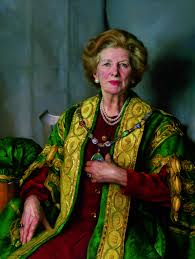
Margaret Thatcher Nelson Shanks William and MaryThe year was 1979.  I had just graduated from college and moved to London for an adventure, armed with a BUNAC work permit.  We were allowed to land “any job a British citizen couldn’t or wouldn’t do” which sounded a bit ridiculous and impossible.

And yet I was hired to be a social worker in Richmond with a desk overlooking the Thames.  Nice.

I was vastly underqualified and  – besides – why didn’t some British 20-something want this job?  Maybe because the job seemed ridiculous and impossible.

Margaret Thatcher had just become Prime Minister and suddenly there were jobs created for people like me to take social services away from people like Henry Burville.  Mrs. Thatcher was what we would call today “A Job Creator.” More about Henry Burville later.

What I was supposed to do:

  • Visit elderly pensioners who received free telephones and televisions, courtesy of the sovereign state of the UK, and discern whether or not they really needed those benefits.
  • Decide that they didn’t need those benefits.
  • Take away those benefits.

What I really did:

  • Visit elderly pensioners who received free telephones and televisions, courtesy of the sovereign state of the UK,  and hear their stories.
  • Occasionally pray with them around cluttered kitchen tables.

Henry Burville had been a landscaper at Kew Gardens, but in his 90s he had become very confused to the point that he consistently forgot that his wife was dead.  I found myself reminding him that she was not in fact in the next room, and he would cry as if hearing it for the first time.

Mr. Burville thought I was a WWII nurse and once he wandered  to Hammersmith to visit me and The American Girls at our flat.  I came home from work to find him sitting in our living room being entertained by my housemates.

There was no way I was taking away that man’s phone and TV.

Actually in the months I worked at that job, I never took away anybody’s phone or TV.  I got yelled at a lot by my supervisor.

I remember telling one of my housemates that the issues I encountered with those folks were not about their televisions or telephones.  Their issues were spiritual.  I talked with all my clients about  hope and community and peace.  About betrayal and abandonment and isolation.  “You should definitely go to seminary,” my roommate said.  And so I did.  In fact, hers was the first wedding I officiated.

I’d been thinking about seminary for a while and –  pre-London – I had talked about it with professors and pastors.  But it was Margaret Thatcher who nudged me over the edge to the place of no return.

And so for that, I’m thankful.

Image source here.

How to Create a Clergy Support Group

Attention Clergy Friends:  to whom do you turn when you need support and enrichment?

Roundtable 2010This is what clergy support has looked like for me:

First call – Rural Congregation  

  • Met with the two geographically close-by PCUSA male colleagues occasionally to plan joint youth events for our handful of youth and to pray for each other.
  • Regular breakfasts with Fr. Richard  to talk about celibacy (his and mine).

Second call:  Clergy Group Bonanza in Our Nation’s Capital  (Now the groups have Names.)

  • Lex Girls – About eight clergywomen in National Capital Presbytery, meeting monthly to share lectionary resources.  Some of the most creative women I know, whose preaching I continue to admire.  
  • Preaching Roundtable – Created during/after finishing degrees at Columbia Theological Seminary in the days when Moveable Feast didn’t include women.  Wide range of ages and church sizes hailing from multiple states and Scotland  (Cindy Bolbach called this group International Lex Girls.)  We have been meeting for 10+ years in the cities where one of us lives, which means we’ve been all over: Richmond, DC, NY, Atlanta, San Antonio, Austin, Edinburgh, San Francisco, Montreat – and this year in Chicago.  We used to share lectionary sermons and resources and then we moved to themes.  We shared sermons preached on federal holidays in DC.  (i.e. sermons for Veterans’ Day, 4th of July, etc.) We shared life- milestone sermons one year (e.g. sermons about marriage, singleness, divorce, parenting, adoption, etc.)  This year the theme is Interfaith – sermons we might preach at an interfaith service or in one of our own churches on  interfaith marriage, etc.  We’ll be hanging out at Interfaith Youth Core this year.  We consistently eat very well.
  • Writing Revs – 4-6 National Capital Clergywomen who write articles, books, blogs, poetry.  We still grieve the loss of KB.
  • The Can’t-We-All-Just-Get-Along group (my personal name for this gathering), ostensibly made up of an equal number of “conservative” and “liberal” male and female pastors in the Presbytery, meeting in hopes of creating connections.  It’s harder to be snarky to someone on the other side if you’ve been praying for his kids.
  • And then there were others:  Presbymergent, Emerging Church Cohort, digital communities.

Third (but interim) Call: Presbytery Staff

  • Roundtable continues. We’ve gone through marriages, births, new calls, unemployment, major traumas, and basic life together for over a decade.  We turn to each other for professional and personal support.  An enormous blessing.
  • Clergy Book Group – several male and female clergy from the Presbyteries of Chicago and Milwaukee, reading both fiction and nonfiction, and talking about our work.

How do we create these essential groups for ourselves?

  • Be pro-active.  Contact a small group of people you’d like to get to know better, hang out with, study with, pray with and invite them to meet.  If they say “no” don’t worry about it.  If they say “yes” you can try it out.
  • Be flexible.  Maybe you start as one thing and evolve into another.  It’s fine.
  • If it’s not working out, allow individual people to leave the group with no hard feelings.  Some of us have too many home responsibilities.  Some of us are looking for something else.
  • Try not to commodify each other – although this is hard.  Of course we want to meet with people for our own support and edification.  How fun would it be to meet in a clergy group with Rob Bell or Nadia Bolz Weber?  It’s fun to have cool friends.  But this is mostly about authentic selfless relationships.  We need this and others do too.  

Some of us consider it a boundary problem for clergy to have deep friendships with parishioners.  In fact, it is a boundary problem.  No matter what, we will always be The Pastor and this limits what we can say or do with people in our faith communities.

Do you have a clergy support group?  And how does it enhance your ministry? Please share.  And parishioners:  if you have a pastor, ask her/him, “Who is your pastor?”