Rich Church, Poor Church

3D Printer image of cathedralAfter reading this article about 3D printers (make your own working plastic rifles at home!), I was pondering how a church might use such a printer.  Chris Ruddell has already thought about it here.

Rich churches can buy shiny new printers that scan 100 pages per minute and print professional quality posters.  Poor churches print dated-looking bulletins with battered office machines.

Rich churches might use a 3D printer to create a model of their new building addition.  Poor churches find their buildings to be a financial burden that they cannot maintain much less renovate and expand upon.

What makes a church “poor” or “rich”?   Most of us believe that small numbers + large buildings = impoverished ministry.

Of the 98 congregations in the Presbytery I serve, 26 of them had an average weekly worship gathering of 60 or less in 2011.  14 had less than 30 worshiping together on average.  Most of these congregations have neither large endowments or wealthy members to sustain their buildings or staff a thriving church.  If these smaller congregations were House Churches – without a building to maintain – they might be considered healthy and even “rich.”  But – again – small congregations + large buildings = impoverished ministry most of the time.

Obviously there are rich churches that have few financial resources, but what they have feeds hungry bodies and souls.  And there are churches with lots of money and impoverished spiritual lives.

Is there a right way to be the church?

Maybe, but it has less to do with attendance, building, and cash than it has to do with service to the neighborhood, organizational creativity, and the shift from a 1950s paradigm to a 21st Century paradigm for ministry.

The bigger problem is that our churches – rich and poor – are stuck.

  • Maybe our congregation can afford to buy a pricey printer that will enhance our communication, but we can’t imagine how fresh communication will make a difference.  Or we are simply too cheap to go for it.
  • Maybe we could sell our building and move to a more manageable  space but we cannot imagine worshiping in a room with no center aisle or stained glass windows.  Or we simply won’t let go of the memories of past glories.
  • Maybe we could relinquish some of the endowment to employ a minister whose focus is to serve those who are not yet part of the church, but we are uncomfortable paying for a staffer who’s not available to serve our  needs.  Or we simply don’t want new people with us, in spite of comments that “we need to grow.”

Image source here. This is what you can do with a 3D printer.

Why Protestants Should Care Who Becomes Pope

Rare is the person who will voluntarily relinquish immense power.

Pope's Prada ShoesI would love to be best friends with Fr. James Martin, SJ who wrote those words for a NY Times op-ed last week.  I respect  his take on the church and love watching his interactions with Colbert.

I agree that Benedict XVI’s retirement is what many will respect and remember most about his legacy.  It is indeed extraordinarily rare to give up power – especially the kind of power that can decree what a whole gender can and cannot do in religious leadership, among other things.  Pope Benedict’s decision to relinquish his power was the perfect example of Lenten devotion.

Every Protestant pastor I know has former Roman Catholics in our congregations.  In fact, they might still self-identify as Catholic although they’ve officially been Presbyterian, Lutheran, Episcopalian, Methodist, or non-denominational for years.  They tell us how they disagreed with the faith of their childhood that limited women’s leadership, forbid the use of birth control, and required their priests to be celibate.  And so they left.

Some of them left any semblance of any kind of church.

Many of our local and global neighbors are Roman Catholics – and not the kind whose annual spiritual highlight is the St. Patrick’s Day Parade.  I’m talking about devout, committed, faithful followers of Jesus like Fr. James Martin and millions of others.  They staff hospitals and schools, they fund life-saving projects throughout the world.

People from Bill Maher (really?) to me (a lifelong Presbyterian Christian) have something to say about who should be the next Pope, as if any of us has any influence in the matter.  But we who are trying to follow Jesus – no matter how we live out our faith – should care about this.  Why?

  • The next Pope might loosen the restrictions on divorced parishioners at the communion table, while Benedict XVI refused to do this.  The pastoral benefits that would come from including divorced people at the table are enormous.  I, for one, want the world to know that there is nothing that can separate us from the love of Jesus – or from Jesus’ table.  Nothing.  
  • The next Pope might be more receptive to talking with those Nuns on the Bus – or any women religious who work face to face with the people every day.  Maybe he’ll even listen faithfully to what they have to say.
  • The next Pope might allow hospitality and justice to trump regulations and appearances (something we Protestants need to do as well.)
  • The next Pope might keep that Twitter account but then also branch out to talk with Biblical and Canonical scholars who interpret God’s message differently – and maybe even more faithfully.
  • The next Pope might understand The 21st Century Church in such a way that the hopes and hungers of the world are met and fed in abundance.

All of us can do better in following Jesus as a way of life.  Some of us live and work alongside cultural Roman Catholics, practicing Roman Catholics, anxious Roman Catholics, former Roman Catholics.  We also live and work alongside people who have given up on the church, people who consider Christians to be at least as hateful and selfish as the rest of the world.

Let’s pray for the man who could change this at least a little bit, for the sake of Christ and Christ’s reign on earth.  In spite of what E.J. Dionne opined, what we do know is that he’ll be male.

Image source here.  Does the Pope wear Prada?  Prada isn’t saying and the office of the Pope says his own cobbler created the famous red slippers.

How to Love Your Pastor – Anniversaries!

balloonsThe congregation my dear friend JBL serves celebrated her 10th anniversary as their pastor this morning.  Two thoughts:

1) She  totally deserves a nice party.

2) Many churches are not good at this kind of thing.

Just as most of us in the church consider ourselves “friendly,” we also consider ourselves “loving” even when we aren’t.  I get to observe, as part of my job, an ordination, installation, retirement, or clergy anniversary almost every Sunday of my life and I have some thoughts on this.

Maybe we simply need to re-teach what it looks like to love our pastors.  Although I’m a pastor myself, I hope you don’t consider this self-serving, but somebody’s got to say it.  If you want to love your pastor – that person in your life who serves as spiritual guide and pastoral caregiver, please:

  • Remember.  Remember the anniversary of the day she became your pastor.  Remember the anniversary of his ordination to professional ministry.  Most anniversaries of pastors are remembered by their spouses who whispers into someone’s ear that “a big anniversary is coming up.”  I even know one pastor who was given a new robe for an anniversary by her congregation only to learn later that – actually – her husband bought it for her.  The church couldn’t be bothered, even after he told them about the anniversary.  He also ordered the cake.  Also remember that your pastor might still be grieving the death of his father last year.  Remember that your pastor had a miscarriage last summer and Mothers’ Day might not be her favorite holiday.  Remember that your pastors are human beings.
  • Forget.  Forget that lousy sermon preached the day after a tough funeral one Saturday last autumn.  Forget the time your pastor didn’t include your name on the list of Vacation Bible School volunteers in the newsletter because sometimes it happens – and possibly she’s not even the one who published the list.  Forget the time he didn’t say “hi” to you in the hall because his mind was on something more pressing.  Holding childish grudges only damages community and personal relationships.  And it makes you look petty.
  • Acknowledge.  Acknowledge openly and in public that your congregation has not given the pastor a raise in years, and maybe didn’t even give a cost of living adjustment last year.  Acknowledge that she has a hard job.  Acknowledge that he is a good pastor.
  • Notice.  Notice that she drinks tea (so you might have a cup ready when she visits.)  Notice that he doesn’t eat red meat (when the officers plan a cookout.)  Notice that he didn’t take a day off last week because of that emergency.  Notice that she came home a day early from vacation to do your daughter’s wedding.
  • Celebrate!  Celebrate milestones together.  Celebrate reaching the light at the end of the proverbial tunnel (e.g. paying off the church mortgage,  welcoming 25 new members on Christmas Eve, reaching a financial goal for that hospital in Haiti!)  It’s possible that your pastor had something to do with the good things happening in your congregation.

Learning how to love our pastors is good practice for loving everyone else.  We do not do this well naturally.  We need to learn how.

And congratulations to the extraordinary JBL today.  10 years at WSPC!

Crafting a Church Staff

Senior Pastor.  Associate Pastor.  Christian Educator.  Minister of Music.

Staff

This is the classic model of a traditional church program staff for a congregation of between 250 and 600 members.  Or at least it used to be.

Traditional congregations are staffing in creative ways in the 21st Century Church and one of the exciting opportunities is the crafting of the church staff.  This is something we don’t learn in seminary, probably because church staffing is so contextual.

Usually staff issues involve (soul-sucking) activities like putting out staff fires, managing people, and finding somebody – anybody – with a pulse and no misconduct history to fill in a necessary position.  Again, we didn’t learn how to finesse all this in seminary.

And working with a team should be a joy, not a burden.  Creating a fabulous staff and working on a common mission is one of the most fun parts of professional ministry.  I have adored working with atypical staffers – hired not because of their degrees or even their experience (or lack of it) but because they had the right gifts needed for a certain time.

Not only because we cannot financially afford to staff churches the way we staffed them 10-20 years ago, but we cannot theologically afford it either.  Working with a fresh kind of staff is crucial for the future church.

Image is a mosaic of staffers from an imaginary church.  Imagine who does what.

Doing Without on Valentine’s Day

I can live without him; I just don’t want to.

I remember a friend in college saying this about the man she would eventually marry.  It had a huge impact on me, as one who was trying to figure out women who seemed so weak and flighty around men – like they couldn’t live without them.  Could you be a strong person without a partner?Broken Heart in Lights

I don’t want to live without my Valentine, but I guess I could if I had to.  It would be miserable, though, probably for the rest of my life.

Lent is about “doing without” but we can be strong because loss is not the end of the story.

It’s fascinating that our Roman Catholic friends are doing without a Pope for part of this Lenten season – for the first time in forever.  Another friend is doing without her mother for the first time.  Other friends who long for a child are doing without a baby once again this winter.

We have losses, pain, regrets that can feel insurmountable on this side of the resurrection.  I personally love Valentine’s Day as a reminder about all those people I love.  But Valentine’s Day is  about brokenheartedness too, especially during Lent.

P.S. Missing Cindy Bolbach who loved the Lenten hymns.

Image Source here.

Autobiographical Ashes

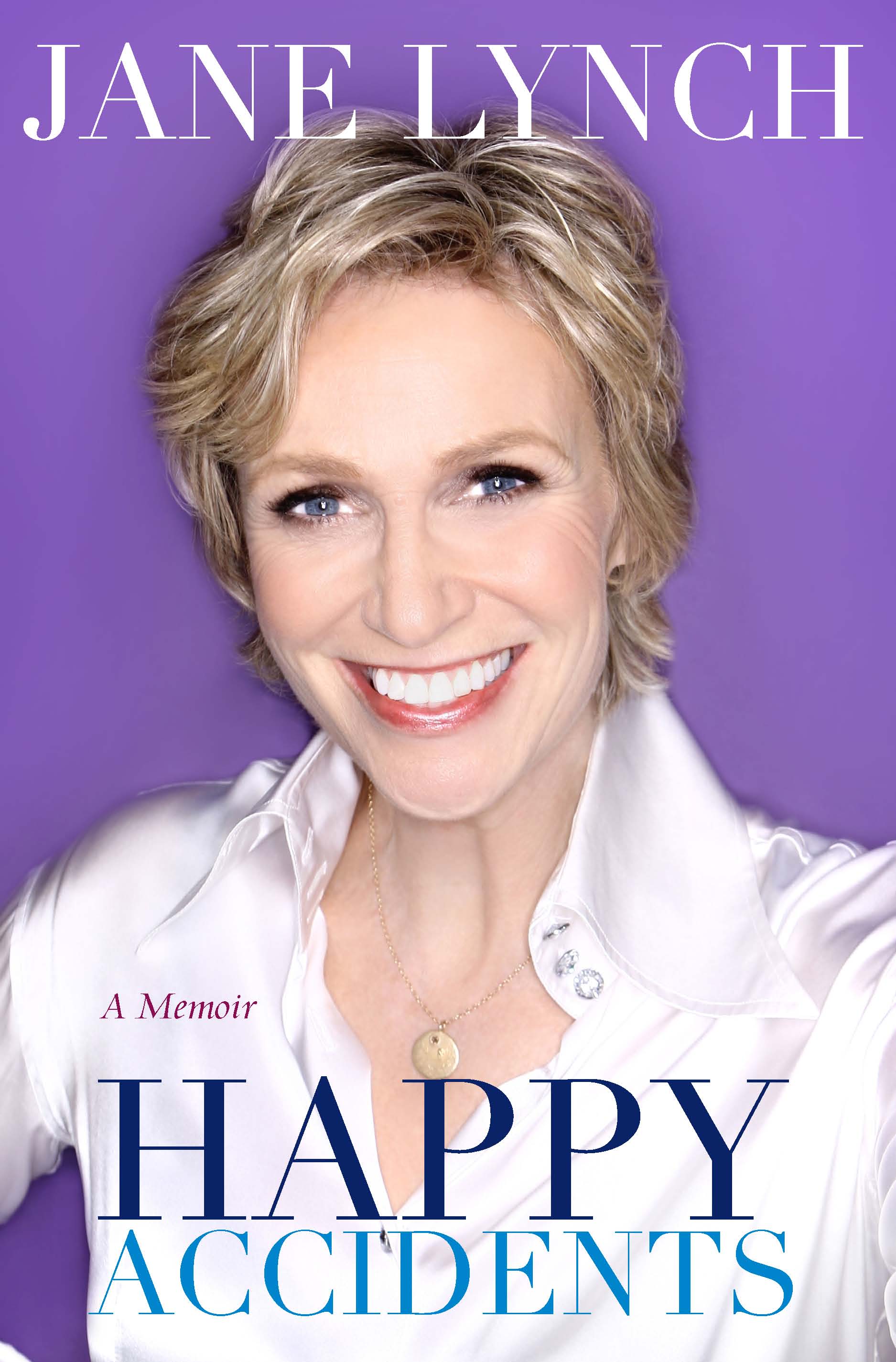
Sculpture of Chilean Arturo Prat covered with volcano ashOn our recent road trip, HH and I listened to the memoirs of both Tina Fey and Jane Lynch.  I like the way funny people tell stories.  But most funny people have endured a  profound measure of pain that has informed their lives and helps explain their brokenness.

Tina Fey talks about being the dark-haired Greek girl with the unibrow at the University of Virginia among lithe yellow-haired sorority girls.  Jane Lynch talks about feeling like an outsider, struggling with addiction and other demons, and allowing people to love her even if she didn’t love herself.  In the epilogue, she speaks of “happy accidents” that people of faith might call providence.  I kept wanting her to acknowledge that – just maybe – there was some kind of cosmic, holy power behind these “accidents.”

On this Ash Wednesday, we remember that ashes are part of all of our lives.  Some of us are merely dabbed with them.  Some are coated with them.  Some of us live in a place where it looks like thick volcanic ash is covering everything.

My favorite David Hayward cartoon is this one.  We all have stuff in our respective closets.  Most of us hide our ashes in there.

But today is the day we begin – once again – to recognize that we need to clean out our closets, wash ourselves off, and clear the air everywhere possible.  I know I need this and I call it a God thing.  But whether we call it a God thing or not, Lent is a universal necessity.  It’s crucial for our souls.

The image is a sculpture of the Chilean military hero Arturo Prat, covered with ash from the Chaiten volcano (2008).


Love Week

I love Vacation.  Holidays.  Holy Days.  Study Leave. The linguists in my family could etymologically explain how all these terms relate to each other, but I simply appreciate that Mardi Gras and Ash Wednesday, and Valentine’s Day are all celebrated on the same week this year.  Mardi Gras Ash Wed V Day

We could recognize the uniqueness of this week by watching Chocolat tonight – a film that factors in all three of this week’s peculiar customs.  Not a bad alternative to the SOTU Address, although Obama – and Rubio  – are sure to speak of sacrifice, love, and heartbreak this evening.

Today is the last day of my vacation  – an East Coast Tour – visiting our kids, their friends, and some random people along the way.  (Thank you, Deirdre – the NYC real estate lady – but no thanks.)  And I’m spending this last day pondering how I will practice Lent this season.  What is needed?  What is sorely lacking in my life and in the lives of those around me?

I’m struck by recent encounters with broken people:

  • The young woman who seems to be ticked off by pretty much everyone, to the point that she cannot even acknowledge acts of kindness without snarling
  • The gorgeous scholar who has no idea how valuable she is – and not just for her pretty face
  • The meatball waitress (yes meatballs) who screams funky with her dreadlocks but doesn’t seem to believe that she really is so funky and awesome, even if she brings me the wrong dessert.  Really, it’s ok.
  • All the young married women in NYC with huge diamonds on their fingers – what’s up with that? – working so, so hard to prove they are smart, successful, and holding it all together.

Mike Morrell wrote a solid post today about what it means to really love.  And, of course, Jesus said it best.

Here’s to a week of perfect moments – not just loving the ones who love us, not just loving the lovable, not just loving with a martyr’s attitude, not just loving people in hopes of getting something in return.  Imagine a Lent during which is it a simple joy to love everyone really well – as best we can.

Happy Mardi Gras-Ash Wednesday- Valentine’s Day Week!

PS   I also wrote today’s ecclesio post on my take re: the PCUSA Board of Pension’s Dues Plus proposal.  Check out the ten year old photo.

Guest Blogger: What’s My Place? Seeking Ordination in the PCUSA as a Black Woman

Note from Jan:  While on vacation, I’ve invited Denise Anderson to post this article she initially wrote for NCP Monthly.  These are questions I hear often:  Where do I fit in?  Is there a call for someone like me?  Please also check out Denise’s blog:  http://thesoulstepford.com

172A friend of mine recently posed a Black History Month challenge with the following question, “What will be your place in Black history?”

As I look forward to final assessment this weekend – the culmination of years of Divinity school, exams, papers, write‐ups, and supervised ministry experience – I often wonder what my own place in Black history will be. More specifically, I wonder what my place in Black and PC(USA) history will be. What will my experience look like as an
African‐American and female Teaching Elder in this denomination? What will I aim to accomplish as a member of such a small club?

Our denomination, for all its efforts to promote diversity and inclusion, still counts only 206 African‐American women among its 13,109 active ordained clergy. In case you’re keeping count that means less than 1.6% of our
clergy are Black women. The potential exists for someone like me to, quite literally, make history. There are still too few areas in this denomination in which people like me have made inroads. I can very well be one of many who
help this process of inclusion along. But how?

As I look back on my ordination‐seeking experience, from applying for enrollment as an Inquirer to preparing for final assessment, I regret that not once did I stop to consider what I wanted to do with such a unique opportunity.
What mark do I want to make as a Black woman in the PC(USA)? How will I clear the path for other Black women to seek ordination here? Will my voice add to the others in such a way that we are all convinced that more voices like
ours should be heard?

I certainly hope it does. And I certainly hope that part of the mark I make here leads to the ordination of many, many more African‐American women. I’d like to see us pursue this much more aggressively. I didn’t go to a Presbyterian seminary. I went to Howard – a Divinity School with no denominational affiliation. As such, I saw the United Methodist Church, the UCC, The Air Force Chaplain Candidate Program, and a number of other denominations and religious organizations get in front of these students and present them with viable avenues for ministry. Do you know how many Presbyterians I saw doing the same? None.

Not that I didn’t have wonderful Presbyterian instructors who to this day are mentors, but, in all honesty, their denomination did not step up the way they did. What a goldmine we should consider that to be if we truly want more African‐Americans to seek ordination with us!

In many ways, I hope to follow in the footsteps of Katie Geneva Cannon, Margaret Aymer, and Floretta Watkins. Looking outside of the PC(USA), I hope to continue the legacy of Jarena Lee, Ida B. Robinson, and Carolyn Ann
Knight. But, hopefully and prayerfully, I can go where they haven’t. Wherever I find myself in Black/Women’s/PC(USA) history, I hope what I see behind me are some busted walls, cleared‐out forests, and trampled brush, clearing a path for more ministers with a similar witness to come forth.

And, most of all, I hope the Black‐woman‐in‐training I’m raising sees all of it and determines in her own heart to do the same.

Denise is a Candidate in the National Capital Presbytery under the care of Prince George’s Community Presbyterian Church. She currently serves as a Pastoral Assistant at Taiwanese Presbyterian Church in Derwood, Maryland where she
leads the English-language Ministry.

Road Trip

arrolynn-weiderhold-road-trip-map-art

After we finish laundry, after we pack the car, after my Wednesday morning staff meeting, HH and I head east to visit The Kids.

I’ll be posting about scenic vistas and curious insights en route.  A week long vacation!  More later.

Image source here.

Moral Wounds

hadiya-pendletonThe church is for wounded people.

But most of the wounds that unite us involve loss and bitter disappointment.  I was struck over the weekend with talk of the moral woundedness of Chris Kyle who was a professional sniper and the author of American Sniper.  He wrote in that book about his first kill:  a woman with a child who was, in fact, a suicide bomber.  But still, it troubled him a bit to kill her.  Yes, she intended to kill his friends.  But she was a woman with a child.  Unspeakable.

Some said it “morally wounded” him.

I wonder these days if people who are morally wounded show up in churches.  We pray prayers of confession, but do we see ourselves as being morally wounded?

I remember a family with two young children in my former congregation who intentionally arrived in worship after the prayers of confession.  The parents told me that they didn’t want their girls to feel like they were “bad.”  They had “nothing to confess.”

Wow.

We all have something to confess and the sooner we realize and acknowledge this, the better.  We can’t change the world unless we know that we are part of the problem.

Photo of  Hadiya Pendleton who was shot in a park near her school in South Chicago.  Dear God, who did this?