I’m No Angel . . .

Do not neglect to show hospitality to strangers, for by doing that some have entertained angels without knowing it. Hebrews 13:2

angel-unawaresI’m no angel.  I can be snarky, bossy, judgmental, and clueless.  I’m hard of hearing and sometimes when people speak to me, I don’t hear them.  I cannot see well without my glasses, and so if I’m standing in a room and you wave and I don’t wave back, it could be that I can’t see you.

So, when others are less than hospitable, I understand.  Maybe they are shy, and shy people often appear to be aloof.  Maybe they are hard of hearing or they can’t see very well.  Or maybe they are distracted by worry or busy-ness.

For most Sundays of my life, I am the stranger in church.  I’m a guest in worship an average of six times a month in six different congregations.

At best, I’m invisible:  a middle-aged woman seated by myself. At worst, I am suspect.  Occasionally people don’t just fail to smile at me; they actually frown at me.  I’m not sure they even realize they’re doing it.

Last Sunday, I arrived late to worship and although there were four people in the lobby, no one looked up when I entered.  No one handed me a bulletin, so I entered worship without knowing the number of the hymn the congregation had begun to sing.  Sometimes a friendly soul will hand me their open song book to help me jump right in and sing.  Last Sunday, the person singing closest to me literally took a step away from me and pulled his hymnal closer so I couldn’t see which hymn number they were singing.  Or maybe it was my imagination.

It’s the exception rather than the rule when people speak to me as a guest in their church.  I once asked the person sitting beside me a question about something in the bulletin and she literally shrugged and turned away.  Although the liturgist often invites “everyone” to coffee after worship, I have never – in a year and a half at this job visiting churches – been invited personally as in “Can I take you to coffee hour?”  Most churches serve their after-worship coffee in a room that is “down the hall” or “upstairs” or “in the basement” and if you don’t know where you are going, you may not find it.

I don’t expect people to fall all over me.  I don’t expect people to know that I’m “from the Presbytery” and subsequently treat me especially well.  But I do expect people to practice the basics of hospitality.

How do we tell our churches that they are not very friendly – in spite of what they believe about themselves?  As I shared over the weekend via Facebook, I visited a church Sunday to assist with a congregational meeting and during heated comments about GBLTQ ordination in the PCUSA, two of the speakers concurrently shared that “they love everyone” and “they even love homosexuals” and “they are very friendly” and – I pray with a spirit of compassion and gentleness – I responded by sharing my own experiences in that particular congregation.  I had visited them for three different worship services on three different occasions, and in those three visits, not one person had ever approached me to say “hi” much less “welcome!”  I had approached people myself and then they spoke to me.  But no one initiated, “Good Morning.”  No one said, “Are you new here?  Would you like to join me for coffee after worship?

If you Google, “Why are Christians so . . .”  you’ll find that it might look like this:
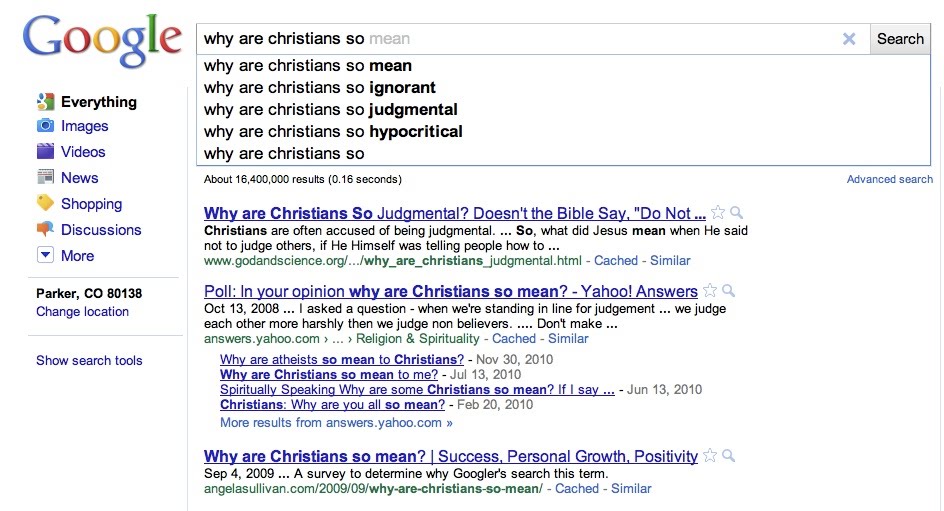
Why are Christians so(This image comes from here.)

A lot of people consider us mean, ignorant, judgmental, hypocritical.  Most of those folks probably don’t regularly cross the thresholds of church buildings.  But if they do join us, it’s possible we don’t even notice them.

I like the concept of Ship of Fool’s Mystery Worshippers who visit churches around the world to observe everything from the comfort of the seats to the genuine friendliness of the people.  My favorite observance:  “Did the service make you glad to be a Christian?”

It is my privilege to visit a variety of congregations for regular worship, installations, ordinations, congregational meetings, and retreats.  But what’s the most faithful response when we observe congregations doing exactly the thing they don’t think they do?  The thing that keeps us from being glad Christians?

I’m no angel myself, but there are other angels who might try to connect with our faith communities this week.  I wonder if we’ll even notice them.

Guest Blogger SBC: Teachers Who Change Our Lives Forever

Mr. ONote from Jan:  Robert O’Donnell taught high school English in Arlington, VA until June 2012.  He died yesterday after an illness that weakened his body but not his spirit.  SBC is a writer, editor, scholar, and my Second Born Child. 

Did you know that “tortilla” and “torture” have the same etymology (“tort” meaning “twist”)? I didn’t, until I took Mr. O’Donnell’s class.

I feel sort of bad saying he was my favorite teacher in the history of teachers, in part because I had many terrific teachers, and in part because he would have none of it. He is whatever the opposite of a sociopath is. Or rather, as of recently, he was.

O’Donnell was wise. O’Donnell was hilarious. O’Donnell loved stories and words and trivia and jokes and baseball and his wife and history and pancakes and us. He was literally, but never figuratively, a sick man. By the time I met him he was in his early fifties, but resembled a particularly spry grandfather. His heart, feeling the need to define irony, never worked very well.

It might not be entirely kosher to talk about this, because folks tend not to like thinking about times of sickness. But for me, O’Donnell was always various degrees of sick. And while this in and of itself did nothing to define him, I think his reaction to it certainly did. He never moped or showed anger, at least not to us: rather, in a fit of himselfness, he allowed himself to be dubbed “Mr. OldDonnell” and made it a point of wry pride.

He never treated us like kids, which is the hackneyed standard of a good teacher. But he didn’t treat us like adults either, which is what made him a great one. He treated us like teenagers, who still didn’t know much of anything but hated to be reminded of it. He granted us the perfect balance of guidance and independence in his class; and, because it was the last advanced English course before APs had us training for one big test, said class essentially consisted of him doing whatever the hell he wanted. We covered Williams both Golding and Shakespeare, discussing how Lord of the Flies might have been had girls been allowed on the trip, and whether or not the Bard hated Jews; he taught us literary terms using examples in anecdotes rather than pure definitions (the tale used to explain “understatement”, for instance, was one of his uncle’s war stories, and in telling it O’Donnell accidentally taught us “harrowing” as well); he somehow, somehow made grade-level sentence treeing interesting, through puns and mnemonics and doodles; and, in all scenarios, he always held a soft spot for a good word.

On a personal level, as I hinted at in the beginning, Mr. O’Donnell shaped my love of etymology. One of his many projects involved researching various word roots and seeing how many modern words we could find from them, deducting points for false leads (in the example given, the unrelated “tortoise” almost did me in) He taught me what the Oxford English Dictionary was. He taught me how to research. And for a second there, thanks to him, I wanted to be a teacher.

Fortunately for America’s youth this sentiment passed, but not before I started checking out which colleges had good teaching programs. One that stuck out was William and Mary, initially mentioned for its five year undergrad/masters program, and even when my desire to teach faded, the school itself had a stubborn grip. In that way, Mr. O’Donnell is very much the reason I went to the school I did, and had four wonderful years of education in linguistics (which, you recall, he also inspired), and made some of my best friends, and heard about the Denver Publishing Institute, and ended up in New York working at an amazing bookstore with an honest-to-god goal in life. If you met me after tenth grade, and like anything about me, chances are you should be thanking Bob O’Donnell.

But the true testament to OD’s greatness is that my story is one of hundreds, of many before me and too few after me. And all of us were crafted by a different aspect of the man; he could talk about anything, and make you feel like you knew more than you did through osmosis, and give you confidence and set you on your way like you were the only student that mattered. One day in my eleventh grade English class, the magnificent Linda Meer mentioned the term “renaissance man” in passing. By the time she was finished defining it for us, we all had the same thought. Oh. Like Mr. O’Donnell.

I love you. I miss you. And I still want to be you when I grow up.

Three Questions That Would Change Every Church

After an excellent weekend spent with core leaders from four congregations, it Cool Jesusoccurs to me that every spiritual community could benefit from asking the following three essential questions:

  • Why does our congregation exist?
  • What breaks God’s heart in our community?
  • Name one spiritually transformative moment you personally experienced in the last year.

Three simple questions.

Our responses  determine the future existence of our congregations – small or large, rich or poor, Protestant or Roman Catholic or Orthodox.  That is all.


I’ve long lost the source of the image above but would love the source if you know it.

Is There a Place for Me?

Hospitality, relationships, and community are hot topics in spiritual communities these days.

congregation

John Vest recently wrote here about his hopes for rebooting our Presbytery by relationship building using the community organizing method of relational meetings.  Henry Brinton’s excellent book on hospitality offers interesting generational insights on how hospitality has been taught (and not taught) through recent history.

But here’s a universal issue I’ve noticed:  we who tout relationship-building and hospitality are – ourselves – often relationship averse with certain kinds of people.  It’s cool to be tolerant towards certain kinds of people, but are we intolerant towards the uncool?

I hear over and over again – across generations, genders, races, sexual orientations, theological beliefs and political parties:

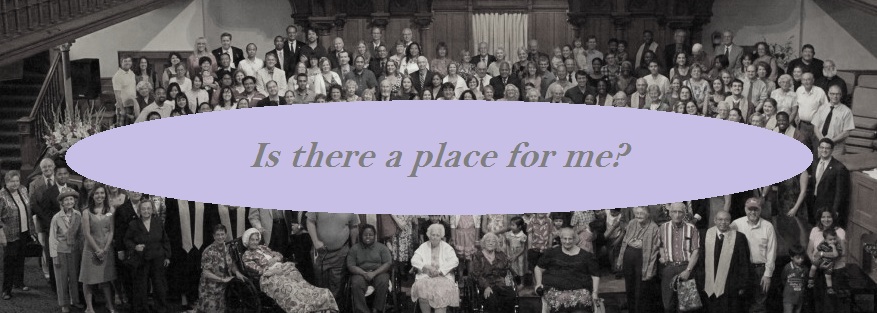
Is there a place for me in your circle?

  • A heavily pierced 30-something couple walked into a traditional 11 am church service to find themselves basically ignored –  even though this was a congregation of “progressive” and “welcoming” believers
  • A 70-something retired man hoped to join a group of young leaders sipping coffee at a church function, only to have the group literally turn their backs on him so that he’d join another table
  • A 90 year old lifelong church member, after suffering a stroke, sat alone on the sofa in her church fellowship hall while her healthier friends laughed together on the other side of the room
  • A transgender woman wanted to meet with the Women’s Bible Study in her church but was gently told that “this is not really for you
  • A Black hospital patient who was served communion by the pastor of his White roommate during a pastoral care visit, later asked his roommate about his church saying he might like to visit, but was literally told that he would be uncomfortable at that church because “we don’t really have Black people in our congregation.”

These are all true stories I’m sorry to say.

This doesn’t mean that every person has to be a part of every group and every tribe.  But if we are serious about connecting with The Other, welcoming strangers, and building relationships, we need to realize that none of us is as tolerant and friendly as we’d like to think we are.

I especially notice this between generations in the church.  When younger generations announce that “everything has to change” older generations seem to hear “we are no longer welcome here.”  When older generations cling to familiar forms of faith, younger generations seem to think “there is no place for someone like me.

We can’t simultaneously say we want to build relationships and then ignore some of the people with whom we are supposed to be building those relationships.  Either we welcome everyone  or we don’t.

Imagine how church would change if we welcomed even those who offended us, bored us, confused us, or angered us.  Imagine if we welcomed even those who are not among the cool kids.

Rich Church, Poor Church

3D Printer image of cathedralAfter reading this article about 3D printers (make your own working plastic rifles at home!), I was pondering how a church might use such a printer.  Chris Ruddell has already thought about it here.

Rich churches can buy shiny new printers that scan 100 pages per minute and print professional quality posters.  Poor churches print dated-looking bulletins with battered office machines.

Rich churches might use a 3D printer to create a model of their new building addition.  Poor churches find their buildings to be a financial burden that they cannot maintain much less renovate and expand upon.

What makes a church “poor” or “rich”?   Most of us believe that small numbers + large buildings = impoverished ministry.

Of the 98 congregations in the Presbytery I serve, 26 of them had an average weekly worship gathering of 60 or less in 2011.  14 had less than 30 worshiping together on average.  Most of these congregations have neither large endowments or wealthy members to sustain their buildings or staff a thriving church.  If these smaller congregations were House Churches – without a building to maintain – they might be considered healthy and even “rich.”  But – again – small congregations + large buildings = impoverished ministry most of the time.

Obviously there are rich churches that have few financial resources, but what they have feeds hungry bodies and souls.  And there are churches with lots of money and impoverished spiritual lives.

Is there a right way to be the church?

Maybe, but it has less to do with attendance, building, and cash than it has to do with service to the neighborhood, organizational creativity, and the shift from a 1950s paradigm to a 21st Century paradigm for ministry.

The bigger problem is that our churches – rich and poor – are stuck.

  • Maybe our congregation can afford to buy a pricey printer that will enhance our communication, but we can’t imagine how fresh communication will make a difference.  Or we are simply too cheap to go for it.
  • Maybe we could sell our building and move to a more manageable  space but we cannot imagine worshiping in a room with no center aisle or stained glass windows.  Or we simply won’t let go of the memories of past glories.
  • Maybe we could relinquish some of the endowment to employ a minister whose focus is to serve those who are not yet part of the church, but we are uncomfortable paying for a staffer who’s not available to serve our  needs.  Or we simply don’t want new people with us, in spite of comments that “we need to grow.”

Image source here. This is what you can do with a 3D printer.

Why Protestants Should Care Who Becomes Pope

Rare is the person who will voluntarily relinquish immense power.

Pope's Prada ShoesI would love to be best friends with Fr. James Martin, SJ who wrote those words for a NY Times op-ed last week.  I respect  his take on the church and love watching his interactions with Colbert.

I agree that Benedict XVI’s retirement is what many will respect and remember most about his legacy.  It is indeed extraordinarily rare to give up power – especially the kind of power that can decree what a whole gender can and cannot do in religious leadership, among other things.  Pope Benedict’s decision to relinquish his power was the perfect example of Lenten devotion.

Every Protestant pastor I know has former Roman Catholics in our congregations.  In fact, they might still self-identify as Catholic although they’ve officially been Presbyterian, Lutheran, Episcopalian, Methodist, or non-denominational for years.  They tell us how they disagreed with the faith of their childhood that limited women’s leadership, forbid the use of birth control, and required their priests to be celibate.  And so they left.

Some of them left any semblance of any kind of church.

Many of our local and global neighbors are Roman Catholics – and not the kind whose annual spiritual highlight is the St. Patrick’s Day Parade.  I’m talking about devout, committed, faithful followers of Jesus like Fr. James Martin and millions of others.  They staff hospitals and schools, they fund life-saving projects throughout the world.

People from Bill Maher (really?) to me (a lifelong Presbyterian Christian) have something to say about who should be the next Pope, as if any of us has any influence in the matter.  But we who are trying to follow Jesus – no matter how we live out our faith – should care about this.  Why?

  • The next Pope might loosen the restrictions on divorced parishioners at the communion table, while Benedict XVI refused to do this.  The pastoral benefits that would come from including divorced people at the table are enormous.  I, for one, want the world to know that there is nothing that can separate us from the love of Jesus – or from Jesus’ table.  Nothing.  
  • The next Pope might be more receptive to talking with those Nuns on the Bus – or any women religious who work face to face with the people every day.  Maybe he’ll even listen faithfully to what they have to say.
  • The next Pope might allow hospitality and justice to trump regulations and appearances (something we Protestants need to do as well.)
  • The next Pope might keep that Twitter account but then also branch out to talk with Biblical and Canonical scholars who interpret God’s message differently – and maybe even more faithfully.
  • The next Pope might understand The 21st Century Church in such a way that the hopes and hungers of the world are met and fed in abundance.

All of us can do better in following Jesus as a way of life.  Some of us live and work alongside cultural Roman Catholics, practicing Roman Catholics, anxious Roman Catholics, former Roman Catholics.  We also live and work alongside people who have given up on the church, people who consider Christians to be at least as hateful and selfish as the rest of the world.

Let’s pray for the man who could change this at least a little bit, for the sake of Christ and Christ’s reign on earth.  In spite of what E.J. Dionne opined, what we do know is that he’ll be male.

Image source here.  Does the Pope wear Prada?  Prada isn’t saying and the office of the Pope says his own cobbler created the famous red slippers.

How to Love Your Pastor – Anniversaries!

balloonsThe congregation my dear friend JBL serves celebrated her 10th anniversary as their pastor this morning.  Two thoughts:

1) She  totally deserves a nice party.

2) Many churches are not good at this kind of thing.

Just as most of us in the church consider ourselves “friendly,” we also consider ourselves “loving” even when we aren’t.  I get to observe, as part of my job, an ordination, installation, retirement, or clergy anniversary almost every Sunday of my life and I have some thoughts on this.

Maybe we simply need to re-teach what it looks like to love our pastors.  Although I’m a pastor myself, I hope you don’t consider this self-serving, but somebody’s got to say it.  If you want to love your pastor – that person in your life who serves as spiritual guide and pastoral caregiver, please:

  • Remember.  Remember the anniversary of the day she became your pastor.  Remember the anniversary of his ordination to professional ministry.  Most anniversaries of pastors are remembered by their spouses who whispers into someone’s ear that “a big anniversary is coming up.”  I even know one pastor who was given a new robe for an anniversary by her congregation only to learn later that – actually – her husband bought it for her.  The church couldn’t be bothered, even after he told them about the anniversary.  He also ordered the cake.  Also remember that your pastor might still be grieving the death of his father last year.  Remember that your pastor had a miscarriage last summer and Mothers’ Day might not be her favorite holiday.  Remember that your pastors are human beings.
  • Forget.  Forget that lousy sermon preached the day after a tough funeral one Saturday last autumn.  Forget the time your pastor didn’t include your name on the list of Vacation Bible School volunteers in the newsletter because sometimes it happens – and possibly she’s not even the one who published the list.  Forget the time he didn’t say “hi” to you in the hall because his mind was on something more pressing.  Holding childish grudges only damages community and personal relationships.  And it makes you look petty.
  • Acknowledge.  Acknowledge openly and in public that your congregation has not given the pastor a raise in years, and maybe didn’t even give a cost of living adjustment last year.  Acknowledge that she has a hard job.  Acknowledge that he is a good pastor.
  • Notice.  Notice that she drinks tea (so you might have a cup ready when she visits.)  Notice that he doesn’t eat red meat (when the officers plan a cookout.)  Notice that he didn’t take a day off last week because of that emergency.  Notice that she came home a day early from vacation to do your daughter’s wedding.
  • Celebrate!  Celebrate milestones together.  Celebrate reaching the light at the end of the proverbial tunnel (e.g. paying off the church mortgage,  welcoming 25 new members on Christmas Eve, reaching a financial goal for that hospital in Haiti!)  It’s possible that your pastor had something to do with the good things happening in your congregation.

Learning how to love our pastors is good practice for loving everyone else.  We do not do this well naturally.  We need to learn how.

And congratulations to the extraordinary JBL today.  10 years at WSPC!

Crafting a Church Staff

Senior Pastor.  Associate Pastor.  Christian Educator.  Minister of Music.

Staff

This is the classic model of a traditional church program staff for a congregation of between 250 and 600 members.  Or at least it used to be.

Traditional congregations are staffing in creative ways in the 21st Century Church and one of the exciting opportunities is the crafting of the church staff.  This is something we don’t learn in seminary, probably because church staffing is so contextual.

Usually staff issues involve (soul-sucking) activities like putting out staff fires, managing people, and finding somebody – anybody – with a pulse and no misconduct history to fill in a necessary position.  Again, we didn’t learn how to finesse all this in seminary.

And working with a team should be a joy, not a burden.  Creating a fabulous staff and working on a common mission is one of the most fun parts of professional ministry.  I have adored working with atypical staffers – hired not because of their degrees or even their experience (or lack of it) but because they had the right gifts needed for a certain time.

Not only because we cannot financially afford to staff churches the way we staffed them 10-20 years ago, but we cannot theologically afford it either.  Working with a fresh kind of staff is crucial for the future church.

Image is a mosaic of staffers from an imaginary church.  Imagine who does what.

Doing Without on Valentine’s Day

I can live without him; I just don’t want to.

I remember a friend in college saying this about the man she would eventually marry.  It had a huge impact on me, as one who was trying to figure out women who seemed so weak and flighty around men – like they couldn’t live without them.  Could you be a strong person without a partner?Broken Heart in Lights

I don’t want to live without my Valentine, but I guess I could if I had to.  It would be miserable, though, probably for the rest of my life.

Lent is about “doing without” but we can be strong because loss is not the end of the story.

It’s fascinating that our Roman Catholic friends are doing without a Pope for part of this Lenten season – for the first time in forever.  Another friend is doing without her mother for the first time.  Other friends who long for a child are doing without a baby once again this winter.

We have losses, pain, regrets that can feel insurmountable on this side of the resurrection.  I personally love Valentine’s Day as a reminder about all those people I love.  But Valentine’s Day is  about brokenheartedness too, especially during Lent.

P.S. Missing Cindy Bolbach who loved the Lenten hymns.

Image Source here.

Autobiographical Ashes

Sculpture of Chilean Arturo Prat covered with volcano ashOn our recent road trip, HH and I listened to the memoirs of both Tina Fey and Jane Lynch.  I like the way funny people tell stories.  But most funny people have endured a  profound measure of pain that has informed their lives and helps explain their brokenness.

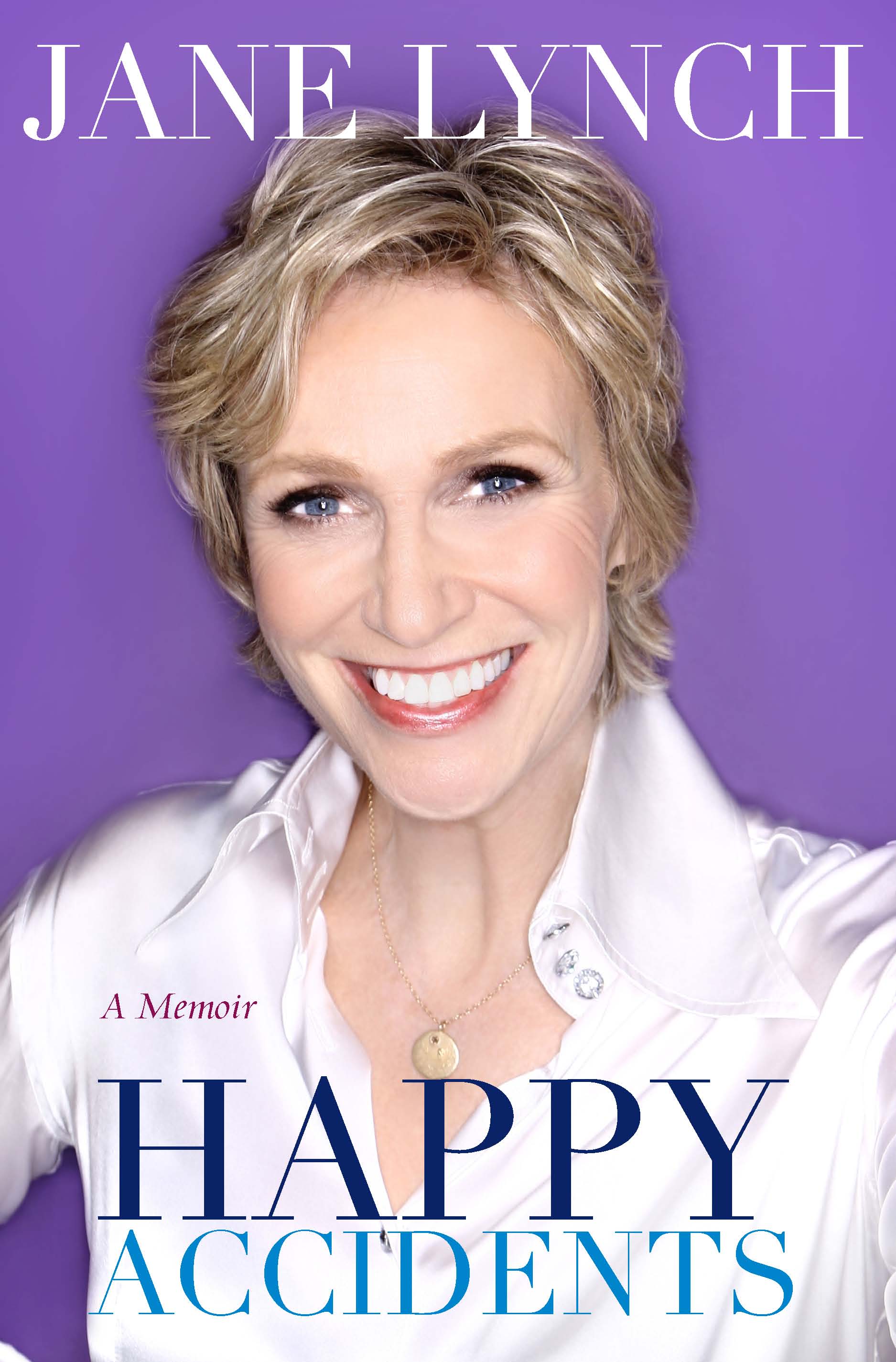
Tina Fey talks about being the dark-haired Greek girl with the unibrow at the University of Virginia among lithe yellow-haired sorority girls.  Jane Lynch talks about feeling like an outsider, struggling with addiction and other demons, and allowing people to love her even if she didn’t love herself.  In the epilogue, she speaks of “happy accidents” that people of faith might call providence.  I kept wanting her to acknowledge that – just maybe – there was some kind of cosmic, holy power behind these “accidents.”

On this Ash Wednesday, we remember that ashes are part of all of our lives.  Some of us are merely dabbed with them.  Some are coated with them.  Some of us live in a place where it looks like thick volcanic ash is covering everything.

My favorite David Hayward cartoon is this one.  We all have stuff in our respective closets.  Most of us hide our ashes in there.

But today is the day we begin – once again – to recognize that we need to clean out our closets, wash ourselves off, and clear the air everywhere possible.  I know I need this and I call it a God thing.  But whether we call it a God thing or not, Lent is a universal necessity.  It’s crucial for our souls.

The image is a sculpture of the Chilean military hero Arturo Prat, covered with ash from the Chaiten volcano (2008).