I’m Kind of Sick of Baby Boomers

In the interest of self-disclosure, I am 56 years old.  That means I was born between 1946 and 1964. I am a Baby Boomer.barbara pregnant with Jan 1956

I grew up watching Gilligan’s Island and That Girl.  Whatever.  Because of my gender, I couldn’t wear pants to class until high school except on “Pants Day.”  That doesn’t really matter now.  Yes, those my age and older remember when JFK, MLK, and RFK died, but that doesn’t mean we are uniquely wounded or particularly inspired compared to other generations.

According to generational studies, I am in Cohort 2 of the Boomers – “Generation Jones.”  More Watergate and Live Aid than Cuban Missile Crisis and Woodstock.  But I believe every generation has their comparable touchstones.

So here’s my beef:  I’m getting kind of sick of Baby Boomers – at least the ones of us who believe we are all that.  It hit me yesterday when I came across this article: In Travel, We’re All Boomers.  Really?  Like we invented flexible travel and nice beds.  As if people under 45 don’t ever trek off the beaten path.

Then I find out that the NY Times actually has a regular section for Boomers with articles about gray hair and increased urination and how hard this economy is especially for my generation.  Ugh.

As the mom of three Millennials, I’ve watched their generation’s particular life markers and cultural highlights up close.  And their elders in Gen X  have made breathtaking contributions to civilization. (Thank you Mark Zuckerberg.)  All these generations shift the culture and create fresh ideas and trends.  We need each other.

And so when I hear that my particular generation is special or more than other generations, it ticks me off a bit.  I was ordained to professional ministry as a twenty-something because the generation just above me gave me a chance.  In my 30s, my children’s health insurance was covered by my denomination – whether I had one or eight kids.  (I had 3 under the age of 4 at a time when I was sharing a single pastoral position with my spouse which means that our congregation paid double dues even though we were “one pastor” on paper.  Thank God for that insurance though.)

And now, my denomination’s Board of Pensions, which made it possible for me to work at a very low income because they covered my and my children’s health insurance, is proposing a change for 2014 in which only 65% of the cost of dependents’ health insurance would be covered – the rest to be covered by pastors or their congregations.

This is unjust and incredibly short-sighted.

Small churches cannot afford to add this to their pastors’ benefits.  Young pastors are most likely to have seminary and college loans to repay.  We who choose to follow God’s call into professional ministry make the choice to live with less money and we simply can’t pick up an additional 35% of our insurance payments.

And just because Baby Boomers like me are either empty nesters or moving into empty nestedness, doesn’t mean we should refuse to support our young pastors with dependents.  Someone supported us years ago.  It’s wrong for us to “get ours” and then ditch our responsibilities to the generations behind us.

I am 56 years old and have no idea when I’ll be able to retire.  College tuition is still part of our lives.  There was a period of unemployment a few years back.

So I get it:  even Baby Boomers have financial issues.  But we aren’t the only ones, and in fact, our generation has most of the money as a whole.  But – rich or poor – we are not the center of the universe.  Life doesn’t begin and end with us.  We have a responsibility to do what we can – pay more ourselves for insurance?! – so that younger generations can afford to serve our congregations and live relatively comfortable lives.

If you agree, please contact the PCUSA Board of Pensions (Corporate Secretary Andrew Browne:  abrowne@pensions.org) and let them know before they vote at their meeting in Philadelphia March 7-9.

We need to stick together – all generations, all kinds of human beings.  Life is much sweeter this way.

Photo of BALE carrying JLE – spring 1956.



Staffing the 21st Century Church

SB paintsChurch staffing issues were not covered in my seminary.  Managing, hiring, firing, supervising, developing staff was not on anybody’s radar as we were consumed with exegeting the Gospels and working out our own understanding of Reformed theology.  But in Real World Church, I found that staffing – from volunteer management to personnel issues – took an enormous amount of time.

Common wisdom once said that there should be a pastor for every 300 members and if your church is currently staffed like that, it’s almost certain that your church is stuck if not declining because of it.

Bill Tenny-Brittian – whose work I regularly read – suggests that the traditional model for staffing has been a pastor for every 100-125 members.  Good luck with that in this economy – although if a church expects to have a personal relationship with their pastor, this is probably about right.

Creative staffing is one of my favorite things.  Working with a team of appropriately gifted human beings is really, really fun and it makes everybody better leaders.  I’m a big fan of calling everybody The Minister of _____ or coming up with creative job titles:

  • The Minister of Community Discipleship (the person who does all his/her ministry out in the streets, in coffee shops, in bars, in town board meetings)
  • The Minister of Worship Arts (the person who creates glorious space that inspires spiritual connections via lights and cloth and paint and rocks)
  • The Minister of Relocation (the person who coordinates helping people move into new apartments, into assisted living, into moving vans to head to a different city)
  • The Flower Czars/Czarinas (the ones who brighten our worship and work spaces with fresh plants or deliver flowers to those whose lives need brightening)
  • The Signage Artists (the ones who create welcoming directional signs for the building or helpful informational signs for special events)

Everybody gets to be a minister or leader in a healthy church, keeping in mind that just because you want to be The Minister of Liturgical Dancing doesn’t mean you get to do this.  Vocational call has to do with obvious gifts and the affirmation of the community, as well as the needs of the community.

Bill Tenny-Brittian wrote in this article that a healthy church staff includes people responsible for these four tasks:

  • Bringing people into the community of faith
  • Retaining them
  • Disciple-ing them
  • Deploying them out into the community to serve

Who currently does this in your church?

The short answer should be All Of Us – at least on some level.  But somebody obviously needs to coordinate each of these tasks.

  • Who heads up making connections with people who are currently not in the church?  
  • Who leads efforts for making people feel at home and deepening relationships within the faith community?  
  • Who mentors people spiritually?  
  • Who prepares the community for following Jesus out in their work places and the other places out in the world where God’s heart is broken?

While we tend to staff churches based on problem solving (Somebody’s got to visit the sick!  Somebody’s got to preach!) imagine a church lead by a team that focussed on Tenny-Brittian’s four basic tasks.  I see a pastor’s role as a teacher, especially as a person trained to equip others for ministry based on solid Biblical exegesis and solid theological reflection.  Too many pastors are putting out fires or badly juggling management tasks.

I’m wondering if new churches or redeveloping churches would be best served by a team of at least four people who might be called:

  • Minister of Connections (connecting with local businesses, schools, hangouts)
  • Minister of Lavish Hospitality (modeling and training others how to love/welcome/support the faith community)
  • Teaching Pastor (curating content for Biblical and theological conversations and gatherings)
  • Minister of Deployment (discerning gifts, connecting people with local/global needs)

I would love to be part of this  staff.

Photo of the Rev. Shawna Bowman by Deanne Snedeker Medina

Pondering Virginity

I can’t get this article out of my mind.Virgin-Mary-007

Thoughts on virginity:

  • it’s good to wait for love before leaping into an intimate relationship
  • because of loneliness, violence, or countless other reasons most people are not virgins when/if they marry
  • a person is not eternally tainted if he/she is unmarried but not a virgin 
  • virginity is an idol for some of us
  • followers of Jesus are called to be counter-cultural (we don’t have to be intimate with each other just because everyone else is having sex)
  • sexuality is a normal part of life like eating and sleeping
  • please don’t get married so that you can have sex
  • people are precious not just for our naked bodies but also for our naked brains and our naked souls (i.e. don’t casually play with my mind or my heart either)
  • I don’t really care if Mary was a virgin.  My faith is not based on this.
  • I don’t really care if Jesus was a virgin.  My faith is not based on this.  (But I would imagine there is a really good reason/story behind this if he wasn’t.)
  • God treasures people like Sarah Bessey.  Either we believe in redemption and forgiveness or we don’t.

You pastors out there:  any guesses on how many weddings you have officiated for couples who were virgins?  (Either one or both of them.)

Other thoughts?


The Secret to Healing?

jesus-bandaidTwo weeks ago at this very hour, I broke my nose in a clumsy fall on the Metra platform.  My nose was bleeding, then swollen. My eyes were swollen, then black.  Today there is just a faint trace of black which aligns nicely with the frames of my glasses so it’s barely noticeable.  The miracle of healing.

Yesterday at my Uncle’s funeral, I spent holy time with a ridiculously diverse group of human beings.  We may not have looked that different in terms of skin tone or even surnames, but we truly run the gamut theologically and politically.  I hugged and kissed people who voted for the constitutional amendment banning same-sex marriage in N.C. last May and people who have been attendants at gay weddings.  I ate deviled eggs among people who have always lived within a few miles of their birthplace and people who have traveled the world.  I talked nose to nose with people who believe the Bible is inerrant in matters of theology, history, and science and those who believe is it (merely?) infallible in pointing to the Truth.  I prayed along with people who do not believe in the ordination of woman and people who have never had a male pastor. I enjoyed story-telling with the under-educated and the over-educated, the old and the young, the Republican and the Democrat, the Tea-Partier and the “Mondale Liberal” (as my father would put it.)

And it was lovely.

This group of people would take opposite sides on many matters – including matters about what makes God happy and what doesn’t – but the bottom line is that love makes God happy.  And love heals people.

It’s not easy to love those who judge us or criticize our choices, but if we can feast our eyes on each other with the eyes of Christ, I believe healing happens.  That is all.

A Farmer’s Sabbath

Edmiston Dairy BottleI write this post from The University of Saint Mary of the Lake at the Presbytery of Chicago Clergy Retreat.  MaryAnn McKibben Dana is our guest speaker and the topic is Sabbath.  And yesterday morning, I received word that my Uncle Bill – a lifelong farmer who rarely got a Sabbath – had passed away.

Farmers’ lives are not the same as most of our lives.  Yes, there are “gentlemen farmers” and “industrial farmers” who have other people or machines bearing the brunt of their work.  But I remember that Uncle Bill had a 5:30am/5:30pm milking schedule every day of his life except for those rare times when someone else tended the dairy cows for him.  But now, in his death, he can rest.  He finally gets a true Sabbath.

Prayers today for those who get no Sabbath, not because they refuse to practice that discipline but because they tend to living things – animals or babies or the elderly  – whose needs do not wait.

Thankful especially today for my Uncle Bill.

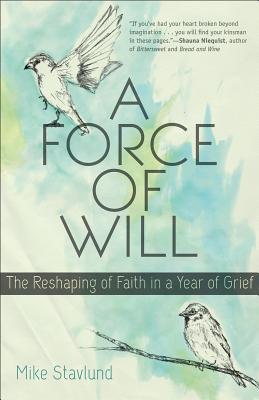
Order This Book for Lent: A Force of Will

Force of Will

“Mine was a climate-controlled existence, bland beyond description, distinctive only by the particular travail my son was facing on any given day.”

Years ago, the church I was serving spent Lent talking about how we might better love each other.  My friend Mike Stavlund – one of the core leaders of Common Table in Vienna, VA –  offered the content one night:  How Do We Really Love People Who Are Grieving?  Mike and Stacy had had the experience of losing a child.

What can we do to help?  The short answer is: there is nothing we can do to help.  Casseroles are great.  Errand-running is fine.  Cards and phone calls and cups of tea are all standard practices offered by good neighbors and friends.  But raw grief cannot be soothed by a cup of soup or a heartfelt card.

This is not to say that we should not offer such acts of kindness.  But there is a pain so deep – Biblical pain – that we are kidding ourselves if we think our small acts of kindness will make everything alright.

Mike has written an elegant book about the loss of his baby boy –  Will –  which pulls us into the excruciating truth that some pain is so raw that it changes us forever.  Mike is allergic to platitudes – which are often the go-to responses of church people.  But he faced the pain thoroughly and totally, like a person standing – arms out straight – in a violent storm.

A Force of Will comes out on March 1st.  Plenty of time for you to talk it over with your book group and decide to order your copies for the 3rd Sunday of Lent.  Really, this is an excellent choice for some serious reflection about loss and grief and being with those  in the paralyzing agony of it.

We in the church believe we are already adept at loving people.  It’s what followers of Jesus do.  But we are not very good at this, really.  We take dinner over to friends after a death and then we go home.  We’ve done our duty.

Even those of us who carry the pain of others with us like a heavy backpack, making their burdens our burdens – we cannot really know their pain.  We love them.  We would do anything to relieve them.  But we can’t.

This is the heartbreak of loving people.  Pain is part of life.  It reshapes our faith.  I’m grateful that I am not in that horrible club of parents who have lost children, but even the death of children is part of life, and it would serve us well to try to understand this depth of pain as well as we can so that we will have a small sense of what to do and what not to do.  Lent is a good time to ponder these things – and  it’s just around the corner.

PechaKucha Envy

I have PechaKucha envy.  Here’s one that warms my heart after my own recent urban disaster.*

Scene of the FallI envy those who attended the Emergence Christianity gathering in Memphis a couple weeks ago and saw presentations by Adam Walker Cleaveland, Mike Stavlund (everyone should read his book – more about that in future post), Bruce Reyes-Chow, and 16 other creative souls.  PechaKucha – Japanese for chit-chat – is a presentation showing 20 slides for 20 seconds each.  Read more about it  here.

I want to see them.  I want to make them.  I want our Presbytery to exchange traditional workshops for them.  Who wants to go to PechaKucha night in Chicago on  March 5?

*Broke my nose a week ago after tripping on a train platform.

Image is from my personal urban disaster.

Is It Wrong for Church to be Fun?

This post is not about game theory which I don’t understand.  But it’s about games and fun and church.

Classic Games Collage

Me (to the new pastor of my home church):  So how’s it going?

New Pastor:  I’m having a blast.  This is so much fun.

Me:  ?!

It’s embarrassing to say this, but – until that moment – I had not considered that church life could be fun.  I was in my 30s.

Honestly, my life in the church had occasionally been fun but my Calvinist upbringing swiftly stuffed that response, reminding me that Following Jesus Is Totally Serious Or It Doesn’t Count.

My generation generalization tends to be this:

  • Younger generations want spiritual activities to be both meaningful and fun.
  • Older generations expect spiritual activities to be meaningful.  Fun = a lack of seriousness

I am all for serious fun with a spiritual twist.  And I’m kind of old.  But I find that some wonderful people don’t realize that following Jesus can involve great joy.  And fun.

Maybe it’s a cheap ploy for ecclesiastical gain, but I’ve found it both meaningful and joyous to make a game out of certain moments in ministry:

  • To encourage attendance at a congregational meeting, I once invited  10 people to pledge $100 each if we could get 100 people at our small church’s annual meeting.  If 100 people attended, the $1000 would be contributed to a favorite mission project in our neighborhood.  Counting babies and toddlers, we got the 100.  And it was fun.
  • A group of church people once love-bombed a local playground on a really hot day handing out free Popcicles on a random Saturday afternoon.  Really fun.
  • When we heard that the local high school had an emergency fire drill on a cold day (the chemistry lab was on fire) a couple of us from the church staff took huge coffee urns to the school and handed out free hot chocolate to everybody.  They loved it and gave us “thank you” poinsettias.  Fun.

What fun things are you doing in church these days?  It’s okay if you believe that monitoring meeting minutes is fun.

Thank You for NOT Asking – Guest Blogger Larissa Kwong Abazia

Note from Jan:  In my ongoing hope that both congregations and core leaders  will be teachable followers of Christ, I’ve asked my friend Larissa Kwong Abazia to share her experiences as one searching for a new call in a new city.

 Larissa Kwong AbaziaI’ve recently started interviewing for ministry positions and felt I was prepared for the onslaught of what I deem “inappropriate questions” from churches.  As a 30-something woman of color, I am familiar with comments that pose doubts about my age or experience, ability to minister to people older than me, slotting me right into youth ministry roles, assuming that hiring me will automatically grow the young adult population, or blatant misunderstandings surrounding race.  I’ve learned to take them as par for the course, as sad as it may seem in the life of the Church.  I was not ready, however, for questions surrounding my role as a mother.

Every single interview (Did you read that?  EVERY SINGLE INTERVIEW) that I have had in the past several months has included some form of the question, “How do you feel about going back to work?” or “What will your son do once you start working?”

At first, I found myself justifying my desire to go back to work, laid out daycare plans, and the ways that my husband and I would juggle the weekly schedule.  Then I gave more guarded answers by acknowledging the concern behind the question and returning to my ministry experience as someone who likes balancing a lot of things at once.  Finally, I worked to briefly reassure them of a healthy work/life balance and redirected the interview to my call to ministry.  I confess that I have yet to find an answer that I am comfortable with even though I have been asked countless times.

I have no doubt that such questions will continue to come throughout my career and I will have to become at expert at answering both pastorally and candidly.  For now, I have arrived at an even deeper concern for our hiring process for female clergy.

For those who are seeking a pastor, here are some friendly notes that you might want to take into consideration:

  • It is illegal to ask a woman (or anyone for that matter) if they are married, have children or plan to have children, or any other personal questions.  I’ve also been asked about my plans for daycare and how I will juggle my potential work schedule; if those aren’t illegal, they certainly are poor form.
  • If you’re going to ask a question of a female candidate, first ask yourself if you would request that information from every other interviewee.  If not, then perhaps you should consider not asking at all.
  • Asking a female candidate, “How do you feel about working while raising your children?” feeds into decades of pressure on women to feel as though they have to do it all.  I’m guessing if a woman has applied to your church, she has already considered this…otherwise why would she have submitted her resume in the first place?!  Give her the benefit of the doubt, bite your tongue, ask about the unique gifts she brings to your congregation, and uncover the ways you can do ministry together.
  • It seems as though the underlying concern in such questions is a distrust that a woman can care for her congregation if she is also a mother (and therefore caring for her family).  Perhaps, then, congregations should consider if they are asking for too much time and energy from their leaders that won’t allow them to maintain healthy boundaries outside of the church.  We aren’t parents of, but partners in ministry with our congregations.  It’s long overdue that we begin thinking about the ways we support our clergy, male and female, in their calls in ways that allow them to be whole people both inside and outside of the church walls.

Attention Jesus Followers: Uncommon Decency?

I wish that people who are conventionally supposed to love each other would say to each other, when they fight, “Please – a little less love, and a little more common decency.”  Kurt Vonnegut in the Prologue to Slapstick

2013PresidentialInauguration

Vonnegut’s novel is about the story of the last President of the United States and it’s kind of ridiculous, but – on this inauguration day – I was thinking about common decency.

Imagine if we treated The Other with common decency.  Forget about “love.”  Figuring out how to love others is confusing sometimes.  (Tough love? Sacrificial love? True love?)

What about mere common decency for the other political party, the other races, the other nations, the other sexual orientations, the other classes, the other faiths?  Or – even better – what if we who claim to be followers of Jesus aimed for uncommon decency?

The One we aspire to follow touched the untouchable, spoke with the unspeakably estranged, and forgiving the unforgivable.  He showed uncommon decency.

I would like to imagine the United States being the nation – perhaps the only nation –  that shows uncommon decency to others:  no torture, no political blackmail, no cruelty to enemies.  Yes, this is a simplistic way to look at global governing, but I have a dream.