The Wave Is Coming

waveIt’s happening.  January in the Presbytery Office means pastors are slowly and quietly sharing their plans that this is the year they will be retiring.

Baby Boomer Pastors are retiring in increasingly huge numbers and the consequences will be very interesting.

Generally speaking, there are pastors retiring from tiny churches and those congregations may not survive the transition.  There are also pastors retiring from larger congregations who have had the resources to continue to be 1950s churches  and they may want to call “a young pastor” (meaning younger than 50) who wants to bring them into the 21st Century, and it will be a tricky transition.  There are medium sized churches who will also call younger pastors and that could be even trickier – or easier if these same medium-sized churches have already recognized the cultural reasons why they can no longer afford an associate pastor.

Attention all pastors under the age of 50, and especially those of you under the age of 40:

  • You will need to learn how to finesse the shift between 20th and 21st Century Church or
  • You will need to plant new churches.

A friend of mine was recently told by a PNC that he was “too creative” to be their pastor.  Actually, he is emergent/fresh/missional/social media savvy, and – yes – creative.  Too creative?  Maybe for them.  Actually, they are a wonderful congregation with enormous potential to be a haven of ministry, but the changes they’ll need to make to ascend on the Church Life Cycle are too scary to fully accept quite yet.

These are tumultuous changes, but God does awesome things with waves.  We need to get ready.

Guest Blogger: The Exceptional MaryAnn McKibben Dana

From Jan:  It was MaryAnn who inspired me to write this blog for the past eight years.  Please check out her own blog – The Blue Room.

MaryAnn McKibben DanaFrom MaryAnn:  Jan is a great friend, an alum of my Writing Revs group, and an inspiring church leader and thinker. So it’s great fun to blog swap with her today. Jan asked me to write some thoughts about how to encourage Sabbath in our church communities… a topic that’s near and dear to my heart.

When I speak to groups about our need for rest and renewal, I don’t get many blank stares and quizzical looks. People get it. People crave Sabbath, even if they don’t call it that. They feel tired and overwhelmed, pulled in too many directions. They are weary of their smartphones buzzing texts and emails and news updates day and night. But they don’t even know where to start to change. The cultural pressure to do more, to enroll our kids in more activities, to be accessible to the office at all hours, is so overpowering.   People get stuck.

Here’s where religious communities come in. We need people to hold us accountable in love. My family has been practicing Sabbath for many years, but there were two times that I’d call our “best” Sabbath seasons. One was during the writing of Sabbath in the Suburbs  Nothing like a contract to write about Sabbath to keep us on track with rest! But the other was when I was in a Sabbath group at the church I served. These folks were committed to the discipline of Sabbath and checking in with one another. We supported one another in our halting efforts and celebrated those moments of joy when we got it “right.”

What tips would I offer to congregations as they help folks pursue a more intentional rhythm of work and play?
Don’t just study Sabbath. Do Sabbath. Presbyterians in particular like to study things. We’ll form a task force at the drop of a hat. (Special Committee of the General Assembly to Study the Dropping of Hats.) That’s great, except when the study serves to deflect us from the hard work of ministry and discipleship. But with Sabbath, you don’t need any special knowledge. You just need an awareness of what delights you—what “rest” looks and feels like—and a commitment to immerse yourself in that rest on a regular basis, ideally once a week, but as often as you manage it. That’s all. There’s no magic resource that’s going to make everything fall into place.
Here’s where my publisher starts to yell at me. Yes, my book has lots of practical tips and ways to think about Sabbath that might provide a good entry point, whether you’re a suburban mother of three like me, or a single person, or an empty nester, or a retiree. But if I had to choose between people buying the book and never getting around to practicing Sabbath, or not buying the book but trying to make this practice take hold in their lives… I’d choose the latter. I care about you.
Think about it programmatically. Are you preaching Sabbath from the pulpit and the gospel of busyness with your program calendar? Consider whether there are ministries that need a time of Sabbath. That huge children’s ministry initiative that requires dozens of volunteers to implement? Maybe let it go for a season… and make a point of saying why: to give people space to breathe and savor the gift of time, their families, their hobbies, their delights.

Acknowledge the awkwardness. As church leaders, we are regularly calling folks to the ministry of the church, as ruling elders and deacons, Sunday School teachers, etc. Make Sabbath a part of the conversation. Acknowledge the challenge of respecting people’s boundaries yet also inviting them to be a part of the exciting things the church is doing. And if they decline to participate, don’t write them off as lazy moochers. Give them the dignity of respecting that their “no” may be in the service of a Sabbath “yes.”

Can the bravado. Pastors can be the worst when it comes to the stiff-upper-lip routine. I’ve been in gatherings of pastors in which people were not so subtly one-upping each another with their impressive to-do lists. I’m so over that. You can only lead your people as far as you yourself have been led. Yes, Sabbath is hard. Yes, you work on Sunday. Get over it.
If you’re a Presbyterian teaching or ruling elder, you took a vow to serve the people with “intelligence and imagination,” among other things. Use those creative smarts to find another time to take Sabbath. Sunday afternoon? Saturday morning from 9-11? Monday evening?
On the other hand, recognize that church members may have it even harder. At least self-care is part of our vocabulary in the church—not so in many business contexts. Rest is for the weak. If the boss emails you, the boss expects an answer within the hour, your son’s soccer game be damned. Again, our creativity is required to help them think through what Sabbath looks like in their own lives, with its particular pressures and expectations.
What tips would you add?

Why You Gotta Be So Mean?

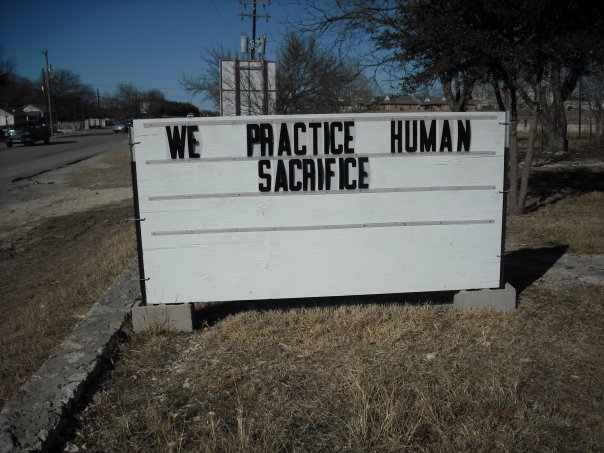
human-sacrificeOne of my favorite people – a lifelong church lady – was ruing the fact recently that church people can be incredibly mean.  I was surprised to hear her make this admission so matter-of-fact-ly.  After a lifetime of Circle meetings, Bible studies, worship services, elder meetings, and potluck dinners, she admitted that she had heard her share of stunningly ugly comments from her Christian brothers and sisters.  Yep.

The original Mean Girls were probably church ladies.  And some of the worst bullies I’ve ever met were Church Men.

What in the world is up with this?

My ears (and probably yours if you’ve spent much time in church world) have heard:

  • Church leaders yell – and even swear – at their pastors and then pounce if the pastor responds in self-defense.  Choice memory:  “You call yourself a @X*% minister?  How dare you speak to me like that?
  • Elders criticize their pastors in board meetings as if they are not sitting right there.  Choice memory:  “Everybody knows that (the pastor) is not a leader.”
  • Worshippers sipping coffee after worship whispering about the pastor.  Choice memory:  “We have the votes to oppose her vacation.

Some people are so desensitized to gossip and criticism that they don’t realize how outrageously rude and mean they sound.  Some people come to church gatherings directly from offices and homes with cultures of coarse language and they forget (or never knew) that this is not the way most followers of Jesus speak to each other.

The meanness is less about the actual words than the ugliness behind the words:  the cattiness, the power grabbiness, the selfishness, the fear.  It’s no wonder that Jesus needs new PR.

How do we respond to bullies?

We actually respond.

So many times, I hear mean words in church meetings and no one challenges the speaker.  Nobody corrects the liar.  Nobody defies the troublemaker.

I’m not ready to retort:  You brood of vipers!  But we might try responding this way:

  • Joe/Jane, why would you talk that way? You owe our pastor an apology.
  • We were not made to talk to each other like that.  Can we agree to speak respectfully to each other?
  • That has not been my experience with ___.  But either way, that’s not how we should be talking about each other.

A former pastor of a church I served was our guest preacher one weekend and after worship, a couple hosted him and his wife, along with several other couples out for brunch.  The next morning – on Monday, before he and his wife drove back to their retirement home –  he stopped by the church study to share that, during the brunch, the hosting couple had verbally shredded me and my husband over a lovely Sunday buffet.

“What did the others say?” I asked.  And he said, “That was what was most disturbing thing.  Not a single person spoke up to end the gossip or defend you.”

The very least we can do is to speak to and about each other in a way that doesn’t make people question what kind of God we claim to follow.

The Teachable Church

I wrote last September about the importance of being a teachable pastor.  Latelyjesus-light
I’ve been thinking about teachable congregations.

A growing church is a teachable church:

  • It’s curious about the world and the Creator of the world
  • It wants to grow in faith and service, and
  • It wants to connect with God and others, including people who might be considered The Other.

There is so much we all need to learn to be a 21st Century Church.  It does not help when:

  1. Leaders schedule workshops and classes on topics that interest almost nobody.   I recently saw a flyer about an upcoming leadership training event in a small congregation that will be offering workshops on Soteriology (Really?  Do people a) know what soteriology is? and b) consider salvation to be a primary daily issue?  Actually, I could make a case for salvation as a daily issue, but this didn’t sound like that kind of workshop), Re-writing Church Bylaws (you’re killing me), and Different Curricula for Pre-Schoolers (although the church has only two pre-schoolers.)  Honestly, I suspect that very few people will be attending this event although a lot of time will go into preparing for it.
  2. Leaders schedule workshops and classes at times that don’t work for most people.  Some people don’t go out on winter evenings.  Some can’t do Tuesday morning classes.  Some find Sunday mornings to be tricky.  When and where gatherings are offered depends on the culture of our community and the demographics of our people.
  3. Leaders don’t pay attention to what their people really want to learn.  Maybe they don’t want to learn how to re-write the church by-laws but they’d love to know what to do when a friend is diagnosed with cancer.  Maybe they don’t need a theological lecture on predestination, but they’d like to know how to pray out loud with somebody.

In my humble opinion, church people need to learn:

  • What a 21st Century Pastor does (and doesn’t do.)
  • How to pray with a friend or stranger (without cracking a Bible over their heads/scaring them.)
  • How to shift from obsessing with church stats (attendance numbers, etc.) to loving our neighbors
  • What does loving our neighbor look like (and what does is not look like?)

What’s really tricky is when we in the church believe we already know how to be the church.

We’ve been at it for so long that – of course – we know how to care for a new mom or welcome an unfamiliar guest or offer hospitality to an enemy.

But every day of my life, I hear people tell me how friendly their church is, only to worship with a congregation and have not a single person speak to me (especially when I’m in the pews rather than the pulpit.)  Every week, I watch parishioners ignore people who don’t look like they look.  Every day we hear of people (“the nones”) who have been turned off by Christians rather than loved/shown mercy by them.

These are some of the things that a teachable church needs to learn – those daily “how to live a Jesus-shaped life” practices.

Soul Feeders

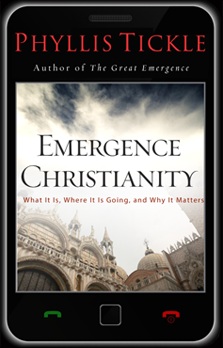
I am not in Memphis right now.  emergence-christianity-book

Although I’d registered, it didn’t work out, but I’m heartened to know that:

  1. My ticket is being used by a young pastor who will meet amazing people and hear Phyllis Tickle up close and personal.  I expect him to return to Chicago on fire.
  2. My friends in Memphis are plotting The Great Commission and new ways to love The Other, and subsequently the reign of God will expand.

Instead of being with my Emergence Church friends, I spent the day retreating with people in my Presbytery who have passion for New Church Development, Immigrant Church Plants, Multicultural Ministry, and Fresh Ideas.  It fed my soul, and not a moment too soon.

Too many of our churches spend their precious time worried about attendance, buildings, and cash.  Too many say that “they love each other” but then they gossip about each other in the parking lot or on “the prayer chain.”  Too many of our churches would not be missed by their communities if they disappeared tomorrow.  These churches are comprised of fine people, many of them committed to following Jesus, but they misunderstand what that means.  It’s my calling to serve these people, but it’s a little draining.

All of us have work that drains us.  Here’s to work that feeds our souls.

PS  Check out #EC13 on Twitter for Memphis updates.

Style Shifts – The Look of Future Pastors

emergent-jesusPeople in our Presbytery who want to begin the process towards ordination to the office of Teaching Elder aka Pastor aka Minister of the Word and Sacrament start their official journey in my office.  They share their sense of call, receive a packet of forms to complete at home, and hear me tell them that – no matter what happens – they are called to ministry.  Maybe not this ministry, but ministry nonetheless.

All kinds of people come through my door, and I’m struck – especially – not by the variety of ages or experiences, nor by the number of women or the number of men seeking ordination.

I am struck by style.

There was a time when people came for this preliminary interview dressed  like business professionals.  They wore suits as if I was interviewing them for a banking job.

Increasingly these future pastors come through my doors dress like they are catching a plane for Peru.  Their dress is Casual Hipster or maybe Funky Professor.

I’ve heard comments that people should dress to visit me as if they were headed to a job interview (hence the suit.)  But what I love about the variety of dress is that it reflects the kind of church these folks will serve.  People in suits will most likely seek calls in establishment churches.  People in jeans will most likely seek calls in alternative churches.  I love this.

Not all new pastors are hipster.  Not all will have tats and piercings.  But not all of them – even the Presbyterian ones – will wear suits either.


Downton Presbyterian Church

HighclereCastle_EastLawnsSeason 3 Episode 1 of Downton Abbey was such a hit that some Pharisee posted on  Facebook (probably facetiously) “Why is everybody talking about some new Downtown Arby’s?

Indeed.

The real “Downton Abbey” is Highclere Castle, a fifty bedroom residence that costs an unspeakable fortune to maintain.  As Lord Grantham wrings his hands over the financial crisis that could result in losing his historic home, the conversations  about cultural shifts and unwieldy buildings reminded me of countless conversations I’ve had with church people worried over the possibility of losing their historic church homes.

There are the people who equate their church with their building and there are other people who do not fear giving up a fabulous but expensive church building.  And it’s not necessarily a generational issue.  Lady Mary (in her 20s) will do almost anything to keep Downton Abbey.  Isobel Crawley (in her 60s) finds change exciting.  And then we have the older ladies:

Countess Violet (Maggie Smith): “You Americans never understand the importance of tradition.
Martha Levinson (Shirley MacLaine): “Yes we do, we just don’t give it power over us. History and tradition took Europe into a world war. Maybe you should think about letting go of its hand.

Like many of our historic church buildings, Highclere Castle was designed by a

First and Franklin Baltimorefamous architect, is appointed with marble floors and Gothic turrets, and brings to mind  a different time when top hats were an essential part of a man’s wardrobe and women didn’t leave home without wearing white gloves.  Many of our historic American church buildings were financed by the closest thing we have to royalty: the titans of business.  Carnegie, Armour, Pullman, Roosevelt, Flagler, and many others all contributed lavishly to the building of Protestant church buildings incorporating the artistry of world-renowned painters, sculptors, and designers.

But this is not what we worship, right?  Gorgeous things are so seductive.  Who doesn’t want to sit ensconced in exquisite architecture with breathtaking vistas?  But these things are not God.  Our life’s purpose is not to maintain beautiful buildings.  It’s to do beautiful acts of love.

While our buildings can be effective tools for ministry, they can also keep us from doing our work as spiritual people.

Thank You Aunt Frances

gold frankincense myrrhHappy Epiphany everyone and many blessings to my friend Teri who begins her second pastoral call tomorrow.  Part of my work includes preaching the Sunday after a pastor leaves a position or the Sunday before a new pastor begins.  Today I preached among her new church.

Although I don’t usually post my sermons, I want to honor my Aunt Frances. Aunt Frances sometimes asked me to offer grace at the Edmiston Reunion even though many of my loved ones belong to churches that don’t ordain women.  And long, long ago, she gave me something for my Hope Chest.

“Future Gifts” –  Matthew 2:1-12

In the time of King Herod, after Jesus was born in Bethlehem of Judea, wise men from the East came to Jerusalem, 2asking, “Where is the child who has been born king of the Jews? For we observed his star at its rising, and have come to pay him homage.” 3When King Herod heard this, he was frightened, and all Jerusalem with him; 4and calling together all the chief priests and scribes of the people, he inquired of them where the Messiah was to be born. 5They told him, “In Bethlehem of Judea; for so it has been written by the prophet: 6‘And you, Bethlehem, in the land of Judah, are by no means least among the rulers of Judah; for from you shall come a ruler who is to shepherd my people Israel.’” 7Then Herod secretly called for the wise men and learned from them the exact time when the star had appeared. 8Then he sent them to Bethlehem, saying, “Go and search diligently for the child; and when you have found him, bring me word so that I may also go and pay him homage.”

9When they had heard the king, they set out; and there, ahead of them, went the star that they had seen at its rising, until it stopped over the place where the child was. 10When they saw that the star had stopped, they were overwhelmed with joy. 11On entering the house, they saw the child with Mary his mother; and they knelt down and paid him homage. Then, opening their treasure chests, they offered him gifts of gold, frankincense, and myrrh. 12And having been warned in a dream not to return to Herod, they left for their own country by another road.

I grew up in a family with 20 Edmiston first cousins – and because our family was so large –  we drew names at Christmastime.  You know how that works:  everybody’s name goes into a basket on individual slips of paper and each person draws one name, and you give a single gift to the person whose name you draw.

 When I was nine years old, my cousin Dan Edmiston had drawn my name.  Again – I was nine and Dan was a teenager, I think, and this is what he gave me:  a small silver-plated tray.  [Note to readers:  I brought the tray with me and showed it to the congregation. Yes, I still have it.]

 Actually I think this gift was chosen by Dan’s mother, my Aunt Frances.  Did I mention that I was nine years old?

 I opened this gift and I hope I declared exactly what my mother had taught me to say when I opened a gift:  “Thank you.  I love it!”

 While most nine year old girls in the world got make-your-own jewelry craft sets and Little House on the Prairie books, I got a silver-plated tray.  “It’s for your Hope Chest,” my Aunt Frances explained to me.  And then, I had to ask my mother what a Hope Chest was.

 At one time, especially in the South (where I grew up) and apparently in the Midwest (where many of you grew up), girls had Hope Chests – also called a Dowry Box – which was meant to fill with all kinds of things a young woman would need someday when she got married and set up her first home.  You might put linens in it, or special dishware, or maybe even a silver-plated tray that – one day – you would use when entertaining guests for tea in your living room.

 This was a future gift – something to hang onto which I would most definitely need in the future.

 On this Epiphany Sunday,  we member the story of the wise men who visited Baby Jesus, guided by a star.  He was between the ages of newborn and a toddler.  And they famously brought him  three future gifts.

You’ve all probably heard the joke that “if the three wise men had been three wise women, they would have been asking for directions instead of following a star. And they would have brought practical gifts like diapers and teething rings and baby clothes.

 But this story is about “wise men from the East.”  Although we commonly sing that there were three of them, the scripture never tells us that there were three wise men.  We only know that there were three gifts, and it’s assumed that there must have also been three givers.

 11On entering the house, they saw the child with Mary his mother; and they knelt down and paid him homage. Then, opening their treasure chests, they offered him gifts of gold, frankincense, and myrrh.

These gifts seemed to be about as useful to a baby as a silver-plated tray was to a nine year old.  But what made the givers wise was that these gifts were meant to be used in the future.

 Gold was commonly a gift given to a king at his crowning.  [Note: It’s interesting to consider that – although Mary and Joseph have always been considered poor – a sack or gold would actually have been a useful gift the moment they received it.  Maybe it wasn’t “a sack” of gold.  Maybe it was a few shavings of gold in a little pouch.  We just don’t know.  But perhaps they used this gold to pay their way to Egypt.

Frankincense – which would have come from the part of the world we call Yemen today – was a sort of aromatherapy, used in worship to fill the temple with a fragrance meant to enhance the mystery of God’s presence.  Frankincense could have been a gift they used immediately too – nice to burn to cover up the smell if you’re living in a home full of farm animals.

 But then baby Jesus was also gifted with Myrrh, of course, was commonly used as an embalming oil – surely a disconcerting gift from the parents’ point of view.  Who knows whether or not Mary kept the myrrh?   When Jesus really needed it, about 33 years later, it was provided by a trio of wise women:  Mary Magdalene, Joanna, Mary the mother of James, along with other unnamed women at the tomb of Jesus, according to the Gospel of Luke.[1]

This familiar story of the Wise Men from the East is actually points to a future that Mary and Joseph could not have imagined.

Here on the first weekend of 2013, we all face a future that we cannot fully imagine.  Anything could happen this year.  Some of you might fall in love with someone you haven’t yet met.  Maybe you – or someone you love  – will get a new job, a new home, or an unexpected opportunity.  Any of us could come down with a sudden illness that threatens our very lives.  Or maybe a rich relative will leave us a tidy inheritance.  Who knows?

But one thing we do know is that – starting tomorrow – you will have a new pastor.  And the future of this congregation is subsequently full of possibilities and wonder and hope and excitement.  We have no idea what will happen under Teri’s leadership, but we trust in God that she has been called to cast a fresh vision and serve with energy, intelligence, imagination and love.

 She will bring to you all manner of giftedness:  solid preaching and tender pastoral care and good humor and faithful challenges.  But she will be also provide you with future gifts – gifts you might not need at moment she gives them, but – God knows – you will need them in the days and years to come.

Many years ago, when serving in my former parish, I was visiting a very sick man – a pillar of our congregation –  who suffering with the last stages of Parkinsons Disease.  He had stopped speaking and could barely swallow.  I would talk to him, but he wouldn’t talk back.  I would pray for him, but he wouldn’t respond.

 If you’ve ever visited a very sick person who cannot talk back to you or respond in any way, it’s not easy.  You feel like you are talking to yourself.  It’s as if nothing is making a difference and the person barely knows you’re in the room.

            One day, I decided to read the 23rd Psalm to this sweet man, mostly because I’d run out of things to say on my own.  And so, as I read to him, “The Lord is my Shepherd, I shall not want . . .”  I noticed that his lips were moving, and I looked closely, and he was reciting the Psalm himself.  There I was with my handy travel Bible, but D. was ever-so-quietly whispering the words himself, along with me.

The Lord is my shepherd; I shall not want. He maketh me to lie down in green pastures: he leadeth me beside the still waters. He restoreth my soul: he leadeth me in the paths of righteousness for his name’s sake. Yea, though I walk through the valley of the shadow of death, I will fear no evil: for thou art with me; thy rod and thy staff they comfort me.

            Somebody long ago had taught him that Psalm.  Maybe it was a Sunday School teacher or maybe it was his grandmother or maybe it was a pastor from his childhood.  And – who knows – maybe he had complained about having to learn it.  But it was a future gift:  one day, he would need it.  And I got to be there on that day.

Your new pastor is going to teach you what it means to be a disciple of Jesus.  She is going to help you learn how to articulate your faith – both in words and actions.  She is going to help you carve out a vision that reaches lost and broken people who crave Good News.

And sometimes, you might wonder about these things she’s giving you.  But please trust me when I remind you that some gifts are future gifts that you’re going to need.

  • Maybe you’ll be at a church meeting and the person sitting next to you needs a word of hope.
  • Maybe – years from now – you’ll find yourself in a situation when you’ll remember something Teri taught you in a class or through a sermon and it comforts you.
  • Maybe – decades from now – you will be in the company of a person in need and you will see that person in a new way because of a vision Teri has cast.

 A magi’s job  in the First Century  was to be a scholar and a priest.  But clearly – sometimes – they brought future gifts to be used at a later time.  A pastor’s job is to be a scholar and priest, to equip the saints for ministry, according to the Scriptures.[2]  And – by God’s grace – pastors also bring future gifts to the people they serve.

This is my hope for all of you in this New Year.  May God feed you and refresh you through these gifts – and these gifts (the cup of salvation and the bread of life.)

 And I’d like to offer up a final nod to my Aunt Frances.  When she chose that gift for me that I opened when I was nine years old at Christmastime in the old family home in Mt. Ulla, North Carolina, she could not have possibly imagined that one day, that nine year old girl would be called by God to go to seminary, that one day she would be ordained to serve as Minister of the Word and Sacrament, and that eventually she would use that same silver-plated tray to make a point in a sermon she would preach in Palatine, Illinois.

We have no idea what gifts we have received today can do in the future.  Thanks be to God for these good things.  Amen.


[1] Luke 24:1-10

[2] Ephesians 4:12-14

The Time It Takes

Church Clock
It takes a lot of time to be a good parent.  My brother used to take a different one of his four kids out for alone-time-with-dad every Saturday morning when they were little.  It was about donuts and focusing on that one child’s precious life.

Kids need our total focus on a regular basis and I don’t know how people do it who have huge families.

It takes time to develop trusting relationships, to know what’s going on, to notice a child’s hidden talents, to uncover hurts, to answer questions.  You can go to every soccer game and every PTA meeting and. still, never know your child.  Talking and listening are crucial.

Professional Ministry is like this too.   It’s not enough just to be there.  We need to talk.  We need to listen.

I spend my days hearing comments like these:

  • This is my church.  I’ve been a member for __ years and I’m not going to let ____ run me out.
  • We need more young families in our church.
  • Children are the future of our church.
  • The pastor doesn’t visit people in the hospital.  He expects the deacons to do it.
  • Do you have something like a baseball stat report we could use to evaluate our pastor?
  • We are hoping to get someone (to be our pastor) without spending a lot of money.  Do we really have to pay the minimum?
  • I don’t get a sabbatical in the business world.  Why should our pastor get a sabbatical?

As good church people share these comments with me,  I realize that this is going to take a lot of time.

It takes an enormous amount of time to listen to an individual church’s story (i.e. the story that explains why they bully each other, the story that sheds light on the fact that they are dying, the story that clarifies why the Christian Educator doesn’t get along with the Treasurer.)   I,  frankly, love hearing these stories, but there isn’t enough time in the day.

It takes an enormous amount of time to shift a congregation’s culture from a long-dead model of ministry that hasn’t worked for a generation to a fresh model of ministry for a new century, much less a new year.  (e.g. Children are not the future of the church; their parents are.  The pastor’s job is to equip others to do pastoral care, not to do it all herself.  It’s not the pastor’s job to ‘bring in new members’ or bolster attendance.)  At least those things are not true if you want to be a church for these times.

It takes an enormous amount of time to try new things and give ourselves permission to fail.  There is no cookie cutter way to do church in 2013.  Everything depends on context (who’s in our neighborhood?), capacity (what resources do we have?) and – of course – the Holy Spirit.  Maybe God wants to do something completely different that we aren’t willing to do in our churches, and so God lets a congregation die so that a new community can be resurrected.

All this ministry takes time.  On a given day, I am privileged to spend quality time with an average of three churches.  I realize that each of those congregations needs lots of time and attention.  Their pastors are busy with the everyday responsibilities of congregational life.  Their officers have jobs and families, along with their own volunteer ministry.

There are about 100 congregations in our Presbytery and we can’t possibly spend the time each congregation probably needs.  But because we are now living in the 21st Century and most churches have no idea how to be a 21st Century Church, we have a lot to do.  It’s going to take time.

What 2013 Will Be About

Set FreeIn my first parish, one of the local funeral directors used to call me on January 1st and ask me who I thought might die that year.  Really.   He wasn’t kidding.  This wasn’t about his preparing for a potentially busy year; it was just casual wondering.  And creepy.

While we don’t know what the new year will bring, we have the opportunity to make 2013 about something good, no matter what happens.  This could be the year that our churches rethink their purpose (i.e. it’s not about us and what we like.)  This could be the year that more of us are set free (from anger, addictions, overwork, regret, bigotry, selfishness.)  This could be the year that bullies are conquered and the bullied are empowered – not merely in the confines of our congregations but in our neighborhoods and communities as well.

This could be the year that The Church comes closer to what we were created to be.  We have been given the power to make 2013 about God’s reign on earth as it is in heaven. I’m pumped.