

I heard on the radio yesterday that the weapon that killed the Sandy Hook children and adults is the best-selling semi-automatic rifle in the United States. Dick’s Sporting Goods in Newtown recently announced that they were suspending the sale of these weapons “out of respect for the victims and their families, during this time of national mourning” but they will return to the shelves in due time. They bring in too much profit to remove them from the shelves forever.
Walmart, JC Penney, and Kohl’s make clothing at the factory in Bangladesh that burned to the ground, killing 110 workers. In the past six years, 600 workers have died in Bangladesh in factory fires like this one. Why does this happen? Because making clothing in Bangladesh is cheaper for the companies and safety requirements in Bangladesh are lax. Is it worth the profits that those companies earn if poor people do not have safe work conditions?
Greed is a spiritual issue.
We are all greedy in our own ways. We want what we want, whether we need it or not. We covet our neighbors’ cars/clothing/homes/toys even if our own possessions are more than sufficient. We want more. For some, it’s a game.
Whether somebody makes $131 million a year (John Hammergren of the McKesson Corporation) or a mere $15.36 million a year (Richard K. Templeton of Texas Instruments, some of our most admired business and entertainment leaders have more money than any human being could possibly need. This is a little nuts.
But, again, we are all greedy in our own ways. And we all tend to worship financial security and financial success.
I believe that Jesus made sacrifices for love. What sacrifices do we make to bring about everyday justice and show compassion for other human beings?
- Are we willing to pay a little more if it means that somebody gets health care?
- Are we willing to make less money if we know that our colleagues are working in safe conditions?
- Are we willing to stop shopping at stores that refuse to pay fair wages to those who make their goods in faraway lands?
One way to fight greed is to practice everyday justice. Especially in this holiday season, it’s good to remember that we make choices to be just or greedy every day. (A good holiday read or re-read: Everyday Justice by Julie Clawson.)
As we continue to mourn the horrible events in Newtown, I can’t help but wonder what part greed played in that tragedy.
 You get the picture. I’ve been to funerals that erroneously lionized the dead. I’ve been to funerals that never mentioned God. I’ve been to funerals that were joyless and faithless. Perhaps you have also been to these funerals.
 In life and in death we belong to God.
 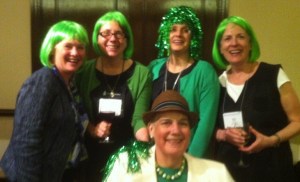 Note: It’s Cindy Bolbach Week in my head, so I’m thinking of her wisdom as we approach the 3rd Sunday in Advent.
 Note: It’s Cindy Bolbach Week in my head, so I’m thinking of her wisdom as we approach the 3rd Sunday in Advent.
  It’s an age-old question, especially for those of us whose job it is to hold people accountable or help shepherd them into a healthier and more faithful way of life. Every day I deal with people in churches who deny that there is any dysfunction in their community/congregation/institution. It’s not that I want to be negative or that I look for the dirty laundry. But it’s really important to face The Truth so that we can become what we were created to be.
 I used to be part of a church comprised of openly broken people. One person said we were like characters from the Island of Misfit Toys. Unlike many of our traditional congregations, this was a church in which people fearlessly shared their depression, their doubts, their relationship conflicts with each other.
 A Church for Starving Artists