When Church is Full of Strangers

blogI served a congregation in Our Nation’s Capital for many years and found Christmas Eve to be a disappointment in terms of what I’d experienced as a child.  Because almost everyone in the congregation was from Someplace Else [Note: most people who live in the DC area are not from the DC area] they returned home to Nebraska or Ohio or South Carolina for the holidays and so either the pews were semi-empty or they were filled with strangers visiting from out of town.

Unlike the Christmas Eve services throughout the nation, there was no children’s choir (they were all visiting grandparents in other states/countries), there was no adult choir (most of them were with their families of origins in the ‘home churches’) and there were no crowds.  I almost forgot was it was like to have full pews for Christmas.

Now I live in a small town south of Chicago where everyone comes home for Christmas and home is here.  On the fourth Sunday of Advent, there were two children’s choirs and two young adults (in high school or back from college) playing a viola duet.  The pews were packed and it’s not even Christmas Eve yet.  On Christmas Eve, there will be three services and all of them will be full.

But back to strangers.  No matter where we live, there will be “strangers” in our pews on Christmas Eve.  Maybe they’ll be the family members or the significant others of family members.  Maybe they’ll be people who walked in off the street curious about this cultural phenomenon called Lessons & Carols.  Maybe neighbors who ordinarily don’t do church will be invited for this one night, to be followed by eggnog back at the house.

But the most important people in the room on Christmas Eve will be The Strangers because Jesus was once The Stranger, so different from everybody else.  So strangely obedient to the Truth of the Gospel.  So unlike others in his own faith tradition.  If nothing else, Jesus taught us how to treat The Other.

Look out for the strangers on Christmas Eve.  If we don’t welcome them on Christmas Eve, we never will.
TEOTWAWKI

school shootingOn the last Sunday of 1999, I preached a sermon called TEOTWAWKI (pronouced TAY-o-ta-WAH-ki) – The End of the World As We Know It.  Of course, the world didn’t change that much, any more than the world as we know it will end tomorrow with the Mayan calendar.  But tomorrow – being the longest night of the year – reminds us that the world as we know it changes forever when great loss occurs.  The longest night is followed by the commencement of increasingly longer days and – Lord – we need more light.

There are several memorable events that have changed my world forever: 

  • The day I met HH in Warrensburg, NY  – my future family began
  • The day my mother died of cancer – my family of origin would never be whole again
  • The day HH and I moved to Northern Virginia – where we would meet the best friends of our lives and raise our children
  • The day my Grandmother died – no more Saturday morning phone calls
  • The day FBC left for college – our family dynamics were changed forever

Some of our losses are minor in a cosmic way and some blast a hole through our gut.  I cannot imagine the staggering changes in the lives of families whose loved ones die from violence.  Here is a story from a member of Fourth Presbyterian Church about her own experience and it gives us a glimpse of the despair.  But we cannot know unless we’ve been through it.

God, please don’t let any more of us go through it.

This is a good day to remember in prayer all those who have lost a family member, a best friend, a home to natural disaster, a part of their own body, their dignity through unemployment or financial despair.  As the snow promises to fall in Chicago today, it’s an especially good day to pray for those whose worlds  – as they knew it – ended in 2013.

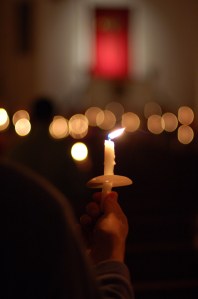
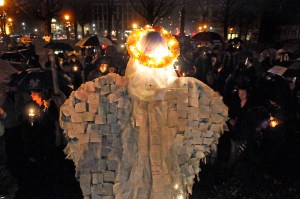
Image from candlelight vigil in memory of  Sandy Hook Elementary School principal Dawn Hochsprung.

Greed Is A Spiritual Issue

grinch

I heard on the radio yesterday that the weapon that killed the Sandy Hook children and adults is the best-selling semi-automatic rifle in the United States.  Dick’s Sporting Goods in Newtown recently announced that they were suspending the  sale of these weapons “out of respect for the victims and their families, during this time of national mourning” but they will return to the shelves in due time.  They bring in too much profit to remove them from the shelves forever.

Walmart, JC Penney, and Kohl’s make clothing at the factory in Bangladesh that burned to the ground, killing 110 workers.  In the past six years, 600 workers have died in Bangladesh in factory fires like this one.  Why does this happen?  Because making clothing in Bangladesh is cheaper for the companies and safety requirements in Bangladesh are lax.  Is it worth the profits that those companies earn if poor people do not have safe work conditions?

Greed is a spiritual issue.

We are all greedy in our own ways.  We want what we want, whether we need it or not.  We covet our neighbors’ cars/clothing/homes/toys even if our own possessions are more than sufficient.  We want more.  For some, it’s a game.

Whether somebody makes $131 million a year (John Hammergren of the McKesson Corporation) or a mere $15.36 million a year (Richard K. Templeton of Texas Instruments, some of our most admired business and entertainment leaders have more money than any human being could possibly need.  This is a little nuts.

But, again, we are all greedy in our own ways.  And we all tend to worship financial security and financial success.

I believe that Jesus made sacrifices for love. What sacrifices do we make to bring about everyday justice and show compassion for other human beings?

  • Are we willing to pay a little more if it means that somebody gets health care?
  • Are we willing to make less money if we know that our colleagues are  working in safe conditions?
  • Are we willing to stop shopping at stores that refuse to pay fair wages to those who make their goods in faraway lands?

One way to fight greed is to practice everyday justice.  Especially in this holiday season, it’s good to remember that we make choices to be just or greedy every day.  (A good holiday read or re-read:  Everyday Justice by Julie Clawson.)

As we continue to mourn the horrible events in Newtown, I can’t help but wonder what part greed played in that tragedy.

Diverse Congregations

We’ve heard the stats:nativity_solomon-raj (1)

  • For the first time in modern U.S.history,  the majority of all Hispanic, Black, Asian, and Mixed Race births reached 50.4 percent of the population.  (Source)
  • The median age of worshipers in the Presbyterian Church (USA) is 61.  (Source)  In the Episcopal Church the median age is 57.  (Source)  In the United Methodist Church it’s also 57.  (Source)  For Southern Baptists it’s 49.  (Source)
  • Only 5 percent of Protestant churches and 15 percent of Roman Catholic churches are multiracial in the U.S. (Source)
  • The number of American mosques increased 74 percent since 2000 and Islamic houses of worship tend to be ethnically-diverse (Source)

I could go on and on in terms of stats that show both our diversity in congregations and our lack of diversity.  When a congregation describes themselves as “diverse” I have no idea what they mean.

  • Do they have a percentage of non-white members in a predominantly white church, or a percentage of white members in a predominantly non-white church?
  • Do they have a mix of gay and straight members?
  • Do they have a variety of ages?
  • Do they have a variety of political perspectives?
  • Do they have a variety of socio-economic backgrounds?

One of the most unexpected sources of diversity in congregations, from my experience, is theological  – although most members are basically unaware of the breadth of their heterogeneity.  Church people tend to believe that the person sitting beside them in worship generally agrees with them on matters of heaven, hell, and salvation.  They might find it shocking to learn that some of their brothers and sisters in Christ at table with them at the monthly potluck have ideas about ordaining GBLT members that are the opposite of their own.

Churches are finding that they don’t know who they are, what they stand for, or “what they believe.”  It’s all part of the postmodern struggle to replace the importance of “right beliefs” with  belonging to a community and behaving according to the expectations of that community.  In this realm, we are quite diverse.

What are you finding in terms of congregational diversity?  Is it hidden?  Is it obvious?  Is it absent?

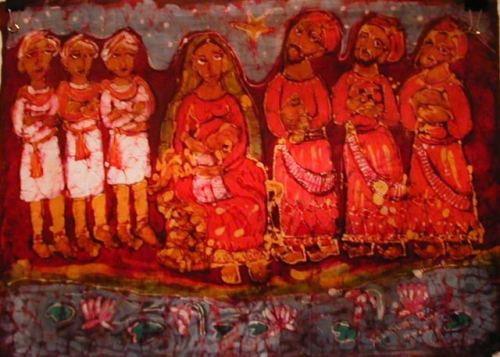
Diverse images of the Nativity can be found here.

Being Known

I’ve heard the following comments at Funerals Past:

“I didn’t know the deceased at all, but I understand he died of a heart attack.  I had a heart attack once and it was the best experience of my life.” – Protestant Pastor preaching at the funeral of a non-member

“_____ never uttered a cross word to anyone.  He was a saint.” – Daughter of the deceased ignoring the fact that her father was a bully to everyone who crossed him including his own pastor.

Cindy's stole 2You get the picture.  I’ve been to funerals that erroneously lionized the dead.  I’ve been to funerals that never mentioned God.  I’ve been to funerals that were joyless and faithless.  Perhaps you have also been to these funerals.
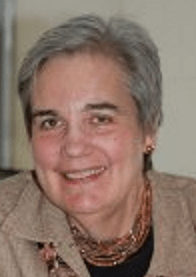
Over the weekend I had the privilege of attending my spiritual sister Cindy Bolbach’s funeral.  Many of us will miss her for the rest of our lives.  You can read more here and here.

This was perhaps the most powerful, joyful, and faithful funeral I have ever attended and it’s because 1) it was led by people who really knew Cindy from a variety of perspectives (work, church, friendship, family) and 2) the focus was Jesus.

My own call story involves a time when – although I knew I was loved by my family and friends –  I felt totally alone in that they did not really know me.  They knew sides of me, but they didn’t know the depth of my pain, the breadth of my doubts, the width of my existential loneliness.

Then something happened.  On a dark of the soul when I had reached the pit, I felt an overwhelming and all-consuming sense that  – because of Jesus – God was the only One who truly knew me.  And I was going to be alright.  And my calling in life would to share this truth with other people who feel alone and unknown.

Christianity is the only religion in which a person is the “decisive revelation of God” in the words of Marcus Borg.  The decisive revelation for Jews is the Torah and Moses revealed it.  (He is not himself the revelation.)  The decisive revelation for Muslims is the Koran and Muhammad revealed it.  (He is not himself the revelation.)  Jesus is the Word made flesh, God in human skin.  Jesus is the revelation.

I believe that because God came to earth, that even though Jesus was a Jewish male person living 2000 years ago, I am known in a complete and holy way.  The intimacy of being known is an unspeakable treasure . . .

. . . which brings me back to Cindy.  There were things she knew about me, things I knew about her.  Through Cindy I got to know other precious friends.  It was a close and joyous friendship, and a huge part of it was about God – that ongoing conversation about what God was calling us to do and be.  We talked about it in our homes and on vacations and at bedsides and over wine and we laughed a lot.  It’s terrible to lose that friendship but who could wish her back to endure more?  I also believe that now Cindy knows fully, even as she was fully known – only by God.  So grateful.

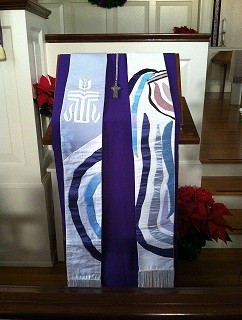
The photograph is of Cindy Bolbach’s Moderator’s Stole and Cross taken at her funeral service on December 15, 2012. Cindy was the Moderator of the 219th General Assembly of the Presbyterian Church USA.

So Grateful

Cindy closeupIn life and in death we belong to God. 

I’m taking a break from posting for a couple of days.   What will we do without our Cindy?  We will be a better church, better friends, better children of God because of her influence.

[Note:  Ruling Elder Cynthia Bolbach died Wednesday, 12-12-12.  She was Moderator of the 219th General Assembly of the Presbyterian Church USA 2010-2012.  You can read more here.  I have long loved this woman.]


What I Continue to Learn from Cindy Bolbach: We Hate Cancer

Cindy Green WigsNote:  It’s Cindy Bolbach Week in my head, so I’m thinking of her wisdom as we approach the 3rd Sunday in Advent.  

I hate cancer.

Breast cancer is my special enemy.  I also have profound hatred for Non-Hodgkins lymphoma, liver cancer, cancer of the uterine lining, and . . . really, all of it sickens me.

I’ve watched cancer steal the body shapes, appetites, hair-dos, energy levels and souls of people I love.  I have – most devastatingly – observed cancer sapping the faith of previously faithful people.

What Cindy has taught me is that There Is A Will To Live beyond common wisdom and understanding.  I’ve witnessed hopefulness when no thinking person would still have hope.  I’ve participated in gallows humor that kept us sane.

The exquisite E. (the tiny one) has shared that her father – the forester – knew when pine trees were about to die because they produced an enormous number of pine cones just before their lives ended.  Human beings do this too.

And yet, even when it looks like cancer has won, it hasn’t.  There is something beyond this life.  I really have to believe this.

What I Continue to Learn from Cindy Bolbach: Not All Hymns Are Equal

John Calvin was the Mascot when Cindy Bolbach stood for Moderator of the 219th General Assembly in 2010

John Calvin was the Mascot when Cindy Bolbach stood for Moderator of the 219th General Assembly in 2010

Note:  It’s Cindy Bolbach Week in my head, so I’m thinking of her wisdom as we approach the 3rd Sunday in Advent.  
Yes, yes, we all know that new hymns often use fresh lyrics set to popular music. Supposedly Ein’ Feste Burg was the tune of a drinking song in 16th Century Germany, but in truth Martin Luther wrote the tune himself – along with the lyrics to A Mighty Fortress – probably while drinking a hearty German beer.

John Calvin wrote I Greet Thee, Who My Sure Redeemer Art set to a tune in the French Psalter about the same time that Luther was composing A Mighty Fortress.  Maybe he was drinking a glass of French wine during the process, or maybe not.

These are two of the greatest hymns ever written.  And here’s my point:  great hymns are written by great theologians.  Recently a seasoned pastor told me “There are no good new hymns anymore because there are no good new theologians.”  I respectfully disagree.

All of us are theologians.  Even atheists are theologians. (Simple:  There is no god.)  But the deeper our faith, the more profound our theology and the most creative among us can put that to poetry and music.

Not all popular songwriters are deep theologians, but there are some amazing songwriters today who stir something in us which connects us to God – maybe not with resounding organ sounds but – still – with deep meaning.

Jesus Is My Boyfriend music doesn’t do it for me and I don’t see that message as sound theology.  But everyday, theologians continue to write amazing music and lyrics.  And some of us are still stopped in our tracks by those 16th Century favorites.

What I Continue to Learn from Cindy Bolbach: Elders Rule

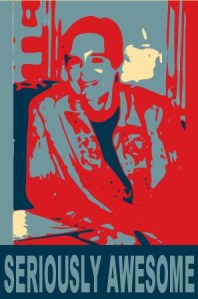
Cindy Seriously AwesomeNote:  It’s Cindy Bolbach Week in my head, so I’m thinking of her wisdom as we approach the 3rd Sunday in Advent.  

We in the Presbyterian Church (USA) call clergy and elders Teaching Elders (clergy) and Ruling Elders (non-clergy).  This ticks some people off because they say (and, to be fair,  it’s true) that ordinary, non-churchy people have no clue what a “Teaching Elder” is.  They know the terms Pastor, Priest, Clergy, Minister (the most misused term), and even Teaching Pastor, but most people don’t know the Greek word for elder, etc.

Nevertheless, we Presbyterians believe that both kinds of elders are equal in calling and this designation (Teaching Elders & Ruling Elders) notes this.  This is who we are as Reformed Christians who lift up the priesthood of all believers as one of our Essential Tenets.

My favorite Ruling Elder served as Moderator of the 219th General Assembly of the Presbyterian Church USA.  She is brilliant, witty, generous, and without question a minister in the Church of Jesus Christ.  She reminds us all that Ruling Elders rule.  Which brings me to the ecclesiastical whirlwind known as Advent.

Every parish pastor I know is Very Busy right now.  In addition to the usual unrelenting duties of Ordinary Time, Advent piles on the extra worship services,  hanging-of-the-greens, pageants, concerts, staff parties, and – like clockwork – more pastoral care needs.  From the person who wonders if he should ask his beloved to get married in 2013 to the person who is retiring to the family whose losses are more profound in this season, there is always more pastoral care in these last weeks of the calendar year.  All Teaching Elders I know are overwhelmed with holiday ministry.

So, here’s my question:

How many Ruling Elders – who are obviously also leaders in these busy days in the life of a church – are also finding their ministerial responsibilities increased?  I have the sense that many of our elders are not particularly busy leading their congregations.  Sure, they have responsibilities like decorating and preparing for family events.  But I wonder why Teaching Elders are the only ones who feel like this season gives them more ministerial duties.  What would happen if Ruling Elders took some of these tasks because . . . they are Ruling Elders and it’s their job?

What if our ruling elders were equipped to:

  • Visit the sick without feeling less official than a Teaching Elder who visits the sick?
  • Teach Advent classes because they were confident in their own theological chops?
  • Coordinate one of the extra worship services because the Teaching Elder relinquished that responsibility knowing that the Ruling Elders can do this well?

Advent doesn’t have to be a vortex of craziness for clergy – and aren’t we missing the point if we insist on it being a crazy season?  In Reformed Churches, at least, Elders Rule.  Let’s lead our congregations in preparing for the Coming of the Lord together.

Believing (Difficult) Truths

But speaking the truth in love, we must grow up in every way into him who is the head, into Christ.  Ephesians 4:15

How do we get people to believe us when we share the truth in love?

The Key by Jackson PollockIt’s an age-old question, especially for those of us whose job it is to hold people accountable or help shepherd them into a healthier and more faithful way of life.    Every day I deal with people in churches who deny that there is any dysfunction in their community/congregation/institution.  It’s not that I want to be negative or that I look for the dirty laundry.  But it’s really important to face The Truth so that we can become what we were created to be.

Examples:

  • A church program is totally controlled by One Person who wields Great Power, and even though it no longer feeds anyone’s soul (except the person in power) it continues because people are afraid to challenge the viability or the effectiveness of the program. So: they never challenge the bullies or the power players.
  • Patterns in spiritual communities are obvious to everybody except those in the communities.  They just can’t see it or they don’t want to see it.  And so they keep hiring the same dysfunctional staff people or they refuse to make the necessary shifts or they choose to argue about silly things instead of Important Things. So:  they keep making the same mistakes over and over again.
  • Pastors continue to perpetuate tired patterns, refuse to do something bold and scary,  and fear obeying God because of what that might mean.  So:  they stick around too long, doing damage as they pretend that there is no good reason to make a change.

Sometimes I tread carefully as I share what I see in a church’s life.  Sometimes I just come right out and say it.  This often doesn’t go well, because people don’t want to hear that Changes Are Necessary.  How do we help people notice what’s really true about ourselves (me included)?

Image is The Key by Jackson Pollock (1946)