First Say “Hi”

It’s annoying and perhaps offensive when someone tries to tell us something we 1) already know and 2) have known a long time.

For example, I once worked with a seminarian who was constantly explaining things to me like “There’s this amazing scholar named Walter Brueggemann“) as if I not been quoting Brueggemann for 20 years in my sermons.  It was a sign to me that she hadn’t noticed who I already was and what I already knew.

In relationships, though, we often need to teach our beloveds how to care for us – even though we wish they could read our minds and just know.  Early on in marriage, HH and I had this exchange at the end of a long work day:

Me:  What a crappy day.  Ugh – traffic, mean people, no break for lunch.

HH:  You need to (fill in the blank with a litany of helpful things)

Me:  No.  This is the moment when you are supposed to say, “Everything’s going to be alright.”

HH:  Everything’s going to be alright.

Me:  You are the Best HH Ever.

So, here’s the deal:

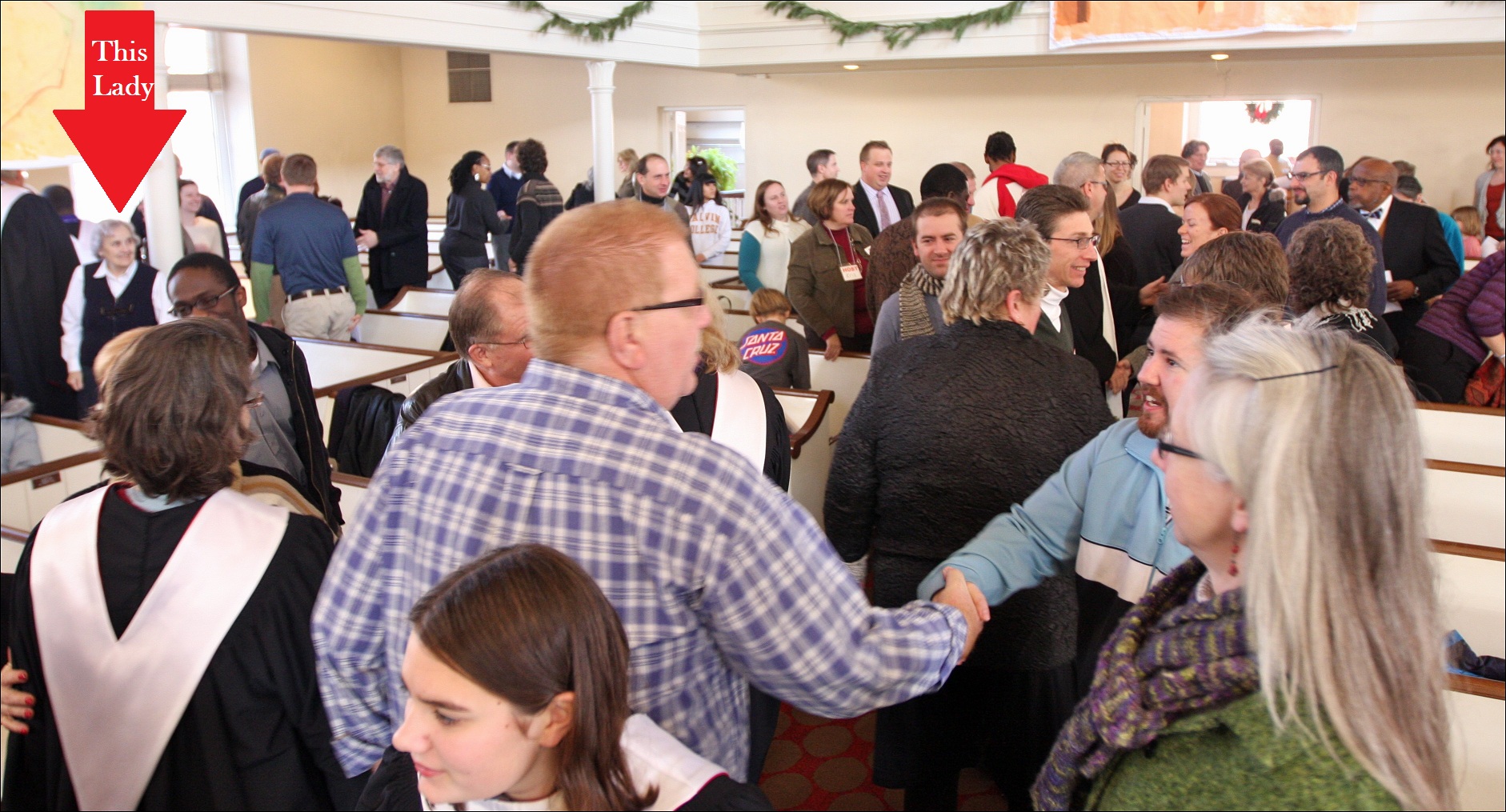
At the risk of offending all our “friendly congregationswe need to teach people what they are supposed to say when they see another human being at a church event – especially a person they don’t already know.

First you say, “Hi.”  You could say, “Hi, my name is ___.”  Or you could say, “I’m not sure we’ve met before, but my name is _____.”  And then . . .

  • Remember their name and introduce them to one of your friends (not to ditch this person, but to genuinely connect him/her to another)
  • Ask a real question or make a real comment (“I love your sweater” – if you do; “Have you been part of this church for a long time?”)
  • Walk. With. The. Person. To. Coffee. Hour.
  • Find out three things about this person.   Look the person in the eye and remember.
  • (If you are really interested in connecting) Invite the person to join you for something to eat.  Maybe a few of you already have plans.  But especially if you are going out for brunch, pizza, more coffee, invite this new person.

Our Presbytery Staff is reading Jim & Casper Go To Church which tells the story of Jim Henderson (a Christian) and Matt Casper (an atheist) visiting ten churches during which Matt gives his take on what that congregation seems to be about.  One of their top observances is that almost nobody talks to them.

For churches that universally consider themselves to be both “friendly” and “interested in growth” this is a totally strange phenomenon.  And I can’t help but agree.

In the past three weeks, I have worshiped with five church communities – most of which I’d never visited before.  My communication with most of those I met involved mime:

  • Someone silently handed me a bulletin.
  • Someone pointed to where I could sit.
  • Someone opened an interior door and looked annoyed that I was late.

Nice but no cigar.  I am a Myers Briggs Introvert, but I can put myself out there and talk to people.  I’m happy to do this, but honestly, it would be great for all our congregations to learn how to greet someone they don’t know.  All our congregations need some in-service training on this.  Really.  “First, look the person in the eye and say, ‘Hi.'”

Four Churches Re-form Today!

Portrait of Martin Luther (1529) by Lucas Cranach the Elder

There is so much to be reformed in the church.  I’m reading this book – more about that later this week – but Henderson & Casper (“The Friendly Atheist”) point to enough opportunities for institutional church change to exhaust a person.

Nevertheless there is reason to rejoice:  four communities in my life are making brave steps that will transform their neighborhoods:

Church-Beside-the-School is voting to call a new pastor who looks nothing like any pastor they’ve called before.  She prepared for one of her interviews by researching how many students at the school next door were on free/reduced lunch.

Ghanaian-Church-in-the-City will commission their new Pastor today.*  He will continue to do his day job in finance, but because he speaks Twi, loves Jesus, and can lead a people, he will also be commissioned to administer the sacraments and preach among this particular congregation of people who hail from Ghana and now live in Chicagoland.

Famousish-Emerging-Church will celebrate their new home in West Rogers Park with music, pumpkin-carving, and Poetry Vespers.  They will be sharing a pastor with another, more traditional congregation in the same worship space.  Centered, Generous, Dynamic Faith will continue to flourish in a new neighborhood, later partnering with a community in yet another neighborhood as well.

Ebenezer-New-Church-Plant will formally launch the ministry of my friend and former colleague, Matt Pritchard, as he’s licensed to preach in the Mennonite denomination, planting a new congregation called Ebenezer in the Oaklands neighborhood of Pittsburgh.

Reformation Day Challenge:  Can you name one thing your spiritual community has done in the past year to reform its ministry?  Not a rhetorical question.  I’d love to hear what you have to say.

Happy Reformation Sunday.

*The PCUSA – my denomination – allows for churches to be served by what they call CREs – Commissioned Ruling Elders.  Previously these servants were called CLPs – Commissioned Lay Pastors.  The Presbytery of Chicago is still calling them CLPs but it stands for Commissioned Local Pastor.  WHY do we need our own acronym?  Here’s why:  All Ruling Elders are commissioned.  All of them.  And “lay pastor” is a misnomer in that all Ruling Elders and Deacons are no longer “lay” anything.  If you are ordained to serve in any way, you are no longer a lay person.  Please stop referring to Ruling Elders and Deacons as “lay people.”  Remember the priesthood of all believers?  It’s not just for Reformation Sunday anymore!

Politics and Parenting Reprise

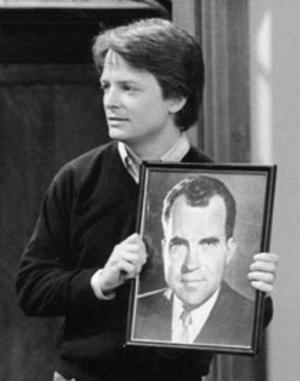
There was a popular TV show in the 1980s called Family Ties about Boomer Parents and their Gen X firstborn.  Elyse and Steven are Democrats (Dad works for Public Television, for Pete’s sake) and their son – Alex P. Keaton – is a conservative Republican.  Sitcom hilarity subsequently ensued.

According to this recent article, from information first published in Psychological Science, researchers have determined that authoritarian parents tend to raise politically conservative children and egalitarian parents tend to raise politically liberal children.  In other words, Alex P. Keaton would be an anomaly.

We adults define “good children” in different ways.  Some of us define “good children” as being compliant and obedient.  Others of us define “good children” as being fearless and inquisitive.  Which temperament would you prefer to have in your real or imaginary children?

Conservative families tend to have more fearful children, according to this article.  Their children are more afraid of breaking the rules, getting into trouble, and being excluded if they go a different way.   Have you found this to be true in your family or in other families you know?

Liberal families tend to have more fearless children.  Their children are temperamentally more restless and focused on activities.  Have you found this to be true?

As I’ve shared before, there seem to be two basic parenting styles.  And while it’s really easy to peg people and their their children, I am amazed when parents raise children who see the world in a diametrically different way than they do.

Republican parents tend to raise Republican children.  Democratic parents tend to raise Democratic children.  Or do we?

Cosmic Sabbath

For the past 20-some years, I have experienced what can only be called a Cosmic Sabbath, twice a year.  This is my way of explaining how I sometimes get sick during the busiest weeks of my working life.  It often happens Holy Week.

It happened this past week, just after I finished reading the exquisitely written Sabbath in the Suburbs.  Actually, I read it twice.  The second reading was especially inspirational in my role as a wife and mother, not to mention a person who is supposed to be professionally spiritual.

This is what I learned from a week of coughing, gargling, napping, and sultry whispers during which I missed several Very Important Meetings, Phone Calls, and Emails.  In hopes of surviving a week of the cruds, I channeled the amazing MAMD and others who reminded me that:

  • I am not indispensable as much as I’d like to think I am.
  • Floating Sabbaths (a Tuesday afternoon here, a Wednesday morning there) don’t work.
  • Sabbath is not the same as “Family Time.”
  • Doing things “Sabbathly” is such a good idea.
  • Vick’s Vaporub is a miracle ointment.

At the risk of sounding Mourdockian, God has a way of slowing me down when I consciously or unconsciously act as if I’m All That.  But what makes this different from believing that overworking is “something God intended,” I realize that this is my choice.  A poor choice.

Why do we believe that not keeping the Sabbath is an okay commandment to ditch?

What I’d Like to Say to . . .

This is what I’d like to say to . . .

People on both sides who remove political signs from people’s yards:  Stop it.  What is wrong with you people?

Indiana Republican Senate candidate Richard Mourdock  who made that comment about it being part of God’s plan when someone gets pregnant because of rape:  This is terrible theology.  Not only is it  unorthodox, but it repels people from the God we worship.  God has given human beings free will which means that God’s finger is not on every trigger, every steering wheel, and every hand on the proverbial apple.  Stop it.  Read your Bible, sir.  God can use even evil for good.  But God is not responsible for all the evil

Seminary Curriculum Administrators:  Please teach our seminarians how to serve the 21st Century Church, even if it means messing with tenured professors’ lesson plans.  We don’t need any more seminary graduates trained in serving churches that no longer exist.  Please hire leaders who have actually been engaged in Missional Ministry, Making Disciples, Third Place Ministry, and Entrepreneurial Community-Building.  I can get you a list of people who know how to do this.  Please.

The Makers of Delsym Night Time Cough & Cold Medicine:  The worst is over.  We’re almost through this  cold.  Not sure if you were more helpful than soup and tea, but thank you for not tasting awful and doing your part.

Hoping to get back to the office today.

New Habits for “Nones”

The downfall of the institutional church, in my humble opinion, has been the fact that we church people spend most of our time with other church people.    Big mistake.  We need some new habits if we hope to connect with “the nones.”

Easum & Brittain’s new book is about how we must staff churches in a world where one in five people self-identify as having no religious affiliation. The facts show that fewer and fewer church members are “coming to church” so how can we expect never-churched people to come through our doors?

And because I’m sick and don’t have the energy to do much more than quote people, consider this from Easum & Brittain:

Because people no longer come to church on their own, the church must spend most of its time, energy, and money filtering people out into the community.  The measurement of effectiveness shifts from ‘how many in worship?’ to ‘how much difference is the church making in its efforts to transform the city?’

The question ‘What is God doing in our community that we can be a part of?‘ is replacing, ‘How can we get more people to come to church?’

Easum and Brittain would also say that the smaller a church, the more time the pastor must spend in the community – not in the church office.  Take note Personnel Committees!

We need to develop new work and staffing habits if we hope to reach out to “the nones.”  And before we reach out to them, we need to know why we are reaching out.  Clue:  it’s not to get them to join our church.

Excellent conversation starter, if you are hanging out with your church friends:  watch the most recent episode of The New Normal (The Godparent Trap, aired 10-23-12.)  How would your church relate to Bryan?

Image from the London Nun Run in 2009.

What a Courageous Pastor Looks Like

The most courageous pastors are prophets.  But most congregations don’t want their spiritual leaders to be prophets.   When people gather together for worship after a busy, stressful week, most of us would prefer to be comforted, cheered, and congratulated, not nudged, challenged, and held accountable.

Nevertheless God has called those of us in professional ministry to be brave – even if it ticks people off and threatens our personal and professional lives.

It’s not easy being a courageous pastor especially if:

  1. We are dependent on the paycheck we receive from the very congregation we risk offending when we proclaim the Word of God in love.
  2. We serve a church that does not respect our authority or trust our vision.

What does a courageous pastor look like?

  • A courageous pastor is more afraid of God than his/her congregation.
  • A courageous pastor is an equal opportunity offender.  (We don’t always side with the Republicans, the Democrats, the new members, the long-standing members, the rich, the poor, the most active members, the least active members, etc. etc.)
  • A courageous pastor preaches the Word of God, even if it confounds and offends everybody.
  • A courageous pastor stands up to bullies, even if the bullies are the biggest contributors,  hold the historical power, and will do ungodly things that we – as the pastors – cannot and will no do ourselves in retaliation.

Every single pastor will deal with bullies if she/he stays in professional ministry long enough, and this experience is excellent for our prayer lives.

My own personal experience with bullies a few years ago is what made me more fearless because I learned that, even when people believed the worst about me after some serious defamation, God was faithful.   We follow a Prophet – and Savior – who was rejected to the point of death.  And – still –  love won.

Being courageous is dangerous.  But courageous congregations are lead by courageous leaders, and they are the ones who will actually transform the world in the name of Jesus.

Image of the prophet Jeremiah by Chagall.  (Notice how haggard he looks.)

The Courageous Church

I would love to say that most of our institutional spiritual communities are very brave, but I’m not sure I believe that.  (That’s Southern Speak for I don’t believe that.)  It’s understandable that most of our congregations – especially those under a membership of 150 –  find themselves in survival/scared mode.

God makes us brave.  A sure awareness of the Holy Spirit fills us, not only with a peace that passes all understanding, but also with a confidence beyond all understanding.  And these are the perfect days to call on God to make our congregations courageous.

This is what a courageous church looks like:

  • They call the Pastor that the Holy Spirit tells them to call, even if she/he doesn’t look like a) the typical pastor and/or b) the kind of pastor who has always served their congregation.  In other words:  No More Pulpit Candy.
  • They have The Conversation about doing something drastic about their worship space:  remove pews?  shift seating arrangement?  sell the @&!x# building?
  • They encourage/implore/require their pastor to spend more time in the community than in the church building.
  • They come together ready to learn how to be deployed to serve a broken community, rather than gathering to be taken care of   themselves.
  • They stick their lives into other people’s crazy.  They are willing to sit with the chemo patient, eat lunch with the homeless person, listen to the illiterate child learn to read, go with the arrested kid to the police station.
  • The last things on their minds are:  I need a nice venue for my funeral/my daughter’s wedding/my grandchild’s baptism.

What else would you add to this list on a lovely Monday morning?

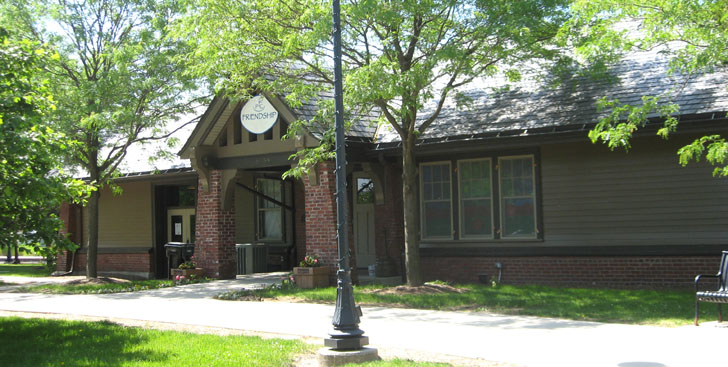
Image is of the building where one of the most courageous churches I know gathers for worship in Chicago.

Hallmark and The Missional Church

Let’s talk about greeting cards.

Every church has at least one lady who sends greeting cards to church members.  Birthday cards. Get well cards. I’m-praying-for-you cards.  We sometimes call this a card ministry.  But I wonder how effective this is as pastoral care for a 21st Century Church. As I leave a conference about offering pastoral care to caregivers, some of us were talking yesterday about the dear ladies who send the cards.  For a certain generation, sending a card is one of the most thoughtful gestures of affection.  To other generations, it’s not at all meaningful, especially when it comes with a platitudinous blurb or just a signature. My grandmother always sent me a birthday letter about the day I was born and I have dozens of them.  They are almost identical as she sent the same tale every year. Those are precious letters, written thoughtfully and with some effort especially in her older years. SBC used to get a card from a church lady for his birthday, but she didn’t have his name right. Ever. I’m sure she meant for the cards to be a meaningful gesture, but they struck SBC as a inauthentic.  She didn’t even know his actual name. One older lady I know was hurt when her daughter didn’t send a birthday card to her.  The daughter had taken her mother out to dinner and given her flowers.  But there was no card.  Fail. A guy told me yesterday that people under the age of 40 find greeting cards to be a fake form of showing real care – unless the card contains a personal note or a check.  This seems to be a generational preference.  What seems thoughtful to some seems inauthentic to others. Having said this, we all need to send Thank You notes – real, handwritten, heartfelt thank you notes. Do it for your grandmother.

Toast

I thought the Disaster Alert Phone App would be good for my prayer life.

Just one click and I’d have access to all kinds of prayer-worthy crises from floods to earthquakes to tropic storms to fires.  As I write this, there are three earthquake watches, five tropical storm alerts and two hurricane warnings in The Top Ten Disaster Alerts.

Actually, this App stresses me out instead of moving me to prayer.  I already have enough disasters on my prayer list.  In fact, I am a magnet for disaster news . . .

which is why I’m at this Conference on Compassion Fatigue Prevention & Resiliency – for personal as well as professional reasons.  We hope to upgrade the Pastoral Care to Pastors in our Presbytery.  But I also need to learn these skills personally.

Before I left my last congregation in Virginia to join HH, who’d been called to serve a church in Chicagoland, a parishioner asked me what I’d be doing next and these words almost burst out of my mouth:

I am exhausted.  I just need a break.”

I didn’t mean to shock her but she appeared a little shocked as if she was thinking, “What does she have to be so exhausted about?”  It’s not like I was a pastor in Katrina-ravaged New Orleans or earthquake-destroyed Port Au Prince.

The truth is that the unrelenting nature of professional ministry is what makes the profession hard.  It’s like being the pinball in a spiritual arcade, and even we pastors are disciplined in taking a Sabbath, it’s just one day off with a different set of demands. Compassion fatigue is a real issue for pastors – and others – especially when we are not inoculated against it.

Pastors are among the most isolated people in the world, according to the Presbyterian Disaster Relief trainers meeting with us this week.  In the 1950s, professional ministry was considered the healthiest profession in the U.S. and now it’s considered among the least healthy.  Clergy have an extremely high incidence of obesity, depression, alcoholism, and high blood pressure.  All empathetic people – whether we are teachers, doctors, social workers, or fire fighters – tend to be good at pastoral care, but we are also more at risk for Compassion Fatigue which – if left unattended – can lead to all manner of inappropriate behavior.

A friend of mine tells me that her family has a motto:  Don’t put your hand in the crazy.  Clergy people  have intentionally chosen to put our whole selves in the crazy.  It’s called incarnational ministry.

But if we don’t build resilience or strengthen our refueling tools, we will feel like toast.