Who Needs Pastoral Care?

I’m writing from Epworth By the Sea in Georgia at the Presbyterian Pastoral Care Network, and feeling a bit like a Pharisee.  The point of this conference is to discuss the pastoral care of our pastors and their families and I’m  a big fan of pastoral care for pastors and their families.

On the one hand:

We were asked last night to share an example of a pastor we know who has received stellar pastoral care and one woman could not think of a single example.  She has personally never been honored for her service (almost 30 years) by the churches she’s served.  She has never had a colleague reach out to her in times of stress.  My hope is that she would initiate her own circles of care.  But –  honestly people –  we need to appreciate our pastors and support their families.

On the other hand:

As I hear conversations about the stresses of pastors – and believe me I know about those stresses – I’m cognizant  that everybody seems to have this kind of anxiety these days.  Forgive me, pastors, but who doesn’t have overwhelming stress today?  Is it true that many are receiving every drop of attention from us and there’s nothing left for our own self-care?  Or are only a handful of people getting the spiritual support they need?

I’ve witnessed many congregations doing a terrible job of thanking their pastors.  This is Pastor Appreciation Month – a recognition initiated by the Focus on the Family people – but worthwhile in terms of appreciating those who offer spiritual leadership.

But in a healthy church, the pastors are training others to be spiritual leaders.  Is the issue that we fail as pastors to equip others to serve as ministers?

There’s a lot of talk at this conference about “ministers” and “lay people” and this is the basic problem.  We are all called to be ministers.  The lay people are those with no training and no call to serve the offices of ministry (elders and deacons in the PCUSA tradition.)

There are whole congregations that do not give helpful pastoral care to its people.  A community is transformed when everyone is trained how to care for the lonely, the overwhelmed, the sick.  Yes, there are those without the capacity to care for others.  But most of us can learn the basics.

We all need pastoral care.  And everyone can be taught to offer it.


What I’ve Learned

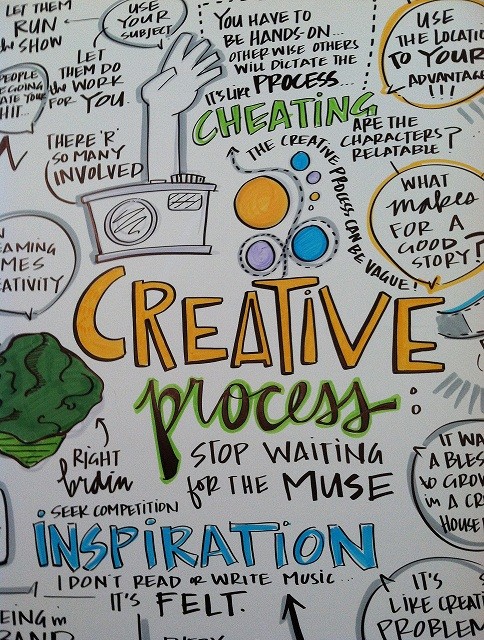
Between Chicago Ideas Week – which ended today – and my whirlwind visit to the NC State Fair and my Introduction to the New Beginnings program of the PCUSA, I’ve learned a couple things in the past several days.  As I head down to St. Simon’s Island, GA to learn about pastoral care networks, here are several  nuggets to consider.

What I learned from:

  • Lauren Drain It’s important to allow questions in our faith communities, and if our church doesn’t allow questions, look out.  TAKE AWAY FOR CHURCH: Church should be the one community in which it is always good to ask questions.  There are no stupid questions.  There are no faithless questions.  If our kids are not asking hard questions they aren’t paying attention.
  • Leah Libresco Even the most committed atheists can change their minds.   TAKE AWAY FOR CHURCH:  Answer those questions honestly and love lavishly and you never know what God will do.
  • Julia Sweeney Even a religious upbringing doesn’t guarantee lifelong faith in God. TAKE AWAY FOR CHURCH:  Love people even when they let go of God.
  • Kiel Murray Collaboration & brutally honest feedback sparks the best from us.  TAKE AWAY FOR CHURCH:  We need to trust each other enough to be held and to hold others accountable.  We need to be able to say, “Your sermons are not growing disciples, this Peach Festival is not reaching the neighbors, our Bible Studies have become gossip sessions.”
  • Karen TenkhoffResearch is essential.  If they are making a movie about scuba diving, for example, everyone from the screenwriters to the editors to the gaffers go scuba diving.  TAKE AWAY FOR CHURCH:  Everyone needs to be on the same page working towards the same goal – from the music director to the sexton to the clerk of session to the pastor.  If the goal is disciple-making, then everything each individual does should be about disciple-making.
  • Brian Bowen Smith – “I don’t just look at the subject of my photographs; Context is everything.”  Are we in a studio?  At the beach? In an airplane hangar?  TAKE AWAY FOR CHURCH: The way we work is impacted by our context (aka missional or incarnational church.)  If we serve in a biker community, it’s different from serving in a country club community.
  • Brandon Boyd“Art is creative problem solving.”  TAKE AWAY FOR CHURCH: Instead of bemoaning the issues we face, why not approach them creatively?  Parking problems?  Partner with the Tattoo Parlor with plenty of parking.  Huge building with too many pews?  How about taking out the back 30 pews and create a space for an art gallery or children’s play area or an expanded hospitality center.
  • Scott BelskyCreativity x Organization = Impact.  TAKE AWAY FOR CHURCH.  We need both 1) creative leaders (those with great ideas) and 2) organized leaders (those who make the trains run on time) to have an impact in our community.  Dreamers need doers.  Doers need dreamers.
  • Susan Meier, Our New Beginnings Consultant – We used to believe that Trying Harder would move churches ahead.  Now we know that Doing More doesn’t necessarily help.  What’s needed involves doing a Completely New Thing.  TAKE AWAY FOR CHURCH:  Amen.
  • NC State FairAn experience is enhanced by sensory treats.  The Smells (Fried Dough, Bar-B-Que, Caramel Apples, Chickens, Donkeys), the Sights (Pig Races, Tractors, Mega-sized Pumpkins), the Textures (Cotton Candy, Straw, Pottery),the  Sounds (Carnies Calling Us to Play Whack-a-Mole, Screaming Roller Coaster Riders, Cows Mooing), and the Tastes (ham biscuits, fried Snickers Bars.) TAKE AWAY FOR CHURCH:  God has created too many sensory experiences for us to bore people with bland worship.

May you learn amazing things this week.

Ideas Week: The Gamification of the World

It’s Ideas Week in Chicago!

When I was a parish pastor, some volunteer leaders came up with fun names for ordinary jobs to keep things interesting: Flower Czarina (the person in charge of Sunday morning flower arrangements) and Coffee Queens (those serving refreshments after worship) were among my favorites.

When we toured the Tribeca Flashpoint Academy for Chicago Ideas Week on Tuesday, I noticed they did the same things with the naming of their rooms.  The  library is called the Info Commons.

Howard Tullman spoke of the gamification of the world.  Get this:

  • More middle aged women play digital games now than teenage boys. (Hello Farmville.)
  • It’s more lucrative to sell virtual t-shirts than real t-shirts.
  • Building up one’s Klout score  = the game of life?

Again, there are consequences for church.  Just as secular educators have long used games to teach students, church educators have also used games – from Bible Jeopardy to What Would Jesus Do? – The Board Game to make Sunday School more fun.  We prefer to play.

But church is for losers.  We are the screw ups of the world who realize the need for a savior.  The first Christians included some rich and successful souls, but most of them were “sinners and prostitutes.”  Remember this song?  (One of my personal favorites.)

The world might increasingly become “gamified” but we who seek to follow Jesus find ourselves living counter culturally – even though we get sucked into the game more easily than we’d like to admit.  Eventually we get tired of games.

Ideas Week: Going Mocial

It’s Chicago Ideas Week.

Light Bulb Wreath from Howard Tullman’s private collection

Touring Howard Tullman’s Tribeca Flashpoint Academy yesterday – a for-profit two-year college in the heart of Chicago – felt like what I imagine it feels like to tour the USC Film School in LA.  The tour guides were very cool and said things like, “When Tyra Banks was here . . .”

The result is that I felt fairly dorky in my black pea coat and sweater tights.  (Imagine Velma from  Scooby Doo touring the set of Minority Report and you get the idea.)

Howard Tullman has made millions doing entrepreneurial things, and he shared his insights yesterday on what he’s learning.  I could write several weeks worth of blog posts on his commentary.  But for today:  Mocial Networking (Mobile Social Networking)

If you connect with people on the run, you already do this, of course, but imagine these activities – all possible right now –  via your smart phone:

  • Filtering of Data so that we can see what our friends and colleagues are doing as often as they want to tell us.  Imagine Ticketmaster connecting with our Facebook friends so that we can see exactly where our friends are sitting at a concert or ball game.
  • Smart Reach between people and objects.  “It if computes, it connects.”  We can measure when our laundry is dry, how far along our moving van has traveled, or how many people have gathered for a protest via phone apps that send us progress, locations, and data via texts.  Measuring on the go.
  • Real Time Sharing via eavesdrop apps that allow information (e.g. music) to be shared between two friends without those Old School headphone splitters.  In fact you can be in different states and share music or videos.
  • Fully Interactive Engagement in crowds.  In a stadium, everyone can vote on the encore song or voice their opinion on a ref’s call.
  • Fan Solicitation that negates the need for Ticketmaster to promote sales.  For example, if 19 million people are following Taylor Swift on Twitter, you can tell her followers about the new tour dates and they can buy tickets directly from her.  And then your phone can tell you which of your FB friends will be there.
  • Wiki Work makes good use of random time.  For example, after people randomly watched the video of a school bus monitor being bullied, they contributed over $700,000 to fight bullying during the course of two months.

So, as Howard Tullman was flying through double-screened slides of interesting data and analysis, I was probably the only person in the room wondering how this all impacts institutional faith communities.  Off the top of my head, these are my first thoughts about what this means for Church People:

  • Measuring is everything:  Our Klout scores – and similar tools – will determine what we pay for items online.  For example, Tyra Banks will – ironically – pay less for cute shoes because it’s believed that if she loves her new Louboutins, she will tweet about them and millions of others will want to buy their own pair.  If I buy them (which I won’t), it will cost me more because I don’t have her reach mocially.  The church will need to be a community – and perhaps the  only community – that doesn’t care what your real-world influence might be.  We will love you if no one knows your name.  We will welcome you even – even – if you don’t own a smart phone.
  • All this stuff eventually makes our brains hurt.  It’s very cool and yet we need to turn it off occasionally.  (Insert Sabbath in the Suburbs pitch here.)  Church might soon be the one “place” where people are encouraged to take a Sabbath, teach Sabbath skills, and remind people that there is a Creator who is mightier than Zuckerberg.

As I was reading about Howard Tullman after the lab talk yesterday, I came across this quote from the 9-11-12 issue of INC magazine, written by Tullman:

“Too many businesses run into serious problems because they waste time trying to make their circumstances fit their plan rather than changing their plan to fit their circumstances. The longer you benchmark or measure your progress to an irrelevant or outdated standard, the more time you waste and the more ground you give up to the competition.”

I would shift this to say that too many churches waste their time trying to make their circumstances fit their customs rather than changing their customs to fit their circumstances.  The longer we benchmark or measure our progress to an irrelevant or outdated standard (church attendance, church building, church budgets), the more time we waste and the more ground we give up to the competition – i.e. a secular world view.

And that’s what I learned on Tuesday.


Ideas Week: Beyond Sizzle

It’s Chicago Ideas Week and yesterday I attended the CIW Lab on The Interfaith Youth Core, founded ten years ago by Eboo Patel.  Read his book for more.

It’s fun to be cool and having ideas is cool.  We applaud bloggers and other authors with Fresh Ideas although very few ideas are really fresh.  They are simply restated in ways a new generation or a new community can understand and receive.  But ideas without impact mean nothing.

The Interfaith Youth Core has been shifting to the next chapter of its life as a not-for-profit that teaches young adult interfaith leaders, and they’ve learned some things in this transition.  We, in the church, can learn something here.

IFYC has learned the importance of:

  • Picking the one thing you are really called to do.  They could do interfaith work in embassies, prisons, and elementary schools.  But their mission is now limited to colleges and universities in hopes of equipping the next generation of young adults to build religious pluralism.
  • Choosing a staff of rock stars.  Hire a team that others will want to work with.
  • Ensuring that everyone is on the same page.  Eboo shared the story of a janitor at NASA who – when asked one day what he was doing – said, “Trying to get someone on Mars.”  From the janitor to the chief engineer, everyone should have the same mission.
  • Possibly requiring a new team.  If team members are not 100% on board with a new mission, you need a new team.  Otherwise, the old guard will block or sabotage the new mission.

Any of this sound helpful for churches?

Most of all though, the take away from this CIW event was about the importance of impact over sizzle.  Even if people love you, even if your brand is excellent, even if the pastor/educator/musician on your staff is an expert, none of it matters if there is no lasting impact.

As we assess our mission trips, our “special music” and concerts, our Vacation Bible Schools and book groups, what is the deep discipleship we are nurturing?  Even if our elders and deacons are being equipped to serve the people, are they serving the people?

So many times we “come to church,” we participate in Bible studies or discussion groups, we volunteer for mission projects, and we leave inspired or smarter or gratified.  But what has been the result beyond our own edification?

A lot of ideas to ponder on a Monday in autumn.

More than a Good Idea

It’s Ideas Week in Chicago  and – while I’ve never participated before – it feels like Ted Talks on steroids.  Lots of workshops and labs on everything from Quality and Innovation at a Local Brewery to The Meaning of Life (with Patrick Swayze’s widow, among others.)  80+ events with an array of thinkers, dreamers, and achievers:  Colin Powell, Michael Phelps, Diane Von Furstenberg, Stanley McChrystal, Eboo Patel, Jack Andraka (the 15 yr. old who won the 2012 Intel Science Fair), Jon Meacham, Julia Sweeney, Lilly Ledbetter, and Zack Wahls and several hundred more.  Can’t wait.

But here’s the thing:  while ideas are wonderful and we need more of them, ideas without action offer zero impact.  Eboo Patel’s new book focuses on this.   We need to figure out how to equip people to go back to their communities and do the work that makes change happen.

Every day this week I’ll share the idea I’ve learned at a CIW event.  And I’d encourage you – if interested – to follow CIW on twitter to experience the bubbling of multiple creative minds at work.

Favorite idea of the weekend is from Brian McLaren:   As devout Christians (or Jews, Muslims, Buddhists, etc.) living in a pluralistic world, are our only choices to A) condemn those who have different beliefs  (“They are probably going to hell“) or B) water down our own faith to accept other faiths (“We all believe the same thing“)?  No.  McLaren lifts up a third way:  to be able to articulate and practice our own faith which not only forces us to know and do what we believe, but it also strengthens our religious identity while connecting with those who have different religious identities.

I’m a better follow of Jesus because of my caring relationships with Jews and Muslims, for example.  What a concept.

They’ll be much more each day this week.  A feast of the mind and soul  – but junk food,  unless we actually use the ideas for good.

This Is What Hospitality Looks Like

It’s old news that most institutional churches consider themselves to be friendly.  Merely “friendly churches” are dinosaurs.  (And honestly, we aren’t as friendly as we think we are.  I’m talking to you First Church on the Hill.)

We need to teach hospitality skills to our people.   I realize that this will offend many of our long time church members who believe they are already excellent at this.  We are not.  Even as a Presbytery staffer, I have experienced worshiping with people who don’t even look at me, much less tell me where coffee hour is.

But it’s not enough to say that we could be friendlier.

We need to equip nuts and bolts hospitality skills to everyone in our congregation – not so much because we want to treat each other well within the confines of Church World.  The point is that we want to model hospitality outside the walls of the church.  We just hone our skills on Sunday mornings with each other and those who visit as we worship together.

Some basic suggestions that show it’s about The Other (and not about us):

  • Teach church members to introduce themselves to guests and then walk them to coffee hour after worship.  Just announcing that there’s coffee after worship isn’t enough.  Sometimes it’s hard to find where people are gathering- especially if it’s served down the hall or in the basement.
  • Teach people how to get to know a guest for the sake of getting to know the guest.  This is not about pouncing on visitors in the hunt for fresh meat.  This is about being authentically interested in God’s children.  Show members how to introduce themselves and then find out three things about this new person.
  • Create a culture of inclusion and invitation.  If a small group of people is going to brunch after worship, encourage them to seek out someone who seems to be new or alone or really hungry and invite that person to come along.  Church is not a private club.  We are a community of people grappling together with issues of faith and life and new people also like to grapple.  Over food.  Especially look out for a) middle aged women who are often invisible, b) people who don’t look like you, and c) parents who look like they could use a nice salad while someone helps with their toddler.
  • Meet people in the parking lot with smiles (and umbrellas, if it’s raining) and walk them into the building.  Make sure they have what they need:  a coat hanger, the nursery, a bulletin or program.  Connect them to someone else (“Judy, this is Steve”) before you leave them to return to the parking lot to greet someone else.
  • Ask the young mothers of your congregation to come up with a list of helpful tips for those who wish to visit  after the birth of a child.  And then share this list with all those who sign up to take a meal to a family with a new baby.  New moms will tell you the truth:  please don’t bring casseroles in your best china, please don’t stay more than 10 minutes, please don’t make comments about the new mom’s housekeeping or personal appearance.   In my former parish, we found that some well-intentioned visitors – especially those who had not had a baby lately – had no idea how to visit a new mom.  The problem is that they thought they did.

What hospitality skills do you teach in your congregation?  If our churches have a culture of learning – including learning genuine hospitality – we’ll become a really different kind of community.

Doing Something About It

Everyone – and I mean everyone – should be reading Sabbath in the Suburbs by MaryAnn McKibben Dana.  Even if you don’t live in the suburbs.  Even if you don’t think you need a Sabbath.  Even if you think it is impossible to keep a Sabbath.

So many of us complain/suffer/find ourselves in the fetal position dealing with our lives.  We are too busy.  We are too exhausted.  We are overwhelmed.

Why don’t we do something about it?  MaryAnn did and she explains why doing something about it transformed everything from her soul to the lawn mowing schedule.  How do we teach Sabbath to our children who are shuttled from soccer practice to dentist appointments to piano lessons?  Are they all doomed to  etch “Hurry Up, Let’s Go!” on their parents tombstones as MA feared?

And honestly, many of my single friends and retired friends also find themselves swirling in the vortex of calendar-craziness.  How can some people be even busier in retirement than they were as employees?  But it happens.

So what can we do about it?   We can start by joyfully reading this book.  Not only is it elegantly written and intimately revealing, but it might  really stir a hunger that can’t be satisfied until we do something about the gnawing anxiety deep inside every one of us.

And on a personal note:  I started writing this blog six years ago this month because of the nurturing and wildly talented MaryAnn McKibben Dana.  Thank you MA.


Geniuses We Know & Love

I love, love, love the day we get to hear who got Genius Grants from the MacArthur Foundation.

I love this day not because I fantacize about getting one of those calls (not going to happen) but because I like to fantacize about who would get a $500,000 grant if I worked for MacArthur.  Who are the geniuses I know who could do exceptionally creative things with a half a million dollars?

I’m not talking about smart people who need $500,000 to pay back their student loans or buy a first house.  There are plenty of those.  I’m talking about visionaries who have broad and specific ideas about understanding the world through technology, history, medicine, religious studies, anthropology, literature, music, math, and film.

But seriously, if you were on the selection committee for MacArthur, who would be on your list of grant recipients?  It’s a real question. 

Here are my top candidates and I’m not kidding:

Deb Roepke founded Computer CORE in Alexandria, VA which has taught over 2000 low income adults computer skills while also making it possible for their children to have a computer in the home for their own studies.  She’s now doing other things, but her mind is a fountain of peacemaking, life-changing ideas.

Shawna Bowman is an artist, pastor, and creative genius who models the future of the institutional church.  She is quietly brilliant and could continue to do even more beautiful, extraordinary things with a chunk of grant money.

Kimberly Pendleton Bolles is a Christian, feminist, international development, fashion rock star who has a beautiful brain and a beautiful style.  Remember this name.

TBC is a person very close to me and I hesitate to include her in this list (unalterated nepotism), but she is my ideal of passion, justice-seeking, visionary amazingness.  This week the schools in Charlottesville, VA are using lesson plans that she wrote about school gardens.  She is ridiculously gifted in emotional intelligence, wisdom, global vision, domestic organization.  I would also tell you to remember her name, but she’d be embarrassed.  The girl is going to alter how schools are designed and how cities are focused.  MacArthur might not notice her for another 10 years because she’s only 20.

So, I’d like to know about the ordinary geniuses in your life.  Who should get a MacArthur next year and why?

Image by Uta Barth, one of the 2012 MacArthur Grant winners.

It Costs More to Do The Right Thing


New Balance Shoes are more expensive than most other sneakers.  Why?  Because they are made in America.  New Balance pays their workers a living wage with benefits.

In fact New Balance is the only athletic shoe company still manufacturing shoes in the United States.  Other companies make their shoes in China, and increasingly in Indonesia, Vietnam, Burma, and other nations where workers make about $4 a day in some cases.

Of course we want good deals, but at what cost?  Would we spend a little more money on food, clothing, and other goods if it meant that people were paid fairly?  Would we buy cute clothes from our favorite store even if we found out they were made by children in sweat shops?

It costs more to do the right thing.

Institutional churches are generally struggling financially, but even before this was the case – or maybe it was always the case – some congregations have historically not done the right thing when it comes to paying their staffs fairly.  I can’t tell you how often I hear my Christian sisters and brothers say things like this:

  • If we hire a clergy couple for a single position, we’ll get two for the price of one.
  • Why does our pastor deserve a sabbatical?  I don’t get a sabbatical in my job.
  • She can buy her own computer.
  • Why would we help pay his cell phone bill?
  • Do we have to reimburse our pastor for highways tolls, or just mileage?
  • Why can’t our music minister find a cheaper conference to attend?
  • Do we have to pay for that conference and his room and board?
  • The manse doesn’t really need air conditioning.
  • We can’t afford to give our staff a Christmas bonus.

As I help search committees ponder the Terms of Call for their new pastors, the focus is often on “what we can get away with” rather than “what we can do to support and honor our pastors.”  And this is perhaps a bigger issue for church musicians, educators, sextons, office managers, and financial secretaries.

I found in parish ministry that church staff members serve sacrificially.  No matter how hard they work, they rarely receive raises and there might be years when there’s not even a cost of living increase.  It makes my heart sink when someone says – during contract negotiations –  “In the business world . . .

  • we don’t pay this kind of severance package.”
  • we don’t recognize staff for beyond-the-call-of duty work.”
  • we don’t give extra time off for family emergencies.”

Remember that Jesus said we are to make earth as it is in heaven.  We in the church are supposed to emulate the Kingdom of Heaven, not the business world.  I want my church to be Christ-shaped, not world-shaped.

So, as you – wonderful congregations – ponder your church staffs’ salary and benefits for 2013, please do not take advantage of those who serve your congregation professionally.  Be as generous as you can be for deserving staffers.  Do the right thing.

It will cost more, but it’s wrong to take advantage of people.