The Secret List

In a Presbytery in which I once served, there were whispers of a “Secret List” held among the leadership.  The covert list included three columns:

  • The Healthy Churches
  • The Churches Just One Crisis Away from Disaster
  • The Dying/Dead Churches

The largest group was the middle column of congregations just one leaky roof, one kitchen fire, one sexual misconduct pastor away from life and death disaster.

The healthy churches were not necessarily “large” congregations in terms of numbers, but they was energy and vitality in the community.

The dead churches were – for the most part –  satisfied to struggle along until the coffers were empty and the last member was gone.

I’m not sure why this list was so secret.  Some churches live in serious denial of their vulnerability, and it seems to be a good idea to share the seriousness of their situation.  Sure, some congregations don’t want to hear the truth.   But there are others who need for us to look them square in the eye and say these words:  There is no way your congregation will be in existence 3 years from now without some serious shifts in the way you do ministry together.

Because I now work for The Presbytery and am immediately suspect (see this post) some congregations assume that I want them to close so that we can “take their building” or simply control them.  Actually all I want – and I honestly mean this – is for congregations to thrive and grow and transform people and neighborhoods in the name of Jesus Christ.

We are now in the process of discerning the health and future of our individual congregations and I need your help:

What metrics would you use to measure a congregation’s vitality and health?

What columns would you use to differentiate the thriving congregations from the fragile congregations?

How would you organize this list?

And finally: what is the best way to share the truth with congregations about their need to make changes in their ministry?  How can we get them to hear those of us who serve them?

And when we figure these things out, we won’t be keeping this list a secret anymore.  It’s time to act in faith to be a new church for the 21st Century.

You’ll Do ANYTHING?

There’s a joke about two people in a bar – one being a businessman and the other being a prostitute.

Prostitute:  Hey Big Guy, want to have some fun?  I’ll do anything for you.

Businessman:  Anything?

Prostitute:  Yes, anything!

Businessman:  Paint my house.

Not only is that joke politically incorrect, but it’s metaphorically problematic as well.  But I hear varieties of this conversation in the context of the church on a regular basis.  It goes something like this:

Church Leaders:  We’ll do anything to grow.  That’s all we want for our church.

Me:  You’ll do anything?

Church Leaders:  Yes, anything!

Me:  Hire a bilingual pastor, since your neighborhood increasingly speaks Spanish.  Move out of your building because it’s a money pit and you will never be able to afford what it will take to refurbish it.  Mix it up in your worship style.  Welcome  those people who visit occasionally and take them out for lunch or coffee this week.  Offer a Bible study in a local diner or bar. 

Church Leaders:  We didn’t mean things like that.

The great news is that they are in fact some congregations who would do anything.  Check this out – below –  (and please be patient with the buffering.)

Art by the amazing Shawna Bowman.

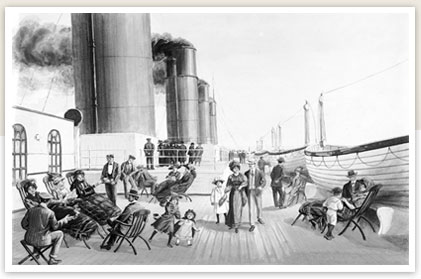
Rearranging Those Deck Chairs

Dear Sweet Man on Plane Yesterday,

Even though I like to read on airplanes and my Kindle was open and ready to go, it was clear you wanted to talk on our flight between Little Rock and Dallas.  Of course, we found connections:  we’ve both lived in Northern Virginia, we share the same political proclivities (and I loved your fun Bill Clinton stories.)  We are both Presbyterians, even knowing some of the same pastors.  When I told you I was going to the Board of Pensions Regional Meeting you nodded knowingly.

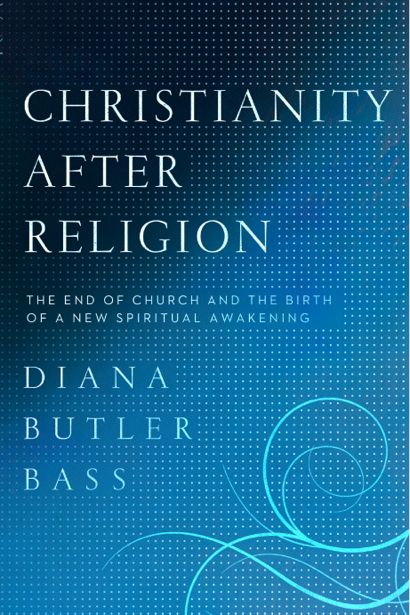
But in the back of my mind as we talked about church, what I wanted to do was hand over my Kindle and plea that you read this book and get back to me.

Clearly you are a wonderful man with an interesting history and a satisfying life.  And yet you aren’t deeply satisfied.  Among the things you said that made me want to hug you and quote Diana Butler Bass:

  • We’re thinking about switching to the Baptist Church because the preaching is better.  The sermon isn’t supposed to be entertaining, but, to tell you the truth,  I like being entertained.
  • Maybe I should go to a Bible Study or something.
  • I’ve been ushering for years but it’s an obligation, really.
You are obviously looking for something that transforms your life and the world.  As we walked all the way to baggage claim together, I felt like I’d known you all my life.  And I have, in terms of so many others with whom I’ve had the same conversation.  “If only we had a dynamic pastor with kids, we’d attract the young families.” If only we had better programs, people would come.”  “If only we had more money.”  “If only we had a better church sign.”
My wonderful Brother in Christ,  none of these things matter if we aren’t practicing our faith – not in a rote or obligatory way but – in our hearts and souls.
Nobody has taught you why devoting your life to following Jesus was the best way to live.
My hope is that somebody out there – maybe even in your church – will reach out to you.
Your Sister in Jesus, Jan

I Am “The Presbytery”

When people think of the word “religion” they consider external things: “institutions, organizations, buildings, dogma, rules, hierarchy, order, and authority”  From Christianity after Religion by Diana Butler Bass

All together now:  Yuck. 

What we long for are the internal things:  deep community, unconditional hospitality, spiritual peace, God moments.  But – even if your spiritual community is a house church – there will be some management required.  The not-fun-stuff of ministry.  Somebody’s got to be sure there is toilet paper.  And coffee.

When I first read the job description for my current church position, one job requirement stood out:  The Ability to Sit Through Long Meetings.

Really, that is one of my job requirements, which begged the question:  Just how long are these meetings?  For the record, I’ve not experienced terribly long meetings, or at least they haven’t felt long, mostly because they are about things I love:

  • talking with people about their faith journeys and how they believe in God
  • hearing about what God is telling people – often over coffee or lunch
  • mediating tough issues as brothers and sisters in Christ
  • figuring out how we can get out of the way and help somebody’s call come to life

I love this stuff.  But – from all outward appearances – I am the purveyor of rules and regulations.  I am the person who is going to make pastors and churches do something they don’t want to do.  I am “The Presbytery.”

I planned to go to a church meeting to talk about their mission plans a couple weeks ago, but the day of the meeting was asked not to come.  “They don’t want ‘The Presbytery’ there.”

When I first came on board, I hoped to get together with everybody who (like myself) attended the first Fellowship of Presbyterians gathering in Minneapolis.  But I was told it wouldn’t be good to attend because I now represented The Presbytery (and apparently this was not a good thing.)

I also wanted to get together with the pastors under 40 to help them get stuff done – in a new way.  After a couple attempts in the first months of my ministry, I am finally invited to assorted meetings of the Young Turks, so to speak.  It wasn’t certain, at first, if it was a good plan to have somebody from The Presbytery present.

Here’s the thing, we are all The Presbytery here in The Windy City and Windy Cityland – all PCUSA ruling elders, teaching elders, parishioners, friends, etc.  I just try to make things happen – God-willing – to the glory of God. 

Yes, I sit through long meetings.  But that’s not half bad considering what I get to talk about and listen to.  I’m not crazy about being the scapegoat when a pastor or church needs to blame someone.  (e.g. “The Presbytery made us do this.”)  It goes against every emerging church cell in my body to work in an administrative role for the institutional church – God’s little joke on me.

But – yes, I’m the Presbytery – and to sort of quote one of my favorite theologians – so can you. 

Let’s Talk

One of my fondest memories about church involved a meeting during which we were all waiting to be trained on the new copier.  We were waiting for the trainer, and I did what many pastors do:  I asked if there was anything we could pray about for each other:

– Person #1 (20-something)  “Please pray for my brother who’s run away from home and is addicted to crystal meth.”

– Person #2 (20-something) “Please pray for my parents.  My dad just retired and he’s driving my mother crazy.”

– Person #3 (20-something)  “Could we pray for my partner who is dealing with bipolar issues?

– Person #4 (70-something)  “Everything’s okay.”

– Person #5 (60-something) “Everything’s okay.”

– Person #6 (70-something) “Everything’s okay.”

Perhaps it’s because of the Oprah generation, or the social media generation, or our chronological generations, some of us feel more comfortable talking about our real life issues than others.  I’ve known lovely church people with Serious Concerns who would no more share their personal issues than they would confess their most embarrassing sins to their straight laced Grandmothers.  Some of us are comfortable sharing our stuff and some of us are not.

I imagine a church in which we share our stuff.  I am tired of Mad Men Church in which we pretend that all is well, that “everything is fine” and  nobody needs anything.  I long for a church in which I can turn to the person beside me in the pews and – during the passing of the peace – I am free to say, “Things are not so great. Please pray that I get through this week.”  

This is the future of The Authentic Church.  It’s not about pretending to be who we aren’t.  It’s not about walking into a sanctuary, enjoying the worship gathering, and then having brunch.  It’s not about making ourselves happy while we pay people to Be the Ministers.

Can we really talk?  I hope so.  It’s a spiritual thing.

Diana Explains It All

This weekend, read this book.  Pulling together analysis from Harvey Cox, Brian McLaren, Phyllis Tickle and others,  Diana analyzes the shifts in Christianity which explain – among many other things –  

  • why faithful people in my denomination want to leave the PCUSA to join the ECO or EPC while other faithful people want to remain in the PCUSA
  • why the “how” questions (“How do I believe?”) is a better question today than the “what” questions (“What do I believe?”)

I love this book.  It sparks ideas for theological education, sermons, liturgy, and endless grappling conversations over coffee.  Your brain, soul, and faith communities will thank you.

Such a Good Idea: Espresso Book Machines

Part of yesterday was spent touring Inter Varsity Press in Chicagoland with one of my favorite theologians.  I, for one, believe that the business of publishing books is not toast – if we evolve and embrace change as a glorious adventure rather than a bitter shift.  Soon to be gone:  warehouses full of books waiting to be shipped off.  The trend:  Espresso Book Machines?

Espresso Book Machines are amazing.  Have you ever looked for a book in a bookstore and they don’t have it but a staffer says, “I can order for you.”  And you think, “Much easier to go home and order it on Amazon.”  The Espresso Book Machine makes a single published, bound copy for you on the spot.  Very cool.

While most people still read hardcover or paperback books, the scales will be shifting so that the majority of people will use Kindles, iPads, Nooks, etc. and the minority will want traditional books.  The IVP sage who spent time with us yesterday suggested that maybe the warehouses can be repurposed to house multiple Espresso Book Machines.  If somebody wants a classic copy of a classic John Stott book, IVP runs a single copy and sends it out.  No need to store lots of copies which may never be ordered.

We already have an assortment of paths in the publishing world.  Amanda Hocking  self-published several (enormously popular) ebooks and then got a fancy contract with St. Martin’s Press.  Tony Jones has several books published via traditional publishers and is now self-publishing digitally.  Whatever works.

I increasingly don’t want to lug books around and rarely read a book that’s not on my Kindle – although I was thankful to be given a copy of Amy Sherman’s Kingdom Calling yesterday.  Honestly though, I will sometimes turn down offers to be given free paper books. 

Have you totally shifted to digital books?  Would you buy a paper book if you could  sip espresso in a coffee shop while your very own, single copy was being printed and bound by a machine in the corner? 

Image is the warehouse at IVP.

Why I Can’t Give Up on Church

Easter Monday by de Kooning

Easter brunch was thoroughly enjoyed.  Church leaders everywhere are recovering from the marathon of Holy Week events.  Parishioners have taken  lilies from their sanctuary chancels to their home mantles.  And now it’s Easter Monday.

There are many who attended worship on Easter Sunday for cultural reasons:

  • It’s what we do with friends.
  • It’s the institutional requirement before brunch with the family.
  • We go for the extraordinary music and especially fine-tuned preaching and liturgy.

And there are many who attended Easter Sunday worship gatherings for spiritual reasons.  Some of us are part of the church year-round.  But why?  It’s not because we love committee meetings or political church fights.

I was touched by Rachel Held Evans’ post about why she has returned to church after being away for a while.  And I myself ponder why I am still part of the institutional church. One reason is because I’ve seen glimpses of resurrection in my church communities:

  • The woman who found help for her addiction in a church basement and when she made the transition to “come upstairs” for a traditional worship service, people welcomed her and sipped coffee with her on Sunday mornings, even though she wasn’t dressed like everyone else.
  • The widow who lost her husband and her son in the same year, who was regularly invited to dinner by church friends – especially holiday dinners – after her losses.  She went from a woman who could barely get dressed in the morning to a woman who laughed at Circle meetings with her friends.
  • The twenty-something person with no family in town who moved from a studio apartment to a group house to a condo in the course of a year, and found church friends who happily helped her pack her stuff and haul them from one home to the next, and then took her out for pizza.

This is why I am still part of the church on Easter Monday.

Easter and Beyond

Christ is risen!  Christ is risen indeed!

For Christians in the United States, today will probably involve:

  • Easter Eggs
  • Easter Lilies
  • Spring-like clothing (and maybe even bonnets)
  • A feast involving one or more of the following offerings:  lamb, ham, asparagus, coconut, jelly beans
  • Exposure to bunnies, chicks, and Peeps.

And then on Monday, we will go about our business unless we have tickets to the Easter Egg Roll at the White House or we have the day off to go shopping.

Nobody grouses much about “The War on Easter” but it’s clear that pagan Easter/secular Easter has “won” in terms of the popular focus.  I’d love to know if you are part of a church community that does NOT have an Easter Egg Hunt  this weekend.

It’s The Biggest Sunday of the Year for our churches.   Some people will come for the cultural experience.  Some will expect superb music and elegant preaching.  They will love seeing little children bedecked in pastels.

Do we really need church today?  I’ve been pondering last week’s Newsweek story: Forget the Church; Follow Jesus (with the unfortunate white  Jesus on the cover) and have some things to say about it.  But for now, I am racing to preach in lovely Round Lake, IL for a congregation with no pastor.  And we will sing “Jesus Christ is Risen Today.”  And we will once again tell the story of the first Easter.  And I will say, “Christ is risen!” hoping against hope that the congregation will know to follow with “Christ is risen indeed!

But what will happen tomorrow – on the day I grew up calling Easter Monday?  Hope you’ll return to this blog so we can reflect on exactly that.

What Breaks God’s Heart in Your Community?

One of the conversations I’m having more and more often – which is about missional ecclesiology, although most people don’t think of it that way – involves congregational mission service.

Some churches – in their annual reports – have long lists of mission projects they serve.  Often they give $200 here and $400 there, which is nice but not life-changing.  We give money to projects we have been been giving money to for many years, even though most parishioners are not personally connected or even aware of those projects except, perhaps, in name only.

Other churches have compassion fatigue and zone out when appeals to give to various mission concerns are shared.

When outreach is tired and people are wondering “how to improve their mission work” I have been asking:  “WHAT BREAKS GOD’S HEART IN YOUR COMMUNITY?”

The answers I’ve received range from curious looks (“What do you mean?”)  to heartbreaking specifics (“Do you mean like teenager suicide?”)  We might think that offering a tutoring program in our community is a fun idea, but maybe the need is not tutoring.  Maybe we’d love to open a cancer support program but the American Cancer Society already does that.

What is the need that’s not being met – or even noticed – in your neighborhood/village/suburb?  What’s breaking God’s heart where you live?  It’s worthy of a conversation.