Matt and Jan

My last post was about Young Clergywomen and the need for women mentors.

Mentoring between genders might seem fraught with extraneous issues, and it’s true that choosing a mentor is not something you can just do.  The Spirit has a hand in putting people together.

But I see a new model of mentoring for the 21st Century Church.

Meet Matt and Jan (that would be me.)  Matt and I worked together in a parish for a couple of years and it was a great experience in terms of dual-mentoring.  Matt was in his late 20s at the time.  I was old enough to be his mom.  He had a degree in economics and was a renaissance man in terms of technology, legal documents (!), social media, spiritual gifts, and apostolic church.  I was what some might call “a seasoned pastor.”  I graduated from seminary in the 80s and had been ordained in a mainline denomination for over 20 years.

Matt often introduced me to people as his “boss.”  And my response was an awkward “He’s sort of like my boss too.”

The truth is that we mentored each other.  I might talk about the importance of loving people whose spiritual practices he didn’t understand.  He would hand me a book to read.  I asked him to pick out the church’s new copy machine because he would know what’s out there in terms of cool bells and whistles.  He would ask me if we could take a group to the next emerging church event.  I would share an interesting article from Alban.  He would share his copy of Relevant.  He might tell me about a new church management software.  I might teach him how to do a Hebrew word study online.

It was fun.

Ministry can be exasperating, angina-inducing,  and spiritually exhausting, but God wants us to have fun as well.  Especially in these shape shifting days of God’s church, it’s important that we mentor each other:  men and women, younger generations and older generations, institutional and not-institutional disciples.

How do we do it?  I have a couple of thoughts on what makes c0-mentoring thrive:

– Both sides need to be willing to give up “the power” – especially the older seasoned leader.  To My Older Pastor Colleagues:  You don’t know everything.  It’s okay.

– Don’t lord over each other what we know.  (Yes, you can read Greek.  Hurrah.  So, you do Prezi.  Good for you.)  Don’t roll our eyes when someone asks “a stupid question” (Who is this Walter Bruggemann?  What’s a PDF?)

– You have to trust each other.  There can be no possibility of sabotage, jealousy, or one-upspersonship.  You are on the same team.

– Every church should have someone on staff (who is not only working with youth) to offer leadership in ministry.

My life was positively changed forever by working with Matt.  And that’s what a mentor does.

I hope that you, too, get to have this in your ministry.

 

Young Clergywomen

Once upon a time . .  .

I was a twenty-something clergywomen.  The first time I did the benediction in the sanctuary of my first church, in that brief breath between the “amen” of the last hymn and the moment when the benediction is spoken, I heard someone say, “She can’t be a day over 13,”  I was a pastor but I was a very young person.

Tonight I asked the members of my clergywomen’s group, “How old were you when you were ordained, and all of us were in our twenties except for one who was a wise 30 year old.  Now we are in our 40s and 50s.  And we were not the first generation of ordained clergywomen.  But we were close to being The First.  Most of us were The First Clergywomen that our parishioners had ever seen.

An amazing thing happened today:  a seminarian who happened upon a member of our Preaching Roundtable in a parking lot had just received a phone call offering her a call.  Her first call.   She had happened upon our group, and we gathered around her and laid hands upon her and toasted her.

She is our new sister in professional ministry.

So, here’s my question:  What can 40/50/60-something clergywomen who are among the first ordained women in their churches offer to those who will be ordained in the next year?  My hope is that we mentor each other.

A question to women:  who is mentoring you these days?  Please share.

Study Leave Day 1

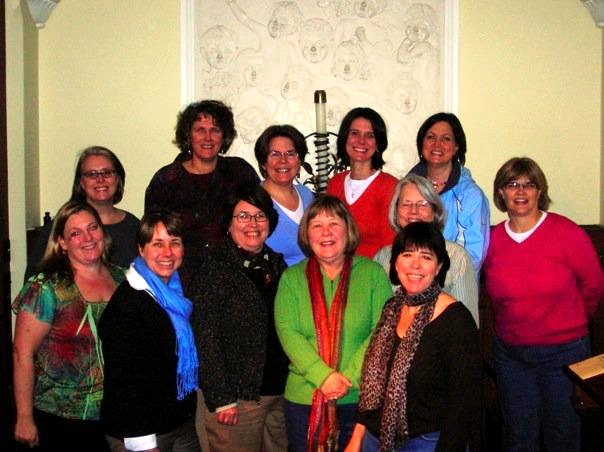
For 10+ years now, I’ve been in a preaching group with 13 other clergywomen.  Some of us met while we were getting our DMin degrees.  Some of us met through other connections. We range from ages 40 – 62 and we have gathered in various places where somebody serves:  San Francisco, Richmond, DC, Atlanta, San Antonio, suburban NYC, Asheville, Edinburgh.  We share sermons, books, liturgies, hymns, articles.  We drink wine and eat well.

But the most important thing we do is share our lives.  Every pastor needs this.  We are each other’s pastors.

This week we are in Atlanta again and we’ve planned conversations with some of the great theologians of our tradition.

Today we gathered.  Tomorrow we’ll share what’s happened personally and professionally in the last year – which will take at least a whole day.  I will share that I have a new call in a new city.  I’ll catch them up on what my spouse and kids are doing.  I’ll share the joys and burdens of my work.  We’ll pray for each other.

It’s a glimpse of heaven.

The personal advice I would give any new pastor is this:

1- Hire someone to clean your house once/month.

2- Connect with a group of clergy colleagues – preferably a group that meets away from your work context for a few days each year.  It could be all women or all men, or a mix.  It could be a lectionary group or a book group.  It could include conversations with theologians or white water rafting or making cupcakes.  But try to get away and process ministry with people who are also living it.  Our parishioners cannot do this with us.  But we need it.

My hope is that – by the end of the week – we will have decided to go to Chicago in 2013.

Imagine of The Preaching Roundtable 2010.

Why Do Pastors Get Study Leave – or Even a Sabbatical?

I came from a Presbytery where it was assumed that pastors would take sabbaticals after 6-7 years of service in their church.  I now serve a Presbytery where sabbaticals seem rare.  Why would a pastor get 1-3 months “off”?  Postal workers, office managers, chefs, and doctors don’t get that kind of paid vacation.  This is what people have said to me, and clearly some interpretation is needed.

Study leave for clergy – much less sabbatical time – is a misunderstood “perk” of professional ministry.

Study leave is required for pastors across the board in my denomination – 2 weeks minimum – in hopes that the pastor will read, attend classes, write, or process the layers of ministry that cannot be done while working  6-7 days a week.  People understand that professors and others in higher education take sabbatical or study leave to work on their intellectual specialty.  But many don’t understand that pastors need this as well to serve with fresh eyes and minds.

The PCUSA now calls Ministers of the Word and Sacrament Teaching Elders, which points to the fact that teachers need to study so that they will continue to have wisdom and insights to share with others.  And pastors need to step back and pray/reflect/worship/listen to the sages of our faith.

But here’s the crux of my concern for the 21st Century Church:  shouldn’t all church leaders get some form of study leave?  My previous church encouraged the music staff to take study leave but the budget allowed for little more than a local workshop.

Yes, all congregations are struggling with tight budgets.  But I believe a healthy 21st Century Church encourages all leaders to take a day – or a week or two – to study and learn from others beyond our particular communities.  I’m grateful for my denomination’s record on offering regular local training for everybody in our congregations.  Just last weekend, the Presbytery of Chicago offered LEAD.

Sometimes we all need to get away so that we can return fresh and ready to continue our service.  This week I’m headed to Columbia Seminary outside Atlanta.   Check back with me this week and I’ll let you know what I’m learning.

But in the meantime, I have a couple questions:

When was the last time you or your pastor took a sabbatical?

– What do you do on study leave?

Image from Columbia Theological Seminary in Decatur, GA.

9 Months of Being Nobody’s Pastor . . and Yet

Inspired by this post written by Landon Whitsitt,  I’ve been thinking about what I’ve learned after 9 months of being nobody’s pastor.  For 27 years I was called Pastor Jan and it’s strange that nobody calls me that anymore.

And yet, my current work as a middle judicatory staffer (aka the IAEPM, aka “The Presbytery,” aka “Jan from Presbytery”)  I feel very much like a pastor of pastors and seminarians.  I still pray with people in my study.  I still preach, albeit in a different church every weekend.  I still go to Session meetings.

So what have I learned about church?  Here are a couple of things, in no particular order:

1.  Churches that love their (fill in the blank) more than they love Jesus are doomed.  Some of them know they are doomed and don’t care.  Some of them pretend like it’s okay to love their windows, organs, communion tables, strawberry festival more than God.

2.  Churches need to learn how deal with conflict well.  Conflict is good.  It’s an opportunity for growth and improved communication, but most churches are allergic to it.

3.  Pulpit candy still doesn’t work.  Some churches – especially congregations who see themselves as being Important – because once they were –  call pastors who look like they should be the pastors of Important Churches.  They have good hair, impressive height, radio voices, and attractive spouses.  But PNCs who consider only the outward appearances without delving into theology, personality, vision, and leadership skills are asking for a disaster.

4- Using up a dying church’s endowment is a sin.  There are congregations who’ve been living off their endowments to balance their budgets for some time now.  Some congregations can calculate exactly when they will close based on what’s left in the endowment.  I know pastors who plan to stay on board until the endowment is gone and then they will retire.  This is wrong.

5- Pastors who don’t equip their people are missing the point.  There are pastors who are afraid to let their ruling elders rule.  They are threatened by having their Deacons and/or Stephen Ministers do pastoral care.  They refuse to give up “the power.”  They need to read Ephesians 4:11-12.

I totally miss officiating at baptisms, serving communion up close and personal to people I love, officiating at weddings of parishioners, preaching to people I know, and picking the art for bulletin covers.  But I love having the extraordinary privilege of serving the wider church.  I have the greatest job in the world.  But would somebody please call me Pastor Jan again?


Pray for Asma

Please stop whatever you are doing at this very moment and pray for Asma al-Assad, the First Lady of Syria.  Pray that she can speak words to her husband that he can hear.  Pray that she is unafraid to stand up to evil.  Pray that she has the strength to do and be what God made her to do and be.

Today is International’s Women’s Day and we pray that the women of Syria’s prayers are heard. 

You can read more about Asma al-Assad here.

Re-Imagining Christianity Over at Pomomusings

I’m guest blogging over at Adam Walker Cleaveland’s blog today.  Adam’s question is:

What is one belief, practice or element of Christianity that must die so that Christianity can move forward and truly impact the world in the next 100 years?

For my answer, check it out here.  (It should be up sometime Wednesday.)

Image is from a shop near the baptismal site of Jesus in Jordan.

Tiny Steps Towards Transformation

Many of my creative church friends believe that starting a new church from scratch sounds more appealing that serving a congregation with long-established patterns, a 1950s DNA, and sacred cows that nobody wants to send out to pasture.

Planting new churches is hard.  Having said this, I hope you’ll join me at the Church Planters Academy  in Minneapolis May 3-5 if God is calling you to start something new.

Serving established churches is hard.  Having said this, I’ve witnessed some Tiny Steps Towards Transformation over the past few months:

  • I preached in a lovely but struggling church recently, offering some words that – the pastor later shared – would have been totally rejected if I’d preached the same sermon 5 years ago.  Hearing it in 2012 made them feel energized rather than angry or anxious.  The wild and crazy message?  That churches focusing on the ABCs (attendance, building, and cash) as their building blocks are dying.  But the churches that are focusing on the NOPs (neighborhood, organizational structure, paradigm shift) are growing.
  • At a church Session meeting recently, a new elder introduced herself  by explaining how meaningful her ministry is.  Nobody prompted her to describe her church work as ministry; she already saw it that way.  Elder by elder described her/his work in that congregation as ministry. This would not be happening in a dying church.
  • A church pastor nominating committee is looking at some creative models for ministry in their new pastoral leadership.  “Maybe we’ll look at a co-pastor team,” they’ve shared.  “We like the idea of a seasoned pastor working with a college or seminary student serving as partners in ministry.”  We’re talking about a traditional, old-fashioned congregation here, but they are looking at fresh possibilities for leadership.

There are signs of hope for followers of Jesus all around.

The image is from Presbygrow.


Death Star? Mother Ship?

I have very little power in my job as a “middle judicatory staffer”  in a particular denomination and then again, I have lots of power.

Example of no power:  I can’t control God’s call.  (Note: this is fine with me but there are still people who believe I can “get them a call.“)  No I can’t.  I can’t control the minds of search committees.  I can’t make a search committee interview you.  I can’t articulate a call statement for you.

Example of lots of power:  I give people permission to do new things when they have been called, sometimes in unconventional ways.  I point out to search committees how amazing someone is.  I clear the way for churches and church leaders.  I get to hear the stories of people’s visions.  And I have a voice.

Some people believe I work at The Death Star – where dreams are dashed and endless rooms of red tape distract us from real ministry.

Some people believe I work at The Mother Ship – from where ministries  and ministers are launched, conflicts are mediated, and people are set free to go out and make disciples of all nations.

The future church of course is flatter – and maybe as flat as a pancake – which probably means there will be no paid middle judicatory workers, no middle judicatory offices, no job for me in the not-so-distant future.  That doesn’t much worry me.  But I do hope I always get to be a part of the  incubation and connection-making and disciple-making forever.  I love what I get to do for work.

Image is The Chicago Bean – aka “Cloud Gate” designed by sculptor Anish Kapoor.

Is Your Ministry Fun?

Me (to new pastor serving a church known for being very difficult):  How’s it going?

New Pastor:  I’m having a blast.

Me: !

This was one of the first times – early in my own ministry – when I realized that it was okay if our ministry is fun.  In fact, it’s recommended.  As a person steeped in the Reformed tradition (Calvinism) reminded to shun ostentation and be happy in those wooden, cushionless pews, this was a revelation.

All ministry has it’s not-so-fun parts: administrivia, fixing toilets, squelching gossip – unless those activities happen to be fun for you.

But I believe God wants our ministry to be fun – and if it’s not fun it could be a sign that changes are needed.  The beauty of holy callings is that what might be a burden to some people  (working with junior high students, preaching, organizing a supply closet) may bring total delight to others.

Here’s how I know I’m called to my current ministry:  I sit in meetings listening to people share what their churches are doing, I have conversations with people seeking new calls who share their visions, I mediate troubled situations with church leaders – and I love this.  Honestly, I can’t believe that I enjoy this as much as I do.  It’s exhausting, frustrating, etc.   But it’s an opportunity to see God work in often impossible situations.

So, off I go to try to do something that makes the reign of God more visible.  Hope you have a fun day too.

Image is from another ministry that was really fun in my previous life.