Word Confusion

I staff the Commission on Ministry in our Presbytery which involves helping congregations, pastors, and “specialized ministers”  in transition or trouble.

I also staff the Commission on Preparation for Ministry which involves helping seminarians discern their call and prepare for professional, institutional ministry.

The following words are tossed out and repeated innumerable times every day of my life:  minister, ministry, church, call, lay, elder, commissioned.

Theological Word Confusion abounds.

People say “lay” as in “lay leader” or “lay preacher” to include ordained ruling elders.  But actually ordained ruling elders are not laypeople. They Are Ordained – at least in my tradition, the PCUSA.

People say “minister” or “ministry” meaning the person with the MDiv degree or the work of the institutional pastor.  But actually, every Christian/disciple of Jesus/baptized believer is a minister and we are all engaged in ministry.  This is not a PCUSA thing.  This is a Biblical thing.

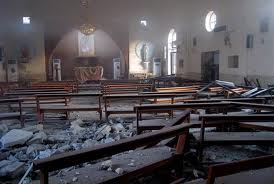
“Church” has devolved into being a building (in spite of this 40 year old Avery and Marsh song) rather than a people.  Again, the Bible always refers to “church” as a people, never as a building.  But every day, someone in my life refers to the brick building with the steeple as the church.  “Let’s meet at the church.”  “I was in the church.”    They are talking about a building.

This is frustrating, and not because I’m obsessed with Dictionary Correctness.  It’s frustrating because it impacts our understanding of what God calls us to do and be.  All of us who are baptized into the Christian faith are called to ministry.   All.  Of.  Us.

Not all of us are called to professional ministry, but all of us are called to serve in some way in the name of Jesus Christ.  All of us are called to serve to make earth as it is in heaven.  This is good news.

We who are baptized and called are the church.  Some of us are elders – elders who teach people or elders who  rule in terms of leadership. All of us have been commissioned.  So is it too much to ask that we recognize these things in the way we talk?

Cursed?

Me:  One of the great things about my job is that I see so many possibilities in our churches.

Colleague:  It’s a curse, isn’t it?

I walk into church buildings and see so much hope.  If only . . .

If only a congregation would reach into their neighborhood.  If only the church flung open their doors and welcomed the community into their building.  If only the members were schooled in authentic hospitality.  If only people loved each other the way they long to be loved.

Sometimes I visit churches on Sunday mornings and – before they realize who I am: The Presbytery – nobody speaks to me.  I literally said, “Hello” to a stranger in the women’s room and she still did not speak to me.  What if we were honestly “friendly”?

My curse is that I look at church communities and see what they could be.  But either 1) they don’t want to be the church that rocks the neighborhood or 2) they don’t know how.

What is your curse in terms of serving the 21st Century Church?


Next Church 2012

I’m looking forward to hearing about Next Church 2012 from afar this week.

There are two things for certain that will happen:

  1. There will be prayers for our sister – The Moderator –  who is preparing for a different kind of Lent this year.
  2. There will be exceptional leaders sharing their ideas for the future of the PCUSA.

Here are two things that I hope will happen:

  1. The ideas will be new.
  2. The ideas will be about the deeper issues at hand for the 21st church (paradigm shifts) and not about the shallow issues (worship wars, generational differences.)

Of course there are very few truly new ideas.  Several of my colleagues and I read a new report this past week about the state of the church and there was nothing new in there.  It could have been written ten years ago.

But there are voices in the church with fresh ideas who are in the trenches of parish ministry.  There are those of us who work every day with weary leaders, anxious elders, and dysfunctional boards.  But we are still here working for a healthy church that seeks to make disciples of all nations.

A paradigm shift is everything and I see almost every day where it’s needed.  Two examples from this week in ministry:

–  I met a woman who was once a faithful church member serving in several ministries in her congregation.  She had church friends and was a regular leader in worship.  But when her marriage fell apart and her financial situation took a nose dive, she found herself alone.  Her church friends blamed her, shamed her, and gossiped about her.  And so she left.

Paradigm shift required:  real hospitality and pastoral care involves lavish acceptance of those who find themselves on the edge.  We in the church often fail to love broken people as we pretend that we are not ourselves broken.  Churches that “present well” – i.e. everyone looks good, acts ‘appropriately’ and doesn’t offend – are sometimes oblivious to the brokenness sitting right next to us in the pews, much less out in the neighborhood.

– I met a man who described his congregation according to “business metrics” (his words.)  His church is “failing” he said because attendance is down, finances are tight, and his parish is not offering the services it used to offer.

Paradigm shift required:  the church was never meant to be a vendor of spiritual goods.  The church has been called to make disciples (followers) of Jesus in every corner of the earth and to make earth as it is in heaven.  As long as  we consider the A,B,Cs (attendance, building, cash) to be the building blocks of a healthy church we are doomed to fail.

The real building blocks of a healthy church are the N,O,Ps:

How are we serving the Neighbors?  What’s breaking God’s heart in our neighborhood and what are we doing about it?  (See Luke 10:25-37)

How are we Organized for all to be ministers?  Is the pastor considered the only minister or is her/his primary responsibility to equip others to do the ministry?  (See Ephesians 4:11-12)

How has our Paradigm indeed shifted from a Constantinian Church to an Apostolic Church?  (See  the entire book of Acts)

So, may Next Church equip everyone who attends in how to make real changes that expand the reign of God (rather than focus on the survival of a denomination.)  This is my prayer.

Broken

With young adult kids of my own, I’ve been especially interested in the trial of George Huguely in Charlottesville.  He was found guilty of second degree murder on Ash Wednesday.

He’s not the only person whose brokenness made international news on the First Day of Lent.

Syria is broken.  Countless civilians have died at the hands of their own government, and on Ash Wednesday reporter Marie Colvin and photographer Rémi Ochlik died covering these brutal crimes.

The people in our pews, on the streets, in our work places are all broken.  Rich, poor, young, old, wise, foolish.  Jesus came to save broken people.

I love the season of Lent because it levels all playing fields.  We are dust and to dust we shall return.  But it won’t be the end of the story.

Prayers tonight for all of us who are broken that this would be a holy Lent.

A Word or Two About Bad Behavior in Church

Still floating after a wonderful ordination experience last weekend, I was talking with colleagues today about why such an experience is so rare.  I’m not talking about the rarity of a moving worship service.  I’m talking about the phenomenon of a person who has been wholly and truly nourished by the congregation of her birth through childhood and teen years and into her young adulthood.

People wonder why there are so few young adults in church.  There are many reasons.  But the bottom line is that few young adults have experienced authentic hospitality and unconditional love, not to mention spiritual meaning.

If we have experienced lavish love in a spiritual community, we will stay with that community.

Too many of us have experienced these kinds of scenarios:

  • First time guests come into worship trying to figure out where to sit and how to find the bathroom.  And a church officer greets them in the lobby with, “Welcome!  We’ve never had anyone with a pierced lip here before.
  • During the Passing of the Peace, a teenager wearing her soccer uniform is greeted by a church leader with, “I see you didn’t have time to dress appropriately this morning.”  During the Passing of the Peace.
  • A middle-aged single woman – new in town –  sits in the pews by herself and not one person says “Hello” much less, “Can I get you a cup of coffee?” or “Would you like to join me and my sister for brunch after worship?

I wonder sometimes if we have failed – as a church – in teaching basic Christian behavior.  So many broken people come through our doors and we fail in showing what wholeness looks like.

In fact, we tend to excuse bad behavior – afraid that difficult people will leave.  We fail to hold each other accountable.

I remember calling out an elder on her bad behavior – she was sending incendiary emails out randomly to church members – and after telling her that it was unacceptable, not to mention a violation of her ordination vows, to behave in that way, she said, “So are you asking me to leave the church?”

I said, “I’m not asking you to leave the church.  I’m asking you to stop being so mean.”  She was stunned – in a good way.  Because of her own “stuff” she tended to misbehave so that she would be kicked out of a community.  She was used to being asked to leave every organization or job or friendship she’d ever had.

We don’t want mean/rude/inhospitable/gossipy people to leave our churches.  We just want them to stop it and start making an honest effort to follow Jesus.

How does your community deal with bad behavior?

The Way (Church) Life Should Be

In spite of the message of Diana Butler Bass’ new book – Christianity After Religion – in which Diana correctly notes many ways in which the institutional church no longer works for people in terms of nurturing their Christian faith, I experienced something profound yesterday:

A young woman was ordained to the Ministry of Word and Sacrament in the church where she had been baptized as an infant, confirmed as a teenager, and nourished as a young adult.  And clearly the institutional church was at the core of her Christian journey.  Amazing.

The miracle of this day included the fact that:

  • Vows made by parents on the day of their infant’s baptism had been kept.  (They really did pray with and for her and raise her in the faith.)
  • Vows made by a congregation on that same baptism day had been kept.  (The congregation really did know, love, and nurture this infant throughout her childhood, teenage years, and young adulthood – through kindergarten, middle school, high school, college, seminary, and beyond.)
  • Vows made by a young woman on the day of her confirmation had been kept.  (She actually grappled with her faith and allowed herself to be mentored by adults, and led by God.)
  • The institutional Christian community worked.  (An individual and her extended family were loved, inspired, held accountable, set free, and launched for ministry through a church family for the entirety of one young woman’s life.)

Sadly, we don’t see this much.

Most of our ordained pastors, much less, those called to serve apart from formally ordained ministry – have experienced their journey a more difficult way:

  • They have been hurt by the church, even after baptism and confirmation, or  – at best – their home churches have been indifferent towards their spiritual growth.
  • They have wandered from the faith and nobody noticed.
  • They were raised with no spiritual community at all.
  • They crave spiritual nourishment now but still can’t find it in the church.

God has a mysterious way of calling us even when we wander, even when the community around us has failed.  But yesterday I witnessed with my own eyes an   institutional church that got it right.  Congratulations L. and welcome to this ministry.


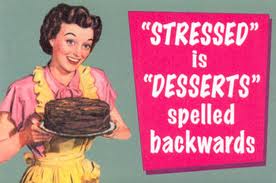
My Personal Relationship with Stress

I live with stress.  This week my stress has been exacerbated by:

  • Pastors in trouble (although there are ways out)
  • Churches in trouble (although there is still hope)
  • Committees in trouble (although they could be healthier with just a few tweaks)
  • Tuition bills (although paying them means my kids get to go to college)
  • Out of town guests (although it’s more fun than stressful)
  • Commuting (although I’m grateful to have slept on the train this morning)

I actually get more done when things are stressful. Heart-racing, shoulder-aching, tear-inducing stress is not so great.  But I like having work to do, schedules to keep, deadlines to make. 

There is a good article here about workaholics.  Sometimes we throw ourselves in the vortex of stress to avoid bigger issues.  And sometimes we just like stress.

What’s your relationship with stress?  Is it killing you?  Energizing you?

Happy Week: Re-Wiring Our Brains

Happy churches tend to have happy pastors.  Happy pastors tend to be creative human beings who crave fresh ways of doing ministry.

There, I said it.

I increasingly see ineffective pastors who haven’t learned or done anything new in years.  Interestingly enough, some of them think they are learning something new when they read books or attend workshops, but the books they read or the events they attend only make them “smarter.”  The information doesn’t translate into fresh ways of doing ministry.

According to Shawn Achor human happiness is less determined by genetics, environment, or a combination of the two than by the commitment to develop new habits.   Exercising our brains makes us better – and happier – people.  When we develop new habits, our brains literally re-wire themselves.

The Church needs more re-wired pastors.

I serve a denomination with many talented pastors.  They are smart, well-spoken, creative, and compassionate.  But they are also – sometimes – lame.  Some of us haven’t allowed our spiritual practices to evolve since seminary.  Some of us haven’t preached a fresh sermon – or delivered that sermon in a fresh way – for decades.  Recently heard in a sermon:  “Maybe you’ve heard of the new play Cats . . .

The brains of  digital natives who have never known life apart from computers are wired differently from those of us who went to high school equipped only with typewriters.   We can become digital immigrants, but we have to be willing to go there.  Immigrate.

A truly great conference or a truly excellent book moves us to a new place.  Before spiritual communities can move closer towards the Kingdom of God, spiritual leaders have to be willing to move first.

I still believe that the meaning of life is To Glorify God and Enjoy God Forever.  This involves some re-wiring.

Happy Week: Who’s With You?


The Preaching Roundtable

Bad things happen.

In my first 5 years of marriage, both my parents and my only grandparents died.   We moved.  We changed jobs.  We had a couple miscarriages.  And we also had three healthy kids – which was good – but not easy.  But we were blessed with a sense of okay-ness, if not joy, in those first five years.  We were happy.

HH and I  are still happy after many more years together, but this is not a post about married life.  It’s about life.  My hope is that I’d also be happy (okay if not joyful) even if I’d remained single.  I know life would be different but I suspect it would still be good.

One characteristic that increases happiness is resilience.  There have been studies, in particular on the resilience of clergywomen which say we can learn how to be more resilient which makes us happier.  One tool:  community.

Much of what adds to our happiness involves the support systems we have around us.  Daniel Gilbert, who teaches psychology at Harvard,  wrote this:

If I had to summarize all the scientific literature on the causes of human happiness in one word, that word would be “social.” If I wanted to predict your happiness, and I could know only one thing about you, I wouldn’t want to know your gender, religion, health, or income.  I’d want to know about your social network – about your friends and family and the strength of your bonds with them.

Whatever you do for work and life, what communities have made it better?

Happy Week Day 2: Happy Things People Say About Love

My wedding day will be the happiest day of my life.”

He/she always makes me happy.”

If only I was with someone, I would be happy.”

Get these good people a (pre-marital, marital, individual) counselor.

I, for one, love Valentine’s Day.  But love can be hard.