Happy Week: The Harvard Business Review

I’m back from a church event in Sterling, VA and – when I’m doing a work trip with lots of ideas swirling around – I usually buy the current issue of The Harvard Business Review.  It’s not the kind of journal I read regularly, but there’s something about stepping away from my usual context that inspires me to read something apart from my usual context as well.  The January-February 2012 issue features several articles about Happiness.

I absorbed and highlighted chunks of this issue like I was reading the latest Rob Bell book.  And there’s probably more in this HBR issue for church leaders than even Rob Bell might offer in one of his books.  And I’m not at all talking about treat-your-church-like-a-business articles – which I usually disagree with.

So on this Valentines week of many (eye-rolling) Happily Ever After stories, I’d like to have some conversations on Happiness.  Reading the Harvard Business Review on a plane makes me happy.

What kind of reading (and where) makes you happy?

Conferences! Conferences!

Please share:  which spiritual/Christian/worship/churchy conferences or events are you attending this year?  (See yesterday’s post.)

I especially want to know if you are registered for this Mime Conference.

Everyone:  please share what conferences you might be attending related to your field in the secular world too.


Cool Event Envy

I’m in Sterling, VA this week for a Cool Event even though not many folks have signed up.  It’s about shifting meetings (which have become the business equivalent of breathing) from deadly wastes of time to spiritually energizing gatherings.  That’s not the official name of the event, but that’s what I’m calling it.

I could spend my life attending events:

Next Church 2012

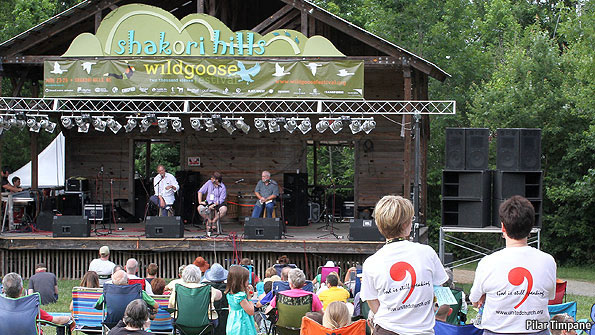
Wild Goose 2012

Festival of Homiletics 2012

Church Planters Academy

Heck, I’d like to go to Burning Man once in my life although my family frowns upon this idea.

Many of these spiritual/church events feature the usual talented leaders.  You know who they are.  The energy among participants is contagious.  The FB and Twitter feeds buzz with comments.  People leave refreshed and dizzy with cool ideas.

Of course I have limited time to do these things.  There are events I pretty much have to attend (Board of Pensions Benefits) and those I really want to attend (Q1012).

Like meetings that go nowhere, I hesitate to attend events that I fear will go nowhere in terms of solid tools for change in the church.  Yes, some events are meant to enliven us and offer sabbath, but events that promise to point us to A New Way actually point us to not so new ways.

What conferences/events are you attending in 2012?  And why?

Image source.

Are the Rich Better Church People?

I almost drove off the highway on the way home from work Monday while listening to this interview with Libertarian author Charles Murray about his new book – Coming Apart: The State of White America 1960-2010.  

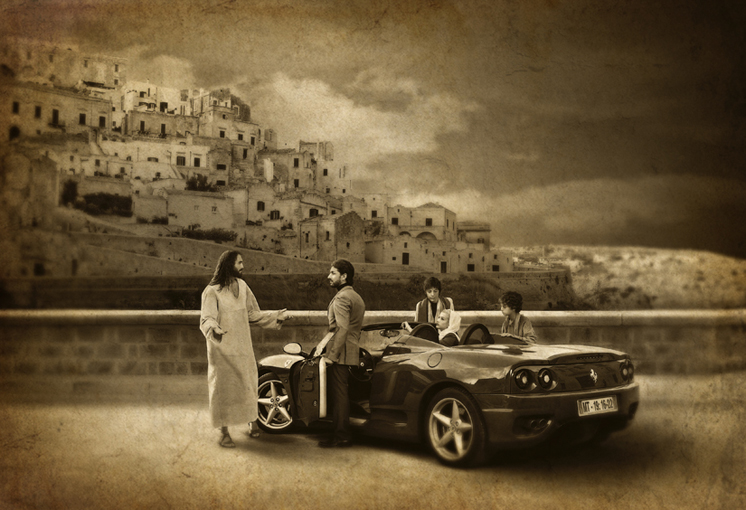
He casually said  that The Rich Are Better Church People Than The Poor.  Really?

Don’t get me wrong.  There are very faithful wealthy people who often serve as patrons supporting 21st Century evangelists, apostles, teachers, etc. much like Paul and others were supported in the 1st Century Church.

But Charles Murray seems to ratchet this up a bit.  He says that wealthy Americans are more likely to be good church people than their less educated, poorer fellow citizens.

First this made me angry.  And then I think I got it.

Wealthy, established people benefit the most from institutions:  schools, clubs, churches, etc.  They are better at being institutional because they have benefited from institutions: universities, fraternal organizations, social clubs, and so on.

It used to be true, he said, that civic institutions attracted people from a variety of socio-economic groups.  The Moose Club, The Elks Lodge, the Kiwanis Club enjoyed memberships that included rich, poor, and everyone in the middle.  But today, Murray asserts that the Upper Class and the Lower Class have segregated themselves.  (This sounds a lot like The Big Sort.)

Upper Class Whites generally watch the same TV shows, eat the same foods, and rear their children the same way as other Upper Class Whites.  Lower Class Whites basically watch the same TV shows, eat the same foods, and rear their children the same way as other Lower Class Whites.

Among the activities that Rich People Life is church.  Or synagogue.  Or mosque – again, according to Charles Murray.  He would argue that this means that the wealthy are more committed to religious institutions.  

But this doesn’t mean that The Rich are most committed to Jesus.  Two different things.

Again, there are both rich and poor who are Good Church People and there are both rich and poor who try to follow Jesus.  These groups are not necessarily the same but sometimes they are the same.

(Side note:  when HH and I saw The Book of Mormon in January, I was struck by how much more church talk there was compared to God talk.  The missionaries were most concerned with bringing people into the church, building the church, obeying the church.)  In my theology, the church is a body that brings people to God, builds God’s kingdom, tries to obey God.

Are the Rich better Church People?  Maybe.  Are they better disciples of Jesus?  Maybe.  But the poor in our world and all who hunger for purpose and relief are more likely to call God’s name in the night.  Those who’ve experienced the living God, who’ve known resurrection in this life, who’ve acknowledged God’s grace are the ones more likely to be disciples.   They could be financially rich and serving within institutions.  Or they could be financially poor and connected by less formal relationships.

What have you seen concerning wealth and faith?

Image source.

Ten Ways Being a Cheerleader Prepared Me for Ministry

Inspired by  Landon Whitsett . . . 

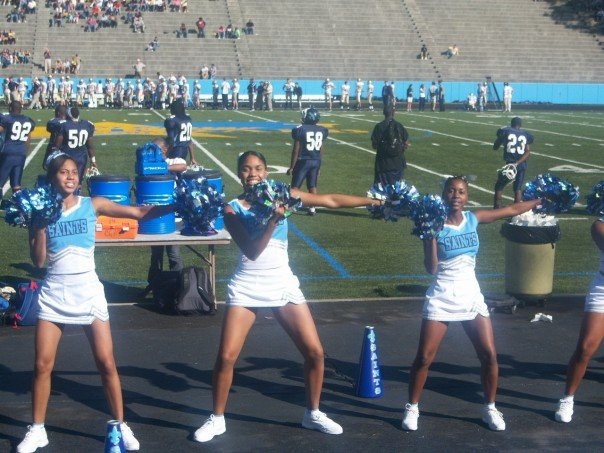
My name is Jan and I was a High School Cheerleader.  I’ve thought many times how well those years of jumping with pom poms prepared me for professional ministry.  Here are The Top Ten Things I learned:

1- It’s good to be flexible.

2- Sometimes you have to yell “A little louder now.”

3- Sometimes you have to yell “A little softer now.”

4- Keep your hair out of your face.

5- Standing in front of crowds can be unnerving, but pick a focal point and keep going.

6- It helps to have rhythm.

7- One word:  teamwork.

8- Sometimes you have to smile whether you feel like it or not.

9-All of us stand on the shoulders of others.

10- Sometimes you fall on your backside.

Super Bowl Prayers

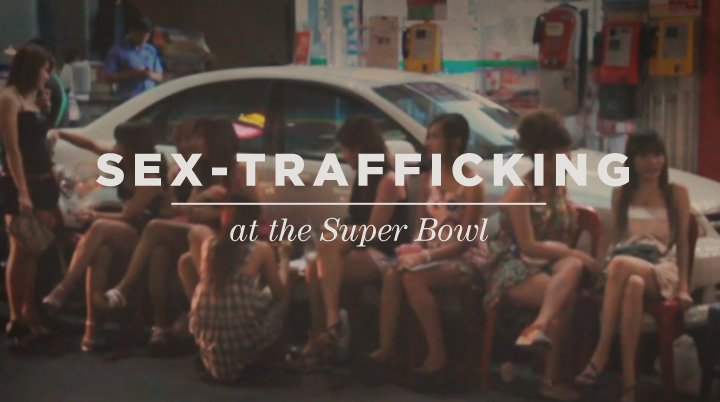
This weekend, even as you read this post, there are  boys, girls and women being forced into sexual activity by sex traffickers in Indianapolis.  They will have traveled with their captors for Super Bowl Weekend, while throngs of sports fans have planned a big weekend of professional football and partying.

“Partying” for many of these men will involve sex with children and women who have been taken against their will by human traffickers.

Because of eleven congregations of Roman Catholic women, many of these traffickers will find their unholy efforts confounded.  But we can help as well:

  • Learn about human trafficking in the 21st Century.  Did you know that there are more slaves in the 21st Century than in any other time in human history?
  • Know the signs that someone is being held against her/his will.  Here are some of the signs for school children who might be victims.
  • Donate time or money to organizations like The Polaris Project and the International Justice Mission.
  • Pray this weekend.  Don’t pray that God will bring victory to the Giants or Patriots.  Pray that people will keep their eyes and ears open, that they will speak up, that they will step in.  This is what it means to be the eyes, ears, and voices of Jesus in a crazy world.

Source of image

Reality Check

We’re Big Deal Church on the Hill.  We don’t need to reach out to the
neighbors.

Reality:  The neighbors don’t know this church exists.

I won the preaching award back in seminary.”

Reality:  You haven’t preached a fresh word in years.

Our church is very friendly.”

Reality:  A person can come and go with nobody noticing.

All of us need a reality check from time to time.  One of the marks of an authentic Christian community is that we hold each other accountable and tell each other the truth.  And before we can hold each other accountable, we need to trust each other.  And before we can trust each other, we need to love each other.  And before we can love each other, we need to remember that God that loves us even in our imperfection.

Too many of our church communities are filled with people who are not held accountable, don’t trust each other, don’t love each other, and don’t know that they are loved by God in spite of their imperfections.

This is not what God intends for the church.  We can’t be the hands, feet, voice, ears, and soul of Jesus on earth if we don’t live in reality.  But when we do live in reality, we see what needs to change.  People will attack us for telling the truth.  But we need to be real.  This is part of our calling.

How Many Do You Need to Have a Church?

A conversation on the Emergent Village Community Facebook Group caught me by surprise on Wednesday.  Someone asked:   “Does anyone know of Emergent leaning churches in the 200-600 member range?

The comments that followed were interesting.  Emergent churches have no designated requirements and there are certainly no rules about size. I have been a part of a tiny emerging church community  and I’ve experienced emerging worship in a congregation of several hundred.

Scripture says that where two or three are gathered, Jesus is among them.

But then again, one of the Emergent Village Community FB commenters said that a church isn’t sustainable if it stays at about 150 participants unless  the congregation has no full-time staff, no building, etc.  Actually, this is true for most congregations – not just emergent churches but all kinds of churches.  Unless at least 150 people are committed and involved, they don’t have the capacity to hire a pastor, sustain a building, etc.

In my denomination – the PCUSA – the median church size is 95.  Eight in ten congregations (80 percent) have 250 or fewer members. Half (52 percent) have 100 or fewer.  So how do these congregations survive much less thrive?

Many of them use their endowments – funds donated and invested when times were different.  Many of them stop maintaining or repairing their buildings.  Many call a part-time pastor or share a pastor with another small church.  But there is no capacity for the kind of ministry they once offered in their communities and it’s just a matter of time – unless things dramatically change – before the church closes.

The future holds an even wider variety of churches:  those without buildings and professional staff, those with part-time paid leaders, those living off their assets until the well is dry, those with enough resources to continue to serve as they’ve been serving , new communities being completely different kinds of churches.

I’d love to hear about the capacity of your church to do ministry in 2012.  What does your congregation have to make ministry possible?  What do you need to make ministry possible?

Minority Report

I almost named this post The Lesbian Bible Study.

I was in a Bible study on Capitol Hill about 15 years ago with a group of clergywomen about my age, and – as it turned out – I was the only heterosexual in the group.  It was interesting being in the minority.  I am a white woman with a good education and a privileged background in comparison to the rest of the world. I am rarely in the minority. In fact, I am almost never “the only one” of my race/age/ethnicity when I go to meetings, the grocery store, church, or the office.

How about you?  Have you ever been in the minority?

I remember being in a Chick-Fil-A in rural Maryland with my kids once and they noticed that all the customers and employees were white.  It was immediately noticeable to them.  It wasn’t like the Chick-Fil-A back home.

My kids rarely comment when they are the only white kids in any particular situation.  They’ve grown up as the minorities in their (excellent) public schools.  They have every expectation of working with people, living with people, and being in church with people of different races and ethnicities from their own.

I believe this is the future of our culture and world in spite of the fact that the morning news today reported that Chicago – where I now live and work – is the most segregated city in the United States.

When was the last time you were a minority and how did it feel?  It’s an excellent exercise for teaching us how to be welcoming, hospitable, and open.

Guest Blogger: Matt Pritchard

While I’m at a retreat through Tuesday, one of the most influential people in my ministry – Matt Pritchard – has generously agreed to share a post he wrote for another blog.  Enjoy this wisdom from Matt.

For many years, I’ve been blessed to be a part of many groups that deeply valued community from the elementary and high schools in my small mountain town to Christian groups in college to intentional Christian communities throughout my 20s to today.

In the autumn of 2007, I joined the staff of Fairlington Presbyterian Church in Alexandria, VA.  One of my key responsibilities was to nurture Holy Grounds, a new worship community of only a few months.

Holy Grounds turned out to be the most unique church community I’ve ever been a part of.

Most churches function as a banquet. We pay people to prepare a weekly spiritual meal for all who have gathered.

While this is certainly easier for those gathered, it has significant drawbacks. The pastor who has been paid to prepare the banquet is often left exhausted and famished by the endeavor. While the meal is often quite tasty and nourishing for some in the congregation, the menu, whether baby food, steak, curry, vegetarian, or gluten-free, fails to sustain all.

Holy Grounds became a community where people not only learn and accept the responsibility to seek out food (note: not talking individualism here, it’s God who makes the provision), but also learn how to and accept the responsibility to feed others. It’s not up to paid staff to feed everyone, rather it is a communal responsibility to find and share spiritual (and actual) food. We teach, bless, and encourage one another (as our gifts allow) in our pursuit of God.

It’s a spiritual potluck. We each bring a dish.

Some bring old favorites. Others bring new recipes that they’re trying out for the first time. Sometimes a person can’t bring a dish because they are too tired or overwhelmed. Sometimes someone brings a few dishes or one giant dish. Each contributes from her or his gifting whether a baker, cuisinier, rôtisseuror, saucier, or dishwasher.

Some people eat a little bit from what every person has brought. Others get a massive helping of a handful of dishes.

There is plenty for everyone to eat and certainly something that will fill the hunger each brings.

We don’t just leave with our hunger satiated, but, as with any good potluck, we share the recipes so that we can make them later for others.

The cool thing is that it’s not incumbent upon any individual to make sure that everyone is fed. It’s a responsibility we share. Unlike most churches, pastoral staff doesn’t arrive too tired to eat from preparing a massive meal for everyone; at Holy Grounds they get to partake in the spiritual feast alongside their coworkers in ministry.

And we each depart with more than we brought.

The banquet extends far beyond worship as we share responsibility in decision-making, in planning, in discernment, in care for the least of these, in walking alongside one another throughout each week, in encouraging, in pastoral care, in hospitality, and in virtually all aspects of our lives. It’s messy and it’s often difficult, but it’s truly good.

Holy Grounds (linkto: http://fairlingtonholygrounds.org) grapples with the hard questions of what it means to follow Jesus and love their neighbor as Christ loves them so that they might bring the Kingdom of God in Alexandria, VA and throughout the whole world.

Matt Pritchard now lives in Pittsburgh, PA helping people form communities that seek to bring the Kingdom of God closer.  He works with Kingdom Experiments , InterVarsity, the Simple Way , the House of St Michael the Archangel , and many more .