 No, this is not a post about 9-11, although that post might be written later this week. This is about the New Church Plants of the 21st Century and what – imho – will most likely never happen again.
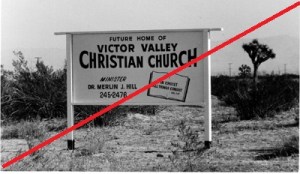
It used to be true that groups of Presbyterians or Episcopalians or Lutherans or whomever found themselves in a growing community without their flavor of church (think post-war Washington, DC in the late 1940s.) Maybe a group of friends threw together a Vacation Bible school one summer because there wasn’t one within walking distance of their apartment or new split level home, and they had so much fun that they decided to form a new church. (Actually, I used to serve that church.)
Or maybe an established church in the neighborhood was so overwhelmed with new members (Baby Boomers everywhere) that they planted a new church themselves just a mile away. You couldn’t have too many churches in the same zip code.
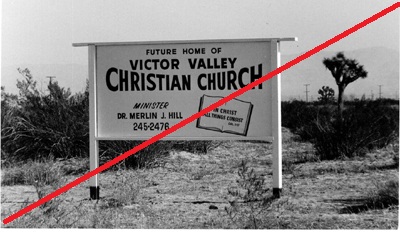
Later it was true that – as new housing developments sprang up in what were once fields out in the country – dioceses and presbyteries and conferences and associations recognized that those new burbs would need churches and so they parachute-dropped a charismatic pastor into that new neighborhood and a new congregation was soon established, and it grew and grew.
As recently as ten, fifteen, twenty years ago, this model still worked. At least in some parts of the country, churches were planted in new neighborhoods and they thrived under strong leadership. Yes, some attempts to starts new congregations faltered. In fact most New Church Starts are not successful. But occasionally, one catches a spark and flourishes.
In many areas – as we all know – megachurches sprang up in the past 20 years, often first meeting in a gifted teacher’s living room and eventually needing a massive warehouse or abandoned shopping mall to accomodate the hundreds and then thousands of people pouring into worship services.
I’m being ridiculously simplistic and over-generalizing here, but my point is this: Those Days Are Over For The Institutional Church. Sure, there could be a new megachurch or two popping up somewhere in 2015. And this is not to say that many established churches, founded in 1950 or 1970 or even 1870 will not continue to thrive and serve in extraordinary ways. But the days of multiple new churches in one neighborhood are over. The days of dropping a fresh faced pastor into a new condo development and establishing a sustainable church replete with a shiny new building in less than 5 years are over.
Again, please hear me out. Congregations that are already established can and will continue to do ministry well in their neighborhoods IF they are missional communities committed to adaptive change. But the majority of new spiritual congregations will look more like Broad Street Ministries in Philadelphia or Wicker Park Grace in Chicago. (Sorry but the WordPress hyperlink is on the fritz.) Those congregations are fluid and open. Membership stats are loose and worship is marked by art (often led by a curator rather than a preacher) and conversation (rather than a sermon.) In Holy Grounds Alexandria (again I can’t hyperlink) we called it grappling.
This may be painful for those of us who love membership rolls to accept but searching millennial generations are not going to join First Church on the Hill and sign up for the mission committee. Sure, there will be young adults who grew up singing from hymnbooks who will seek out a church like the one they knew and loved as children, but even those brothers and sisters in Christ will want something more emergent. Traditional in worship style perhaps but emergent in culture.
How do we make this shift in our thinking and our planning? Baby steps. While continuing to serve traditional congregations, we encourage the creation of missional communities that meet in nontraditional spaces: art galleries, bars, coffee shops, diners, movie theatres, parks. We’ve already seen them out there if we’ve been paying attention.
This is the future of new church developments if you ask me.

 From a conversation I had recently:





 A Church for Starving Artists