Are We Anti-Semitic?

This is a very tender and complicated matter.

I have Jewish friends who are feeling threatened from every side today. From the right, neo-Nazis and other hate groups continue to terrorize synagogues and Jewish Community Centers in the United States. And now the Jewish community is surely feeling assaulted – at least verbally – from the left.

The Petra Hotel in East Jerusalem where settlers moved into the first floor in March 2022 removing residents.

My own denomination approved a committee resolution last week at our General Assembly which states the following:

Recognize that the government of Israel’s laws, policies, and practices regarding the Palestinian people fulfill the international legal definition of apartheid. Apartheid is legally defined as inhuman acts committed for the purpose of establishing and maintaining domination by one racial group of persons over any other racial group of persons and systematically oppressing them This occurs in Israel/Palestine through:

  • Establishing two sets of laws, one for Israelis and one for Palestinians, which give preferential treatment to Israeli Jews and oppressive treatment to Palestinians
  • Expropriating Palestinian land and water for Jewish-only settlements.
  • Denying the right to freedom of residence to Palestinians.
  • Dividing the population along racial lines by the creation of separate reserves and ghettos for the Palestinians.
  • Denying Palestinians the right to a nationality.

Mine is not the first denomination to use the word “apartheid” but it deeply stings to many hearers. My denomination has a long history of partnering with Jewish neighbors both in the United States and in Israel, and yet we are called to speak truth.

When I criticize the harmful systems in my own country based on my religious beliefs, I do so because I believe the United States can do better. It doesn’t mean I hate my country.

When we criticize the harmful systems in Israel based on our religious beliefs, we do so because we believe Israel can do better. It doesn’t mean we hate Israel.

The God of the Abrahamic faiths is a God of justice and mercy and it’s very hard to call out our friends when we see and hear about unjust, merciless practices. I have visited the Holy Land several times and have seen with my own eyes the differences in the way Palestinians are treated compared to their Israeli siblings. I have Jewish friends who agree that Palestines must be treated with more compassion if there will ever be peace. Again, it’s tender and complicated.

Just as the United States is not a Christian nation and – when we are our patriotic best – we welcome all faiths, many of us also recognize Israel’s right to exist while – at the same time – supporting the Christians and Muslims who have lived in Palestine for thousands of years.

Only God can help us with these conflicts. But I refuse to not speak up when any nation oppresses their people (including my own.)
Billboards I’d Like to See This Summer

HH and I love where we live except for one thing: the view. Our balcony overlooks a parking lot and if you stand at the kitchen sink, you can see an Independence Boulevard billboard blocking our view of the Charlotte skyline. Usually the billboard is advertising a realtor or an HVAC business. It’s ugly.

One of my cousins works for a billboard company and I was asking her what it would cost to rent that billboard so that I could look out my kitchen window and be inspired. Not surprisingly – I can’t afford that or any other billboard.

But a girl can dream.

I would love to have a billboard that expresses a faith in Jesus that doesn’t look like these people or these people or these people. Most people think that Christians believe homosexuality to be “unacceptable” not realizing that tens of thousands of Christians in the United States not only “accept” our LGBTQA+ siblings; we recognize their gifts and love who they are. Every day I read tweets about how Christians are destroying the world.

Not the Christians I know.

The ones I know are doing what Jesus taught us to do like housing people and feeding people and teaching people that God has created each dang one of us in God’s own image. We like wholeness and colors – including gray – and all kinds of music and poetry and art and humans. A lot of us like Ted Lasso.

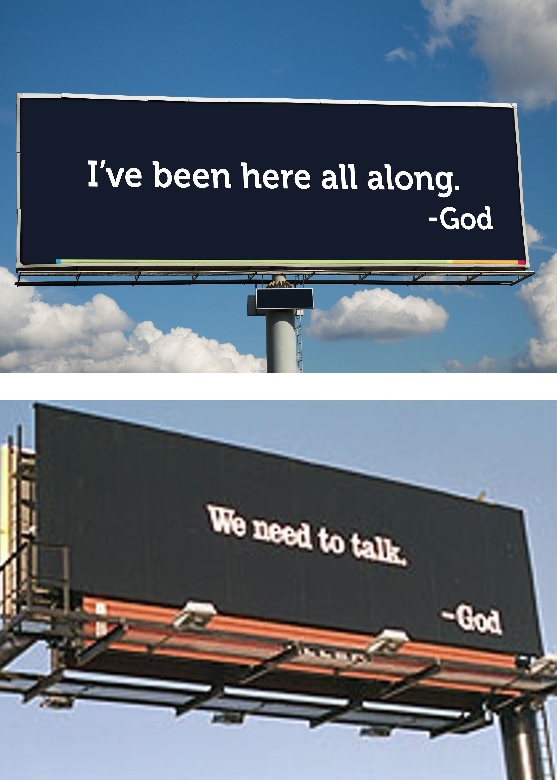
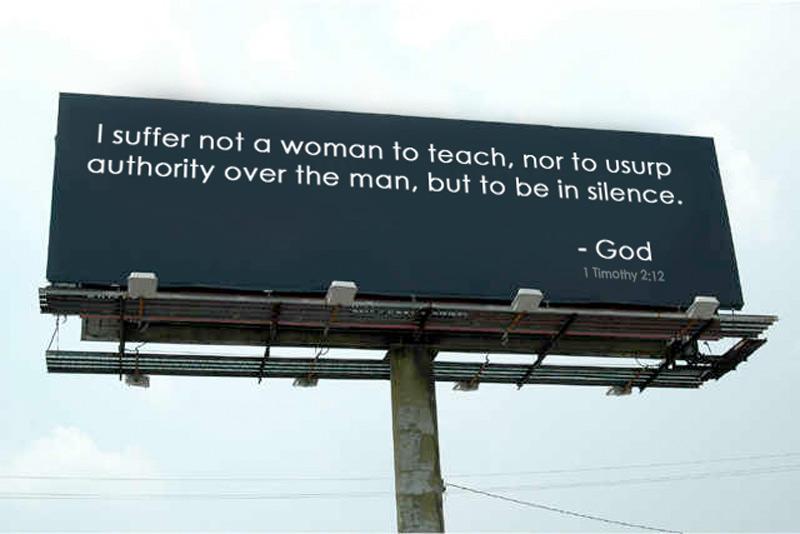
You’ve probably seen those billboards where God is talking to us:

I don’t mind these and I believe God can speak any way God wants to speak, but this kind of thing can be abused. Exhibit A:

(Cherry-picking verses without proper exegesis is bad theology.)

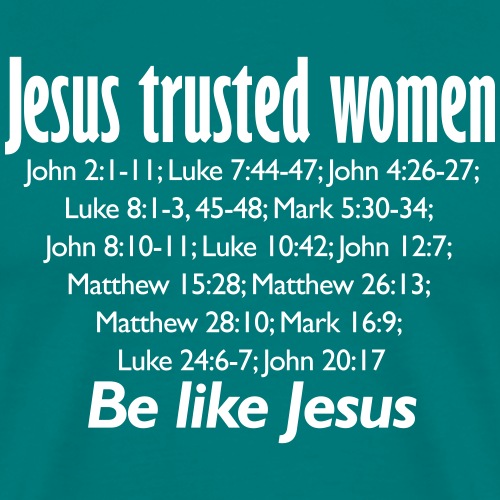
I would love to see a billboard that states what my sister Denise Anderson came up with for a t-shirt to benefit several important charities:

I’d love to see a billboard that says:

  • You know Jesus died for Nancy Pelosi, right? You know Jesus died for Mitch McConnell, right? You know Jesus died for Ilhan Omar, right? (This would actually be a series of billboards.)
  • If your church condemns LGBTQA+ people, you need to find a new church.
  • Love your neighbor’ even includes people who get on your last nerve.

This is not about “getting new members” or “being woke.” This is about living the way Jesus shows us to live.

Also, if you know of any grants that pay for inspiring billboards, please let me know.

The Secret About America?

FBC was taking an Uber from Union Station in DC to his home in Northern Virginia and his driver was one of those interesting people you often get to meet in Ubers. She was an immigrant from Afghanistan who had come to the U.S. five years ago. She had just finished her Masters Degree in cyber security and was earning extra money by driving for Uber.

They had the kind of conversation that FBC said he wishes could have continued past the cab ride, but one thing she said has stayed with him.

“One thing I’ve learned about American is that you can either eat well or you can sleep well.”

Translation: if you are rich enough to eat well, it happened because you did something that should keep you up at night. And if you can sleep well at night, it’s probably because you’ve lived a life of integrity and it’s kept you from becoming rich.

I’m not sure I agree. (Sadly many immoral people who eat and live like royalty sleep very well at night.) There are many “good people” who have lived prosperous lives without engaging in criminal activity. And yet most of the most financially prosperous people I know are slow to dig deeply into the roots of our success. We who are rich live on land taken from Native Americans. We who are rich (and white) have benefitted from the labor of enslaved people who were owned by our ancestors. We who are rich have benefitted from investments in businesses that privileged shareholders over stakeholders for the last 100 years which has resulted in hurting vulnerable populations and the environment.

And yet – nevertheless (one of my favorite God words) God’s reign lifts up a world in which everyone eats well and sleeps well – if only we love God and our neighbors as ourselves. We just don’t want to.

The not-so-secret thing about this great country is that it’s never been what we say we want to be.

“We the People of the United States, in Order to form a more perfect Union, establish Justice, insure domestic Tranquility, provide for the common defense, promote the general Welfare, and secure the Blessings of Liberty to ourselves and our Posterity, do ordain and establish this Constitution for the United States of America.”

If we look at all things our nation is divided about today, it all has to do with Justice, Tranquility, common defense, general Welfare and the Blessings of Liberty. If we honestly sought these things for all people, we would be a better nation. And God seems to be calling us to this kind of nation – one in which everyone eats and sleeps well. Happy Fourth of July, friends.

Image is The Flag is Bleeding by Faith Ringgold (1997)

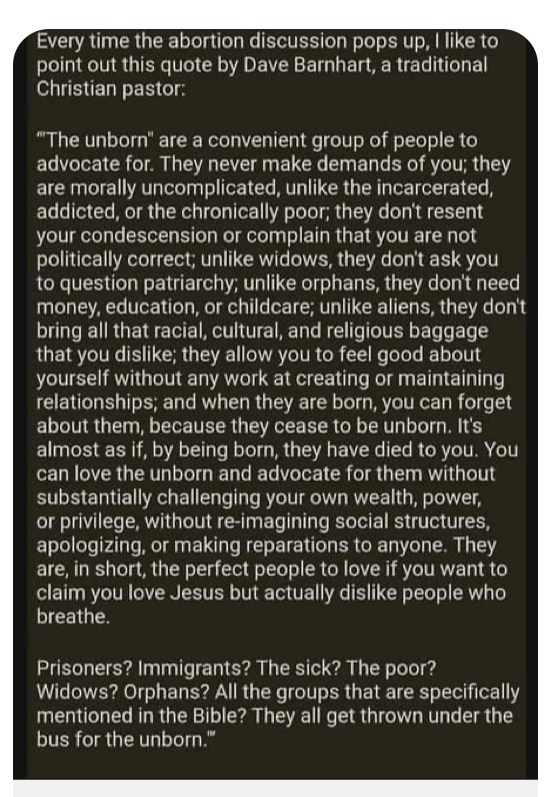
I Don’t Know Dave Barnhart but I Concur

Also I’m on vacation this week. Please let’s all be authentically Pro-Life this week and every week.

(Tweet from Kelly Grimes.)

From Intelligence to Emotional Intelligence to Adaptability Intelligence

I wrote this in 2015 here:

Emotional intelligence is a better predictor of pastoral success than straight As on a seminary transcript.  Emotionally intelligent people better manage their stress, diffuse anxiety, and promote a climate of optimism and adaptability which makes people feel more innovative.  It’s science, people.

EQ continues to be the most essential personality characteristic of an effective pastor. A self-aware leader understands their actual strengths and weaknesses, blind spots, and purpose.

Although many of us know the work of Ronald Heifetz, I’d never heard the term AQ until reading this book by Alan Murray. While we might be aware of the importance of being adaptable – especially after/during a pandemic, congregations hoping to transition into impactful mid-21st Century ministry need to find leaders with a high AQ.

Or maybe congregations don’t want that.

At the risk of over-simplifying the Pastor Nominating Process, I believe – very generally speaking – there are three kinds of pastors seeking ministry positions in these days:

Those with a high IQ – They are smart enough to do theological graduate work – and in my denomination – they can exegete scripture in ancient Hebrew and Koine Greek. They are well-read and have gifts in teaching, preaching, and general leadership. Extra points if your resume includes an Ivy League School. “Our pastor went to Yale.”

Those with high EQ – They communicate well, play well with others, and know how to read the room. They are self-aware and empathetic and able to succeed relationally. They handle conflict with poise and adversity with a positive spirit.

Those with high AQ – They are not only well-read about adaptive leadership, they are not only relationally gifted enough to talk about adaptive leadership, but they can actually do adaptive leadership. They are not afraid to try and fail, to unlearn and relearn, to pivot – our favorite pandemic leadership word.

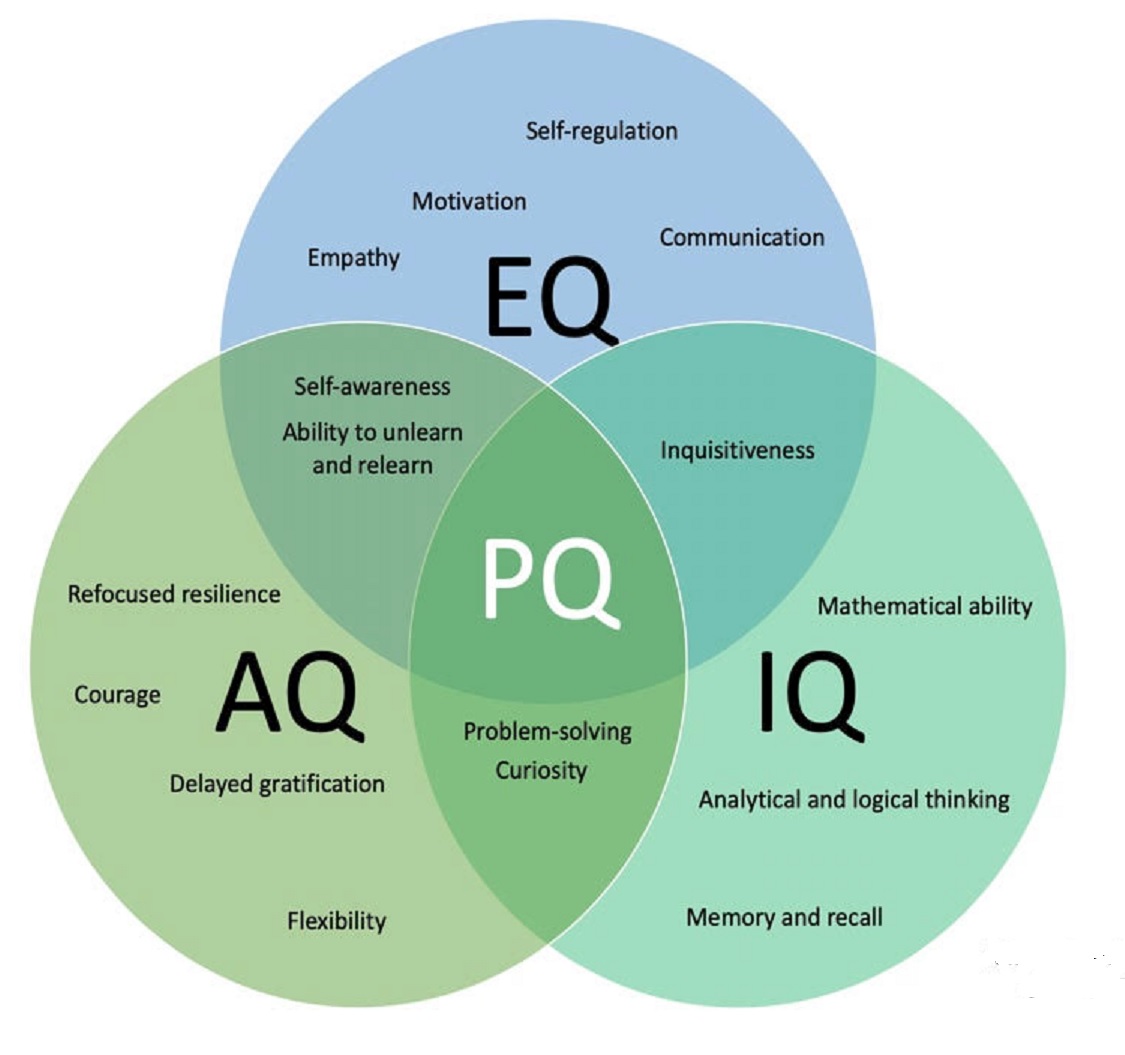
According to the chart above which I found here, there is also the PQ which is “performance quotient” or what a person is actually achieving.

All this talk of achievement is a tricky one in that being a “successful spiritual leader” means different things to different people. Is a successful spiritual leader one who is beloved by their congregation because the pastor’s like God to them? Is a successful spiritual leader one who doubles the size of the membership? Is a successful spiritual leader a builder who led the sanctuary renovation and added a new gym? Is the successful spiritual leader one who equips the saints for ministry – whether those saints are members of the church or preschool parents or scout troop members or neighbors who drop by the food pantry?

Some people naturally have a high AQ and others of us can learn how to have a high AQ. This is a rich and exciting time to learn these skills whether we are pastors, bankers, bakers, or dairy farmers. These times call for joyful adaptability. Who’s with me?

What Happens When We Don’t Belong to Anyone or Anything

Please read this book:

Especially in the past week, I have felt extraordinarily loved. I am Attachment Rich. I belong to many people and groups of people and mostly I belong to God, and this makes me feel so loved that even in this mess of a world, my heart is light.

There have been times when I’ve felt like I didn’t belong and that’s the worst feeling ever.

Cole Arthur Riley has written an exquisite book subtitled “Spirituality, Liberation, and the Stories that Make Us” and her words on the importance of belonging are poignant and brilliant.

If you go without belonging for long enough, if you’ve know the sting of betrayal, you can end up manufacturing an identity from your alienation. To protect yourself from the reminder and risk of exclusion, you begin initiating distance on your own calling yourself ‘loner’ or ‘independent.’ But a life lived with trust only in the self is exhausting.

Picture the middle school kid sitting alone in the cafeteria. Picture the sole little Black girl in her Brownie Troop who was not chosen as a bunk mate. Picture the middle aged woman who is now invisible when she goes shopping. Picture the elderly man who drinks coffee alone day after day in the local diner. Picture the new kid in high school who only speaks Twi. Picture the suburban man who was laid off after working for the same company for 28 years.

Being excluded kills. It kills the spirit and sometimes it kills the body.

There is something to being chosen that is uniquely healing,” writes Cole Arthur Riley.

So, here’s my thought. If – like me – you’re Attachment Rich, if you are included in most or many circles, if you belong in almost any place you find yourself, we have the opportunity and responsibility to include the unincluded.

I volunteered to drive kids I didn’t know to a mission trip location a few years ago and I felt like I belonged when a group of Cool Girls chose to ride in my car. Those young women blew my mind when they noticed that a young man who would be considered awkward in some circles hadn’t been chosen to ride in any specific car. One of The Cool Girls jumped out of our car, yelled that kid’s name, ran over to him, took his hand and said – joyfully – you’re coming with us! For the whole trip they included him in their stories and laughter. I saw a glimpse of heaven that day. That young man had been chosen. He belonged.

Look for someone who appears not to belong today and choose them. There’s something to being chosen that is uniquely healing.

I, Too, Have Climbed into a Dumpster

Angela Rubino and I have this in common.

I was retrieving a wedding cake topper that I’d accidentally tossed before a wedding reception in Northern Virginia. Angela Rubino dove into a dumpster in Rome, Georgia looking for evidence of voter fraud.

I easily found the cake topper which I unboxed and placed on the cake. And Angela drove home with two sacks of shredded paper which she stored in her garage hoping to find evidence of election fraud. She would need help taping them back together to uncover The Steal.

Please read this article by Stephanie McKrummen about one woman’s political journey which has led her to join an organization called Domestically Terrorized Mothers – among other things.

Suspicious of almost everything, trusting of almost nothing, believing in almost no one other than those who share her unease, she has in many ways become a citizen of a parallel America — not just red America, but another America entirely, one she believes to be awash in domestic enemies, stolen elections, immigrant invaders, sexual predators, the machinations of a global elite and other fresh nightmares revealed by the minute on her social media scrolls. 

As I write this, our nation is beyond culturally divided. We demonize each other, mock each other, accuse each other, and cancel each other. Some of us turn to God, including Angela Rubino:

“Sometimes I’m like, what if I’m wrong? It crosses my mind. Then I ask God: If I’m doing something wrong, please give me the strength to figure it out. Because I really want to understand what the point is. This can’t be what life is, that you get up and go to work and come home. That as humans, we’re nothing.”

After attending the first days of my denomination’s General Assembly last weekend, I heard other people express the same thoughts: “I ask God to help us. We’ve forgotten that we are created for more than work and worry.”

How can people of such different understandings of the world come together?

Part of the answer seems to be to lower the volume and calm the drama. Rep. Marjorie Taylor Greene is quoted at the end of this article as saying that the establishment “hates us.” The author Andrew Klaven says “Leftists hate freedom.” Historian Miles Culpepper says “Conservatives hate democracy.” Normally soft-spoken adults spew hate for Nancy Pelosi and Hillary Clinton, Donald Trump and Tucker Carlson.

Hating each other is not the answer.

Seeing each other as human beings created in the image of God is the answer.

I don’t hate Angela Rubino. We have both jumped into dumpsters with purpose.

I want to understand her and show her what the love of God looks like. I hope she would show me what the love of God looks like, because I often get it wrong.

Do I believe there is evil in the world. Yes. Do I believe the love of God can conquer that evil? Definitely.

Transitional Ministry Reprise

My inbox overfloweth.

After posting this love letter to Transitional Pastors, I heard from quite a few of you. In fact, I received over 60 private texts, DMs, emails, and phone calls about the state of Transitional Ministry and Transitional Ministry Training in the Church. Here’s the problem: nobody wants to shame or blame their colleagues and yet changes need to be made. Among the comments I heard over and over again:

  • My transitional ministry training was a waste of time.
  • The transitional ministers teaching the course I took are not themselves effective transitional pastors.
  • Some of the faculty who taught my class have never been transitional pastors.
  • My recent training prepared me to be an interim pastor ten or twenty years ago.
  • The supposedly trained transitional pastor at my church before I was called and installed there did nothing but preach old sermons.

It’s not easy to tell a beloved colleague that their transitional ministry gifts are weak. It’s not easy to share with my colleagues who teach Transitional Ministry Training that their faculty and methods are not preparing leaders to be effective transitional ministers in a late 21st Century, post-pandemic, overwhelmingly divided and anxious culture.

There are some good training offerings out there and there are some stellar transitional leaders out there. I shared one training in particular that I’ve found to be excellent. If you’ve checked them out, please do so again to leave your contact information. (Now there’s a black and white tab to click at the top of their website if you want to be on their mailing list.)

These times demand excellence in the way we serve the Church of Jesus Christ. It’s a critical time when we need about five times more gifted transitional leaders than we currently have. Please consider if God is leading you to be trained for this particular calling. Thank you. And thank you, colleagues, who are questioning if you should continue to serve as or train transitional leaders. It might be time to let some fresh leaders serve in this way.

My Dad and I Talked About Hard Things

My Dad has been gone for almost 32 years and – especially considering the times – it was surprising that he talked about so many controversial topics with me. I think it might have been because neither of us was afraid about shocking each other. He was very loving in sharing his opinions. From the time I was a teenager until he died when I was 34 we covered abortion, interracial dating and marriage, mental illness, alcoholism, what it was like to support Mom when she had cancer and what it was like after she died. And this was all before he found out he had cancer himself. He became even more tolerant after receiving the news that he had months to live – probably preparing to meet his gracious Creator. He wanted to be at least as tolerant as he believed God was.

(Note: He was never tolerant of anything having to do with Duke or – for some reason – Sears.)

If you are one of my cousins and Dad knew your family secrets, I probably know them too. I’m not sure why he confided in me, but I know some things that I’ve kept to myself. I think his point might have been that yes, people have affairs and unexpected pregnancies and transgender children and mental health challenges and financial difficulties and yet God loves us and Dad figured he should love everybody too.

Even though he talked about hard things with me, he never got over the fact that some people don’t believe in God. He considered that confounding. How can you live in this world (“It’s amazing what the LORD has let us learn!“) and not believe in God?

Dad often stopped the car and pulled over on the side of the road in Mt. Mourne, N. C. between Mooresville and Davidson to show us where enslaved people had been sold on a block by the train tracks before the Civil War. He didn’t offer much color commentary or ask “I wonder” questions, but he almost always pointed out the spot where families were separated “and that’s why it’s called Mt. Mourne,” he’d say. That history has been erased from current day Mt. Mourne if it was ever true.

But it sounded true when he talked about it. One of the largest plantations was right there by that auction block and there used to be an historic marker about the small slave market. It’s gone now.

Father’s Day and Juneteenth don’t always land on the same day, but I wonder what my Dad and I would be talking about today if he were alive. I imagine that his heart would be hurt by the fact that some enslaved people didn’t hear that they were free for more than two years after they’d been emancipated. They continued to live as chattel for two more years of their lives. He didn’t know that history growing up.

Dad was an easy crier and I think this would have made him cry if we’d talked about it.

I have only a vague idea of what happens after this life, but I pray that my Dad is with those men, women, and children who were held against their will now in the light of their Creator. And I hope God is as gracious as my Dad was.

Healing mercies to all who grieve today.

Church Pollinators

It occurred to me over coffee with a colleague last week that I am a church pollinator.

As a spiritual leader who oversees lots of congregations of varying sizes, contexts, and demographics, I get to be the one who travels from church to church carrying resources, ideas, and encouragement in interactions that nourish God’s people with the expectation that their ministries will flower and reproduce.

Some of the coolest creatures on earth get to be pollinators: birds, bats, bees, butterflies, beetles, lizards, lemurs, and possums. And because of their critical (and natural) work, we get:

  • fruits, vegetables, and nuts
  • half of the world’s oils, fibers and raw materials
  • healthier soil

This is the ecosystem in which the earth thrives.

Congregations have ecosystems too and pollinators are needed to grow fruits (of the Spirit) and spread God’s love. This metaphor is exciting because who doesn’t want to grow fruits and spread love?

What do we need to create church pollinators who will help the ecosystem flourish?

  • Something needs to be blooming. If nothing at all is blooming, it’s hard to pollinate anything.
  • We need water and the Spirit. We can’t see God’s plan without them.
  • We need healthy soil. Are we really ready for pollination? Or are stuck and bored and blind and disinterested in being God’s people? Jesus said something about this.
  • We need light and some of our congregations have actually chosen darkness: bullies are in control, basic kindness is rare, there is little evidence that anyone wants to love God or their neighbors as they love themselves.

Pollination is my favorite. It makes the world more beautiful and more nourishing, and it’s our critical and natural life purpose if we are living as we were created to live.