Loving Subtraction

 “Before you leave the house, look in the mirror and take at least one thing off.” Coco Chanel

We are better at addition than subtraction, but sometimes less is more.

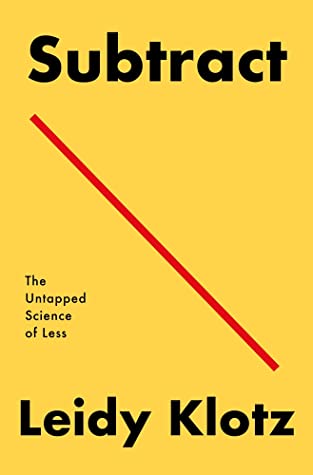
I love this book by Dr. Leidy Klotz of the University of Virginia and it holds many wise words for those of us serving congregations or other non-profits. It could also work for jewelry and other accessories a la Coco Chanel.

Every congregation I know – when considering their programming, mission activities, and even staff models – likes to add rather than subtract. We are already involved in Habitat for Humanity, the local homeless shelter, and the annual Chili Fundraiser (which we’ve been doing on for 34 years.) And when we are looking to “grow” or “reach new people” we consider adding a tutoring class or a spring ice cream social.

What if – instead of adding something to our already busy church schedule – we take something away? What if the reality is that everybody hates that Chili Fundraiser or it’s increasingly impossible to find volunteers for Habitat? It’s okay to stop doing something. It’s more than okay. It’s healthy to take something away – especially if we are tired of it and it has no positive impact for the community anymore.

As the years pass I need fewer and fewer things and so I’ve developed a personal discipline that goes like this: before I can buy a new pair of shoes, I need to get rid of a pair of shoes. Before I buy a new black turtleneck, I need to give one away. (This works for books and toys too.)

Leidy Klotz notes that humans are more likely to add than subtract in our thinking processes. It’s literally more work for our brains to subtract than it is to add, and so adding becomes our go-to behavior. He uses the example of his young son’s work on a Duplo bridge. The bridge that he was building with his son was uneven because one tower was taller than the other. Klotz’ son instinctively removed a block from the taller side – which was an interesting choice. Most people would add a block to the shorter side.

We seem to forget that we can remove things from our personal and corporate schedules – from meetings to fundraisers to classes. It’s okay, we don’t have to offer a Bible study on Wednesday nights anymore. Maybe we can move it to Sunday nights. Or maybe it could shift to a different kind of study. Or maybe we can just stop doing it for a season and see if anyone misses it.

Business leaders tell us that subtraction can make us more efficient. I think subtraction can make us more faithful. What do you think?

Check out these articles about subtraction as a practice.

(Not So Secret) Agenda

A friend recommended the book Search by Michelle Huneven recently. (Thanks L.) It’s the story of a restaurant critic who is also on her church’s pastor seach committee, and it’s a familiar story – at least to me.

Some of the Search Committee members have an agenda: some are serving to ensure that the new pastor is not a straight while male. Some hope to steer the committee towards a pastor under the age of 40. As the story goes on, it’s clear that their agendas are actually not so secret. Pacts form. Strategies develop. There’s an attempt to remove a couple members of the search committee when their agendas clearly don’t align with the agenda of the old guard.

Perhaps this story is familiar to you too.

Especially in Church World, we believe that The Holy Spirit has something to do with The Call to Ministry. There’s that initial call when a human being senses that God might be directing them towards a spiritual vocation. And then there are calls that come and go throughout a pastor’s life.* In my tradition, all Christians are called to ministry at the moment of their baptism. Some of us are called to professional ministry.

Do we, the members of the church, accept _____ to be our pastor, chosen by God through the voice of this congregation to lead us in the way of Jesus Christ?

This is the vow church people make when their new pastor is called in the Presbyterian Church USA. We believe God speaks through discerning humans.

God can still work when people come to the table with secret agendas. But hidden agendas are divisive and when someone campaigns to be on the pastor nominating committee to ensure that the next preacher will love handbells, it can get in the way. In some circumstances, it can derail a search.

In so many aspects of life, we come with secret (or not so secret) agendas. Personal agendas have been derailing the Institutional Church since well before Constantine was the Emperor. Among my favorites:

  • The leader who suggests that the church bakes cupcakes to give to the homeless as a new mission project when actually she wants to start her own cupcake business.
  • The members who want to fill the Pastor Nominating Committee with bagpipers in order to call a Scot as their new pastor.
  • The pastor who wants to put his own spouse on the governing board “because my spouse is so faithful” when actually the pastor just wants another elder on the board who will agree with him.

These are all true examples.

I have not-so-secret agendas too, but I’m constantly praying that my truest agenda is that we in the Church will do what pleases our Creator. Maybe it’s Build Affordable Housing. Maybe it’s Open an Emergency Shelter. Maybe it’s Add a Child Development Center. It doesn’t really matter as long as it pleases God.

*According to the PCUSA constitution “In Baptism each Christian is called to ministry in Christ’s name. God calls some persons from the midst of congregations to fulfill particular functions, so that the ministry of the whole people of God may flourish.” (W4.0401) The only laypeople in a Presbyterian Church USA congregation are the unbaptized.

Super Powers – We All Have Them

If I could choose my super power it would definitely be polyglotism – without the need for Duolingo. In reality my super powers are parallel parking and basic navigation. I am blessed with the ability to parallel park in any space that’s the size of whatever car I’m driving. And I have a superb sense of direction.

Zazie Beetz playing Domino in Deadpool 2. Her super power is that she is freakishly lucky.

I asked a friend recently what her super power was and she said that she is super at “living while poor.” She grew up in a military family that struggled financially and once her father left the Army, he went to college and worked full-time. Her mother had two jobs, and their one luxury was books. Her mother allowed my friend and her brother to buy books. Eventually, they could afford a house and college (with loans) but S. is still extremely frugal. She makes no spontaneous purchases and she can squeeze a lot out of $20 – like three meals and a new t-shirt. It’s her super power.

I have another friend – a pastor – who spent a couple of years as a young adult who was incarcerated. He is deeply ashamed of this and is very careful to entrust that information with just a handful of people outside his family. And yet, this is his super power. That experience changed his life for the better to the point that he credits his prison time as the seminal event of his call to professional ministry. He has a wisdom that changes the lives of other people who might be where he once was.

Sometimes we live with personal shame and yet it’s possible that the cause of our shame is actually our super power.

Did you have alcoholic parents? Did you lose your parents at a young age? Have you lost a child to gun violence? Are you in recovery? Are you a housefire survivor? Did your family get evicted? Did you grow up in foster care? Were you raised by wolves?

My friends – yes, you need therapy – and after your wounds have turned into scars, those scars are your super power. Use them to make the world better.

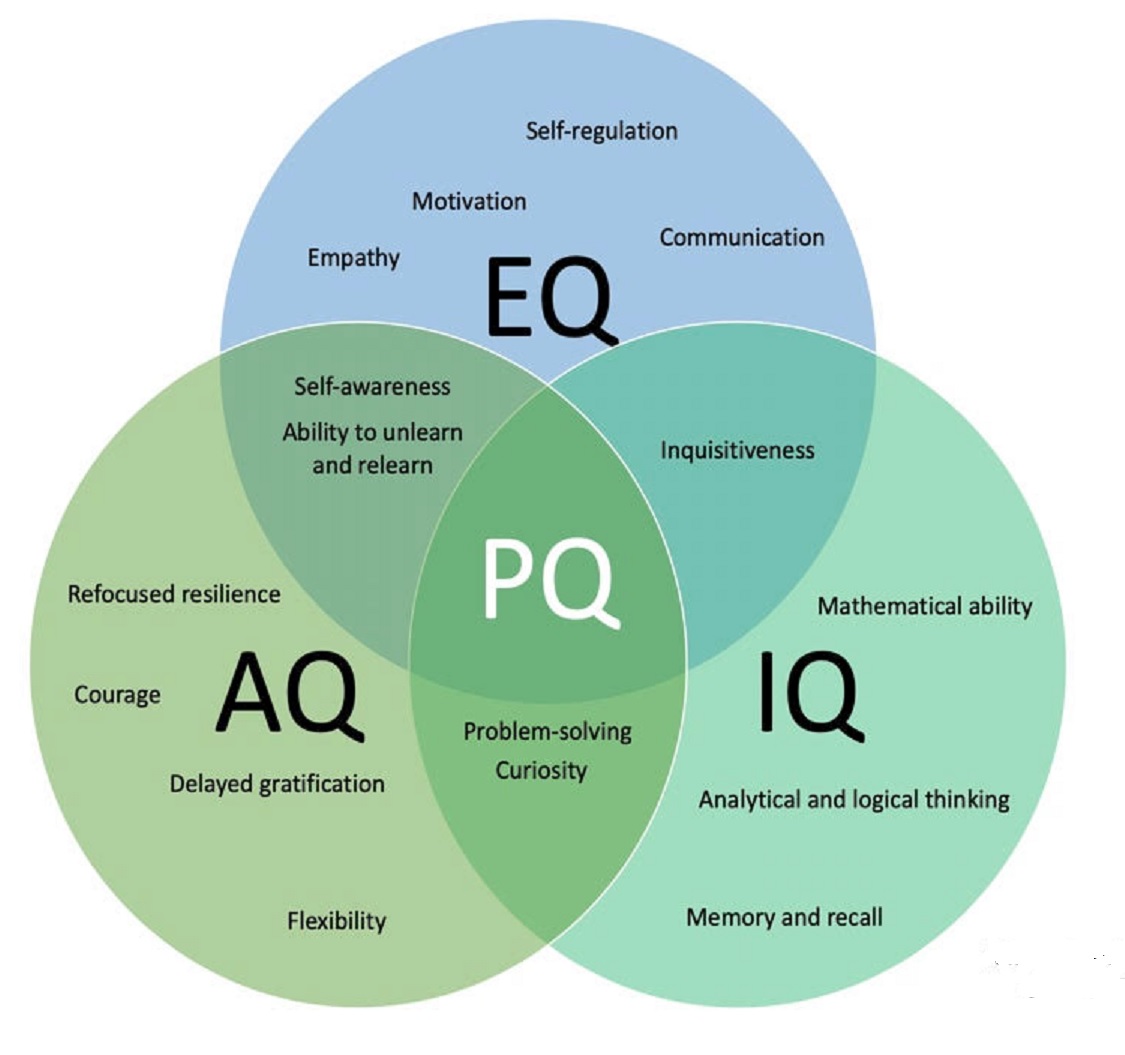
Did you win the genetic lottery? Do you have a genius IQ? Do you have a genius EQ? Can you walk on your hands? Can you intuitively take apart a car engine?

My friends – yes, you probably need therapy too – and after you get over yourself, realize that those gifts are your super power. Use them to make the world better.

Have a wonderful Monday.

A Love Letter to Regenerating Congregations

Dear Regenerating Congregations,

I’m not supposed to have favorites, but you are my favorites.

You understand that just as lost or injured organs can regenerate, human institutions – like the Church – can be regenerate too. And you haven’t just talked about it; you’ve done it.

Thank you Friendship Place in Chicago. Thank you Arlington Presbyterian Church in Northern Virginia. Thank you Caldwell Presbyterian Church in Charlotte (and other partner churches in the Presbyterian, Missionary Baptist, Roman Catholic, AME, and United Methodist traditions.) Thank you St. Gregory of Nyssa in San Francisco for feeding 500 families every week.

Thank you The Grove Church in Charlotte for being willing to lose more than half your membership when you decided to invite your immediate neighborhood into your building, love your Muslim neighbors, and focus on discipleship over churchianity.

[Note: These congregations are not necessarily filled with rich people. They have partnered with like-minded neighbors who understand their regenerative vision.]

Many of our congregations have forgotten that they were established to love God and the world God created, becoming social clubs instead. A few of our congregations protest injustice in all its forms. And a handful of congregations – like yours – are creating something that makes a practical impact in the lives of God’s children. Thank you. I love you.

Eboo Patel writes in his new book We Need to Build: Field Notes for Diverse Democracy that he had a vision for a world that saw its diversity as “a powerful and visible asset.” And then someone pulled him aside and said, “Please build what you see – it would make the world so much better.”

I see a world where everyone has enough food to eat and a safe place to live. I see a world where children have access to excellent health care and schooling. I see a world that addresses what breaks God’s heart in the name of Jesus Christ. Let’s build that together.

Regenerating Congregations: thank you for showing us what could happen when we take our faith and the Holy Spirit seriously.

Gratefully yours, Jan

Image is Friendship Place in Chicago. Source here.

Who Wants to Build Something?

Although I’ll be watching the January 6 Hearings tonight on C-Span, I doubt that I’ll be joined by the masses. People have already decided what they think happened on January 6 or they don’t care. Both of these perspectives are disturbing.

We just commemorated the 78th Anniversary of D Day when 6,603 Americans died alongside 2,700 British, and 946 Canadians. I don’t know anyone who doesn’t consider what happened on D Day to be anything less than a monumental sacrifice against the evil of fascism for the sake of freedom. And yet now we live in a world in which the reactions to fascism range from a shrug to a tweet.

Who wants to build something rather than tear something down? Eboo Patel has written a new book about the need for us to shift from shaking our fists and burning down our enemies’ houses to changing the world to become a beautiful social order. I would call this the Reign of God.

As politicians continue to tear each other down and brokenness shows up in school shootings and young adult suicide, as the Church continues to grapple with terrible press – much of it deserved, thriving communities are not succumbing to pessimism and hopelessness.

Tomorrow – another love letter is coming. A love letter to regenerating congregations. Thanks SB.

In the meantime, please read Eboo’s latest book. You can buy it here.

“I Hope ___ Read That Blog Post”

After doing my unplanned series of love letters – which were all inspired either by your requests or my own personal experiences – I’ve heard quite a few people tell me that they hope (their transitional pastor/their head of staff/their associate pastor/their 60-something pastor/their 30-something pastor/their former pastor/their current pastor) read a certain post.

I wish we could be lovingly honest with each other to the point that we didn’t need to surreptitiously and anonymously place a printout of a blog post on somebody’s desk. (“Hmm. Where did this article come from?“)

I love the Church of Jesus Christ. I love watching the Holy Spirit make shifts that we never imagined or expected. I love watching stuck congregations become unstuck. I love watching an authentic call unfold. I love observing leaders build a different kind of Church.

But friends, we have got to hold each other accountable when our efforts are lacking or when we are damaging the Church rather than bolstering the Church. True fact: some of us believe we are strong leaders when we are not. Please re-read this.

A couple of things based on your thoughts shared with me privately over the past week:

  • It does the Church no favors when Presbyteries (and other mid-councils responsible for preparing candidates for professional ministry) continue to move seminarians forward when it’s clear that they do not have the EQ to be successful pastors. Humans can learn Emotional Intelligence, but we have to want to do it.
  • Much of the practical training for pastors and the certification training for transitional pastors is sorely dated. Just because we have a seminary degree and/or transitional ministry training doesn’t mean we learned how to serve the 21st Century Church. I’m receiving a lot of feedback from people who have taken transitional ministry training. Basic feedback: Please stop using dated tools. Please stop teaching what might have worked 10 years ago. Or 25 years ago. (For the record, this training is excellent.)
  • Do not be afraid. Many of us are afraid to retire with too little money. Many of us are nowhere near retirement, but we fear losing the only kind of job we know how to do. Many of us are afraid to move away from our families. Many of us are afraid to take a leap into new territory professionally. People – we call ourselves children of God and followers of Jesus. What does scripture say about being afraid? Why don’t we listen to the angels?

Maybe there will be a future “love letter” or two. And in the meantime, let’s be the Church together seeking what expands the reign of God.

Painting is David and Nathan by Swiss artist Angelika Kauffman (1741–1807.) Source.

A Love Letter to Transitional Pastors

Dear Transitional Pastors,

I have strong feelings about your ministry.

Some of you call yourselves Interim Ministers but that sounds like you’re a place holder until the real pastor shows up. Pastors who are serious about this work of serving a congregation between settled or “permanent” pastors are not place holders. You are Transitional Pastors.

Keep in mind that the hardest and last part of active childbirth is called “Transition.” It’s going to hurt but at the end there’s new life.

Some denominations don’t have Transitional Pastor positions, and I believe that’s a mistake, but this post is not for you. It’s for denominations who recognize that – between pastorates – there are some messy things that need to happen to prepare for a congregation’s next chapter. How wonderful that you – Transitional Ministers – have signed up to do these messy things for the sake of the Gospel. Thank you.

And yet, I hear over and over again about Transitional Pastors who are leaving their temporary positions in worse shape than they found them, meaning the newly installed (“permanent”) pastor has to start their ministry doing hard things. No honeymoon. No hearty welcome.

I am not breaking up with you, Transitional Minister colleagues, but please consider not being a Transitional Pastor if any of the following are true:

  • You haven’t been a successful pastor in called and installed positions, and so you’re trying this out as a Plan B.
  • You are conflict averse and find it incapacitating to consider helping the 85 year organist retire because she can’t read music anymore. Everybody in the church knows she needs to step down but they love her and nobody wants to do it. It’s your job to do it.
  • You’ve always wanted to live in The Big City, The Mountains, The Resort Town and it would be fun to live there for a year or two. Oh right – you also will have a hard job to do six days a week.
  • You consider Transitional Ministry a great post-retirement income even though you’re exhausted and seriously kicked back for the last five years before retirement.
  • You believe this will be the way to maneuver yourself into a permanent call. If they fall in love with you, they might keep you. Colleague: this is devious and unhealthy.

Great reasons to serve as a Transitional Pastor:

  • You still have energy for professional ministry but it’s time to leave your current position after 15+ years. You are too close to retirement to seek another called and installed position, but you have so much to give and find working intensively with a church in transition to be interesting.
  • You get that all congregations are in transition right now, and you welcome the opportunity to set the stage for continuing transition even after the new pastor is called.
  • You don’t aspire to fix a church, heal a church, or dramatically change a church that doesn’t need to be fixed, healed or dramatically changed. In other words, you don’t have a savior complex and you get that some congregations are quite healthy.
  • You travel lightly. (i.e. You don’t carry unnecessary baggage from previous pastoral roles.)
  • You don’t need to be the smartest person in the room. It’s offensive to have a pastor come in assuming that nobody else knows how to do church.
  • You have excellent emotional intelligence. You read rooms quickly.

I have strong opinions of where people should and should not take Transitional Leadership training. Message me if you’d like suggestions. For the record, really excellent Transitional Leadership Education is a worthwhile continuing education experience for all pastors whether you plan to serve in a specific Transitional role or not. But don’t take just any class. Again – some are better than others.

A great Transitional Pastor is like gold and we need more of you. The Church of Jesus Christ continues to evolve and reform, and it didn’t start with the pandemic. It’s been happening for decades and it will only continue. Thanks to all who find this exciting.

You are an essential part of 21st Century ministry. Much love to all who accept this call which requires sacrifice and flexibility beyond the usual pastoral role. I’m trying to get more benefits for you.

Bless you, Jan

A Love Letter to Parishioners Who Want to Be the Pastor’s Best Friend

[Note: Yes, I’m on a roll with the whole ‘love letters’ theme. I’m taking requests now.]

Dear Beloved Parishioners Who Want to Be the Pastor’s Best Friend,

Bless your heart – and I mean that in the most sincere way. Pastors need friends and your desire to befriend your professional minister is heartfelt. Thank you.

Thank you for remembering the pastor’s birthday. Thank you for inviting the pastor to your home for dinner. Thank you for offering to babysit the pastor’s kids. Thank you for inviting the pastor to play golf/go camping/join your bowling league/have a beer/go running/be a normal person.

Be careful.

Be careful not to confuse time spent with the pastor as ordinary friendship.

  • That conversation about the state of your marriage over a salad? That was pastoral care.
  • That time you helped the pastor chaperone the church kids to Disney World? That was youth group volunteering.
  • That time the pastor and family joined you and your family for a big graduation party? That was fellowship time.

Yes, pastors and parishioners can be friends. And also pastors need best friends who are not members of their congregations.

Pastors need best friends who are not members of their congregations. It’s worth saying twice.

The future of your church depends on it and I’m not kidding. If the pastor’s closest friends are members of the congregation one of two things happen when that pastor leaves: 1) the pastor now has no friends or 2) the pastor cannot separate from the congregation which means the next pastor will be impacted.

It’s also important to note that you – beloved parishioner – don’t get to be the pastor’s confidant, pal, or parent figure just because you want to fulfill that role. Maybe that was your role for a previous pastor. Maybe you long to have that kind of connection with your minister. If your pastor doesn’t take you up on offers of friendship, it means your pastor has good boundaries.

As a young woman long ago, the church I was serving included other young women who perceived that we were close girlfriends. The truth is that while church members were sharing the details of their sex life, medical life, work life, and home life, they hadn’t noticed that I wasn’t sharing comparable information. I might say that I was going on vacation to the beach but that’s not the same as sharing “my boyfriend and I got in a big fight on vacation at the beach and here are the photos.” Not the same.

I once served a congregation in which my predecessor had been very close friends with the members across the street. They even vacationed together. When it was clear that I wasn’t going to have that kind of relationship with them, they considered me to be rude or unfriendly.

It’s okay not to be best friends with those who befriended previous ministers.

It’s important to have friendly relationships between church staff members and church members. And it’s also important to remember our roles for the sake of healthy leadership. I have deeply loved the congregations I’ve served and yet, they couldn’t be my closest friends. Again – I loved them and relished our relationship. But I was still their pastor first.

Please encourage your pastor to have friends who are not part of your congregation. It will benefit everyone in the future.

Your sibling in Christ, Jan

P.S. The image of Pope Benedict XVI with a friend and a beer was taken on “Buy Your Priest a Beer Day” which is apparently September 9. Roman Catholics and some Anglicans apparently celebrate this. I know other denominational leaders who’d be up for it.

A Love Letter to Pastors Who Are Lying to Themselves

Dear Pastor Colleagues,

You know how we sometimes quote 1 John 1:8 before Prayers of Confession?

If we say we have no sin, we deceive ourselves, and the truth is not in us.

Yeah, I like that verse too. And I am also a champion self-deceiver in areas of sin, perceptions, and so many other things. (I still think I look like a middle-aged mom. I often think I’m not racist. Truth: I look like a grandmother. Racism is and will always be in my bones.) As an Enneagram 3, I continue to learn how my 3-ness helps me deceive myself and others.

So how do we tell each other that we are deceiving ourselves?

For our particular context, how do we help each other understand that self-awareness is essential to being a successful pastor? Friends – I wrote earlier this week about the importance of being teachable. This means we need to be on a constant journey to learn the truth about ourselves.

One of the ongoing issues that come to me from church members is: how do we help our pastor be a better pastor? We pastors deceive ourselves in terms of:

  • Listening only to our biggest fans. (“I love it when you tell stories about your dog!”) Truth: Lots of people are done with hearing about your dog.
  • Avoiding conflict. (“They’ve never liked me anyway.”) Truth: You clearly have a hard time receiving constructive criticism.
  • Taking credit for things that – frankly – anybody could have achieved. (“500 new members have joined since I became pastor.“) Truth: We happened to in the right place at the right time – when new construction was booming around here and there were no other churches within a mile.
  • Believing we are still as fresh and energetic as our younger selves. (“I’m still an excellent preacher. People love my accents and anecdotes.”)
  • Believing we have nothing left to learn. (“Why would I need to attend a conference on stewardship when I’ve been leading stewardship campaigns for years?”)

Beloved Colleagues: please hear and believe me when I say – with deep compassion – that we might be deceiving ourselves.

I personally do not love it when people tell me that I need to change some things about the way I do my ministry. And yet, my calling is not about me. It’s about what makes Jesus happy. If I’m doing anything that 1) makes Jesus unhappy or 2) is damaging the very church I love, I need to know – even if it hurts.

For the last 15 years, I have had a group of four people in my life (4 in my last congregation, 4 in my last Presbytery, 4 in my current Presbytery) whose job it is to tell me hard things. I picked them myself because I trust them to tell me the truth. My current team’s job is specifically to tell me when it’s time to retire, in the event that I am not paying attention. They also have permission to tell me I’m spending too much time ____ and not enough time ____. They also have permission to tell me I talk too much or I am an idiot or I handled something really poorly. Whatever I need to know, they have promised to tell me.

I need this because it’s too easy for me to deceive myself. The spiritual journey is about knowing ourselves in light of being the person God has created us to be. I can be a thoughtless fool and so can you. This doesn’t mean we are failures to the universe. It means we can do better and it’s a good thing to know we can do better.

Colleagues, we don’t have to be stuck or make our congregations feel stuck. It makes Jesus – the most self aware human being ever – happy when we allow the truth to be revealed.

With love and empathy, Jan

Image is Hope by George Frederic Watts and associates (1886)

Extroverting for Jesus

I am a Myers Briggs Introvert but I regularly Extrovert for Jesus. This means that naps are essential and quiet time between meetings makes me a better leader.

A professional minister has a daily pinball routine whether serving as a parish pastor, a chaplain, or a denominational leader. As a parish pastor one might go from a pastoral call about a brain tumor to a phone call about budget deficit to a phone call to recruit volunteers to a lunch meeting about a mission trip to preparing for Bible study to a phone call about church insurance claim to a phone call after surgery to preparing for a funeral to coffee with angry person to an in-person training for Presbytery committee. The next day might look similar but with a slot for sermon preparation or meeting someone at the ER or writing thank-you notes. The shifting gears from one thing to another thing can be exhausting.

For a denominational leader in middle-judicatory ministry the routine can be similar. From staff meeting to phone calls to reference checks to preparation for a Zoom meeting to the actual Zoom meeting to another Zoom meeting to in-person meeting to sermon writing for the church whose pastor is retiring.

Hello 9 PM Bedtime.

But here’s a little secret about this particular Introvert: I can extrovert for Jesus all day long when I see the activity’s impact on expanding the reign of God. Here’s a day that is not in any way exhausting:

Phone call with a pastor who has A Great Idea to pitch. Morning staff meeting as we mention the impactful things happening in our Presbytery. Coffee with a candidate for ordination who has a gleam in her eye. Checking in with two pastors who are finding success in a joint effort to offer an after-school program. Writing a sermon that feels like the Holy Spirit is in the room.

Of course there will always be pastoral care and administrative and other responsibilities, and done through the lens of transformation makes even the most ordinary responsibility feel life-changing. If God is with us in each moment, there are opportunities for shifting the culture to look more like heaven.

According to this article, 75% of Google’s senior leaders are introverts. This article offers excellent points too. It occurs to me that deep relationships often happen best during one-on-one conversations. Extrovert or not, successful pastors love their congregations and – if very, very fortunate – like their congregations.

And what’s especially fun about serving The Church while being an introvert is when we see the Holy at work. Sometimes it makes us so excited that we appear to be extroverts.

Image source. (Although I believe introverts can make good pastors if we are willing to practice extroverting for Jesus.)