One (Mainline) Church. Multiple Campuses.

Lots of non-denominational congregations have multiple campuses to the point that they become their own denomination. In the city where I live, examples include Forest Hill Church and Elevation Church. There are four Forest Hill locations in Charlotte, one just over the NC border in SC, and one just outside Charlotte out “in the country.” Elevation has five locations in Charlotte plus additional locations from Florida to Canada. They all share common beliefs about their faith and have lots of pastors, programs, and people.

I am part of a denomination once known as a mainline church in that we are part of the earliest Christian groups to come to what would become the United States starting in the 1600s, helping to form this country. We are the Presbyterians, the Episcopalians, the Lutherans, the Methodists, the Disciples of Christ, and the Congregationalists. Our people hailed from northern Europe for the most part and we were mostly White.

Things have changed. Sort of. These days “Mainline Protestant Christians” and “Evangelical Christians” are often considered mutually exclusive although I would call myself a Mainline Protestant Evangelical Christian who is very progressive on some things and kind of conservative on some things. But that’s just me. People of faith are easily pegged but it’s unfair to do so. Most Black Protestants are part of Mainline denominations or denominations that are offshoots although I know lots of Evangelical Black Presbyterians.

But I digress.

I serve 93 congregations in seven counties as a “mid-council leader.” These congregations are small and large, urban and rural, “conservative” and “liberal” and also a mixture of both. Each congregation has it’s own governing board and it’s own budget and it’s own mission and ministry. Like “non-denominational churches” we have a shared set of beliefs based on scripture and historic creeds. We all love Jesus in our own ways – although some of us talk more openly about it than others.

What if we saw these 93 congregations as one Church with 93 campuses?

Seriously. Imagine this. While each congregation had it’s own location and leadership, there would be more of a sense of cross-pollination which – frankly – has been one of the blessings of COVID. During these past two years, I’ve seen:

  • Members of “East Church on the Hill” and “Church with the Red Barn” participate in Zoom Bible Studies and Book Discussion Groups over at “Third Church in the Suburbs.”
  • People worshipping with a variety of different congregations on a given Sunday via live-streaming.
  • Congregations partnering together for special worship events, small groups and youth programs.
  • Lots of pulpit exchanges and guest preachers from the variety of congregations in our Presbytery.

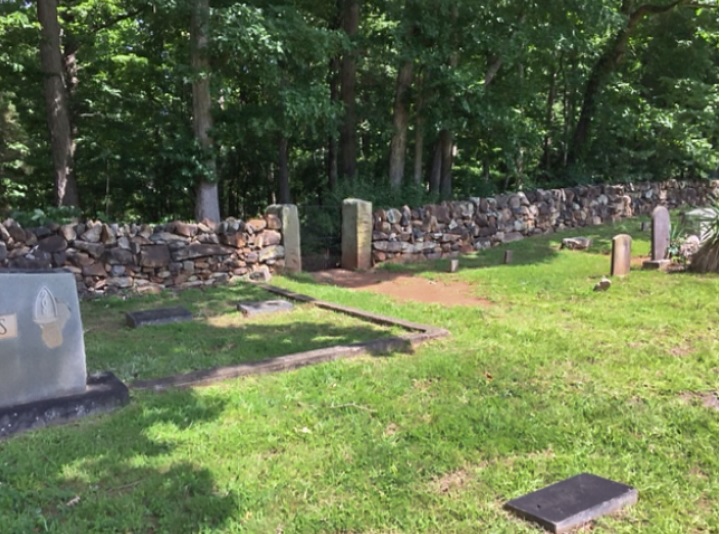
One of the benefits of being A Connectional Church is that we partner together to do what we cannot do as individual congregations. Over the past year, I’ve witnessed a large congregation replace the roof of a small congregation making it possible for that small congregation to return to their sanctuary for Christmas Eve. I’ve seen participants from at least six congregations join together to clear out an historic cemetery. I’ve watched multiple youth groups work together to build a Habitat House. I’ve marveled at the mass collection of supplies for victims of natural disasters and seen multiple congregations join to help new refugees from Afghanistan find homes and jobs.

Ministry is not about making a name for our particular branch of faith or our individual congregations. It’s not about competing with our neighboring congregations. It’s about serving the people God loves. (That would be all people, especially the broken ones.)

Yes, we have different campuses. The particular Church I serve has 93 of them. But all of us are on the same mission: to heal the dispirited, to make disciples, to worship the One who created us.

Imagine if we saw ourselves as One Church.

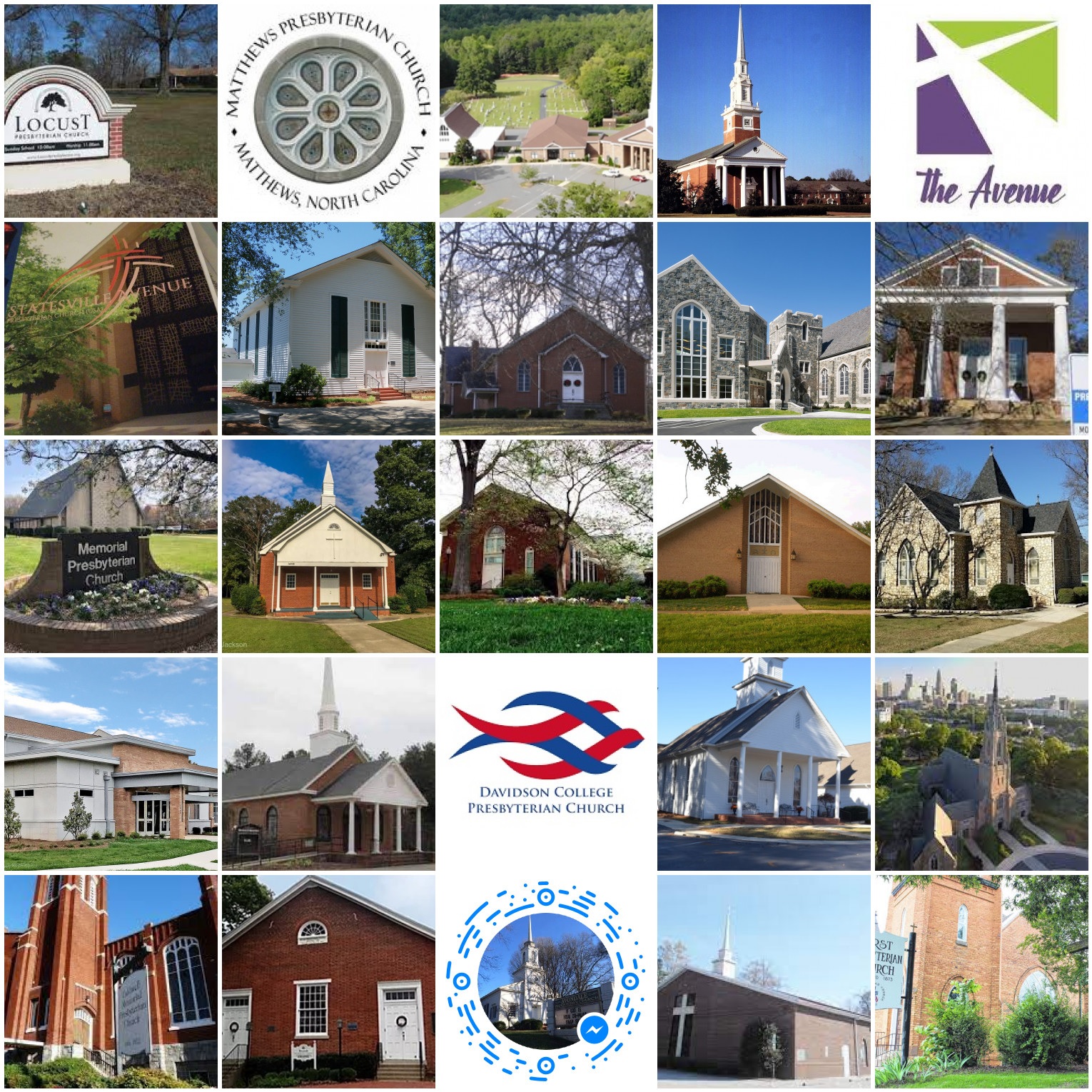
Image of just a few of the campuses of The Church known as Charlotte Presbytery. Friendly reminder: the church is not a building. We just use buildings as places for The Church to gather.

Basketball, Shame, and Jesus

There was a basketball game over the weekend. The unlikely victors defeated a team coached by the winningest coach in NCAA history at his last home game. My hope is that we were all good sports and yet I admit before you and God that sometimes I am not.

My first memory of hate involves NCAA basketball.

The year was 1971 and it happened to be my 15th birthday. The University of North Carolina and the University of South Carolina were playing in the NCAA Atlantic Coast Conference finals.

USC was #6 in the nation, coached by Frank McGuire who had committed the unforgivable basketball sin of leaving one school in the ACC to coach at a rival school in the ACC. UNC was #11 in the nation, coached by Dean Smith who had been McGuire’s assistant but was now in his tenth year as Head Coach in Chapel Hill.

It was a dirty game.

Even USC fans admit that their talented point guard John Roche was mean and nasty. He had a resting scowl face and he was quick to kick, punch, and elbow his opponents while referees often missed it. He seemed to be a bully off-court too. I deeply hated him.

South Carolina prevailed 52-51 over North Carolina that day in 1971 and it was bitter. The bully won.

And then – in an act of humility and authentic good sportsmanship in spite of 40 minutes of questionable officiating, Coach Smith directed each of his players to line up and shake the hands of each of their South Carolina opponents. John Roche refused to shake the hands of the North Carolina players or coaches. He wouldn’t shake anyone’s hand but instead smirked and laughed at the Tarheels.

I can still feel my insides seething when I recall that day. I hated John Roche with a burning hatred. The smugness. The disdain. The terrible sportsmanship.

The bad guy who did the sign of the cross before hitting free throws. How dare he call on Jesus’ name.

It infuriated me worse than any feeling I’ve ever felt for Duke – and there are many of us who grew up with strong feelings about Duke including a high school classmate of mine who wrote the seminal book about it. (The Blythe family also sat behind us in church.)

During Lents past and especially when I read the accounts of Jesus’ betrayal and shameful death, I remembered John Roche at the 1971 ACC Finals. It was the closest thing I could get to experiencing utter betrayal and bitter contempt.

[Note: clearly my life was and has been unspeakably easy if my deepest experience of shame and betrayal involved a basketball player I’d never met. But again, John Roche taught me about what treachery and contempt felt like.]

March Madness always falls during Lent and that makes sense to me if you are a college basketball fan. Yes, it’s just a game and it’s also about heroism and honor and teamwork and self-sacrifice. It’s about stories of redemption and stories of grace.

I love March Madness. And I love that God can even use basketball to teach us what sin looks like.

Image of John Roche, point guard for the University of South Carolina in 1971. And congratulations to Coach K who finishes up an extraordinary career at Duke University where he is currently the winningest coach in NCAA history.

Leadership and Keeping Up

Note: This is not a post about 1) Toxic Busy-ness, 2) The Kardashians, or 3) Frantic Anxiety about Falling Behind.

This is a post about Keeping Up for the sake of the Gospel.

When I was traveling for two years with a church gig, one of my handlers (the person who picked me up and made sure I got to where I was supposed to be) was driving me to a meeting. Once he got onto the highway, he merged into particular lane created for people with more than one person in the car.

We call this the HOV lane,” he said, “And it stands for ‘high occupancy vehicle.'”

He didn’t offer this explanation s-l-o-w-l-y as if I was intellectually challenged. He said it matter-of-factly as if this was a bit of information that was simply not well-known. This man was younger than I was.

I thanked him and shared that I had lived in the DC area with lots of HOV lanes.

And then he told me about some of the churches in their Presbytery. He shared that one of their churches had a tutoring program and he expressed that fact with an exclamation mark, as if tutoring programs were rare or unique in churches. He mentioned that another church was thinking about starting a computer training program. This was 2018.

Again, a computer training program is neither rare nor unique on church campuses. But they were new to that leader. And as we drove together it was clear that he was also unfamiliar with churches who welcome refugees, host after-school programs, and take mission trips. He mentioned all those ministries as if he’d just heard that they happen, when actually most of the thriving congregations I know of all faiths offer similar ministries. This lovely elder who had offered to drive around was simply unaware of what was going on in his own community.

Imagine if a church person came up to you and said, “There’s this thing they do in St. Dymphna’s Church down the street called Lent. We should try that.”

One of the things I notice in many of our churches is that we are slow to learn new things. We hear that there’s a new resource called Nooma videos and while we are pumped to try this new resource, we don’t realize that Rob Bell created Nooma videos in 2002. We wonder if we should introduce “contemporary music” to worship although much of what we call “contemporary” is 40 years old.

Speaking as a late bloomer who is often the last to know, I offer this word to my colleagues in ministry: please let’s hone our tools. Read secular materials to see what cool things are happening in other organizations and ponder how we might benefit from new ways of thinking. Read through the latest editions of Fast Company, Wired, and the HBR if you are pondering entrepreneurial shifts. For ordinary trends read Monocle, Riposte, and Positive News. Read poetry. Listen to podcasts that your kids recommend. Attend conferences that you’ve never attended before.

One of the common questions parishioners ask me is about encouraging their pastors to work on their preaching, pastoral care, leadership skills. Especially when a pastor’s been at it for over a decade – much less several – we don’t think we need to upgrade our proficiencies. Several times a year, I’m asked by a different church leader, “How do we tell our pastor (who thinks he’s good preacher) that he needs to attend a preaching conference?” And I’m not talking about criticism from the parishioner who is still furious at the pastor for something that happened in the 1990s. I’m talking about what happens when the leaders of a congregation all agree that their pastor could use some coaching on better ways to moderate a meeting or offer authentic pastoral care.

Leaders: if we believe in lifelong learning, this is the perfect season to venture into some new skill set building. It’s not about keeping up with every cultural icon or racing to attend every cool event. It’s about breathing different air, seeing with new eyes, staring into space and letting the Spirit speak. Ask people you trust what you need to do to be a better leader. And then do that thing.

We have too many leaders who are okay with coasting on the big things while being busy with a million little things. May Lent be a season when we can breathe deeply and ponder the big things, perhaps prompted by what’s going on over at The Creative Independent.

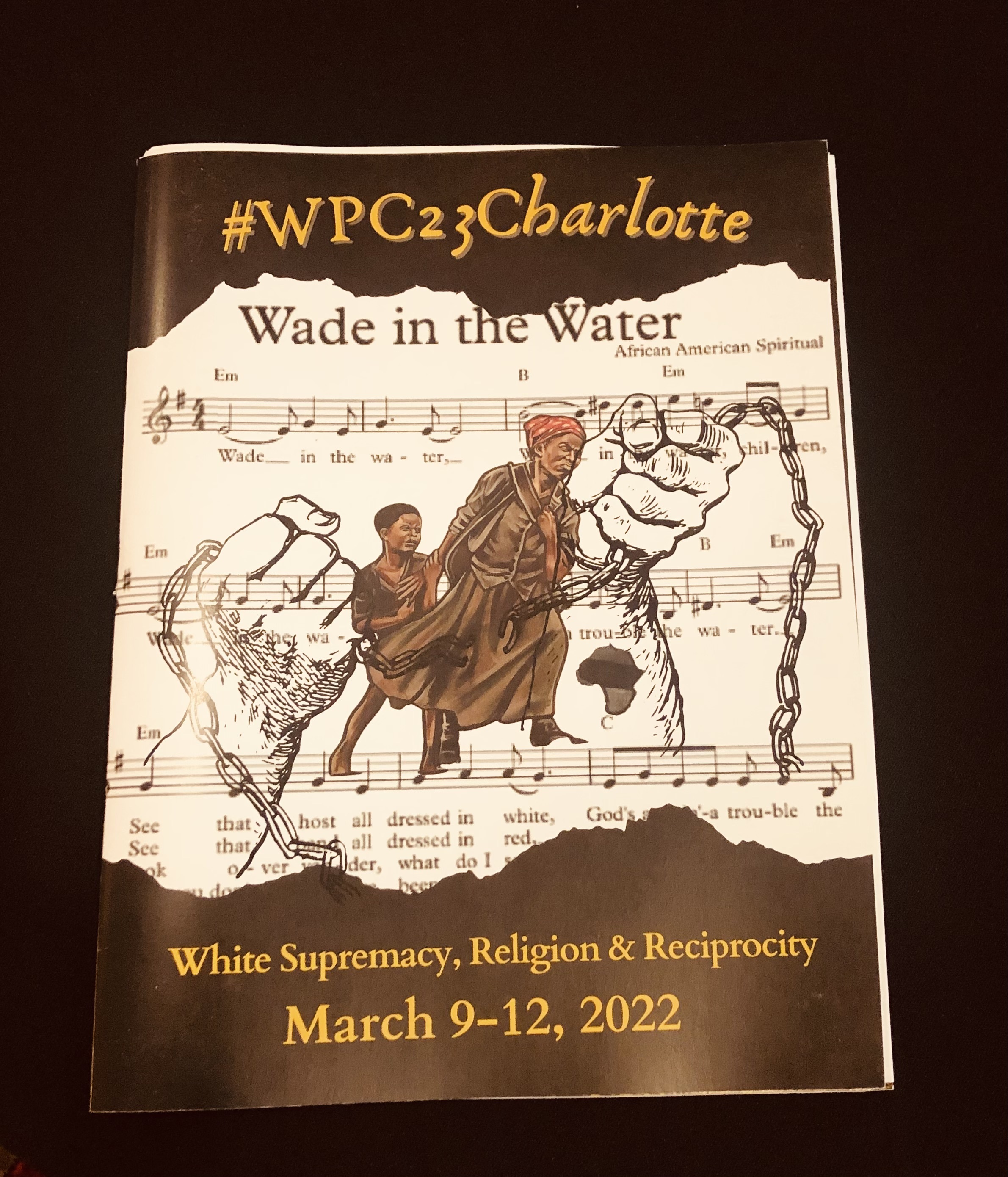
Note: We need you and you need to be at The National White Privilege Conference here in Charlotte next week: March 9-12, especially if you indeed want to grapple with new things. Info and registration here. Deadline for registration is March 7.

Dust

You are dust and to dust you will return.

Today there will be Ash Wednesday church services and drive-through Imposition of Ashes throughout the land, and depending on where we live, we might see a lot of people with ash-smudged foreheads or we might not see a single person with ash marks. The secular might pull the devout aside and whisper, “Hey there’s something on your forehead” not knowing that this is an intentional mark of penitence and mortality often worn by Christians on the first day of Lent.

You are dust and to dust you will return.

Most of us don’t tell our children they are dust. We want our children to believe they are amazing and exceptional and able to leap tall buildings in a single bound.

Some of us adults possibly feel like we dwell in a suffocating ash heap. We don’t need a priest to tell us that we are dust and to dust we will return. We get it. We have swings of hopelessness. We continue to endure COVID-brain, COVID-appetite, COVID-fatigue. COVID-crankiness. We fight our neighbor over masks and vaccines. We will threaten our children’s teachers if they don’t listen to us Parents.

What does it mean – today – to have someone mark us with a cross of ashes on our foreheads and say, “You are dust and to dust you will return” ? Do we respond with “Duh. What else is new?” Do we feel even worse about ourselves? I hope this isn’t the case.

Not all dust is created equal.

  • Dust bunnies live under the sofa and they grow if not vacuumed up.
  • Furniture dust – if left long enough on the dining room table – can be written or drawn upon.

These forms of dust are uninspiring and allergy-provoking.

But then there is cosmic dust. Star dust. The dust of creation.

God created us in the beginning out of the kind of dust from which a universe could be molded and formed. And after we live this life, something mysterious happens that we can only imagine. We return to dust, but I get the idea that this is not a terrible thing.

Jesus died for these things: love, hope, deep peace, justice, freedom. When we find ourselves overwhelmed by the ash heaps of life, maybe it helps to reframe the dust from which we come and to which we will return.

Maybe it’s star dust.

Image of interstellar dust.

Little Gestures that Heal

Lord, oh the Great and Almighty, protect our beloved Ukraine,

Bless her with freedom and light of your holy rays.

With learning and knowledge enlighten us, your children small,

In love pure and everlasting let us, oh Lord, grow.

We pray, oh Lord Almighty, protect our beloved Ukraine,

Grant our people and country all your kindness and grace.

Bless us with freedom, bless us with wisdom, guide into kind world,

Bless us, oh Lord, with good fortune for ever and evermore.

SNL’s cold open over the weekend was a hymn sung by The Ukrainian Chorus Dumka of New York (lyrics above.)

This was a choice the writers didn’t have to make. They could have gone with a satire about Putin or a Lonely Island video about Chernobyl. It could have been funny because – Lord knows – we need funny. But they went with healing.

It was healing in the same way the cold open was healing on December 15, 2012 – the Saturday night after the Sandy Hook massacre when a children’s chorus sang Silent Night.

I attended a stirring funeral service over the weekend and among the takeaways is that most of us send sympathy cards that offer our thoughts and prayers. Much has been said about the cliche of “thoughts and prayers” over the past years.

Everytime there’s a school shooting or a immigration catastrophe or a flood, we routinely offer them and then nothing much changes.

Someone eulogized at the same funeral that we show our affection and empathy by doing more than thinking and praying with our brains. Sharing food, making a phone call, and visiting on a random Tuesday afternoon infuse us with something holy. There are gestures we can offer that actually bring healing.

The Library of Congress Magazine this month includes an article recently called “The Book That Saved a Life” about a French soldier named Maurice Hamonneau whose life was spared in battle because the book Kim by Rudyard Kipling was in his shirt pocket and it stopped the bulletin. Hamonneau sent the book to Kipling whose own son had recently died in a different battle.

Hamonneau didn’t have to do that. But he did, and it was a healing gesture. The gesture probably helped heal Hamonneau as well as Kipling.

Lent begins this week and imagine a Lenten season where we devote ourselves to simple gestures of healing. What do we have that might bring healing if we gave it to someone else?

An extra coat? A medal? A family treasure? A handwritten letter? I believe that if we made healing gestures a way of life – instead of offering mere thoughts and prayers – the world can indeed be truly healed.

What a Difference Two Years Make

Video is from the 20th Anniversary of the Conference. This will be the 23rd Conference in March 2022

[Note: Ukraine was attacked after this post was written. Please join me in praying for all those in harm’s way today.]

Two years ago, a small group of Presbyterians decided that we would try to bring the National White Privilege Conference to Charlotte. It would be the 23rd of these conferences and – as we started our planning – a lot of organizations were “in.” Yes, they would support the conference. Yes, they wanted their names attached.

Things have changed in the past two years and not just because of a global pandemic.

Today, the words “White Privilege” are fighting words – now more than ever. Today . . .

  • In Virginia, House Bill 781 is being considered and if passed, teachers who teach “divisive concepts” can be charged with a Class 4 misdemeanor punishable by up to $250, face termination or have their license revoked.” You can read the bill here.
  • In New Hampshire, Mom’s For Liberty will pay $500 to people who report teachers in violation of their new “discrimination laws.”
  • In Utah, the principal of West Jordan Middle School asked the student group “Black and Proud” to change its name to “The Black Student Alliance ” after a white student’s father had asked her if his son could start a club called “White and Proud.”***

***This very comment demonstrates why teaching about Slavery, Jim Crow Laws, Red-lining, the Tulsa Massacre, and so much of this history is essential. People with Black bodies have been taught for over 1000 years that their bodies, their minds, their souls were inferior to People with White bodies. This teaching was legislated. It was (and is) part of our culture. And subsequently, People with White bodies were taught that their bodies, minds, and souls were superior. This continues to show up in educational opportunities, law enforcement, and – sadly – church.

We who are White-skinned have been taught overtly and subtly all our lives that we can indeed be proud to be White. It’s good to be White, we’ve learned through the ages, especially in a courtroom, in a classroom, in a board room, in an upscale shopping mall, behind the wheel of a car, walking in a nice neighborhood, running for office, interviewing for a job, etc. etc. etc.

But what a difference two years makes.

Much of these differences are a result of misinformation shared for the sole purpose of causing chaos and division. (Note: Here’s a podcast on how to identify misinformation.) Our nation is terribly divided because of misinformation.

This is a time to be firm but loving with each other. Let’s learn from each other. Let’s talk with each other. Let’s not be a party to the misinformation.

An excellent way to start and/or continue the learning is to attend the National White Privilege Conference. Please join us. You can register here.

So Many Shots

I hope to travel to India in late March for SBC and AJC’s wedding and during my checkup last week, I got all the shots. The required shots. The just-in-case shots. The shots that have nothing to do with travel to South Asia. At the risk of sounding like a certain favorite lyricist unpacking the word “shot” I’m reminded that God connects things for us in unexpected and holy ways.

Example: something random happens on a Tuesday in January and on a Friday in February it suddenly makes sense. It requires alone time to notice these connections. If every minute is fulled, we miss them.

So I was so happy to hear Eminem sing Lose Yourself at the Super Bowl because it is one of the greatest songs of all time and – 20 years later – it still moves me. It will always move me.

You better lose yourself in the music, the moment
You own it, you better never let it go
You only get one shot, do not miss your chance to blow
This opportunity comes once in a lifetime
.

I put it on repeat in my car and opened the moonroof and turned it up and didn’t care when people stared at the white lady driving a ten year old CRV as I drove around last week. And while the lyrics swirled in my head and reinforced my opinion that Eminem is a lyrical genius, I was also thinking about our local countdown to the National White Privilege Conference which starts 15 days from today. And I was thinking about the fact that I can afford to buy tickets to travel to India. And that I have excellent health insurance that even pays for extraordinary innoculations.

This is the definition of privilege: When you get more than one shot in life.

I went to high school with a guy who was given a red Porsche on his sixteenth birthday and even I – a person who didn’t know him well enough to say “hi” in the cafeteria – could have told you that this was a terrible idea. He totalled the car less than a month later, and nobody was surprised when his parents replaced the obliterated Porsche with another one.

I remember times when I’ve failed at something: a test, a job. I remember changing my college major more than once. I remember forgetting to change the oil in my beat up car to the point that the engine seized on an interstate highway driving to Boston. What happened? I got a re-take on the test or a different job. I got to take extra classes to finalize a new major. I even got another car and while it was no Porsche, it was a car and my parents bought it for me and drove it up to Maryland from North Carolina where the other car had died.

I have had countless shots at success, prosperity, and education. Imagine – if we possibly can – what it’s like to have one, single, desperate shot.

Before Miranda told us about Alexander Hamilton’s one shot, Marshall Mathers wrote about it with such clarity that I could feel the sweaty hands and smell the vomit on his sweater. I don’t know who reads this blog, but I’m guessing that nobody reading this right now has ever had one sole shot at success. We have most likely had countless shots.

Desperate people do desperate things. Imagine the despair if there is just one opportunity to rise out of poverty or capitivity or misery and there is a possibility that it could slip away.

I believe that we need to go there – at least in our heads – if we hope to follow Jesus the One who has come to lift us out of death in all its forms. Jesus saw those who were desperate. My hope is that I might see the desperate too so that I might also do the work of Jesus.

Image of Marshall Mathers (Eminem) the writer and rapper of Lose Yourself.

Throw Back Thursday – Blog Version

As my colleagues and I prepare to welcome what we hope will be a couple thousand people from around the country to something called The White Privilege Conference, I found another post from 2016 as I prepared to attend my first White Privilege Conference. You can read it here.

Some things have changed: I now live in Charlotte, NC

Some things haven’t: People still roll their eyes when they hear the words White Privilege.

Actually those words seem to spark more anger than eye-rolling these days. We are so divided that some believe that even talking about hot topics will only further divide us. And yet, when we don’t talk with each other, when we don’t risk being uncomfortable, when we pretend like everything is fine, we are forgetting that things are not fine for all God’s people.

We can do better.

This is not a conference for becoming smarter about all kinds of Privilege (and all of us have some kind of privilege.) This is a conference that we hope will move us to live differently. For me, it’s about God and who God is calling us to be so that the world might be – on earth – as it is in heaven.

You can register for the 23rd White Privilege Conference here. Scholarships and discounts are available.

Why Do I Have to Apologize for Slavery?

I’ve never enslaved a person. For that matter, I’ve never removed Native people from their own property. I’ve never interred a person of Japanese heritage. Why do I have to apologize for something I’ve never done?

I have Black friends. I’ve gone to school with Black students. I was bussed from my own neighborhood to a school across town. And now I live in a neighborhood with Black and Brown people. There’s even a Black family in my church.

Why do I have to apologize for slavery?

Over the weekend, our Presbytery discussed whether or not we would concur with an overture to the General Assembly (the biennnial congress responsible for considering changes to our denomination’s constitution) regarding the history of slavery in our country and in the Church. It starts out like this:

The Presbytery of Giddings-Lovejoy overtures the 225th General Assembly (2022) to offer an apology to African Americans for the sin of slavery and its legacy.

(Note: Giddings-Lovejoy is the name of one of the 166 Presbyteries in the Presbyterian Church USA. It’s based in the St. Louis area.)

Included in this overture are the following statements:

  • White supremacy is a conscious, calculated effort to perpetuate and institutionalize white supremacy and privilege through legal systems as well as economic and physical intimidation.
  • We, as a people of faith, recognize that the only appropriate path to healing and reconciliation is to acknowledge the wrongs that we, the Presbyterian Church, as part of the institutional church structure, were and are complicit in perpetuating.
  •  Black lives have been devalued beginning with slavery, and their human dignity continues to be circumvented through the economic and legal systems that are racist as institutions.
  •  We recognize the necessity of building a trusting relationship between white Americans and African Americans.
  • The PC(USA) apologizes to African Americans both in the church and outside of the church for all the wrongs that have been done throughout our history and those that are ongoing.

These are fighting words for many.

These words spark many layers of conversation from “Is White Supremacy actually baked into our U.S. history from the beginning?” to “Am I personally guilty of the sins of our Fathers and Mothers?” These words make many White people feel ashamed and defensive.

Speaking as a Christian in the Reformed Tradition, my faith is confessional. This means that we believe that although – from the beginning – God has called human beings to live in covenant with both God and each other, we have broken that covenant. Confession is a major part of our faith, meaning that – in simple terms – we can do better. We as individuals can do better. We as corporate humanity can do better. We as a nation can do better.

We all fall short of the glory of God. Even Mother Teresa. Even the Pope. Even our sweet grandmothers.

And so we confess those things that have separated us from God and each other. The sin of slavery is one of those things. It separated human beings in the worst possible ways from the beginning of our nation’s history. And after emancipation, the inequities continued. And they continue today from the shooting of people in Black bodies to the everyday ways people are treated whose skin colors are different from our own.

We have to be blind not to see this.

On Saturday, our Presbytery voted 71% to 29% in favor of concurring with this overture. The 225th General Assembly will discuss it, tweak it, vote on it this summer in Louisville, KY. Clearly there are many people who believe we have nothing to apologize for. In faith I disagree.

Image of the Briery Presbyterian Church in Keysville, Virginia (in the Presbytery of the Peaks). In 1766, slave holding members voted to raise money to hire a minister by investing in human chattle to build the church endowment. You can read about the church here and here.

“Stop laughing Janice!”

“Stop laughing Janice or you’re going to give yourself a hematoma!”

I’m not sure which was funnier: the Netflex series I was watching or Nurse Marsha of the American Red Cross fussing at me while I was donating platelets over the weekend. What I didn’t know before Saturday is that – while giving whole blood takes about 15 minutes – giving platelets takes about 3 hours during which both arms are pinned down. All the whole blood donation spots were full so I thought I’d give platelets.

I am an antsy person with itchy eyes. Between needing to scratch my eyes and laughing at episodes of Murderville, I was moving more than I was supposed to be moving.

“Stop laughing Janice or you’re going to give yourself a hematoma!”

First of all, no one calls me Janice. And secondly, I’d never been threatened with a hematoma before. This struck me as hilarious.

A lot of things are hilarious in everyday life. And in these days and every day we need to notice those things for our sanity.

I’ve been a pastor for almost 38 years and it’s been inspiring, joyful, exhausting, and funny. Sometimes the humor is dark. In fact, most of the time it’s dark.

I’ve experienced a ventriloquist funeral director, circus tent worship with wild animals trained to dance to organ music, a funeral soloist using karaoke to sing Celine Dion, a 21 gun salute with live bullets, a daughter of the deceased falling into the grave on top of the casket, and weddings with the following songs as processionals: I Love a Rainy Night, Feelings, and Stand Inside Your Love. I’ve been subpoenaed for accusing a man of pooping in the church parking lot (he wanted to sue me for defamation of character but it was tossed out in court) and someone from a 12-step group set up a mini-grotto on church property honoring me with photos he’d taken of me plus lots of candles.

As a mid-council leader I’ve had parishioners accuse their pastors of killing people, changing upholstery material without due process, and installing a swing set too close to the wrought iron cemetery fence.

Maybe this hit me all at once when I was lying in a recliner surrounded by other Good Deed Doers giving platelets on Saturday and Nurse Marsha singled me out. “Stop laughing Janice or you’re going to give yourself a hematoma!” But I laughed until I couldn’t breathe.

Exhausted People: it’s good for the soul to have a bout of doubled-over, tears-running-down-your-cheeks laughter, especially when you are trapped with no means of escape/connected to IVs. I strongly suggest it and yes, I got a hematoma in my left arm. It was totally worth it.

Image from the series Murderville which is one of the dumbest shows I’ve every watched, but if you are punchy or light-headed, it might be hysterically funny.