When I was a young pastor in my twenties, a young man phoned me the Friday morning after Thanksgiving and he was furious. His whole family had gathered at Grandma’s for Thanksgiving dinner. They had enjoyed a feast together with four generations. And then Grandma took a nap while everyone went home to sleep off their turkey and fixins. And sometime in the late afternoon or evening, Grandma had died in her sleep.
What a great way to go.
She had just relished a fine dinner with her family and she had spent the day with her children, grandchildren, and great-children. And then she died without pain in her own bed.
Again – her grandson was furious. How could God take his grandmother on Thanksgiving weekend and ruin that holiday forever?
There are different ways of looking at life and it’s beyond looking at half-empty or half-full drinking glasses. There is often something deeply valuable in times of loss and discouragement. The grandmother who dies on Thanksgiving Day. The disappointing college admissions letter. The difficult diagnosis.
One of the gifts of aging is looking back to see the blessings that arose after loss. I’m not saying that God gives us loss to teach us lessons. I’m saying that God uses everything, including loss to bless us in some way.
The Japanese art of kintsugi involves repairing broken things with gold or silver so that the veins/cracked places shine. It reminds us that scars are evidence of healing. Scars are beautiful in that they remind us that the bleeding stopped, that the wound healed. Scars remind us to be thankful.
In the coming weeks as we celebrate holidays and gatherings and disappointments and losses, it’s a spiritual practice to see life through a lens of gratitude. May it be so.
Have a blessed Thanksgiving and First Sunday in Advent.
This is a post about how we teach our children about difficult things.
I know someone who was very upset to learn that her first grader’s class was participating in the DARE program (Drug Abuse Resistance Program.) Her other children had participated in DARE as older students, but now it was being taught to six year olds. But just as she was ready to slam the school system for introducing the subject of marijuana to her first grader, she learned that he had a classmate who volunteered in class that, “In my family, we call it weed.” Clearly, at least one family was already dealing with drug use.
[Note: The DARE program is not without its problems. Some studies have shown that it is not only ineffective; some students who have participated in that program had a higher incidence of drug abuse as young adults.]
One of the classic decisions parents must make is: whendo we share difficult things with our children? Do we fling open the doors and encourage questions early? Or do we shield our children from life’s heaviness so that they can “be children” for as long as possible?
When do we talk with our children about adoption (especially if the children are adopted)?
When do we talk with our children about sex and birth control?
When do we talk with our children about our nation’s history of slavery and creating different laws for people depending on the color of their skin?
I was struck by the tweet posted above regarding a 10 year old’s comment that “we learned some very sad things in school today.” Does learning about how the pilgrims treated Native Americans make white children hate themselves? Does it make students less patriotic? I don’t think so.
Every generation carries the baggage of the generations before us whose actions – in the words of the apostle Paul – have fallen short of the glory of God. At any given time, there has been a dominant culture who treated others unfairly. Depending on the generation, those treated unfairly have been Native American or female or African or elderly or disabled or queer or Mexican or Haitian or Muslim or rural or children. There are stories of mistreatment and abuse and cruelty and injustice.
When do we teach our children those stories? The truth is that many grown adults don’t even know those stories. How many of us are just learning – in adulthood – about the Tulsa Massacre or the Trail of Tears or the World War II Interment Camps? How many of us know about smallpox blankets and the Tuskegee Study of Untreated Syphilis?
Let’s not complain about Critical Race Theory being taught to our schoolchildren – which it isn’t – when we haven’t even discussed when schoolchildren should learn about basic United States history like the Underground Railroad or Juneteenth or Emmett Till.
A church member once said to me that we (the Church) needed to get back to Genesis Family Values and I asked him if he’d ever read the book of Genesis.
I like the idea of teaching difficult stories to children – in loving, thoughtful ways – as sharing sad stories with them. Sometimes life is sad and human beings make mistakes that hurt people. And this is when we also tell children that God loves us so much and God wants us to love each other in the same way.
As we remember the first Thanksgiving in this country and all the Thanksgivings since, let’s be brave enough to tell the truth and faithful enough to repent.
Fear not, for I am with you; be not dismayed, for I am your God; I will strengthen you, I will help you, I will uphold you with my righteous right hand.
Do not be anxious about anything, but in every situation, by prayer and petition, with thanksgiving, present your requests to God. And the peace of God, which transcends all understanding, will guard your hearts and your minds in Christ Jesus.
Come to me, all who are weary and are heavy laden, and I will give you rest.
The Lord himself goes before you and will be with you; he will never leave you nor forsake you. Do not be afraid; do not be discouraged.
God is our refuge and strength, an ever-present help in trouble. Therefore we will not fear, though the earth give way and the mountains fall into the heart of the sea, though its waters roar and foam and the mountains quake with their surging.
Sometimes we need to wrap ourselves in these words of comfort. Sometimes we need cozy Bible.
Dr. Phyllis Trible famously wrote a book about the least cozy verses in Scripture and I know all those. Jesus said some discomfitting words that push me to address things I wish I didn’t have to address. Just as the Biblical world was a disturbing and cruel place, our world today is terribly disturbing and cruel.
And yet there is hope and beauty and comfort.
Just as true crime – and the books and movies that portray it – can be bloodstained and gruesome, it’s good to know that there are mysteries available today that involve cake and home decorating for those who need cozy. Sometimes we all need cozy.
(But then we need to study the uncomfortable bits too.)
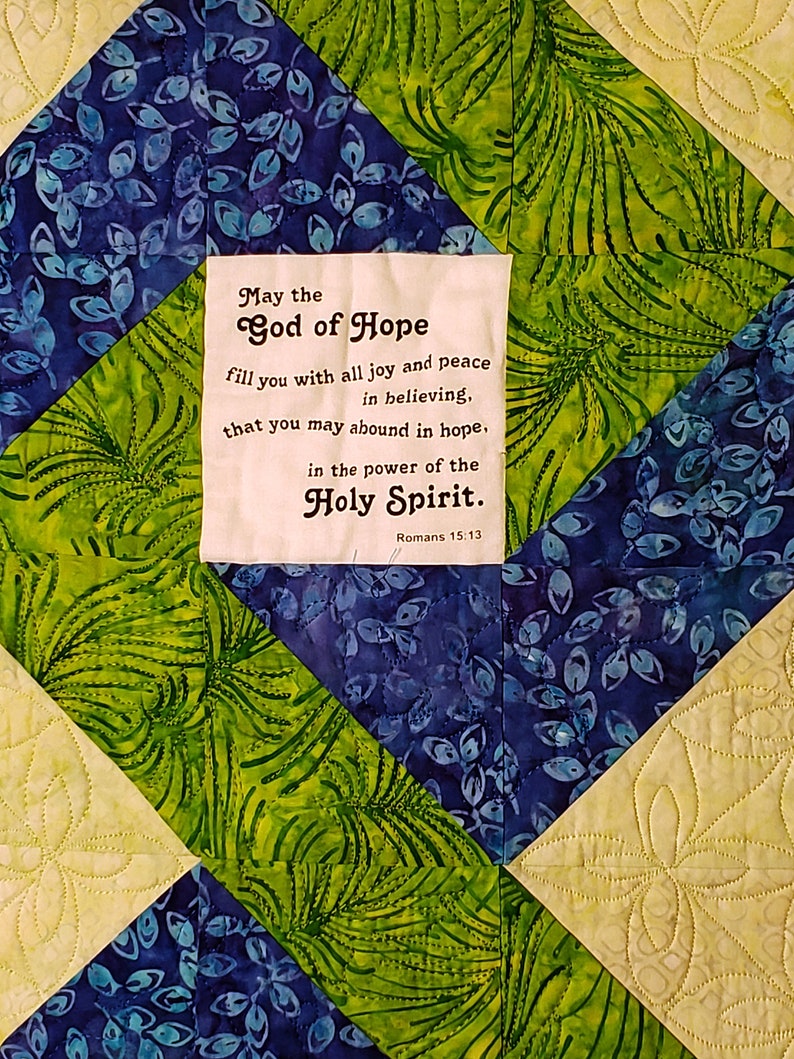
Image from a scripture quilt you can purchase on Etsy here.
FBC is a teacher who’s shared that – in addition to the challenges of teaching students both in person and virtually during a pandemic – it’s obvious that many students have forgotten how to act in social situations. He has a student, for example, who was last in class with friends in the 7th grade and now that student is in high school. The student forgot that picking your nose and then eating the findings from said nose in a public place is not okay. (Not okay anywhere if you ask me.)
I’m hearing similar comments from church people – not necessarily involving nose-picking though. It’s as if we’ve been isolated for so long that – at least on Sunday mornings – we’ve forgotten how to interact with our siblings in Christ.
Here are some obvious things that may not seem obvious anymore:
The mask goes over both your nose and your chin. Be a good neighbor and wear one even if you’ve been vaxxed unless you are outside. A friend passed away last week (after being vaccinated) from complications from COVID because she was living with invisible issues that made her vulnerable. Please note that wearing a mask is one way to love your neighbor as yourself.
Don’t make comments about one’s post-COVID appearance like “Are you pregnant or just carrying around some extra COVID weight?” “You hair got so gray during the pandemic.”
Continue to smile and say please and thank you, even if you are wearing a mask.
Notice people. Do they need a door held open? Help with packages? Yes, we are weary/busy/cranky from 19 months of COVID, but we can still be pleasant/observant/kind.
Send gift cards. Maybe we don’t feel comfortable sending a casserole or muffins to new parents or recovering friends, but we can still help them with meals via Uber Eats or DoorDash.
I’m struck – more often than I wish – by people both in and outside the Church who tell me how nasty church people can be. Some don’t want to move into leadership positions becase they are afraid of what they’ll see and hear. A person said to me just yesterday that church is where she learned to gossip. Another told me last week that she had to leave her church when see saw the level of contempt some members had towards each other.
Jesus wept.
Authentic community only happens when we treat each other the same way we would treat Jesus. No fake flattery. No comments about how friendly we are, when we are actually only friendly to our friends. No ugly comments shared with smiles on our faces wearing really good lipstick.
How can we be a healthy Post-Pandemic Church? We can begin by treating each other like God’s valuable children.
Be especially kind to veterans today.
Image of Queen Elizabeth who is nothing if not socially skilled.
I was visiting a church in the country recently and was told the story of their beginnings. Less than 200 people lived in the village but a new rural highway was coming through town and it was decided to build a church along that highway because – surely – travelers driving between Florida and Maryland would stop, if they happened to be driving through at 11 am on a Sunday morning, and join them for worship. Never mind that there was another church of the same denomination less than five miles away. Never mind that most people don’t stop for Sunday worship if they are traveling up and down the East Coast. Even a hundred years ago, few people had that kind of piety.
The church never thrived as they imagined. The highways travelers didn’t stop for anything but gasoline.
I know another church – actually several – who believed in the mid to late 20th Century, that if they only installed a fine pipe organ, people would come for Sunday worship, for weekday concerts, for holiday sing alongs. The organs were installed but it didn’t make much difference to anyone but the current members. And even some of the members weren’t happy to spend so much money on a pipe organ.
No.
Sometimes we get it wrong. We have a vision. We think it will “grow the church.” Sometimes our visions are wholly about glorifying God and sometimes they are actually about glorifying ourselves.
Peter Drucker famously said that “culture eats strategy for breakfast” and never has this been truer. Discernment involves noticing the culture around us and whatever Post-Pandemic Culture will look like, we need to pay attention. Do people stop on highways to attend worship if they happen to be driving by a church building on Sunday mornings? Do most people listen to organ music on the radio? What will truly transform people in the name of Jesus Christ?
This is the question we need to ask God as we pray for guidance moving forward.
Image of a fountain in a church courtyard. This wasn’t their best idea.
I was driving to Candor Presbyterian Church in Candor, NC for their 100th Anniversary driving through four counties through spectacularly colored leaves when what looked like a pterodactyl swooped down from the trees on my right immediately in front of my car and then ascended up to the trees to my left. It was one of those moments of grace that had me praising God for the rest of the trip. I’d never seen such a gleaming white tail and head on a bald eagle. It’s wing span must have been something like 7 feet long and 5 feet wide. It was exhiliarating.
And then I got to worship with a congregation of 8 members joined by an additional 40 souls who sang and told stories and shared photographs and prayed and listened to a fine sermon together. And then we ate and talked some more and I was privileged to spend a little time with the two oldest members – both about to celebrate birthdays in December. A 95 year old matriarch and a 93 year old matriach. What an enormous privilege.
And then I got to make the same drive back to Charlotte without a bald eagle sighting but with the knowledge that I have the best job on earth and I was on my way to another church to celebrate the ordination of a new young pastor who came to us in a grace-drenched way that I won’t go into here. But clearly God is good and there are extraordinary moments of grace with every new day.
As I sped toward Charlotte after my visit to Candor, I saw a truck with a flag attached to the truck bed and it was hard to make out what the flag said. I assumed it was celebrating a sports team or a political candidate. But once we slowed down coming into Charlotte, I saw that the flag this this: “Kill ’em all. God will sort it out.”
Like I said, it was almost a perfect day.
There are people everywhere like that truck driver who don’t get it. God creates beauty like bald eagles and maple trees and nonagenarians and butter cream frosting and ordinations of excellent new leaders and time on the front lawn with colleagues and friends and lemonade and more cake.
Yes, the world is a hot mess. Yes, there is ugliness and life is not fair. And God continues to create and call and gather and take our breath away. I experienced near perfection yesterday. The love of God overcomes the hate of the world every day.
And I even got to see a bald eagle.
Image from the U.S. Fish and Wildlife Service. (No, I didn’t take it while driving.)
I once thought “Till death do you part” meant separation when a partner dies. I realize now some commitments last until we’re both in the grave. There are parts of you that I strive to carry on. Or perhaps, they carry me. Daniel Jonce Evans to Rachel Held Evans in the introduction to Wholehearted Faith
I think and talk about death more than the average person, to the point that when our children were little, someone asked them if their mother was a funeral director. My own funeral bulletin has been written for many years and I update it on January 1st annually.
I really hope to see my parents again on the other side, along with Cindy and Margaret and little Katie and now Molly. I don’t believe that Revelation 21:16 is about the physical dimensions of heaven as much as it’s about a vision that reminds us that our future rests in God’s hands. If there are twelve gates, that’s lovely. But my faith doesn’t rest on how many gates there will or will not be.
My mother-in-law who became a widow over the past year has said that she feels very close to her husband in spite of his death last December. She feels him near. I was thinking about this in light of what Dan Evans wrote in the introduction of his wife’s last book. She started this book before her shocking death in 2019 and her friend Jeff Chu has finished it.
I agree with her husband that we continue to be carried by those who have left this life, and we will be connected until we join them on the other side – whatever that even means.
I find joy in seeing my grandparents’ dining room furniture in my sister’s house. I love Chummy in Call the Midwife because she reminds me so much of Cindy. I am still connected with Margaret through her children and the grandchildren she never got to meet. I stillcontact Katie’s mom on Katie’s birthday. She would be 27 now.
It’s a blessing to feel connected with people we love in spite of death.
My parents are still dead, and I still miss them and there are other children who lost a parent this week and that will never be okay. In life and in death, we belong to God and those words mysteriously fill me with peace. What is also true is that we belong to each other even in death. There are parts we strive to carry on. Or they carry us.
This post is dedicated to Molly Lowry and her family.
“One of the worries that I have about the way that we’re talking about race” is that “somehow white people now have to feel guilty for everything that happened in the past. I don’t think that’s very productive.” Of course . . . there’s more to the critical race theory debate than that. But about the strain of educational philosophy that looks to raise students’ awareness of racial injustice, Rice said that for Black kids to be empowered, “I don’t have to make white kids feel bad for being white.” John McWhorter quoting Condoleezza Rice here
I feel good about being White because that’s what God created me to be. My parents’ DNA gave me my skin color and haircolor. I have Grandmother Ethel’s blue eyes and Grandmother Lucy’s body shape. I was born heterosexual with the ability to bear children. I feel good about all this.
I also want you to feel good about being Brown or Black or Golden or whatever skin color God has given you. I want you to feel good about being queer or differently abled or however way God made you.
Do I cringe when I learn about history that didn’t value people with darker skin or eyes, with different orientations or abilities? Yes. Do I squirm when I find out that my own ancestors enslaved people and moved Natives from their land? Absolutely. Do I have White Guilt? Most definitely. But most of all I want to learn even the difficult history of my family and my country so that we will do better now and in the future.
One of the reasons that representation is so important is that all children and all adults deserve to feel good about being however God created them to be. I want everyone to see that it’s good to be them because the world is full of possibilities for people who look and live like they do. They can be church leaders and scientists and inventors. They can run companies and countries. They can be parents and teachers and writers.
I want all people to feel good about ourselves because we are created in God’s image. To say that Critical Race Theory or Anti-Racism Studies make White People “feel bad for being white” is a cop out. It’s an excuse for avoiding the difficult truths of our history. Being ignorant about historic and scientific Truths doesn’t grant racial supremacy. It simply keeps us ignorant.
We are created in the Image of all that is holy and good and yet we have fallen short in every generation. By grace, I want all God’s children to feel good about who they are. Don’t you?
This only happens when everyone is given opportunities and possibilities.
This only happens when people who don’t look like me are valued as much as people who do.
Image is of the supernova remnant Cassiopeia A. NASA’s Chandra X-ray Observatory captured this picture. God created the universe. Source here.
Specifically, this is a love letter to the Presbytery I serve.
Dear Church,
It’s been a rough year and seven months, and it wasn’t a piece of cake even before March 2020. We have been misunderstood and blamed for the sins of Christians who have behaved shamefully. We have often wandered from the way of Jesus. We have lost trust in each other. We have let each other down.
And yet what the average person doesn’t know – because cable TV and social media don’t cover it – are the exquisite expressions of generosity and love that go unseen by the rest of the world. I want to thank you for the countless things I get to see and hear about every day because I’m privileged to serve on your Presbytery Staff.
Thank you to the rural congregations who have sent checks to the church helping the two Afghan men who have found safety in your community after escaping their home country. Thank you to the people who have collected grocery store gift cards for them and driven them around the county so that they could have job interviews and figure out how to get a driver’s license. Thank you for praying for their families back in Kabul and for making preparations to welcome them as soon as they can get here even though their faith and languages are different from our own.
Thank you volunteers who lead Zoom small groups for youth members on random weeknights. We needed more of you than we expected because more youth signed up than expected and you stepped up to ensure that isolated kids found safe spiritual places.
Thank you to the woman who “just wanted to study what the Bible said about racism” and found herself leading an online book group of 25 people from all over the state. I knew you would be fine, even with the cranky ones.
Thank you to the pastors who keep going even when parishioners criticize you for everything from encouraging mask-wearing and vaxxing to opening up the building “too soon.” And thanks especially to brave elders whose first priority was safety for your siblings in Christ as your friends threatened to “leave the church” if you didn’t do what they wanted.
Thank you to churches who’ve found the funds to subscribe to The Bulb so that your neighbors could have free vegetables. Thanks to that little church with 50 members who serves over 300 people every week and figured out a way to distribute milk and meat in addition to fruits and vegetables. You know who you are.
Thank you for the oldest generations in our congregations who have arranged to leave funds to our Presbytery for everything from supplementing the salaries of young pastors to church development grants. To their children: you will never know how much your parents’ legacy has meant to new ministers and congregations in need of technical upgrades, coaching, and mission project support.
Thank you seminarians for pursuing a calling to professional ministry although your parents wanted you to go to business school. You are essential colleagues and we need you.
Thank you to all who pay attention to the disparities in clergy salaries, the not-so-sexy needs in our cities and towns, and the people who are being excluded from the table.
Thank you to the congregations who realize that they don’t have the energy and capacity to be a Church for the next generations. Thank you for allowing yourselves to die so that something new can be resurrected after you are gone.
I have the unique privilege of seeing all these things every day. Yes, there are some discouraging things I also see. There are some heartbreaking things I see. But the overwhelming activity of The Church I serve is life-giving and hopeful and obsessed with serving “the least of these.” Thank you.
May God bless you as we remember this weekend that we are still reforming.
For as much as critics dismissed [The Thing movie] as expensive trash, there is an idea here: that fear and paranoia can dissolve the bonds of friendship, camaraderie and citizenship. That they can sap us of our ability to work together and paralyze us in the face of crisis. It is an idea which, in our age of misinformation, public distrust and pandemic disease, lands with heavy force. Written by Jamelle Bouie here
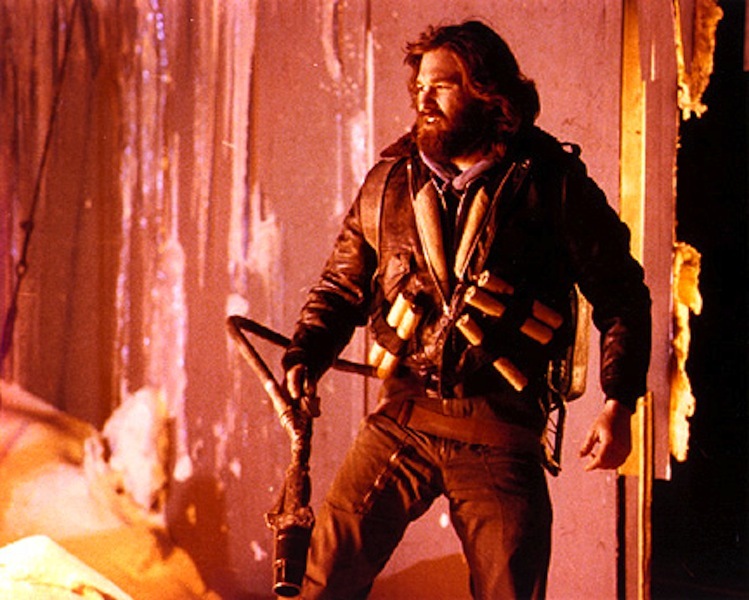
“Nobody trusts anybody now and we’re all very tired.” Kurt Russell in The Thing.
Apparently a remake of the classic movie The Thingis happening. We’ll see how that turns out.
Jamelle Bouie of The New York Times wrote an op-ed about the 1982 original recently and his point was that the world today is experiencing a “thing” which has infiltrated our lives and caused us to distrust each other. Parents don’t trust vaccinations. Emerging generations don’t trust institutions. Nobody trusts politicians.
Even those of us who say we trust God actually don’t. Otherwise, we would never worry about medical tests and job searches and what in the world will become of The Church post-pandemic.
Either we believe God’s got us or we don’t. And by this I don’t mean that believers never become sick or unemployed. I mean that God uses everything including terrible things. And God has acted through history as trustworthy. We’re the ones who have screwed up.
Someone said tome recently: “I trust Jesus. I just don’t trust The Church.” And we could exchange the word “Church” with “my pastor” or “the Presbytery” or “the elders” or “religion.” There are countless reasons not to trust The Church. Or those other things. Power, greed, envy – all the human characteristics that make us sinners are especially ugly in settings that are supposed to be about service, generosity, and kindness.
What builds trust in The Church today? Here’s what I’m seeing:
Non-transactional blessing. (Don’t offer support to refugees and expect them to join your church in return.)
Organizations that exist to serve rather than perpetuate their institution. (Hello Presbyteries and Synods.)
Keeping confidences which is not the same as keeping secrets. (No I won’t share your addiction struggles. Yes I will report your misconduct.)
Being a safe place for everyone and not just for the dominant demographic. (I’m looking at you “friendly churches” who aren’t actually friendly to everyone.)
Authentic kindness (as opposed to “for show” kindness while skewering me behind my back.)
Working together for something life-giving beyond ourselves.
It feels like nobody trusts each other now and we are all very tired. And yet there is tremendous hope if we are committed to being trustworthy in a weary world.
The Church is at an important moment right now. Let’s not waste this opportunity because God’s got us. And we have work to do in Jesus’ name.








 A Church for Starving Artists