One Sign of Health: Laughter in Meetings

Our staff had an especially long meeting last week and – according to consensus – it was a great gathering. There was the sharing of information, there were honest mental health check-ins, there were ideas generated and there was laughter. Lots.

How much laughter is happening in your staff meetings, board meetings, officer meetings, social gatherings? Sometimes when HH (who is also a pastor) is in a Zoom meeting in the next room, I’ll hear gales of laughter and I know it’s a good meeting. It indicates to me that there is love in the room. It indicates that people are on the same page in terms of their mission (e.g. We laugh at all those moments when people are completely missing the point of Church.) We laugh to keep from crying sometimes.

If there is never any laughter, if we leave meetings feeling like we need a drink, if we can’t sleep after an evening meeting, if life is all-intensity-all-the-time then something is not healthy. I’m not saying that there is never pain or dread or handwringing from time to time. But when we who sit around a table together can’t laugh at the absurdities of leading the Church in these days, we have lost something.

Funny story: I got a phone call recently from a church member somewhere (I don’t even know which congregation) complaining that “An Asian Lady” in her congregation had brought “An Asian Flower Arrangement” for the chancel on Sunday morning. And “it didn’t look right.”

Complaining Church Lady explained that she had told her pastor about this transgression and he said, “He didn’t care.” (Probably not his exact words or maybe they were especially if Pastor was coming off a night of sitting with someone dying of COVID or the church treasurer had just resigned.)

My official questions as a Mid-Council Leader in the Presbyterian Church USA denomination:

  • What is an Asian Flower Arrangement?*
  • Did Jesus die for this?

It might have been the end of a long day for me but I think I told Complaining Church Lady to get on her knees and thank God that someone was generous enough to share beautiful flowers with her congregation on a summer Sunday. And how wonderful that they were — apparently — an especially fresh and creative arrangement.

Thanks be to God.

I laughed with people about this story last week, not because I was mocking the CCL, but because we are all very strange humans and we need to get our priorities straight. Every one of us.

And we need to get on our knees and thank God that grace abounds for each of us. Have a wonderful weekend and I hope there will be laughter.

*If you google Asian Flower Arrangements, you’ll find that it really is a particular kind of style of arranging flowers. And it’s appropriate and lovely for any church setting FTR.

Image of people laughing during an important ecclesiastical rite of passage.

Absorbing the Grief

It’s the temptation of clergy and first responders and therapists and teachers and social workers and helpers everywhere: we absorb the grief of the people we serve. The closer we are to the vagaries of human life, the more grief we witness. And many of us feel it. We absorb it.

COVID has been an inconvenience, a bad news story, and a global usurper of normal life. And if we didn’t notice it before, we surely notice now: it is also a grief generator. The layers of grief that COVID has created are countless. Even the extreme weather has contributed to that feeling of being overwhelmed.

Few of us can let this deep grief just fall off our shoulders. We need to take gentle care of ourselves. That is my prayer for you and for me today.

God is with us whether we believe that or not. I hope this soothes you as much as it soothes me.

We Love Big Numbers (And Smaller Numbers Worry Us)

Sunday morning worship numbers are down. There’s no denying it, my friends.

With COVID protocols relaxing a bit, some congregations have “come back” to in-person services but most have not returned. Not yet.

Since late spring, I’ve worshipped with twenty people, with ten people, and with eight people in three different congregations although their memberships are officially much larger. I’ve also worshipped in groups of 100+ people with distancing and in all those cases, the people sitting in church sanctuaries are just a fraction of those on the church rolls.

Most churches are also offering virtual worship and there’s no definitive way to count virtual participants. Some people note their “attendance” in Facebook comments. Some offer a thumbs up on Youtube. But all in all, the numbers are down. More are worshipping online than in person, but still, the numbers are down.

Why is this important? Because big numbers = success to most of us. Numbers = viability for a congregation. Numbers = Financial Security.

Again I quote Yancey Strickler:

“Today the world is dominated by an idea I call ‘financial maximization.’ The belief is that in any decision, the right choice is whichever option makes the most money. This is the default setting that runs much of the world.”

If people at the top who already have lots of money can make even more money by laying off workers, or giving the job of two people to one person, or razing affordable housing to build expensive housing, or eliminating the last of a community’s green space to development – great. Good for them IF making more money is what matters the most.

And also, if making more money is what matters most, then other sweet things like our love lives, our family lives, our health, our community relationships, our sense of safety, our spiritual lives, and pretty much everything else, might suffer.

What I’m not saying: That money is bad and profits are bad.

Yay for money and profits because they allow us to have tools to do great things like have homes and cars and education and healthcare and vacations and impactful non-profits like houses of worship. It’s just that when making the most money regardless of who gets hurt or left behind is the most important thing, we find ourselves living lives that don’t look like the lives we were created to live.

And this brings me to Church and numbers again.

I wrote before that The Mother of All Culture Shifts is the shift from doing ministry to gain new members to doing ministry to serve our neighbors. For example, some church leaders believe that the success of a church preschool or a church after school program or a church clothing closet can be measured in terms of “how many people joined” as a result of those ministries. We want people to join so that our numbers will increase and subsequently our financial donations will increase.

This is the opposite of what Jesus taught.

If a church member ever asks you, “Why are we distributing free food to people who live in the next county? They are never going to join our church” please 1) slap your forehead and then 2) remind them about The Great Commission of Jesus’ Disciples and the Shema and The Golden Rule and Matthew 25.

A world whose first priority is financial maximization will not get it. Why should I give my COVID tax relief check to my congregation to fill a food pantry for the neighbors when I could enjoy a fancy meal? Why should this business make a generous donation to the men’s shelter so that they can replace the roof? Why should we work for teacher salary increases when we don’t have children in public schools? Why should we keep driving our old car and increase our pledge to our church for a capital campaign to expand our preschool?

Again financial stability is good. In fact, it is a basic right for all God’s people. But the divide in our country between the very rich and the very poor along with the financial stresses of everyone in between will destroy this country if we let it continue. And it will destroy our souls.

I sound really preachy today, don’t I? But what I love about Yancey Strickler’s work is that he believes we can be a more generous people – both in terms of money and priorities. This is a huge issue for the Church which doesn’t need money for doing ministry in a survival mode. Money is a tool we can use to expand the reign of God and bring resurrection to those seeking life’s meaning.

Life’s meaning is about love. Money and people are two ways to spread that love.

Is Our Strategy a Hail Mary?

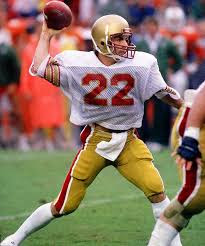
Not surprisingly, the term “Hail Mary” – meaning a go-for-broke football pass – originated at the University of Notre Dame.

Basically, when time is running out and choices are limited, the quarterback in a football game decides to throw what is essentially a desperation shot. My favorite Hail Marys happen during college games but the term became more common after Roman Catholic QB Roger Staubach confessed to throwing and praying “Hail Mary, full of grace, the Lord is with thee” during his professional career.

It’s a mouthful to pray while throwing a football.

Protestants often join our Roman Catholic siblings in praying during sporting events although this is theologically shaky. And what we Protestants also do alongside our Roman Catholic siblings is throw proverbial Hail Marys.

For example, a Church might . . .

  • Use the last of its endowment to start a much-needed preschool,
  • Generously increase the pastoral salary package in hopes of calling an especially gifted leader who will help move them forward.
  • Decide to take its underused parking lot and build affordable housing in that space.
  • Sell their building and property and give all their money to start a jobs-training program.

Just kidding. Most of the congregations I know will not do those things.

Instead, we sit back and hope that a miracle lands in our laps – that young families will magically come, that a great pastor will show up to lead them, that they will be able to do life-changing mission one day. Hope is our strategy. And while I’m a big fan of hope, God gives us what we need to be The Church but we don’t always acknowledge those gifts.

In the words of entrepreneur Yancey Strickler (yes, that guy again):

Hope isn’t a plan. When a Hail Mary is the strategy, you’ve already lost. And yet on the big questions in front of us, we act as if there’s nothing worth working toward.

I have a friend who used to pray for a husband. She prayed a lot. And she never went out to parties or other social gatherings, she never approached interesting people to find out about their lives, she never participated in events where she might meet someone. It was as if – if she prayed hard enough – God would fly the right person through her window.

God gives us opportunities and tools and inspiration to expand our ministry every day. It’s just that we ignore those things. Instead we sit back and hope. And the most heartbreaking part is that we act as if there is nothing worth working toward.

How about working toward expanding The Reign of God? Remember this:

‘The Spirit of the Lord is upon me,
because he has anointed me
to bring good news to the poor.
He has sent me to proclaim release to the captives
and recovery of sight to the blind,
to let the oppressed go free,
to proclaim the year of the Lord’s favor.’
Luke 4:18,19

Is this worth working toward? I believe that if this is the purpose and mission of our congregations, there will be no need for last minute desperate measures.

Yes, there is hope. And love hopes all things. And love is an action.

It’s time for action, Church. What is our strategy for loving God and loving our neighbors?

Image of Doug Flutie throwing his famous Hail Mary for Boston College against The University of Miami in 1984 during the last second of that game. BC won 47-45.

What I’ve Learned About Money and Ministry

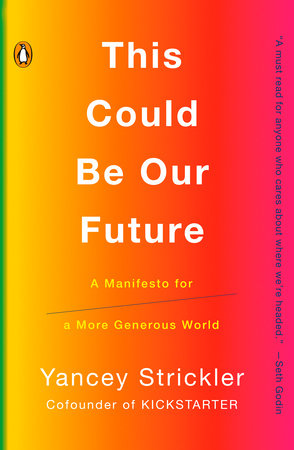
First of all, I’m in search of people who would like to read/re-read Yancey Strickler’s book This Could Be Our Future: A Manifesto for a More Generous World. Seriously. Email and we’ll do this in late August/September together. No more space for book group. Thanks for your response, friends.

I don’t agree with everything Yancey Strickler says, but I’m basically in, in terms of this manifesto. (Churches call them Mission Statements and – sometimes – they don’t mean much.) Secondly, as an English major who never learned anything about managing or making money from my parents (fodder for a longer post), I am now obsessed with the topic of money and ministry.

Things we need to know about money and I hope you knew this decades ago:

  • Budgets are moral/mission documents. When I look at my Mint account, I can tell fairly quickly what my and HH’s priorities are. We love subscriptions to newspapers, magazines and movie streaming. We like to eat out. We like to travel. We also like to give money away and we definitely have a profile in terms of what we support financially.
  • Supporting organizations financially is about investment – not survival. We invest in things that make an impact where we live and beyond. We invest in organizations that bring hope.
  • Investment is not just about money. It’s boring to send a check with no skin in the game. It’s the 1950s way of “doing mission.” Church people send checks to a hospital in Asia or a school in Central America or a well-drilling project in Africa and that’s the extent of our efforts. There are no relationships. There is no proximity to the issues at hand. Investment is about personal relationships and partnerships with those on the ground where the need is greatest.
  • Church leaders need financial education. We are – generally speaking – a bunch of humanities people. We need to educate ourselves about budgets. Nothing in the Bible suggests that we who believe can sit back and wait for the funds to appear magically.
  • Tell people what’s needed. When we started a new church in Northern Virginia comprised mostly of young adults, we tried to have a money talk once a quarter about the needs of our community. One night, a couple joined us for the first time and as we were finishing up our money conversation, someone said, “Well, they’ll never be back again.” Actually, they were back the next week and they stayed because they loved that we were talking money openly. What exactly were we talking about? Relational tithing. Someone needed a car and we made it happen. Someone needed help with rent and we took care of it.

We have been in a scarcity mode or in a sentimental mode for a long time. We now look at what the post-pandemic Church might look like and we are afraid “nobody is coming back.” We fail to re-think our staffing or our programs because “we love Ms. Betty and even though she can’t play the piano anymore, we keep her on staff” or “we keep doing The Peach Festival even though it loses money every summer but Mr. Joe loves that Peach Festival.” We give $50 to this organization and $100 to that organization because that is what we’ve always done even though our meager donation doesn’t make much of an impact and that organization doesn’t make much of an impact either.

So who wants to do a Zoom Book Study with me about becoming a more generous world? Please email me or share your email in the comments. And have a life-changing Monday.

Image of Yancey Strickler’s book. He’s one of the co-founders of Kickstarter.

It’s Perry Chen Week

I’ve anointed Perry Chen the Patron Saint of A Church for Starving Artists – at least for this week, because his thinking is rocking my ecclesiastical world.

Perry Chen founded Kickstarter in 2009 with two friends – Yancey Strickler and Charles Adler – in hopes of giving everyday people (i.e. not millionaire investors/philanthropists) the opportunity to support the arts and creativity. He had me at “not millionaires.”

He was featured on the podcast How I Built This with Guy Raz recently and this quote sparked a flood of ideas:

Governance is the killer app. And I don’t mean leadership at the operational level. I mean organization at the corporate governance level. We’ve been running so much on this totally profit-centric system in the US. and even the biggest businesses are giving their head nods to a lot of other things that matter in the social contract. But that’s going to take real evolution of governance – something nobody’s thought about for a long time. I think this is going to be an era. I think this is how things are going to differentiate. Like people look at an Uber and a Lyft and say, “It’s the same thing.” But over time the difference in a lot of things will be governance.*

The future of creativity/generativity is in governance.

What will matter in the most successful organizations in the future will be “their soul and the alignment of their actions with their own stated mission values.” If it’s our church’s fundamental mission is actually to serve ourselves then no attempt to grow will succeed because people are craving authentic relationships and meaning.

Examples:

  • Does your congregation’s Governing Board spend lots of time tweaking the bylaws? Or do they consider how they can make the space friendlier? (I once sat through a meeting during which two hours were spent clarifying whether pet dogs could be in the building. It evolved into whether pet ferrets, cats, and parrots could also be in the building. Jesus wept.)
  • Does your church have a long list of requirements for people who want to be ushers (i.e. must wear a suit, no open-toed shoes) or are ushers anyone who understands the ministry of hospitality? (There are many congregations who do not allow women or children to be ushers. Believe me – most folks hope for someone who will be so happy to see them without regard to age or gender.)
  • Is the Manual of Operations for your church thicker than “Oh the Places You’ll Go“? The thicker the MoO, the less permission-giving the organization which means that creativity is often squelched.
  • Does your Governing Board spend more time talking about the bills than sharing what signs of transformation they’ve seen because of the church’s impact on the community?

Now more than ever, the way we govern our organization will impact its vitality. And if sociologists who study generations are correct, the youngest generations will be more interested in the soul and mission of an organization than anything else. More about that here.

My hope – as the Mid-Council leader of many congregations – is that I would help shift our culture to be more generative than extractive. Step One: look at how you govern, church leaders. Is it about being expedient? Being Cheap? Appearing successful? Or following Jesus?

Note: Dan Hotchkiss wrote about this regarding congregations and other non-profits. I connected more with Perry Chen but the Hotchkiss book is an important resource.

*Lyft is generally considered less corporate than Uber which is appealing to many consumers who would use a ride-sharing app. If Lyft proves to be a more compassionate company in the way they treat their employees and their customers, they will thrive more than Uber according to Perry Chen and others.

Image source.

Everybody Needs an Uncle Frank

First of all, the movie Uncle Frank is not a comedy. HH and I were under the impression that we were going to be watching a comedy, but it’s heart-wrenching with a couple of humorous moments. Brace yourself.

Secondly, Uncle Frank, the person, is a mess. He’s broken and addicted and full of shame. But he is also wise and good and encouraging. Many of us are a mess but we are great at offering wisdom, goodness, and encouragement to others. This is Uncle Frank.

This movie will trigger many LGBTQ+ people who have traumatic memories of spiritual abuse, and yet I hope it will mostly be a reminder to those of us with a Frank in our lives that someone queer (in all the ways humans can be) loved us because of (not in spite of) our own unconventional and queer parts.

Final note: God loves Queer People however that queerness manifests itself. The depth of God’s love for us is beyond measure no matter who we are. The very people who believe that God doesn’t love us for who we are are the ones in need of conversion. The Bible tells me so.

Have a lovely weekend and be someone’s Frank today.

Image of Paul Bettany as Uncle Frank in the 2020 Amazon Prime movie.

A Salute to Homemade VBS

VBS = Vacation Bible School

Much of the world doesn’t know this as illustrated in a long, long Twitter thread I was reading in the middle of the night when I couldn’t sleep. Someone posted that her local VBS was preying on children, indoctrinating them with myths about fire and brimstone and that it would take the rest of the summer to deprogram her child. And then the responses poured in:

  • What’s VBS?
  • I took my kids for the free childcare.
  • Yeah, my mom took us to every VBS in town every summer for the free childcare and snacks.
  • They taught my daughter that she was going to hell if she didn’t accept Jesus as her Savior. She was four.
  • They taught my son that the Jews killed Jesus (from a Jewish mom)
  • They taught my kids that Jesus was an American.
  • They taught my kids that God hates gay people.
  • They taught my kids that only boys can be leaders.

It was hard not to feed the trolls in that thread but it did make me wonder where their kids went to VBS. Yes, it’s true that many congregations use the same packaged curriculum (because it’s easiest) and sometimes that curriculum is shaky in terms of the theology (and politics) taught. Yes, it’s true that many parents use VBS for free childcare. Yes, it’s true that some churches take advantage of poor communities, sending buses to their neighborhood in hopes of proselyzing their children and therefore “saving them.”

And it’s also true that Vacation Bible School can be a valuable ministry to children . . . when it’s not transactional. This is what transactional ministry looks like:

  • God will only love you if you pray like we pray and believe exactly what we believe.
  • Yes, you can have snack today if you recite The Sinners Prayer.
  • You can only get a t-shirt at the end of the week if your parents sit through a presentation by our pastor.

When I was fortunate to visit Christian schools in Lebanon and Syria, I learned that they were very popular with Muslim families because the religious lessons learned were about the love of God and how Jesus teaches us to love our neighbor. Muslim parents I talked with said that the Muslim schools taught lessons that denigrated their Jewish and Christian neighbors and they wanted their children to learn the way of Jesus. This did not include condemning their children to hell if they didn’t get baptized.

When I was a parish pastor, we often used packaged VBS programs because – yes – they were easier. You get flyers and puppets and CDs of Bible songs and easy-to-follow lesson plans. But when the staff felt creative and excited about something different, we made up our own curriculum and it was a lot more fun. Exhausting. But so much fun.

There was the time we did “Great Stories from the Old Testament” and we built a massive papier mache fish with a mouth big enough to fit 10 preschoolers and a teacher in there. We threw sand on the fellowship hall floor and got a life-sized blow up pharaoh which doubled as a punching bag. We built a Garden of Eden with hundreds of houseplants brought from members’ homes. It was exhausting but a blast.

There was the time (our church’s anniversary) when we used Bible verses with the numbers 40 (the church was founded in the 1940s), 50, 60, 70, 80, and 90 and then we took songs from each decade and changed the lyrics. (“Jeremiah was a prophet! Was a good friend of mine” – from the 70s.) “I Want to be like Christ. I wanna be, I wanna be like Jesus” – from the 90s. It was a blast.

The summer of 2021 is particularly heavy with many global issues and our churches are still reeling from pandemic changes. But in spite of this, there are still congregations creating their own VBS and it’s about loving God and our neighbors and serving others. You know who you are, Amazing Followers of Jesus. I thank God for you.

It’s Okay, Simone

As my sister Denise said yesterday, “If Simone Biles never does another thing, she’s done enough.”

Naomi, Serena, You who have battled The Bullies of COVID, You whose grief feels fresh, —- you have done enough. Your mental health is important and you get to stop and rest.

Note to people who are feeling steady and strong: reach out to those who are not.

Mental health is part of human health inspite of those who say things like this:

“We’ve just been told that, with regards to Simone withdrawing, it is not injury-related.

It is a mental issue that Simone is having.” John Roethlisberger of NBC

Demons cause injury. Trauma causes injury. Overwhelming stress causes injury.

Simone Biles is 24 years old. She survived abuse by an Olympic doctor. She is a Black female who grew up in this country. She has sustained injuries.

Someone said to me yesterday that “young people need to toughen up” after I had just told a story about the verbal attack on a young clergywoman by an older male church leader and I was surprised by the comment. Yes, life is hard and we need to be tough. And the voices in our heads of people telling us we aren’t good enough, smart enough, white enough, black enough, successful enough can still injure us.

Simone Biles is no snowflake and neither are those who wrestle with their demons. We in the Church can do better when it comes to supporting those with mental health challenges. We begin by recognizing that mental health is part of human health.

Image source. Note if you are in the Charlotte, NC area: There is a daylong mental health training for pastors sponsored by Pittsburgh Theological Seminary and Davidson College Presbyterian Church on Wednesday, August 18, 2021 from 8:30 am to 3:45 pm ET. Register here.

Equipping the Bystanders

I was initially going to call this post “Bullies Unleashed.”

There have always been bullies in church and only the most naive among us believe that everybody in church is kind and sweet. Church exists for people who need help whether it’s because we are bullies or we are broken. (Actually bullies are usually broken but that’s for another post.)

COVID has unleashed the bullies in Church. While – again – there have always been bullies in congregations, the world feels upside down. From isolation to political division to half the world being on fire while the other half is under water, we are deeply weary. During COVID congregations lost members and money and traditions and a way of being God’s people that brought comfort and routine. And now – as early COVID dissapates and new variants spread – worship is different, Sunday school is different, meetings are different. Many people are not “back” and many are never coming back.

And bullies have been empowered. It’s easy to take out our COVID frustrations on volunteer organizations and my ministry coach tells me that this is happening everywhere. Bullies are mistreating their pastors and other leaders. I’ve heard more stories from pastors about COVID bullies than any other time in my 30+ years of professional ministry.

Long before COVID, when HH and I were co-pastors, a former pastor of our church asked to meet with us while he was in town visiting. The day before, he had eaten lunch with a group of members and – as he told it to us – one parishioner in particular spent the whole lunch “shredding” us. That church member – an elder by the way – criticized us in searing terms. The former pastor thought we needed to know that we had a Session member who was doing this.

What did the other members at lunch say when they heard him talk about us like that?

And the former pastor simply said, “Nothing.” The others around the table had kept silent rather than speak up and defend us.

Anti-bullying and anti-racism advocates often teach us how to speak up when we witness different forms of public harassment and we need this kind of training in church too. Church people need to recognize that “saying nothing” while witnessing bullying in church is the same as condoning it.

No – it’s not okay to ignore it or change the subject or meet privately with the person who was bullied after the fact and express our shock at ___’s behavior. This is not the way of Jesus, my friends.

In this COVID/post-COVIDish time, I’ve heard of bullies lashing out at pastors and church volunteers for everything from favoring one form of worship over another to misplacing the microphone. I’ve personally heard bullies scream at pastors in meetings while the pastor took it and no one stepped up to say, “This is not how we talk to each other.” Emotionally controlled leaders can say this themselves: “This is not how we speak to our siblings in Christ” and then they go home and cry for a while.

What really hurts is when there are witnesses and the witnesses don’t have the courage to step in.

Pastors are called to equip the saints for ministry and strengthening bystanders is just as essential as teaching the saints how to pray or exegete Scripture. It’s about modeling justice. It’s about modeling pastoral care.

Just as God intervened in human life as Jesus, we are called to intervene when faced with suffering. Let’s teach our leaders how to do this. We can shift Church Culture to become a Culture of Respect.

Thanks to LF for helping me wrestle with this.