Perhaps you are familiar with Gary Chapman’s Love Languages? (My love language is Acts of Service because my heart goes all aflutter when someone vacuums for me.)
Shane Hipps has created a tool for assessing our Leadership Language. (You might know Shane as a former pastor at Mars Hill Church in Michigan or as an author of leadership books.) You can take his quiz here.
As a leader, do you need:
Recognition?
Mentoring?
Purpose?
Proximity?
Connection?
This could be a helpful tool for staffs to do together. I know that the way to squelch my own leadership is for me to misunderstand your leadership style – or my own.
In my tradition (Presbyterian/Reformed Christian) the congregation is “ruled” by elders who shepherd the congregation’s ministry in worship, mission, education, and vision. The pastor is the one who equips the elders to lead in this way, but it’s the elders who govern as the official board. You can tell a lot about the health of a congregation by looking at who serves on the governing board.
Are your elders . . .
The Big Financial Givers?
The oldest, most longterm members?
The church bullies?
The same people for decades – with the required break of one year between terms?
The community leaders like the fire chief, the mayor, the bank executive, the school principal?
People with a pulse because it was hard to fill those open slots?
The Pastor’s biggest fans?
Descendants of historic members who will preserve the church’s traditions?
People with spiritual depth who can pray without notes, be trusted with finances and personal confidences, and regularly participate and lead in worship and teaching?
Chances are that all those people on your board, but what kind of leaders dominate?
I occasionally hear what I never want to hear from a pastor or a church member: “I’m not even sure our elders believe in God.” Those words assure me that a congregation will be closing sooner than later.
Healthy congregations are led by spiritually mature elders (who might in fact be among the youngest members of the church rather than “elderly”) who stand up to bullies and speak up when they witness disturbing activity in terms of how the members treat each other.
Healthy pastors are possible because of healthy elders. From the beginning, the right elders ensure that the Pastor Nominating Committee is comprised of people who will be in prayerful discernment rather than push their own agendas. They will give the pastor back up and hold the pastor accountable. They will understand that their pastor’s calling is to cast a vision with them and that vision is about God rather than personal desires.
So, who are your churchelders and are they helping your congregation thrive in the name of Jesus Christ? And if they aren’t what are you willing to do to help change that? Things can be different if we want them to be different.
Sometimes I sit on the balcony of our apartment which backs up to some woods between our building and Independence Boulevard in Charlotte. And every once in a while, men appear coming out of the trees just like that scene in Field of Dreams. Apparently they live in the woods.
I remember talking with a young man in Zada Jane’s Restaurant in the neighborhood a couple years ago who told me he lived in the woods by the highway and I thought he meant that he lived in a house there. I realize now that he meant he lived in the woodsas in under the trees with the rabbits.
Who are those guys? They are literally my neighbors.
We all live near people who are invisible to us: the retired couple who rarely leave the house, the single woman of a certain age who walks her dog, the men who emerge from the woods every morning while I’m having coffee on my balcony.
We often fail to see the homeless neighbors or the lonely neighbors or the grieving neighbors or the addicted neighbors but they are all around us. Some of them are in plain sight and we still don’t see them.
One of our callings as The Church is to notice what’s going on around us. Where is there brokenness? Where is there injustice? Who is hurting? Who needs a hand?
We see our friends and others who look like they could be our friends. But we fail to see those who are different from us. Who are those guys?
It’s risky for me to try to befriend the men in the woods. One local businessman told me that they’re drug addicts so I should stay away. My family reminds me that not everybody is safe. Local police officers have advised those of us who live in homes with doors that we should not approach the people who live without doors.
And yet they are God’s people as clearly as I am.
For the longest time we in The Church believed that if we built it, people would come, but that’s a thing of the past. Today, God is calling us to go into the world and notice who’s out there.
In my neighborhood, there are men living in the forest without tents.
Father’s Day Memory: My Dad got pulled over once for going the wrong way down a one way street. “What’s the problem, Officer?” and the Officer informed him that he had been going down a one way street. “But I was only going one way,” Dad said.
Jesus answered, “I am the way and the truth and the life. No one comes to the Father except through me. John 14:6
Five years ago last weekend, I was among four people standing on a stage in front of hundreds of people with countless more watching online on the first night of the 222nd General Assembly of the Presbyterian Church USA. We were two teams of two and the commissioners could ask us anything they wanted as we were standing to be their Co-Moderators. This is terrifying, for the record. “What’s the capital of South Dakota?” What’s your plan for world peace?” They could ask anything.
Denise Anderson and I were one team and someone asked this:
Do you believe that Jesus is the one way to salvation?
Our answer was a quick yes which led to a smattering of applause. (Apparently we were being rewarded for not giving them a circuitous answer.)
I continue to believe that the answer to this question is “yes” and there are indeed nuances including the fact that God is God and we are not, so God gets to save whomever God chooses. Earlier in the Gospel of John, Jesus notes that God sent his son to save the whole world. So there’s that.
HH and I raised three PKs (preachers’ kids) and they have varying connections to organized religion these days, but they all hold onto their Christian roots. This summer we are adding to the family a Hindu bride and her Sikh father to join two daughters-in-love who were raised Muslim. I am now the owner of a beautiful shalwar kameez which I’m wearing to SBC and AJC’s Rokka ceremony preceded by a prayer ceremony led by a Sikh priest.
So who gets to be saved? Most people of faith agree that Jesus was a “great man” and perhaps even a prophet. I believe that Jesus saved my life – quite literally – on this earth. I hope to enjoy the life that comes after this in God’s eternal light. AND since God seems to surprise us on a regular basis (look out Pharisees) I am not worried about whether or not those raised Muslim, Hindu, or Sikh in my family recite the precise words of The Jesus Prayer in any of it’s forms.
What if you follow Jesus in behavior but never say the words? What if you say the words but live a selfish life? What if you lead a “good life” while clueless about the injustices that the people Jesus died for deal with every day?
I went to a funeral recently during which the preacher reminded us that not one of us is good – including the person in the casket whom I knew as a profoundly loving and kind human being. Okay – yes. We all fall short of God’s glory. And also God moves us to live lives of love to all people including those who are hard to love, including the least of these, including people who were born in parts of the world that worship God in other ways.
Some of us are clearly going “one way” in the way we live that we believe to be the correct way while it might in fact be the wrong way in the eyes of God. I’m grateful that I don’t have to be the one to judge who’s in and who’s out. Again, I’m trusting that – like always – God will surprise us.
The next 18 months of being The Church could be the most fun we have ever had in ministry. Or not.
I remember talking years ago with a colleague in the first year of a new call and when asked how things were going, he exuberantly said, “I’m having so much fun!”
There are parts of professional ministry that aren’t fun. Filling out forms. Meeting with bullies. Sitting through poorly prepared meetings. Serving people who have zero interest in discipleship. Realizing your congregation is more of a social club than a faith community.
These are the fun parts: Watching the Holy Spirit move a congregation from stuck to unstuck. Meeting the person God has sent you to help with ___. Teaching Bible studies among people hungry for God’s Word. Preaching a sermon God has inspired you to preach. Sitting with siblings in Christ during their holiest moments.
If you are not having fun in ministry, ask yourself “Why?” And what needs to change?
Note: Jesus didn’t die “for fun.” Don’t get me wrong.
Our role as The Church is to be with people in their pain and confusion. And yet nothing is more exhilarating than watching God work.
This is a bone dry time for many people. Exhausted. Frustrated. Anxious about the future viability of our congregations. But the next 18 months will tell us all we need to move forward in this ministry.
People will trickle back, and many who are “coming back” will not return immediately. They’ve loved Sunday mornings in their pjs and it might take a while to realize how satisfying it feels to be with everyone in the same space.
God will use what we learned during the worst of the pandemic. At the extremes we learned – on the one hand – that we have no energy to be a 21st Century Church or – on the other hand – that we are surprisingly good at pivoting.
Churches without the capacity to serve people their community well will close. The tiny churches will close faster.
Lots of 60-something pastors will retire. They had planned to retire at 70 or 72 but COVID wrecked them. Or “it’s just not fun anymore.” Retirement is a good thing.
Lots of pastors will be re-energized (including some in their 60s) because God has shown us what’s important in 21st Century Church. Clue: it’s not the pew cushions.
The spiritual lives of many deepened during COVID. One pastor shared with me that their deacons met every Friday via Zoom during COVID to pray. And now those deacons have little tongues of fire floating above their heads.
Summer is a good time to let go of some things. Yes, there might be Vacation Bible School or Youth Trips. But you can cancel all those July meetings. Yes. Meetings can be cancelled.
This is a good time to assess personally what’s giving us life and what’s sucking the life out of us. And then do that with your Church Leaders. What is energizing our congregation right now? And what do we have zero energy for?
Where do you want to be in 18 months? If God keeps telling you that you want to be living near the grandchildren, listen to that. If God is saying “There are people in this community who need you” listen to that. If God is saying “My people are really tired and we can get rid of those soul-sucking activities and still do ____ and ____,” listen closely.
Deep breath.
Image from the 24/7 Prayer Room in Charlotte, opening at Amity Presbyterian Church in July 2021
I once knew an 80+ year old woman who was sweet and faithful and thoroughly unwilling to accept invitations to lead anything in our church. She was asked by the Women’s Group to lead one of the “Circles.” She was approached about serving as a Deacon. She always said “no.” I remember her telling me that she “was not worthy” to do such things.
Sitting with her as her husband lay dying over many hours for many days, she told me stories about her childhood. She was the oldest of three sisters whose parents had died when they were very young. A married couple in town wanted to adopt the sisters but G. had scoliosis and the couple told her that they would not adopt her until she had back surgery to correct her posture. First of all, there is no surgery that will correct scoliosis and secondly, G had no capacity to pay for surgery. But after her sisters were adopted, the couple who would eventually become her new parents suggested that she beg for money on the streets and when she’d collected “enough” they would adopt her too.
Lord help us.
The human capacity to damage other humans physically, emotionally, and spiritually is devastating. And we all have stories that have made us who we are today – in dark ways.
The teacher who humiliated us.
The parent who beat us.
The housefire that took everything from us.
The childhood illness that debilitated us.
The sibling’s childhood illness that made us feel invisible.
That time we lived in a car.
That time Dad left and didn’t come back.
That time the Pastor told me “it’s our secret.”
Perhaps you have no such stories in your own life. Or maybe you do. The dark stories of our childhood do not have to ruin our adulthoods, but we have to tell those stories to work things out so that our lives will be what they were created to be.
I wish my parishioner G had told someone her story about being forced to beg in the streets long before she told me that day in the hospital. It was the first time she could bring herself to talk about it and she had carried it for 80 years.
Just as we need to hear the tragic stories of our nation’s history, just as we need to hear the hard truths about God’s people, we need to share the stories of our lives that keep us in dark places. Our personal histories – no matter how shameful or broken they might be – can become our super power. But we have to process them.
Here are three books I’m reading in hopes of doing that:
All our stories – of national heritage, of faith traditions, of personal experiences – impact who we are in our deepest souls. I was thinking that all the COVID months of isolation might be a good time to do some hard soul work.
But it occurs to me – as “returning” from COVID feels a little overwhelming – that it’s post-COVID when we will do some of our best soul work.
This post is written in grateful memory of Steve Austin.
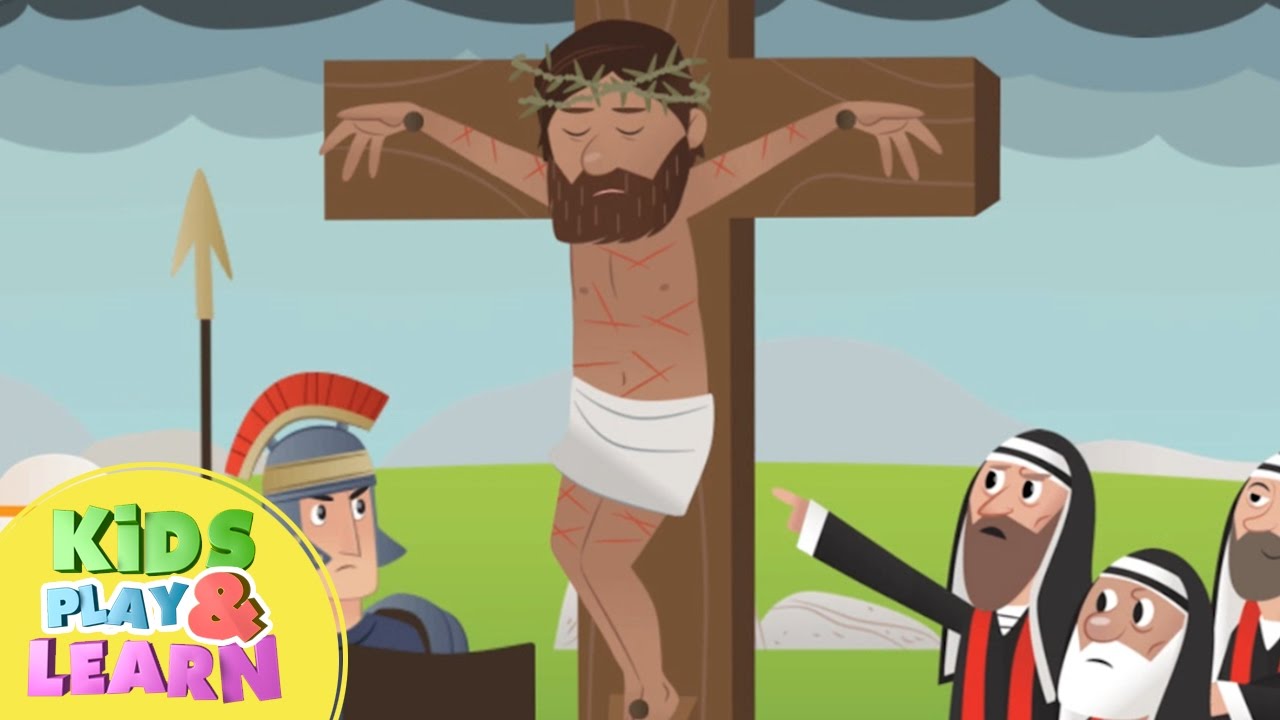
Is the crucifixion of Jesus too unpleasant for young children? Will it make them pessimistic about the world? Will it scar them emotionally?
I’ve always heard from Christian Educators that if you are looking for a Children’s Bible for your children, see how they tell The Crucifixion Story. If the text and images are age-appropriate for your child, then it’s probably a good match.
(In other words, don’t let Mel Gibson teach the story to your pre-schoolers.)
This article by Elie Mystal is excellent in terms of the current debates about sharing difficult stories with schoolchildren. Most of the people who want Critical Race Theory kept out of schools are White People. And this is why:
The founding of the country is taught through the eyes of Thomas Jefferson, not Sally Hemmings. The fight for women’s rights is introduced only through the efforts of noted suffragist and racist Susan B. Anthony, not Sojourner Truth or Frances Ellen Watkins Harper. Westward expansion is explored purely as the story of Lewis and Clark—and their helpful assistant Sacagawea. Slavery is addressed primarily through the redeeming narrative of “the Great Emancipator,” Abraham Lincoln. And, of course, students learn that any issue of racial oppression that Lincoln didn’t quite get around to solving was “fixed” by Martin Luther King Jr. and the anodyne, docile caricature of nonviolence white people have created around him.
History, of course, is always told through the voices of “the winners.” But to keep the more difficult truths of American history from schoolchildren is comparable to keeping the most difficult truths of Biblical stories from Sunday School Children.
We are happy to celebrate the heroism of our D-Day veterans, but we omit the truth that Black and Brown veterans were blocked from receiving free college education from the GI Bill. We laud the efforts of our ancestors to open schools for young Native Americans out on the Prairie, but we leave out the parts where we forced those children to live away from their parents and unlearn their heritage. (And then there’s this.)
[Note: If you’ve never read Howard Zinn, this might be a good time, but – spoiler alert – it will make you angry if you believe the USA has achieved liberty and justice for all.]
As people of faith, in both Jewish and Christian circles, we acknowledge the failings of our forebearers Abraham, Isaac, Jacob. Saul, David, Solomon. The disciples of Jesus.
Why don’t we acknowledge the failings of our forebearers in American history?
I believe it has something to do with White Supremacy.
To paraphrase the words of Mr. Mystal:
When we teach stories that reveal that – historically – white people have been complicit in acts of violence and oppression against Black, Brown and other People of Color, it pushes against the myth that White people are the best people. And if White people are guilty of anything, it was that we mistakenly thought we were being good, that our actions were justified, or all wrongs have since been righted.
Most Christians believe that Jesus was brutally executed on a cross. And most Christians believe that isn’t the end of the story.
The wonderful news about our nation is that there is hope. There has been brutal injustice and yet that isn’t the end of the story. But in the words of James Baldwin, “Nothing can be changed until it is faced.”
Juneteenth is around the corner. Let’s read up about it, for the sake of the Gospel.
A Black male teenager stepped on the foot of a White female teenager. She yelped. He ran. (He knew what people assumed when a White woman and a Black man are alone together and the White woman yells.)
And in a matter of hours hundreds of Black residents of Tulsa’s Greenwood neighborhood were killed and 35 blocks of Black-owned businesses and homes were burned to the ground. It happened 100 years ago today, but most of us have never heard this story.
Someone asked on Twitter over the weekend how old they were when they first learned of the Tulsa Massacre, and – while Twitter is in no way a scientific tool – the responses were telling. No one mentioned learning about this in school. I learned about it in my 50s via Watchmen because our kids were reading it.
There is a division in our nation today about the efficacy of sharing difficult truths in order to bring about racial healing. Some believe that teaching stories about the Tulsa Massacre, for example, will only divide us more deeply. And others believe that teaching such stories is essential in understanding the divide. The same arguments are made for and against teaching Critical Race Theory to school children.
For the record, I believe it’s important to talk – age-appropriately – about difficult parts of our world and personal history for the sake of understanding each other and bolstering critical thinking skills.
Imagine teaching a kindergarten class and you announce that everyone wearing blue gets ice cream on the playground today. If you aren’t wearing blue, you get no ice cream. “Would that be fair?” Of course not. “How would you feel if you were getting the ice cream? How would you feel didn’t get ice cream?”
So is it fair that if you have pale colored skin you automatically get extras that people with dark skin don’t get? (Note: Everybody in that kindergarten class gets ice cream today.)
We like to think of our nation as fair, where everyone can prosper equally if we work hard. The people in the Greenwood District of Tulsa worked so hard that their neighborhood was called Black Wall Street. And it was burned to the ground because of false accusations, fear, greed, and – basically – White Supremacy. The KKK was active there and lynchings were not uncommon in 1921.
And so we can do better when we know that story. We know what has happened and why it can’t happen again. And we know that there is anger and fear between people with different skin colors. It’s essential that we know these stories for the sake of the Gospel, siblings in Christ. Keep in mind that there is a story we share every year about the arrest, betrayal, and crucifixion of Jesus. Without that part of the story, there is no resurrection.
Every Pastor is Moses these days if we are doing what God is calling us to do. And it’s exhausting especially if we forget that God is with us.
We are moving God’s stubborn, terrified, distracted, often ridiculous people from where they used to be to a new place that is unknown. Some of us are moving congregations of 10 people. Some are moving congregations of 50 people. Some are moving congregations of hundreds of people. A few of us are moving congregations of thousands of people.
Moses was moving a congregation of 600,000+ or many less or many more – depending on different sources. And there were animals.
There are 28,518 members of the Presbytery (middle governing body) I serve according to the 2020 stats. It’s an enormous challenge moving less than 30,000 human beings from a stuck faith to a vibrant faith without animals. I have new appreciation for Moses every day.
This kind of work will break your heart. No wonder so many pastors focus on keeping the flower committee happy because it’s easier than making disciples.
Let’s talk about that movement to a vibrant faith. I’ll be honest with you.
Too many of God’s people in our congregations . . .
Love their cemeteries, their buildings, their pre-school, their former pastor more than they love Jesus.
Believe it’s “their church” because they’ve been part of it for generations.
Are terrified that everything they love about church will be taken away if they don’t cling to it.
Are in deep denial that their glory days are never coming back.
Expect to grow without a full-time pastor (or one working full-time who is being paid only part-time wages)
Ignore changes in their neighborhoods.
Want to grow but not if it means welcoming “those people.”
Why would anyone want to attempt this way of life? Because of Pentecost.
Let me tell you what I’ve seen the Spirit of God do:
I’ve seen a tired congregation come to the holy realization that they need to close so that something new is possible where they’ve worshipped for 100 years.
I’ve seen a congregation of less than 200 raise money to transform their former education wing into transitional housing and another congregation of less than 200 move forward on building affordable housing for young adults aging out of foster care.
I’ve seen downtown churches open their doors to neighbors who need to take a shower or do a load of laundry.
I’ve seen a rural church with unused/underused property offer it up so that a Disaster Relief Warehouse could be erected there to serve victims of fires, hurricanes, and tornadoes.
I’ve seen congregations call pastors who don’t look like them but who do look like the new neighbors in hopes of making those neighbors feel welcomed.
I’ve seen congregations welcome preschoolers who don’t speak their own language.
I’ve seen the wealthiest among us make sacrifices to serve “the least of these.” And I’ve seen the poorest among us make even greater sacrifices.
This is why I’m still in the Church. But moving God’s people is not for the fainthearted. They say they want to escape Egypt, but many of them really don’t. “At least in Egypt, we knew what to expect.” Something about the devil we know.
Moses wasn’t a saint. But he is my de facto model for ministry.
Have a lovely three-day weekend. Maybe you won’t “go to church.” But you can still be the Church.
Sometimes it’s called Study Leave and pastors (and other professionals) are expected to do it. My denomination requires two weeks of study leave annually.
So what counts as Continuing Education? A retreat with Simon Sinek? A Carrie Newcomer concert?
What books can be charged to a clergyperson’s book allowance? Brene Brown? John Green? Jameliah Young-Gooden?
Gone are the days when we clergy spent all our Study Leave time attending preaching conferences – although those conferences are still offered and often recommended. And our books are no longer solely Biblical commentaries.
Which of the activities below would your congregation consider study leave or continuing education? (Select as many as you wish.)
The truth is that – especially for preachers – EVERYTHING can inform out sermon-writing from Marvel movies to medical journals, from romance novels to podcasts about bees. This is how the Holy Spirit works. God uses everything to teach us about the meaning of life and who we are and who God is.
Although we Clergy (and others) are tasked with taking our two weeks of study leave, many pastors I know do not do it. They are offered Sabbaticals after 5-7 years of service, but they do not take those Sabbaticals. Why?
Money is an issue. Many clergy have continuing education budgets that aren’t enough to pay for a conference away from home. And churches sometimes fuss that they also cannot afford to pay for someone to cover for pastors when they are away.
Martyrdom is an issue. Many clergy are “too busy” to take time away or they fear that their congregations will not like it if take vacation and study leave time.
Not understanding the meaning of Continuing Education/Study Leave is an issue. Parishioners call it “vacation” even if you are in classes every day, especially if those classes are in a beautiful place. Some parishioners don’t realize how important it is for the church that their leaders take time to rest and reflect.
I’m curious about Continuing Education for you and/or your church leaders. Do pastors take it? Do elders have to approve it? Is there enough funding to cover it?








 A Church for Starving Artists