The Chasm (and Why It’s Ruining Our Spiritual Lives)

Chasms are scary if you have a fear of heights.  I can barely look over the balcony railing from my fourth floor apartment, much less stand on one side of a mountain looking down. 

There are physical chasms that separate the surface of the earth.  And there are figurative chasms that divide human beings in terms of our opinions, our core beliefs, and our life experiences.

And there is a single time when the word “chasm” is used in the Bible.  (χάσμα pronounced “chasma“) It’s here in the story of Lazarus and the Rich Man.

There was a chasm between them in both life and death.  In life, the rich man led a comfortable existence with fine foods and elegant clothing and the poor man (Lazarus) was starving and covered in sores.  In death, the rich man found himself tortured in Hades and the poor man (Lazarus) was comforted at the side of Abraham.  And between them  – at least in death – was a great, fixed chasm.

It didn’t have to be this way.  It wasn’t supposed to be this way.

I’m not an economist, but I have concerns about the increasingly treacherous financial chasms between the rich and poor in the world God created.  This is not what God intended.

For 16 years, Ben Cohen and Jerry Greenfield of Ben and Jerry’s ice cream ran their company with this policy: the pay ratio between the highest salaried executive and lowest-earning-worker would be no greater than 5 to 1.

Yes, that was a long time ago but their corporate values were laudable and – if you ask me – holy.  Today, the pay ratios between the highest paid executives and their lowest paid workers in the same companies are depressing – and if you ask me – sinful.

(These are pre-pandemic numbers, published in early 2020 according to Bloomberg.)  The pay ratio between the highest paid executives and the lowest paid executives are:

  • Costco – 169 to 1
  • Apple –  201 to 1
  • General Motors – 203 to 1
  • Bank of America – 276 to 1
  • Merck – 289 to 1
  • Walmart – 1076 to 1
  • Chipotle – 1136 to 1
  • McDonald’s – 1939 to 1
  • The Gap – 3566 to 1

You can look up your own favorite companies on that Bloomberg link.  And this would be a good time to check the pay ratio on your church staff.  Is it fair?  Would you call it just?

The divide between rich and poor is increasing and this is bad for our country and our souls.  We have come to believe that people are poor because they’ve done something wrong when actually our structures are set up against the poor in ways that keep them poor.  From housing opportunities to educational opportunities to job opportunities, the chasm between rich and poor is not what God planned.

The chasm between rich and poor in this life is not fixed.  We can still cross that chasm if only we will.

Let’s reread the story of Lazarus and the Rich Man and ask ourselves this:

  • Do we notice the poor person at our gates?
  • Do we tend to the health concerns of the poor?
  • Do we ensure that the poor have food security?
  • Do we know the names of the poor who live on our streets?

I’ve asked this before and I’ll ask this again:  What is the first and last name of the poorest person you know?  It’s a real question.  What’s your answer?

Are we going to die perpetuating that chasm between rich and poor?  Or are we going to notice and then lift up those who are hungry and sick in our communities?  Again – the chasm is not a fixed one.  For now.

Image of The Grand Canyon overlooking the Colorado River.

The Future of Congregations is in Partnerships

Individual congregations often partner with other congregations in a variety of ways:

  • If your church is part of a denomination, you are connected to other churches in the denomination.
  • If your church is on one of a variety of campuses, you are connected to the other campuses of the main church.
  • If your church is part of an interfaith network, you are connected to congregations of other faiths.

These partnerships might result in joint mission, education, and worship experiences.  Maybe they even share a pastor.

The truth, however, is that most of our congregations are not as connected as they could be for the sake of more impactful ministry.

Imagine the impact if:

  • Your congregation has a vegetable garden and you partner with a church that wants to share your fresh vegetables with the canned goods from their food pantry.
  • Your congregation has a preschool and you partner with a neighboring church without a preschool who provides healthy snacks to yours.
  • Your congregation partners with another congregation (which doesn’t look like yours) for a Civil Rights trip to Birmingham with ongoing conversations about race.
  • Your congregation partners with a non-profit to provide a jobs training course on your church’s property.
  • Your congregation partners with a local school for a monthly “Thank You” Party to community helpers.  (This month: Firefighters!  Next month: Police Officers!)

Most of our congregations, however are Lone Rangers.  It’s easier to do mission on our own without the collaborative meetings and extra administrative work.  But the future is in partnerships.

By definition, partnerships are about more than perpetuating an institution (like the church.)  They build community.  They exist to serve people.

So, as your congregation moves into the fall, ask your leaders these questions:

  • Are we connected to other congregations and how?
  • Are we connected to other faiths and how?
  • Are we connected to community leaders and how?
  • Are we connected to community non-profits and how?

If the answer is “no” to all those questions, I’m going to venture that your congregation is focused inwardly (and your ability to thrive is stifled.)  If the answer is “yes” and your connections are between a single member or two, then how might your partnerships become broader?

The future of healthy congregations will involve partnerships because the healing of the nations requires all of us together:  houses of faith, community leaders, non-profit organizations, educational institutions, for-profit businesses.  The world needs us to join together.  And God calls us to a common purpose.

Somebody Else’s Freedoms

I live in an apartment building and someone threw a party Saturday night.  I didn’t want to be That Person but I was sleepy at 1:30 am.

A couple things:

  1. There’s a pandemic.  At one point I saw the inside of the party room (more about that later) and it was a wall-to-wall, mask-less affair.  There appeared to be about 20 nice people holding red cups.
  2. The pounding bass could be heard throughout our floor.  I live about ten apartments away from Party Central and it felt like the music was coming from my closet.
  3. Several residents and I were gathered outside their door knocking in hopes that someone would hear us so we could ask them to turn down the bass just a little.  (They couldn’t hear us knocking.)
  4. Finally someone opened the door to take out the trash (which is when we saw how many people were in there) and he said he’d definitely turn it down.  (They did, two hours later.)
  5. Saturday nights are generally not party nights for Pastors  but I seriously considered telling the partiers that I was a brain surgeon with a procedure scheduled for 6 am and by keeping Dr. Jan from resting, they were risking the life of a twelve year old in need of a miracle.  It sounded more important than “I have to wake up and preach the gospel of Jesus Christ in the morning.

Connecting with friends is important.  Preaching the gospel is important.  Performing surgery is important. Loving our neighbors – even when they are rude – is important.

Everyday we see and hear about neighbors who believe that wearing face masks is important to prevent the spread of COVID-19 and neighbors who believe it’s important to allow people the freedom not to wear a mask.

This article is a must-read . Whenever freedom is described as “religious,” things are going to be heated. One person’s “religious freedom” might be the ability to withhold business from black people because of the “curse of Ham.”  Someone else might feel their “religious freedom” is threatened if they can’t harbor undocumented immigrants.  “Religious” and “Christian” are dangerous adjectives.

And personal freedom is more mundane than this.  Is it okay for me to burn citronella candles on my balcony if the people on the balcony above me are allergic to citronella?  What if it’s safer for me to walk the dog in the bike lane instead of the sidewalk, which means bicyclists have to go around me?  Is it okay for me to buy all the toilet paper?

Individual freedoms have trumped (sorry) the common good for a while now and this is not merely a legal concern or a public health concern or a capitalist concern.  This is a spiritual concern.

Weighing what is most important is a daily task.  Sometimes it’s easy. (The need for socially isolated people to gather loudly or the need for people to sleep at 2 am.)  Sometimes it’s less clear. (The need for students to get back to school or the need for teachers and staff to feel safe.)

But the bottom line is about how we treat our neighbors.  Can we see the world through their lens – not necessarily to change our own minds but  – to try to understand where they are coming from?  Can we compromise?  Can we try to see them through the eyes of Jesus.  (This one really helps me when I want to choke someone.)

Imagine if we Christians were known for loving our neighbors as ourselves.

The Strange Little Things We’ve Lost

I really miss going to restaurants.  It’s not about the food really or the fact that I don’t have to cook that night.  It’s about having a little break in the midst of an ordinary week.

During this pandemic, we’ve lost jobs, routines, and social closeness.  And there are also strange little things we’ve lost that make a difference in our emotional well-being.

  1. We’ve lost the mini-vacations of visiting museums, shopping, and eating out.  The change of scenery, the treat, the opportunity for something unexpected to happen have all been minimized during these days of quarantine.
  2. We’ve lost the ability to start the day making a command decision at our local coffee shop.  At home there’s one kind of coffee.  If we buy coffee out, there are at least six decisions to be made before we get to the office: hot or cold, caf or decaf, whip or no whip, sugar or sugar-free, skim or whole, short or tall.  Remember this scene from You’ve Got Mail?
  3. We’ve lost the ability to connect with strangers.  It goes without saying that the lack of touching between family members who don’t live together is hard.  But it’s also hard to stand six feet away from the cashier, the post office employee, and the person on the street.  Call me inappropriate, but I used to touch the shoulder of my public librarian when she walked me over to the copy machine.  “Thank you so much.” (touch shoulder)

As a person living alone for two years while HH and our dog were still in the Midwest, I would sometimes sit at the bar of breakfast diners and talk with perfect strangers about what they ordered.  They might ask me what I’m reading.  I’ve been asked more than once about movies, books, and even where I go to church.  I loved that connection with strangers.

I also loved wandering into cute shops looking at the candles and greeting cards.  I loved going to the movies on a rainy afternoon.  I loved wandering into a secondhand store looking for treasures.

I really loved meeting people in coffee shops.

Those things are gone for now and five months into this thing, I feel it.  It takes it’s toll.

It also goes without saying that this is a First World Issue that shows my privilege.  Variety is a privilege.  Options are a privilege.  Making six decisions about our morning coffee is a privilege. Eating in restaurants is a privilege.

I remember being asked by a guy for money on Central Avenue in Charlotte, and I told him that I was on my way into the restaurant he was standing in front of and I didn’t have money, but I’d buy him breakfast.  It was very clear that he didn’t eat in restaurants much.  He asked for McDonald’s french fries (we weren’t in a McDonald’s.)  He wanted a milkshake in a restaurant that didn’t do milkshakes.  But having that opportunity to hang out with that person was not only a privilege for me; it was a gift.  I miss random encounters.

We who’ve had the opportunity to enjoy such strange little things pre-pandemic are just fine.  And yet, I admit before you and God that I miss them.

Image of Undercurrent Coffee Shop in my neighborhood and one of their mochas.  It’s not like this anymore.

Pray for Lebanon

We tend to pray hardest for those people and situations with whom we have a personal connection.  It’s only natural.

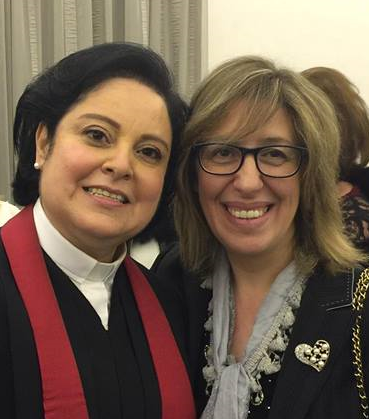
In spring 2017, I was blessed to visit Lebanon and Syria, and I still have prayer partners living there.  And they are shaken today.

Not only are they our siblings as God’s children, they are also our denominational siblings: Najla and Rola and Hala and Hadi and Sanah.  And there are many more.

How many of us realize that there are Presbyterian Protestants in Lebanon and Syria? And being The Church there is not easy sometimes.

Our clergywomen colleagues have struggled to be ordained and called to professional ministry positions in countries with limited opportunities.  Our congregations in the National Evangelical Synod of Syria and Lebanon (NESSL) deal with being Protestant Christian minorities in countries with a long history of civil war.  There are more refugees in Lebanon per capita than any other country in the world.

And today they are grieving deep loss. Please pray for this beautiful country and for the individual friends who live there today.

If so moved, please consider making a donation:

  • here for Presbyterian Disaster Assistance in Syria and Lebanon, or
  • here to the Near East School of Theology in Beirut which suffered damage yesterday, or
  • here to support Presbyterian Mission Co-Workers Scott and Elmarie Parker who have served in Lebanon since 2013.

Thank you.

Images from top to bottom: The Rev. Rola Sleiman, and The Rev. Najla Kassab and Hala Bitar (who’s been ready to be ordained for several years.)

Raised Right

Sister, you know what’s right.  Just do right.  Maya Angelou

To be “raised right” at least in the South used to mean that you knew not to wear white before Memorial Day.  To be raised right meant that you wrote thank you notes and gave your seat to your elders whether that seat was on a bus or somebody’s livingroom.

I once knew a lifelong church member who conflated good manners with righteousness.  She took it upon herself to teach etiquette to her Sunday School class of elementary school students. Three of her students had found their way into Sunday School without their parents, so she assumed that those particular children weren’t being raised right.

She believed that social graces were more important than God’s grace.

Unfortunately the students in her class learned some unfortunate teachings.  They learned that some church people value actions that make you look good over actions that make your soul good, that make the world good – or at least better.  Eventually they all left our church and if they ever connect with a church again it would be a miracle.  They were children who needed a community that loved them unconditionally, a community that taught them that God loves them unconditionally.

This famous video with Maya Angelou is worth the three minutes and 26 seconds you’ll spend watching it.

Right might not be expedient, it may not be profitable but it will satisfy your soul.

Doing what’s right is an essential service during a pandemic, during a hurricane, during a political campaign.  It’s essential if we are going to be the people we were created to be.

“Raise up children in the right way and when they are old, they will not stray.” Proverbs 22:6

It’s not about etiquette. Although I’m a fan of good manners, it’s about doing the right thing.  Today is a good day to do the right thing.

Image is Sister Sookie’s Funeral by Phoebe Beasley 


If You Are Seeking a New Pastor and You Can Do This, Do This

You’ve seen those Galleries of Former Pastors in church buildings:  professionally-taken photos of mostly men line the hallways and parlor walls of church buildings.  Occasionally, there might be a woman, but most of the images are of male pastors who have served Since The Beginning.

These are excellent days to be bold in our faith – especially if we are seeking a new pastor.

Although there are pastor nominating committees who say that they are totally open to The Spirit in discerning their next leaders, they tend to seek leaders who look like their past leaders.  Male. Married to a woman. Skin color matching the current majority of members.

Please don’t tell me you hope to become “a more diverse congregation” and then call someone who doesn’t represent a demographic that affirms that hope.

There are more than 230 More Light congregations in my denomination (i.e. churches working “for the full participation of LGBTQIA+ people in the life, ministry and witness of the Presbyterian Church (USA) and in society.”) And very few of these congregations have ever had a pastor who identifies as LGBTQIA+.  This is curious to me.

If our congregation identifies as “More Light” and we are open to calling pastors who can be their true selves as leaders of our church, then why aren’t we calling LGBTQIA+ pastors?

The majority of our congregations in my denomination are White.  Most are 100% White.  If everybody in your community/town/county is White, then your congregation will be 100% White.  Of course.

And if our communities are increasingly Black, Brown, Golden, or a mixture of all skin colors, and we are serious about “reaching out into the community” then why haven’t we seriously considered calling a pastor who doesn’t look like the majority demographic?  

If you are a congregation who can call a Queer pastor (in a majority Straight church) or Brown pastor (in a majority White church) or a Spanish-speaking pastor (in a majority English-speaking church with Spanish-speaking neighbors) or a Korean-speaking pastor (in a majority English-speaking church with Korean-speaking neighbors) then please do it.

You are the ones who can actually do this.  So please do it.  And if you – predominantly straight White English-speaking churches – are looking for great candidates who happen to be LGBTQIA+ or People of Color who speak multiple languages, contact me today.  I will introduce you to some of the finest pastors in the world.

Image of the Wall of Fame found in a wonderful church in Grand Haven, MI. This post is inspired by SB.

The More You Know

I grew up in North Carolina knowing virtually nothing about Native American history except that the first English settlers disappeared (i.e. The Lost Colony) and they most likely connected with a tribe of natives along the coast of North Carolina or died of a virulent disease.  I’ve learned in only the past several years that White People reportedly gave small pox infected blankets to Native Americans in the 1700s causing widespread epidemics.  One of the surest stories is that Lord Jeffrey Amherst (for whom Amherst College is named) promoted the idea.  He personally mentioned what a great idea it was in a letter to British Captain Simeon Ecuyer.

I grew up “knowing” that General Robert E. Lee was an honorable man who hated slavery and  loved the Commonwealth of Virginia more than he loved his country.  The truth – according to this firsthand account by an enslaved person named Wesley Norris – is that he was a particularly brutal slaveholder.  Turns out he was not the benevolent plantation owner many have called him, although his portrait still hangs proudly in many White fraternities throughout the South.

I grew up admiring Josephus Daniels, the longtime publisher and editor of the Raleigh News and Observer and the namesake of The Student Stores building on my college campus.  I bought my textbooks in the Daniels Building.  He was considered an honorable man, a teetotaler who forbid work on the Sabbath. (What a good Christian.)  The truth, though, also includes the fact that he was a White Supremacist who helped lead the Wilmington Insurrection of 1898 which resulted in a bloody attack on Black residents and Black-owned businesses.  Just yesterday, the UNC Board of Trustees voted to remove the name of Josephus Daniels and three other White Supremacists from campus buildings.  This was the right decision.

I share these stories not because I hate my country or my Southern heritage.  I love my country and my Southern roots, and because I love my country and my roots, I want us to be better.  I want us to do better.

The more we know, the better the world can be.  (Note: My grandmother used to say, “It’s amazing what the LORD has let us learn.”  I agree.  God makes learning possible.)

There are Church People who “know” that Mary Magdalene was a prostitute.  (Not true.)  There are people who believe that there was a literal “Good Samaritan” and a literally “Prodigal Son” even though the Bible clearly says that Jesus was telling parables (not sharing a news report.)  Jesus told parables to jolt us into understanding the depth and breadth of God’s love for us and God’s expectations of us.  Rabbis tend to answer questions with stories and with more questions. Jesus was a rabbi.

Someone told me recently that Tucker Carlson had been doxxed by a New York Times reporter and that his family was forced to move because of the protesters who showed up at his house.  Actually, the opposite is true.  Mr. Carlson’s address was not shared but the reporter’s address was leaked and protesters showed up at his house.

We need to do our research.

I learned in seminary to dig deep and seek out original sources like Josephus and Tacitus.  I learned in college to seek scholarly articles and to find multiple sources for my “facts.”  There is indeed a lot of fake news out there.  And there is misinformation about what’s in the Bible as well.

We can do better because we love God and we love our country and we love our heritage.  AND we have quite of bit of corporate confession and reparations to make.  The Bible calls it repentance.

The more we know, the more we realize that we have work to do to make things right, in the name of Jesus.  

You Are My Favorite

We learned at my grandmother’s funeral long ago that everytime one of her nephews visited, she told that particular nephew, “You are my favorite.”

They were all her favorites.

Before COVID hit, when I was preaching from one of the 96 pulpits in our Presbytery or when I was visiting for a congregational event, I would often tell that Church that they were my favorite..  To be perfectly honest, they are all indeed my favorites in their own way.  Struggling congregations, thriving congregations, broken congregations, betrayed congregations, and even cranky congregations. Although they can be a challenge, cranky congregations do wonders for my prayer life.

I want to let you (church members out there) in on something I hear regularly from your pastors about what makes a congregation one of their favorites. 

In these pandemic days, it’s the perfect time to work on these things:

  1. Remember that the church is first and foremost a spiritual community.  We are not a social club.  We are not a family business.  We are not a fast food establishment.  Healthy pastors want to be the Church with people who have a spiritual hunger.  We are trained to think theologically, to teach the Bible, to mentor people in their faith.  Healthy pastors lose interest when all the Church wants to do is argue about money or perpetuate social expectations.
  2. Lighten up.  Enjoy each other’s company.  Forgive generously. Laugh more.  Refrain from all opportunities to shame each other.
  3. See every challenge as an opportunity. Instead of wringing our hands over the way this pandemic has “ruined everything” consider how the church might address new opportunities for worship and service.
  4. Don’t be afraid to try new things.  Who knows how long this pandemic will last before there’s a vaccine?  This is the time to try new practices.  If we like them – great.  If we don’t like them, we can stop when the pandemic ends.  Trying new ways of loving God is Biblical.

If your congregation does these things, you will not only be my favorite, you will be the favorite of every pastor fortunate enough to serve you.  Let’s use this strange time to re-think, re-tool, re-focus.

Image of one of my favorite churches: Holy Grounds (2010) because they worked on the four things I’ve listed. I’ve been blessed to work with hundreds of favorites.

Can We Inherit Scars?

I would love to tell you that I am a regular reader of novels, but it’s not true.  I read lots of nonfiction. And I read one novel a year during beach vacation.  That’s it.

A lot of research goes into what that one novel will be.  This year it was Homegoing by Yall Gyasi.  It’s excellent.

This particular paragraph struck me hard:

“Yaw listened as his best friend told him that he had explained to the girl that you could not inherit a scar.  Now, nearing his fiftieth birthday, Yaw no longer knew if he believed that.”

Can we inherit scars?  I think we can and we do.

Generational Trauma is real. Yaa Gyasi’s story of eight generations of an African/African-American family illustrates that scars can indeed be inherited.

This is also true for “church families.”  I am queasy about calling all congregations “families” and yet church systems and family systems are similar.  The generational trauma/family systems in a congregation are especially pronouced during a pandemic, and we who want The Church to thrive need to consider how most congregations share common themes:

  • There are heroes in the life of each church. Beyond Abraham, Moses, Ruth, David, and Jesus there are beloved former pastors and other legendary pillars.
  • There are “identified patients” The “problem pastor” who led the church astray or the elder who kept speaking truths that no one else wanted to here.
  • There are blind spots. The congregants who pride themselves in their beautiful sanctuary or their financial endowment who don’t see that the walls are cracked and the endowment is dwindling fast.)
  • There are levels of distrust.  Some church people don’t trust each other, their pastor, or the denomination.  They don’t even trust God.
  • There is anxiety which leads to a sad survival mode.  Again, they don’t trust God.
  • There is amnesia. We don’t remember why we are the church in the first place.
  • There is mis-remembering.We used to have 300 children in Sunday School” when records show that actually, we never had more than 150 in Sunday School during the most glorious of The Glory Days.
  • There are unhealed wounds.  People are still hurting about everything from not being elected to serve a second term on the Deacons to “that sermon about the gays” to Angela Davis.  ( Look it up, Presbyterians.)
  • There are scars we’ve inherited from generation to generation.

We carry with us scars from the past.  Maybe our church once banished a divorced woman from the communion table.  Maybe we refused to welcome a family who didn’t look like us.  Maybe we shamed someone for having a baby too young or for needing to use the food pantry or for having “problem children” who refused to participate in Confirmation. These are the scars that people carry with them long after they leave the church.

But they don’t have to be scars that we forever pass on to future generations.  There are thousands of congregations who welcome the broken, the poor, the sick, the wounded, the excommunicated without hesitation.  There is redemption in a healthy church.  There is movement from “stuckness” to fresh visions what service in God’s name might look like

This is the time to be the redemptive, fresh People of God.  Thank God for this pandemic, if it indeed stops the cycle of passing on the scars and the dysfunctions we’ve come to normalize.

And thank God for Yaa Gyasi who can tell an amazing story.

Note: My 2019 novel was The Nickel Boys by Whitehead Colson.  My 2018 novel was There, There by Tommy Orange.  My 2017 novel was Little Fires Everywhere by Celeste Ng. My 2016 novel was The Underground Railroad by Whitehead Colson.  These are all good vacation reads.