What Do You Do for Spiritual Reasons?

When FBC was in kindergarten, we got a note after school from his teacher that shared this information:

“___ might be especially hungry when he gets home because he refused to eat lunch.  We had a pizza party and he said that he couldn’t eat that pizza “for political reasons.”

FBC lived by his convictions from an early age.

There are many things I do or don’t do for “political reasons” but mostly those choices have deeper roots.  My hope is that my “political reasons” for doing or not doing something is more deeply based on “spiritual reasons.”

I just registered for the 2020 National White Privilege Conference in Mesa, Arizona and one of the preconference classes is Racial Justice as a Spiritual Imperative.  One of the things I am trying to be is consistent in my life.  I want to live according to the broader message of what Jesus teaches (love your neighbor, love your enemy, love Jesus more than other stuff) and part of Jesus’ message involves doing ministry on the edges.

Jesus created community with all kinds of people beyond his own cultural boundaries: foreign women, tax collectors, “unclean” folks.  In the United States today, we white people have built a boundary around ourselves that we don’t even notice or acknowledge.

“White” is normative for us. We make sacred assumptions that white = better, smarter, more successful.

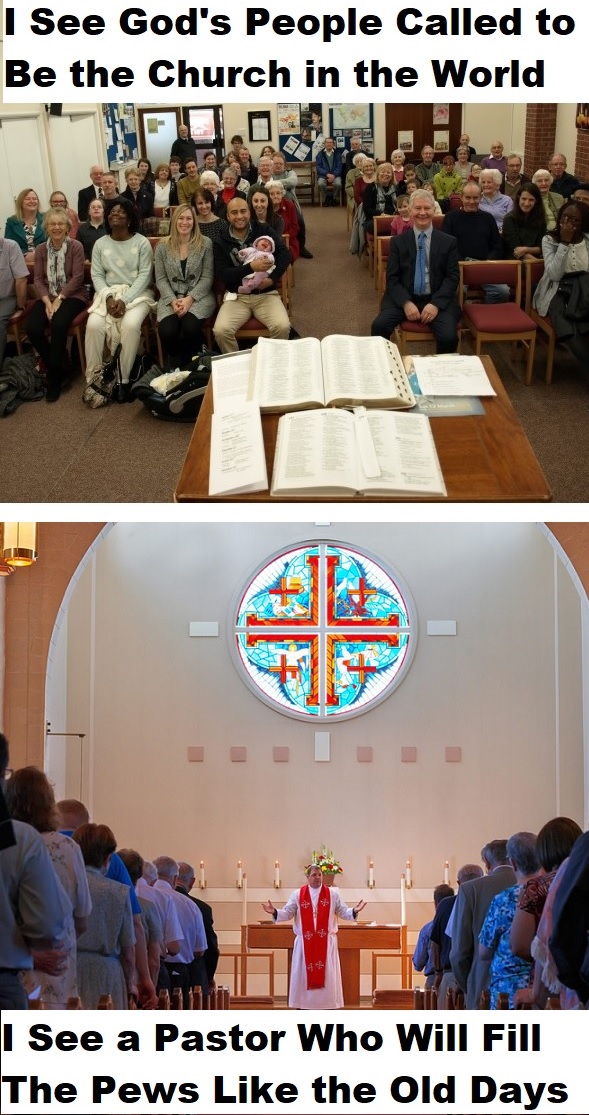
White supremacy is the foundation of our nation’s history from how Europeans treated the native population to slavery and Jim Crow and – today – how we see immigrants.  But most of us do not realize much less accept this.  We make sacred assumptions that things were better in the old days.  We forget that this great nation was built by people of color.

My faith in Jesus teaches me that I need to understand these hard truths.  My faith in Jesus teaches me that I need to learn from people of color.  My faith in Jesus reminds me that we are all human beings created in God’s image.  It is a spiritual imperative that I address racial injustice.

Some of us do not eat meat for spiritual reasons.  Some of us tithe our earnings for spiritual reasons.  Some of us do not drink or swear for spiritual reasons.  Some of us volunteer at soup kitchens for spiritual reasons.

If we living out our faith, it shows up in what we do and what we don’t do in our everyday lives.  And I want to be clear: this is not about check lists and using the Bible as a weapon to chastise each other.  It’s about spiritual disciplines that help us grow as followers of Jesus.

What do you (try) to do or not do for spiritual reasons?

Image from the 21st National White Privilege Conference to be held this year April 1-4 in Mesa, AZ. It’s important work.  I’ll be there for spiritual reasons.

Table for One

After my Mom died, Dad often ate dinner alone at the K&W in Chapel Hill.  He was a very social guy and it kind of broke my heart thinking about him sitting alone.  He probably chatted up the women serving chicken livers and chocolate pudding.  But then he would have taken a seat by himself.  He wouldn’t have brought a book to read and he certainly didn’t have a cell phone to read his email.  It makes me feel sad to think of him at a table for one.

HH and I are on the final stretch of living without each other and – just like running a marathon – we are at the point when it’s especially tough.  Living without your person is really hard.  Really hard.

I frankly enjoy eating alone in a restaurant because it’s a respite from meetings and wall to wall phone calls.  And I’m not having to cook or clean for myself.  At least for now, it’s comforting to have someone bring me sweet tea.

I once preached a sermon called Eating Alone for a communion service and I noted that – when we share in The Lord’s Supper together – we are feasting with those who are present and those who are no longer with us – the saints who’ve gone before us.  One never celebrates communion alone.

When I eat alone in a restaurant, I don’t feel alone at all.  Sometimes people at neighboring tables ask if I’d like to join them, and honestly, I don’t want to.  I need quiet time when nobody’s talking.  I find comfort in that table for one.

Loneliness is a weird experience.  I have been told many times that professional ministry is lonely and that mid-council ministry is especially lonely, but I have not found this to be true. I can’t share what’s going on with our pastors and congregations, except to share it with God who already knows.  And that’s all I need.

What I also need is my person.  HH moves to this time zone in April, and it’s a bittersweet move.  He is leaving a fantastic congregation in a wonderful place.  He is entering into the unknown in that we are hoping for a new fantastic congregation in a different wonderful place – but we don’t know where that is yet.

I will continue to eat alone sometimes and that will be fine.  But I look forward to setting a table for two at least once a day in just a couple more months.

Here’s to the people sitting at table for one. Maybe they’d like company.  Maybe they wouldn’t.  But try to notice them.  They might be missing their person.

Image is Automat by William Hopper (1927) Des Moines Art Center.

When Church Governing Boards Are Too Big (This Sounds Really Boring, But I Hope it Sparks Some Conversation)

[Note: I’m Presbyterian and Presbyterians call our governing boards “Sessions” but this post might also apply to your church’s non-Presbyterian council too.]

I can tell a lot from the size of a congregation’s governing board:

  • If a smallish congregation has a huge governing board, I assume there are trust issues.  (They don’t trust a small group of elders to lead them.)
  • A large board could be good (i.e. the congregation is also large and this board works like a creative, well-run machine along with the church staff.)
  • A large board could be not-so-good (i.e. committees and ministry teams are ineffective and this large group serves as a committee of the whole congregational system.)
  • A large board often = long meetings of the elders. (Note: no elder meeting should be longer than an hour and a half – and this includes at least 30 minutes of prayer and theological reflection.)

I’ve been taught that church boards should be sized according to the size of the congregation in this way:

  •  Six elders on the board for a congregation of 50 – 150 members, not counting the pastor.
  • Nine to twelve elders for a congregation of 300 members, not counting the pastor(s).
  • No more than 24 elders for any congregation over 300 members.

Our boards are more than receivers of reports.  In a perfect world, our boards are comprised of spiritual pillars who represent the diversity of the congregation.  They welcome faithful discernment and generate big themes for the ministry of that congregation.

Examples of Big Themes are:

  • addressing the opioid addiction in our community
  • addressing homelessness in our community
  • addressing the digital divide in our community
  • addressing systemic racism in our community . . .

. . . all to the glory of God who calls us to address what loving our neighbor looks like in our particular neighborhoods/towns.  God calls us to be good neighbors and so we act accordingly – in the likeness of Christ by the power of the Holy Spirit.

Too many times, the reality of our boards is that:

  • people are bored on the board.
  • people are uncertain what their role is.
  • people are comfortable doing practical tasks (picking curriculum, replacing the boiler) but are uncomfortable being spiritual leaders (praying for each other, sharing their faith stories, disclosing their doubts, discerning together what God is calling the Church to be.)

I love being Presbyterian because we are an elder-led denomination.  There are ruling elders (who serve on the board) and there are teaching elders (who are ministers of the Word and Sacrament.)  Or at least that’s our historic lingo.

Sitting with church people called to lead a church should feel like a room full of light bulbs.  But too often it feels like a life-sucking waste of time.

It doesn’t have to be this way.  Teaching our governing boards how to do generative ministry makes all the difference.  Nobody – except the people who seek power – wants to serve a church board that focuses on committee reports and congregational minutiae.  I’d rather sit through a reading of Calvin’s Institutes. Seriously – I totally would.

Elders rule.  They have the power to bring light to the everyday ministry of their congregation.  And those not currently serving on the church board are not exempt from responsibility.  They, too, have a role in participating in the ministry of their congregation.  It’s just that the elders are looking at the Big Picture.

What’s the Big Picture in your church?  Do you see it?  Do you agree on it?  Or are you frazzled over the artificial flower arrangements for next Sunday?

What would it take to change the culture of your church’s governing board to make it more enriching, exciting, and energizing for the sake of your congregation’s ministry?

What Really Happened Was This . .

So let’s say that your city or town needs a new highway.  Construction will involve removing whatever’s in the way, and it makes sense, of course, to take “blighted areas” or “slums” for the project.  Everybody wins!  Those eyesores become gleaming new highways which improve traffic patterns and make commuting from the suburbs easier.

The Wikipedia definition of Urban Renewal literally puts it that way.

What actually happened in many of our cities and towns was Urban Removal.  African American neighborhoods were sacrificed for various “renewal” projects, and although the most photographed properties in the city proposals showed rundown lots, most of the properties served a thriving middle-class African American community.

In 1958, the City of Charlotte voted to destroy the Brooklyn Village neighborhood. Brooklyn Village included the first Black high school, twelve churches, stores, medical offices, restaurants and the homes of about 9000 citizens – all owned or occupied by African Americans. The Charlotte City Council at the time promised to create a new and improved neighborhood for the Brooklyn residents.  It never happened.

What does this have to do with the Church?

I could go on and on about this but I won’t for now.

What I will say is that our Presbytery – 96 congregations covering seven counties – voted unanimously over the weekend to send a resolution to the Charlotte City Council and the Mecklenburg County Board of Commissioners asking them to urge the new developers of what was once Brooklyn Village to:

  • Ensure that 20% of the planned housing units be affordable for households or individuals earning 30% or below the area median income.
  • Ensure that 20% of the planned commercial spaces would go to African American owned businesses, offering subsidies if needed.
  • Allocate ongoing revenues from the development to a Restorative Justice Fund to provide economic stimulus and support to the African American community in the hopes of repairing some of the economic damage done to this community.

Our Presbytery commissioners unanimously approved this and many of our churches are committed to attending future meetings to speak up.

My friends, this is the 21st Century Church.  We build. We repair. We support the least of these.  I am profoundly grateful to serve among people who want to be this kind of Church.

Happy Monday.

Images of Brooklyn Village before it was torn down in the 1960s and 1970s in Charlotte, NC.

A Cool Thing I’m Doing Right Now

An increasingly essential truth for the 21st Century Church is that growing congregations are connected to their communities.  It looks like this:

  • The high school principal calls the local pastor asking for help with several families with LGBTQ students because the families are concerned about bullying.  The church introduces a First Friday of the Month gathering of LGBTQ families and those interested in supporting them.
  • The Town Council has noticed a huge need for a growing homeless population.  They ask for a meeting of all local faith leaders about working together to provide food and shelter support.  The faith-based community opens a Room at the Inn or similar program.
  • The School Board is spending more and more time discussing the disparities between students with access to computers and students without access.  The faith-based communities, a local bank, and a local department store partner together to provide digital access at the homes of all students on free or reduced lunch.

Obviously, these things will never happen if faith based leaders, school leaders, business leaders, and other non-profit leaders don’t know each other.

One of the cool things I am doing right now is preparing – with seven other Charlotte people (non-profit leaders and government leaders) to gather in Chicago in March for training with the Divided Communities Project.   We are planning in advance for possible unrest in our city in future months.

This is not in any way to cast aspersions on that or any other event.  It is to say – however – that recent gatherings of a political nature throughout the country and world have experienced unrest and we are hoping to be prepared in a positive way.

In the meantime, the eight of us have been meeting for conversation in hopes of building relationships with each other so that we can become a team that will bring back tools for expanding this effort.  Bridging divides is good.

As we all know, our country is divided.  Our world is divided.  Nationalism – specifically – is divisive in a way that crosses over into a variety of issues from white supremacy and systemic racism to poverty and health care disparity.

I am excited that my corner of The Church will be partnering with some extraordinary Charlotte leaders in my former city.  It’s very cool.

What cool things are you working on these days?  Please tell me you are having coffee with the sheriff or lunch with the mayor to talk about ways to partner for the sake of the community.

Image from The Divided Community Project based at the Ohio State University Moritz College of Law. But we’ll be meeting in Chicago March 1-3, 2020 (because Chicago might be more fun than Columbus.)

Either We Trust Each Other or We Don’t

It’s truly wonderful to work with people who trust each other.  To trust and be trusted makes for a happy and effective organization – including and especially in church.

I’ve noticed that there are clear signs when church people don’t trust each other.  And if church people don’t trust each other, their churches become sick.  And sick churches cannot thrive.  And churches that can’t thrive die.  And dying churches do not make God happy.

So how can you tell if church people don’t trust each other?  Here are a few crystal clear indicators:

  1. The pastor has an Emergency Discretionary Fund to help neighbors with simple needs or major emergencies, but before the pastor can access the fund, they have to get permission from the treasurer, the mission chairperson, and the church secretary.
  2. The officer nominating committee presents a slate of new elder and deacon nominees for the congregation to elect, but church members nominate a completely different slate from the floor.
  3. The church budget is full of “designated funds” so there is very little opportunity to try new ministries.
  4. A candidate for professional ministry comes before the Presbytery (or comparable governing body) as the very last step before ordination. After earning the required degrees, passing multiple written ordination exams, passing countless oral exams, achieving good reports from field education, Clinical Pastoral Education, and psychological counseling experiences the entire Presbytery still insists on scrutinizing them as if they haven’t been through sufficient preparation.
  5. The elders make an important decision for the congregation but two elders who missed that meeting demand that the decision be rescinded until they can be present for a new vote.
  6. The pastor is required to turn in a weekly schedule listing all pastoral calls, each hour spent in prayer, each hour spent preparing for worship and classes, each hour teaching and preaching, each hour doing email and phone calls so that the Personnel Committee can be sure that pastor is really working.
  7. A grieving family asks that memorial gifts donated in memory of Grandma go into a special fund that the family gets to control.
  8. The same people serve on the same committees for decades to guarantee that things happen the way they’ve always happened.
  9. Certain leaders of the church insist on approving all purchases by the pastor for the pastor’s own books, office supplies, and continuing education plans.
  10. The Personnel Committee requires the pastor to keep office hours in the church building to ensure that the pastor is really working, which they can’t do if the pastor is working at home or in a coffee shop.

If any one of these is happening in your congregation, there is a trust problem. Either we trust each other or we don’t.

And if we don’t, why not?

There are ongoing reports about “the death of the church” and “the increasing number of ‘nones’ and ‘dones.’  I believe that the issues are not about a lack of spiritual hunger.  I believe the issues are about trust.

People seeking a spiritual community where they can grapple with the meaning of life are not going to stick around when the overriding culture of that spiritual community is about power and control.  Today might be a good day to do a trust audit in your congregation.  (It won’t be a comfortable conversation, but please refrain from shaming and blaming each other.)

Working in a culture of trust is glorious.  And it makes God happy (because it’s about God and not personal power.)

Image source.

Relationships Are Not Tidy

Since seminary, I have lived:

  • alone in a house with a dog
  • with a spouse and a dog
  • with 1, 2, 3 children (in rapid succession) and a spouse and a dog
  • in an empty nest with a spouse and a dog
  • alone in an apartment with no dog

Living alone for a Myers Briggs Introvert can be heavenly for several reasons and one of them – maybe the loveliest reason – is that I can organize things the way I want.

Look at my kitchen cabinet.  No clutter. Orderly. Color-coordinated.  Exactly how I like it.

My tools are always where I placed them last. My fridge holds no expired food. Every book is in its place. And it’s lonely.

I can hardly wait until HH joins me in Charlotte in late April but our home will not look like this.  Every one of us who resides with another human being knows that people load the dishwasher a certain way.  Some of us leave dirty dishes in the sink.  They will be random piles of paper.  It’s the price we pay for living with our loved ones.

Relationships take work beyond deciding how to load the dishwasher.  They can be messy and that’s kind of the fun part.  Figuring out how “we” will set the table or make the bed is all part of the glorious work of being in relationship.  When we love the people we live with, it’s easier to let the occasional laundry on the floor thing go. (Note: sometimes I leave my laundry on the floor.)

We negotiate and compromise when relationships are important to us. One of my hopes for the people who serve in Our Nation’s Capital is that they will come to care about our country and each other enough to negotiate and compromise.  When we focus on winning, we are engaging in Level 3 Conflict which is a terrible place to start.

Who will be the heroes and patriots willing to engage in the messy work of building relationships across the political aisle?

Who will be the disciples of Jesus willing to engage in the messy work of building relationships beyond church walls?

Who will be the people willing to engage in the messy work of building relationships beyond our comfort zones?

Our future as a nation, a Church, and a people depends on building relationships.  And here’s the cool part: we have spiritual  resources to help us out.

Jeremy Bearimy

The finale of The Good Place came at the perfect time last week. (This recap has spoilers.)

By the time HH and I will get to live in the same home again, two years and two weeks will have passed.  We chose to do this to ourselves partially by choice and partially not by choice, but my primary request to God for these commuter marriage months has been this:  Please don’t let HH die while we are living apart.

My parents died young.  As a pastor I’ve buried precious people who died every age from hours old to 100 – literally.  I’m in the life and death business and so a television show written by a philosopher about the afterlife was bound to attract my attention.

By grace and providence HH and I were in the same time zone sitting on the same sofa to watch the series finale and it occurred to me – one more time – that one day one of us will have to say “goodbye” to the other one.  I want to do this really well when the time comes.  And I hope the time doesn’t come for many years.

I long to see my parents again.  I would love to see Cindy and Margaret and Anne and Mason and RS and Ethel and Bob and Lucille.  I would love to see Zack and Scout too.  I look forward to spending some eternal time with CM.

When last week begins with a beloved NBA legend and his daughter dying suddenly with seven other souls on their way to do something they all love and ends with a nation’s democracy teetering on destroying itself, The Good Place finale has been a soothing balm.

My life started in The Southern Part of Heaven only to loop through relationships and dreams and births and deaths only to circle back to find myself  back in North Carolina for the last years of my professional life. It’s clear that Jeremy Bearimy could be a real thing (maybe on earth as it is in heaven?)

HH and I listened to James Taylor’s new autobiography over the weekend and – again – I’m amazed at how life loops and circles around.  (Note: Break Shot is an excellent and quick 90 minute listen.)

Here’s an explanation of Jeremy Bearimy.  Here’s where you can watch the series finale (Season 4, Episode 13.)  And here’s where you can find a lifelong place to figure out the loops and circles about who God is and who we are.

I believe this to be true:

“The Good Place, like its architect, always found happiness, and sometimes beauty and deep meaning, in the mundanity of life.”  (Alan Sepinwall in Rolling Stone.)

I look forward to having daily mundanity with HH again – later this year.  And I ache for those who don’t have it anymore.

Have a lovely week, everyone.  And be kind to each other.

When Bullies Win

I try to let it go when bullies win.

I try to surrender my disappointment to God and trust that God will bring justice to an unjust situation.

And the weird thing about bullies is that they often do not consider themselves to be bullies at all.  They see themselves as:

  • Smart
  • Tough
  • Successful
  • Savvy

Actually they are afraid.  They are afraid to be vulnerable.  They are afraid to fail.  They are afraid that they aren’t the smartest or strongest or most powerful person in the room.

I’ve known some bullies and they can be Life Destroyers.  It’s easy to let thoughts of them control our sense of peace.

So, on this day when you might work with a bully or read a bully’s tweet or hear a bully’s voice here’s something we can do. (I learned it from a pillar of the Church named Maybelle.)

Try to see that person through the eyes of Christ.  Where we see a threat, I believe God sees a broken, terrified person who is loved by God but has never been loved unconditionally by anyone else.  Or maybe they have been loved unconditionally, but they can’t love themselves enough to believe it.

Loving bullies is the only thing that helps, and we pray that  – in the meantime  – the harm they wreak will be reversible.

Image of Regina George in Mean Girls not to be confused with the Olympic sprinter.

Lost Ticket-no grace

I made two serious parking mistakes yesterday morning:

  • I parked in the garage that doesn’t validate parking tickets.
  • I lost the unvalidatable parking ticket.

This means I forked out $21 for a parking spot that should have cost me $6 and as I pushed the “lost the ticket” button on my way out of the garage, the machine spat out this special receipt:

Lost Ticket – no grace.

Maybe there would be grace bestowed upon me by the Voice In The Machine.  “I was just at the doctor for less than two hours.”  Maybe the disembodied voice would have mercy on me.

Nope.

Grace happens when we receive what we do not deserve. Mercy happens when we do not receive what we deserve. Two different things.

Church is in the grace business AND in the mercy business.  It’s been this way since the First Century if the Church has authentically followed Jesus.  When most of the First Century world cast out disabled children and “sinful women” the Early Church took them in and loved them. When most of the world left widows to fend for themselves, the Church provided for them.

This is what the Church has always done if we have been faithful to Jesus’ teaching.  This is what we do today if we are faithful to Jesus’ teaching.

I know congregations who welcome undocumented immigrants who haven’t followed the rules.  I know congregations who re-purpose classrooms for transitional housing for people coming out of prison.

We who believe God calls us to offer grace and mercy are often called fools.  One woman snapped at me in church years ago and accused me of being a “do-gooder.”  I wish I actually did as much good as she seemed to think I did.

It’s interesting to me that the poor seem to offer more grace and mercy than the rich – and maybe that’s an unfair assessment.  But people who have experienced their own need for grace and mercy seem more willing to offer it.

On this very day in the year of our LORD,  we are going to see less grace than rudeness.  We will witness less mercy than cruelty . . . unless we are very fortunate or we make the commitment to offer grace and mercy ourselves to those who don’t deserve it.  Weirdly it’s a joy to do this.