For the Love of God . . .

. . . trust Black women. 

I’ve had a couple experiences in the past week during which leaders who happen to be Black women have been ignored or written off or unfairly criticized.  I see this often in my line of work and it’s crushing.  And a sin.

Trust Black women – not merely because they vote, not only because they are wise, not simply because they are strong.  Trust Black women because they are unspeakably gifted.   That’s all I have to say today.

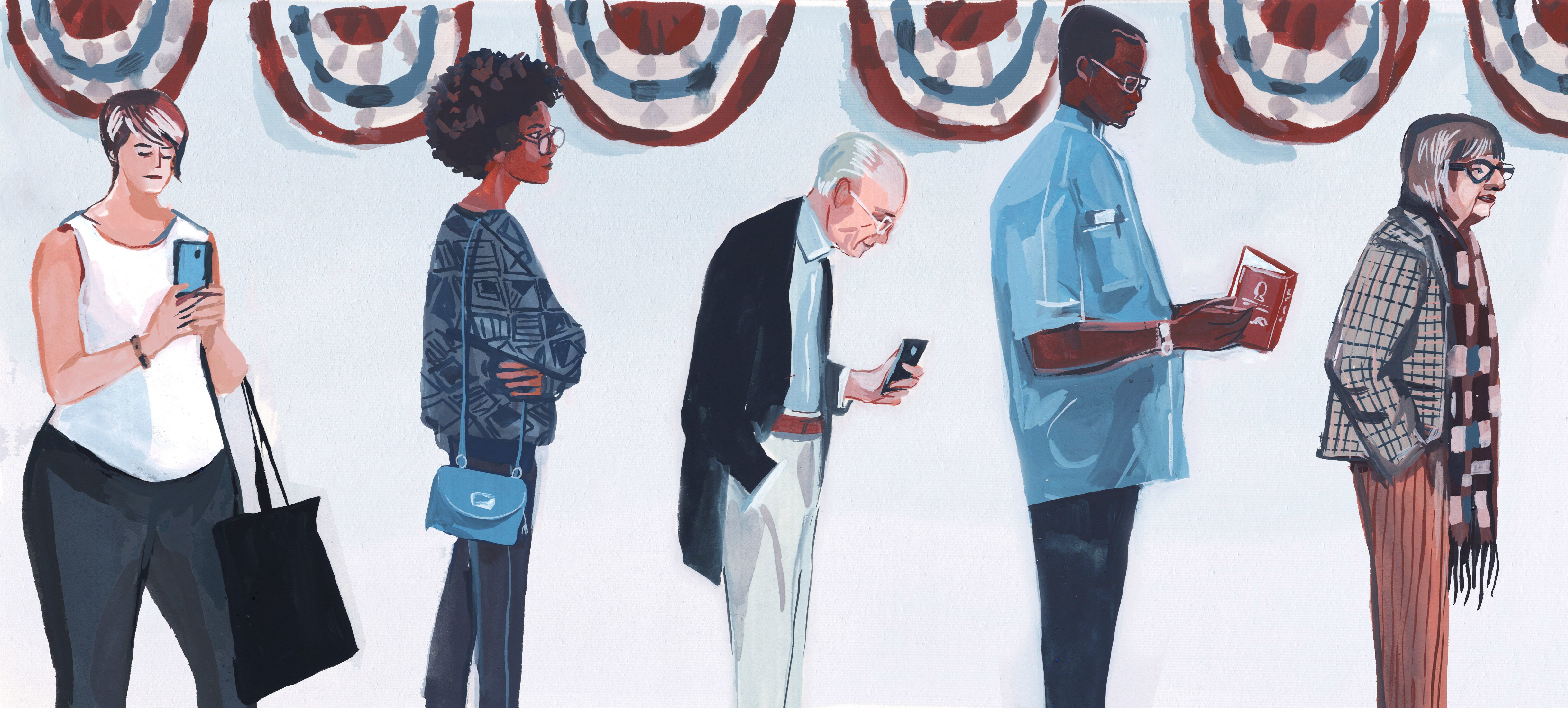
Image source.

Paying Taxes is Patriotic

Today We The People get to vote.  Some of us get to vote on increasing our local taxes or not.  

Mention the word “taxes” and most Americans will groan.  But I, for one, am grateful for the privilege of paying taxes to my government.

  • When I lived in Illinois my (very high) taxes paid for amazing community fairs and a top notch public library.  I – a Southerner – had no qualms about driving in the winter because the roads were clear every day.  The commuter trains were reliable and safe.  The schools were and continue to be excellent.
  • Now that I’m in North Carolina, I will happily vote today in favor of a quarter-cent increase in our sales tax to fund arts, parks, and education here in Charlotte.  I believe it’s good for our city.

I have no children in the school system here but teachers deserve the supplements this tax increase would provide.  I rarely use the parks and greenways but they are essential for community recreation. Although I don’t take full advantage of the cultural resources in this city, the arts edify all ages and income levels.

Paying taxes is patriotic.  It means that we support what builds up our community and helps our neighbors as well as ourselves.  Would you pay higher taxes if it meant that public school teachers were paid better salaries?  Would you pay higher taxes if it meant that everybody got health care?

I hope your answer is a big yes.

We Americans are a flag-waving people – especially in regards to our veterans and our first responders.  Our taxes make it possible for veterans to receive their pensions and healthcare.  Our taxes make it possible for our police officers and firefighters to get better training.

The truth is also that our taxes pay for policies that perpetuate injustice and – again – this is why we vote. Voting expresses our desire to make changes – or not.

If we truly believe that God calls us to serve our neighbors I hope we will vote accordingly. It’s the faithful thing to do.

We are incredibly fortunate to be citizens of the United States, and I say this knowing full well that there are great and small injustices throughout our nation.  We can do monumentally better.  Unless we are cynical about the whole “liberty and justice for all” part of our national pledge of allegiance, we are all called to vote for leaders and policies that will serve our neighbors as well as ourselves.

Our allegiance is not to an institution.  Our allegiance is to each other.  We are the United States of America.

I hope you’ll vote today.

Image source here.

Was Harriet Tubman a Magic Negro?

You are familiar with Magic Negros right?  Think Will Smith in Bagger Vance.

Magic Negroes are the dark-skinned characters in fictional movies who help the light-skinned people figure it out.  They can communicate with the dead (Whoopi Goldberg in Ghost.) They can see the future (Gloria Foster in The Matrix.) Sometimes they even portray God (Morgan Freeman in Bruce Almighty.)

Harriet Tubman was not a Magic Negro.

She was the real life human woman with the faith to move mountains. She could not read and write but she could hear God’s Voice.  She could see Visions. That Voice and those Visions made it possible for her to free at least 70 enslaved people in the 19th Century United States.

Do you know what would have happened to her if she’d been caught?

Nat Turner was hanged and then flayed and then beheaded after leading a slave rebellion in 1831.  His skin and bones were literally handed out as souvenirs after his death. And he even got a trial.  I doubt that Harriet Tubman would have gotten a trial.

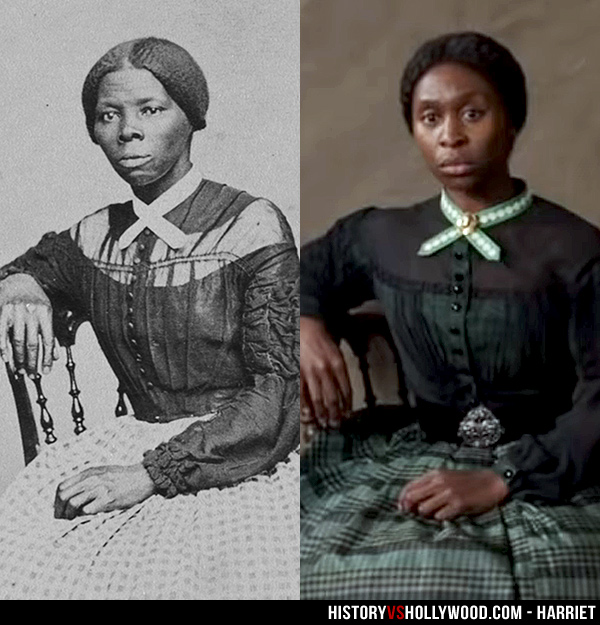
The fact that she was never caught is a miracle of Biblical proportions. In honor of All Saints’ Day last week, it would be a good idea to see Kasi Lemmons‘ film Harriet staring Cynthia Erivo. It’s excellent.  (Note: there is not a more elegant actor alive than Leslie Odom, Jr.)

There are people who believe that Jesus is also magic.  The miracles were like magic tricks.  Prayers are magical chants.

But Jesus is not magic and prayers are not incantations.

And the Saints of God from Joan of Arc (1412 to 1431) to Teresa of Avila (1515-1582) to Harriet Tubman (about 1822 to 1913) are not magic – even though they all exuded a deep spiritual power that made them fearless.

Each of us are also called saints of God in my Christian tradition, and it doesn’t mean we are perfect, but it does mean that we can have that spiritual power as well.  It’s just that our fear usually outweighs our faith.

Faithfulness is a power that can move an illiterate enslaved 5’2″woman to risk her life for the sake of justice.  She wasn’t magic.  She was simply filled with the Spirit of God.

This Spirit can be ours too but we’re distracted by projects like “filling the pews” and “making the budget.” (And this is swiftly killing the Church.)

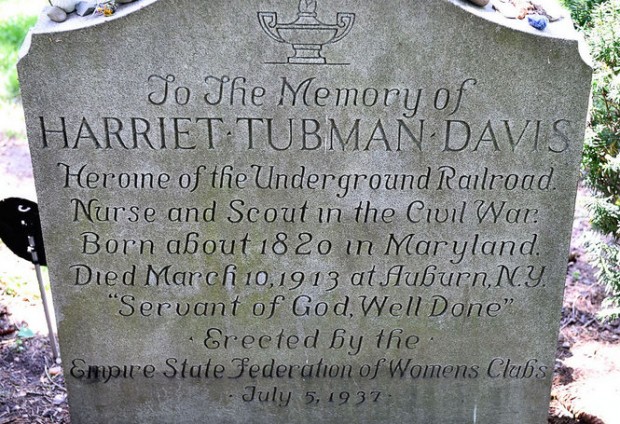
Top image of Harriet Tubman and Cynthia Erivo who plays her in Harriet. The bottom image of the saint’s gravestone in Auburn, New York.

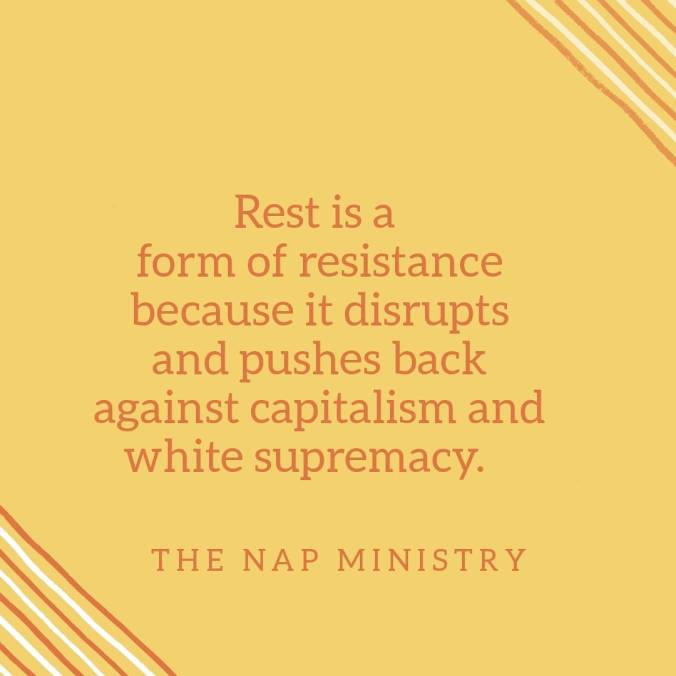
Rest is a Form of Resistance

It’s been a long week, my friends.  Actually it’s been a long couple of weeks with big meetings and a two trips and a bad cold.  You don’t have to tell me twice to take a nap.

A colleague introduced me to The Nap Ministry which is – yes – about self-care and getting enough shut-eye.  And it’s also about much more.

Naps are a holy place, spiritual practice and a form of resistance for those living in the margins, navigating racism, poverty, violence and discrimination. What could have happened if we were allowed the space to rest?

The other night I was blessed to participate in a conversation about weathering and African American women.  This is a subject for a year’s worth of blog posts and I’ve been thinking about Women of Color who are in my life.

  • I think about my friend S. whose life has been exhausting for most of her 30 years. She is currently homeless and doesn’t want to live in a shelter because her spouse will not give her custody of their children if she’s living in a shelter.  And so – without a car or a phone – she tries to find work and shelter and food.  What takes me five minutes takes her two hours because of her situation.
  • I think about T. who took care of me and my siblings when we were young children.  One day my Dad let me ride with him to take T. home and when we pulled in front of her dilapidated house with several children my age playing in the yard, I asked her, “Whose children are these?”  And she said “They are my children.”  I didn’t ask the question out loud, but I though it: “Who takes care of your children when you are taking care of us?” (Note: We didn’t even call her “Miss T.”  Just her first name.)
  • I think about my sisters in ministry who are Women of Color.  Like all clergywomen, they have to deal with everything from comments about their hair to comments about their clothing.  But Women of Color have additional burdens.  What church will call them to serve?  (Very often African American, Korean American, and Puerto Rican congregations will not call Women of Color who’ve come out of their own congregations.  And neither will White churches.)  And then they have to deal with all the everyday stress of not appearing to be “too ethnic” or “too loud” or “too angry.”  But they also have to work all the time so that people will know they are “committed.”  It’s exhausting.
  • I think about the women at the border.  They have fled violence and quite possibly fended off further violence along the way.  And they have children who can be taken from them.  And they don’t speak English and they are hungry and they are desperate.  What I would give to be able to pay for hotel rooms with hot showers and comfy beds for every one of them.

Life is remarkably easy for me.  I don’t have to prove that I’m worth being in the room these days mostly because of 1) my professional experience and 2) my age.  My skin color has allowed me in most rooms for most of my life.

I don’t have to worry about my husband being pulled over and humiliated on his way home from a night meeting.  I don’t have to worry that someone will yell “Go home” to me if I’m out walking in my neighborhood.  I don’t have to worry about a safety net if everything goes south.

Imagine a world in which we just stopped and rested because we could?  Most of us can indeed stop and rest.  We just don’t.

And there are millions of others who can’t stop and rest because of who they are and what they are going through.

Some of us have the power to allow others to stop and rest.  Let’s do that.  And let’s nap for the sake of our souls this weekend.  We get an extra hour of sleep.

This post is dedicated in memory of Erica Garner for All Saints Day.

Because There May Not Be Anything Scarier Than Stewardship Sunday

Freezer Burn from InLighten Films on Vimeo.

For many church leaders, there’s nothing scarier than stewardship.  Check this out from Inlighten Films. Password if needed: inlighten

Happy Halloween

Freezer Burn from InLighten Films on Vimeo.


City Ham and Country Ham

[Note: My apologies to those of you who don’t eat pork.]

Yesterday at our Presbytery meeting we were hosted by a congregation known for its exquisite hospitality.  Usually the meetings start with coffee.  Yesterday the meeting started with coffee and homemade ham biscuits with a choice between “City Ham” and “Country Ham.”  Some of us chose both.

A lot is written about hospitality in congregations, but we sometimes conflate rules of etiquette with letting people know they are included. Hospitality is less about the right fork and more about including the newcomers, the visitors, the lost, and the ones who don’t particularly want to be there.

Each of those people can be found in church meetings.

Many of us are busy at these kinds of meetings.  And yet the first priorities must be about people rather than process.  Yesterday, I witnessed:

  • People standing in line to welcome new pastors.
  • Lavish applause offered to newly elected leaders.
  • Grace given to people whose microphones didn’t work.
  • Accommodations made for people who needed help getting around.
  • Accommodations made for people with young children.
  • Lots of laughter.
  • Two kinds of ham biscuits.

We crave authentic community in these days and it’s not about being in a crowded room.  It’s about being with people who see us and appreciate us and celebrate with us and cry with us.  It’s about looking around and seeing people who don’t look like us or speak like us, but caring about what happens to them.  This is Church at its best.

Boo

Prior to the 5th Game of the World Series, I wondered if a time would come when crowds yelled “Lock Him Up.”  My deep hope has been that people opposed to this President would not lower themselves to his standards.  Yes, it’s true that Hillary Clinton has not ever been found guilty of a crime and yet many people in this country consider her to be crooked.  It seems only just to yell the same to the President even though he has not ever been found guilty of a crime at this point in his life.  And yet there are many in the country who consider him to be crooked.  We’ll see what’s proven in a court of law if that should indeed come to pass.

I – like you – have watched and re-watched the President’s experience from a luxury box at Nationals Stadium last weekend.  I admit before God and you that I felt a tinge of appreciation for those who booed him.  And yet I want to embody something different from those who “go low.”

This opinion piece struck a nerve for me.  I don’t want people to boo.  I don’t want them to yell “lock him up.”  I want us to “go high.”

And yet, as a person who has experienced my own assaults and betrayals, I never want the rapist or the betrayer to win.  I want love to win.

What do we do with this?

Politics in the Pulpit

People say they do not want to hear politics from the church pulpit.

And yet Jesus was crucified for political reasons.  He received the death penalty from Roman authorities for sedition.  Calling himself “Lord” was a crime against the emperor.

Following Jesus is political and it’s important to remember that:

  1. The Bible is an equal opportunity offender.
  2. Nobody has cornered the market on The Truth/God’s Will.
  3. God is certainly not on the side on any specific party.

Can we all agree that God is on the side of the poor, the imprisoned, the stranger, the sick, the hated, and every kind of person because all of us were created in the image of God?  Can we who call ourselves Christian all agree on this?

It’s not about “political correctness.”  It’s about what Jesus said.  Does anyone disagree with Jesus’ comments on “the least of these”?

What we decide to do about the poor, the imprisoned, the stranger, the sick, the hated, and all the others with whom we share a planet is where politics come into play.  Different political persuasions have different ideas about the government’s role in each of those issues.

Differing about politics is one thing.  Differing about who is created in the Image of God is another thing.

Let me try to explain.

Two male friends got married to each other in 2011 and by 2016, they had adopted a child.

It was clear that – on social media – their family and friends were supportive of their family.  People obviously love their child.  And yet many of the couple’s friends and family were planning to vote for Donald Trump who has a history of not supporting LGBTQ rights.  On social media before the 2016 election, they asked the people who love them not to vote for Donald Trump.

Their request was not about Donald Trump’s political policies on taxes or the environment or public education.

Their request was about the belief that  a vote for Donald Trump was a vote against the existence of their family.

I have another friend who is white and his spouse is a brown immigrant from Central America. He is preparing for the fact that many of his friends and colleagues plan to vote for Donald Trump again and he is hurt by this because he believes that a vote for Donald Trump is a vote against his marriage, his wife, and the existence of  his future children.  

We can disagree on politics and it’s probably healthy that we do.  And yet – if we recognize the humanity of every individual that God created as people of faith- how can we condone:

  • Any political policy that treats one skin color preferably to other skin colors?
  • Any political policy that automatically treats migrants like criminals as they are fleeing for their lives?
  • Any political policy that puts a higher tax burden on the poor than on the rich?
  • Any political policy that is indeed against human life – at all ages?
  • Any political policy that keeps the poor poor, the sick sick, and the homeless homeless?

Politicians have many ideas about how to solve the ills of the world and I personally have never found one with whom I agree 100%.  I have voted for candidates from both major parties.  What I’m looking for is a candidate who – at the very least – recognizes the sacredness of other human beings – including their political enemies.

What I’m looking for is  someone who can help me understand in a non-political way how we can elect leaders who do not acknowledge the inherent value of each person.  Again, I don’t want to pick a fight about politics here.  I just want to understand how we can continue to elect leaders who denigrate the very existence of some people and some families because of who they are.

Comments welcomed. (Thanks.)

Image source here of emergency shelter for migrants at Blessed Sacrament Church in El Paso, TX.

A Little Something That Delivers a Shocking Amount of Joy

Maybe everybody tips hotel housekeepers, but I didn’t grow up doing that.  My parents never taught this to me – maybe because we didn’t stay in hotels much. Now I stay in hotels a lot.

The great Gayraud Wilmore taught my HH to do this and HH taught me, and now I take a few $5 bills to leave for the person who cleans my hotel room with a little note.

It’s important – if you are going to leave a tip – that you do this every morning because – if you wait until the end of your stay – the person who cleaned your room on Day 1 was not necessarily the person who cleaned the room on Day 3.

I share this not because I am a sweet person, but because the world is a hot mess and everybody needs some unexpected joy.

I was in a lovely hotel in Baltimore for four nights last weekend and I did what Dr. Wilmore has taught my family to do.  And you would have thought that I’d left each housekeeper keys to a new car.

Little notes were left for me in return with words of deep appreciation.  One housekeeper left me bonus bottles of spring water.  I was overwhelmed with how little it takes to make someone’s day.

Do most people not tip hotel housekeepers?  Really, it’s important.  Those people work very hard for little money.  Have a happy Thursday.

No More “Interim Pastors”

My denomination has no bishops who assign/suggest the new pastor for a congregation. (True confession: sometimes I’d like to be the bishop.)

In Presbyterian Churches, pastors are elected by the elders (for temporary positions) or by the whole congregation (for installed positions) and in between churches hire “interim pastors” – a certain kind of temporary minister who serves between the “permanent ones.”

We have something like a dating app to match churches and congregations.  Or sometimes churches and pastors are introduced by mutual friends.

It used to be true that “Interim Pastors” took a week’s worth of training to equip them to help prepare a church for the next pastor.

  • Some interim pastors are disasters – causing more trouble than they found when they arrived.
  • Some interim pastors see themselves as fixers.  They come in, diagnose the problems, fix them, and move on.  Or so they think.
  • Some interim pastors are place-holders doing not much of anything except the usual preaching, teaching, pastoral care, and administration.
  • Some interim pastors do an excellent job “preparing for the new pastor.”

I believe every church needs a Transitional Pastor – not an Interim Pastor.  And the difference is not merely semantic.

All our churches are in transition.  In every demographic.  In every geographic region.  In every denomination and non-denomination.  Unless you’ve been living under a rock, you already know that . . .

  • Rural congregations are transitioning from vibrant farm communities into ghost towns with the children and grandchildren of farmers choosing another path.
  • Small town congregations are transitioning from “factory towns” to communities with closed factories and rampant unemployment.
  • Suburban congregations are transitioning from full pews and well-attended programs to not-so-full pews and fewer programs/fewer participants.
  • Urban congregations are transitioning from large city structures –  once the center of public power  – to aging buildings renting space to everybody from other congregations to community non-profits just to pay the heating/air conditioning bills.

Fewer people are attending weekly worship.  More people are interested in less traditional worship.  You know all this.

All our churches are in transition and therefore we need Transitional Pastors and not Interim Pastors.

Here’s the big shift (and once again, thank you Scott Lumsden.)

Healthy “Transitional Pastors” for the 21st Century Church who serve in between “Permanent Pastors” do not prepare the congregation for the new pastor.  They prepare the congregation for a new chapter of ministry. 

And when “Permanent Pastors” are called, they continue to help the church transition into that new chapter of ministry.

Healthy 21st Century ministry is about the congregation more than the pastor.

Yes – we need faithful, fearless, creative, loving, well-trained pastoral leaders in every congregation.  But so much of what determines whether a congregation will thrive or die is based on the congregation not the pastor.

Sometimes church people do not want a new chapter of ministry.  And this is sad, because stuck churches die.

And here’s the kicker (again, thank you SL):  transitional change is not a tweak.  Oh my gosh, I hear church people tell me all the time that things are changing because:

  • They got a new sign.
  • They changed their church stationery.
  • They project their hymns on the wall now.
  • They decreased the number of elders on their governing board.
  • They agreed to let their pastor preach without a robe.

These are tweaks, not cultural changes.  Cultural changes are way harder because our culture is so entrenched, we don’t even know what it is.  (And that’s the job of the temporary Transitional Pastor: to help us figure out who we are as a congregation right now.)

  • Are we a congregation run by one or two families?
  • Are we a congregation afraid of ___ because they might leave if we don’t let them do what they’ve always done?
  • Are we a congregation addicted to being a social club rather than an example of God’s reign on earth?
  • Are we a congregation who looks down on people without our income or education?
  • Are we a congregation that honestly does not want strangers to join us?

Transitional ministry is where all of us are right now.  To ignore this is a decision to stop following Jesus. (And it’s also really difficult.)

Image of transitioning leaves.  They’re pretty, but they actually die before turning green again.