“Last time I hired you, it was for all the wrong reasons. This time, I absolutely wanted you for the right ones.” Rebecca to Ted Lasso, Season 4
Every organization has a culture and I’ve been obsessed with thecultureofreligiousinstitutionsforalongtime. Although it’s usually the Head of Staff, the CEO, the President, or the Chief of an organization who sets the culture for an organization, I’ve seen powerful culture shifters among – in a church context – a single elder, a Christian educator, an organist, or an Associate Pastor.
I’ve witnesses church cultures in which:
There was no energy (because the lead pastor had no energy)
Everybody walked on eggshells (because the church bullies might unexpectedly explode if they don’t get their way )
Office doors were rarely left open (because the staff didn’t speak to each other)
Door slamming was the norm (because everybody was angry)
People loved “coming to church” (because the leaders were clear about the mission and the mission was lifechanging)
Staff members regularly help each other when somebody’s plate is too full (because they were a team more interested in building the Kingdom than tending to egos)
Generosity was the standard (because people saw the concrete difference their generosity made)
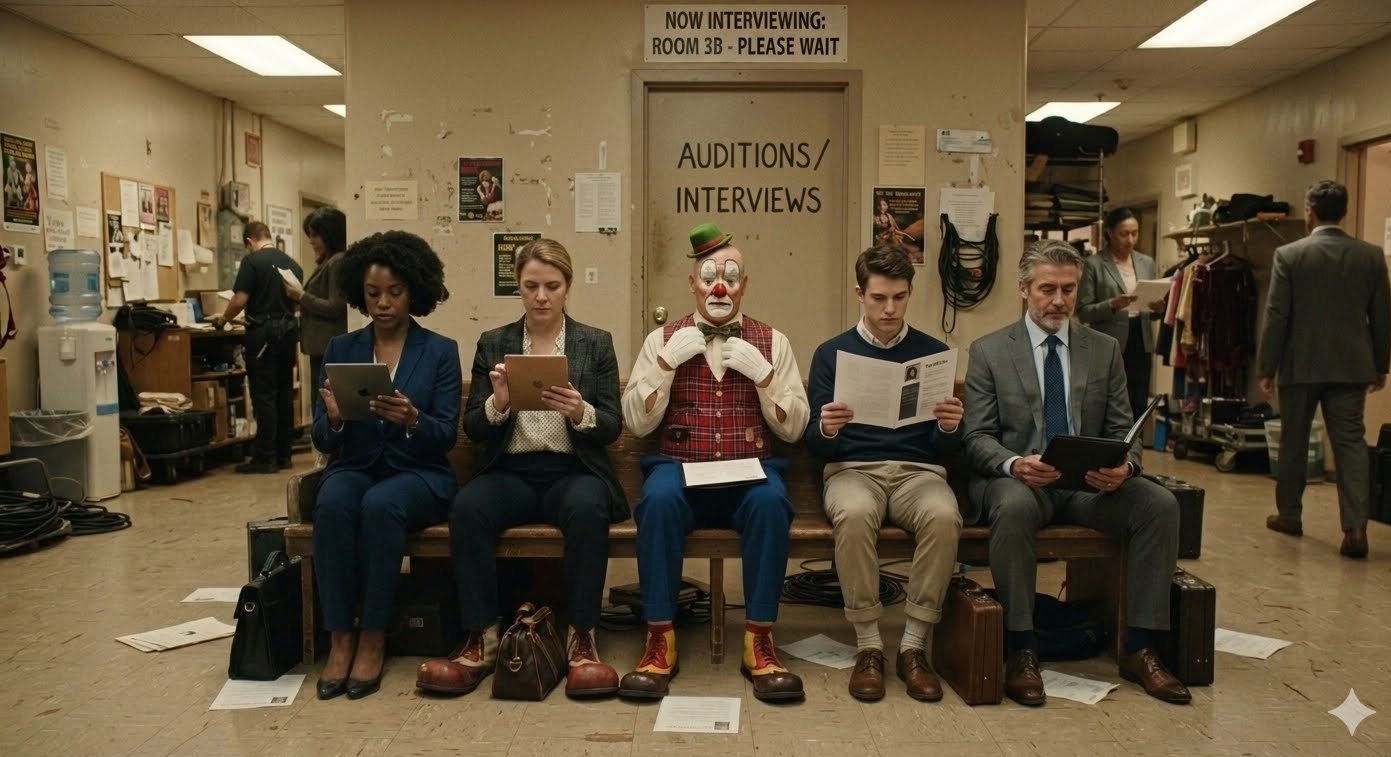
Many of our congregations are hiring/calling new leaders these days. For the love of God please hire/call them for the right reasons (vision, energy, imagination, joyfulness, collaboration) and don’t hire them for the wrong reasons (appearance, special relationship with a church member, pedigree, resume, in order to sabotage the mission.)
Rebecca hired Ted originally to sabotage the mission. She hired him the second time for his ability to create a life-giving culture. We can still learn from Ted Lasso in Season Four.
Yes. We have good reasons and not-so-good reasons.
According to Merriam-Webster, lying is “the act of saying something you know is not true to trick someone else.” It’s the definition of disinformation.
Misinformation is sharing information that we believe is true which might not actually be true. (Note: People who say that Mary Magdalene was a prostitute or the sin at Sodom was about homosexuality might honestly believe those statements, but neither is Biblically true.)
It feels like lying is more rampant these days, but that’s probably because we can track lies almost instantly using digital media. Fiction would be less interesting – from Odysseus to Mayella Ewell – if characters didn’t lie.
Nevertheless it also feels like a spiritual crisis these days.
Political leaders declare under oath that they will or will not take a specific action, and then they break their word minutes after swearing in.
Aspirants think nothing of padding their resumes.
(And I’m intentionally offering a partisan view here) The so-called “leader of the free world” told a documented 30,573 lies during his first term, according to The Washington Post.
“I’ll never tell a lie, I’ll never make a misleading statement, I’ll never betray the confidence that any of you has in me.”
Historians have a hard time pinning down a lie Carter might have shared, but – ironically – some religious leaders perpetuated lies both before and during the Carter Administration. It wasn’t the beginning of political disinformation and it obviously wasn’t the end.
Is there any hope for bolstering our willingness to tell the truth? How do we share The Truth of our faith while also deceiving each other in Church World? Pastor Nominating Committees withhold conflicts from candidates they interview. Pastoral Candidates always tell Search Committees that they lead “collaboratively” whether they do or not. We advertise that “all are welcome” but we don’t truly mean everyone.
There are quite a few lies told in church.
Nevertheless, the feeling that happens when we are told the truth – by political candidates, by Pastoral Nominating Committees, by preachers feels inspiring. Telling the truth often brings growth and positive change. (“You seem unhappy in this volunteer role. What do you sense God is calling you to do next?”) I increasingly love it when leaders speak difficult truths. I’m finding that I lose patience when friends and family withhold truths from each other.
What I’m not saying: Bring a hammer to a family/office/community meeting and take no prisoners.
What I am saying: We must speak the truth in love to each other. It’s healthier in the long run.
Don’t marry the city person when you’re secretly a small town person.
Don’t accept the call to a church that won’t accept your LBGTQ+ child.
Don’t call a pastor who looks good on paper but one of the references shared that they don’t work well with women.
Don’t avoid sharing hard but essential information with loved ones because they will eventually find out and then they’ll wonder what else you kept from them.
Don’t keep the church office volunteer who sabotages the mission, but you fear that nobody else will do it.
Don’t let the bullies rule for fear they will take their money and leave.
All of us tell lies about ourselves and each other. But we can do better. We can expect more of our leaders and each other. And I am so ready for it.
Image of liars who changed history in devastating ways, from center top clockwise: Carolyn Bryant Donham, Anna Anderson, Jeffrey Epstein and Ghislaine Maxwell, J. Edgar Hoover, Richard M. Nixon, Kim Philby, Bernie Madoff, Theodore McCarrick, James Watson and Francis Crick.
“Everyone has something. This is yours. Each life has a defining crisis.” from Strangers: A Memoir of Marriage by Belle Burden
I waited until a public library copy of Belle Burden’s bestselling memoir was available instead of ordering it on Bookshop . Ordinarily when I really want to read a new book, I order my own copy. Impatience.
I didn’t really want to own a copy of Burden’s book although I wanted to read it. I loved her 2023 Modern Love essay. And her story said so much about the choices and assumptions about men and women, husbands and wives. But Burden’s privileges (multiple homes, vaunted family tree) made me wary that most of us could relate. It’s a quick read and especially interesting, perhaps, because of her privilege. Gwyneth Paltrow will be playing Ms. Burden in the Netflix series.
Nevertheless, it’s true that every life has a defining crisis and I’ve spent my professional life sitting with people in theirs: the sudden death of loved ones, the long slog of death from terminal diseases, betrayal, violence, poverty, defeat, abandonment, self-destruction.
For some people their defining crisis might be something seemingly less catastrophic like the death of a nonagenarian parent or knocking out a permanent front tooth. (Seriously, I remember an acquaintance who told me that this was the worst thing that had ever happened to them – losing a front tooth at summer camp when they crashed into a diving board.) For other people, their defining crisis smacks of an Alexander Hamilton childhood. Pain is pain.
My hope, like Belle Burden, is that my children and grandchildren “will move toward people who are in pain, rather than away.” This is how we become community. This is how we become Church.
Our nation is in a state of overwhelming discombobulation right now. Legal residents of the USA are being detained and held in substandard facilities without their constitutional rights. Both political parties conflate partisanship with the common good, and everybody seems to be out for themselves.
Many of our families are in a state of discombobulation for all the usual reasons. You know them.
Retirement can feel like a state of discombobulation, at least at first. Today marks Retirement Day 158 and I only know that because I have a countdown app that hasn’t been updated.
I’ve known newly retired men who died suddenly months after ending their professional careers, possibly because losing their identity became their defining crisis. And I’ve known retired people who never look back. Personally, I’m still trying to figure it all out and I thank those who’ve retired before me whose advice was:
Don’t make any new commitments for at least a year.
Be gentle with yourself. (Naps are our friends.)
[Note: Retirement is an enormous financial privilege. According to The National Council on Aging “45% of older adult households (more than 19 million) lack the income needed to cover basic living costs.” In other words, they will not be able to stop working. Ever.]
Feeling disoriented impacts everything from our appetites to our energy levels to our mental health. When talking with my adult kids, I often ask them – at the end of a phone call in which we’ve reviewed all the ways our world is a hot mess -“Where do you see hope?” At least once, they’ve had to ask me the same question.
Looking for signs of hope is a spiritual practice. And when we don’t have the strength to even attempt to look for hopeful signs, there’s usually someone out there who is feeling hopeful, who can share hope with us. It’s good if we are not all feeling hopeless on the same day.
We need each other. If we have the capacity, one of my hopes is that we will practice gravitating towards people in pain instead of distancing ourselves. Imagine living in a world defined by our shared discombobulation instead of our human isolation.
Image of osprey chicks photographed by Andy Morffew. If you read Belle Burden’s book, you’ll know why I featured confused-looking ospreys.
William Sloan Coffin once said that he set apart one day of the week to read when he was Head of Staff of Riverside Church in NYC. A whole day.
Two truths about this Reading Day goal:
Bill Coffin never had to wait for the boiler repair person to show up or print the church bulletins. (I once worshipped at Riverside on a Sunday off from my rural church in NY and I burst into tears when I realized there was a team of greeters in matching outfits stationed at every door to welcome people. That’s all they did. But it was one of 40 things I did on a given Sunday morning.) Of course he had time to read books.
When I shared with my rural congregation that I too would like to have a Reading Day – after they stopped laughing – it never happened because 1) some parishioners seemed to delight in having emergency needs like “where are the light bulbs?” on my Reading Day and 2) why should their pastor get “another day off” to read when they don’t get that in their jobs? and 3) there were actual emergencies on almost every Reading Day.
Now that I’m retired and can read all the day long and sometimes I do.
I have time to read non-fiction with no obvious connections to Church World. I have time to read novels. I can read without writing in the margins that a particular story or quote would make an excellent sermon illustration. Honestly, this is one of my favorite things about retirement.
So, here is my question: Do you read books? Do you read whole books? And are you currently under the age of thirty and and reading whole books? Do you have an occupation that requires you to read whole books? (Kudos to all the engineers who read Ann Patchett.)
A 2024 article in The Atlantic tells the story of a Columbia literature professor whose students couldn’t keep up with the reading. One student confessed that in high school, they had never been assigned a whole book to read. They had read excerpts or chapters of books, but never the whole books.
Was this your high school or college experience? (And I’d love to hear from you educators about whether or not you assign whole books to read.)
And – Boomer siblings – this is not the place to share how you were assigned Remembrance of Things Past over fall break in the 10th grade and kids today are slackers. Stop it.
I wish that young pastors were given the time to read. I wish that congregations understood that their clergy and educators not only need to read all the Andrew Root books but also poetry and fiction and children’s literature. I wish that all parents had the time and inclination to read whole books to their children. I wish we all loved to read.
What are you reading these days?
Image of a favorite writer’s study that I surreptitiously photographed when my preaching group visited their home a couple years ago.
For the record, I’m an equal opportunity offender in terms of my own personal politics, mostly because our political system (both major parties) are brimming with cronyism and Potomac Fever. Power can be a dangerous drug. It’s exhausting to observe.
I’m heartened however by this article noting that in recent elections, successful candidates have been less about the “hostile spending” of millions of dollars and more about inspiring voters. Just like in spiritual communities, all of us – all of us – are looking for authenticity and action.
“If you’re knocking on a door because somebody paid you to do it, there’s just no real force behind that. But when someone freely of their own volition signs up to get out there” — especially in the summer heat — “you, the voter, will never forget that encounter.” Beto O’Rourke discussing grassroots campaigning
It’s about an encounter.
I had never heard the term “hostile spending” but apparently many of the millions of dollars that political action committees contribute to candidates are dedicated specifically to this kind of political priority. Drench the airwaves with false information. Erroneously identify rivals as “communists” or “radicals” or “crazies.”
It’s one thing to share facts regarding criminal prosecutions or provable misdeeds for example. It’s another thing to share disinformation, misinformation, and blatant lies. Successful campaigns inspire hope, not hostility.
Now for the inevitable Church Connectiont:
Imagine how it would feel if all church spending intentionally focused on hospitality: supporting homes for the unhoused, food for the hungry, community for the lonely, welcome for the searching. Intentionally focusing on hospitality might be as simple as asking – before we spend chunks of money – “How is this expense offering hospitality to our neighbors?” Church staffs are agents of hospitality. Buildings are tools for hospitality. It matters when we make those connections.
And now imagine how it would feel if political campaigns intentionally focused on what’s best for our nation and world? Health care for the uninsured. Justice for the falsely imprisoned. Shelter for the refugee. It’s also important to remember that government workers can be agents of promoting the essential tenets of our nation. Infrastructure is a tool for health and safety and peacemaking and service. Global support has long term impactful benefits for our nation and other nations.
I long to be inspired: by the Church, by political candidates, by educators, by health professionals. I refuse to sink into despair (although I have my moments.) I truly believe that most of us long to be inspired and to let go of the hostile spending of both money and breath. You?
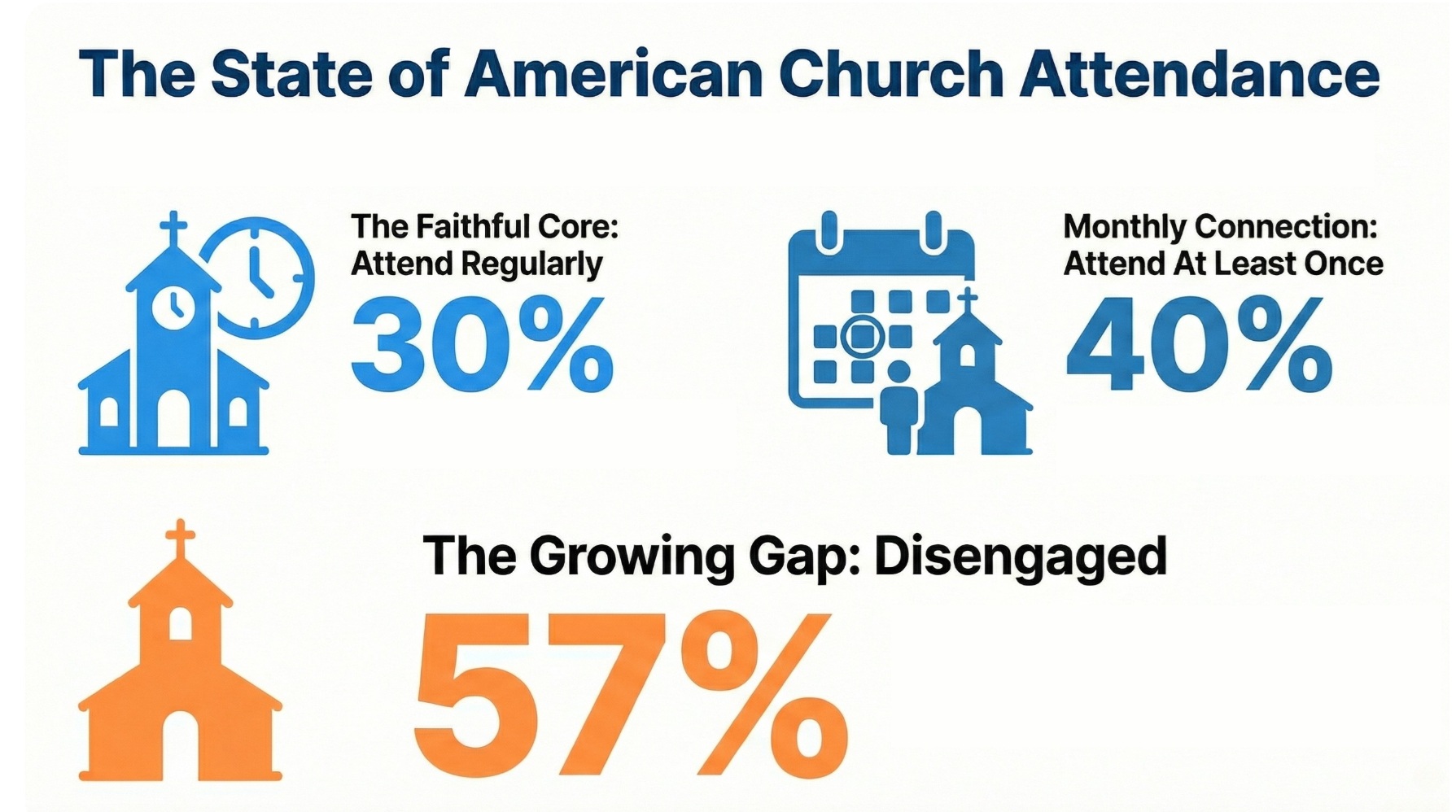
“Where do you go to church?” is a question people asked their new neighbors in the 1960s or maybe the 1970s – at least in the South and the Midwest. We all know that physical church attendance in 2026 has not risen to pre-COVID levels. People either watch online or have forsaken the practice of weekly worship altogether. According to Gallup:
In the four years before the pandemic, 2016 through 2019, an average of 34% of U.S. adults said they had attended church, synagogue, mosque or temple in the past seven days. From 2020 to the present, the average has been 30%.The recent church attendance levels are about 10 percentage points lower than what Gallup measured in 2012 and most prior years.Source (2023)
So . . . what are HH and I doing for “church” since relocating to Northern Virginia and moving into the rhythms of retirement. We are asked this on a regular basis by family and friends.
We have so many options: PCUSA congregations we have previously served between 1989 and 2010. Other PCUSA congregations. Other denominations. Non-denominations.
A couple of things I’ve noticed in the processing of retirement after 42 years in professional ministry:
Many (most?) retired professional clergy don’t do church anymore. Are we burned out? Judgey? Worried about being asked to fall back into a pastoral role?
“Churches Without Walls” all seem to have buildings. I get that “going to church” and “being the Church” are very different things and we don’t need a building to be the Church. But in my cursory research of congregations named “Church Without Walls” they all have buildings. Some have multiple campuses.
Many of us (active clergy, retired clergy, church members, once spiritually curious non-members) simply feel weary about Church World especially when Church World involves battles for power, passive-aggressive members (“I won’t make a financial pledge until the pastor comes to my house and begs“), and adventures in missing the point (i.e. more concern about flower arrangements, dress codes, generational disappointment, paint colors, music, protecting bullies, shielding abusers, annual fundraisers than serving “the least of these.”)
So this is what HH and I are doing for church these days. We’ve worshipped with congregations we’ve served at their invitation. (Loved it.) I worshipped with a Church I knew many years ago and they continue to be awesome. I pray with random people (my own Church Without Walls.) And I meet with Church People I Love over coffee while we dream about changing the world in Jesus’ name.
It’s Primary Election Day today in Virginia and I volunteered this morning between 6 and 9 to support a particular candidate. I asked people at Precinct 109 if they were registered to vote and told them that 1) we have same day registration in Virginia and 2) please consider voting for my guy and here’s some information.
Not only did I meet some cute dogs, admire hard core joggers and relish in the diversity of my home town, I talked with a young graduate of Georgetown who was also volunteering. She is amazing. I was obsessed with hearing about her dreams and hopes and “if you were the queen of all things, what would you love to be doing in ten years?” was asked and answered. And in the course of getting to know each other, we exchanged contact info and I was blessed to be a connector for her. She might like to serve in a prison justice ministry? I know someone she could connect with. She might be interested in legal support for trafficked women and children? I know someone she could connect with.
This is my new call.
We retire with a wealth of experience and still-valuable information. And our next calling/our next church involves 1) getting out of the way for the next generations and 2) connecting them if they wish to resources that will open doors.
I love my new church. It literally has no walls. It might involve visiting congregations with buildings. I will definitely involve online Bible studies with Charlotte friends and theological studies with international friends and phone praying/Lyft praying/bench praying with people who may or may not identify as Church People. For now, this works. I love the ongoing journey to meet God’s people who turn out to be my people too.






 A Church for Starving Artists