
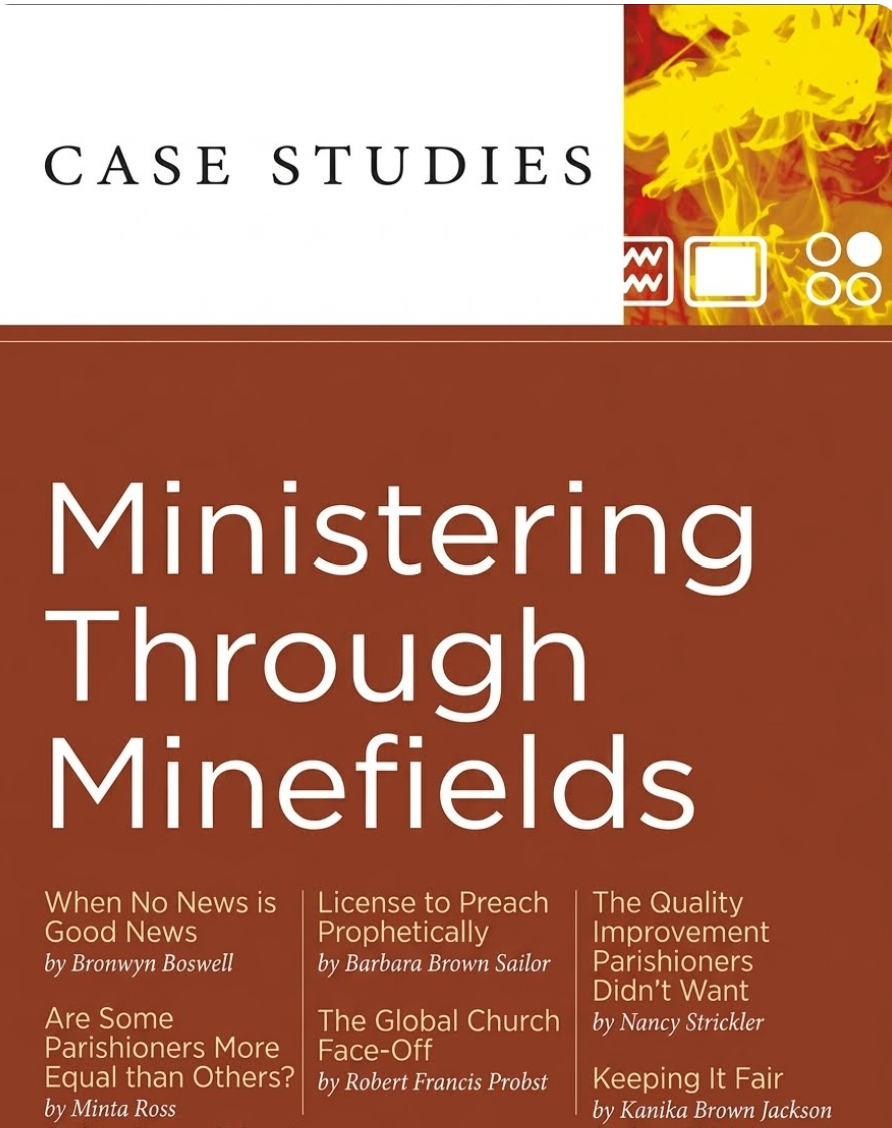
Just like yesterday’s post, today’s post is informed by The New York Times article by Christopher Marquis “Let’s Abolish Business Schools.” I hope you’ll read it. I’m interested in the differences between business schools and divinity schools/seminaries (which are legion.)
Harvard Business School famously uses case studies as their “signature method of business education.” I would love to see this method used with Master of Divinity students. The difference though – between how a business school uses case studies and how a seminary might use case studies – is important. According to Marquis, the HBS method tends to seek a particular response, albeit after lively discussion and analysis. He notes that this is problematic though. A single response “narrows . . . imagination.” A single response seems to be a roadblock for a “yes and” answer to the problem.
Professor Marquis writes that “case studies end up as instruments of reputation management.” I can attest to the fact that discerning God’s will and then acting accordingly in professional ministry can damage a pastor’s reputation, at least among the most powerful players in a congregation.
“Complexity is systematically shaved away and dissenting voices often go unheard. Real organizations don’t move in clearly delineated phases toward a decision point but business school teaching materials often do – compressing timelines, dropping messy subplots and smoothing over contradictions to produce clean narrative arcs and satisfying problems to debate.” Amen to that.
Case studies for seminarians would ideally involve not pretending to be the person in charge (like a CEO) but practicing collaborative ministry where there are not “winners and losers” as much as there is an expansion of the Reign of God. Yes, please.
I could write these all day, based upon my personal experiences after 42 years in professional ministry, but you’d never believe they could be real. As we’ve all said, “I can’t make this stuff up” but in order to protect the innocent (and the guilty) I’m making these case studies up.
- You are the solo pastor of a medium sized congregation with a part-time secretary, a part-time music minister, a part-time nursery attendant and a seminarian working 5-10 hours a week while finishing their last year of study. There are nine elders who make decisions with the pastor and staff. The seminarian has befriended a barista in town who is gay and the barista asks the seminarian if they can use the church sanctuary to marry their partner. The seminarian (erroneously) tells the barista that “they don’t do gay weddings” and the word gets around the town (population 10,000) that First Church on the Hill – known for their welcoming spirit and community service – will not allow the beloved barista and their partner to marry in their church building. In the meantime, the barista who is not part of any congregation, is in a terrible car accident and the partner (also not part of any congregation) is terrified. They share a four year old child with special needs and a dog. An Open and Affirming organization the next town over has sent protesters to gather on Sunday mornings in front of First Church on the Hill and they are very angry that this church won’t allow this wedding especially considering that the barista is in the hospital and maybe the couple wants a hospital room ceremony. The board of elders is meeting tonight to discuss this situation. How does the church respond? Who does what? What makes Jesus happy?
- You are the Associate Pastor of a 400 member congregation who officiated at a wedding last weekend. It was clear that The Bride’s family and The Groom’s family strongly dislike each other. There is unfortunate sniping all wedding weekend and the couple was happy to leave town on their brief honeymoon. The Head of Staff is on a mission trip to Haiti. Two days after the newlyweds return from their honeymoon, there is a gas explosion in their rental home (owned by a parishioner) and they are both killed. Their families must return to town from other states to plan a joint funeral. The Head of Staff isn’t due back for another week. The bride’s family wants to sue the parishioner who was their landlord. The groom’s family wants their son buried in a family plot across the country. The bride’s family wants both the bride and groom cremated together. The groom’s family wants a cut of the bride’s trust fund. How does the church respond? Who does what? What makes Jesus happy?
- The first year in your new call as Head of Staff in a large church is going well. There is plenty of funding to serve the neighborhood and beyond. The staff gets along well. There are new people joining the congregation. People seem responsive to your leadership. An elder who is a five-generation member takes you out to lunch and let’s you know that his family has long supported every pastor for over 200 years and they have shared their financial successes from a family business generously. They continue to do so. The elder informs you that he has some expectations based on his family’s legacy and he looks forward to working with you for many years. A month later as you are getting the lay of the financial land, you notice a fund named after the elder’s family and you ask the church treasurer about it. Clearly, no one is supposed to ask questions regarding this fund. But you were a financial analyst before going to divinity school and it looks like the esteemed family is laundering money through the church. The church treasurer, it turns out, is the second (out of three) spouses of the elder’s son and she is very protective of the family. There are also three other members of that family serving crucial positions in the congregation. The church’s gym is named for this family. And a cousin in the family was just featured on Crimes Gone Viral after being exposed with a second family in Omaha where she has often traveled for work since the corporate headquarters of her branch of the family business is there. How does the church respond? Who does what? What makes Jesus happy?
The point of a class called “Ministering Through Minefields” would obviously not be about finding answers for every particular, complicated church problem. It would be how to be how to faithfully do improv in Church World taking into account the polity and theology of the congregation. Tell me this wouldn’t be a helpful class. Possible instructors: Commission on Ministry Moderators.
Image is an AI creation based on the December 2, 2008 issue of the Harvard Business Review Case Studies with apologies and thanks to Bronwen Boswell, BBT, Yancey Strickler, Harriet Tubman, Pope Leo XIV, and Ketanji Brown Jackson.


