The great majority of pastors I know do NOT suffer from Talent Dysmorphia but I wanted to consider this after hearing the term on Ted Lasso this week. (No spoilers. It’s just a term I appreciated much like “Compliment Sandwich.”)
Ted Lasso is chock full of leadership lessons.
Back to Talent Dysmorphia though . . .
There are indeed some pastors who believe they are amazing preachers, teachers, and pastoral caregivers when their parishioners would disagree. These are the pastors who tend to forego Continuing Education classes, mentoring, and counseling. They don’t think they need to brush up on their sermon writing or delivery. They love their people even if their faces appear annoyed.
I also know pastors who struggle more with Imposter Syndrome. (“If people really knew me, they’d never let me be their pastor.“) For what it’s worth, here’s a good article about women and imposter syndrome. Some of us might have it because we’ve been told we aren’t enough/supposed to be in the room because of our gender or age or experience. We often believe what other people say about us, even if it’s not true.
I wonder if people who accuse their colleagues of being imposters actually – themselves – have Talent Dysmorphia. Maybe they believe they are smartest/most gifted people in the room to the detriment of their organization’s health. Nobody else can be successful if leaders believe they are the only successful ones. They have an unrealistic opinion of their own talent.
In happier news, the most effective pastors I know are lifelong learners (especially about their own psyches.) They don’t take themselves too seriously, but they take their calling very seriously. They laugh easily and have an obvious spark. They are self-aware. They know that they belong to God.
Image is Jack (actor Jodi Balfour) from Season 3 of Ted Lasso: The worst people often think they’re the best. My dad calls it “talent dysmorphia.”
I preached my 40th Easter Sermon in what is the historically oldest congregation in Mecklenburg County, North Carolina last weekend. Professional ministry and the preparation to become a professional minister have changed in those forty years.
Note: This is not a post about how it used to be better or harder so let’s make it harder for seminarians.
There are certainly generational differences in those entering seminary today and those who entered seminary 10-50 years ago. Requirements have changed. Demographics have changed. Expectations have changed. Seminaries have changed. Thanks be to God.
Today, we have online seminaries, weekend seminaries, commuter seminaries, and the traditional live-on-campus seminaries. Today it’s possible in many of our seminaries and/or denominations to be ordained without ever doing field education in a congregational setting, much less in a congregational setting that’s unlike one’s home church. Some people are even ordained to serve their own home church.
It used to be true that every seminarian was required to get experience in contexts unlike what’s familiar to them. For example, I grew up in a large small city church. I had planned to be a hospital chaplain when I started seminary, and took four units of Clinical Pastoral Education, and was also required to do field education in a church unlike my home congregation. My first call was not as a hospital chaplain but as a rural church pastor in a town of 400. But it was okay. When my sense of call changed (from chaplaincy to little rural congregation) I was prepared for a broad variety of contexts.
Philadelphia Presbytery and Princeton Theological Seminary are partnering to offer a really cool field education experience that involves students serving in congregational contexts but working to dream about community ministries working from those congregations. This is great training for 21st Century professional ministry.
I’ve often said that I wish I’d taken seminary classes in non-profit management and community organizing along with all the language, Bible, theology, practical, and history classes. I’ve taken continuing education courses in those other areas over the past decades. And I encourage new and seasoned pastors to branch out and fill out what seminaries didn’t teach with new learnings after ordination. (Note: pastors also need training in conflict resolution, leadership, stewardship and personnel management.)
This is not about hazing seminarians or pastors as in “when I was a student I had to walk ten miles to my field education church and work ten hours every Sunday – so you should have to do that too . . .” This is not about forcing busy people to become busier for the sake of the Gospel. This is definitely not making seminarians “marketable.” (A mid-council leader once told HH that he was impressively “marketable.” Gross.)
This is about being a well-rounded leader whom God is preparing to do whatever.
I still believe that professional ministry (and I include Chaplains, Educators and Youth Leaders here too) is an unusual calling in which we can expect God to lead us to serve in places we would never choose for ourselves. See Abram, Ruth, and Jonah. It always concerns me when a seminarian declares that they will never . . .
Leave their hometown
Serve a small church
Live farther than 5 miles from a craft brewery
Go to a part of the world they don’t want to ever go
It’s possible that God could call us to serve in a rural community where we don’t know anyone or in a part of the country where we don’t have family or a place with three diners and no coffee shop. It’s possible.
God gets to be God in terms of leading people. If God is doing the calling, all will be well even if it’s arduous.
I don’t believe God calls us to contexts that will be abusive or damaging. But I do believe God challenges us and blesses us in unlikely places. As a person who lived in the same (semi-perfect) town where I was born for the first 23 years of my life, it’s been a blessing to serve in three other states far-ish from home these past decades.
May this Eastertide offer deep insights and nuggets of wisdom. If you are a pastor or you are preparing to be a pastor, keep an open mind. God has unexpected plans for us.
Image of the chapel at the Charlotte Campus of Union Presbyterian Seminary.
On this – the holiest and the busiest – week of the Christian calendar, I am moved to honor courageous leaders remembering both the courage of some of Jesus’ followers and the lack of courage of even more of Jesus’ followers. Unfortunately this continues to be the trend.
We who say we love Jesus and hope to follow him but don’t live up to this aspiration, imagine being more courageous as a spiritual discipline this week. I thank God for the ones who say brave words, take unpopular but faithful stands, and make sacrifices for the sake of love.
To the elders who stand up to bullies even when they threaten to “leave” or “withhold their pledges” . . .
To the pastors who start worship with welcoming words to “All People – including Trans Kids” even though some disapprove . . .
To the church lady who sits beside the visitor to make him feel welcomed even though it’s not in her regular pew . . .
To the church gentleman who gets a cup of coffee for the visitor who doesn’t smell very fresh . . .
To the deacon who suggests to the other deacons that they reach out to their Muslim neighbors . . .
To the choir director who says “yes” when the Ghanaian church members ask to sing an anthem in Twi knowing that some will complain . . .
To the youth leader who stands with the non-binary tenth grader . . .
To the Christian Educator who teaches a Bible study focusing on anti-racism in a congregation that doesn’t believe there’s any racism.
Jesus spoke the truth in love. Jesus turned over tables when God was being mocked. Jesus stood with people who were hated, banished, and broken. To say that Jesus was courageous is a monumental understatement. He said all the brave words. He took unpopular but faithful stands. He made the ultimate sacrifice for the sake of love.
Just one time in the next few days – unlike Peter or the other disciples – let’s be courageous for the sake of all that’s good and just and pure.
I’m not talking about the kind you keep away from toddlers. I’m talking about the ones that remind older children and adults that there are beautiful and terrible things in history we must never forget. There are acts of heroism we need to remember for inspiration and gratitude. There are acts of brutality we need to remember so they will never happen again.
When I was a child, there was a permanent historical marker in the small town of Mt. Mourne, NC along NC Highway 115 that reminded passers-by that “this was the place” where enslaved people were sold and put on a train headed south. It was near one of the largest plantations in Iredell County owned by Rufus Reid, a Presbyterian. He owned as many as 84 human beings.
As a child, my dad would stop alongside this permanent marker as we drove between Mooresville and Davidson, and he would point out that the town was called Mt. Mourne because of it’s legacy of trauma.
The train tracks are still there but the platform where the enslaved were forever separated from their families is gone. The historic marker is also gone and even Mt. Mourne’s wiki page doesn’t mention this history of selling people on a platform across from the train tracks. Even the origination of the town name has changed. It’s now said that Mt. Mourne was named for the Mourne Mountains in Northern Ireland.
Sometimes even a permanent marker is not permanent.
Last week – with 42 colleagues – I made my first pilgrimage to The Legacy Museum and The National Memorial for Peace and Justice in Montgomery, Alabama. The Equal Justice Initiative, founded and directed by Bryan Stevenson, created both this museum and memorial in order to tell a story that most of our U.S. History books do not tell.
Just as the Bibles many of us study include true stories of the mistreatment of women and children, slavery in Egypt, the worship of gold, the devastation of villages, and even the gory crucifixion of an innocent man whom some of us call The Living Word of God, real history – even if it’s excruciating and shameful – is essential for us to know. It reminds us who we are and who God is.
There are more than 176,473 permanent historic markers in the USA according to The Historical Marker Database with more added daily. There are markers at the homes of Clara Barton, Mary McLeod Bethune, and Davy Crockett. There are markers at U.S. Naval Base Pearl Harbor and Bunker Hill. There are even markers designating a Circus Train Wreck in 1918 in Indiana and the original Krispy Kreme Donut Shop in North Carolina.
But we need to remember. We need to remember in order to honor those who have suffered. We need to remember in order to tell the truth about ourselves – which is my favorite verse before Sunday Prayers of Confession:
If we say that we have no sin, we deceive ourselves, and the truth is not in us. If we confess our sins, he who is faithful and just will forgive us our sins and cleanse us from all unrighteousness. I John 1:8-9
The Equal Justice Initiative continues to collaborate with local communities to install more permanent markers that tell the truth. My hope is that – one day – there will even be a marker at the Bank of America Stadium.
Image of a marker at the National Memorial for Peace and Justice commemorating the lynchings that occured in Rowan County, NC from where my people hail.
I once suggested that we “have a powwow soon” to a Native American church leader. I assumed that the Black man in a suit was a server. I touched Denise’s hair.
I am a White Person who has said, thought, and done ignorant things. I am ashamed of these things and I am trying to do better.
This week – with Denise – I’m facilitating a pilgrimage of mostly White Mid-Council Church Leaders to Montgomery, Alabama to focus of something my generation never learned about (and if some people get their way – no generation – will ever learn about): the history of racial violence in the United States of America.
It certainly didn’t end with George Floyd. And it didn’t begin with the enslavement of people. It’s happened throughout our nation’s history.
I am no less a grateful American knowing this information. In fact, I am a better American for knowing it. And I am more likely to marvel at the resilience of my dark-skinned siblings by knowing it. I am more likely to work to make it never happen again.
As we have prepared for this pilgrimage, some of my colleagues have expressed anxiety that they will say or do something ignorant. This is not the Woke Olympics. Each of us is not only capable but likely to show our ignorance. It will happen.
Our FBC took a group of high school students to The Legacy Museum in 2022 and this documentary – created by three of those students – is getting a lot of attention. If you have 30 minutes, please watch it. It will inspire you more than it will trouble you. It will make you appreciate the youngest generation of Americans and honor those who have suffered. I hope it will move you to support public schools and their teachers.
I am a ridiculous Karen-adjacent White Person. And I’m trying to learn – not to be “woke” but to be more faithful to the God who created each of us in God’s image. May God have mercy on us who fail to acknowledge and confess.
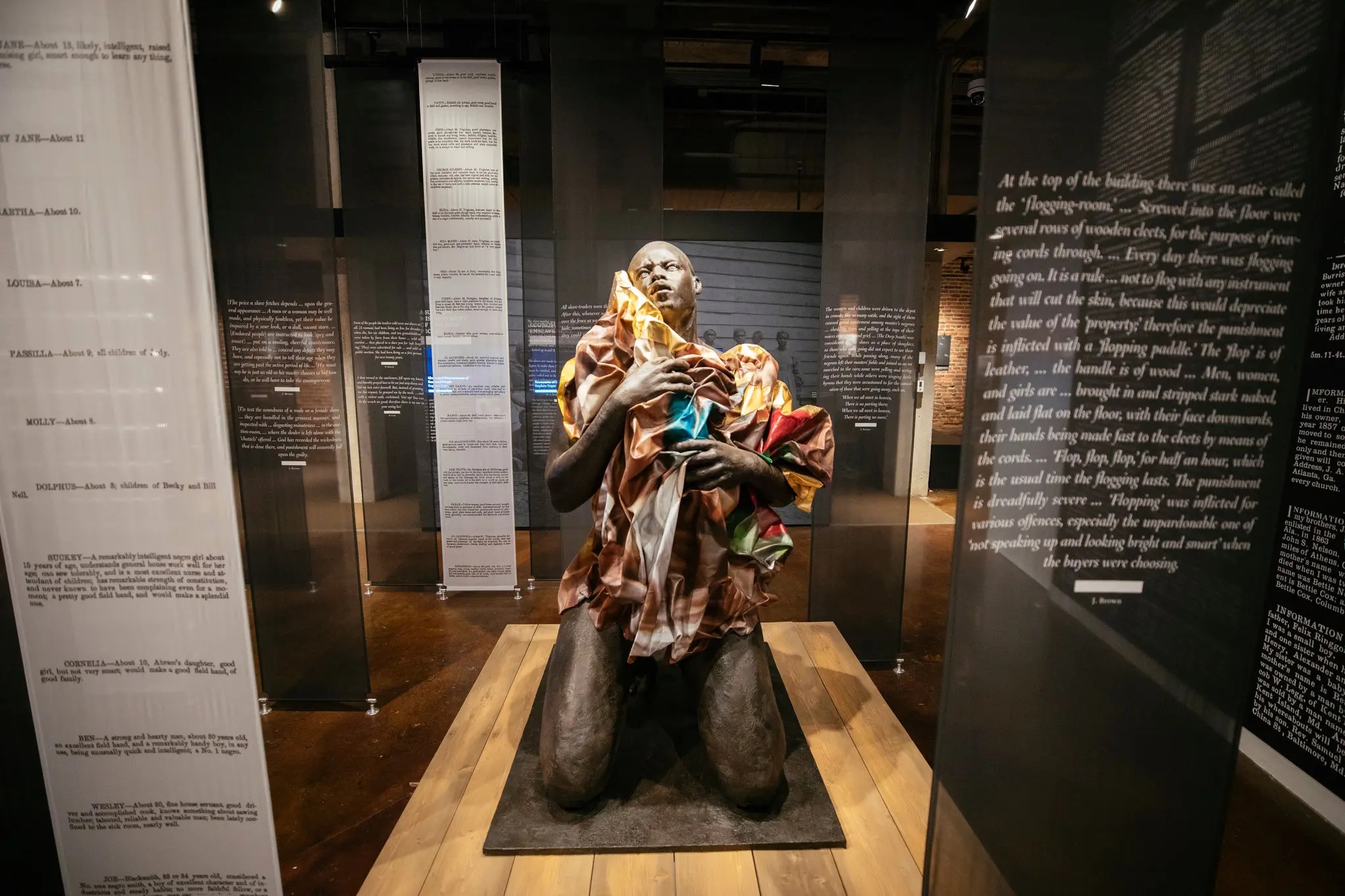
Image is the sculpture Doubt by Titus Kaphar (2017) in The Legacy Museum.
Human sacrifice! Dogs and cats living together – mass hysteria! Dr. Peter Venkman in the original Ghostbusters.
Utter chaos. Cindy Bolbach, Candidate for Moderator of the 219th General Assembly of the Presbyterian Church (USA) when asked what would happen if she wasn’t elected.
Progressive institutional leaders have specifically taught young progressives that catastrophizing is a good way to get what they want. From this article quoting Matt Yglesias & Jill Filipovic
The world is a hot mess.
I say those words on a regular basis and it occurs to me that they are sort of true but not totally true. Lent is a great time to acknowledge that we are dust, apart from Jesus we are nothing, and we are indeed a hot mess. Some of us catastrophize for dramatic effect (Dr. Venkman) and some of us catastrophize because we are being brilliantly sarcastic (Cindy) and some of us catastrophize because we’ve been taught it’s useful in daily life.
Even if we try to follow Jesus, many of us are really good at focusing on what’s wrong. If we are connecting with the poor, the sick, the vulnerable, the lost, or the broken on a regular basis (which is what I believe we are all commanded to do) then an average week might have us spending time with someone who is considering suicide, someone whose cancer is not responding to treatment, someone who has monumental financial troubles, someone who has no friends, someone who is being abused but can’t leave, someone who is being vilified, or someone who is feeling utterly hopeless.
Hang on, friends. Resurrection is possible.
Don’t get me wrong. Jumping ahead to resurrection means we are not acknowledging the need to be resurrected. If I am a hot mess, I need to be saved from that. I need signs that life can be different.
I have profound hope in The Church of Jesus Christ as a community for those who want the world to be different. We see in Jesus someone who was destroyed by the Empire, castigated for standing with “the least of these” and mocked as a leader. His ways were not the ways of the powerful. Remember there were two parades the week of Jesus trial: one with a donkey (Jesus) and one with war horses (Pilate).
What gives me hope these days? Churches that love trans kids and remind them that God loves them beyond measure. Churches that partner with the poor rather than lord over the poor with toxic mission practices. Churches that use everything as a tool for ministry from their building (for community needs) to their underused property (for affordable housing, medical clinics, food pantries, clothing closets.)
As for Dr. Venkman, Cindy Bolbach, and the plight of teen-aged girls . . .
The Ghostbusters saved the world from Gozer/the Stay Puft Marshmallow Man),
Cindy was elected Moderator of my denomination,
Compassionate people all over the world are studying the mental health needs of young people so that we can do better.
Yes, the world is a hot mess. And we can do better. And there is hope.
One of the profound joys of the kind of ministry I do involves witnessing the Holy Spirit match pastors and congregations. It’s a beautiful thing. When the vision of a passionate leader aligns with the vision of a passionate congregation, it fills my heart with joy.
But sometimes it’s not a good match. It’s better not to have a pastor than to wish you didn’t have one. It’s better not to have a pastoral call than to wish you didn’t have one. Bad fits are not the end of the world, but it’s best to avoid them.
Here are the top reasons why pastoral calls fail and Jesus weeps:
The Pastor Search Committee (PNC) was in a rush and didn’t do their homework.
The pastor was in a rush to be ordained/find a new position and didn’t do their homework.
The church was desperately looking for a pastor – any pastor – and the pastor was desperately looking for a church – any church.
The PNC lied to the pastor during the interview process. Actually there are conflicts. Actually there is financial instability. Actually we don’t want to serve our neighbors.
The pastor lied during the interview process. Actually I don’t like pastoral care. Actually I loathe traditional music. Actually I have no idea how to talk to children.
The candidate who interviewed so effectively didn’t show up for the real work.
The candidate looks great on paper (degrees from great colleges and seminaries) but had weak personal skills.
The church looks great on paper (wealthy suburb, lots of programming) but has more fear than faith.
The pastor is a bully and it wasn’t evident until they moved into the position.
The congregation has bullies and they seemed so helpful until the pastor challenged them.
It damages us – spiritually, emotionally, and physically – when pastoral calls don’t work out. We might lose our faith, our self-confidence, and our joy. I know pastors who have never had a happy/successful call and it shows. They are often bitter.
Sometimes it’s just not a good fit. The church is truly wonderful. The pastor is truly gifted. But authentic expectations were not expressed and it was a battle from day one. When a pastor has a single “bad fit” experience, it doesn’t preclude future success. It could be a one off.
And sometimes pastoral ministry in general is not a good fit even if we have seminary degrees. Unlike the fields of medicine and law when finishing up all the required courses and exams automatically makes you a doctor or lawyer, the field of pastoral ministry is not like that. It’s not a certification process. Finishing all the required courses and exams doesn’t make someone a pastor. It makes it possible to become a pastor if the community sees you as a pastor and affirms your calling.
How do you tell someone “You are not called to this ministry?” Sometimes it’s simply not a good fit. And that’s okay.
Not aligning with a specific field of ministry, much less with a specific congregation doesn’t mean we are failures to the universe (although it will feel like that.) In the timeless words of Regina George, “Stop trying to make fetch happen.”
A parable:
A candidate for ordination who had made excellent grades and fulfilled all the requirements for ordination could not find a church call for over two years. They were sure that being female and queer was the reason why no church would call them. They were angry.
The denominational leader invited this candidate to get together to talk about the situation. They met in a denominational office. When the candidate showed up for the meeting, they were wearing this hoodie and flip flops.
Maybe it’s possible that someone can’t get a call for reasons we are missing.
Are PNCs sometimes sexist or homophobic or ageist or racist? Definitely. Does God make holy things happen even when PNCs are sexist or homophobic or ageist or racist? Definitely. And sometimes we are simply not a good fit.
A good fit is holy. It’s worth the wait to discern one.
TBC is my extremely wise thirty year old daughter, and she and I were recently comparing notes on my parenting skills and the skills of other parents in terms of how well we parents have taught our children sex education, life skills, etc. Like every parent, I fell short in countless ways and yet TBC is gracious and said, “Mom you did the best you could.” In the course of four years, I had 3 kids, lost both parents, was pastoring a church. It was a lot. And I did the best I could. And it was fine.
Grace abounds, thanks be to God.
This is an excellent article (thanks MTB) about mental health trends in teenage girls and it states – basically – that social media is not helping. We all know people living their best lives on Instagram and their “best” involves perfectly curated vacations and toned abs after eating made-from-scratch empanadas. It’s easy to feel less than.
Consider this from the linked article by Jon Haidt:
By 2015, it was becoming normal for 12-year-old girls to spend hours each day taking selfies, editing selfies, and posting them for friends, enemies, and strangers to comment on, while also spending hours each day scrolling through photos of other girls and fabulously wealthy female celebrities with (seemingly) vastly superior bodies and lives. The hours girls spent each day on Instagram were taken from sleep, exercise, and time with friends and family. What did we think would happen to them?
There seems to be a cultural lack of grace in 2023. Grace for ourselves. Grace for our children. Grace for our parents. Grace for each other.
A young woman I know recently told me that she doesn’t believe in grace. If you hurt her, she is done with you. This feels like a really hard way to live.
Each of us has our own experiences bringing joy, trauma, bitterness, inspiration and deep grief. A treasured friend of mine was literally hit by a car while on a run a few years ago and her body continues to suffer consequences. And yet, she said to me today that everybody has something like being hit by a car. For some it could simply be a really bad broken leg. For others, it could be infertility or betrayal or crushing debt. And everybody’s doing the best they can.
I write a lot about racism, white supremacy, Church World, leadership, things Jesus did and did not die for, growing older, and random other things. Sometimes I get comments that say more about the commenter than me and that’s okay. We are doing the best we can.
To the person who texted me from an unknown number last week that they would bash my face in if they ever met me: I hope you are okay. I don’t know what you need, but I hope you receive it and find peace.
Monday, March 20 is Mr. Rogers Day and read the comments to learn what that is. I’m grateful that he was an instrument of grace in this world. His calm wisdom continues to bring healing and inspiration. Have a wonderful week.
“There is a boy here who has five barley loaves and two fish. But what are they among so many people?” John 6:9
HH was told in the fourth grade by a pastor that he has gifts for ministry. Unfortunately, when I was in the fourth grade, it never would have occurred to my pastor or any pastor to identify my gifts as a sign that I might be called into professional ministry. (The first woman I ever saw in a pulpit was in seminary in 1980.)
Pipelines are generally not beautiful. They mar scenic vistas and often trespass – albeit “legally” – on holy land. I don’t know much about transporting oil but this post is about human pipelines. Human pipelines are quite beautiful.
It used to be true that most African American Presbyterian Pastors – in my part of the world – came through the ordination process via the Johnson C. Smith Seminary. JCS no longer graduates students with Masters of Divinity degrees.
It used to be true that the college to seminary pipeline – in my part of the world – stretched from Davidson College in North Carolina to Union Seminary in Virginia. This was the expected road map for White Male Pastors in the Southeast.
It used to be true that most of our seminary graduates – much less – new pastors – never included humans who were non-binary, queer, or non-White. Today we need everybody God calls to transform the Church for good in the name of Jesus Christ. But the pipeline has diminished to a trickle. It’s certainly not clogged. It’s a little dry.
There are gifted leaders in the pipeline to be sure. And yet many (most?) of those in seminary do not plan to seek ordination to parish ministry. They are pondering calls to chaplaincy positions or other validated ministries in interesting places near coffee shops. (Note: I’m writing this while serving in an interesting ministry in a coffee shop.)
We need to work on our congregational-leader-to-pastor pipeline. Here are some of the cracks in that pipeline:
Churches are slow to call pastors who don’t look or sound like every other pastor they’ve ever had in the past.
People are graduating from seminary with clear ideas about what they don’t want to do (i.e. serve in rural areas, serve in small congregations, serve in churches unlike the congregations where they grew up) which might be in conflict with what the Spirit is preparing them to do.
Churches are afraid to tell the truth about who they are to pastoral candidates (“We love each other but we also drive each other a little crazy when we discuss worship preferences.” “COVID was hard for us and too many have not returned to active participation.” “Our last pastor stayed a little too long and we are in a time of figuring out who God is calling us to be.“)
Churches want a full-time pastor but can’t afford one yet they expect their part-time pastor to serve them and only them full-time, which 1) prevents a pastor from serving a second congregation so that a liveable income is possible and 2) prevents rich partnerships between congregations who are geographically near each other and could share that pastor.
Pastors and other leaders have stopped telling young leaders that God might be calling them to serve in the Church. It’s possible that young liturgists, high school leaders, preschoolers who clearly love Bible stories, and that kid in Confirmation who wasn’t ready to join the church at age 13 but their questions led to a deeper commitment to Jesus at the age of 17 – are meant to be in the pipeline. It’s possible that we are the ones to plant seeds.
There are all kinds of people in and outside of the Church at this moment whom God is preparing to serve in unexpected ways. It’s fun to look out for those people and wonder, along with them, “could God be calling you to serve in a particular way in professional ministry?”
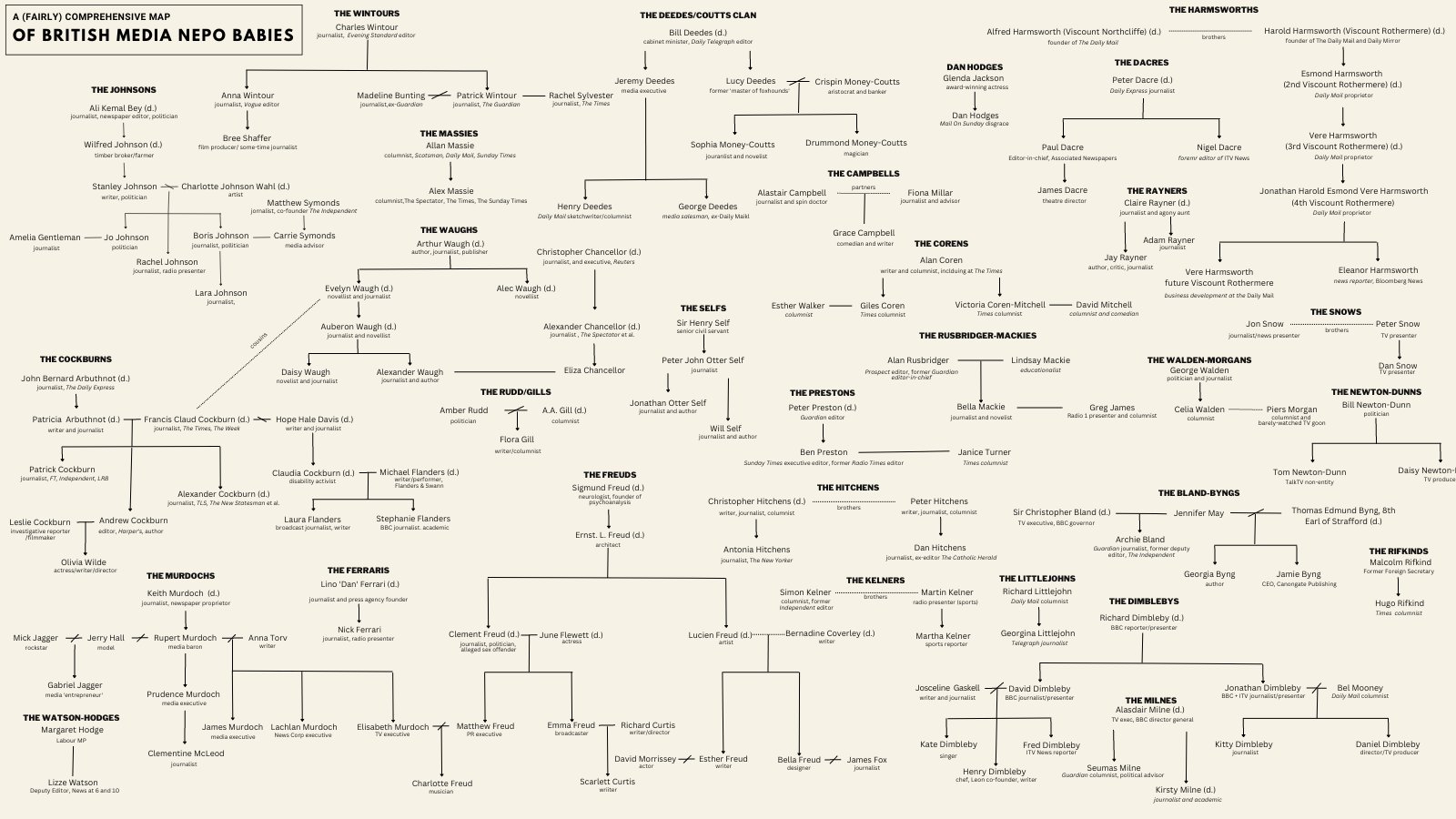
Loved Maya Hawk (daughter of Uma Thurman and Ethan Hawk) in Stranger Things. Regret missing John David Washington (son of Denzel Washington) on Broadway in The Piano Lesson. Congratulations to Jamie Lee Curtis (daughter of Tony Curtis and Janet Leigh) who won an Oscar last night. Are these talented people? Definitely. Did they get any breaks based on their family connections? Definitely.
Imagine what life might be like for the children of Jann Wenner (whose son Gus is now CEO of Rolling Stone) or Phil Collins (whose daughter Lily is Emily in Paris) or Steve Harvey (whose daughter Lori is a model) or Quincy Jones (whose daughter Rashida was so wonderful in Parks and Rec). Would we have ever heard of Lachlan Murdoch, Laura Dern, or Angelina Jolie without nepotism?
It’s possible to reach extraordinary success without famous parents (see Jenna Ortega, Zendaya, Daniel Kaluuya, Donald Glover) and yet each of those people had geography or genetic blessings or education on their side as a result of their parentage.
My parents were not famous or rich but I benefited from being their daughter by growing up in a college town (good public schools and friends whose parents were professors from all over) in a prominent church (with a confirmation teacher who showed us actual pieces of the Dead Sea Scrolls from his personal research), with enough money to afford vacations and college (with manageable debt.) The nepotism in my life helped me get summer jobs (a friend’s dad owned a cute shoe store) and my second church call (my aunt had a house at Montreat near the Pastoral Nominating Committee Chair’s house.) My privileged friend connections have resulted in invitations to join clergy groups and leadership positions.
I got excellent UNC basketball tickets all through high school and college because I walked Goldie, the head of ticket operations’ labrador retriever who lived in my neighborhood whose son was a year ahead of me in school but didn’t want to walk the dog. This too is privilege.
All of us have privilege who read this blog post. And the hope is that we use our privilege for good – whether it comes from having rich and famous parents or it comes from proximity to other people’s privilege or it comes from randomly winning the lottery.
The conversation about seminary exams last week touched on privilege, both in terms of who has access to mental health care and who gets to be ordained in the first place. In my denomination, we pastors do not get to call ourselves to professional ministry. It’s a three-legged stool:
Individuals sense a calling from God.
Calling is affirmed by the Church (meaning a home congregation and then a higher judicatory.)
There is a calling body (meaning a congregation or a hospital or an educational institution issuing “a call”).
I mention this because I know people who feel called to professional ministry and yet the Church and/or a Calling Institution do not affirm their calling. This is very painful. It doesn’t mean a person is not “called by God” to serve. But it could mean that a person is not called to a particular ministry. (We are all called to ministry by virtue of our baptisms in my theological tradition.)
I also know pastors who have been called to positions because of nepotism and so do you. And I know people who were noticed by Pastor Nominating Committees because someone like me contacted them and suggested they take a closer look at Candidate X. It’s extremely rare to be called to a position without some – even nominal – connection.
I’m inviting you to connect with me and I hope I can connect with you. If there’s anything I can do to share my own privilege, let me know. What I can also say is that the inability to be ordained or receive a pastoral call might be related to other real and true factors.
Yes, it’s true that incompetent people still get called to serve in plum positions because of nepotism, sexism, racism, etc. while exceptional leaders get passed over. And yet there is less of this in 2023 than in 1973.
Every day I see excellent candidates without the usual connections and/or profile (at least the profile of most leaders 50 years ago) be called to serve as ordained pastors. And I also see excellent candidates who are not considered because someone with better connections prevailed.
Again, it’s true that most of us have life connections that have helped us. And it’s also true that we can be those life connections to people who could be helped. We are all in this life together.










 A Church for Starving Artists