Author Archives: jledmiston

Read This Book

In the past years, I have observed deeply faithful church folks separate themselves from other deeply faithful church folks because of politics. I’ve heard from Presbyterian siblings that they are embarrassed to be identified as part of the PCUSA (the largest and most progressive Reformed denomination in the United States) because of our social policies. (Note: those social policies included wearing masks during the worst days of COVID and confessing the historic sin of slavery.)

How did we get here? Brad Onishi has written a very good book about the history that got us where we are today in terms of the rise of Christian Nationalism. He and Daniel Miller are also the creators and hosts of one of the most widely-listened to podcasts on religion and politics in the U.S. right now. Check out the podcast Straight White American Jesus.

Do we want to go to war with each other over our theology? Onishi makes the case that it’s not about theology at all. It’s about power.

Black History Month and Swimming Pools

“My father built a swimming pool in Charlotte in the 1950s and let Black people swim there.” White Church Leader explaining to me why his family wasn’t racist at an anti-racism event in 2018

This post is perhaps better suited for swimming pool weather – especially in the summer months when two significant stories about Black history occurred in 1951 and 1964. But maybe these stories will sink in just as well in February 2023.

The most gut-wrenching story from Isabel Wilkerson’s extraordinary book Caste: The Origens of our Discontents involves a young Black boy, his mostly White Little League team, and a municipal swimming pool in Youngstown, Ohio in 1951. The Donnell Ford Little League team had won the city’s championship with a game winning hit by the only Black child on the team – Al Bright. The team celebrated with a pool party and picnic, except they (the White coaches) forgot that young Mr. Bright would not be allowed to join his teammates in the swimming pool and his parents would not be allowed on the picnic grounds. Al Bright was eleven years old.*

While the White children swam, the pool was padlocked to ensure that Al Bright would not be able to join them. Eventually, the pool supervisor was convinced to allow Al to swim but first, all the White kids would have to get out of the pool. From Ms. Wilkerson’s book, a story told by Al’s friend Mel Watkins:

Al was led to the pool and placed in a small rubber raft. A lifeguard got into the water and pushed the raft with Al in it for a single turn around the pool, as a hundred or so teammates, coaches, parents, and onlookers watched from the sidelines. After the agonizing few minutes that it took to complete the circle, Al was then escorted to his assigned spot on the other side of the fence. During his short time in the raft, as it glided on the surface, the lifeguard warned him over and over again of one important rule “Just don’t touch the water,” the lifeguard said, as he pushed the rubber float. “Whatever you do, don’t touch the water.

Although young Al was offered a ride home by his White teammates’ families after the party, he chose to walk home. Sources here.

Thirteen years later, on June 11, 1964 Dr. Martin Luther King, Jr was arrested for trespassing after trying to eat lunch at the Monson Motor Inn in St. Augustine, Florida. While in jail, Dr. wrote his friend New Jersey Rabbi Israel Dresner who convinced 16 other rabbis to join him in protesting the Monson Motor Inn. They were also arrested in what would be the largest mass arrest of rabbis in the United States.

Later the same day Black and White protesters all jumped into the Monson Motor Inn “Whites Only” swimming pool and the motel’s owner responded by pouring muriatic acid into the pool. Muriatic acid (a diluted solution of hydrochloric acid) burns human skin and can cause vision loss in the event of eye contact. Sources here.

I imagine that many of my friends and family are reading this and thinking “this is just the way things were” That is truthfully correct.

And yet – and yet – knowing the truth doesn’t excuse us or relieve us of confessing past sins and lamenting decades of injustice – especially when we have claimed to be followers of Jesus. It’s on us – White People – to know these stories and to work against such injustice every day. It’s not just the right thing to do; it’s what Jesus teaches us to do.

Instead of writing off these not-so-ancient stories, we are called to be aware that such hatefulness continues to occur today. And then we fight that hatefulness with God’s love.

*Dr. Alfred L. Bright (1940-2019) grew up to be an artist and teacher who was the first full-time African American to serve on the faculty of his alma mater Youngstown State University.

Starting with Tsenacommacah

Tip of the hat to SB for sharing this resource.

I’m back from my 5th or 6th (or 10th or 20th) Anti-Racism Training event which doesn’t mean I’m woker than you. It means I constantly need to educate myself about information that daily impacts my life even though I didn’t realize it for my first 50+ years.

Because it’s once again Black History month, there is all sorts of commentary about changes in the AP African American Studies curriculum, or why reading The 1619 Project and/or watching it on Hulu is important to do or why The 1619 Project is “historically illiterate” (an older but interesting op-ed by George F. Will.)

If we could only focus on the facts. But we even debate what’s factual.

Now that we are no longer children and can engage in critical thinking, we are old enough to educate ourselves on all aspects of something and then discern what’s true and what’s not true. No longer are we first graders who are told that – for example – “you can’t take three away from one” in math. We learn when we are a bit older that – in fact – we can take three from one and we get negative 2. But six year olds usually aren’t ready for that part of math.

Back to Black History Month.

We can all download for free this resource if we consider ourselves teachers in any way. I am a teacher of church people and maybe you are too. Or you teach your own children or grandchildren.

The List is curated by Marquis D.B. who is @kbnpete on Instagram. He has accumulated 60 facts about Black History connecting the enslavement of 20 men and women from Angola to George Floyd. And he has inserted his own perspective. For example, The List begins with this:

  1. 1619 – 20 Africans brought from Angola to Tsenacommacah which is Native American for ‘This was our land until the English invaded it, conquered it, and re-named it to Jamestown, Virginia.”

Because, upon reading this, I found the meaning of Tsenacommacah curiously specific, I dug a little (i.e. I googled “Tsenacommacah”) and subsequently learned that it literally means “densely inhabited land” by the Powhatan people. So – as we can see – Marquis D.B. is making a point in regards to the facts.

[Note: My children all went to Jamestown, VA for their 4th Grade field trip and they probably would have survived if someone had mentioned that the original name for Jamestown was in fact “Tsenacommacah.” They could have practiced saying it. It would have been fun.]

Saying that Tsenacommacah means “This was our land until the English invaded it, conquered it, and re-named it to Jamestown, Virginia” does not make me stop reading The List. It simply teaches me that 1) Marquis D.B. has a pointed and humorous perspective and 2) I need to be a critical thinker when I read things.

Here’s something about education:

  • If we believe we are educated because we are widely read on topics that affirm what we already believe,
  • If we never read information that challenges us,
  • If we don’t read at all, but we accept what others say about books, etc. as sufficient for us . . .

we are not very educated at all.

We’ve become a culture that judges everything without knowing what we are talking about. I truly appreciated reading The 1619 Project and yet I also took issue with some of its statements. It’s not the Bible, people (and re: The Bible, I hope we all dig a little into those books too.)

On this first Monday in February, my hope is that all of us who consider ourselves to be “White” will read something that troubles us just a little for the sake of the Gospel of Jesus Christ which commands that we love our neighbors as ourselves. Unless we live in a very unfortunate bubble/gated community, we all have neighbors whose skin is not “white.” Thanks be to God.

Please Explain This to Me Like I’m Two Years Old

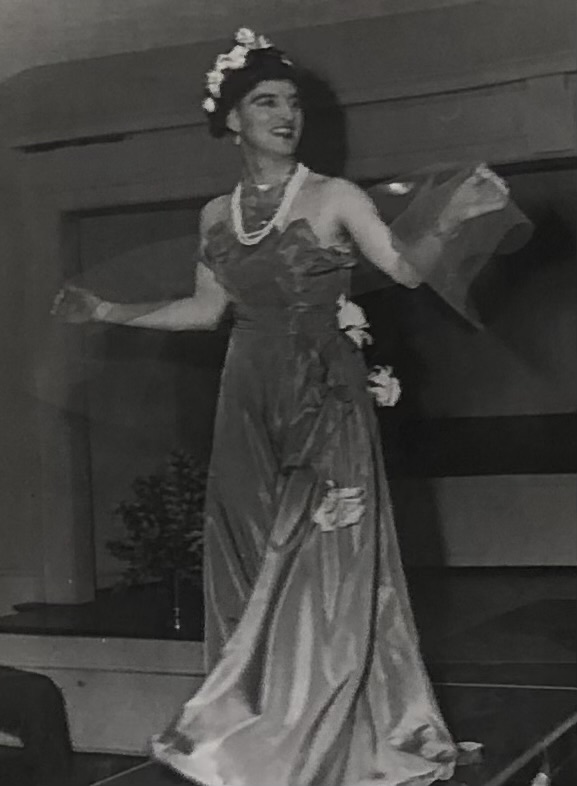
During my tenure as a pastor in Northern Virginia, I remember seeing photos of a church event in the 1950s in which 25 men dressed in drag for a “fashion show.” It was held in the Fellowship Hall and a note by one of the old photos says, “Oh well – – it’s been fun and we ourselves have got some good laughs. And got to know each other better. We’ll just cross our fingers and hope the audience gets a laugh out of our theatrical attempts.”

In the 1950s, this was considered good clean fun, albeit just a little bit sexist. Men dressing as women is different from white people dressing as black people or anyone dressing as Nazis. I get that.

What I honestly don’t understand is why so many people consider dressing in drag so threatening today.

Clearly drag events – including bingo nights and story times – are considered “adult performances” that confuse children and teens. Just as clearly though, in my mind, is that the Super Bowl is coming up and these same leaders have no problem with cheerleaders even though their performances might also confuse children and teens into thinking that women’s bodies are for entertainment.

Can someone explain why professional cheerleaders are wholesome and drag queens are not?

We Can (and Must) Hear Hard Things

Some words are hard to hear:

  • To the Pastor: “We need for you to take a class on preaching/worship leadership/administration.” (Ouch for Pastors who already consider themselves to be good preachers, worship leaders, and administrators.)
  • To the Music Director: “We invite you to spend time attending a conference to hone your skills and get some fresh ideas.” (Ouch for Music Directors who believe themselves to be in no need of improvement.)
  • To the longtime volunteer Confirmation Teacher: “We thank you for serving in this role for so long, but we would like to give someone new the opportunity to teach Confirmation.” (Ouch! I thought the kids loved me – especially that part of Confirmation when we talk about church history!”)
  • To the longtime Chairperson of the Annual Fried Chicken Fundraiser: “The elders have decided that the Annual Fried Chicken Fundraiser needs to take a break. We have had a hard time getting volunteers to cover it and we’ve actually lost money on it for several years.” (Ouch for the Fried Chicken Fundraiser Chairperson. “But this is my thing! I’m going to leave the Church if I can’t be in charge of the Fried Chicken Fundraiser.“)

Note: Each of us have a long list of harmful things we have been told about ourselves or our activities which are not true. I’m not talking about power plays or mean criticisms or cattiness here. I’m talking about those hard truths we need to hear for the sake of clarity and healthy relationships and our ability to expand the Reign of God.

It’s not only uncomfortable to say hard things like:”It’s time for a change in the way you do things.”

It’s also uncomfortable to hear hard things. One of the best things we can do as leaders – in any context – is be open to receiving uncomfortable feedback.

What often happens is:

  • Deafness: As if nothing was said at all. Example: Pastors to whom (conflict-averse) leaders attempt to say, “You really need to take a preaching refresher” but no refresher course is considered much less scheduled.
  • Defensiveness: The one receiving hard truths reacts with hostility and anxiety, and probably offers a threat: “Fine. If I can’t lead the youth group, I’ll just leave.”
  • Congregational war-mongering: The offended one lines up their supporters and it’s war. Gossip, ugliness, and basic unChrist-like behaviors ensue. “It would be better to destroy the Church if I can’t have my way.”

Obviously this is about trust. If we trust our parishoners, our leaders, our colleagues, our siblings in Christ, we can both say and hear hard things. What’s also true is that for millennia, church people have been saying hurtful and untrue things.

If we are told something uncomfortable, consider:

  • Is the person sharing the difficult thing as a lone ranger making a personal swipe? (I once had a Personnel Committee member tell me it was “time to go” where I was pastor. He had gone rogue and the Personnel Committee had not asked him to have this conversation with me.) One might say he simply didn’t want a female pastor.
  • Ask the person who is sharing the difficult truth, “Are you sharing this on behalf of the whole church?” (If so, they should have brought at least one other person with the authority to have this conversation with you.)
  • Ask trusted others if this resonates with them too. Trusted colleagues will indeed be able to speak to hard feedback.

A common Call to Confession in my faith tradition is: If we say we have no sin, we deceive ourselves and the truth is not in us. (Thank you John the Evangelist.) Part of our own spiritual growth – if we believe we were created to serve rather than to be served – is to let hard truths sink in. We cannot grow if we don’t embrace the truth that we can and need to do better.

Do I need to listen more and talk less? (Ouch. Yes. It’s true.)

Note: I’m on study leave this week and this is my last post for January. Thanks be to God.

We Can (and Must) Say Hard Things

It’s come to my attention that Church People find it difficult to say hard things that need to be said. We confuse being nice with being lovingly faithful. Too many church leaders are conflict-avoidant because we forget that speaking the truth in love is a thing.

Examples:

  • A church elder leaves worship in a huff, red-faced and slamming doors on their way out. No one (from the Pastor to another elder) contacts this church elder to find out what’s going on. No one thinks to/has the courage to invite this elder to talk.
  • At the last staff meeting someone snapped, “You always make things about you!” to another staff member. Ouch. And that comment was never addressed in a way that promoted a “we-don’t-talk-like-that-to-each-other culture” way.
  • A lavishly pierced person came to worship last Sunday and nobody talked with that person. But one of the ushers who was busy ushering noticed. In a healthy church, that usher would point out to the leadership that the pierced visitor was not welcomed. Can we have an honest conversation about people who make us uncomfortable and try to change the way we welcome them?
  • The pastor has figured out that a married church leader is inappropriately in relationship with another married church member. So awkward because both couples are friendly with each other and have children who are friends. The pastor hestitates to have a confidential conversation with the church leader because it could result in that leader needing to step down. But she’s such a good worker!

Christ have mercy. Lord have mercy. Christ have mercy.

Effective leaders – especially faith leaders – must be equipped and willing to address conflict. There is no healing without it and to fail to address conflict only leads to more layers of dysfunction and pain.

Are seminaries teaching students how to mediate conflict these days? It’s not something I was taught except by experience and yet I’ve noticed that – with zero exceptions – leaders who know how to address uncomfortable matters with the spirit of Christ are the people serving thriving congregations.

Some churches are run by bullies. Sometimes the bullies are the pastors. Sometimes the bullies are the longterm members. Freeing a congregation of bullies makes it possible to become the Church we are called to be.

Next post: We Can (and Must) Hear Hard Things.

What Churches Can Learn from “Godless Institutions”

Our former NC Senator Jesse Helms hailed from Monroe, NC. which is a lovely town in our Presbytery. It’s the county seat of Union County, known for Klan rallies back in the mid-20th Century. And today, there’s a restaurant in town that offers Drag Bingo.

This is not to say that Monroe has gone Full Wokeness. In fact, a colleague was sharing that many Good Christians are not happy with East Frank Superette & Kitchen. (I ate there recently and had one of the best sandwiches of my life, for the record.)

All the usual accusations about establishment with any drag activity have been expressed by disapproving locals: they are grooming children, etc. There have even been protests outside the restaurant during Drag Bingo Night. And how did this restaurant respond?

They served free food and drinks to the protesters. They offered authentic hospitality to those trying to run them out of town.

First of all, if our churches are not doing something controversial, maybe we aren’t following Jesus very closely. Jesus, we will recall, offended all kinds of religious leaders, power brokers, and rule followers. Jesus wasn’t crucified for chucking little children under his chin. He was crucified for offending Herod and the religious hierarchy.

Examples of some things like might offend our neighbors – even the Christian ones: loving our enemies, offering shelter, feeding the hungry. (Sorry. Not sorry?)

We sometimes miss the point in Church World. We sometimes forget what Jesus said. We sometimes follow societal norms to the detriment of the Gospel. We can do better loving those with whom we disagree.

Thank you East Frank Superette and Kitchen And – friends – do yourselves a favor and try them out if you are in NC. And let’s be a more hospitable church.

What Churches Can Learn from a Hockey Team

Our FBC works for a Northern Virginia school system and one of his recent assignments was to film a practice session for The Capitals, the NHL team in Washington, DC. Capitals Captain Alex Ovechkin recently broke Gordie Howe’s all-time record to score his 802nd goal.

This article tells of the exciting day when 802 fourth and fifth graders from Arlington, VA public schools were invited to attend the Capitals’ practice. Each class got to have their photos taken with Ovechkin. Each student received a t-shirt. Every child had learned how to spell “Ovechkin” making signs to wave during the practice.

What the article doesn’t report is that all the school bus drivers also got to pose for photos with Ovechkin and each received a gift card from The Capitals to enjoy a lunch out. The Capitals didn’t have to do this, but it was a simple gesture to build community and show appreciation.

We in the Church say that we want to be relational. We want to reach out into the community. We want to connect with neighbors. The Capitals, who practice in Arlington, VA, show us how to do this.

Every congregation has neighbors like the volunteer fire department or the local sheriff’s department or the postal workers or the sanitation workers or the school teachers and staff. When was the last time our congregations contacted them to ask if there was anything they needed? (And then we provided it.) Have we ever hosted a “thank you” event for them? Or have we given small gift cards to all the employees in their building?

Why do we do this? I can tell you why we don’t do this:

We don’t do these things so that our neighbors will join our churches. It’s never about that.

This is not a transactional activity. Maybe (like the gift cards for the bus drivers) we don’t even share publicly that we’ve offered this kindness.

Community is created when we show appreciation, when we honor the overlooked, when we consider those who make our lives better/easier/safer.

You would never have known about the gifts cards to bus drivers if I hadn’t shared this via FBC. It wasn’t done for the sake of public relations. It was done for the sake of building community. So simple.

Image source.

Being Pro-Life 50 Years After Roe

I wish I could share the personal stories shared with me over the last months since the Dobbs decision on June 24, 2022. They are stories of procedures involving non-viable pregnancies and abortion-like procedures involving human tissue that is not technically fetal material. What’s true is that if a pregnancy is not viable or if a procedure needs to be done involving other non-viable tissue, a woman can indeed have a legal procedure that removes those tissues. What’s also true is that – depending on the state – the courts would have to be involved before the procedure is cleared and some doctors won’t even try to get clearance.

But I can’t tell those stories. They are not my stories.

Here is a story that I can share because a writer named Nicole Walker already shared it. If you read it and think, “It’s extremely rare for this kind of thing to happen – a preteen assault victim who finds herself pregnant,” for example – please know that I have known dozens of women who have disclosed similar experiences to me as their pastor. I’ve been contacted by mothers and grandmothers who have asked for help for their daughters and granddaughters.

On this 50th Anniversary of Roe v. Wade, I mourn the loss of choices for women like Nicole Walker for whom “abortion at 11 wasn’t a choice; it was her life.

We still live in a world that doesn’t value women as independent, beloved, precious children of God. God has given us agency but some seek to take that agency from us. And yes, we humans sometimes (often?) make poor decisions. And also God is gracious and God loves even the shamed and blamed among us.

What does it mean to be Pro-Life today? We need to read scripture through that lens. And we need to pray for divine guidance. And we need to remember that everyone reading this loves someone who has had an abortion. And we need to remember that loving the unborn more than the born is not okay.

PS This.

Image is an Associated Press photo from 2005.

Let’s Talk About Sister André

French nun Sister André (née Lucile Randon) lived for 118 years and 340 days and was the world’s oldest documented living human, until her death yesterday in Toulon, France. God bless her.

She had a lot of things going for her that improved her odds for longevity.

It was reported that “she died in her sleep” and eventually someone will write that “she died of old age.”

Fun fact: no one technically dies of old age. Yes, older parts wear out. But there is always a medical cause of death: lung failure, complications from skin cancer, COVID, traumatic brain injury, bubonic plague, flesh-eating maladies.

It was reported that both Prince Philip and Queen Elizabeth II died of old age, probably because it’s considered unseemly to say that they died from renal failure or COPD. The royal industrial complex doesn’t want us considering those royal kidneys or lungs. Same with Pope Benedict. He passed ostensibly because he was 95, not because diabetes or heart disease or complications from childhood tuberculosis.

If you’ve been reading this blog for a while you’ll know that I think about death a lot. The disadvantage of believing I wouldn’t live past 60 is that I never imagined that retirement planning would be necessary. The advantage of realizing that I have and will continue to live past 60 is that I have adventures to plan. And I love adventures.

Within the last few months, I was talking with someone I don’t know and she said, ‘There used to be a Presbyterian Pastor named Jan who wrote a blog. Something about artists.” Have you ever read it?

I said, “I think it’s me. And I still write it.”

Oh, sorry,” she said. “I thought she was dead.

Not dead yet. But this is a glimpse into what my future holds. I’ll be less active and less “out there.” People will think I’m dead before I actually pass away. God-willing we will all grow older with lots of adventures.

Like Sister André, I am a female, white, religous, chocolate-eating, wine-drinking, still-working, not isolated human. And by providence, I don’t yet have cancer or a flesh-eating disease. But I would appreciate not living until I’m 118.

Nevertheless I am grateful every day that I’m still alive. I’m grateful that you’re alive.

(Note: There have been times when I couldn’t say I was grateful to be alive. If you are uncertain about the value of your life, please contact me or someone on your team.)