Author Archives: jledmiston

“I Hope ___ Read That Blog Post”

After doing my unplanned series of love letters – which were all inspired either by your requests or my own personal experiences – I’ve heard quite a few people tell me that they hope (their transitional pastor/their head of staff/their associate pastor/their 60-something pastor/their 30-something pastor/their former pastor/their current pastor) read a certain post.

I wish we could be lovingly honest with each other to the point that we didn’t need to surreptitiously and anonymously place a printout of a blog post on somebody’s desk. (“Hmm. Where did this article come from?“)

I love the Church of Jesus Christ. I love watching the Holy Spirit make shifts that we never imagined or expected. I love watching stuck congregations become unstuck. I love watching an authentic call unfold. I love observing leaders build a different kind of Church.

But friends, we have got to hold each other accountable when our efforts are lacking or when we are damaging the Church rather than bolstering the Church. True fact: some of us believe we are strong leaders when we are not. Please re-read this.

A couple of things based on your thoughts shared with me privately over the past week:

  • It does the Church no favors when Presbyteries (and other mid-councils responsible for preparing candidates for professional ministry) continue to move seminarians forward when it’s clear that they do not have the EQ to be successful pastors. Humans can learn Emotional Intelligence, but we have to want to do it.
  • Much of the practical training for pastors and the certification training for transitional pastors is sorely dated. Just because we have a seminary degree and/or transitional ministry training doesn’t mean we learned how to serve the 21st Century Church. I’m receiving a lot of feedback from people who have taken transitional ministry training. Basic feedback: Please stop using dated tools. Please stop teaching what might have worked 10 years ago. Or 25 years ago. (For the record, this training is excellent.)
  • Do not be afraid. Many of us are afraid to retire with too little money. Many of us are nowhere near retirement, but we fear losing the only kind of job we know how to do. Many of us are afraid to move away from our families. Many of us are afraid to take a leap into new territory professionally. People – we call ourselves children of God and followers of Jesus. What does scripture say about being afraid? Why don’t we listen to the angels?

Maybe there will be a future “love letter” or two. And in the meantime, let’s be the Church together seeking what expands the reign of God.

Painting is David and Nathan by Swiss artist Angelika Kauffman (1741–1807.) Source.

A Love Letter to Transitional Pastors

Dear Transitional Pastors,

I have strong feelings about your ministry.

Some of you call yourselves Interim Ministers but that sounds like you’re a place holder until the real pastor shows up. Pastors who are serious about this work of serving a congregation between settled or “permanent” pastors are not place holders. You are Transitional Pastors.

Keep in mind that the hardest and last part of active childbirth is called “Transition.” It’s going to hurt but at the end there’s new life.

Some denominations don’t have Transitional Pastor positions, and I believe that’s a mistake, but this post is not for you. It’s for denominations who recognize that – between pastorates – there are some messy things that need to happen to prepare for a congregation’s next chapter. How wonderful that you – Transitional Ministers – have signed up to do these messy things for the sake of the Gospel. Thank you.

And yet, I hear over and over again about Transitional Pastors who are leaving their temporary positions in worse shape than they found them, meaning the newly installed (“permanent”) pastor has to start their ministry doing hard things. No honeymoon. No hearty welcome.

I am not breaking up with you, Transitional Minister colleagues, but please consider not being a Transitional Pastor if any of the following are true:

  • You haven’t been a successful pastor in called and installed positions, and so you’re trying this out as a Plan B.
  • You are conflict averse and find it incapacitating to consider helping the 85 year organist retire because she can’t read music anymore. Everybody in the church knows she needs to step down but they love her and nobody wants to do it. It’s your job to do it.
  • You’ve always wanted to live in The Big City, The Mountains, The Resort Town and it would be fun to live there for a year or two. Oh right – you also will have a hard job to do six days a week.
  • You consider Transitional Ministry a great post-retirement income even though you’re exhausted and seriously kicked back for the last five years before retirement.
  • You believe this will be the way to maneuver yourself into a permanent call. If they fall in love with you, they might keep you. Colleague: this is devious and unhealthy.

Great reasons to serve as a Transitional Pastor:

  • You still have energy for professional ministry but it’s time to leave your current position after 15+ years. You are too close to retirement to seek another called and installed position, but you have so much to give and find working intensively with a church in transition to be interesting.
  • You get that all congregations are in transition right now, and you welcome the opportunity to set the stage for continuing transition even after the new pastor is called.
  • You don’t aspire to fix a church, heal a church, or dramatically change a church that doesn’t need to be fixed, healed or dramatically changed. In other words, you don’t have a savior complex and you get that some congregations are quite healthy.
  • You travel lightly. (i.e. You don’t carry unnecessary baggage from previous pastoral roles.)
  • You don’t need to be the smartest person in the room. It’s offensive to have a pastor come in assuming that nobody else knows how to do church.
  • You have excellent emotional intelligence. You read rooms quickly.

I have strong opinions of where people should and should not take Transitional Leadership training. Message me if you’d like suggestions. For the record, really excellent Transitional Leadership Education is a worthwhile continuing education experience for all pastors whether you plan to serve in a specific Transitional role or not. But don’t take just any class. Again – some are better than others.

A great Transitional Pastor is like gold and we need more of you. The Church of Jesus Christ continues to evolve and reform, and it didn’t start with the pandemic. It’s been happening for decades and it will only continue. Thanks to all who find this exciting.

You are an essential part of 21st Century ministry. Much love to all who accept this call which requires sacrifice and flexibility beyond the usual pastoral role. I’m trying to get more benefits for you.

Bless you, Jan

A Love Letter to Parishioners Who Want to Be the Pastor’s Best Friend

[Note: Yes, I’m on a roll with the whole ‘love letters’ theme. I’m taking requests now.]

Dear Beloved Parishioners Who Want to Be the Pastor’s Best Friend,

Bless your heart – and I mean that in the most sincere way. Pastors need friends and your desire to befriend your professional minister is heartfelt. Thank you.

Thank you for remembering the pastor’s birthday. Thank you for inviting the pastor to your home for dinner. Thank you for offering to babysit the pastor’s kids. Thank you for inviting the pastor to play golf/go camping/join your bowling league/have a beer/go running/be a normal person.

Be careful.

Be careful not to confuse time spent with the pastor as ordinary friendship.

  • That conversation about the state of your marriage over a salad? That was pastoral care.
  • That time you helped the pastor chaperone the church kids to Disney World? That was youth group volunteering.
  • That time the pastor and family joined you and your family for a big graduation party? That was fellowship time.

Yes, pastors and parishioners can be friends. And also pastors need best friends who are not members of their congregations.

Pastors need best friends who are not members of their congregations. It’s worth saying twice.

The future of your church depends on it and I’m not kidding. If the pastor’s closest friends are members of the congregation one of two things happen when that pastor leaves: 1) the pastor now has no friends or 2) the pastor cannot separate from the congregation which means the next pastor will be impacted.

It’s also important to note that you – beloved parishioner – don’t get to be the pastor’s confidant, pal, or parent figure just because you want to fulfill that role. Maybe that was your role for a previous pastor. Maybe you long to have that kind of connection with your minister. If your pastor doesn’t take you up on offers of friendship, it means your pastor has good boundaries.

As a young woman long ago, the church I was serving included other young women who perceived that we were close girlfriends. The truth is that while church members were sharing the details of their sex life, medical life, work life, and home life, they hadn’t noticed that I wasn’t sharing comparable information. I might say that I was going on vacation to the beach but that’s not the same as sharing “my boyfriend and I got in a big fight on vacation at the beach and here are the photos.” Not the same.

I once served a congregation in which my predecessor had been very close friends with the members across the street. They even vacationed together. When it was clear that I wasn’t going to have that kind of relationship with them, they considered me to be rude or unfriendly.

It’s okay not to be best friends with those who befriended previous ministers.

It’s important to have friendly relationships between church staff members and church members. And it’s also important to remember our roles for the sake of healthy leadership. I have deeply loved the congregations I’ve served and yet, they couldn’t be my closest friends. Again – I loved them and relished our relationship. But I was still their pastor first.

Please encourage your pastor to have friends who are not part of your congregation. It will benefit everyone in the future.

Your sibling in Christ, Jan

P.S. The image of Pope Benedict XVI with a friend and a beer was taken on “Buy Your Priest a Beer Day” which is apparently September 9. Roman Catholics and some Anglicans apparently celebrate this. I know other denominational leaders who’d be up for it.

A Love Letter to Pastors Who Are Lying to Themselves

Dear Pastor Colleagues,

You know how we sometimes quote 1 John 1:8 before Prayers of Confession?

If we say we have no sin, we deceive ourselves, and the truth is not in us.

Yeah, I like that verse too. And I am also a champion self-deceiver in areas of sin, perceptions, and so many other things. (I still think I look like a middle-aged mom. I often think I’m not racist. Truth: I look like a grandmother. Racism is and will always be in my bones.) As an Enneagram 3, I continue to learn how my 3-ness helps me deceive myself and others.

So how do we tell each other that we are deceiving ourselves?

For our particular context, how do we help each other understand that self-awareness is essential to being a successful pastor? Friends – I wrote earlier this week about the importance of being teachable. This means we need to be on a constant journey to learn the truth about ourselves.

One of the ongoing issues that come to me from church members is: how do we help our pastor be a better pastor? We pastors deceive ourselves in terms of:

  • Listening only to our biggest fans. (“I love it when you tell stories about your dog!”) Truth: Lots of people are done with hearing about your dog.
  • Avoiding conflict. (“They’ve never liked me anyway.”) Truth: You clearly have a hard time receiving constructive criticism.
  • Taking credit for things that – frankly – anybody could have achieved. (“500 new members have joined since I became pastor.“) Truth: We happened to in the right place at the right time – when new construction was booming around here and there were no other churches within a mile.
  • Believing we are still as fresh and energetic as our younger selves. (“I’m still an excellent preacher. People love my accents and anecdotes.”)
  • Believing we have nothing left to learn. (“Why would I need to attend a conference on stewardship when I’ve been leading stewardship campaigns for years?”)

Beloved Colleagues: please hear and believe me when I say – with deep compassion – that we might be deceiving ourselves.

I personally do not love it when people tell me that I need to change some things about the way I do my ministry. And yet, my calling is not about me. It’s about what makes Jesus happy. If I’m doing anything that 1) makes Jesus unhappy or 2) is damaging the very church I love, I need to know – even if it hurts.

For the last 15 years, I have had a group of four people in my life (4 in my last congregation, 4 in my last Presbytery, 4 in my current Presbytery) whose job it is to tell me hard things. I picked them myself because I trust them to tell me the truth. My current team’s job is specifically to tell me when it’s time to retire, in the event that I am not paying attention. They also have permission to tell me I’m spending too much time ____ and not enough time ____. They also have permission to tell me I talk too much or I am an idiot or I handled something really poorly. Whatever I need to know, they have promised to tell me.

I need this because it’s too easy for me to deceive myself. The spiritual journey is about knowing ourselves in light of being the person God has created us to be. I can be a thoughtless fool and so can you. This doesn’t mean we are failures to the universe. It means we can do better and it’s a good thing to know we can do better.

Colleagues, we don’t have to be stuck or make our congregations feel stuck. It makes Jesus – the most self aware human being ever – happy when we allow the truth to be revealed.

With love and empathy, Jan

Image is Hope by George Frederic Watts and associates (1886)

Extroverting for Jesus

I am a Myers Briggs Introvert but I regularly Extrovert for Jesus. This means that naps are essential and quiet time between meetings makes me a better leader.

A professional minister has a daily pinball routine whether serving as a parish pastor, a chaplain, or a denominational leader. As a parish pastor one might go from a pastoral call about a brain tumor to a phone call about budget deficit to a phone call to recruit volunteers to a lunch meeting about a mission trip to preparing for Bible study to a phone call about church insurance claim to a phone call after surgery to preparing for a funeral to coffee with angry person to an in-person training for Presbytery committee. The next day might look similar but with a slot for sermon preparation or meeting someone at the ER or writing thank-you notes. The shifting gears from one thing to another thing can be exhausting.

For a denominational leader in middle-judicatory ministry the routine can be similar. From staff meeting to phone calls to reference checks to preparation for a Zoom meeting to the actual Zoom meeting to another Zoom meeting to in-person meeting to sermon writing for the church whose pastor is retiring.

Hello 9 PM Bedtime.

But here’s a little secret about this particular Introvert: I can extrovert for Jesus all day long when I see the activity’s impact on expanding the reign of God. Here’s a day that is not in any way exhausting:

Phone call with a pastor who has A Great Idea to pitch. Morning staff meeting as we mention the impactful things happening in our Presbytery. Coffee with a candidate for ordination who has a gleam in her eye. Checking in with two pastors who are finding success in a joint effort to offer an after-school program. Writing a sermon that feels like the Holy Spirit is in the room.

Of course there will always be pastoral care and administrative and other responsibilities, and done through the lens of transformation makes even the most ordinary responsibility feel life-changing. If God is with us in each moment, there are opportunities for shifting the culture to look more like heaven.

According to this article, 75% of Google’s senior leaders are introverts. This article offers excellent points too. It occurs to me that deep relationships often happen best during one-on-one conversations. Extrovert or not, successful pastors love their congregations and – if very, very fortunate – like their congregations.

And what’s especially fun about serving The Church while being an introvert is when we see the Holy at work. Sometimes it makes us so excited that we appear to be extroverts.

Image source. (Although I believe introverts can make good pastors if we are willing to practice extroverting for Jesus.)

A Love Letter to Seasoned Pastors

Dear Pastor Colleagues,

If you’ve been professional ministers for over ten years, I consider you “seasoned.” You’ve had enough time to experience what pastors get to experience eventually – from glorious newborn moments to excruciating deathbed moments, from the absurdities of what some people believe about God to the Holy Spirit moments that make us weep with joy, from soul-draining meetings about things Jesus didn’t die for to majestic acts of forgiveness. Thank you for sticking with this peculiar calling. Quite of few of us don’t last more than five years after ordination.

What I also need to share is how hard it is sometimes to teach seasoned pastors anything new. Yes, some of us relish coaching, spiritual direction, therapy, and continuing education. And some of us do not.

It’s really hard for our elders, including our personnel committees to share constructive criticism with us. People – especially church people – tend not to love conflict and it feels uncomfortable to tell pastors who’ve been preaching for 10+ years that they need to taking a preaching class. (Ouch.) It’s even harder to tell pastors that they need to work on their leadership skills, their staff management skills, their pastoral skills. (Ouch, ouch, and ouch.)

No pastor is perfect and I’m not talking here about taste preferences. (“I wish our pastor had a deeper voice.“) I’m talking about universally approved good practices like:

  • Address conflict as soon as possible.
  • Tell your staff when they are doing a good job.
  • Stand up to bullies in the congregation.
  • Have your colleagues’ backs.
  • Share any information your team needs to know to do their jobs well.
  • Keep confidences.
  • Love your people.

[Note: I’m not even addressing spiritual practices here. My sacred assumption is that you have a relationship with the God who created you and called you.]

If you don’t know how teachable you are, ask around. Ask your co-workers. Ask your spouse. Ask your personnel committee. And then listen to them. If they hesitate or give you a “sometimes” answer, take it to heart and ask for specifics. Be the kind of pastor that people can approach with constructive criticism.

What I’m not saying here: that it’s okay for people to use you as a punching bag. No.

Every pastor deserves to be treated with respect and grace. Every pastor deserves to be paid fairly. Every pastor deserves every second of their day(s) off, vacation, study leave, and sabbatical time.

And know that every pastor can improve how we do what we do. I love you. Be teachable.

In Christ’s Service, Jan

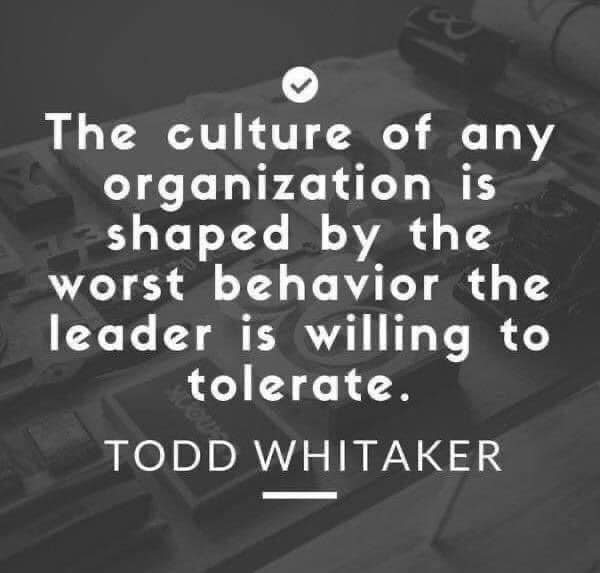
Quote is from leadership educator Todd Whitaker, the author of Shifting the Monkey (and over 40 other books)

A Love Letter to Churches Seeking Part-Time Pastors

Dear Congregations Seeking a Part-Time Pastoral Leader,

First of all, please know that you deserve an excellent minister. It’s the role of the Presbytery (or other denominational entity) to give you the best options possible which means that we want your future pastor to be equipped spiritually, theologically, and ecclesiastically. My role is to offer suggestions and I will only suggest candidates who have proven leadership chops and can pass a thorough background check. You deserve healthy, gifted leadership.

There are a couple things you need to know as the Holy Spirit helps us with this:

  • You will have a limited pool of candidates- Part A. Almost no one will be willing to move to this geographic area for a part-time position. They will not uproot their families to serve in a position that will not cover their living expenses, and because this PT position is almost certainly a contracted position (as opposed to a settled pastor who is installed) there is no certainty that this position will last more than a year. It’s not financially savvy to move here for a position that is insecure and low-paying. This means you will be not be doing a national search.
  • You will have a limited pool of candidates – Part B. You will possibly need to consider candidates who are female, LGBTQ, immigrant, differently-abled and living in differently-colored skin. You might be looking at trained Commissioned Elders. You might be looking at not-yet-ordained seminarians. This could be God’s amazing way of helping your congregation stretch a little. (See: God Gets Everything God Wants.)
  • You will need to pay this pastor accordingly – Part A. The Presbytery I serve will require salaries of $23/hour (or $20/hour for rural congregations) by 2024. If you cannot afford this minimum requirement, you cannot afford even a PT pastor.
  • You will need to pay this pastor accordingly – Part B. It’s unfair and unfaithful to expect a PT pastor to work Full Time. I actually hear church folks comment out loud that they will get a FT pastor for half the price. This is not true. The average pastor in my denomination is expected to work about 50 hours/week. For 25 hours/week you get a worship leader who does emergency hospital visits plus a Bible study. You don’t get someone who attends every meeting, creates a stellar outreach program, and starts several new mission projects.
  • Your PT Pastor will most likely have an additional vocation/job. You will need to share this leader with another church, a hospice, a hospital, a school, or a Starbucks because few of us can live on a PT salary. This will help keep you honest in that your PT Pastor will not be available to work FT for you even if that’s your expectation. Also: sharing a pastor with another church is a blessing. It helps us break out of our understanding of congregations as lone rangers in closed systems.

Church, you are not alone is finding yourselves unable to call a FT leader. Both before and “after” COVID, congregations have become smaller and institutional giving has become splintered. Church tithing used to be the most popular form of charitable contributions in this country, and now the requests for our philanthropy range from school candy fundraisers to alumni organizations to political candidates to charities for everything from sick children to sick whales to this kind of thing.

Retired pastors might be exactly what best serves your congregation. Keep in mind though, as you are saving money not having to contribute to their retirement or medical benefits, that retired pastors will most likely not be on the cusp of new possibilities for your mission. Or maybe that suits you. If you are happy with the way things are going and your mission is primarily to serve your current members, a retired pastor might work very well.

We will help you find the best available leader, Church. But keep in mind that availability is the operative word.

In hope and faith, Jan

Comfort Food on Memorial Day

Last Wednesday I had an overwhelming craving for sweet tea. I grew up drinking sweet tea and at family reunions, there was special sweet tea made by aunts who had particular recipes. Aunt Rena’s sweet tea was especially lemony. Aunt Virginia’s sweet tea had less lemon but no less deliciousness.

Because sugar is now frowned upon, I only drink sweet tea on special occasions these days. Last Wednesday was hardly a special occasion, and yet I needed the comfort of a happy childhood and warm memories.

As a pastor and cousin and sister and observer of Memorial Day, I encourage all readers today to find something that comforts your soul. For those who remember a soldier or sailor who died in war, for those whose hearts are heavy because of the state of our gun-loving nation, for all who feel nothing because we are numbed by statistics, for all will spend this day enjoying picnics and sales – I ask you to find something that brings you comfort. Maybe it’s sweet tea or maybe it’s fried chicken or maybe it’s a photograph of someone you have loved.

Yesterday, I had a Sunday off – as in there was no place I needed to be to teach or preach or recognize a church milestone. And so I chose comfort food: worship online with my home church and then another worship online with my former General Presbyter. Both were blessings that fed my soul.

May you seek whatever comforts you today finding hope in the presence of all that’s holy.

How to Be a Better Human

I’ve been thinking – for obvious reasons – what makes us better humans? Here’s my off-the-top-of-my-head list:

  • Respond to feelings with feelings. (Don’t follow a feeling with a fact.) When I say, “I’m really sad because of what’s going on in the world,” you say, “It makes me feel so sad too. And angry.” You don’t respond by saying, “That gunman was mentally ill.” And please don’t follow my feeling with silence as if I didn’t say anything.
  • Show up for people. Go to the funeral. Remember the death dates as well as the birthdays. Send the sympathy letter (preferably with remembrances of specific things you loved about the person who’s gone.)
  • Send flowers or some other signs of beauty. When things are tough, it’s comforting to be in the presence of beauty.
  • Don’t try to fix things. The hardest things in life cannot be fixed – unless someone needs money. If you can share money, that might relieve an immediate burden.
  • Don’t should on people as in “You should have ____.” Never do this.
  • Don’t make life all about you. It’s not always your party, your story, your moment.
  • Care about people who are not in your family or friend groups. All people were created in the image of God. Even the dirty ones. Even the mean ones. Even the gunmen.
  • Be teachable. I tweeted something thoughtless yesterday and someone was kind enough to let me know. Thank you N.

This is a starter list. What would you add?

Not What I’d Planned

I wrote a different post for today, but it will wait.*

Our FBC teaches high school in Alexandria, Virginia and one of his students was stabbled to death yesterday during the lunch period. But nobody will remember this tragedy because of what happened in Texas on the same day. I have nothing else to say.

*There was a typo when this was initially published. I’d typed “wail” instead of “wait.” It was probably more true with “wail.”